Last updated 2026-07-25
TL;DR
A flat inspection is a walkthrough of a rental unit by the landlord, a property manager, or a city inspector to check condition, safety, or code compliance. Notice requirements vary by state, typically 24 to 48 hours for landlord-initiated visits. Cities with rental licensing programs often add mandatory inspection cycles on top of this, separate from routine landlord check-ins.
what is a flat inspection and who does it
"Flat inspection" is mostly a British-English term (a "flat" is what Americans call an apartment), but it shows up in U.S. searches too, usually meaning one of two different things. It's worth separating them because the rules are completely different. The first meaning is a routine landlord walkthrough: your landlord or property manager comes in to check the unit's condition, look for damage, verify smoke detectors work, or do a general health check on the property. This is private, between landlord and tenant, and governed by your state's landlord-tenant statute on entry notice. The second meaning is a government rental inspection, the kind cities require under a rental licensing or registration ordinance. In this version, a city-employed or city-contracted inspector checks the unit against a housing code, usually tied to whether the landlord can get or renew a rental license. Cities like Minneapolis, Rockford, and dozens of others run programs like this, often on a multi-year cycle (Minneapolis licenses rental property and can inspect on a rotating schedule tied to violation history) [1]. If you got a notice in the mail referencing an ordinance, a permit number, or a re-inspection fee, you're dealing with the second kind, not a routine landlord visit. That distinction changes what rights you have, what notice is required, and who you can appeal to.
what can a landlord look at during an inspection
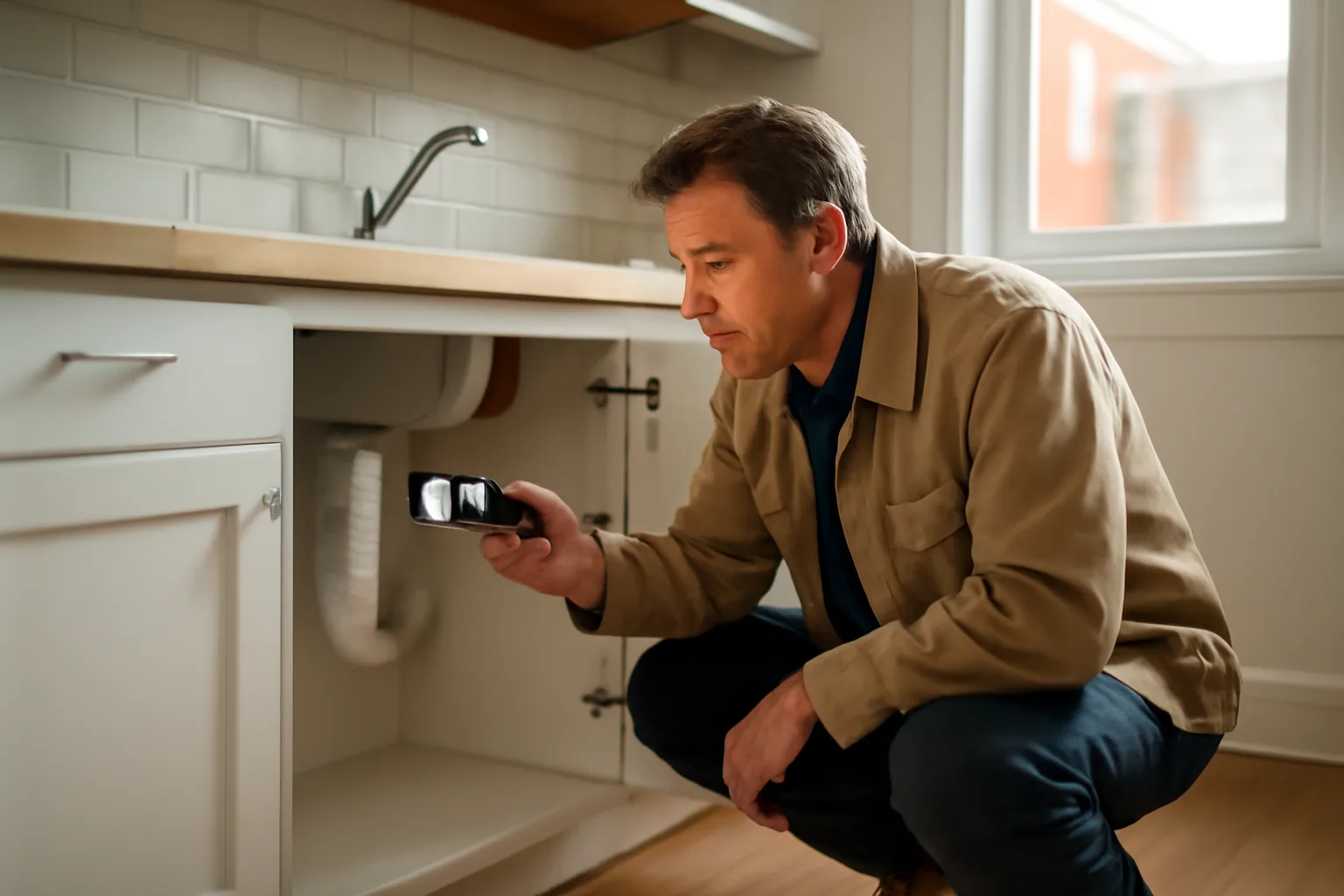
A landlord doing a routine inspection can generally check anything related to the property's condition and safety, not your personal belongings. That includes smoke and carbon monoxide detectors, HVAC filters and vents, plumbing under sinks, signs of pests, mold or water damage, window and door locks, and general wear against the lease's condition clauses. What a landlord can't do is rifle through drawers, closets full of personal items, or search for anything unrelated to habitability or lease compliance. The legal standard in most states is that entry has to be for a legitimate purpose, like repairs, inspection, or showing the unit, and during reasonable hours [2]. California's Civil Code lists the specific purposes that justify entry: to make necessary or agreed repairs, show the unit to prospective tenants or buyers, or in an emergency (Cal. Civ. Code § 1954) [2]. For a government-mandated rental inspection, inspectors typically check things a private landlord walkthrough wouldn't cover in the same depth: egress windows in bedrooms, electrical panel condition, water heater temperature-pressure relief valves, working smoke and CO detectors per code, handrail and stair condition, and sometimes exterior items like peeling paint (a lead hazard concern in pre-1978 housing) or trip hazards on walkways. If your city sent an inspection checklist with the notice, that document is your best source, since checklists vary by jurisdiction. If you didn't get one, ask your city rental licensing office for it before the visit.
how much notice does a landlord have to give before entering
| California | 24 hours (presumed reasonable), written | Cal. Civ. Code § 1954 [2] | |
|---|---|---|---|
| Arizona | 48 hours | Ariz. Rev. Stat. § 33-1343 [3] | |
| Florida | 12 hours (per statute text: "reasonable notice... is presumed to be 12 hours") | Fla. Stat. § 83.53 [4] | |
| Texas | No statewide statute requiring advance notice for entry (lease terms control) | Texas Property Code, Ch. 92 [5] | Emergencies (fire, burst pipe, gas leak) are the standard exception almost everywhere; landlords can enter without advance notice when there's an immediate threat to life or property. Government inspectors doing rental-license inspections operate under a separate notice rule set by the city ordinance itself, which is often similar (24 to 48 hours) but sometimes different, so read your inspection notice letter for the specific number rather than assuming state law applies. |
Most states require 24 hours' written or verbal notice for a landlord's non-emergency entry, though the exact number and the notice method vary. California requires "reasonable notice," which the statute presumes to be 24 hours unless circumstances show otherwise, and requires written notice for most entries (Cal. Civ. Code § 1954) [2]. Some states, like Arizona, also default to 48 hours in specific circumstances under their landlord-tenant act [3]. Here's a rough comparison of common notice rules. Always check your specific state statute since these change and some cities layer on stricter local rules. | State | Standard notice for non-emergency entry | Source |
who is responsible for a rental walkthrough inspection in california
In California, the landlord is legally responsible for entry-related inspections and repairs, but the walkthrough itself is often done jointly with the tenant, especially at move-in and move-out. California Civil Code § 1950.5 requires landlords to give tenants the option of an initial inspection before move-out, specifically so the tenant can fix any deductible items themselves before the final deposit accounting [6]. "The landlord shall notify the tenant in writing of his or her option to request an initial inspection... and of his or her right to be present at the inspection," the statute says regarding the pre-move-out walkthrough (Cal. Civ. Code § 1950.5(f)) [6]. If the tenant requests this initial inspection, the landlord has to give at least 48 hours' written notice of the date and time, unless the tenant waives that notice period [6]. For routine mid-tenancy inspections (not move-out related), the same entry rules from § 1954 apply: 24 hours' notice, legitimate purpose, reasonable hours. There's no separate California statute creating a distinct "landlord walkthrough inspection" right outside of entry law and the move-out initial inspection process. If your unit is in a city with its own rental inspection ordinance (several California cities have proactive rental inspection or registration programs), that city's inspector, not the landlord, handles the code-compliance side, and the notice and appeal rules come from the local ordinance.
what is landlording and what is a landlord
A landlord is the owner (or authorized agent of the owner) of a residential property who rents it to a tenant in exchange for rent, under a lease or rental agreement. "Landlording" is the informal term for the day-to-day work of running that rental: collecting rent, handling repairs, screening tenants, staying current on local code and licensing requirements, and managing the legal relationship defined by state landlord-tenant law. Legally, most states define "landlord" broadly to include property managers and agents acting on the owner's behalf, more than the titleholder. That matters for inspections and notices: if you hire a property manager, that manager typically has the same entry rights and notice obligations you would, and the manager (more than the owner) can be cited for code violations in cities with rental licensing enforcement. Landlording isn't a licensed profession the way real estate brokering is, but a growing number of cities require you to register or license the rental itself (not you personally) before you can legally lease it out. That's the piece people miss: even a single-unit landlord renting out a basement apartment can be required to get a rental license, pass an inspection, and pay an annual or biennial fee, depending on the city's ordinance.
how to become a landlord and how to be a landlord
Becoming a landlord legally involves more than just finding a tenant. Here's the realistic sequence, assuming you already own or are buying a property to rent out. First, confirm zoning allows rental use. Some cities restrict short-term or even long-term rentals in certain zones, or cap the number of unrelated occupants. Second, check whether your city or county requires rental registration or a rental license before you can legally rent. This is the step people skip and regret. Cities including Minneapolis, MN, and many others require landlords to register the property, and sometimes pass an inspection, before renting it out at all [1]. Fines for renting without a required license can run from under $100 to several hundred dollars per violation depending on the city, and some jurisdictions can pursue back-fees for every month the unit operated unlicensed. Third, get landlord-specific insurance (a standard homeowners policy usually excludes rental use), understand your state's security deposit limits and return deadlines, and write a lease that matches your state's required disclosures (lead paint disclosure for pre-1978 housing is federally required under 42 U.S.C. § 4852d, for example) [7]. Fourth, learn your state's entry-notice rules (see the table above), your local eviction process, and your habitability obligations, since a rental that fails code (no working smoke detector, no heat, active pest infestation) is a legal liability, more than an inspection risk. Being a landlord day-to-day is mostly about consistency: responding to repair requests promptly, keeping records of every notice and inspection, and treating the lease as a real contract rather than a formality. If you're managing your first license application or your first city inspection, building a simple file (lease, insurance certificate, prior inspection reports, smoke detector maintenance log) before the inspector shows up saves you the scramble later. Our City Rental License & Inspection Prep Packet is a one-time $79 tool built for exactly that moment, but plenty of landlords just build their own checklist from their city's published code.
why do landlords require renters insurance
Landlords require renters insurance mainly to cover the tenant's personal belongings and liability, not the building itself. A landlord's own property insurance covers the structure, but it generally doesn't cover a tenant's furniture, electronics, or clothing if there's a fire, burst pipe, or theft, and it usually doesn't cover a tenant being sued for causing damage to a neighboring unit. Renters insurance also typically includes liability coverage, meaning if a tenant's guest gets hurt in the unit, or the tenant accidentally causes a fire that spreads, the tenant's policy (not the landlord's) is the first line of defense. That reduces the odds the landlord's insurer gets pulled into a claim or lawsuit from a tenant's mistake. Average renters insurance costs are low, often cited around $15 to $20 a month nationally depending on coverage limits and location, which is part of why landlords increasingly make it a lease requirement rather than a suggestion. There's no federal law requiring it, and state rules vary; landlords typically enforce it as a lease condition rather than relying on a statute, so check whether your state or city places any limits on how landlords can mandate or verify it.
what rights do tenants have without a lease
Tenants without a written lease (a month-to-month or oral tenancy) still have real legal rights under state law; the absence of a written lease does not mean the absence of protections. In most states, an oral or implied rental agreement still creates a landlord-tenant relationship covered by the state's landlord-tenant statute, including habitability requirements, entry-notice rules, and eviction procedures. Without a written lease, the tenancy is typically treated as month-to-month, which means either party can usually end it with proper notice (commonly 30 days, though this varies by state and by how long the tenant has lived there). The landlord still can't shut off utilities, change the locks, or remove belongings to force a tenant out; that's illegal "self-help eviction" in essentially every state and requires going through court instead. Rent amount and due date, if not written down, are generally whatever was actually being paid and collected, which is why oral agreements create so many disputes. Tenants without a lease also keep their state's basic protections: the right to a habitable unit, the right to advance notice before entry, and the right to a formal eviction process rather than being removed informally. If you're a tenant in this situation and something feels off, your state's tenant rights office or a legal aid organization can tell you exactly what applies locally; the rules genuinely differ enough state to state that a general answer only gets you partway there. For related reading, see our pages on tenant rights and tenants rights.
what a landlord cannot do in ohio
Ohio landlord-tenant law (Ohio Rev. Code Chapter 5321) prohibits several specific things landlords sometimes try anyway. A landlord cannot shut off a tenant's utilities, change the locks, or remove the tenant's belongings to force them out without going through the court eviction process; that's a form of illegal self-help eviction [8]. Ohio law also requires landlords to give "reasonable notice" before entering the unit and to enter "at reasonable times," per Ohio Rev. Code § 5321.04(A)(8), which states the landlord must give the tenant "reasonable notice" and enter only at reasonable times except in an emergency [8]. Ohio courts and practitioner guidance commonly treat 24 hours as reasonable, though the statute itself doesn't spell out an exact hour count the way California's does. Ohio landlords also can't retaliate against a tenant for exercising legal rights, like reporting a code violation or joining a tenant organization; Ohio Rev. Code § 5321.02 specifically bars retaliatory conduct such as raising rent, decreasing services, or attempting eviction in response to a tenant's good-faith complaint [9]. Landlords in Ohio also cannot discriminate based on protected classes under the Ohio Civil Rights Act and federal Fair Housing Act, and they cannot keep a security deposit without providing an itemized, written list of deductions within 30 days of the tenant moving out, per Ohio Rev. Code § 5321.16 .
what happens if a city rental inspection finds a violation
If a city inspector finds a code violation during a licensing inspection, you'll typically get a written notice listing each item, a deadline to fix it (commonly 30 days for most issues, shorter for anything considered an immediate safety hazard like exposed wiring or no smoke detectors), and instructions for scheduling a re-inspection. Failing to fix items by the deadline usually triggers fines, which vary enormously by city, from small per-day penalties to license suspension or denial. Some cities also charge a re-inspection fee if the first re-inspection still fails, so getting it right the first time genuinely saves money. Because these fee schedules and deadlines are set locally and change often, confirm the specific numbers with your city rental licensing office rather than relying on a generic figure; what's accurate for one city's ordinance can be wrong for the one next door. If you disagree with a violation finding, most cities have an administrative appeal process, usually with a short filing window (sometimes 10 to 15 days from the notice date). Missing that window typically forfeits your right to appeal, so read the notice's deadlines carefully the day it arrives, not the week before things are due.
how to prepare for a rental license inspection
Preparation is the single highest-leverage thing a landlord can do before a scheduled rental inspection. Most failed inspections aren't about big structural problems; they're dead batteries in smoke detectors, missing egress window hardware, a leaking faucet nobody reported, or a handrail that's come loose. A basic pre-inspection walk should cover: every smoke and CO detector (test them, don't just glance at them), all window locks and screens, water heater temperature-pressure relief valve and discharge pipe, visible plumbing leaks under every sink, exterior paint condition if the property is older, handrails on any stairs with more than a few steps, and working locks on all exterior doors. Bring a flashlight; inspectors check crawl spaces and under-sink cabinets more than people expect. Keep your paperwork together too: prior inspection reports, proof of any repairs made since the last cycle, your rental license or registration number, and your certificate of insurance if your city asks for it. If you manage this across multiple units or multiple cities with different ordinances, that's exactly the organizational problem our $79 City Rental License & Inspection Prep Packet is built to solve: a one-time packet to help you track deadlines, fees, and checklist items city by city, rather than digging through old emails every renewal cycle. It's not a substitute for your city's actual checklist or for legal advice, just a way to stay organized.
Frequently asked questions
How much notice does a landlord have to give before an inspection?
Most states require 24 hours' notice for routine, non-emergency entry, though some (like Florida) use 12 hours and others (like Arizona) use 48 hours. City-mandated rental license inspections often follow a separate notice period set in the local ordinance, so check your inspection letter for the exact number rather than assuming state law controls.
Who is responsible for a rental property walkthrough inspection in California?
The landlord is legally responsible for entry-related inspections under Cal. Civ. Code § 1954, and for offering an optional joint move-out walkthrough under Cal. Civ. Code § 1950.5. City code inspectors, not the landlord, handle any separate rental-licensing inspection required by a local ordinance.
What can a landlord look at during an inspection?
A landlord can check anything tied to the property's condition and habitability: smoke and CO detectors, plumbing, HVAC, signs of pests or mold, locks, and general wear. They can't search personal belongings or closets unrelated to the property's condition; entry has to be for a legitimate purpose under state law.
What is landlording?
Landlording is the day-to-day work of owning and operating a rental property: collecting rent, handling repairs, screening tenants, and complying with state landlord-tenant law and any local rental registration or licensing ordinance. It's not a licensed profession, but the rental unit itself may need a license in many cities.
What is a landlord?
A landlord is the owner or authorized agent who rents residential property to a tenant under a lease or rental agreement. Most state laws define the term broadly enough to include property managers acting on the owner's behalf, who then carry the same entry-notice and code-compliance obligations as the owner.
What rights do tenants have without a lease?
Tenants without a written lease still have full protections under state landlord-tenant law, typically as a month-to-month tenancy. They keep the right to habitability, advance notice before entry, and a formal court eviction process; landlords cannot lock them out or shut off utilities to force them out.
How to become a landlord?
Confirm zoning allows rental use, check whether your city requires rental registration or licensing before you can legally rent, get landlord-specific insurance, learn your state's security deposit and entry-notice rules, and prepare a compliant lease with required disclosures like the federal lead paint notice for pre-1978 housing.
Why do landlords require renters insurance?
Landlords require it mainly to cover the tenant's belongings and personal liability, since the landlord's own property insurance doesn't cover a tenant's possessions or lawsuits stemming from the tenant's actions. It also shifts liability risk (like a guest injury or an accidental fire) away from the landlord's policy.
What can a landlord not do in Ohio?
Under Ohio Rev. Code Chapter 5321, a landlord cannot shut off utilities, change locks, or remove belongings to force a tenant out without a court eviction. Landlords also cannot retaliate against tenants for good-faith complaints (§ 5321.02) or withhold a security deposit without an itemized written statement within 30 days (§ 5321.16).
What's the difference between a landlord's inspection and a city rental inspection?
A landlord's inspection is a private walkthrough governed by state entry-notice law. A city rental inspection is a government code-compliance check tied to a local rental licensing or registration ordinance, often run on a multi-year cycle, with its own notice rules, checklist, fines, and appeal process separate from state landlord-tenant law.
Can a landlord enter without notice in an emergency?
Yes. Virtually every state's landlord-tenant law allows entry without advance notice when there's an immediate threat to life or property, like a fire, gas leak, or major flooding. Outside a genuine emergency, standard notice periods (commonly 24 to 48 hours) apply.
What happens if a rental fails a city inspection?
You'll typically get a written violation notice with a repair deadline (often around 30 days, shorter for urgent safety hazards) and instructions for a re-inspection. Missing the deadline can trigger fines or license denial, and some cities charge a separate re-inspection fee. Confirm exact deadlines and fees with your city rental licensing office.
Do I need a rental license to rent out one unit?
Possibly, yes. A growing number of cities require rental registration or licensing even for a single unit, such as a basement apartment or one rented house, more than multi-unit buildings. Renting without a required license can bring fines and back-fees, so check with your specific city's rental licensing office before listing the unit.
Sources
- California Legislative Information, Civil Code § 1954: California requires 24 hours' presumed reasonable written notice and limits entry to specific legitimate purposes
- Arizona Revised Statutes § 33-1343: Arizona landlord-tenant law sets specific notice requirements for landlord entry
- Florida Statutes § 83.53: Florida presumes 12 hours is reasonable notice for landlord entry
- Texas Property Code, Chapter 92: Texas has no statewide statute mandating advance notice for landlord entry, leaving it to lease terms
- California Legislative Information, Civil Code § 1950.5: California requires landlords to offer tenants an optional initial move-out inspection with 48 hours' written notice
- U.S. Code, 42 U.S.C. § 4852d: Federal law requires lead paint disclosure for housing built before 1978
- Ohio Revised Code § 5321.04: Ohio law requires landlords to give reasonable notice and enter at reasonable times, with an emergency exception
- Ohio Revised Code § 5321.02: Ohio law prohibits landlord retaliation against tenants for exercising legal rights
- Ohio Revised Code § 5321.16: Ohio landlords must provide an itemized written list of security deposit deductions within 30 days