Last updated 2026-07-25
TL;DR
Becoming a landlord means more than buying a property. Most cities with rental licensing require you to register the unit, pass a habitability inspection, and follow notice rules before entry or eviction. Tenants without a written lease still have rights under state landlord-tenant law. Requirements vary by city, so confirm specifics with your local rental licensing office.
What is landlording, exactly?
Landlording is the ongoing work of owning and managing a rental property: collecting rent, maintaining habitability, handling repairs, following state and local law, and dealing with tenants directly or through a manager. It is not a one-time transaction. You sign a purchase agreement once. You landlord every month for as long as you own the unit. A landlord (also called a lessor) is the party who owns the property and grants a tenant the right to occupy it in exchange for rent, under a lease or rental agreement. The relationship is defined by state landlord-tenant statutes, which set minimum standards for habitability, security deposits, notice periods, and eviction procedure. Every state has its own version of these rules, and many cities layer additional registration or inspection rules on top. People use "landlord" loosely to mean anyone who rents out a room or a house, but legally it carries real obligations. HUD's fair housing rules apply to landlords the same as they apply to large property management companies, regardless of whether you own one unit or fifty [1].
How do you become a landlord, step by step?
Becoming a landlord takes five practical steps: buy or convert a property into a rental, check local licensing rules, prepare the unit to code, screen tenants legally, and set up a lease that matches your state's requirements. Skipping the licensing step is the most common mistake first-time landlords make. 1. Confirm the property can legally be rented. Some cities cap the number of unrelated occupants, restrict short-term rentals, or require a certificate of occupancy before you can rent long-term at all. 2. Check whether your city requires rental registration or licensing. A growing number of cities require landlords to register every unit annually and pay a fee before renting it out. Requirements, fees, and inspection cycles differ by city, so confirm with your city rental licensing office rather than assuming a neighboring city's rules apply to you. 3. Get the unit inspection-ready. Working smoke and carbon monoxide detectors, functioning locks, no exposed wiring, and no active leaks are close to universal minimums across cities with proactive rental inspection programs. 4. Screen tenants using the Fair Housing Act's protected classes as your floor. HUD identifies race, color, national origin, religion, sex, familial status, and disability as protected classes nationally, and many states and cities add more (source of income, sexual orientation, age) [1]. 5. Use a written lease that meets your state's minimum disclosure requirements, such as lead paint disclosure for pre-1978 housing under federal law [2]. For city-specific checklists once you know your jurisdiction, see tenant rights and landlord resources.
What is a landlord legally responsible for?
A landlord is legally responsible for keeping the rental habitable, following state-mandated notice periods, returning security deposits under the rules of the state, and complying with any city rental licensing or inspection ordinance that applies to the property. These duties exist whether or not there is a written lease. Habitability generally means working plumbing, heat, hot water, structurally sound floors and stairs, and freedom from pest infestation. Many states codify an "implied warranty of habitability" that exists automatically in every residential lease, meaning a landlord can't waive it even if the tenant agrees in writing. Courts in states like California and New York have enforced this doctrine for decades as a matter of public policy, more than contract law. Beyond habitability, landlords in mandatory licensing cities are responsible for registering the unit (often annually), paying the associated fee, and passing a periodic inspection, which might be triggered by a new tenant, a complaint, or a routine cycle set by ordinance. Failing to register before renting is itself a violation in most of these cities, separate from any condition-based violation found during inspection.
Who is responsible for the rental property walk-through inspection?
The landlord is responsible for scheduling and passing the rental unit inspection. But the format of the walk-through depends on whether it's a move-in/move-out condition inspection or a government compliance inspection under a rental licensing ordinance. In California, state law requires landlords to offer tenants an initial inspection before move-out, giving the tenant a chance to fix deficiencies before final deposit deductions are made. California Civil Code Section 1950.5 requires the landlord to notify the tenant of the right to this pre-move-out inspection and to provide an itemized statement of any deductions if the tenant doesn't participate or fix the issues [3]. That inspection is initiated and documented by the landlord, though the tenant has the right to be present. That is different from a municipal rental inspection, which is scheduled by the city's code enforcement or housing department, not the landlord and tenant privately. In that scenario, a city inspector visits the unit, checks it against the local housing code (smoke detectors, egress windows, electrical panels, water heater venting, and similar items), and either passes it, requires re-inspection, or issues a violation notice. The landlord must grant access, be present or send a representative, and remediate anything flagged, usually within a stated correction period set by the notice. Either way, the landlord carries the responsibility for making sure the inspection happens and passes. Tenants aren't obligated to fix code violations that stem from the building's condition rather than their own behavior.
What can a landlord look at during an inspection?
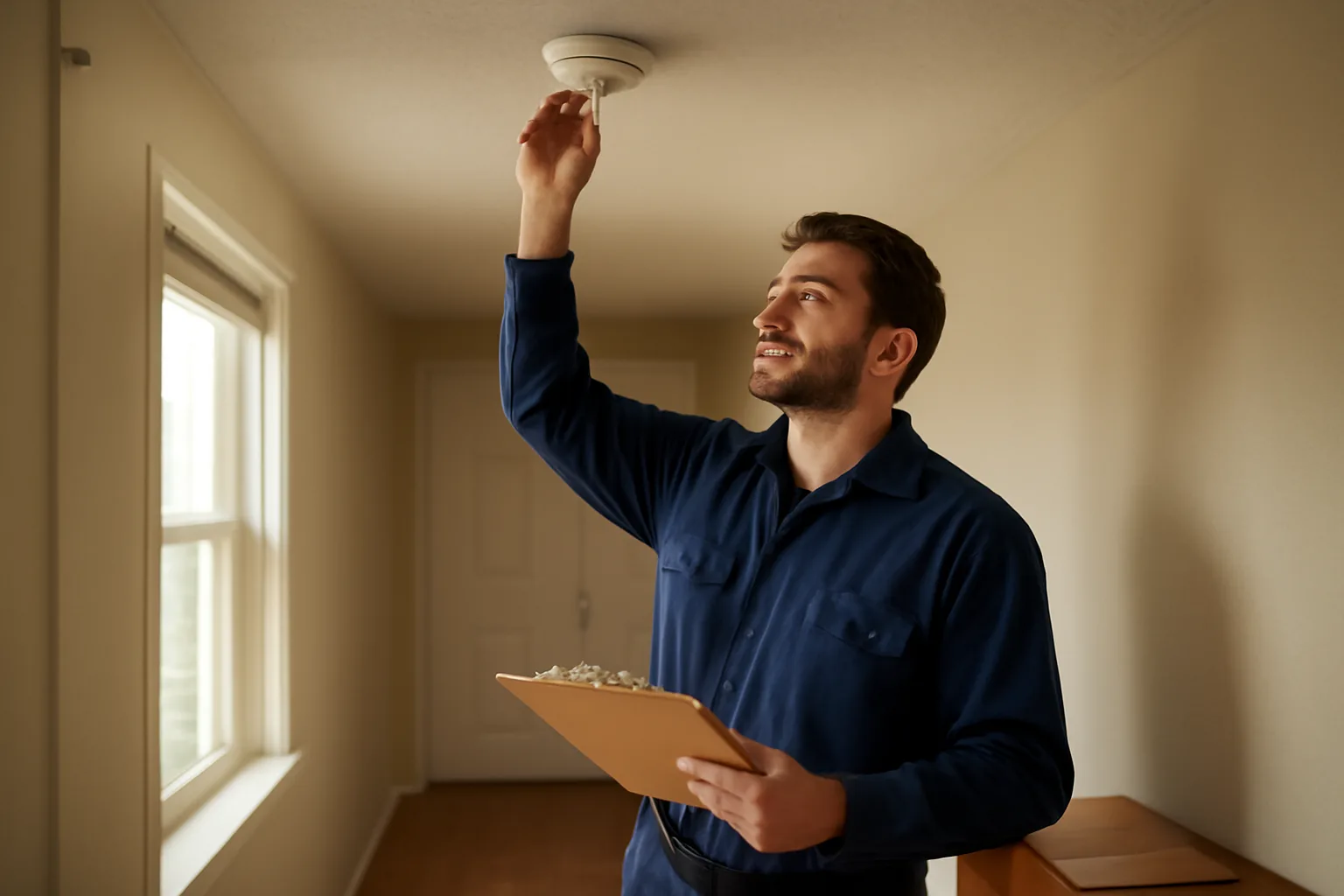
During a routine or licensing inspection, a landlord or city inspector can generally check life-safety systems, structural condition, and code compliance items, but not a tenant's personal belongings beyond what's visible and relevant to the inspection's purpose. Inspectors are checking the building, not the tenant's housekeeping. Typical items on a rental inspection checklist include: smoke and carbon monoxide detector presence and function, secondary means of egress (a workable second exit or window in bedrooms), electrical panel condition and no overloaded circuits, plumbing for leaks and proper drainage, water heater temperature and pressure relief valve, adequate heat source, handrails on stairs with more than a few steps, and pest or mold evidence. Many city inspection checklists mirror the International Property Maintenance Code, which forms the baseline many municipal housing codes are built on [4]. What an inspector generally cannot do is search closets, drawers, or personal storage, demand the tenant remove personal property to "stage" the unit, or use the inspection to investigate anything unrelated to habitability and code compliance, like immigration status or lease violations that have nothing to do with property condition. If a landlord wants that kind of access, it has to come through the lease terms and reasonable notice, not the inspection visit itself.
How much notice does a landlord have to give before entry or inspection?
Most states require landlords to give at least 24 hours' notice before entering an occupied rental for non-emergency purposes, though the exact number and acceptable delivery method (written, posted, verbal) varies by state. Emergencies are the one universal exception. No state requires advance notice if there's an active fire, flood, or gas leak. California requires "reasonable notice," which state law presumes to be 24 hours for most purposes, under Civil Code Section 1954 [5]. Florida statute similarly sets a default of at least 12 hours' notice for entry to make repairs, under Florida Statutes Section 83.53, and requires entry only at reasonable times [6]. Some cities layer their own inspection-specific notice period on top of the state's general entry rule, often 24 to 48 hours written notice before a compliance inspection, so check both your state code and your local ordinance. The safest practice, regardless of the legal floor, is written notice (text, email, or a posted notice) stating the date, approximate time window, and reason for entry. That protects the landlord if the tenant later disputes whether proper notice was given, and it's simply the professional way to run a rental business.
What rights do tenants have without a written lease?
Tenants without a written lease still have full legal rights under their state's landlord-tenant law; the absence of a written lease does not mean the absence of a tenancy. In most states, a tenant who pays rent regularly and occupies a unit with the owner's consent is treated as a month-to-month tenant by default, governed by the same habitability, notice, and eviction rules as a tenant with a signed lease. Without a written lease specifying otherwise, courts generally treat the rental period as matching the rent payment interval, meaning a tenant who pays monthly has a month-to-month tenancy. That tenancy can only be ended with proper notice (commonly 30 days, though some states require more depending on how long the tenant has lived there) and, if the tenant doesn't leave, through the formal eviction process in court. A landlord cannot change the locks, remove belongings, shut off utilities, or otherwise force a tenant out without a lease, and doing so is illegal self-help eviction in every state. A verbal or implied lease still obligates the landlord to maintain habitability, return any security deposit under state rules, and provide required notice before entry. It also still obligates the tenant to pay rent and not damage the property. The lack of paperwork just means more will hinge on state default rules and, if there's a dispute, on evidence like text messages, rent payment records, and witness testimony rather than a signed document.
What can't a landlord do in Ohio?
Ohio landlords cannot shut off utilities, change the locks, or remove a tenant's belongings to force them out, even if rent is unpaid. They also cannot retaliate against a tenant for reporting code violations or exercising a legal right. Ohio Revised Code Section 5321.02 specifically prohibits a landlord from retaliating by increasing rent, decreasing services, or threatening eviction against a tenant who has complained to a government agency about a code violation, complained to the landlord about a habitability issue, or joined a tenant organization [7]. Ohio Revised Code Section 5321.15 separately bars landlords from using self-help remedies like lockouts, utility shutoffs, or removal of possessions to recover a rental unit; the landlord must go through the court eviction process (called a forcible entry and detainer action in Ohio), even if the tenant is clearly behind on rent [8]. Ohio landlords also cannot enter a unit without reasonable notice, generally accepted as 24 hours, except in an emergency, under the same statutory framework governing landlord obligations in Chapter 5321. Ohio also caps how landlords can handle security deposits. Under Section 5321.16, a landlord must return the deposit (minus any itemized deductions) within 30 days of the tenant vacating, and if the landlord wrongfully withholds it, the tenant can recover damages plus attorney's fees [9]. Landlords who violate these rules aren't just risking a lawsuit from the tenant; some violations also carry statutory damages set explicitly in the code.
Why do landlords require renters insurance?
Landlords require renters insurance mainly to shift liability for the tenant's personal property and personal liability away from the landlord's own policy. A landlord's property insurance covers the building and the landlord's own liability. It does not cover a tenant's furniture, electronics, or clothing if there's a fire, burst pipe, or theft, and it doesn't cover a tenant's liability if a guest is injured in the unit. Requiring renters insurance (commonly $10,000 to $30,000 in personal property coverage and $100,000 in liability, though policies vary) reduces the odds that a tenant sues the landlord after a loss the landlord's policy never covered in the first place. It also reduces the landlord's exposure if a tenant's negligence (an unattended stove fire, an overflowing bathtub that damages the unit below) causes property damage; the tenant's liability coverage can pay for it instead of the landlord eating the cost or fighting the tenant for reimbursement. Most states allow landlords to require renters insurance as a lease condition as long as it's disclosed and applied consistently to all tenants under fair housing rules. It is not legally required in most jurisdictions unless the lease itself makes it mandatory, but insurers and property managers commonly recommend it as a low-cost way (often $15 to $30 a month) to close a real coverage gap.
How does rental licensing differ from routine landlording?
Rental licensing is a government requirement layered on top of ordinary landlord duties. Landlording is the ongoing management work; licensing is the paperwork and inspection process a city imposes before you're allowed to do that work legally. You can be a landlord in a city with no licensing program at all. Once a city adopts a mandatory rental license or registration ordinance, though, you can't legally rent a unit there until you comply, no matter how well you otherwise run the property. A typical mandatory rental licensing city requires the owner to register each unit (sometimes each building, sometimes each individual unit), pay an annual or biennial fee, and pass an inspection on a set cycle or upon tenant turnover. Fees, inspection triggers, and penalty structures vary enormously by city, from a low double-digit annual fee in some smaller municipalities to several hundred dollars per unit in larger cities with more active enforcement. Because these numbers change year to year and city to city, confirm current fees and deadlines with your city rental licensing office before assuming a figure you've seen elsewhere still applies. Getting organized before your first inspection saves real time and money. A re-inspection fee, a missed deadline penalty, or a stop-rent order (some cities can bar you from collecting rent until you're licensed) costs far more than an hour of prep. That is the gap a $79 City Rental License & Inspection Prep Packet is built to close: a structured checklist matched to your city's common inspection points, so you walk in knowing what the inspector is likely to flag before they do.
What happens if you skip licensing or fail an inspection?
Cities with mandatory rental licensing generally have three enforcement tools: fines, a stop-rent or stop-work order, and, in repeat or serious cases, court action. The specific fine schedule, correction period, and appeal process differ by ordinance, so the numbers below are illustrative of the pattern, not a promise of what your city charges. A first violation is often a warning or a modest fine with a correction window (commonly 10 to 30 days to fix the issue and request re-inspection). Continued noncompliance typically escalates to daily or per-violation fines, and some cities can legally prohibit the landlord from collecting rent, or even occupying the unit, until the license issue is resolved. A pattern of repeat or unresolved violations can also show up in property records, which matters if you ever try to sell or refinance. The practical fix is almost always the same regardless of city: register before you advertise the unit, walk through the space yourself against a standard habitability checklist before the official inspection, and fix anything obviously broken (dead smoke detectors, missing handrails, exposed wiring) before the inspector arrives rather than after a violation notice forces the issue.
Do all states and cities require rental licensing?
No. Rental licensing, registration, and mandatory inspection requirements are set at the city or county level in the U.S. There is no federal rental licensing system, and most states don't mandate it statewide either. Some states, however, set a statewide floor for related issues like habitability, entry notice, and security deposits, which apply everywhere in the state regardless of whether the local city also has a licensing ordinance. That means a landlord's obligations really stack in three layers: federal fair housing law [1], state landlord-tenant statute (covering habitability, notice, deposits, eviction procedure), and, in a growing number of cities, a local rental licensing or inspection ordinance. Missing any one layer creates real risk, but the local layer is the one landlords most often overlook, because it isn't in the lease template they downloaded and it isn't part of general landlord-tenant law taught in most basic guides. If you're renting in a city you haven't operated in before, the first call should be to that city's housing or code enforcement department, not a general internet search, since ordinance names, fee schedules, and inspection cycles change and aren't always current online.
Frequently asked questions
How do you become a landlord for the first time?
Buy or convert a property into a legal rental, check whether your city requires rental registration or licensing, prepare the unit to meet habitability and safety code, screen tenants under fair housing rules, and use a lease that matches your state's disclosure requirements. Confirm any local licensing steps with your city rental licensing office before advertising the unit.
What is landlording?
Landlording is the ongoing work of owning and managing rental property: collecting rent, maintaining habitability, handling repairs, following state and local landlord-tenant law, and, in many cities, complying with a rental registration or licensing ordinance. It's a continuous responsibility, not a one-time transaction at purchase.
What is a landlord, legally speaking?
A landlord (or lessor) is the party who owns a rental property and grants a tenant the right to occupy it in exchange for rent under a lease or rental agreement. Landlords are bound by federal fair housing law, state landlord-tenant statutes, and any local rental licensing ordinance that applies to the property.
Who is responsible for the rental property walk-through inspection in California?
The landlord is responsible for scheduling it. California Civil Code Section 1950.5 requires landlords to notify tenants of their right to an initial move-out inspection so deficiencies can be fixed before final deposit deductions, though the tenant has the right to be present.
What rights do tenants have without a written lease?
A tenant without a written lease is generally treated as a month-to-month tenant under state default rules, with full rights to habitability, proper entry notice, and formal eviction procedure. A landlord cannot lock out or remove a tenant without a lease; state law still governs the tenancy.
How much notice does a landlord have to give before entering a rental?
Most states require at least 24 hours' notice for non-emergency entry; California presumes 24 hours reasonable under Civil Code Section 1954, while Florida sets a 12-hour minimum for repair entry under Florida Statutes Section 83.53. Emergencies don't require advance notice in any state.
What can a landlord look at during a rental inspection?
Inspectors check life-safety and code items: smoke and CO detectors, electrical panels, plumbing, egress windows, water heaters, and stairs/handrails. They generally can't search personal belongings, closets, or drawers, and can't use the visit to investigate anything unrelated to habitability or code compliance.
What can't a landlord do in Ohio?
Ohio landlords cannot shut off utilities, change locks, or remove belongings to force a tenant out (Ohio Revised Code Section 5321.15), cannot retaliate against a tenant for reporting code violations (Section 5321.02), and must return security deposits within 30 days of move-out (Section 5321.16).
Why do landlords require renters insurance?
A landlord's own insurance covers the building, not the tenant's belongings or personal liability. Requiring renters insurance shifts that risk to the tenant's policy, reducing disputes and lawsuits after fires, water damage, or injuries the landlord's coverage was never meant to pay for.
Does every city require rental licensing or registration?
No. Rental licensing is set locally, not federally or, in most states, statewide. Some cities require annual registration and inspection; others have no program at all. Confirm requirements with your specific city's rental licensing or code enforcement office rather than assuming rules from another city apply.
What happens if a landlord skips required rental licensing?
Consequences vary by ordinance but commonly include fines, a correction period to fix the issue, and in serious or repeat cases a stop-rent order barring the landlord from collecting rent until licensed. Some cities also flag repeat violations in public property records.
Can a landlord require renters insurance as a lease condition?
In most states, yes, as long as it's disclosed in the lease and applied consistently to all tenants under fair housing rules. It generally isn't required by state law on its own; it becomes mandatory only when the landlord builds it into the lease terms.
What's the difference between a rental inspection and a move-out walk-through?
A move-out walk-through is a private inspection between landlord and tenant, often tied to security deposit deductions, like California's pre-move-out inspection under Civil Code Section 1950.5. A municipal rental inspection is a government compliance check against local housing code, scheduled by the city, not the tenant.
Sources
- HUD, Fair Housing Act protected classes: Federal fair housing law protects race, color, national origin, religion, sex, familial status, and disability, and applies regardless of landlord size.
- EPA, Real Estate Disclosure requirements for lead-based paint: Federal law requires lead paint disclosure for housing built before 1978.
- California Legislative Information, Civil Code Section 1950.5: California requires landlords to notify tenants of the right to a pre-move-out inspection and to provide an itemized deduction statement.
- International Code Council, International Property Maintenance Code: Many municipal rental housing codes are based on the International Property Maintenance Code's minimum habitability standards.
- California Legislative Information, Civil Code Section 1954: California law presumes 24 hours to be reasonable notice before landlord entry for most non-emergency purposes.
- Florida Legislature, Florida Statutes Section 83.53: Florida requires at least 12 hours' notice before landlord entry to make repairs, at reasonable times.
- Ohio Laws, Ohio Revised Code Section 5321.02: Ohio law prohibits landlords from retaliating against tenants who report code violations or exercise legal rights.
- Ohio Laws, Ohio Revised Code Section 5321.15: Ohio landlords cannot use self-help remedies like lockouts or utility shutoffs to remove a tenant; formal eviction is required.
- Ohio Laws, Ohio Revised Code Section 5321.16: Ohio landlords must return a tenant's security deposit, minus itemized deductions, within 30 days of move-out.