Last updated 2026-07-25
TL;DR
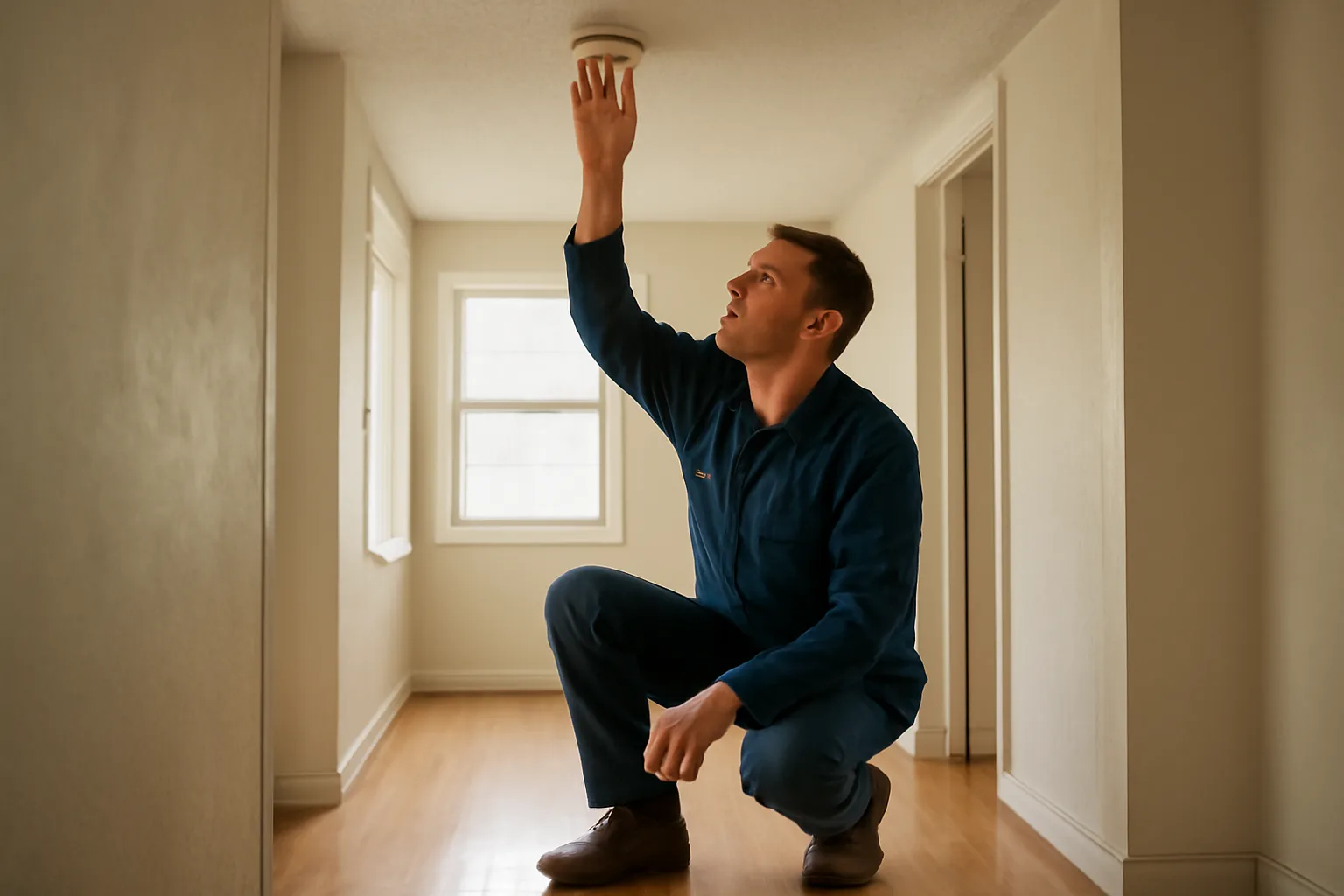
A landlord inspection checks a rental unit for safety, habitability, or code compliance. Most states require 24-48 hours notice before entry, except emergencies. City rental-licensing inspections check smoke detectors, egress windows, plumbing, electrical, and pest issues. Tenants keep rights even without a written lease. Landlords generally can't enter without notice or retaliate against tenants who report violations.
What is a landlord inspection?
A landlord inspection is any visit where the property owner, manager, or a city code official examines a rental unit or building. There are really two different kinds, and people mix them up constantly. The first is a private inspection: you, the landlord, walking through your own unit to check on move-in condition, mid-lease maintenance, or move-out damage. This is governed by your state's landlord-tenant law on notice and entry. The second is a government inspection: a city or county code enforcement officer checking the unit against a rental licensing or housing code ordinance, usually because your city requires a rental license, registration, or periodic inspection to keep renting the unit legally. These inspections check things like smoke detector placement, egress window sizes, electrical panel condition, and visible pest or moisture problems. If you got a notice in the mail about a rental license renewal, an inspection deadline, or a violation fine, you're dealing with the second kind. That's the focus of most of this article, though the tenant-entry rules matter too since you'll often need to coordinate both.
What is a landlord, and what is landlording?
A landlord is the legal owner (or an authorized agent of the owner) who leases residential or commercial property to a tenant in exchange for rent. "Landlording" is the informal term for the whole job: finding tenants, screening them, writing leases, collecting rent, handling repairs, managing turnover, and staying compliant with local housing codes. Most people who search "what is landlording" are trying to figure out if this is a business or a side hustle. Legally, it's neither label that matters, it's whether you're renting property for compensation. Even a single-unit landlord renting out a basement apartment or an inherited house is subject to the same fair housing laws (Fair Housing Act, 42 U.S.C. § 3601 et seq.) [1] as a large management company, and in cities with rental licensing ordinances, a single unit still usually needs its own license or registration number. The economics matter too. The U.S. Census Bureau's Rental Housing Finance Survey found that individual investors, not corporations, own the majority of rental properties in the country, and most of those owners hold 1 to 4 units [2]. If you own a duplex or a few single-family rentals, you're the norm, not the exception, and cities increasingly write their rental registration and inspection ordinances with you specifically in mind.
How to become a landlord: the real steps
Becoming a landlord isn't a licensed profession nationally, but it usually involves several concrete steps beyond just buying a property. 1. Confirm the property is zoned and legally permitted for rental use. Some cities cap the number of rental units per block or require a conversion permit for owner-occupied homes turned into rentals. 2. Register or license the rental with your city or county, if required. Cities like Los Angeles require registration under the Rent Stabilization Ordinance for covered units [3], and many mid-size cities require an annual or biennial rental license with a per-unit fee, confirm the exact amount with your city rental licensing office. 3. Pass an initial inspection if your city requires one before issuing a license. This usually checks smoke and carbon monoxide detectors, egress windows in bedrooms, working plumbing and heat, and electrical safety. 4. Get landlord insurance (different from a standard homeowner's policy) and decide your renters insurance requirement for tenants. 5. Write a lease that complies with your state's landlord-tenant statute, covering security deposit limits, notice periods, and habitability disclosures. 6. Screen tenants consistently and legally under the Fair Housing Act, avoiding any criteria tied to protected classes [1]. A lot of new landlords skip step 2 because they don't realize their city has a licensing requirement until a neighbor complaint or a routine sweep brings a code officer to the door. If you're not sure whether your city or county has one, check with the local rental licensing or code enforcement office directly. Ordinances change often and vary block by block in some jurisdictions.
Who is responsible for a rental property walk-through inspection in California?
In California, the move-in and move-out walk-through inspection responsibility sits with the landlord, but the process is shaped by state law protecting the tenant's right to participate. Under California Civil Code § 1950.5(f), a landlord must, if requested by the tenant, conduct an initial inspection before the tenant moves out (a "pre-move-out inspection"), give the tenant an itemized statement of needed repairs or cleaning, and allow the tenant a reasonable opportunity to fix the issues before the final move-out inspection [4]. This applies specifically to the move-out side. There's no separate statewide mandate for a move-in walk-through, though it's standard practice and heavily recommended for documenting condition and avoiding deposit disputes. The landlord (or their property manager) schedules and conducts the inspection. The tenant has the right to be present. California Civil Code § 1950.5 also requires the landlord to provide the tenant, at the time of the pre-move-out inspection or within a reasonable time after, a written notice of the right to be present during the final inspection [4]. City-level rental inspection programs, like Los Angeles's Systematic Code Enforcement Program, are a separate, additional layer. Those inspections are conducted by city housing inspectors, not the landlord, and check building and habitability code compliance rather than tenant damage or cleaning [3].
How much notice does a landlord have to give before an inspection?
| California | 24 hours presumed reasonable | Cal. Civ. Code § 1954 [5] | |
|---|---|---|---|
| Texas | No statewide statute; lease terms control | Texas Property Code Ch. 92 (no general entry-notice statute) [6] | |
| Florida | No statutory minimum hours specified; "reasonable notice," presumed 12 hours for repairs | Fla. Stat. § 83.53 [7] | |
| Washington | Two days' notice required | RCW 59.18.150 [8] | Emergencies are the universal exception. If there's a fire, flood, gas leak, or another situation threatening health or safety, landlords in essentially every state can enter without advance notice. Government rental inspections (the city-code kind) typically require their own separate notice, often 7 to 30 days by mail or posted notice, set by the local ordinance rather than the state entry statute. Check your specific city's rental inspection notice period rather than assuming the tenant-entry rule applies. |
Most states require 24 to 48 hours advance notice before a landlord enters an occupied unit for a non-emergency inspection or repair, but the exact number and the acceptable notice method vary by state. California requires "reasonable notice," and the law presumes 24 hours is reasonable unless circumstances suggest otherwise (Civil Code § 1954) [5]. Notice can be given in person, by phone, or by leaving written notice at the entry door. A short comparison of common notice rules: | State | Statutory notice for entry | Source |
What can a landlord look at during an inspection?
A landlord entering for a routine inspection can generally check anything related to the condition, safety, and maintenance of the property itself, not the tenant's personal belongings. Typical scope includes: smoke and carbon monoxide detector function, HVAC and water heater condition, visible plumbing leaks, signs of pest infestation, window and door locks, electrical outlets and panel access, and general cleanliness that could cause property damage (like excessive clutter blocking exits). A landlord doing a maintenance or lease-compliance inspection can also look for unauthorized pets, unauthorized occupants, or signs of illegal activity if the lease permits inspection for those purposes. What a landlord generally cannot do: search through closets, drawers, or personal papers unrelated to a reported problem, take photos of personal items beyond what documents property condition, or use the inspection as a pretext to harass a tenant or retaliate for a complaint. Many state landlord-tenant statutes and most leases limit inspection purpose to "showing the property, making repairs, or verifying compliance with the lease," not general snooping. City code inspectors, when conducting a licensing or habitability inspection, are typically limited to common areas and units where the landlord (as license applicant) has granted access, or where a warrant has been obtained. A tenant can refuse entry to a private landlord inspection in some circumstances, but this gets complicated fast. Check your state statute, and if it becomes a dispute, that's a conversation for a local attorney rather than something to guess at.
What rights do tenants have without a lease?
Tenants without a written lease still have legal rights. In every U.S. state, an oral or implied rental agreement (sometimes called a month-to-month tenancy at will) is legally recognized, and the tenant is protected by the state's landlord-tenant statute regardless of whether anything was signed. Those rights typically include: the right to a habitable unit (working plumbing, heat, and structural safety), the right to advance notice before the landlord enters, the right to a formal eviction process rather than a lockout or utility shutoff, and the right to the return of any security deposit within the state's required timeframe. A HUD overview of tenant rights notes that federal fair housing protections apply "regardless of whether there is a written lease" [9], and most state courts treat continued rent acceptance as proof of an ongoing tenancy even without paperwork. What changes without a lease is mostly the notice period for ending the tenancy. Many states treat a no-lease tenancy as month-to-month, meaning either party can end it with 30 days' notice (sometimes tied to the rent payment interval), rather than being locked into a fixed term. The rules for entry notice, habitability, and non-retaliation don't disappear just because nothing was signed.
What can't a landlord do in Ohio?
Ohio's landlord-tenant law (Ohio Revised Code Chapter 5321) spells out specific things a landlord cannot do to a tenant. A landlord in Ohio cannot shut off utilities, change the locks, or remove a tenant's belongings to force them out without going through formal eviction. This is sometimes called a "self-help eviction" and it's illegal [10]. A landlord also cannot retaliate against a tenant for complaining to a housing authority or joining a tenant organization; Ohio Rev. Code § 5321.02 specifically prohibits terminating a tenancy or refusing renewal in retaliation for a tenant's good-faith complaint [11]. On entry, Ohio Rev. Code § 5321.04 requires a tenant to permit landlord entry only after "reasonable notice," and Ohio courts and the statute generally treat 24 hours as reasonable for non-emergency entry [12]. A landlord who enters repeatedly without notice, or uses entry as harassment, can be in violation of the tenant's right to quiet enjoyment. Ohio also prohibits a landlord from discriminating based on the state and federal protected classes, and from including lease clauses that waive a tenant's statutory rights, like waiving the right to a habitable unit. If you're a landlord in Ohio dealing with rental licensing at the city level (some Ohio cities like Cincinnati and Cleveland have their own rental registration programs), the state statute and the city ordinance operate as separate layers. Confirm your specific city's rental registration and inspection notice requirements with its housing or code office.
Why do landlords require renters insurance?
Landlords require renters insurance mainly to shift liability and personal-property risk away from themselves. If a tenant's negligence causes a fire, a burst pipe from an unattended bathtub, or a break-in, renters insurance covers the tenant's personal belongings and often includes liability coverage if someone gets hurt in the unit. Without renters insurance, a tenant with no coverage who causes damage may have no way to pay for it, leaving the landlord's own insurance (and deductible) to absorb the loss, or leaving the landlord to sue a tenant who often has limited assets. The Insurance Information Institute notes that renters insurance is relatively inexpensive, commonly in the range of roughly $15 to $30 a month depending on coverage and location , which is part of why many landlords make it a lease requirement rather than optional. Requiring renters insurance is legal in nearly every state as a lease condition, as long as it's disclosed and applied consistently to all tenants (to avoid fair housing issues). Some landlords also require it because their own landlord policy (dwelling coverage) explicitly excludes tenant personal property, so there's a real coverage gap if the tenant has nothing.
How do rental license inspections differ from routine landlord inspections?
A rental license inspection is conducted by a city or county official, follows the local housing code, and directly affects your legal right to rent the unit. A routine landlord inspection is conducted by you or your property manager, is governed by your state's tenant-entry notice statute, and doesn't affect licensing status by itself, though what you find (or fail to find) can create liability if code violations go unaddressed. City inspections typically check smoke and CO detector placement per current code, egress window dimensions in sleeping rooms, handrails and guardrails, electrical panel labeling and GFCI outlets near water sources, water heater temperature-pressure relief valves, and exterior conditions like peeling exterior paint (a lead paint concern in pre-1978 housing) or unsafe stairs. Many cities issue violation notices with a correction deadline, commonly somewhere in the 14 to 30 day range, before assessing a fine or reinspection fee, though the exact window and fee schedule is set locally, so confirm with your city's rental licensing office rather than assuming a number. Some cities also run a re-inspection fee separate from the original license fee if you fail the first pass. If you're staring at a notice with a specific deadline and a checklist of code sections, it helps to walk the unit yourself first using the same checklist the inspector will use, rather than waiting to be surprised. A City Rental License & Inspection Prep Packet built around your city's actual checklist can save a lot of the guesswork here, since a re-inspection fee and a delayed license both cost more than getting it right the first time.
How to prepare for a rental inspection: a practical walk-through
Start outside and work in, the same way most code inspectors do. Check exterior stairs, railings, and walkways for cracks or looseness; check that address numbers are visible from the street (a surprisingly common violation); check gutters and downspouts for damage that could cause water intrusion. Inside, test every smoke detector and carbon monoxide detector, replace batteries even if they're not dead yet, and confirm placement matches current code (usually inside and outside each sleeping area, and on every level). Check that every bedroom has a compliant egress window (one that opens fully without tools and meets minimum size requirements, which the International Residential Code sets around 5.7 square feet of clear opening for existing buildings in many adopting jurisdictions , though your local code may vary). Check the water heater has a temperature-pressure relief valve with a discharge pipe reaching within 6 inches of the floor. Check GFCI outlets in bathrooms, kitchens, and anywhere near water. Look under sinks for slow leaks that have gone unnoticed. Check that all locks function and that windows aren't painted or nailed shut (a code violation and a real safety hazard in a fire). Document everything with photos and dates before the inspector arrives. If you're managing this across multiple units or multiple cities with different checklists, that's exactly the kind of repetitive admin work worth building a system for once instead of re-researching every renewal cycle.
Frequently asked questions
How to become a landlord with no experience?
Start by confirming your property can legally be rented (zoning, permits), check whether your city requires rental registration or licensing, get landlord insurance, and learn your state's landlord-tenant statute on deposits, notice, and habitability. Many first-time landlords also read their state's official tenant-rights handbook, since it lays out your legal obligations from the other side.
What is landlording as a business model?
Landlording means generating income by leasing residential or commercial property to tenants. It can be a side income source for an owner of 1-4 units (the most common ownership size nationally, per Census data [2]) or a full-time business for larger operators. Legally, the size doesn't change your fair housing or licensing obligations.
Who is responsible for a move-in walk-through inspection in California?
The landlord conducts it, and while state law doesn't mandate a move-in walk-through specifically, it does require the tenant be given the opportunity to be present for a move-out pre-inspection under California Civil Code § 1950.5(f) [4]. Best practice is a joint move-in walk-through with signed, dated photos, even though it's not separately mandated by statute.
What is a landlord legally required to provide?
A landlord is legally required to provide a habitable unit: working plumbing, heat, electrical systems, structural safety, and compliance with local housing codes. Specific requirements vary by state statute, but habitability is a near-universal baseline, often called the "implied warranty of habitability" in state case law and statutes.
What rights do tenants have without a lease agreement?
Tenants without a written lease still get habitability protections, notice before entry, protection from illegal lockouts, and formal eviction procedures under their state's landlord-tenant law. Fair housing protections also apply regardless of a written lease, per HUD guidance [9]. What usually changes is the tenancy defaults to month-to-month with a shorter notice period to end it.
How much notice does a landlord have to give for entry?
Most states require 24 to 48 hours notice for non-emergency entry. California presumes 24 hours reasonable (Civ. Code § 1954 [5]), Washington requires two days (RCW 59.18.150 [8]), and some states like Texas have no statewide statute, leaving it to the lease. Emergencies allow entry without advance notice everywhere.
What can a landlord look at during an inspection?
Landlords can check property condition and safety items: smoke detectors, plumbing, electrical, pest signs, HVAC, and lease compliance issues like unauthorized pets or occupants. They generally can't search personal belongings, drawers, or papers unrelated to a reported issue, and can't use inspections to harass or retaliate.
What can't a landlord do in Ohio specifically?
Ohio landlords can't perform self-help evictions (changing locks, shutting off utilities, removing belongings) under Ohio Rev. Code Chapter 5321 [10]. They can't retaliate against tenants for complaints (§ 5321.02) [11], and they must give reasonable notice, generally treated as 24 hours, before entering an occupied unit (§ 5321.04) [12].
Why do landlords require renters insurance for tenants?
Renters insurance covers tenant personal property and liability if the tenant causes damage or injury, protecting both parties from uninsured loss. A landlord's own dwelling policy usually excludes tenant belongings, so requiring renters insurance closes that gap. Coverage commonly runs $15 to $30 a month according to the Insurance Information Institute [13].
Can a tenant refuse a landlord inspection?
It depends on the state and the reason for entry. If proper notice was given and the purpose is lawful (repairs, showing the unit, code compliance), most states don't let a tenant simply refuse. But repeated entry without notice, or entry for no legitimate purpose, can be challenged as harassment or a lease violation by the landlord.
How often do rental inspections happen in licensed cities?
It varies widely by city ordinance, commonly annually, biennially, or every 3 years, sometimes triggered by a change in tenancy or a complaint rather than a fixed calendar. There's no national standard, so confirm the exact interval and any exceptions with your specific city's rental licensing office.
What happens if a rental fails a city inspection?
The inspector typically issues a written notice listing each violation and a correction deadline, often somewhere between 14 and 30 days depending on the city. Failing to correct issues by the deadline can lead to fines, a delayed or denied license renewal, and in some cities a mandatory re-inspection fee on top of the original license cost.
Sources
- U.S. Dept. of Justice, Fair Housing Act: Federal fair housing protections apply to all landlords regardless of portfolio size
- U.S. Census Bureau, Rental Housing Finance Survey: Individual investors own most U.S. rental properties, typically 1-4 units
- California Civil Code § 1950.5: California requires landlords to allow tenants a pre-move-out inspection and right to be present
- California Civil Code § 1954: California presumes 24 hours advance notice reasonable for landlord entry
- Texas Property Code Chapter 92: Texas has no statewide statute mandating entry notice hours, leaving it to lease terms
- Florida Statutes § 83.53: Florida requires reasonable notice for landlord entry with a 12-hour presumption for repairs
- Revised Code of Washington § 59.18.150: Washington requires two days notice before landlord entry
- U.S. Dept. of Housing and Urban Development, Tenant Rights: Federal fair housing protections apply regardless of a written lease
- Ohio Revised Code Chapter 5321: Ohio prohibits self-help evictions like lockouts and utility shutoffs
- Ohio Revised Code § 5321.02: Ohio prohibits landlord retaliation against tenants for good-faith complaints
- Ohio Revised Code § 5321.04: Ohio requires reasonable notice before landlord entry into an occupied unit
- International Code Council, International Residential Code, Section R310: Egress window minimum clear opening requirements under the IRC