Last updated 2026-07-26
TL;DR
Most Montgomery County jurisdictions (Maryland's Montgomery County, plus counties of the same name in Ohio, Pennsylvania, and elsewhere) require landlords to file a rental license application, pay a fee, and pass a habitability inspection before renting a unit. Requirements, fees, and cycles vary by jurisdiction, so confirm specifics with your local rental licensing office before you apply.
What is a Montgomery County rental license application, exactly?
There are multiple Montgomery Counties in the U.S. that run mandatory rental licensing programs, most notably Montgomery County, Maryland (part of the D.C. metro), and Montgomery County, Ohio (Dayton area, where individual cities like Dayton run their own programs rather than the county). If you searched this term, the first thing to nail down is which Montgomery County and which office actually issues your license, because the application forms, fees, and inspection rules are not shared across states. In Montgomery County, Maryland, the license is called a Rental Housing License and it's administered by the Department of Housing and Community Affairs (DHCA). Maryland law requires the county to license rental facilities, and county code backs that up: Montgomery County Code Chapter 29 governs landlord-tenant relations and licensing of rental housing [1]. The application asks for owner contact information, the property address, unit count, and whether the property is owner-occupied or a standard rental. If you're in a different state's Montgomery County (Ohio, Pennsylvania, Virginia, or elsewhere), the license usually comes from the city, not the county government. Dayton, Ohio, for example, runs its own rental registration program through its Division of Planning and Community Development, separate from Montgomery County itself [1]. So before you fill out any form, confirm with your city or county rental licensing office which agency actually issues the license, what the current fee is, and what the renewal cycle looks like. Fees and cycles change; treat any number you find online, including here, as a starting point to verify, not a final answer. Once you know the right office, the application itself is usually short: property address, owner and manager contact info, number of units, sometimes a floor plan or unit count breakdown, and payment of the license fee. The harder part is what comes after the paperwork: scheduling and passing the inspection.
How do I become a landlord who is actually license-ready?
Becoming a landlord isn't just buying a property and putting it on Zillow. If your jurisdiction requires rental licensing, you're legally running a regulated business, and the county or city expects you to register before you collect rent, not after a neighbor complains. The practical sequence looks like this: buy or convert the property, confirm your local licensing requirement (many counties require registration even for a single rented room in an owner-occupied home), get the unit inspection-ready, submit the license application and fee, pass inspection, then start marketing the unit for rent. Skipping straight to advertising before you're licensed is one of the most common ways new landlords end up with a violation notice in their first 90 days. Montgomery County, Maryland's landlord-tenant law also requires owners to register rental facilities and pay licensing fees before renting, and the county code lays out specific duties around lead paint disclosure, security deposit handling, and habitability that apply on top of the license itself [1] [2]. New landlords often assume the license is the whole compliance picture. It isn't. Licensing gets you the right to rent legally; separate state and local landlord-tenant law governs deposits, notices, and habitability standards you have to follow the entire time you hold the license. If you're brand new to this, budget real time for the inspection prep step. Most inspection failures aren't about big structural problems, they're about small things: missing smoke detectors, blocked egress windows, exposed wiring, or peeling paint in a pre-1978 property that needs lead-safe treatment. Walking the unit yourself with the county's inspection checklist a week before your scheduled visit catches most of this.
What exactly is landlording, and what is a landlord legally responsible for?
Landlording is the ongoing job of owning and managing rental property: collecting rent, maintaining habitability, handling repairs, managing security deposits, and following state and local landlord-tenant law. A landlord, legally, is the party who leases real property to a tenant in exchange for rent and who holds the underlying obligations to keep the unit safe and habitable. That legal definition matters for licensing because most rental license laws attach the licensing requirement to whoever is defined as the landlord or owner in the property records, not to a property manager or family member handling day-to-day operations. If you own the property and rent it out, even informally to a relative, you're usually the party the license has to be issued to. The habitability piece is where licensing and ongoing landlord duties overlap most. Montgomery County, Maryland's code requires licensed rental units to meet health and safety standards, and DHCA can inspect properties to confirm compliance, with licenses subject to suspension or revocation for code violations [1]. That's the throughline in almost every mandatory rental licensing city: the license isn't a one-time fee, it's a standing promise that the unit meets baseline safety standards for as long as you rent it out. If you want more background on the landlord role itself, including deposit handling and notice obligations that vary by state, see landlord and landlord landlords.
Who is responsible for the rental property walk-through inspection in California?
In California, the landlord (or their designated agent) is responsible for conducting move-in and move-out walk-through inspections, and state law gives the tenant specific rights around the move-out version. California Civil Code Section 1950.5 requires landlords who intend to deduct from a security deposit to offer the tenant an initial inspection before move-out, give at least 48 hours' written notice of that inspection, and provide an itemized statement of deductions if the tenant doesn't fix the noted issues themselves [3]. This is a different animal from a county rental licensing inspection. The Civil Code walk-through is about protecting the tenant's deposit rights at move-out; a licensing inspection (in Montgomery County or any mandatory-licensing jurisdiction) is the local government checking that the unit meets code before or during a rental license term. Landlords sometimes conflate the two and assume passing a city inspection means they're covered on deposit disputes, or vice versa. They're separate obligations under separate law. Some California cities layer on their own rental inspection programs on top of the state deposit rules, similar to what Montgomery County, Maryland does. If your property is in one of those cities, you'll have both: the state-mandated Section 1950.5 walk-through tied to tenancy end, and a separate municipal inspection tied to your rental license or registration. Confirm with your city's rental licensing office whether a local inspection program applies in addition to state deposit law.
What rights do tenants have without a lease?
Tenants without a written lease, often called month-to-month or at-will tenants, still have real legal rights. They're entitled to habitable housing, proper notice before eviction or rent increases, and protection from unlawful entry, even with no signed document in place. Oral or implied leases are legally recognized in most states as month-to-month tenancies once rent has been accepted, and the same state landlord-tenant statutes that govern written leases generally apply. The tenant still has a right to quiet enjoyment, a right to habitability repairs, and a right to advance notice before the landlord ends the tenancy. What changes without a written lease is mostly the terms that would otherwise be spelled out: rent amount, due date, and rules, which without a lease default to whatever's been established by practice or to state statutory defaults. Montgomery County, Maryland's landlord-tenant law, for instance, applies to licensed rental facilities regardless of whether the tenancy is under a written lease, and county code still requires the landlord to be licensed to rent the unit legally, lease or no lease [1]. In other words: skipping a written lease does not exempt you from rental licensing requirements, and it doesn't strip the tenant of statutory protections either. For deeper background on tenant protections, see tenants rights, tenant rights, and renters rights.
How do I actually become a landlord, step by step?
Here's the realistic order of operations for a first-time landlord getting a unit licensed and rent-ready: 1. Confirm ownership structure and check whether your city or county requires rental licensing or registration for your unit type (single-family rental, accessory unit, multifamily, owner-occupied duplex, etc.). 2. Pull your local rental license application and read the inspection checklist before you touch the unit. Most jurisdictions post this as a PDF on the housing or code enforcement department's page. 3. Fix the predictable failure points first: working smoke and carbon monoxide detectors, secondary means of egress in bedrooms, GFCI outlets near water sources, no active pest issues, and (in pre-1978 housing) lead-safe certification where required. 4. Submit the application with the fee. Expect a processing window of anywhere from a couple weeks to a couple months depending on the jurisdiction; Montgomery County, Maryland's licensing and inspection process, for example, runs on a multi-year renewal cycle with inspections tied to license terms [1]. 5. Schedule and pass the inspection. If you fail, you'll typically get a re-inspection window to fix cited items rather than an automatic denial. 6. Once licensed, keep a copy of the license and inspection report on file. You'll often need to show it during a tenant dispute, a sale, or a renewal. A lot of new landlords try to do step 6 before step 3, meaning they list the unit and sign a tenant before the license is issued. In a mandatory-licensing jurisdiction, that's a violation waiting to surface, usually the first time a tenant complaint or routine sweep brings code enforcement to the door.
Why do landlords require renters insurance?
Landlords require renters insurance mainly to shift liability for the tenant's personal property and personal liability claims away from the landlord's own policy, and to reduce disputes after fires, water damage, or theft. A landlord's own property insurance covers the building; it typically does not cover a tenant's furniture, electronics, or clothing, and it may not cover liability if a tenant's guest is injured inside the tenant's unit due to the tenant's own negligence. There's no federal law requiring renters insurance, but many states allow landlords to make it a lease condition, and some cities have weighed in on how landlords can enforce it (for instance, by capping what a landlord can charge if the tenant declines and the landlord force-places a policy). None of that is specific to Montgomery County's rental licensing program; requiring renters insurance is a lease term decision, separate from whether your rental unit is licensed. If you require it, put the requirement clearly in the lease and verify the policy is active before move-in and at renewal, since renters insurance policies commonly lapse for nonpayment without notifying the landlord.
How much notice does a landlord have to give before entry or ending a tenancy?
Notice periods vary significantly by state and by the reason for entry or termination, and there's no single national number. For routine entry to inspect or make repairs, many states require 24 to 48 hours' advance notice; for example, California requires at least 24 hours' written notice for non-emergency entry under Civil Code Section 1954, with limited exceptions for emergencies [4]. For ending a month-to-month tenancy, notice periods commonly range from 30 to 60 days depending on the state and sometimes on how long the tenant has lived there. Maryland, where Montgomery County sits, generally requires at least one month's notice to terminate a month-to-month periodic tenancy under state landlord-tenant law, though local jurisdictions can layer on additional protections [1] [5]. Because notice requirements differ so much by state, and because eviction and termination notices carry real legal consequences if done wrong, don't rely on a generic number pulled from an article. Confirm the exact notice period and required delivery method (in-person, mail, posting) with your state statute or a local tenant-landlord resource before sending anything. This article is not legal advice and doesn't draft notices or lease language for you.
What can a landlord look at during a rental inspection?
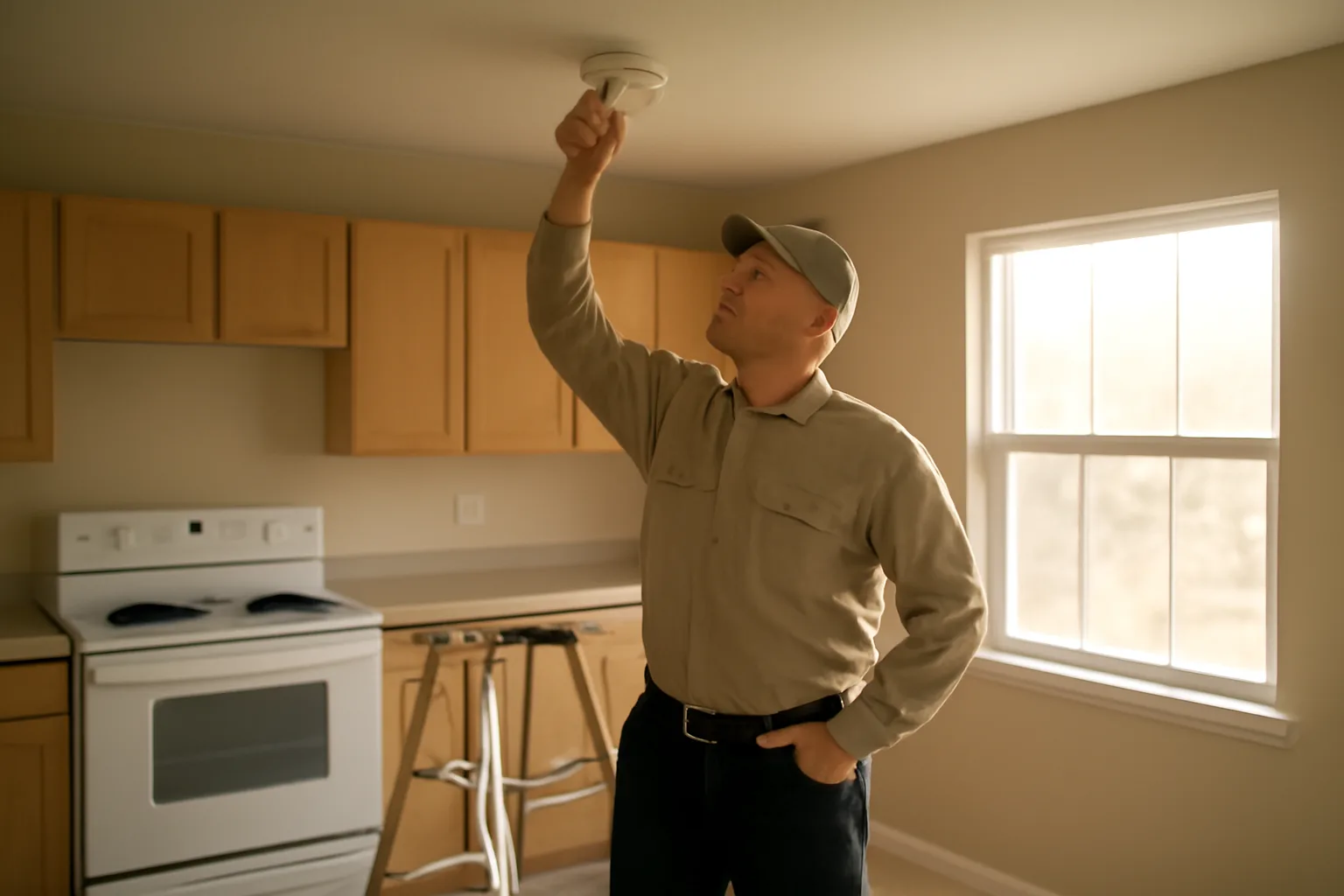
During a licensing or code inspection, the inspector typically checks life-safety items: smoke and carbon monoxide detectors, secondary egress from bedrooms, electrical safety (exposed wiring, proper outlet grounding), functioning heat, structural soundness of stairs and railings, and the absence of active pest infestations. Many jurisdictions also check for lead-based paint hazards in units built before 1978 as part of licensing. What inspectors are generally not there to assess is your decorating choices, personal belongings if a tenant is already in place, or cosmetic wear that doesn't rise to a health or safety issue. A licensing inspection is narrower than a full home inspection; it's checking against a specific code checklist, not evaluating the property's overall condition or market value. If a tenant is in place when the licensing inspection happens, the landlord usually still has to give the tenant advance notice of entry under state law, the same 24-to-48-hour standard mentioned above, even though the inspection itself is government-mandated. Two notice obligations can stack: the county's inspection scheduling process and the state's tenant entry notice law. If you want a structured way to walk your own unit before the county inspector arrives, using a checklist built around the common failure points (detectors, egress, electrical, pest, lead paint where applicable) saves you a failed inspection and a second scheduling fee in most jurisdictions. This is exactly the kind of prep work our $79 City Rental License & Inspection Prep Packet is built around: a jurisdiction-agnostic checklist and document organizer you fill in with your city's specific requirements, not a substitute for confirming your local office's actual rules.
What can a landlord not do in Ohio?
Ohio's landlord-tenant law, codified mainly in Ohio Revised Code Chapter 5321, restricts several landlord actions. A landlord cannot shut off utilities, change locks, or remove a tenant's belongings to force them out; Ohio law requires landlords to use the formal eviction process (forcible entry and detainer action) rather than self-help remedies [6]. This matters directly for Montgomery County, Ohio landlords, since the county sits under Ohio's statewide landlord-tenant code even though individual cities like Dayton run their own rental registration programs on top of it. Ohio Revised Code 5321.04 also requires landlords to keep the premises in a fit and habitable condition, comply with building and housing codes, and make repairs necessary to keep the unit safe [7]. A landlord who ignores repair requests and lets code violations pile up isn't just risking a rental license problem; ORC 5321.07 gives tenants a path to escrow rent or pursue other remedies when a landlord fails to fulfill these habitability duties after proper notice. Security deposit handling is another common trip-up. Ohio Revised Code 5321.16 requires landlords to return the deposit, minus itemized deductions, within 30 days of the tenant vacating, and allows a tenant to recover damages plus attorney's fees if the landlord acts in bad faith . None of this is specific to rental licensing, but it's the backdrop every Montgomery County, Ohio landlord operates under regardless of whether their specific city requires a separate registration or inspection.
What happens if I skip the rental license application or let it lapse?
Operating an unlicensed rental unit in a mandatory-licensing jurisdiction typically exposes you to fines, and in some cases the county or city can bar you from collecting rent or evicting a tenant until you're licensed. Montgomery County, Maryland's code enforcement process allows civil penalties for renting without a required license, and unlicensed operation can also complicate a landlord's ability to pursue eviction for nonpayment, since some jurisdictions treat licensing as a defense a tenant can raise in court [1]. Fines vary widely by jurisdiction and change over time, so don't rely on any specific number you find online, including here, without confirming current amounts with your rental licensing office. What's consistent across most mandatory-licensing cities is the pattern: first violation gets a notice and a cure period, continued noncompliance escalates to a civil fine, and repeated or willful noncompliance can result in higher penalties or a hold on renewing other licenses you own in the same jurisdiction. If you already got a violation notice, the fastest path out is usually to contact the licensing office directly, ask what specifically triggered the notice, and get a clear list of what's needed to cure it. Most offices have a cure period built in before penalties escalate, and most inspectors would rather see a landlord fix real problems than collect a fine.
How do license fees and inspection cycles typically compare across jurisdictions?
| County-run program (e.g., Montgomery County, MD) | Multi-year license | Tied to license renewal, sometimes complaint-based between cycles | Per-unit or per-property fee set by county code [1] | |
|---|---|---|---|---|
| City-run program in a state without county licensing (e.g., Dayton, OH) | Annual or biennial registration | Varies; some cities inspect every unit, others inspect on complaint or turnover | Per-unit or flat property fee set by city ordinance [1] | |
| No mandatory program | N/A | Complaint-driven code enforcement only | N/A | The biggest planning mistake landlords make is assuming their fee and cycle from a previous city or a general internet search will apply in a new jurisdiction. It won't. Every fee schedule and inspection cadence is set locally, and many jurisdictions update fees during annual budget cycles. |
There's no single national fee or cycle for rental licensing, and even within one state, cities and counties set their own numbers. The table below shows the general shape of what to expect, not universal figures. Always confirm the current fee and cycle with your specific city or county rental licensing office before budgeting. | Jurisdiction type | Typical license term | Inspection frequency | Fee structure |
Frequently asked questions
How do I find my Montgomery County rental license application?
Search for your specific Montgomery County's housing or code enforcement department (Maryland's Montgomery County uses DHCA; other states' Montgomery Counties may route through a city department instead). Call or check the office's official page for the current application form, fee schedule, and inspection checklist rather than relying on a third-party site's numbers, since fees and forms change.
How much does a Montgomery County rental license cost?
It depends entirely on which Montgomery County and which program year you're in; fees are set by local code and change periodically. Confirm the current fee directly with your city or county rental licensing office before budgeting, since publishing a fixed number here would likely be out of date by the time you read it.
How to become a landlord if my city requires rental licensing?
Confirm your local licensing requirement first, then get the unit inspection-ready (working detectors, safe egress, no active code violations) before you apply. Submit the application and fee, pass the required inspection, then start marketing the unit. Skipping the license and renting first is how most new landlords end up with a violation notice.
Who is responsible for the rental property walk-through inspection in California?
The landlord or their agent is responsible for conducting it. California Civil Code Section 1950.5 requires landlords who plan to deduct from a security deposit to offer an initial move-out inspection and give the tenant at least 48 hours' written notice before it happens.
What is landlording?
Landlording is the ongoing work of owning and managing rental property: collecting rent, keeping the unit habitable, handling repairs and deposits, and following state and local landlord-tenant law, including any mandatory rental licensing or inspection program in your city or county.
What is a landlord, legally?
A landlord is the party who leases real property to a tenant in exchange for rent and who holds the legal duties to maintain habitability, handle the security deposit properly, and follow state and local landlord-tenant statutes. Rental licenses are typically issued to whoever holds this legal ownership or landlord role.
What rights do tenants have without a lease?
Tenants without a written lease generally still have a right to habitable housing, protection from unlawful entry, and advance notice before eviction or a rent increase, treated as a month-to-month tenancy under state law. A missing lease doesn't remove a landlord's rental licensing obligation either.
Why do landlords require renters insurance?
Mainly to shift liability for the tenant's belongings and certain injury claims away from the landlord's own property policy, which usually doesn't cover a tenant's personal property. It's a lease term decision, not a rental licensing requirement, and enforceability rules vary by state.
How much notice does a landlord have to give before entering a unit?
Many states require 24 to 48 hours' advance notice for non-emergency entry; California requires at least 24 hours under Civil Code Section 1954. Exact requirements vary by state, so confirm your state's specific statute before scheduling entry or an inspection.
What can a landlord look at during a rental inspection?
Licensing inspectors generally check life-safety items: smoke and carbon monoxide detectors, secondary egress from bedrooms, electrical safety, working heat, and structural soundness, plus lead paint hazards in pre-1978 housing where applicable. They're not there to assess decor or normal cosmetic wear.
What can a landlord not do in Ohio?
Under Ohio Revised Code Chapter 5321, a landlord cannot shut off utilities, change locks, or remove belongings to force a tenant out; Ohio requires a formal eviction process instead. Landlords also must keep the unit habitable and return security deposits within 30 days of move-out under ORC 5321.16.
What happens if I rent out a unit without the required license?
You risk civil fines, and in some jurisdictions you may be barred from evicting for nonpayment or collecting rent until you're licensed. Penalty structures vary widely by city and county, so confirm current consequences with your local rental licensing office rather than assuming a fixed fine amount.
Does Montgomery County, Maryland require a rental license for a single room rented in my own home?
Many jurisdictions with mandatory rental licensing, including Montgomery County, Maryland, extend licensing requirements to owner-occupied units renting even a single room, though exact thresholds and exemptions are set by county code and can change. Confirm with DHCA whether your specific arrangement qualifies for an exemption before assuming you're exempt.
Sources
- Montgomery County, Maryland Code, Chapter 29 (Landlord-Tenant Relations): Montgomery County, Maryland requires rental facility licensing and inspection under county code Chapter 29, administered by DHCA
- California Civil Code Section 1950.5: California landlords must offer an initial move-out inspection and give at least 48 hours' written notice before it
- California Civil Code Section 1954: California requires at least 24 hours' written notice before non-emergency landlord entry
- Maryland Real Property Code, Landlord-Tenant provisions: Maryland law sets notice requirements for terminating periodic tenancies
- Ohio Revised Code Section 5321.03: Ohio law prohibits landlord self-help eviction tactics like utility shutoff or lockouts and requires formal eviction process
- Ohio Revised Code Section 5321.04: Ohio landlords must maintain premises in a fit and habitable condition and comply with housing codes
- Ohio Revised Code Section 5321.16: Ohio landlords must return security deposits within 30 days of tenant move-out, with damages available for bad-faith retention