Last updated 2026-07-26
TL;DR
A complete rental checklist covers legal setup (LLC, insurance, licensing), unit prep (safety systems, inspections), and tenant-facing steps (notice periods, lease terms, renters insurance requirements). Rules vary hard by state and city, so treat this as your master framework, then confirm local specifics with your city rental licensing office before you list a unit.
How do you become a landlord, step by step?
Becoming a landlord is mostly paperwork and risk management, not some special license you earn once. You need a property, a legal structure that protects your other assets, insurance that actually covers rental activity, and a system for screening tenants and handling money. Most people skip steps and pay for it later with a lawsuit or a fine. Start with entity structure. Many landlords hold rental property in an LLC to separate personal assets from rental liability, though state rules on LLC formation, fees, and annual reports vary widely. A single-member LLC costs anywhere from about $50 to $500 to form depending on the state, plus ongoing annual fees in some states (California charges an $800 minimum annual franchise tax on LLCs, for example) [1]. Next, get landlord-specific insurance, not a standard homeowners policy. A dwelling fire policy (DP-3 is the common broad form) covers the structure, liability, and lost rental income if the unit becomes uninhabitable after a covered loss. Then check whether your city requires rental registration or a rental license before you can legally rent the unit out. This is the step landlords miss most often, because it's not intuitive that a house you own outright needs a permit to rent. Cities that run mandatory rental licensing programs (think Minneapolis, Baltimore, Sacramento, and hundreds of others) usually require registration before occupancy, not after you get caught. Confirm with your city rental licensing office for the exact program name, fee, and deadline in your jurisdiction. Finally, build your screening and lease process: application, credit and background check, income verification, and a written lease. Verbal agreements create real legal tenancies in most states, but they're a mess to enforce. Put it in writing every time.
What is landlording, and what is a landlord?
Landlording is the ongoing work of owning and operating rental property: collecting rent, maintaining the unit, following state and local law, and managing the landlord-tenant relationship from move-in to move-out. It's a business function, even if you own just one duplex. A landlord, legally, is the person or entity that owns a rental property and leases it to a tenant in exchange for rent. Most state landlord-tenant statutes define the term this way and attach specific duties to it: maintaining habitability, handling security deposits within statutory timelines, and giving proper notice before entry or termination. For example, California's Civil Code defines the landlord's habitability duties under Civil Code Section 1941, requiring the premises be maintained in a condition fit for occupation [2]. The legal definition matters because it triggers obligations regardless of whether you think of yourself as a "real" landlord or just someone renting out a spare property. Once you take rent from a tenant in exchange for occupancy, you're subject to your state's landlord-tenant code, your city's rental housing ordinance if one exists, and fair housing law. There's no small-landlord exemption from fair housing law at the federal level for most rentals; the Fair Housing Act's owner-occupied exemption is narrow and applies mainly to owner-occupied buildings with four or fewer units, and even then discriminatory advertising is still barred [3].
What rights do tenants have without a lease?
Tenants without a written lease still have real legal rights. Once someone pays rent and occupies a unit with the owner's consent, most states treat that as a periodic tenancy (usually month-to-month), governed by the same habitability, privacy, and eviction-process rules that apply to written leases. A verbal or implied lease doesn't waive tenant protections. The tenant is still entitled to a habitable unit, protection from illegal lockouts or utility shutoffs, and proper notice before the landlord can end the tenancy or raise rent (notice periods for month-to-month tenancies commonly run 30 days, sometimes more for longer tenancies or in jurisdictions with just-cause eviction rules). What a tenant loses without a written lease is clarity and evidence. Terms like who pays for what utility, whether pets are allowed, or what the exact rent due date is become he-said-she-said arguments. That cuts against landlords in disputes just as often as tenants, since courts often read ambiguity against whoever drafted (or failed to draft) the agreement. If you're currently renting to someone without a lease, that's a fixable problem, not a legal void. Most states let you convert an oral or holdover tenancy to a written lease at any renewal point; you just can't use the new lease to strip rights the tenant already has under state law without proper notice. For a broader look at what protections apply regardless of lease status, see tenant rights and tenants rights.
How do you actually be a good landlord?
Being a decent landlord comes down to four habits: respond fast, document everything, follow the law even when it's inconvenient, and treat the property like a business asset, not a hobby. Respond fast on maintenance. Most state habitability statutes require repairs within a reasonable time after notice, and "reasonable" gets litigated constantly. California courts and statute treat 30 days as a rough outer bound for non-emergency repairs before a tenant can pursue remedies like repair-and-deduct, though emergencies (no heat, no water, no working locks) need same-day or next-day response [2]. Document everything. Photos at move-in and move-out, written repair requests and your response dates, copies of every notice you serve. This is the single highest-leverage habit for landlords because it's what protects you in a security deposit dispute or an eviction hearing. States that require itemized security deposit accountings (most do) put the burden on the landlord to prove damage beyond normal wear and tear, and photos are your proof. Follow notice and access rules even when you own the place outright. Tenants have a legal right to quiet enjoyment; barging in because it's your building is one of the fastest ways to end up in small claims court or facing a statutory penalty. Run it like a business. Track income and expenses separately, keep a maintenance log per unit, and budget for vacancy and capital repairs (roof, HVAC, water heater) instead of treating rent as pure profit. Landlords who skip this step are the ones blindsided when a furnace dies in January.
Who is responsible for a rental property walk-through inspection in California?
In California, the landlord is responsible for conducting the initial move-in inspection if the tenant requests one, and both parties typically do a move-out walk-through together, though the tenant can decline to participate. California Civil Code Section 1950.5 governs this directly. It gives tenants the right to request an initial inspection before move-out, done "no earlier than two weeks before the termination of the tenancy," so the landlord can identify anything the tenant could fix before the final deposit accounting [4]. The landlord must give the tenant reasonable notice of the date and time and, if requested, a written itemized statement of what needs fixing so the tenant has a chance to cure it before move-out. At move-in, there's no statutory requirement for a joint inspection in California, but it's the single best deposit-protection practice available to landlords and tenants alike. Some cities layer their own rental inspection programs on top of this: several California cities with proactive rental inspection ordinances (Sacramento, Los Angeles's Systematic Code Enforcement Program, and others) require periodic habitability inspections tied to business license or rental registration, separate from the move-in/move-out walk-through. Confirm with your city rental licensing office whether a program applies to your unit and how often inspections repeat. After move-out, Civil Code Section 1950.5 requires the landlord to return the deposit or provide an itemized statement of deductions within 21 days [4]. Miss that window or fail to itemize properly, and California law allows the tenant to recover up to twice the amount of the deposit as a penalty for bad faith retention, on top of the deposit itself [4].
What can a landlord look at during an inspection?
| Safety systems | Smoke/CO detectors, fire extinguishers, egress windows | N/A, always checked | |
|---|---|---|---|
| Structural | Walls, ceilings, flooring, foundation cracks | N/A | |
| Systems | Plumbing, electrical panel, HVAC function | Personal appliances not owned by landlord | |
| Pest/mold | Visible infestation, water damage, mold growth | N/A | |
| Personal property | Nothing | Closets, drawers, personal belongings, boxes | If you're building your own move-in packet, a written checklist protects you and the tenant equally, since it creates a shared record of condition before anyone's memory gets fuzzy six months later. |
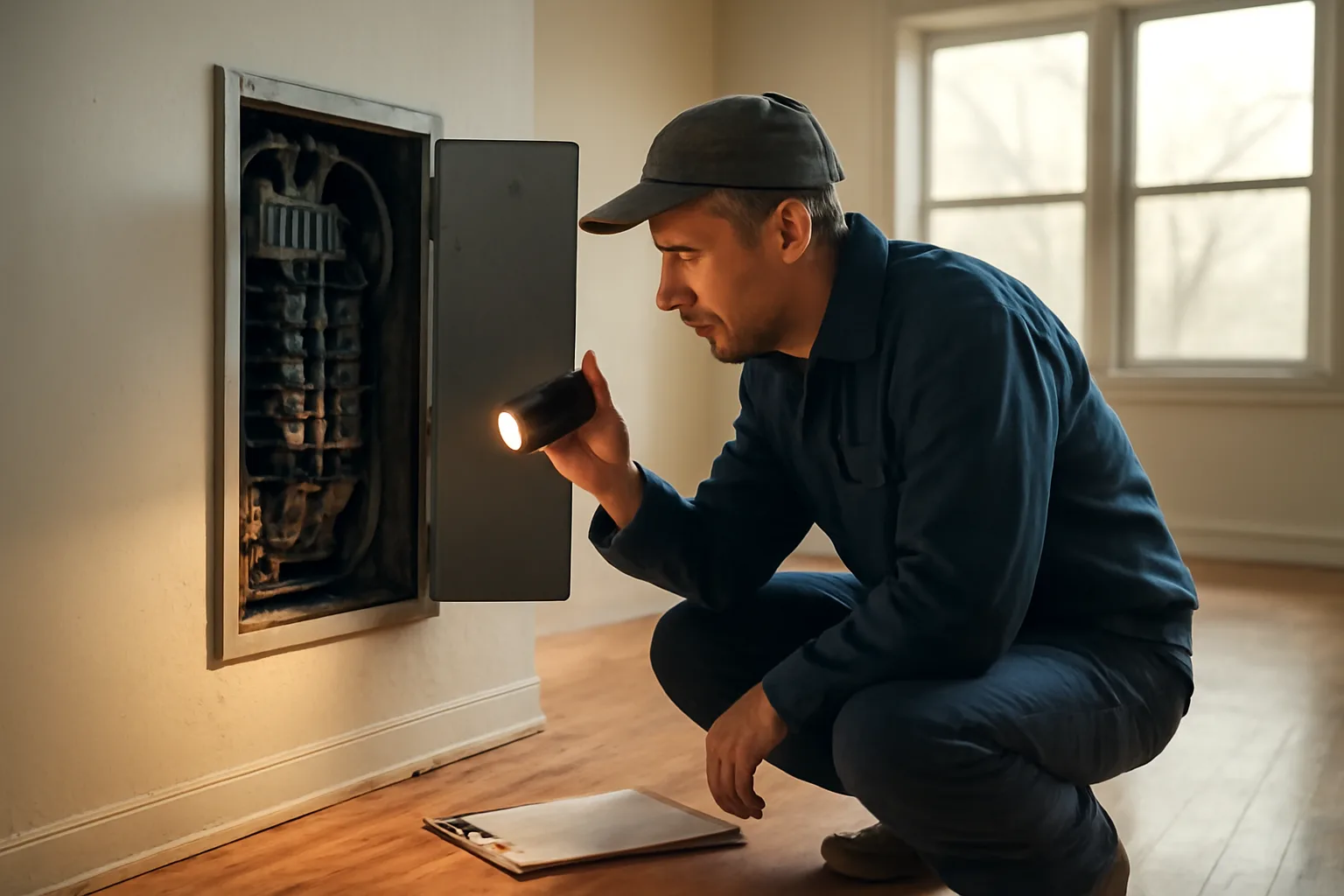
During a habitability or move-in/move-out inspection, a landlord can look at anything related to the physical condition of the unit and its systems: smoke and carbon monoxide detectors, plumbing, electrical outlets and panels, HVAC, windows and doors, flooring, walls and ceilings for mold or leaks, and pest evidence. A landlord cannot use a routine inspection as a pretext to search personal belongings, go through drawers, or inspect for reasons unrelated to maintenance and safety. Most states require landlords to give advance notice before entering an occupied unit for any inspection, typically 24 to 48 hours, except in emergencies. California requires "reasonable notice," which the Civil Code presumes to be 24 hours absent evidence otherwise, under Civil Code Section 1954 [5]. Ohio's landlord entry statute similarly requires reasonable notice, generally interpreted as 24 hours, and limits entry to reasonable times of day [6]. What's fair game during a city-mandated rental inspection (as opposed to your own move-in/move-out check) is usually narrower and defined by the local code: working smoke detectors, secure locks, no exposed wiring, functioning heat, no active leaks, proper egress from bedrooms, and no obvious code violations like unpermitted electrical work. Inspectors in most municipal programs are checking against a written checklist tied to the local housing or property maintenance code, often adopted from the International Property Maintenance Code, and they generally won't open closets or drawers unless there's a visible hazard. A landlord table of what's typically covered: | Inspection area | Typically checked | Typically off-limits |
Why do landlords require renters insurance?
Landlords require renters insurance mainly to shift liability for the tenant's personal property and personal liability away from the landlord's own policy. A standard landlord dwelling policy covers the building and the landlord's liability, but it does not cover a tenant's furniture, electronics, or clothing if there's a fire, burst pipe, or theft, and it often doesn't cover claims arising from the tenant's own negligence (like a candle fire that damages a neighboring unit). Renters insurance is cheap relative to what it covers. National average cost runs around $15 to $20 a month for a standard policy, according to industry rate surveys, which is a small ask compared to the liability exposure it removes from the landlord [7]. Requiring it also protects the landlord's bottom line if a tenant's negligence causes damage. If a tenant leaves a stove on and starts a fire that spreads to two other units, the landlord's policy pays out, but the insurer will often subrogate (go after the at-fault tenant) to recover costs, and a tenant with no insurance and no assets means the landlord absorbs the loss through higher future premiums or an uncovered gap. Most states allow landlords to require renters insurance as a lease condition, as long as it's applied consistently across tenants and disclosed before signing (a fair housing concern if the requirement is enforced selectively). Some cities and some subsidized housing programs cap what a landlord can require or prohibit it outright for voucher holders, so check local rules before adding it as a blanket lease term.
How much notice does a landlord have to give?
Notice requirements split into three categories: notice to enter, notice to terminate a tenancy, and notice to raise rent. All three vary by state, and some cities layer stricter local rules on top of state law. For entry, most states land in the 24 to 48 hour range for non-emergency access. California presumes 24 hours reasonable under Civil Code Section 1954 [5]. Florida requires at least 12 hours' notice for entry to make repairs under Florida Statutes Section 83.53, one of the shorter windows nationally [8]. For ending a month-to-month tenancy, 30 days' notice is the most common baseline, though it stretches to 60 days in some states once a tenancy has lasted a year or more (California requires 60 days' notice to terminate a tenancy of one year or longer, per Civil Code Section 1946.1) [9]. Cities with just-cause eviction ordinances (Los Angeles, San Francisco, Oakland, and others) restrict no-fault termination entirely for many tenancies, regardless of notice length, so a 30 or 60 day notice alone won't be enough without a qualifying reason. For rent increases, notice periods often track termination notice periods: 30 days for smaller increases in many states, jumping to 60 or 90 days for larger increases in states with rent stabilization overlays (California's statewide rent cap under the Tenant Protection Act, Civil Code Section 1947.12, requires 90 days' notice for any rent increase that, combined with other increases in the prior 12 months, exceeds the statutory cap, and generally requires that increases not exceed 5% plus local CPI or 10%, whichever is lower) [10]. The short version: don't assume 30 days covers you everywhere. Pull your specific state statute and your city ordinance before serving any notice, because getting the notice period wrong can invalidate the whole termination or increase.
What can't a landlord do in Ohio?
Ohio landlords can't shut off utilities, change locks, or remove a tenant's belongings to force them out, a practice generally called self-help eviction, and it's illegal everywhere in Ohio regardless of how much rent is owed. Ohio Revised Code Section 5321.15 specifically prohibits landlords from using "lockout, utility shutoff, or exclusion" tactics instead of going through the formal eviction (forcible entry and detainer) process in court [11]. Ohio landlords also can't enter a tenant's unit without reasonable notice except in an emergency. Ohio Revised Code Section 5321.04 requires landlords to give "reasonable notice" of intent to enter and to enter "only at reasonable times," generally interpreted by Ohio courts as 24 hours absent an emergency [6]. Ohio landlords can't retaliate against a tenant for exercising legal rights, like reporting a code violation or joining a tenant union. Ohio Revised Code Section 5321.02 bars retaliatory conduct including raising rent, decreasing services, or threatening eviction within a set period after a tenant's protected complaint [12]. Ohio landlords also can't ignore their own maintenance duties under Ohio Revised Code Section 5321.04, which requires landlords to keep the unit in a fit and habitable condition, comply with building and housing codes, and keep common areas safe [6]. A tenant facing a habitability failure in Ohio generally has to give written notice and a reasonable time to fix it before pursuing remedies like rent escrow through the local municipal or county court. Finally, Ohio law caps what a landlord can do with a security deposit. Ohio Revised Code Section 5321.16 requires landlords to return the deposit (or an itemized list of deductions) within 30 days of termination, and if a landlord wrongfully withholds a deposit, the tenant can recover damages plus reasonable attorney fees [13].
What belongs on a rental license and inspection prep checklist?
If your city requires a rental license, registration, or inspection before you can legally rent a unit, the checklist below covers what most programs actually ask for. Exact fees, forms, and inspection cycles differ by city, so treat this as your baseline and confirm specifics with your city rental licensing office. Registration and licensing:
- Business license or rental registration application, filed with the city or county
- Proof of property ownership (deed or tax record)
- Owner and, if applicable, local property manager contact information (many cities require a local contact if the owner lives out of the area)
- Registration or license fee, paid per unit or per property depending on the city
- Renewal schedule, often annual or biennial Safety and habitability items inspectors commonly check:
- Working smoke detectors in every bedroom and on every level
- Carbon monoxide detectors where gas appliances or attached garages are present
- Secure, functioning locks on all exterior doors
- Two means of egress where required by local fire code
- No exposed or unsafe electrical wiring
- Functioning heat source rated for the climate zone
- No active plumbing leaks or standing water
- Handrails on stairs with more than a few steps
- Proper address numbering visible from the street Documentation to have ready:
- Current lease template
- Move-in and move-out inspection forms with photos
- Security deposit itemization records
- Proof of landlord insurance
- Any required lead paint disclosure for pre-1978 housing (federal requirement under 42 U.S.C. Section 4852d, regardless of city program) [14] This is exactly the gap where a lot of small landlords lose time and money: they own one or two units, don't have a property management company handling compliance, and end up guessing what their city wants until an inspector shows up with a violation notice. If you want a structured starting point instead of assembling this from scratch, the $79 one-time City Rental License & Inspection Prep Packet walks through registration paperwork and inspection prep by city program type.
What happens if you skip registration or fail an inspection?
Skipping required rental registration or licensing usually triggers a fine, and in many cities it also blocks you from collecting rent or evicting a tenant for nonpayment until you register. That second consequence surprises a lot of landlords more than the fine does. Fines for operating without a required rental license vary widely by city, often ranging from roughly $100 to $1,000 or more per violation, with some cities charging daily accruing penalties until the landlord registers. Because these figures change by ordinance and get updated in city fee schedules, don't rely on a number found online; confirm the current fine schedule with your city rental licensing office. Failing an inspection typically doesn't mean an immediate fine. Most municipal rental inspection programs give the landlord a written list of violations and a reinspection window, commonly 30 to 60 days, to fix the issues before penalties apply. Repeat failures or unaddressed life-safety issues (no smoke detectors, no heat, unsafe electrical) tend to escalate faster and can trigger a formal notice of violation, a hearing, or in serious cases a rental license suspension that bars you from renting the unit until it's corrected. The cheapest way to avoid all of this is the boring way: register on time, walk the unit yourself against your city's published checklist before the inspector does, and fix anything you can identify in advance. A pre-inspection self-check catches most of what fails formal inspections, since municipal checklists are public documents in most cities and don't change dramatically year to year.
Frequently asked questions
How do you become a landlord if you've never rented out property before?
Get a lease template, landlord insurance (a DP-3 dwelling policy is standard), and check whether your city requires rental registration or licensing before you rent the unit out. Then set up a tenant screening process (application, credit/background check) and a system for tracking rent, repairs, and deposits. Confirm your city's specific licensing steps with the local rental licensing office before advertising the unit.
Who is responsible for a rental property walk-through inspection in California?
The landlord conducts the initial move-out inspection if the tenant requests it, under California Civil Code Section 1950.5, which allows the request no earlier than two weeks before the tenancy ends. There's no statutory requirement for a joint move-in inspection, but doing one protects both parties in a later deposit dispute.
What is landlording?
Landlording is the ongoing work of owning and operating rental property: collecting rent, maintaining habitability, following landlord-tenant law, and managing tenant relationships from move-in through move-out. It's a business function with legal duties attached, whether you own one unit or fifty.
What is a landlord, legally?
A landlord is the person or entity that owns rental property and leases it to a tenant for rent. State landlord-tenant statutes attach specific duties to this role, including maintaining habitability (California Civil Code Section 1941) and following notice and security deposit rules.
What rights do tenants have without a lease?
Tenants without a written lease still get habitability protections, protection from illegal lockouts, and required notice before termination or a rent increase, since paying rent and occupying with consent typically creates a month-to-month tenancy under state law. They lose the clarity a written lease provides, not the underlying legal protections.
How do you be a good landlord day to day?
Respond to repair requests fast (same-day for emergencies like no heat or water), document every inspection and notice with photos and dates, follow entry and notice rules even on property you own outright, and run the rental like a business with separate books and a maintenance log.
What can a landlord look at during an inspection?
A landlord can inspect smoke and CO detectors, plumbing, electrical, HVAC, structural condition, and pest or mold evidence. A landlord cannot search personal belongings, drawers, or closets under the pretext of a routine inspection; that's outside the legal scope of a maintenance check.
Why do landlords require renters insurance?
Renters insurance covers the tenant's personal property and personal liability, which the landlord's own dwelling policy doesn't cover. It also reduces the landlord's financial exposure if tenant negligence (a stove fire, an overflowing tub) causes damage, since the tenant's insurer, not the landlord, absorbs part of the loss.
How much notice does a landlord have to give before entering a unit?
Most states require 24 to 48 hours' notice for non-emergency entry. California presumes 24 hours reasonable under Civil Code Section 1954; Florida requires at least 12 hours for repair-related entry under Florida Statutes Section 83.53. Emergencies don't require advance notice in any state.
How much notice does a landlord have to give to end a month-to-month tenancy?
30 days is the common baseline, extending to 60 days in some states for tenancies over a year (California requires 60 days under Civil Code Section 1946.1). Cities with just-cause eviction ordinances may block no-fault termination entirely, so notice length alone isn't always enough.
What can't a landlord do in Ohio?
Ohio landlords can't lock out tenants, shut off utilities, or remove belongings to force a move-out; that's barred under Ohio Revised Code Section 5321.15. They also can't enter without reasonable notice, retaliate against tenants for complaints, or hold a security deposit past 30 days without an itemized statement (Ohio Revised Code Section 5321.16).
What happens if a landlord fails a rental inspection?
Most cities issue a written violation list and a reinspection window, often 30 to 60 days, to fix issues before penalties apply. Serious life-safety violations (no smoke detectors, no heat) tend to escalate faster and can lead to a formal hearing or license suspension until corrected.
Do landlords need a business license to rent out a single unit?
In many mandatory rental-licensing cities, yes, even a single-unit landlord needs to register or license the property before renting it out. Requirements and fees vary by city; confirm with your local rental licensing office whether your one unit falls under the ordinance.
Sources
- California Franchise Tax Board, LLC Fee and Tax page: California charges an $800 minimum annual franchise tax on LLCs
- California Legislative Information, Civil Code Section 1941: California landlord duty to maintain premises fit for occupation
- HUD, Fair Housing Act owner-occupied exemption: Fair Housing Act owner-occupied exemption is narrow and applies to buildings with four or fewer units
- California Legislative Information, Civil Code Section 1950.5: California security deposit and initial inspection rules, 21-day return, and bad-faith penalty
- California Legislative Information, Civil Code Section 1954: California landlord entry notice presumed reasonable at 24 hours
- Ohio Laws, Revised Code Section 5321.04: Ohio landlord entry notice requirement and duty to maintain habitable premises
- Insurance Information Institute, Facts + Statistics: Renters insurance: Average renters insurance costs roughly $15 to $20 a month
- Florida Legislature, Florida Statutes Section 83.53: Florida requires at least 12 hours notice for landlord entry to make repairs
- California Legislative Information, Civil Code Section 1946.1: California requires 60 days notice to terminate a tenancy of one year or longer
- California Legislative Information, Civil Code Section 1947.12: California statewide rent cap requires 90 days notice for increases exceeding the statutory threshold
- Ohio Laws, Revised Code Section 5321.15: Ohio bars self-help eviction tactics like lockouts and utility shutoffs
- Ohio Laws, Revised Code Section 5321.02: Ohio bars retaliatory conduct against tenants who exercise legal rights
- Ohio Laws, Revised Code Section 5321.16: Ohio requires security deposit return or itemized statement within 30 days, with damages and fees for wrongful withholding
- U.S. Code, 42 U.S.C. Section 4852d: Federal lead paint disclosure requirement for pre-1978 housing