Last updated 2026-07-26
TL;DR
A rental inspection checklist covers smoke/CO alarms, egress windows, water heater safety, electrical panels, pest signs, and structural issues, matched to your city's code. Most cities require 24 to 48 hours notice before entry, and the same checklist works for move-in walkthroughs, annual license inspections, and pre-listing prep. Confirm exact notice periods and inspection items with your city rental licensing office.
What should a rental inspection checklist actually cover?
| Life safety | Smoke alarms, CO alarms, fire extinguisher, exit door locks, window egress in bedrooms | |
|---|---|---|
| Structural | Stair rails, foundation, roof, gutters, porch/deck, exterior siding | |
| Mechanical | Water heater relief valve, HVAC filter, electrical panel, GFCI outlets | |
| Pest/moisture | Droppings, standing water, mold, pipe gaps | |
| City-specific | Confirm with your city rental licensing office | That last row matters more than people expect. Cities that run mandatory rental inspection programs each publish their own checklist, and they don't match each other. Some check for exterior address numbers visible from the street. Others require a specific number of electrical outlets per room based on square footage. Don't assume your neighbor city's list applies to you. |
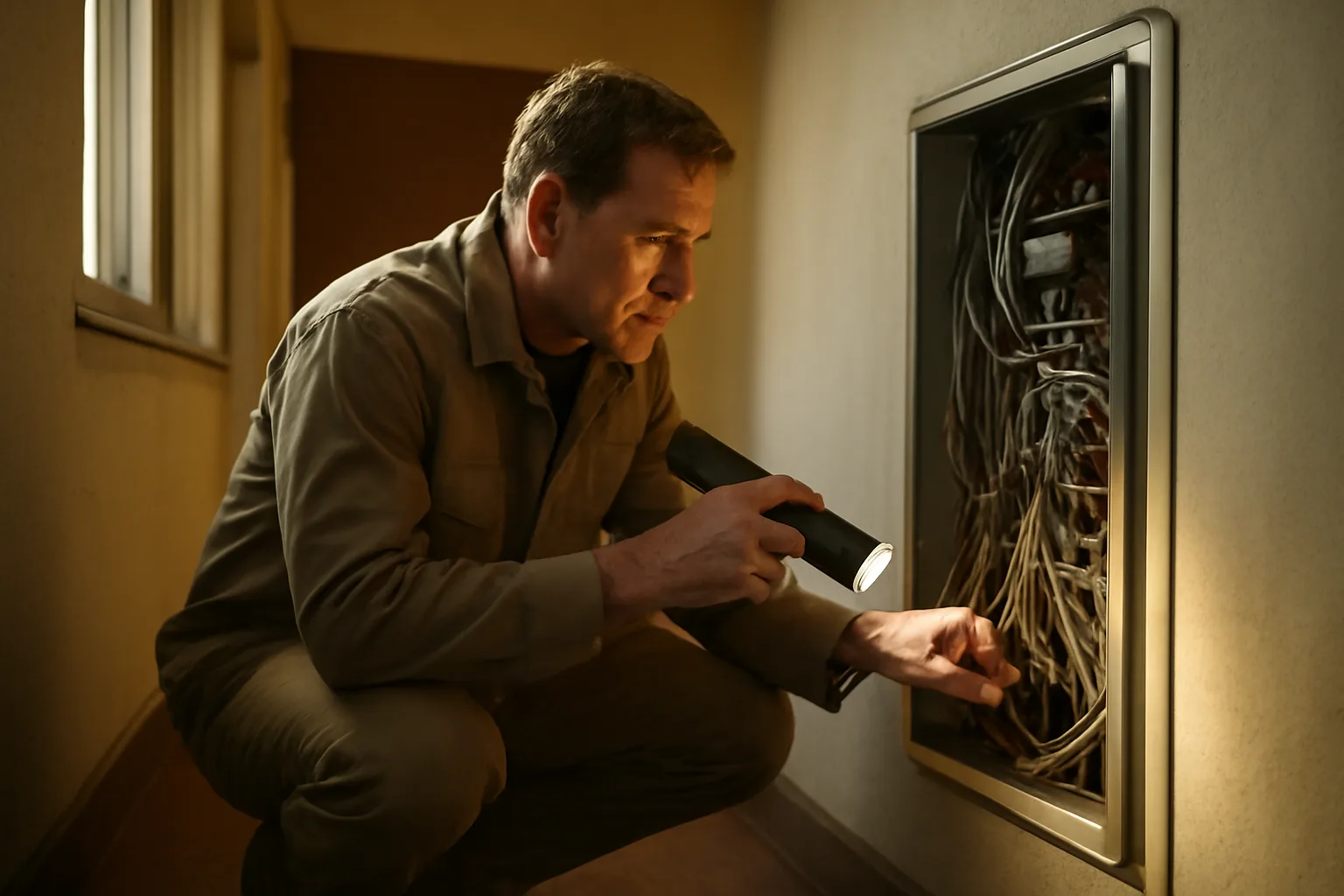
A working checklist covers five zones: life safety systems, structural condition, mechanical and electrical systems, pest and moisture evidence, and code-specific items your city adds on top of the basics. Skip any of these and you're guessing at what an inspector will flag. Life safety comes first because it's what most municipal inspection ordinances actually enforce. That means smoke alarms in every bedroom and on every level, carbon monoxide alarms near sleeping areas if the unit has fuel-burning appliances or an attached garage, and working locks on all exterior doors. The National Fire Protection Association recommends smoke alarms inside every bedroom, outside each sleeping area, and on every level of the home, including the basement [1]. Structural items include stair railings, window screens, foundation cracks, roof leaks, and porch or deck stability. Mechanical items mean the water heater's temperature-pressure relief valve, furnace filters, electrical panel labeling, and GFCI outlets in kitchens and bathrooms. Pest and moisture checks cover visible droppings, standing water, mold on walls or ceilings, and gaps around pipes where rodents get in. Here's a compact version you can adapt: | Zone | Check items |
How do I become a landlord in the first place?
Becoming a landlord legally means more than buying a property and finding a tenant. It usually means registering the rental with your city or county, getting a business license or rental permit if your jurisdiction requires one, and passing an initial inspection before you can legally lease the unit. Start with your city clerk's office or building department to find out if your address falls inside a rental registration or licensing zone. Many mid-size and large cities require this; plenty of small towns and rural counties don't. If your city does require it, you'll typically fill out an application, pay a fee (commonly somewhere in the $50 to $300 per unit range depending on the city, though this varies widely), and schedule an inspection before or shortly after your first tenant moves in. You'll also need landlord-specific insurance (a standard homeowners policy usually excludes rental use), a plan for handling security deposits according to your state's rules, and a written lease. Some states cap security deposits at one or two months' rent and set deadlines for returning them after move-out, so check your state statute before you collect a dollar. Becoming a landlord is part paperwork, part risk management. The paperwork gets you legal. The risk management (screening tenants, documenting condition, keeping the property maintained) keeps you out of court.
What does 'landlording' actually mean day to day?
Landlording is the ongoing work of owning and managing a rental property: collecting rent, maintaining the unit, responding to repair requests, handling turnover between tenants, and staying compliant with local housing codes. It's not a one-time setup task, it's an operating job that continues for as long as you own the property. A landlord's day-to-day responsibilities typically include keeping the unit habitable under your state's implied warranty of habitability, responding to maintenance requests within a reasonable timeframe (some states set specific deadlines, like 24 hours for no heat or no water), and giving proper notice before entering the unit. Most landlords who self-manage one to ten units end up doing four things on repeat: fielding maintenance calls, tracking rent payments, handling lease renewals or turnover, and keeping up with whatever their city's rental registration or inspection program requires that year. Miss the inspection renewal and you can end up with a fine or a lapsed license, which some cities treat as operating an unlicensed rental, a separate violation on top of the missed inspection itself.
What is a landlord, legally speaking?
A landlord is the person or entity that owns a rental property and leases it to a tenant in exchange for rent, taking on the legal responsibilities of a lessor under state landlord-tenant law. That includes maintaining the property in habitable condition, respecting the tenant's right to quiet enjoyment, and following the notice and entry rules set by state statute. The landlord-tenant relationship is created by a lease or rental agreement, but it doesn't require a written lease to exist. Verbal agreements and month-to-month arrangements without a signed document still create a landlord-tenant relationship under most state laws, with the same basic obligations attached. What separates a landlord from just being a property owner is the act of renting it out. The moment you accept rent from someone living in your property, you've taken on landlord obligations whether or not you called it that.
What rights do tenants have without a signed lease?
Tenants without a signed lease still have legal rights under state law, typically the same habitability, notice, and eviction protections as tenants with a written lease. An oral agreement to pay rent in exchange for occupying a unit generally creates a month-to-month tenancy under most state landlord-tenant statutes. Without a written lease, the tenancy usually defaults to month-to-month terms, meaning either party can end it with proper notice (commonly 30 days, though some states and cities require more for longer-term tenants). The tenant still has the right to a habitable unit, protection from illegal lockouts or utility shutoffs, and the right to proper notice before the landlord enters. What a tenant without a lease does not automatically get is a guaranteed rent amount or lease term. Absent a written agreement, the landlord can generally raise rent or end the tenancy with the state's standard notice period, subject to any local rent control or just-cause eviction ordinance that might apply. If you're a landlord operating without written leases, that's a bigger risk to you than to the tenant. Document everything you can: text messages, rent receipts, any written communication about repairs. If a dispute lands in court, you want a paper trail.
Who is responsible for a rental property walkthrough inspection in California?
In California, the landlord is generally responsible for conducting move-in and move-out walkthrough inspections, but the tenant has the right to participate. California Civil Code Section 1950.5 gives tenants the right to request an initial inspection before move-out, specifically so they can fix any deficiencies themselves and avoid deposit deductions. The statute states that the landlord must notify the tenant in writing of the right to request this initial inspection, and if the tenant requests it, the landlord must give at least 48 hours' written notice before conducting it, unless the tenant waives that notice [2]. After the inspection, the landlord has to give the tenant an itemized statement of what needs fixing or cleaning to avoid deductions, along with a reasonable chance to address those items before the final move-out inspection. This is separate from any city rental inspection program. A city that requires periodic safety inspections (for things like smoke alarms or code compliance) operates under its own municipal ordinance, and that inspector, not the tenant, walks the property alongside the landlord or a scheduled appointment. Some California cities, including Los Angeles under its Systematic Code Enforcement Program, run their own rental inspection cycles separate from the move-out walkthrough rules in the Civil Code [3]. So in short: for security deposit purposes, the landlord runs the walkthrough but the tenant has a right to be part of it. For municipal code inspections, check with your specific city's housing department, since the process and who's present varies by jurisdiction.
How much notice does a landlord have to give before entering?
Most states require landlords to give tenants advance written notice before entering an occupied rental unit, commonly 24 hours, though the exact number and the situations where notice isn't required vary by state. California requires "reasonable notice," which state law presumes to be 24 hours in most circumstances, per California Civil Code Section 1954 [4]. Other states set different defaults. Some require 24 hours, some require 48, and a handful don't set a specific number at all, just a "reasonable notice" standard left to case law and common sense. Notice requirements also typically list the specific reasons a landlord can enter: to make repairs, to show the unit to prospective tenants or buyers, to conduct an inspection, or in response to a court order. Emergencies are the standard exception. If there's a fire, a burst pipe, or another situation threatening life or property, landlords generally can enter without advance notice under nearly every state's law. For a scheduled rental license inspection, cities often layer their own notice requirement on top of state law, sometimes requiring the landlord to notify the tenant in writing a set number of days before the city inspector arrives. Confirm this timeline with your city rental licensing office, since it's common for the city's notice period to differ from your state's general entry notice rule.
What can a landlord actually look at during an inspection?
A landlord conducting a routine or move-out inspection can look at the general condition and cleanliness of the unit, check that systems and appliances work, and note damage beyond normal wear and tear. What a landlord cannot do is search personal belongings, open closed drawers or containers, or use the inspection as a pretext to harass a tenant. During a legitimate inspection, a landlord can reasonably check: smoke and CO alarm function, HVAC operation, plumbing for leaks, electrical outlets and switches, window and door locks, flooring and wall condition, and appliance function if appliances are provided. A landlord can also look for lease violations that are visible without searching, like unauthorized pets or obvious property damage. What's off-limits: opening a tenant's closed dresser drawers, going through boxes in a closet, or inspecting for the purpose of monitoring the tenant's daily habits rather than the property's condition. Courts in multiple states have found that inspections conducted too frequently or without legitimate purpose can amount to a violation of the tenant's right to quiet enjoyment, even when notice was technically given. The safest approach: stick to a written checklist, focus only on the property and its systems, and never open anything that belongs to the tenant unless you have a specific, documented reason tied to a lease violation or safety issue.
What can't a landlord do in Ohio?
Ohio landlord-tenant law, codified in Ohio Revised Code Chapter 5321, restricts several things landlords cannot legally do to tenants. A landlord cannot shut off utilities, change the locks, or remove a tenant's belongings to force them out, a practice generally called a self-help eviction, which Ohio law does not permit [5]. Ohio Revised Code 5321.04 requires landlords to keep the premises in a fit and habitable condition, comply with building and housing codes, keep common areas safe and clean, and maintain electrical, plumbing, and heating systems in good working order [6]. A landlord who fails to meet these obligations can face a tenant lawsuit, rent escrow action, or other remedies under the statute. Ohio also restricts retaliatory conduct. Under Ohio Revised Code 5321.02, a landlord cannot terminate a tenancy, refuse to renew a lease, or increase rent in retaliation for a tenant reporting a code violation or exercising a legal right [7]. Doing so can expose the landlord to a retaliation defense in an eviction case. On entry, Ohio Revised Code 5321.04 requires landlords to give reasonable notice, generally interpreted as 24 hours, before entering an occupied unit except in emergencies [6]. Entering without proper notice, changing locks without a court order, or removing a tenant's possessions can all expose an Ohio landlord to legal liability, independent of anything happening in a rental license inspection process.
Why do landlords require renters insurance?
Landlords require renters insurance mainly to shift liability for a tenant's personal belongings and personal liability away from the landlord's own policy. A standard landlord or property insurance policy covers the building structure, but it generally does not cover a tenant's furniture, electronics, or other possessions if there's a fire, theft, or water damage. Renters insurance also typically includes liability coverage, which protects the tenant (and indirectly the landlord) if the tenant accidentally causes damage to the unit or injury to a guest. If a tenant's kitchen fire spreads and damages a neighboring unit, a renters insurance policy's liability coverage can help cover that cost instead of it falling entirely on the landlord's policy or out of pocket. Requiring renters insurance is legal in most states as a lease condition, and many landlords set a minimum liability coverage amount, commonly in the $100,000 range, though this varies by landlord and property type. Some landlords also list themselves as an "interested party" on the policy so they're notified if it lapses. From a landlord's standpoint, requiring renters insurance is a low-cost way to reduce exposure to disputes over who pays for a tenant's damaged belongings, and it rarely costs the tenant much. National average renters insurance premiums have generally run in the range of $15 to $30 per month depending on coverage and location, according to insurance industry data, though rates vary by state and provider.
How do I use a checklist for a city rental license inspection specifically?
For a city rental license or registration inspection, start with the checklist your city's housing or building department publishes, then layer your own general safety checklist on top for anything the city's list doesn't mention. City checklists tend to focus narrowly on code violations the inspector is trained to look for. Your own checklist should catch things that don't show up on an inspector's clipboard but still matter, like a slow leak under a sink or a wobbly railing that hasn't failed yet. Before the scheduled inspection date, walk the unit yourself using both lists. Test every smoke and CO alarm. Check that all windows in bedrooms open and close, since egress requirements are one of the most commonly cited violations in rental inspection programs. Look at the water heater for a properly installed temperature-pressure relief valve with a discharge pipe that terminates near the floor. Check GFCI outlets in kitchens, bathrooms, and any outlets within six feet of a water source, since the National Electrical Code has required GFCI protection in these locations for decades . Document what you find and fix before the inspector arrives, not after. Cities that issue notices of violation typically give a reinspection window, commonly 15 to 30 days, but a second inspection often means a second fee, and a missed reinspection deadline can trigger daily fines in some municipalities. Confirm your specific city's reinspection fee and fine schedule with your city rental licensing office, since these figures differ significantly from one city to the next. If you're managing this process for the first time or you own units across more than one city with different rules, a structured packet built around your specific city's checklist saves real time. That's the whole idea behind our $79 one-time City Rental License & Inspection Prep Packet: it organizes the city-specific requirements, notice templates, and pre-inspection checklist so you're not reconstructing the process from scratch every renewal cycle.
How do I actually be a good landlord, more than a compliant one?
Being a good landlord means treating the maintenance and inspection obligations as the floor, not the ceiling. Compliance keeps you out of legal trouble. Good landlording is what keeps good tenants renewing their lease instead of leaving the moment their term is up. Respond to maintenance requests fast, even the small ones. A tenant who reports a dripping faucet and waits three weeks for a response starts wondering what else you'll be slow about. Most state habitability statutes don't set a specific timeline for minor repairs, but tenants remember how quickly you respond regardless of what the law technically requires. Communicate proactively about inspections. If your city requires a periodic rental inspection, tell your tenant well before the legally required notice period, explain what the inspector will be checking, and let them know if they need to be present or if you'll coordinate access. A tenant blindsided by an inspector at the door is a tenant who starts looking for a new place to live. Keep records. Photos of unit condition at move-in, dated maintenance requests and responses, copies of any notices you've sent. If a dispute ever escalates to small claims court or a code enforcement hearing, the landlord with organized records generally comes out ahead of the one relying on memory. For landlords managing more than one property, or juggling licenses across multiple cities with different renewal cycles, the biggest failure point isn't usually the physical unit condition. It's missing a renewal deadline or forgetting which city requires what. That's a paperwork problem, and it's solvable with a system, not more effort.
Frequently asked questions
How much notice does a landlord have to give before an inspection?
Most states require 24 to 48 hours written notice before a landlord enters an occupied unit for a routine inspection, though the exact number varies by state statute. California presumes 24 hours is reasonable under Civil Code Section 1954. Cities running rental license inspection programs sometimes add their own separate notice requirement on top of state law, so check both.
What can a landlord look at during a rental inspection?
A landlord can check the general condition of the unit, test smoke and CO alarms, inspect plumbing, electrical, and HVAC systems, and note damage beyond normal wear. A landlord cannot search personal belongings, open closed drawers or containers, or use an inspection as a pretext to monitor a tenant's daily life.
Who is responsible for a rental property walkthrough inspection in California?
The landlord conducts the walkthrough, but California Civil Code Section 1950.5 gives tenants the right to request an initial inspection before move-out so they can fix issues themselves. The landlord must give at least 48 hours' notice for that requested inspection unless the tenant waives it.
What is landlording?
Landlording is the ongoing work of owning and managing a rental property, including collecting rent, maintaining the unit, handling repair requests, managing tenant turnover, and staying compliant with local rental registration or inspection requirements. It's an operating responsibility, not a one-time task.
What is a landlord?
A landlord is the owner of a rental property who leases it to a tenant for rent, taking on legal obligations under state landlord-tenant law such as maintaining habitability, respecting quiet enjoyment, and following entry notice rules. This relationship exists whether or not there's a written lease.
What rights do tenants have without a lease?
Tenants without a signed lease generally have the same core rights as tenants with one: habitability, protection from illegal lockouts, and proper notice before eviction or entry. An oral agreement to pay rent for occupancy typically creates a month-to-month tenancy under most state laws.
How do I become a landlord?
Becoming a landlord typically means checking whether your city requires rental registration or licensing, getting landlord insurance, understanding your state's security deposit and habitability rules, and preparing the unit to pass any required inspection. Requirements vary significantly by city and state, so start with your local building or housing department.
Why do landlords require renters insurance?
Landlords require renters insurance mainly to cover a tenant's personal belongings and personal liability, since the landlord's own property insurance generally doesn't cover a tenant's possessions. It also reduces disputes over who pays if a tenant accidentally causes damage or injury on the property.
What can't a landlord do in Ohio?
Under Ohio Revised Code Chapter 5321, a landlord cannot shut off utilities, change locks, or remove belongings to force a tenant out (self-help eviction is illegal), cannot retaliate against a tenant for reporting code violations, and must give reasonable notice, generally 24 hours, before entering the unit.
What items are usually on a rental inspection checklist?
Standard items include working smoke and CO alarms, functioning locks on exterior doors, egress windows in bedrooms, a properly vented water heater, GFCI outlets in wet areas, no visible pest or moisture damage, and structurally sound stairs and railings. Cities often add their own specific requirements on top of this baseline.
How often do cities require rental inspections?
This varies enormously by city: some inspect annually, some every two or three years, and some only at change of tenancy or upon complaint. There's no national standard. Confirm your specific city's inspection cycle and any renewal fee with your city rental licensing office.
What happens if my rental fails a city inspection?
Most cities issue a written notice of violation listing what needs correction, along with a reinspection deadline commonly in the 15 to 30 day range. A second inspection often carries its own fee, and missing the reinspection deadline can trigger daily fines or licensing suspension in some municipalities, though specifics vary by city.
Sources
- National Fire Protection Association, Smoke Alarms in U.S. Home Fires: Recommended smoke alarm placement in every bedroom, outside sleeping areas, and on every level of the home
- California Legislative Information, Civil Code Section 1950.5: Tenant's right to an initial move-out inspection and the 48-hour notice requirement for that inspection
- California Legislative Information, Civil Code Section 1954: California presumes 24 hours is reasonable notice before landlord entry
- Ohio Revised Code Chapter 5321, Landlords and Tenants: Ohio law does not permit self-help eviction methods like shutting off utilities or changing locks
- Ohio Revised Code Section 5321.04, Landlord obligations: Ohio landlord obligations to maintain habitability and give reasonable notice before entry
- Ohio Revised Code Section 5321.02, Retaliation prohibited: Ohio law prohibits landlords from retaliating against tenants who report code violations or exercise legal rights
- National Fire Protection Association, NFPA 70 National Electrical Code: GFCI protection requirements for outlets in kitchens, bathrooms, and near water sources