Last updated 2026-07-23
TL;DR
Omaha requires rental property owners to register with the city and comply with housing code inspections, but exact fees, renewal cycles, and inspection triggers change, so confirm current rules with the city's Permits and Inspections Division. Nebraska's Uniform Residential Landlord and Tenant Act sets the baseline: 30 days notice to end a month-to-month tenancy, reasonable notice before entry, and tenant protections that apply whether or not you have a written lease.
What rules apply to rental properties in Omaha, NE?
Nebraska has no statewide rental licensing law. There's no state agency handing out landlord licenses like a contractor's license. Instead, cities decide for themselves whether to require rental registration or inspection, and Omaha is one of the cities that does. Omaha's approach runs through its housing and property maintenance code, enforced by the city's Permits and Inspections Division [1]. That means the rules landlords deal with day to day sit in the Omaha Municipal Code (available through Municode) [2], not in a separate state statute. On top of that local layer, every landlord in Nebraska, in Omaha or anywhere else in the state, still has to follow the Nebraska Uniform Residential Landlord and Tenant Act, Neb. Rev. Stat. §§ 76-1401 to 76-1449 [3]. That act covers notice periods, entry rights, security deposits, and habitability duties regardless of what a city ordinance adds on top. Here's the honest caveat: registration fees, renewal timelines, and which properties trigger a mandatory inspection change over time as the city council amends the code. Anything specific I'd tell you about a dollar figure or a renewal date risks being wrong by the time you read this. Confirm current fees and deadlines directly with Omaha's rental licensing office before you budget or schedule anything.
Does Omaha require a rental license or registration?
Omaha requires rental property owners to register their units through the city's housing code, administered by the Permits and Inspections Division [1]. The registration itself is generally a paperwork and fee step, not automatically an inspection, though certain triggers (a complaint, a code violation, a change of ownership, or participation in a specific city program) can bring an inspector to the door. What I can't responsibly hand you here is the current fee amount, whether it's a one-time or annual charge, or the exact renewal cycle. Those details shift as ordinances get amended, and getting them wrong could cost you a fine you didn't need to risk. Call or check the website for Omaha's Permits and Inspections Division and ask, specifically, for the current rental registration fee schedule and renewal interval for your property type (single-family, duplex, or multi-unit). What rarely changes is the penalty structure for skipping registration altogether. Cities that run rental registration programs almost always treat an unregistered rental as a code violation subject to a municipal citation, and repeat or willful noncompliance tends to escalate the fine. Ask the city office directly what an unregistered rental costs you in Omaha right now, and get it in writing if you can.
What happens during a rental property inspection in Omaha?
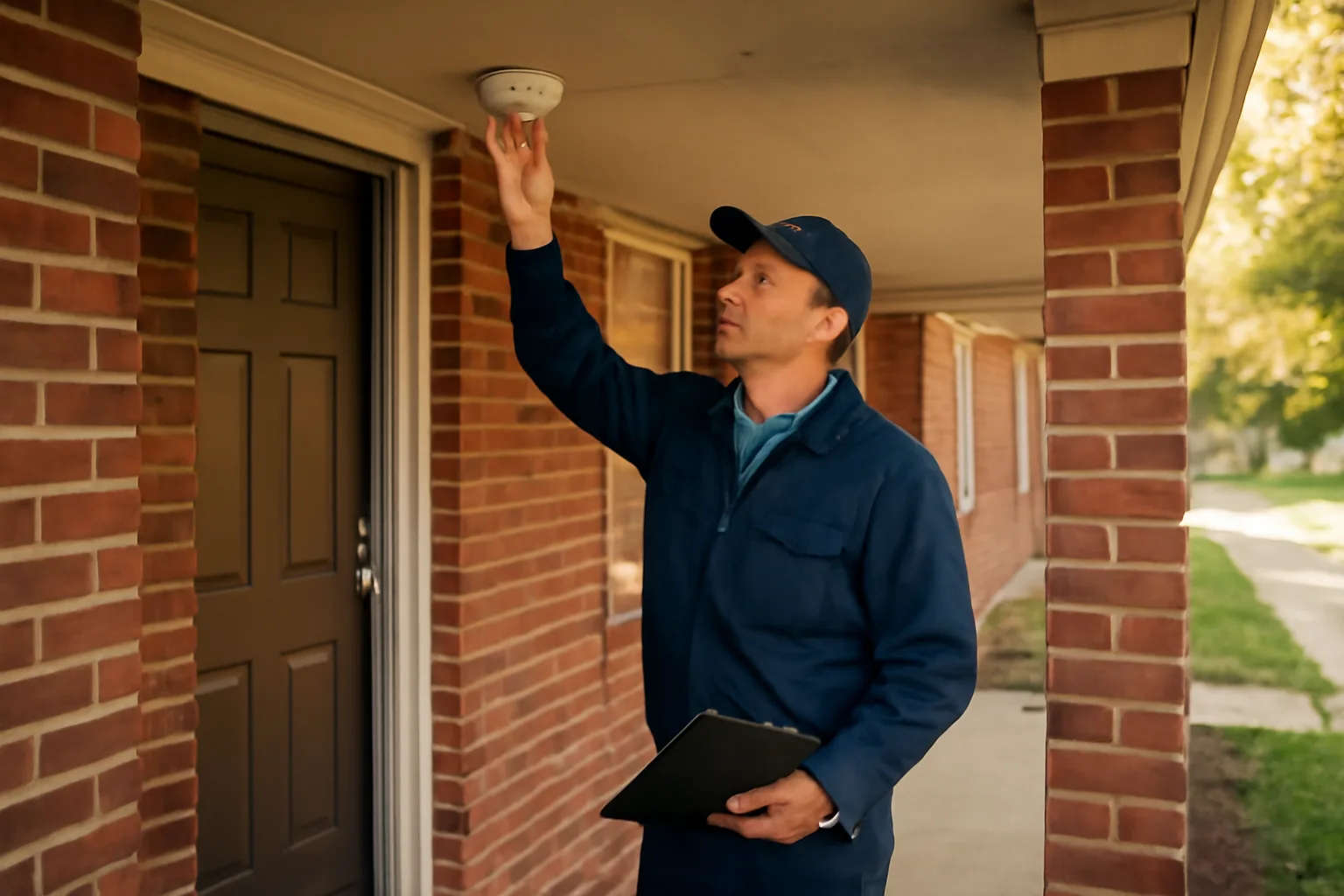
Most cities that inspect rentals, Omaha included, focus on life-safety and structural items rather than cosmetic condition. Expect an inspector to check things like working smoke alarms and carbon monoxide detectors, secondary egress from bedrooms (a window large enough to escape through in a fire), electrical panel condition, visible plumbing leaks, water heater safety (temperature-pressure relief valve, proper venting), handrails on stairs, and signs of pest infestation or structural damage. These categories mirror the International Property Maintenance Code, which many Nebraska municipalities have adopted in some form as the backbone of their housing codes. Omaha's specific checklist, correction period after a failed item, and re-inspection fee are set at the local level and can change, so ask the Permits and Inspections Division for the current inspection checklist before your visit rather than assuming a generic list covers everything they check [1] [2]. One thing that's fairly consistent across cities: you almost always get a written notice of violations with a deadline to fix them, often somewhere in the range of 30 days for most items, before a re-inspection or fine kicks in. Confirm your specific deadline on the notice itself. Don't guess.
What can a landlord look at during an inspection?
This question usually comes up from the other direction: not the city inspecting the landlord, but the landlord inspecting the rental unit itself. During a routine unit inspection, a landlord can generally look at anything related to the condition and safe operation of the property. That includes checking for damage beyond normal wear and tear, verifying smoke and carbon monoxide detectors work, looking for water leaks or mold, confirming HVAC filters have been changed, and checking for unauthorized occupants or pets that violate the lease. What a landlord shouldn't do is turn a maintenance inspection into a search of personal belongings. Going through drawers, closets, or private papers has nothing to do with verifying the condition of the unit, and doing it invites a harassment or privacy complaint. The inspection should have a stated purpose (repairs, a safety check, a periodic walkthrough allowed by the lease) and should stick to that purpose. Timing matters too. Nebraska law requires landlords to give tenants reasonable notice before entering and to enter only at reasonable times, except in an emergency. The statute doesn't spell out an exact number of hours, but most practitioners treat 24 hours advance notice as the safe floor, similar to what neighboring states require explicitly.
How do you become a landlord in Omaha (or anywhere)?
Nobody hands you a landlord license the way you'd get a real estate license. Becoming a landlord is really a checklist of practical and legal steps, not a credential. First, own or control a property you can legally rent out. Check local zoning and, if it applies, any HOA restrictions on rentals before you commit. Second, register the property with your city if it requires it, which in Omaha means going through the Permits and Inspections Division [1]. Third, get the right insurance, a landlord (dwelling fire) policy with liability coverage, not a standard homeowner's policy, since most homeowner policies exclude rented units. Fourth, learn the state law that governs your leases: Nebraska's Uniform Residential Landlord and Tenant Act sets minimums on notice, entry, deposits, and habitability that you can't contract around [3]. Fifth, build a lease that matches state and local law (a lawyer or a solid template service is worth the cost here; this isn't a spot to freelance). Sixth, screen tenants consistently and in line with the Fair Housing Act, which bars discrimination based on race, color, religion, sex, national origin, familial status, and disability [4]. Last, set up systems for rent collection, maintenance requests, and recordkeeping before your first tenant moves in, not after.
What is landlording, and what exactly is a landlord?
A landlord is the owner (or the owner's lessor or sublessor) of a dwelling unit that's rented to someone else under a lease or rental agreement. Nebraska's landlord-tenant act defines it plainly: the landlord is the person entitled to receive rent for a dwelling unit and who takes on the corresponding legal duties [3]. "Landlording" is the day-to-day work behind that ownership: collecting rent, handling repairs, responding to complaints, keeping the property code-compliant, managing turnover between tenants, and staying current on the state and local law that governs all of it. It's part bookkeeping, part maintenance coordination, part legal compliance. A property manager can do the operational work for you, but the legal responsibilities of "landlord" (habitability duties, deposit handling, notice requirements) generally stay with the owner unless a management agreement and local law say otherwise. If you want a fuller breakdown of what separates a landlord's legal role from a property manager's operational one, see landlord and landlord landlords.
What rights do tenants have without a lease?
A tenant without a written lease isn't a tenant without rights. Under Nebraska's Uniform Residential Landlord and Tenant Act, an oral or unwritten rental arrangement still creates a legal tenancy, and if there's no fixed term specified, it's generally treated as month to month when rent is paid monthly [3]. That means the tenant still gets the statute's baseline protections: a habitable unit, reasonable notice before the landlord enters, and the same notice requirements before the tenancy can be ended that a written-lease tenant would get. A landlord can't skip the legal eviction process just because nothing was signed. Self-help eviction (changing locks, removing belongings, shutting off utilities to force someone out) isn't allowed under the general framework these landlord-tenant acts share, and states that spell it out explicitly, like Ohio, ban it outright. If more than one person is living in the unit without a lease naming both, questions about who's actually responsible for rent and who has rights to stay come up often. For that situation specifically, see tenant and tenant. For the broader rundown on what any tenant can expect, see tenants rights and tenant rights.
How much notice does a landlord have to give?
| Nebraska | 30 days | |
|---|---|---|
| Ohio | 30 days | |
| California, under 1 year | 30 days | |
| California, 1 year or more | 60 days | Always check your own lease and city rules too. Some Omaha leases or local ordinances may build in longer notice periods than the state minimum, and you can't shorten the statutory floor even if the lease tries to. |
In Nebraska, to end a month-to-month tenancy, the landlord (or the tenant) has to give at least 30 days written notice before the next periodic rental date. Nebraska Revised Statute § 76-1437 covers this directly for periodic tenancies without a fixed term. Entry notice is a separate rule. Nebraska requires "reasonable notice of intent to enter" and says the landlord "may enter only at reasonable times," except in an emergency. The statute doesn't nail down an exact hour count, so treat 24 hours as the practical minimum unless your lease specifies more. These numbers aren't universal, which matters if you own property outside Nebraska too. Ohio also uses a 30-day notice standard for ending a periodic tenancy. California splits it: 30 days if the tenant has lived there less than a year, 60 days if a year or more. | State | Notice to end month-to-month tenancy |
Why do landlords require renters insurance?
A landlord's own dwelling and liability policy covers the building, not the tenant's belongings inside it. If a pipe bursts or a fire starts and the tenant's furniture, electronics, or clothing get destroyed, the landlord's policy typically won't pay for any of that. Renters insurance shifts that risk to the tenant's own policy instead of leaving it as a gap nobody's covering. There's a liability angle too. If a tenant's negligence causes damage (a grease fire, an overflowing tub) and their renters policy includes liability coverage, that policy can pay for the resulting damage to the building through the tenant's insurer, rather than the landlord's insurer having to absorb it or chase the tenant directly for reimbursement. Cost isn't a real barrier for tenants. The Insurance Information Institute reports renters insurance is inexpensive relative to homeowners coverage, commonly running somewhere in the range of $15 to $20 a month depending on coverage limits and location. Requiring it as a lease condition is a landlord's choice, not a Nebraska or Omaha legal mandate, and how you word that requirement in a lease is a question for whoever drafts your lease, not something to wing on your own.
Who's responsible for the move-out walkthrough inspection in California?
This one's specific to California, not Nebraska, but it comes up enough that it's worth answering directly since landlords sometimes own property in more than one state. In California, the landlord is responsible for offering and conducting an initial (pre-move-out) inspection if the tenant requests one before the tenancy ends. Under California Civil Code § 1950.5(f), the landlord must notify the tenant of the right to request this initial inspection, and if the tenant asks for it, the landlord has to perform the walkthrough and give the tenant a reasonable opportunity to be present. The law requires at least 48 hours prior notice of the date and time. After the walkthrough, the landlord gives the tenant an itemized statement of deficiencies so the tenant has a chance to fix them before move-out and avoid deductions from the security deposit. Nebraska and Omaha don't have an equivalent statutory requirement for a pre-move-out walkthrough. That said, doing one anyway, and documenting it with photos and a signed checklist, is just good practice everywhere, including here. It's the kind of thing that turns a security deposit dispute into a five-minute conversation instead of a small claims filing.
What can't a landlord do in Ohio?
Another state-specific question, and another one worth answering plainly because it shows what "typical" landlord restrictions look like across the model landlord-tenant acts most states, including Nebraska, are built from. Ohio Revised Code Chapter 5321 governs landlords and tenants there. The clearest prohibition sits in ORC § 5321.15, which bans self-help eviction outright: a landlord can't remove doors, windows, or locks, can't shut off utilities, and can't seize a tenant's belongings to force them out, no matter how far behind on rent the tenant is. The only lawful way to remove a tenant is through the court eviction process. Ohio law also bars retaliation against a tenant for exercising legal rights, such as reporting a code violation (ORC § 5321.02), and it requires the landlord to keep the unit compliant with building and housing codes and in a fit and habitable condition (ORC § 5321.04). Entry without reasonable notice is restricted too. None of that is unique to Ohio in spirit. Nebraska's landlord-tenant act carries similar habitability and entry-notice duties [3]. If you own rentals in more than one state, the details differ, but the underlying floor, no lockouts, no retaliation, keep the unit safe, tends to look pretty familiar state to state.
What Omaha landlords get wrong on compliance (and how to fix it)
The most common mistake isn't ignorance of the rules. It's treating registration as a one-and-done task instead of something with a renewal cycle, and then getting a violation notice for an expired registration on a property they thought was handled years ago. Second most common: buying a second or third unit and forgetting each one needs its own registration under the city's housing code, not a blanket cover for "my rentals" [1] [2]. Third: letting a failed inspection item sit past the correction deadline because the landlord assumed there'd be a grace period beyond what the notice actually said. There usually isn't much slack once the written deadline passes. What actually helps is having your registration paperwork, past inspection notices, and the relevant code sections organized before an inspector or a renewal deadline shows up, instead of scrambling through email when the notice arrives. That's the exact gap our $79 one-time City Rental License & Inspection Prep Packet is built to close: a structured way to track your registration status, prep for an inspection walkthrough, and keep your documentation in one place. Check it out at /rental-packet-builder if that sounds like the missing piece for your properties.
The bottom line for Omaha rental property owners
Omaha requires rental registration and can trigger inspections through its Permits and Inspections Division, but the exact fees, renewal timing, and inspection triggers are the kind of detail that changes as the city updates its code. Confirm those specifics directly with the city rather than relying on anything you read, including this article, as the final word [1] [2]. What won't shift underneath you is Nebraska's baseline landlord-tenant law: 30 days notice to end a month-to-month tenancy, reasonable notice before entry, and habitability and deposit rules that apply whether or not a tenant ever signed a lease [3]. Layer good habits on top of both, renters insurance as a lease condition, documented walkthroughs at move-in and move-out, and a habit of fixing violations before the correction deadline instead of after, and most compliance headaches go away before they start. If you'd rather not build your own tracking system from scratch, the /rental-packet-builder packet gives you a $79 one-time way to organize registration and inspection prep for a single property. It won't guarantee a passed inspection, nothing can, but it keeps you from showing up unprepared.
Frequently asked questions
How do you become a landlord?
There's no license required to become a landlord in most states. You need to legally own or control a rental property, register it if your city requires it, get landlord-specific insurance, learn your state's landlord-tenant act (habitability, notice, and deposit rules), write a compliant lease, and screen tenants in line with the Fair Housing Act. Nebraska has no separate state landlord license; local registration is the closest thing.
How do I be a landlord without making costly mistakes early on?
Start with the legal minimums, not the extras: register the property if your city requires it, carry a landlord insurance policy (not a standard homeowner's policy), and use a lease that matches your state's landlord-tenant act. Most early mistakes come from skipping registration, entering units without proper notice, or mishandling security deposits, all of which are avoidable with basic research up front.
What is a landlord?
A landlord is the owner, lessor, or sublessor of a dwelling unit who rents it to a tenant under a lease or rental agreement and is entitled to receive rent in exchange. Nebraska's Uniform Residential Landlord and Tenant Act defines the term this way and attaches specific legal duties, like habitability and notice requirements, to whoever holds that role.
What is landlording?
Landlording is the ongoing work of owning and operating rental property: collecting rent, handling repairs and maintenance requests, managing tenant turnover, staying compliant with local housing codes and state landlord-tenant law, and keeping records. It covers both the legal responsibilities that come with owning a rental and the practical day-to-day tasks of running one.
What rights do tenants have without a lease?
A tenant without a written lease still has legal rights. Under most state landlord-tenant acts, including Nebraska's, an unwritten rental arrangement is treated as a tenancy, usually month to month, and the tenant keeps the statutory protections around habitability, entry notice, and termination notice, the same as if there were a signed lease.
How much notice does a landlord have to give to end a tenancy?
In Nebraska, 30 days written notice ends a month-to-month tenancy under Neb. Rev. Stat. § 76-1437. Ohio uses a similar 30-day standard. California requires 30 days if the tenant has lived there less than a year, 60 days if a year or more, under Civil Code § 1946.1. Always confirm your specific state's rule since it varies.
Why do landlords require renters insurance?
A landlord's own policy covers the building, not the tenant's belongings, so renters insurance shifts that risk off the landlord. It also often covers tenant liability, meaning if the tenant's negligence causes damage, their insurer can pay for it instead of the landlord absorbing the loss. Coverage typically runs about $15 to $20 a month, according to the Insurance Information Institute.
What can a landlord look at during an inspection?
During a routine unit inspection, a landlord can check for damage beyond normal wear and tear, verify smoke and carbon monoxide detectors work, look for leaks or pest issues, and confirm the lease's occupancy and pet terms are being followed. A landlord shouldn't search personal belongings like drawers or private papers; that goes beyond checking the unit's condition and safety.
Who is responsible for the rental property walk-through inspection in California?
In California, the landlord is responsible for conducting the initial (pre-move-out) walkthrough inspection if the tenant requests one, under Civil Code § 1950.5(f). The landlord must give at least 48 hours notice, let the tenant be present, and provide a written list of items to fix before the actual move-out to avoid deposit deductions.
What can't a landlord do in Ohio?
Ohio Revised Code Chapter 5321 bans self-help eviction outright: no changing locks, removing doors or windows, or shutting off utilities to force a tenant out. Landlords also can't retaliate against a tenant for reporting a code violation, must keep the unit habitable and code-compliant, and must give reasonable notice before entering the rental unit.
Does Omaha require a rental inspection before I rent out a property?
Omaha's housing code requires rental property registration through the city's Permits and Inspections Division, and inspections can be triggered by complaints, program participation, or code enforcement. Whether an inspection happens automatically before you rent, or only after a trigger, is a detail that varies by ordinance update, so confirm the current process with the city office directly.
What happens if I don't register my rental property in Omaha?
Operating an unregistered rental in a city with a registration requirement typically leads to a municipal citation and a fine, with penalties often increasing for repeat or willful noncompliance. Omaha's exact fine amounts and escalation schedule are set locally and can change, so confirm the current penalty structure with the Permits and Inspections Division before assuming a fine amount.
How much notice does a landlord need to give before entering a rental unit in Nebraska?
Nebraska law requires landlords to give tenants "reasonable notice of intent to enter" and to enter only at reasonable times, except in an emergency, under Neb. Rev. Stat. § 76-1423. The statute doesn't set an exact hour count, but 24 hours advance notice is the commonly used practical standard.
Sources
- Nebraska Legislature, Neb. Rev. Stat. § 76-1437: 30 days notice is required to terminate a month-to-month tenancy in Nebraska
- Nebraska Legislature, Neb. Rev. Stat. § 76-1423: Landlord must give reasonable notice and enter only at reasonable times
- Nebraska Legislature, Uniform Residential Landlord and Tenant Act, Neb. Rev. Stat. §§ 76-1401 to 76-1449: Definition of landlord and baseline tenant protections including for oral tenancies
- City of Omaha Code of Ordinances (Municode): Omaha's rental registration and housing code requirements are codified in the municipal code
- U.S. Census Bureau, American Community Survey: Source for renter-occupied housing unit estimates used to describe local rental markets