Last updated 2026-07-25
TL;DR
A routine home inspection is a scheduled walk-through of a rental unit, usually by the landlord or a city inspector, to check safety and maintenance conditions. Most states require 24 to 48 hours advance written notice, and inspectors can look at smoke detectors, plumbing, electrical systems, and general habitability, but not search personal belongings or closets unrelated to the inspection's purpose.
what is a routine home inspection and who does it
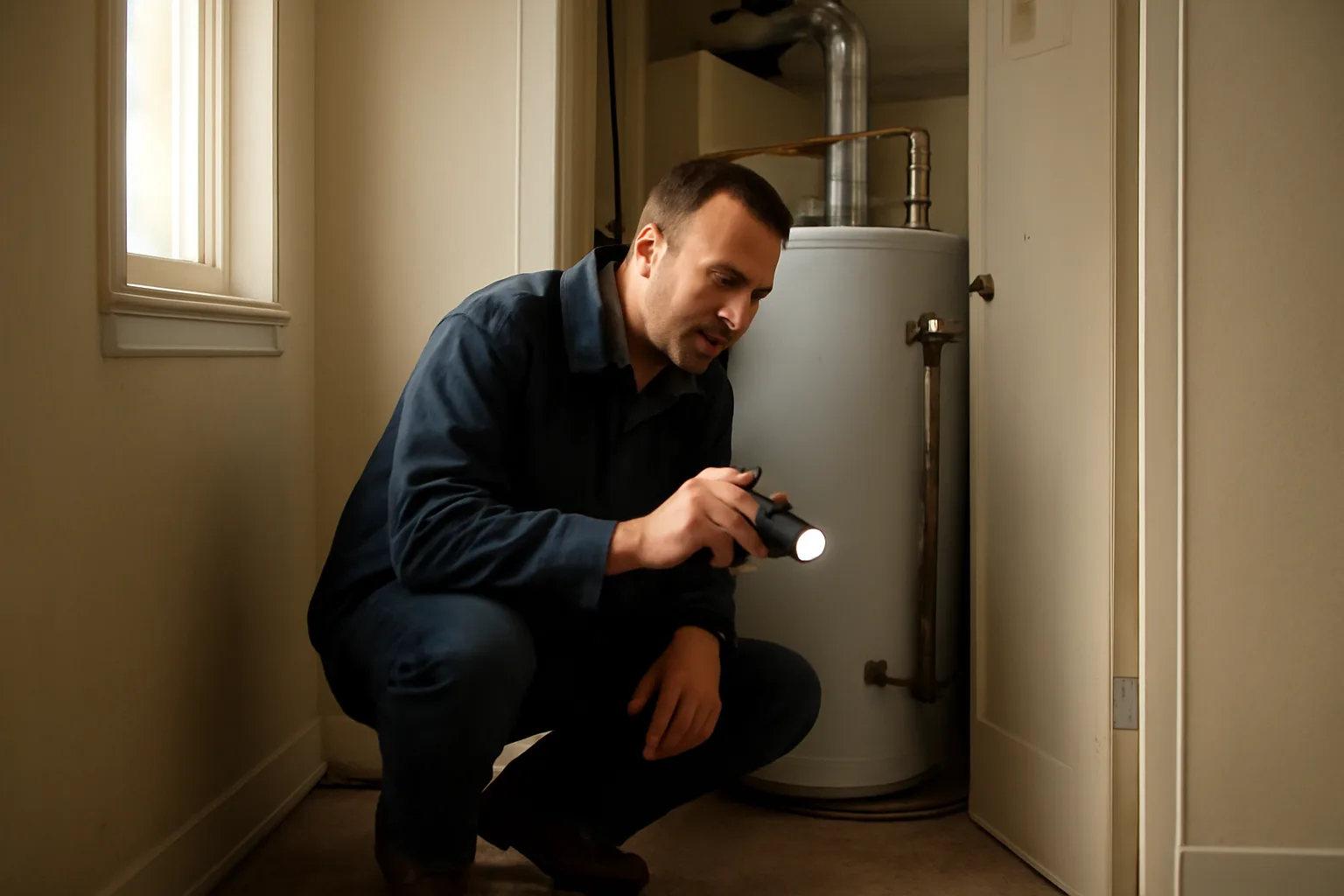
A routine home inspection is a planned check of a rental unit's condition. It's not the same thing as a police search, and it's not the same as the city inspection tied to a rental license. Three different people might show up at your door for three different reasons, and mixing them up causes a lot of the confusion landlords and tenants email us about. First, there's the landlord's own maintenance walk-through. This is the landlord (or a property manager) checking for leaks, testing smoke detectors, looking at HVAC filters, and generally making sure the unit isn't falling apart between tenant turnovers. Second, there's the city or county rental inspection, required in mandatory rental-licensing jurisdictions before a license is issued or renewed. Third, there's the pre-purchase home inspection a buyer orders before closing on a house, which isn't really a landlord-tenant issue at all. This article focuses on the first two: landlord-conducted walk-throughs of occupied rentals, and the city inspections that come with rental licensing programs. If you're dealing with a private home inspector hired for a real estate sale, the rules below on notice and scope don't apply to you the same way. Who actually shows up depends on your city's program. Some cities send a code enforcement officer. Others contract with a fire marshal's office for the smoke detector and egress checks. A few outsource to third-party inspection firms. If you got a notice and don't recognize the department name, call your city's rental licensing office and ask directly; program names vary a lot city to city.
who is responsible for a rental property walk-through inspection in california
In California, the landlord (or their agent) is generally responsible for arranging and conducting routine walk-through inspections, and California Civil Code Section 1954 sets the legal framework for when a landlord may enter a rental unit at all, including for inspections. Under Civil Code Section 1954, a landlord may enter to make necessary or agreed repairs, decorations, alterations, or improvements, to show the unit to prospective tenants or buyers, or in cases of emergency, and generally must give 'reasonable notice in writing,' which the statute presumes to be 24 hours absent contrary evidence [1]. That 24-hour presumption is the number most California landlords rely on, but it's a presumption, not an absolute floor in every situation, and courts can look at whether 24 hours was actually reasonable given the circumstances. Separately, California also has a pre-move-out inspection right under Civil Code Section 1950.5, which lets a tenant request an inspection before vacating so they get a chance to fix issues before the landlord assesses security deposit deductions [2]. That's a different animal from a routine mid-tenancy walk-through, but landlords sometimes conflate the two, so it's worth knowing they're governed by different subsections of the same code. Cities within California can add their own rental inspection programs on top of state law. San Francisco, Los Angeles, and other municipalities run their own systematic code enforcement inspection programs for rental housing, often tied to habitability complaints or proactive inspection cycles rather than routine landlord walk-throughs. If your city has one, confirm the specific notice period and inspector authority with your city rental licensing office, because it can differ from the state's 24-hour civil code standard.
how much notice does a landlord have to give before an inspection
| California | 24 hours presumed reasonable | Civil Code Section 1954 [1] | |
|---|---|---|---|
| Florida | At least 12 hours | Fla. Stat. Section 83.53 [3] | |
| Texas | No statewide statutory minimum; governed by lease | N/A | Emergency entry is the one exception almost every state carves out. If there's a burst pipe, a gas leak, or a fire, landlords generally don't need advance notice at all. But 'I just wanted to check on things' is not an emergency, and using the emergency exception as a routine excuse is one of the fastest ways to end up on the wrong side of a habitability or harassment complaint. City-required rental inspections, separate from a landlord's own walk-through, often follow their own notice rules set by local ordinance rather than state landlord-tenant law. Confirm your specific city's notice requirement with its rental licensing office before scheduling, since some cities require 48 hours or more in writing for a code compliance inspection. |
Most states require landlords to give at least 24 hours of advance notice before entering an occupied rental unit for a non-emergency inspection, though the exact number and required format (written vs. verbal) varies by state. California presumes 24 hours is reasonable notice under Civil Code Section 1954 [1]. Florida requires landlords to give tenants 'reasonable notice,' which Florida Statutes Section 83.53 defines as at least 12 hours before entering to inspect the premises, unless the tenant consents to a shorter period [3]. Texas doesn't set a specific statewide statutory notice period for routine landlord entry the way California and Florida do, so Texas landlords typically rely on their lease terms to define notice, which is exactly why a written lease matters so much there. Here's a quick comparison of a few commonly cited notice standards: | State | Notice period for routine entry | Statute |
what can a landlord look at during an inspection
During a routine inspection, a landlord or city inspector can generally look at anything related to the physical condition and safety of the unit: smoke detectors, carbon monoxide detectors, plumbing fixtures, electrical outlets, window and door locks, visible signs of pests or mold, and the general state of appliances the landlord owns. What they generally cannot do is rummage through drawers, closets, or personal belongings that have nothing to do with the inspection's stated purpose. If the notice says the inspection is to check the water heater and smoke detectors, that's the scope. Opening a tenant's closet to see what's inside isn't part of a habitability check, and doing so can cross into a privacy violation, particularly in states with strong quiet enjoyment protections. City rental license inspections tend to focus on a fairly standard list: working smoke and CO alarms, secure handrails and stairs, functioning heat, no exposed wiring, adequate egress from bedrooms, and no obvious code violations like unpermitted rooms. Some cities also check for peeling lead paint in pre-1978 units, since federal law under 42 U.S.C. Section 4852d requires disclosure of known lead-based paint hazards in housing built before 1978 [3]. A reasonable rule of thumb: the inspector's eyes and camera can go wherever a repair person's would reasonably need to go to do the stated job. Anything beyond that, especially anything that looks like it's aimed at the tenant's stuff rather than the unit's condition, isn't part of a routine inspection and tenants can push back on it.
what a landlord cannot do in ohio
Ohio law doesn't set a specific statutory notice period for landlord entry the way California does, but Ohio Revised Code Section 5321.04 requires landlords to keep the premises fit and habitable, and Ohio Revised Code Section 5321.05 lays out tenant obligations alongside the landlord's corresponding duty not to abuse the right of access. Ohio courts and the Ohio Landlord Tenant Act generally treat a landlord's entry without notice or consent, outside an emergency, as a violation of the tenant's right to quiet enjoyment. Ohio Revised Code Section 5321.04(A)(8) specifically requires a landlord to 'not abuse the right of access,' language that Ohio courts and tenant advocates point to when a landlord shows up unannounced repeatedly [4]. What a landlord in Ohio generally cannot do: enter without any notice for non-emergency reasons, enter at unreasonable hours, use entry as a form of harassment, or retaliate against a tenant who complains about excessive or improper entries. Ohio Revised Code Section 5321.02 also protects tenants from retaliatory conduct, including retaliatory entry, after a tenant makes a good faith complaint about a housing code violation [5]. Ohio landlords are also generally barred from shutting off utilities, changing locks, or removing a tenant's belongings without going through the formal eviction process in court, sometimes called self-help eviction. Ohio Revised Code Chapter 5321 doesn't spell out 'self-help eviction' as one clean sentence, but the combined effect of the statute and Ohio case law is that landlords must use the court eviction process (forcible entry and detainer) rather than lockouts or utility shutoffs to remove a tenant.
what is a landlord and what is landlording, exactly
A landlord is a person or entity that owns residential or commercial property and rents it to someone else, called a tenant, in exchange for regular payment, usually monthly rent. That's the legal definition in almost every state's landlord-tenant statute, even though the day-to-day job looks a lot bigger than that one sentence. 'Landlording' is the informal term for the actual work: screening applicants, drafting or using a lease, collecting rent, handling maintenance requests, following state and local notice rules for entry, keeping the property up to code, and eventually handling move-outs or evictions when needed. It's part bookkeeping, part maintenance coordination, part conflict management. Nobody teaches this in school, and most landlords learn it by making a mistake once and never repeating it. The scale of who does this is bigger than most people assume. According to the U.S. Census Bureau's 2021 Rental Housing Finance Survey, roughly 41.6% of all rental units nationally are owned by individual investors rather than corporations, LLCs, or institutional owners, meaning a huge share of American renters have an individual landlord, not a management company [6]. Being a landlord also means being subject to a patchwork of local rules that a corporate property manager might have full-time staff to track, but a one-person landlord has to figure out on their own: rental registration, business licensing, inspection cycles, and fee schedules that all vary by city.
how to become a landlord and how to be a landlord day to day
Becoming a landlord starts with acquiring rental property, whether that's buying a house or condo, converting a primary residence you're moving out of, or inheriting property. After that, the legal and administrative steps generally include forming an ownership structure (many landlords use an LLC for liability separation, though that's a decision worth running by an accountant or attorney given the tax and cost tradeoffs), getting landlord liability insurance, and checking whether your city or county requires a rental license or registration before you can legally rent the unit out. Mandatory rental licensing is more common than a lot of new landlords expect. Cities across the country, from mid-size college towns to big metros, require landlords to register or license every rental unit, often paired with a periodic inspection. Requirements, fees, and inspection cycles differ enormously by city, so the very first move for any new landlord should be calling the local rental licensing or code enforcement office and asking what applies to your specific address, before you list the unit for rent. Day to day, being a landlord means: screening tenants consistently (and legally, under the Fair Housing Act's protected classes, since the U.S. Department of Housing and Urban Development enforces fair housing law nationwide) , using a written lease that spells out rent, notice periods, and maintenance responsibilities, keeping basic repair and inspection records, and responding to maintenance requests within whatever timeframe your state's habitability law implies (often 'reasonable time,' though a few states set specific day counts for certain repair categories). If you're just getting into this and want a structured starting point, landlord basics and the broader question of tenant rights are worth reading before your first lease signing, not after.
why do landlords require renters insurance
Landlords require renters insurance mainly to protect themselves from liability and to make sure the tenant's own belongings aren't the landlord's financial problem if something goes wrong. A standard landlord insurance policy covers the building structure, but it typically does not cover a tenant's furniture, electronics, or clothing if there's a fire, burst pipe, or theft. Requiring renters insurance also shifts a chunk of liability risk. If a tenant's guest slips and falls in the unit, or the tenant accidentally starts a kitchen fire that damages a neighboring unit, a renters insurance policy's liability coverage can absorb some or all of that cost instead of it landing entirely on the landlord's policy (and potentially raising the landlord's premiums or triggering a coverage dispute). Cost-wise, renters insurance is genuinely cheap compared to what it protects. The National Association of Insurance Commissioners has reported average renters insurance premiums in the range of roughly $15 to $30 per month nationally, though this varies by state, coverage amount, and deductible . Requiring a $100,000 liability minimum, a common lease clause, usually doesn't raise that monthly cost much at all. Landlords can generally require renters insurance as a lease condition in most states, as long as it's disclosed in the lease and applied consistently to all tenants (inconsistent application can raise fair housing concerns). A few jurisdictions have specific rules about how landlords must handle the insurance requirement, so if you're drafting this into a lease, it's worth checking your state's landlord-tenant statute rather than assuming it's unregulated everywhere.
what rights do tenants have without a lease
A tenant without a written lease still has real legal rights in every state. The absence of a lease doesn't mean the absence of tenancy law; it usually means the tenant is classified as a month-to-month tenant (sometimes called a tenancy at will), governed by state statute rather than a written contract. That tenant still generally has the right to habitable housing, meaning working plumbing, heat, and structural safety, under the implied warranty of habitability recognized in some form by nearly every state's courts or statutes. They still have the right to advance notice before the landlord enters, following whatever their state's default notice rule is (since there's no lease clause to override it). And they still have the right to advance notice before the tenancy is terminated, typically 30 days for month-to-month tenancies in most states, though some states require more depending on how long the tenant has lived there. Without a lease, the specific terms (rent amount, who pays for what utility, pet rules) default to whatever was verbally agreed or, absent any agreement, to reasonable custom and state default rules, which makes disputes harder to resolve cleanly. This is exactly why even a short, simple lease is worth using instead of a handshake arrangement, verbal-only tenancies are legal but they're a magnet for 'he said, she said' fights later. A tenant without a lease also can't be evicted without proper legal process just because there's no written agreement. Landlords still have to use the formal eviction process through the courts in every state; skipping straight to a lockout or utility shutoff is illegal self-help eviction almost everywhere, lease or no lease. For more on this, see tenants rights and renters rights.
how routine inspections fit into city rental licensing programs
In mandatory rental-licensing cities, the routine home inspection often isn't optional at all, it's baked into getting or keeping your rental license. A lot of cities require an initial inspection before a license is issued, then a re-inspection every one to three years depending on the local ordinance, with fees ranging widely, often somewhere in the range of $50 to $300 per unit depending on the city (confirm the exact fee with your city rental licensing office, since this varies enormously and changes often). Miss the inspection window or fail it outright, and consequences usually escalate: a re-inspection fee, a compliance deadline (often 30 to 60 days to fix cited issues), and if unresolved, a fine or even suspension of the rental license, which can legally block you from collecting rent in some jurisdictions until the license is reinstated. This is the part where a lot of small landlords get caught off guard. A landlord with one or two units in a city they've never dealt with a licensing program in before often doesn't know the inspection is coming until a notice shows up in the mail, sometimes with a deadline that's only a few weeks out. Getting the unit ready (working smoke detectors, no exposed wiring, functioning egress windows, a compliant water heater setup) before the inspector arrives saves an enormous amount of back-and-forth. This is genuinely where a structured prep checklist earns its cost. Our $79 one-time City Rental License & Inspection Prep Packet walks through the common inspection line items city programs check for, so a landlord isn't guessing at what an inspector is going to flag. It's not a substitute for knowing your specific city's ordinance, but it's a decent head start on the parts that are common across most programs.
what happens if you fail a routine rental inspection
Failing a routine rental inspection almost never means immediate loss of your rental license. Nearly every city program gives a correction period, a set number of days to fix whatever the inspector flagged, before any real penalty kicks in. Typical sequence: the inspector documents violations on a report, hands it to the landlord (or mails it within a set number of days), and sets a re-inspection deadline. If the fixes are made and verified, the license issues or renews normally. If not, cities generally escalate to fines, which vary by city and violation type, and in more serious or repeated cases, to code enforcement citations that can end up in municipal court. Common failure points across cities include: missing or non-functioning smoke detectors, blocked egress windows in bedrooms, exposed or improperly grounded wiring, water heaters without proper temperature/pressure relief valves, and peeling paint in pre-1978 buildings that may contain lead, which triggers separate federal disclosure obligations under 42 U.S.C. Section 4852d [3]. The good news: almost all of these are fixable without major renovation, and most are cheap. Smoke detectors run under $20 each. A T&P valve replacement on a water heater is usually a job a licensed plumber can knock out in under an hour. The expensive failures tend to be structural, foundation issues, major electrical panel problems, which is exactly why getting ahead of an inspection with your own pre-check matters more than it seems like it should.
Frequently asked questions
How much notice does a landlord have to give before an inspection?
Most states require at least 24 hours notice for non-emergency entry. California presumes 24 hours reasonable under Civil Code Section 1954 [1]; Florida requires at least 12 hours under Fla. Stat. Section 83.53 [3]. Some states, like Texas, leave the specific number to the lease. City rental license inspections may require longer notice, so confirm with your city's rental licensing office.
What can a landlord look at during a routine inspection?
A landlord or inspector can check items tied to safety and habitability: smoke and CO detectors, plumbing, electrical systems, locks, appliances the landlord owns, and signs of pests or mold. They generally cannot search closets, drawers, or personal belongings unrelated to the stated purpose of the inspection.
Who is responsible for a rental property walk-through inspection in California?
The landlord or their authorized agent is responsible for arranging and conducting the walk-through, under the entry rules set by California Civil Code Section 1954, which presumes 24 hours written notice is reasonable for non-emergency entry [1]. Local cities may add their own inspection programs on top of this state framework.
What is a landlord?
A landlord is a person or entity that owns residential or commercial property and rents it to a tenant in exchange for regular payment. Nearly every state's landlord-tenant statute uses some version of this definition as the legal basis for the rights and duties that follow.
What is landlording?
Landlording is the everyday work of owning and operating rental property: screening tenants, using a lease, collecting rent, handling repairs, following entry and notice laws, and keeping the property up to local code. It's a mix of legal compliance, maintenance coordination, and people management.
How do I become a landlord?
Acquire rental property, decide on an ownership structure (many use an LLC, though that decision involves real cost and tax tradeoffs worth discussing with an accountant), get landlord liability insurance, and check whether your city requires rental registration, licensing, or inspection before renting the unit. Requirements vary hugely by city.
What rights do tenants have without a lease?
A tenant without a written lease is generally a month-to-month tenant under state law, still entitled to habitable housing, advance notice before entry, and advance notice (often 30 days) before termination. They also can't be evicted without the formal court eviction process, regardless of whether a lease exists.
Why do landlords require renters insurance?
Renters insurance protects tenants' personal belongings, which a landlord's own policy typically doesn't cover, and its liability portion can absorb costs from accidents in the unit, reducing the landlord's own liability exposure. Average premiums run roughly $15 to $30 a month nationally according to the National Association of Insurance Commissioners [9].
What a landlord cannot do in Ohio?
Ohio landlords cannot enter without proper notice or consent outside emergencies, cannot use entry to harass a tenant, and cannot retaliate against a tenant who files a good-faith code complaint, under Ohio Revised Code Sections 5321.02, 5321.04, and 5321.05 [5][6]. They also cannot use self-help eviction, like lockouts or utility shutoffs, instead of the court process.
What happens if a rental unit fails a city inspection?
Most cities give a correction period, often 30 to 60 days, to fix cited violations before any penalty applies. If unresolved, cities typically escalate to re-inspection fees, fines, or in serious cases, license suspension. Confirm your specific city's timeline and fee schedule with its rental licensing office.
Can a landlord inspect a rental without notice?
Generally no, except in a genuine emergency like a fire, gas leak, or major flood. Nearly every state requires some form of advance notice for routine, non-emergency entry, and using 'emergency' as a routine excuse can expose a landlord to a habitability or harassment claim.
Is a routine landlord walk-through the same as a city rental license inspection?
No. A landlord's own walk-through is a maintenance check the landlord schedules directly with the tenant. A city rental license inspection is conducted or overseen by a city code enforcement or fire department office as part of a mandatory licensing program, often with its own notice rules and fee schedule.
Sources
- California Legislative Information, Civil Code Section 1954: California presumes 24 hours written notice reasonable for landlord entry to make repairs or inspections
- California Legislative Information, Civil Code Section 1950.5: Tenants may request a pre-move-out inspection before security deposit deductions are assessed
- U.S. Code, 42 U.S.C. Section 4852d: Federal law requires disclosure of known lead-based paint hazards in housing built before 1978
- Ohio Legislature, Ohio Revised Code Section 5321.04: Ohio landlords must maintain habitable premises and not abuse the right of access
- Ohio Legislature, Ohio Revised Code Section 5321.02: Ohio tenants are protected from retaliatory landlord conduct after a good faith housing code complaint
- U.S. Department of Housing and Urban Development, Fair Housing Act Overview: HUD enforces federal fair housing protections for tenant screening