Last updated 2026-07-25
TL;DR
Tawtheeq is Abu Dhabi's mandatory tenancy contract registration system, run through the Abu Dhabi Department of Municipalities and Transport (DMT), not a US rental licensing program. If you're a landlord in a US city, your closest equivalent is your city's rental registration, license, or inspection ordinance, which works differently and has different fees, deadlines, and inspection rules.
What is Tawtheeq in Abu Dhabi?
Tawtheeq is Abu Dhabi's system for registering tenancy contracts with the government. Landlords and tenants in Abu Dhabi emirate are required to register their lease agreements through this system, which is administered by the Abu Dhabi Department of Municipalities and Transport (DMT), the successor agency to what was previously called the Abu Dhabi Municipality's tenancy contract registration function [1]. The registered contract, called a Tawtheeq certificate, is used to get utility connections (through Abu Dhabi Distribution Company or Al Ain Distribution Company), trade licenses, and other government services tied to a residential or commercial address. If you searched for 'tawtheeq abu dhabi rental registration' because you're renting or leasing property in the UAE, you're in the wrong neighborhood on this site. RentalPermitPath covers US city rental licensing, registration, and inspection ordinances (places like Baltimore, MD, or various California and Ohio cities that require landlords to register or license rental units). We don't cover UAE tenancy law, and this article won't pretend to. What we can do is walk through what Tawtheeq actually is, in case you landed here trying to understand the term, and then pivot to the real question a lot of people mean when they type something like this into Google: what do rental registration and licensing systems look like for landlords, generally, and specifically in US cities with mandatory programs? That's the rest of this article.
How is Tawtheeq different from a US city rental license?
The core difference is what's being registered and why. Tawtheeq registers the tenancy contract itself, the lease agreement between landlord and tenant, with a government housing authority so it can be used to unlock utilities, business licenses, and school enrollment for the tenant's kids. It's fundamentally a contract-registration and tenant-verification system tied to the UAE's broader residency and business licensing structure. US mandatory rental-licensing programs work differently. Cities like Baltimore require an annual rental license per unit, tied to a lead-safe certificate and sometimes a habitability inspection, not registration of the lease contract [2]. Other cities, like many in California and Ohio, run rental registration programs where the landlord registers the property (not the lease) with a code enforcement or housing department, pays an annual or biennial fee per unit, and submits to periodic inspections for things like smoke detectors, egress windows, electrical hazards, and structural issues. So if you're a US landlord and someone mentioned 'Tawtheeq' to you, or you saw it referenced in an expat forum or a UAE property article and got confused about whether your city has something similar, the answer is: your city's equivalent isn't called Tawtheeq, and it doesn't register your lease contract. It's called a rental registration ordinance, a rental license, or a rental inspection program, and it's run by your city's code enforcement, housing, or building department. Check your specific city's rules against our city guides before assuming any national standard applies, because there isn't one. Every US mandatory rental-licensing city sets its own fee, deadline, and inspection scope.
How do I become a landlord in the US?
Becoming a landlord has no single national license requirement, but it does require a few concrete steps regardless of what city you're in. First, you need to own or control the property (or have legal authority to sublease, if your lease allows it). Second, most states require you to follow specific procedures for security deposits, notices, and habitability that are set by state landlord-tenant statutes, not by whether you 'became' a landlord through any formal process. Third, and this is the part people miss: if your city has a mandatory rental registration, licensing, or inspection ordinance, you're required to register or license the unit before you rent it out, sometimes before you even advertise it. Cities that fine landlords for renting without a license or registration typically issue notices with fines ranging from roughly $100 to over $1,000 per unit per violation, depending on the city and whether it's a repeat offense; always confirm the specific fee schedule with your city's rental licensing office since these numbers vary widely and change year to year. Fourth, get landlord-specific insurance (a standard homeowners policy usually excludes rental use), understand your state's security deposit limits and return deadlines, and set up a lease that complies with your state's required disclosures (lead paint disclosure under federal law for homes built before 1978 is a good example, required under 42 U.S.C. § 4852d [3]). Finally, learn your city's specific registration or licensing requirement. This is the step landlords in mandatory-licensing cities skip most often, usually because they didn't know the requirement existed until they got a notice or a fine.
What is landlording, and what is a landlord, exactly?
A landlord is the owner (or authorized agent of the owner) of real property who rents that property to another person, the tenant, in exchange for rent, under a lease or rental agreement. That's the legal definition in essentially every state landlord-tenant statute, though the exact wording varies. 'Landlording' is the informal term for the ongoing job of managing that relationship: collecting rent, handling repairs, responding to tenant requests, managing turnover, and complying with your state and city's landlord-tenant law. Landlording isn't passive. Even a single-unit landlord with one tenant has ongoing legal obligations: maintaining habitability (the 'implied warranty of habitability' recognized in most states), handling security deposits according to statute, giving proper notice before entry or before ending a tenancy, and complying with any local registration or licensing rule. If your city requires a rental license or registration and you skip it because you only have one unit, you're still exposed. Most mandatory rental-licensing ordinances apply per unit or per property, not based on how many units you own citywide, so a single-family rental home in a licensing city needs its own registration just like a ten-unit building does. The difference between 'owning a rental property' and 'landlording' is really the difference between the asset and the ongoing responsibility. You can own a rental property passively through an LLC and hire a property manager to do the landlording, but the legal obligations, including any city registration or license, attach to the property (and often to the owner of record), not to whoever happens to be answering maintenance calls.
How do I become a landlord in a city with mandatory rental licensing? (step-by-step)
Here's the practical sequence for a new landlord in a city like Baltimore, MD, many California cities, or various Ohio municipalities, that require rental registration or licensing: 1. Confirm whether your specific city has a mandatory program. Not every city does, and requirements often kick in only inside certain zip codes or building types, so check with your city's rental licensing office or code enforcement department directly. 2. Register or apply for a license before you advertise or rent the unit. Some cities require this before the first tenant moves in; others give you a grace period (commonly 30 to 60 days, but confirm with your city). 3. Schedule and pass any required inspection. Programs vary from a self-certification checklist to an in-person inspector visit checking smoke detectors, egress windows, water heater venting, and electrical panels. 4. Pay the registration or license fee. This is almost always an annual or biennial fee set per unit, and it varies enormously by city, so don't assume a number without confirming it locally. 5. Renew on schedule and re-inspect if your city requires periodic re-inspection (some cities re-inspect every 1 to 3 years; others only re-inspect on complaint or tenant turnover). 6. Keep your registration or license certificate posted or on file, since many cities require you to show proof to tenants or the city on request. Skipping any of these steps is usually what triggers the fine notices that bring people to this site in the first place. If you got a notice out of nowhere, the property was very likely already subject to the ordinance; you just hadn't registered yet.
Who is responsible for the rental property walk-through inspection in California?
In California, the landlord (or their authorized agent) is responsible for conducting the move-in and move-out walk-through inspections, and the landlord must give the tenant written notice of the right to be present. Under California Civil Code § 1950.5(f), the landlord must notify the tenant of their option to request an initial inspection before the tenant moves out, conducted 'not earlier than two weeks before the expiration or termination of the tenancy,' so the tenant has a chance to fix any issues before final deposit deductions are made [4]. The landlord has to give at least 48 hours' advance written notice of the date and time of that initial inspection, unless the tenant waives that notice, and the landlord must give the tenant an itemized statement of what needs fixing or cleaning if problems are found. After move-out, the landlord (not the tenant) has the burden of documenting the property's condition to justify any deposit deductions, and must return the deposit or provide an itemized statement of deductions within 21 days of the tenant vacating, per the same statute [4]. This is a separate thing from a city's rental inspection under a licensing ordinance (like an annual habitability inspection tied to a rental license). The walk-through under Civil Code § 1950.5 is about the security deposit and the condition of the unit at move-in/move-out; a municipal rental inspection is about code compliance for the city's licensing program. Some California cities (Los Angeles has its Systematic Code Enforcement Program, for example) run both an inspection cycle for licensing purposes and expect landlords to separately handle the deposit walk-through under state law.
What rights do tenants have without a lease?
A tenant without a written lease still has legal rights, usually as a month-to-month tenant under state law, because most states recognize an oral or implied tenancy once rent is paid and accepted. The tenant is entitled to habitability (a livable, safe unit), proper notice before the landlord raises rent or ends the tenancy, and protection from illegal lockouts or utility shutoffs, called 'self-help eviction,' which is illegal in all 50 states regardless of whether a lease exists. Without a written lease, the terms default to whatever the state's landlord-tenant statute says about month-to-month tenancies: typically requiring 30 days' written notice to end the tenancy (some states require more for longer tenancies, and some cities with just-cause eviction ordinances require even more), and the tenant can generally be held to whatever rent was actually being paid and accepted. The lack of a written lease doesn't strip a tenant of habitability rights, deposit protections, or protection against retaliation or discrimination; those come from statute (state law) and from the Fair Housing Act (42 U.S.C. § 3601 et seq.), not from the lease document. What a tenant loses without a written lease is clarity and proof: no lease means disputes over rent amount, pet policies, who pays for what repairs, and lease-end procedures often come down to conflicting verbal accounts. That's a real practical risk for both sides, which is why every landlord-tenant guide, including this one, recommends a written lease even where it's not legally required. For more on the tenant side of this, see our tenants rights and tenant rights guides.
Why do landlords require renters insurance?
Landlords require renters insurance mainly to shift liability risk off themselves and to make sure the tenant can actually cover their own losses (and any damage they cause) without the landlord's insurance or the landlord's pocket absorbing the cost. A landlord's own property insurance policy typically covers the building structure, not the tenant's belongings, and it often doesn't adequately cover liability claims that originate from the tenant's actions (a tenant's dog bite, a candle fire, a bathtub overflow that damages the unit below). Renters insurance policies are inexpensive relative to the coverage they provide. National average costs run in the range of roughly $15 to $30 per month for a standard policy with $20,000 to $40,000 of personal property coverage and liability coverage, though the exact price depends heavily on location, coverage amount, and insurer; the Insurance Information Institute and NAIC track countrywide averages and note renters insurance is generally far cheaper than homeowners insurance because it doesn't cover the structure itself [5]. Requiring it is legal in the vast majority of states and is a standard lease clause, though a handful of jurisdictions have specific rules about how landlords can bundle or require it (some states, for instance, cap what a landlord can charge if they offer a 'renters insurance' waiver fee in lieu of proof of a policy). This site doesn't draft lease clauses, so if you want to require renters insurance, check your state's specific rules on lease terms and get language reviewed by a local landlord-tenant attorney rather than copying a clause off the internet.
How much notice does a landlord have to give before entering or ending a tenancy?
| Non-emergency entry | 24 to 48 hours | California: 24 hours (Civ. Code § 1954) [6] | |
|---|---|---|---|
| End month-to-month tenancy (under 1 year) | 30 days | Most states | |
| End month-to-month tenancy (1+ years) | 30 to 60 days | California: 60 days (Civ. Code § 1946.1) [7] | |
| Rent increase notice | 30 to 90 days | Varies by state and increase amount | None of these notice rules is the same thing as your city's rental licensing renewal deadline, which is a separate administrative calendar entirely. Don't confuse a 24-hour entry notice requirement with a 30-day annual license renewal window; they're unrelated obligations that happen to both involve counting days. |
This depends entirely on which state you're in and what kind of notice you're giving, and there's no single national number. For entry notice (the landlord wanting to come in for repairs, inspection, or showings), most states require 24 to 48 hours' advance notice, with California requiring 24 hours as the presumptively reasonable standard for non-emergency entry under Civil Code § 1954 [6], while some states don't specify a number at all and just require 'reasonable notice.' For ending a month-to-month tenancy, most states default to 30 days' written notice, though some states require more depending on how long the tenant has lived there (California requires 60 days' notice if the tenant has lived in the unit for a year or more, under Civil Code § 1946.1 [7]). Cities with just-cause eviction ordinances (many California cities under statewide AB 1482, plus various rent-controlled cities elsewhere) may require even longer notice periods or a stated legal reason before a landlord can end a tenancy at all, more than proper notice. Here's a quick comparison of common notice requirements. Always confirm the exact figure with your specific state statute, since this table is illustrative and state law changes: | Notice type | Typical range | Example |
What can a landlord look at during an inspection?
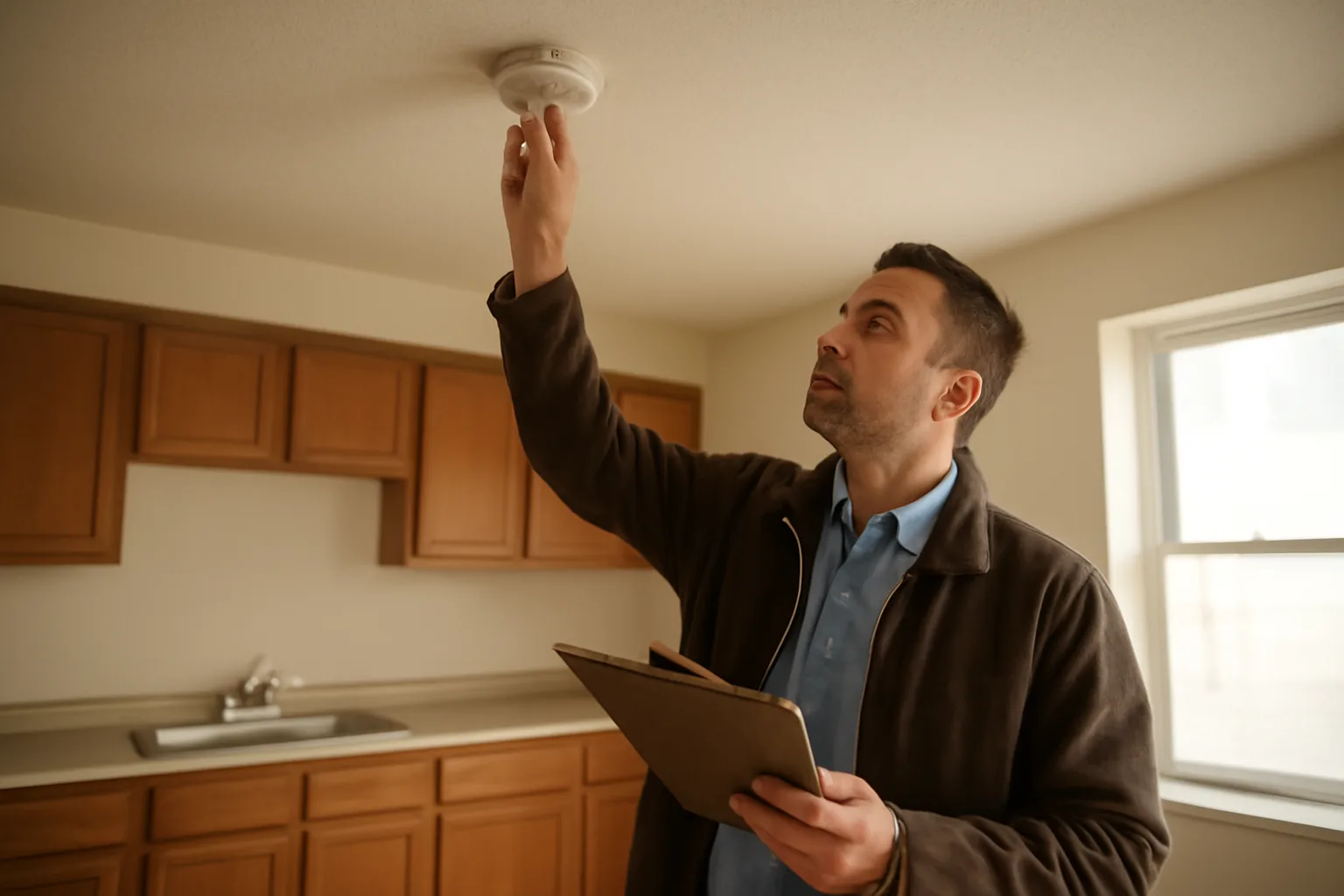
During a routine or move-out inspection, a landlord (or their agent, or a city inspector in a licensing program) can generally look at the condition of the unit itself: walls, floors, ceilings, fixtures, appliances, plumbing, electrical outlets, smoke and carbon monoxide detectors, windows, doors, and signs of damage beyond normal wear and tear. What a landlord (as opposed to a city code inspector) generally cannot do is search through a tenant's personal belongings, open closed drawers or containers unrelated to the inspection's purpose, or use the visit as a pretext to look for anything besides property condition. A city rental inspection under a licensing ordinance usually has a narrower, code-focused checklist: working smoke and CO detectors, secondary means of egress, safe electrical panels, no exposed wiring, functioning heat, no active leaks or mold, and structural safety items like handrails and stair conditions. These inspections typically don't examine cleanliness or tenant housekeeping unless it rises to a health or safety hazard. For both types of inspection, proper notice is required first. State law generally requires 24 to 48 hours' notice for a landlord's own inspection (see the notice table above), and most city rental licensing ordinances also require advance notice to the tenant before a code inspector can enter, sometimes with a specific number of days written into the ordinance itself; confirm the specific advance-notice window with your city's rental licensing office since it's not standardized nationally. If you're prepping a unit for either kind of inspection and want a structured checklist to work from before your city's rental license or inspection deadline, that's exactly the gap our $79 City Rental License & Inspection Prep Packet is built to close: a one-time packet that walks you through the common inspection line items so you're not guessing what the inspector is going to check.
What can a landlord not do in Ohio?
Ohio landlord-tenant law, codified mainly in Ohio Revised Code Chapter 5321, prohibits several specific things. A landlord cannot engage in self-help eviction, meaning changing the locks, removing the tenant's belongings, or shutting off utilities to force a tenant out without going through the court eviction process; only a court order enforced by a sheriff can lawfully remove a tenant [8]. A landlord also cannot retaliate against a tenant for exercising legal rights, such as complaining to a code enforcement agency or joining a tenant organization; Ohio Rev. Code § 5321.02 specifically prohibits a landlord from increasing rent, decreasing services, or threatening eviction in retaliation for a tenant's good-faith complaint [9]. A landlord in Ohio cannot enter the rental unit without giving reasonable notice, generally interpreted as at least 24 hours except in an emergency, per the duties outlined in Ohio Rev. Code § 5321.04 and § 5321.05, which also require the landlord to keep the unit in a fit and habitable condition, maintain common areas, and keep electrical, plumbing, and heating systems in good working order [10]. A landlord also cannot withhold a security deposit without providing an itemized, written list of deductions if the deposit exceeds $50 or one month's rent, whichever is greater, under Ohio Rev. Code § 5321.16 , and must return the deposit (or that itemized statement) within 30 days of the tenant vacating. Finally, a landlord in Ohio cannot discriminate against tenants based on the categories protected under the federal Fair Housing Act (race, color, religion, sex, national origin, familial status, and disability), and Ohio's own civil rights law extends similar protections through Ohio Rev. Code Chapter 4112. None of this is specific to rental licensing or registration; Ohio doesn't have a single statewide rental license, but individual Ohio cities (several have their own rental registration ordinances) layer additional requirements on top of these baseline state protections, so check your specific Ohio city's code enforcement or housing department for anything beyond Chapter 5321.
Does Abu Dhabi's Tawtheeq system have a US equivalent?
Not exactly, and that's worth being direct about. Tawtheeq registers a tenancy contract with a government authority as a prerequisite for utilities, trade licenses, and residency-linked services, a structure that doesn't map cleanly onto any single US system because the US doesn't tie rental housing to national ID or utility connection in the same centralized way. The closest functional comparison in the US is a city's rental registration ordinance, where the landlord (not the lease) gets registered with the city, often triggering a fee and sometimes an inspection, but this isn't a national requirement and isn't tied to utility hookups or a national identity system the way Tawtheeq is in Abu Dhabi. If someone told you 'every US city has something like Tawtheeq,' that's not accurate: most US cities have no mandatory rental registration or license at all, and where a city does require it, the mechanics (fee amount, inspection scope, renewal cycle) are entirely local and don't follow a federal or even statewide template in most states. If your actual question is about US rental licensing rather than the UAE system, the practical next step is figuring out whether your specific city is one of the mandatory-licensing jurisdictions and what its specific requirements are, since that's the only way to get an accurate answer instead of a generic one.
Where do I check if my city requires rental registration or a license?
Start with your city's building department, code enforcement division, or housing department website, and search specifically for terms like 'rental registration,' 'rental license,' or 'residential rental inspection program.' Many cities publish this under a name like 'Rental Housing Program' or 'Non-Owner Occupied Registration,' and it's often buried a few clicks deep rather than on the homepage. Call the office directly if you can't find it online; code enforcement staff deal with these questions constantly and can usually tell you in a two-minute phone call whether your specific address or unit type is covered, what the current fee is, and what the inspection cycle looks like. Ask for the current fee schedule and the ordinance or municipal code number in writing, since verbal answers from front-desk staff sometimes miss exceptions (owner-occupied duplexes are exempt in some cities, for example, while non-owner-occupied ones aren't). If you already got a notice, fine, or inspection deadline letter, that letter should reference the specific ordinance section; look that section up on your city's municipal code website (often hosted through Municode or American Legal Publishing) to read the actual requirement rather than relying on secondhand summaries, including this one. Once you know your city's specific program, our landlord basics guide and city-specific pages can help you get organized, and our $79 Rental License & Inspection Prep Packet is built specifically for landlords staring down a first-time license application or inspection deadline who don't want to guess at what's required.
Frequently asked questions
Is Tawtheeq the same thing as a US rental license?
No. Tawtheeq is Abu Dhabi's system for registering tenancy contracts with the Department of Municipalities and Transport, used to unlock utilities and trade licenses in the UAE [1]. US rental licenses register the property or landlord with a city code enforcement office and typically involve a habitability inspection, not contract registration.
How do I become a landlord?
Own or control a rental property, follow your state's landlord-tenant statute for deposits, notices, and habitability, get landlord insurance, and check whether your city requires rental registration or licensing before you rent the unit out. There's no single national 'landlord license'; requirements are set state by state and, for registration/licensing, city by city.
What is landlording?
Landlording is the ongoing work of managing a rental property: collecting rent, handling repairs, screening tenants, managing turnover, and complying with state landlord-tenant law and any city rental registration or licensing requirement. It applies whether you own one unit or fifty; the legal obligations attach per unit, not per portfolio size.
What is a landlord?
A landlord is the owner or authorized agent of real property who rents it to a tenant under a lease or rental agreement in exchange for rent. This definition is set by state landlord-tenant statutes, which also spell out the landlord's specific duties around habitability, deposits, and notice.
What rights do tenants have without a written lease?
A tenant without a written lease is usually a month-to-month tenant under state law, with the same habitability rights, protection from illegal lockouts, and deposit protections as a tenant with a lease. What's missing is proof of agreed terms like rent amount or pet policy, which creates dispute risk for both sides.
Why do landlords require renters insurance?
Landlords require renters insurance to cover the tenant's belongings and liability for incidents the tenant causes (fires, water damage, dog bites), since the landlord's own property policy usually doesn't cover tenant possessions or tenant-caused liability. It's typically cheap, often $15 to $30 a month, relative to the risk it shifts off the landlord [5].
How much notice does a landlord have to give before entering the unit?
Most states require 24 to 48 hours' advance written or verbal notice for non-emergency entry. California sets 24 hours as presumptively reasonable under Civil Code § 1954 [6]; other states vary, and some just require 'reasonable notice' without a specific number.
Who does the move-in/move-out walk-through inspection in California?
The landlord conducts it, and must notify the tenant in writing of the right to an initial pre-move-out inspection, held no earlier than two weeks before the tenancy ends, under California Civil Code § 1950.5(f). The landlord must give at least 48 hours' notice of that inspection's date and time [4].
What can a landlord look at during a rental inspection?
A landlord or inspector can look at the unit's physical condition: fixtures, appliances, smoke/CO detectors, plumbing, electrical, windows, and signs of damage. They generally cannot search a tenant's personal belongings or use the visit as a pretext to look beyond property condition and code compliance.
What can a landlord not do in Ohio?
Ohio landlords cannot self-help evict (changing locks, removing belongings, shutting off utilities), cannot retaliate against tenants for good-faith complaints under Ohio Rev. Code § 5321.02, must give reasonable notice before entry, and must return security deposits with an itemized statement within 30 days under Ohio Rev. Code § 5321.16 [9][11].
Does Abu Dhabi require Tawtheeq for all rental properties?
Tawtheeq registration is required for tenancy contracts in Abu Dhabi emirate to access utilities, trade licenses, and other government services tied to the property [1]. Specific requirements and any exemptions should be confirmed directly with the Abu Dhabi Department of Municipalities and Transport, since this article covers US rental licensing, not UAE tenancy law in detail.
How do I find out if my US city requires rental registration or a license?
Search your city's building, code enforcement, or housing department website for 'rental registration' or 'rental license,' or call the department directly. Ask for the current fee, the ordinance number, and the inspection cycle in writing rather than relying on a verbal answer alone.
What happens if a landlord skips rental registration or licensing?
Most mandatory-licensing cities issue a notice of violation first, followed by fines that commonly range from around $100 to over $1,000 per unit depending on the city and whether it's a repeat violation. Some cities also bar landlords from filing an eviction case until the unit is properly registered or licensed; confirm specifics with your city's rental licensing office.
Sources
- Baltimore City Code, Rental Housing License requirements: Baltimore requires an annual rental license per unit, tied to lead-safe certification
- 42 U.S.C. § 4852d, Disclosure of information concerning lead-based paint hazards: Federal law requires lead paint disclosure for rental housing built before 1978
- California Civil Code § 1950.5: California landlords must offer an initial move-out inspection no earlier than two weeks before tenancy ends, with 48 hours' notice, and return deposits within 21 days
- Insurance Information Institute, Renters insurance facts and statistics: Renters insurance is generally low-cost relative to homeowners insurance because it does not cover the building structure
- California Civil Code § 1954: California landlords must give 24 hours' notice for non-emergency entry into a rental unit
- California Civil Code § 1946.1: California requires 60 days' notice to end a tenancy of one year or more
- Ohio Revised Code § 5321.02 through § 5321.16, Landlord and Tenant law: Ohio law prohibits self-help eviction and sets landlord duties for habitability, entry notice, and deposits
- Ohio Revised Code § 5321.02, Retaliation prohibited: Ohio landlords cannot retaliate against tenants for good-faith complaints by raising rent, cutting services, or threatening eviction
- Ohio Revised Code § 5321.04, Landlord obligations: Ohio landlords must keep the rental unit in a fit and habitable condition and maintain electrical, plumbing, and heating systems
- Ohio Revised Code § 5321.16, Security deposits: Ohio landlords must provide an itemized list of deposit deductions and return the deposit within 30 days of the tenant vacating