Last updated 2026-07-25
TL;DR
Tawtheeq is Abu Dhabi's mandatory system for registering tenancy contracts with the Department of Municipalities and Transport, run through Abu Dhabi Municipality. It has nothing to do with US city rental licensing programs, though both require landlords to register a rental before it's legally rentable. If you searched this expecting a US city program, this article also covers the basics of US landlord registration, inspections, and tenant rights.
What is Tawtheeq and why does it show up in US landlord searches?
Tawtheeq is the mandatory tenancy contract registration system for Abu Dhabi, in the United Arab Emirates. It's run by the Department of Municipalities and Transport through Abu Dhabi Municipality, and it requires every landlord and tenant in the emirate to register their lease contract online or through an approved real estate registration center before the tenancy is considered legally valid [1]. The word "Tawtheeq" means "documentation" or "authentication" in Arabic, and the system was introduced to formalize what used to be a mostly informal, paper-based rental market. If you landed here searching for "mandatory rental registration," you're probably a US landlord dealing with a city ordinance notice, not an Abu Dhabi property owner. That's common. A lot of US cities (Los Angeles, Baltimore, Cleveland, Minneapolis, and dozens of others) run their own mandatory rental registration or licensing systems, and searches for generic terms like "rental registration system mandatory" pull in results from totally unrelated countries because the concept, government-mandated lease registration, is similar in structure even though the rules, fees, and enforcement are completely different. This article does two things. First, it explains what Tawtheeq actually is, in case you're a landlord with UAE property or you're just trying to understand the term. Second, and this is probably why you're actually here, it walks through how US mandatory rental licensing works in general: what "landlording" means as a legal role, what inspectors can and can't do, what happens without a lease, and what your obligations look like city to city. We're not a law firm and this isn't legal advice for either jurisdiction. City programs in the US vary a lot, so treat any fee or deadline here as something to confirm with your own city rental licensing office.
How does the Tawtheeq registration system actually work?
Under Tawtheeq, a landlord and tenant sign a tenancy contract and then register it through Abu Dhabi Municipality's online portal or an authorized Tas-heel or real estate registration center. The Department of Municipalities and Transport describes Tawtheeq as the mechanism for "documenting all types of real estate leasing contracts in the Emirate of Abu Dhabi" [1]. Once registered, the contract gets a unique reference number that ties to the property, the parties, and the rent amount. The registered contract matters for more than paperwork. In Abu Dhabi, a Tawtheeq-registered tenancy contract is generally required to get utility connections (through Abu Dhabi Distribution Company), to sponsor a family member's residency visa tied to that address, or to enroll children in local schools using that address as proof of residence. Landlords also use it to enforce rent terms and eviction notices through Abu Dhabi's Rental Disputes Settlement Committee, since an unregistered lease can complicate a landlord's ability to prove the terms in a dispute. This is structurally similar to what happens in mandatory US rental registration cities: an unregistered rental can mean a landlord can't collect rent through the courts, can't evict for nonpayment, or faces a straight fine, even if the tenancy itself is real. The mechanism (tie legal enforceability to registration) is the same instinct behind ordinances in cities like Baltimore, whose rental licensing code requires an unexpired license before a landlord can even collect rent or maintain an eviction action [2].
What is landlording, exactly?
Landlording is the practice of owning residential or commercial property and renting it to tenants in exchange for rent, along with the legal and practical responsibilities that come with that role. It's more than collecting a check. It includes maintaining the property in habitable condition, following your state's landlord-tenant statute, handling security deposits correctly, and, in a growing number of cities, registering or licensing the unit before you rent it out at all. The legal backbone varies by state, but most states base their landlord-tenant law on some version of the Uniform Residential Landlord and Tenant Act, first drafted in 1972 and adopted in some form by around 21 states [3]. That model law sets baseline duties: the landlord has to maintain fit and habitable premises, keep common areas safe, and maintain electrical, plumbing, and heating systems. Your actual obligations depend entirely on your state code and, layered on top of that, whatever your city's rental licensing ordinance requires. Landlording at the scale of 1 to 10 units is a different job than managing a 200-unit building. You're doing your own showings, your own maintenance calls, and often your own bookkeping. That's exactly the landlord this site is built for: someone who got a notice, a fine, or an inspection date and needs to know what it actually means, not a corporate portfolio manager with a compliance department.
What is a landlord, legally speaking?
A landlord is the person or entity that owns real property and leases it to another party (the tenant) in exchange for rent, under a lease or rental agreement that creates a landlord-tenant relationship recognized by state law. Legally, that relationship comes with obligations that exist even if you never sign a formal written lease. Most state landlord-tenant statutes define "landlord" broadly enough to include an owner, a manager, or anyone with the right to rent the unit and collect the money. Whoever holds that legal position is the one on the hook for registering with the city, keeping the unit up to code, and responding to habitability complaints. If you inherited a rental property, added your name to a deed, or started managing a unit for a family member, you're a landlord under the law even if nobody drew up paperwork calling you that. That's often how people get blindsided by a city's rental registration notice: the city pulled property tax or deed records, saw a non-owner-occupied address, and mailed a compliance letter to whoever's name is on file, sometimes years after the ordinance passed.
How do you become a landlord, and what has to happen before you rent out a unit?
Becoming a landlord in the US legal sense starts the moment you own residential real estate you intend to rent out. There's no license required nationally to call yourself a landlord, but a growing number of cities require you to register or license the rental unit with the city before you can legally collect rent from a tenant. Here's a rough sequence that covers most mandatory-licensing cities: 1. Confirm ownership and check your city's rental registry rules. Many cities (not all) require registration within a set window of purchase or before the first tenant moves in. 2. Register the property with your city's rental licensing office, which usually means an application, an owner contact form, and a fee that ranges widely, commonly somewhere between $20 and a few hundred dollars per unit depending on the city, though you should confirm with your city rental licensing office since fees change and vary block to block in some places. 3. Schedule and pass any required inspection, if your city's program includes one (not every mandatory registration program requires a physical inspection; some are registration-only). 4. Get your license or certificate, post it if required, and note your renewal date, since most cities require annual or biennial renewal, not a one-time registration. 5. Screen tenants, sign a lease compliant with your state's landlord-tenant code, and collect deposits and rent according to state deposit limits and handling rules. The order matters because a lot of landlords skip step 2 entirely, especially if they bought the property from someone who wasn't renting it, or converted a primary residence into a rental. Cities increasingly cross-reference change-of-address filings, homestead exemption removals, and utility account changes to find unregistered rentals, so "nobody told me" rarely works as a defense once you get the notice.
Who is responsible for a rental property walk-through inspection in California?
In California, the responsibility for a rental property walk-through inspection depends on what kind of inspection you mean, and this trips people up constantly. There are two different things going on. First, California Civil Code Section 1950.5(f) gives tenants the right to request an initial move-out inspection before they vacate, so the landlord can identify deductions from the security deposit and give the tenant a chance to fix problems before move-out. The landlord (or their agent) conducts that walk-through, but the tenant has to be given at least 48 hours' written notice of the date and time, and the landlord must provide an itemized statement of anticipated repairs or deductions [4]. That's a landlord obligation triggered by a tenant's request or a landlord's own initiative before the lease ends. Second, separate from Civil Code deposit rules, many California cities (Los Angeles, Oakland, Berkeley, and others) run their own rental registration or habitability inspection programs through local housing departments, and in those programs a city inspector, not the landlord, conducts the compliance walk-through, usually scheduled by the city's rental housing division. So "who's responsible" splits: the landlord is responsible for conducting or arranging the move-out walk-through under state law, while a city employee is responsible for the compliance inspection under whatever local ordinance applies. Confirm which one you're dealing with by checking the notice you received against your city rental licensing office's specific program.
What can a landlord look at during an inspection?
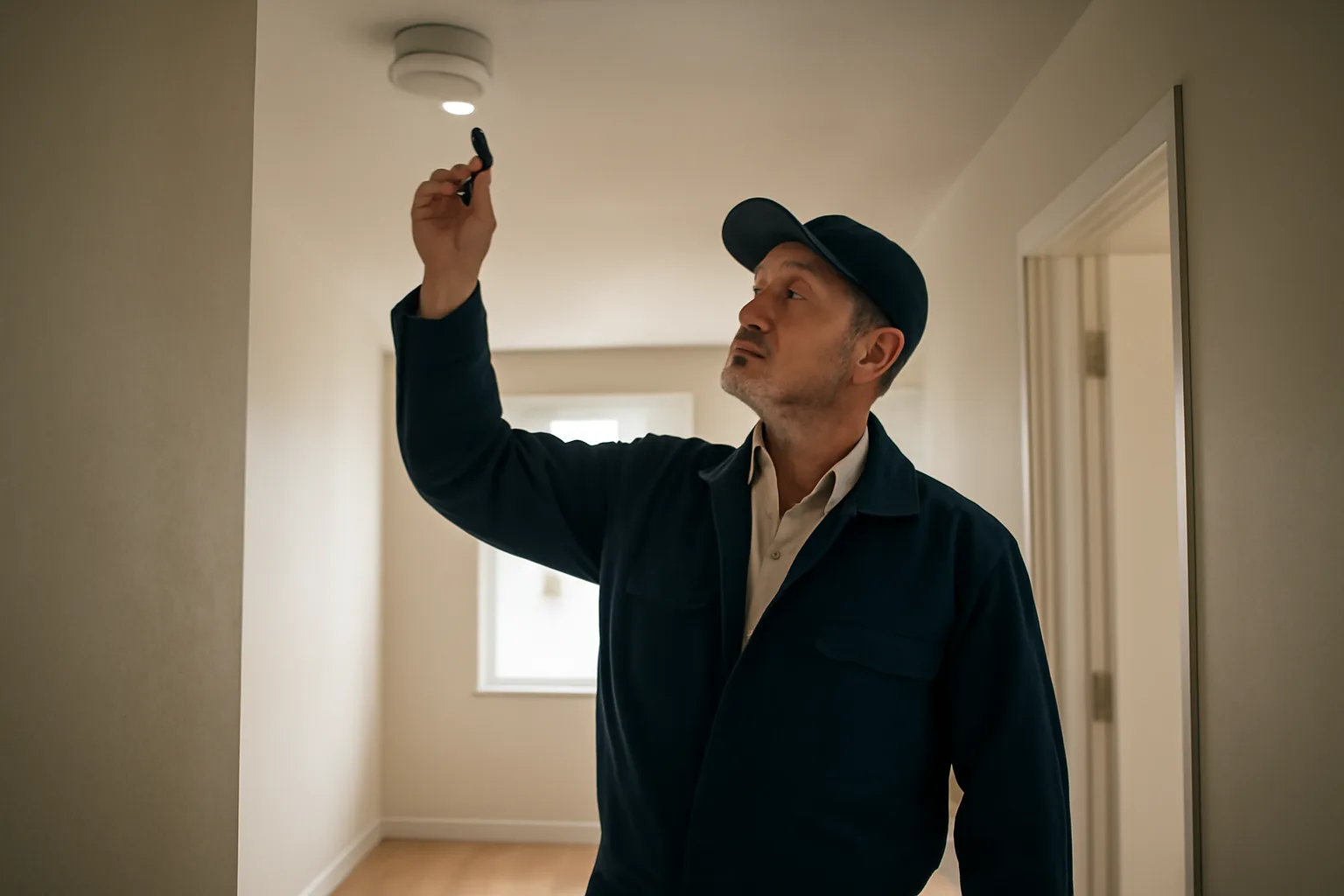
During a routine or compliance inspection, a landlord (or a city inspector, depending on the type) can generally check the condition of core building systems, code compliance items, and safety features: smoke and carbon monoxide detectors, electrical panels and outlets, plumbing fixtures and evidence of leaks, heating and ventilation systems, window and door locks, exit routes, and any structural issues like water damage or pest evidence. Most mandatory rental inspection programs are built around a checklist tied to the local housing or building code, not a general poke through the tenant's belongings. What an inspector or landlord generally cannot do, in most jurisdictions, is search through the tenant's personal property, open closed drawers or containers, or use the inspection as a pretext to look for something unrelated to habitability and code compliance. Notice requirements matter a lot here too. Most states require landlords to give some advance notice (commonly 24 to 48 hours, though it varies by state statute) before entering an occupied unit for a non-emergency inspection, and city compliance inspectors typically have to schedule with the landlord or tenant in advance as well, unless there's an emergency or a specific ordinance provision allowing shorter notice. If you're prepping for a city compliance inspection specifically, the checklist is usually public: check your city's housing or building department page for the actual inspection form before the date arrives, since a lot of failed inspections come down to missing smoke detectors or expired fire extinguisher tags, not big structural problems.
How much notice does a landlord have to give before entering or inspecting a unit?
Most states require landlords to give tenants advance written notice before entering an occupied rental for a routine inspection, repair, or showing, and the standard window in many states is 24 hours, though it's not universal. California, for example, presumes 24 hours' written notice is reasonable under Civil Code Section 1954, unless the tenant and landlord agree otherwise or it's an emergency [5]. Other states set their own numbers, and some don't specify an exact number of hours at all, just requiring "reasonable notice." Emergencies are the standard exception nearly everywhere: a burst pipe, fire, gas leak, or immediate safety hazard generally lets a landlord enter without advance notice, though you should still document why you entered and when. Notice rules for a city's own compliance inspector can be different from the landlord notice rule; some cities notify the tenant directly or schedule through the landlord, so check your specific ordinance rather than assuming your state's general entry-notice statute controls a city inspection appointment too. A good habit, regardless of the legal minimum: give more notice than required when you can, in writing, and keep a copy. It heads off disputes and it makes a nervous tenant a lot more cooperative when the actual inspection day arrives.
What rights do tenants have without a lease?
Tenants without a written lease, sometimes called month-to-month tenants or tenants-at-will, still have real legal protections under state landlord-tenant law. A lease being verbal or nonexistent doesn't strip a tenant of habitability rights, protection from illegal lockouts, or the right to proper notice before termination. Under most state codes, a tenant paying rent regularly without a written lease is treated as a month-to-month tenant, and ending that tenancy requires the landlord to give a statutory notice period, commonly 30 days, though some states require more for longer-term tenants or in cities with just-cause eviction rules. The landlord still can't shut off utilities, change the locks, or remove the tenant's belongings to force them out; that's an illegal "self-help" eviction in basically every state, and doing it can expose the landlord to statutory damages regardless of whether a lease existed. Tenants without a lease also retain the implied warranty of habitability in states that recognize it, meaning the unit still has to meet basic health and safety standards even with no paperwork at all. What a tenant without a lease usually doesn't have is a fixed term. Absent a written agreement stating otherwise, either party can generally end a month-to-month tenancy with proper notice, for any lawful reason, though local just-cause ordinances in cities like Los Angeles or Portland can limit a landlord's ability to end even a no-lease tenancy without a specified qualifying reason. For more on what tenants can and can't expect, see tenant rights and tenants rights.
Why do landlords require renters insurance?
Landlords require renters insurance mainly to shift liability and property-loss risk away from themselves and onto the tenant's own policy. A landlord's own property insurance typically covers the building structure, but it doesn't cover the tenant's personal belongings, and it often doesn't fully cover liability if the tenant (or their guest) causes an injury or a fire that damages the unit. Renters insurance is cheap relative to the protection it buys: national estimates commonly put average renters insurance premiums somewhere in the range of $15 to $30 a month, though the exact number depends heavily on coverage limits, location, and the insurer, so treat any specific figure as a rough planning number rather than a guarantee. For a landlord, requiring it in the lease reduces the odds of getting dragged into a dispute over a tenant's damaged furniture or an injury claim that should properly sit with the tenant's liability coverage instead of the landlord's policy. It's not required by state law in most places, but it's an extremely common lease clause, and some larger multifamily operators enforce it through a master policy the tenant pays into automatically.
What can't a landlord do in Ohio?
Ohio's landlord-tenant law, codified mainly in Ohio Revised Code Chapter 5321, spells out specific things a landlord cannot do, and violating them can expose a landlord to a tenant lawsuit for actual damages plus, in some cases, attorney fees. Ohio Revised Code Section 5321.15 specifically prohibits a landlord from using "self-help" measures to remove a tenant: a landlord cannot lock a tenant out, shut off utilities like water, electricity, or gas, or remove a tenant's belongings from the unit to force them out, even if the tenant is behind on rent [6]. The only lawful way to remove a tenant in Ohio is through the court eviction process. Ohio law also requires landlords to maintain the premises in a fit and habitable condition under Ohio Revised Code Section 5321.04, which includes keeping common areas safe, maintaining electrical, plumbing, heating, and sanitation systems in good working order, and complying with the building and housing codes that materially affect health and safety [7]. A landlord in Ohio also can't retaliate against a tenant for reporting a code violation or asserting a legal right under Section 5321.02, which prohibits retaliatory eviction or lease termination within specific circumstances tied to a tenant's good-faith complaint . None of this is unique to Ohio in spirit, most states have some version of a no-self-help-eviction rule and a habitability duty, but the specific statute numbers and remedies differ. If you're a landlord in a different state trying to figure out your own version of these rules, check your state's landlord-tenant statute directly rather than assuming Ohio's numbers apply.
How does this compare to US mandatory rental registration and licensing?
| What gets registered | The tenancy contract itself | The rental unit or property | |
|---|---|---|---|
| Who administers it | Department of Municipalities and Transport / Abu Dhabi Municipality [1] | City housing or building department (varies by city) | |
| Physical inspection required | Not standard | Common in many mandatory-licensing cities, not universal | |
| Renewal | Tied to lease renewal | Usually annual or biennial, confirm with your city | |
| Consequence of skipping it | Can't get utilities, visa sponsorship, or enforce the lease through Rental Disputes Settlement Committee | Fines, inability to collect rent or evict, in some cities a lien on the property | If you're dealing with a US city notice, the smartest first move is pulling the actual ordinance language or your city's rental licensing office page, not a generic search result. Building your file: proof of registration application date, inspection checklist, any prior violation notices, and your renewal calendar, saves you real time if you get a second notice or a fine later. That's the exact gap our $79 one-time City Rental License & Inspection Prep Packet is built to close: a structured way to organize your city's specific requirements, fees, and inspection prep instead of re-Googling it every renewal cycle. |
Tawtheeq and a typical US city rental license program share the same basic logic: register the tenancy or the unit with the government before it's legally rentable, and lose certain legal protections if you don't. But the mechanics differ a lot. | Feature | Tawtheeq (Abu Dhabi) | Typical US city rental license program |
What should a landlord do first after getting a rental registration or licensing notice?
Read the notice carefully for three things: the deadline, the specific code section or ordinance cited, and whether it's a first notice, a compliance order, or an actual fine. Cities generally send a warning or registration deadline first, then escalate to a fine or a stop-rent order if you don't respond, though the exact sequence and dollar amounts vary enormously by city. Next, confirm the requirement directly with your city's rental licensing office rather than assuming it matches what a neighboring city or an online forum says. Fee amounts, inspection checklists, and renewal timing are genuinely different city to city, sometimes even block to block within the same city if there's a historic district overlay or a different zoning designation involved. Then get the paperwork moving: application, fee payment, and inspection scheduling if required, in that order. Landlords who sit on a notice for a few weeks "to figure it out" are usually the ones who end up with an escalated fine notice instead of a first-notice registration fee. If you manage a small number of units and want a repeatable system for this instead of starting from scratch every time a city changes its ordinance, that's what our City Rental License & Inspection Prep Packet is for: a one-time $79 packet to organize the registration, inspection, and renewal side of running 1 to 10 units without the guesswork.
Frequently asked questions
Is Tawtheeq the same thing as a US rental license?
No. Tawtheeq is Abu Dhabi's mandatory system for registering tenancy contracts, run by the Department of Municipalities and Transport. A US rental license or registration is a separate, city-specific requirement to register or inspect the rental unit itself. They share the same basic idea (register before you rent legally) but different rules, fees, and agencies entirely.
How to become a landlord in the US?
Own or control residential property, check whether your city requires rental registration or licensing before you rent it out, sign a lease that complies with your state's landlord-tenant statute, and follow your state's rules on security deposits, entry notice, and habitability. There's no national license, but many cities now require local registration before your first tenant moves in.
What is landlording?
Landlording is renting out property to tenants and handling the legal and practical duties that come with it: maintaining habitability, following state landlord-tenant law, handling deposits properly, and, in mandatory-licensing cities, registering or licensing the unit. It's the ongoing job of being a landlord, more than the act of owning rental property.
What is a landlord?
A landlord is the owner or authorized manager of real property who leases it to a tenant for rent under a landlord-tenant relationship recognized by state law. That legal status, and its obligations, applies even without a signed written lease, since most state statutes define the role by conduct and control, not paperwork.
What rights do tenants have without a written lease?
Tenants without a lease are generally treated as month-to-month tenants and keep core protections: habitability rights, protection from illegal lockouts or utility shutoffs, and a statutory notice period (often 30 days, sometimes more) before the landlord can end the tenancy. Local just-cause eviction ordinances in some cities can further limit a landlord's ability to end a no-lease tenancy.
Who is responsible for a rental property walk-through inspection in California?
It depends on the type. The landlord (or their agent) is responsible for a pre-move-out inspection under California Civil Code Section 1950.5(f), with 48 hours' notice to the tenant. A separate city compliance inspection, where a city runs one, is conducted by a city housing inspector under that city's own ordinance.
What can a landlord look at during an inspection?
Generally, building systems and safety items: smoke and carbon monoxide detectors, electrical panels, plumbing, heating, structural condition, and code compliance items. Inspectors and landlords generally can't search the tenant's personal belongings or use the inspection as a pretext unrelated to habitability or code compliance.
How much notice does a landlord have to give before entering a unit?
Most states require 24 to 48 hours of advance written notice for a non-emergency entry or inspection, though the exact number and whether it must be written varies by state statute. California presumes 24 hours is reasonable under Civil Code Section 1954. Emergencies are a near-universal exception to the notice requirement.
Why do landlords require renters insurance?
Renters insurance covers the tenant's personal belongings and liability, which the landlord's own building policy typically doesn't cover. Requiring it in the lease reduces the landlord's exposure to disputes over damaged tenant property or injury claims that should sit with the tenant's own coverage instead.
What can't a landlord do in Ohio?
Ohio landlords cannot use self-help eviction methods like changing locks, shutting off utilities, or removing a tenant's belongings to force them out, under Ohio Revised Code Section 5321.15. They also can't retaliate against a tenant for a good-faith code complaint under Section 5321.02, and must keep the unit habitable under Section 5321.04.
Does Abu Dhabi's Tawtheeq system require a physical property inspection?
Tawtheeq itself is a contract registration system, not a physical property inspection program. It registers the tenancy agreement between landlord and tenant with Abu Dhabi Municipality. Separate building and safety inspections in Abu Dhabi fall under different municipal building code processes, not the Tawtheeq contract registration itself.
What happens if a US landlord doesn't register a rental with the city?
Consequences vary by city, but common outcomes include fines, being barred from collecting rent or filing an eviction until the property is registered, and in some cities a lien against the property for unpaid registration fees or penalties. Confirm the specific consequence with your city's rental licensing office, since programs differ significantly.
Is there a national US database of mandatory rental registration cities?
No single federal database tracks every city's rental registration or licensing ordinance, since these programs are created at the city or county level, not the federal level. You have to check your specific city or county housing department directly to confirm whether a mandatory program applies to your property.
Sources
- Baltimore City Code, Rental Dwelling Licensing requirements: An unexpired rental license is required before a landlord can collect rent or maintain an eviction action in Baltimore
- Uniform Law Commission, Uniform Residential Landlord and Tenant Act summary: The Uniform Residential Landlord and Tenant Act, drafted in 1972, forms the basis of landlord habitability duties in many states
- California Civil Code Section 1950.5: California tenants can request an initial move-out inspection with 48 hours' written notice before the itemized deposit deduction statement
- California Civil Code Section 1954: California presumes 24 hours' written notice is reasonable before landlord entry for inspection or repairs
- Ohio Revised Code Section 5321.15: Ohio landlords cannot use self-help measures like lockouts, utility shutoffs, or removing belongings to force a tenant out
- Ohio Revised Code Section 5321.04: Ohio landlords must maintain the premises in a fit and habitable condition and keep systems in good working order
- Ohio Revised Code Section 5321.02: Ohio law prohibits landlords from retaliating against tenants for good-faith code complaints or asserting legal rights