Last updated 2026-07-25
TL;DR
Landlords conducting a rental inspection can generally view all rooms, test safety equipment, check for code violations, and take photos of conditions, but most states require advance written notice (commonly 24 to 48 hours) and limit inspections to reasonable hours for a legitimate purpose. They cannot search personal belongings, show up unannounced without cause, or use inspections to harass a tenant.
What can a landlord look at during an inspection?
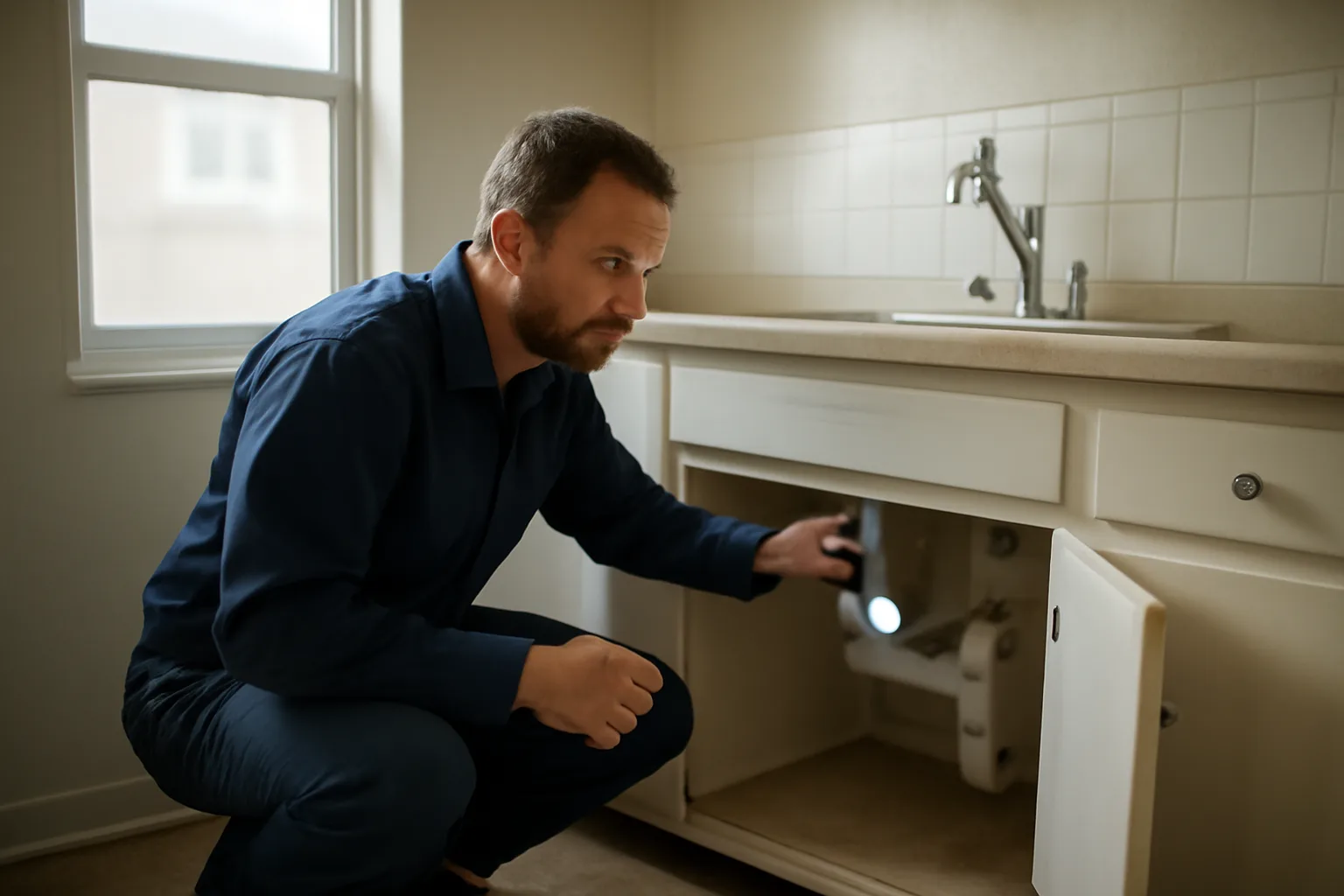
A landlord or a city inspector doing a rental walk-through can generally look at anything connected to the condition and safety of the unit. That means checking smoke detectors and carbon monoxide alarms, testing outlets, looking under sinks for leaks, checking the water heater and furnace, inspecting windows and doors for security and weatherproofing, and confirming there's no unauthorized occupant or illegal alteration to the unit. In most mandatory rental-licensing cities, the inspector is working off a checklist tied to the local housing code, not personal curiosity. Chicago's Residential Landlord and Tenant Ordinance, codified at Chapter 5-12 of the Municipal Code, frames landlord and tenant obligations around habitability items: working plumbing, heat, electrical safety, structural soundness, and exits [1]. A landlord doing a routine (non-licensing) walk-through is typically allowed to check the same things: appliance function, filter changes, signs of pest infestation, unauthorized pets, or damage beyond normal wear and tear. What a landlord or inspector should not do is open drawers, closets full of personal items, or go through mail, boxes, or private files. The inspection is about the property's condition, not an audit of the tenant's belongings. If something looks like a lease violation (unauthorized subletting, obvious property damage), the landlord can document it, usually with photos, but the walk-through isn't a general search. For city-mandated inspections tied to a rental license or registration, the specific checklist varies by jurisdiction. Always confirm with your city rental licensing office exactly what the inspector will check and whether they need access to every room or just common systems like smoke alarms and the furnace.
How much notice does a landlord have to give before an inspection?
| Non-emergency entry (general) | 24 hours (common) | Cal. Civ. Code 1954 [2] |
|---|---|---|
| Non-emergency entry (Ohio) | 24 hours (reasonable) | Ohio Rev. Code 5321.04 [3] |
| Emergency entry | None required | Varies by state |
| City licensing inspection | Set by municipal code, often written notice with a scheduled date | Confirm with your city rental licensing office |
Most states require landlords to give tenants advance notice before entering the unit for a non-emergency purpose, and that notice period commonly falls between 24 and 48 hours, though the exact number and the rules around emergencies vary by state. California law, for example, states that a landlord must give "reasonable notice in writing" and that 24 hours is presumed reasonable absent contrary evidence, under California Civil Code Section 1954 [2]. That's a presumption, not an absolute floor. In an emergency (a burst pipe, a gas leak) no notice is required at all. Ohio's landlord-tenant statute, Ohio Revised Code Section 5321.04, requires landlords to give "reasonable notice" of intent to enter, and defines reasonable notice as at least 24 hours in most circumstances [3]. Other states set 48 hours as the standard, and some (like Texas) don't set a specific statutory number for routine entry at all, though most leases specify one. Here's the honest complication: notice rules for a landlord's own maintenance inspection are usually a state statute matter, tied to landlord-tenant law. But a city's mandatory rental-license inspection is a separate track, often governed by municipal code, and the notice requirement there can be different, sometimes longer, sometimes requiring the tenant's written consent or a warrant if they refuse entry. Don't assume your state's general entry-notice rule and your city's licensing-inspection notice rule are the same document. Confirm both. | Notice type | Typical timeframe | Governing law example |
What can a landlord not do in Ohio during an inspection?
Ohio landlords cannot enter a rental unit without reasonable notice except in a genuine emergency, and they cannot use their right of entry to harass a tenant. Ohio Revised Code Section 5321.04 lays out landlord obligations, and its companion provisions on tenant remedies (ORC 5321.15 through 5321.17) address unlawful landlord entry and retaliation. Specifically, Ohio landlords are barred from entering "at unreasonable times" or with unreasonable frequency, and a pattern of excessive or oddly-timed inspection visits can itself become a legal problem for the landlord, separate from anything found during the inspection [3]. Ohio law also prohibits landlords from using self-help remedies. A landlord cannot shut off utilities, change the locks, or remove a tenant's belongings, even during or after an inspection that reveals a lease violation. Ohio Revised Code Section 5321.15 explicitly bans this kind of self-help eviction. Ohio landlords also cannot treat an inspection as a pretext to search for anything unrelated to habitability or lease compliance. If a landlord wants to look through a tenant's closets, personal papers, or private storage without a specific, disclosed reason tied to the lease (like verifying an unauthorized pet after a complaint), that's outside the scope most courts and the statute contemplate. Ohio doesn't have a single statewide mandatory rental-licensing and inspection law the way some cities do; instead, individual Ohio cities (Cleveland Heights, Youngstown, and others) run their own local registration and inspection ordinances. So the state-law entry rules above apply everywhere in Ohio, but a specific city's licensing inspection procedure sits on top of that and should be confirmed with the local office.
Who is responsible for a rental property walk-through inspection in California?
In California, the landlord is generally the party responsible for arranging and conducting a move-in and move-out walk-through inspection, though the tenant has a legal right to participate. California Civil Code Section 1950.5 gives tenants the right to request an initial inspection before move-out specifically so they can fix any deductible items themselves before the landlord assesses the security deposit [4]. Here's how it actually works. If the tenant requests it, the landlord must schedule the initial move-out inspection and give at least 48 hours' written notice of the date and time, per Civil Code 1950.5(f). The landlord (or their agent) walks through with the tenant, notes any damage that would justify a deposit deduction, and gives the tenant an itemized statement of what needs fixing and roughly what it would cost. The tenant then gets a chance to fix those items before the final move-out. For city-mandated rental licensing inspections (different from the security-deposit walk-through), the responsibility usually falls on the landlord to schedule and be present, or to authorize an agent or property manager to stand in. Cities like Los Angeles and Oakland run their own systematic inspection programs tied to rental registration, and the property owner is the one who gets cited if access isn't provided or if violations aren't corrected. Confirm scheduling responsibility and any tenant-notice requirements with your city rental licensing office, since procedures differ between move-out walk-throughs (state law) and code-compliance inspections (city ordinance).
What is landlording, and what is a landlord?
A landlord is the owner (or an authorized agent of the owner) of residential or commercial property who rents that property to another party, called a tenant, in exchange for regular payment. "Landlording" is the informal term for the ongoing work of managing that relationship: collecting rent, maintaining the property, handling repairs, following state and local law, and dealing with tenant turnover. It's more than collecting a check. A landlord operating even a single unit takes on legal duties defined by state landlord-tenant statutes and, in many cities, by a rental licensing ordinance. Those duties commonly include keeping the unit habitable (working plumbing, heat, structural safety), giving proper notice before entering, returning security deposits within a set timeframe, and following fair housing law in tenant selection. The scale runs from a single-unit landlord renting out a basement apartment to institutional owners managing thousands of units. The legal floor is the same either way: a landlord with one unit in a mandatory-licensing city still has to register that unit, pay any required fee, and pass inspection just like a landlord with ten units, though the specific fee schedule sometimes scales with unit count. Landlord basics and tenant rights guides go deeper on the day-to-day mechanics.
How do you become a landlord, and how do you actually run the job well?
Becoming a landlord legally requires, at minimum: owning or having authority over a rental property, complying with your state's landlord-tenant law, and, in many cities, registering the unit and possibly passing an inspection before you can legally rent it out. There's no license or exam required nationally to become a landlord the way there is for, say, a real estate agent, but plenty of cities now require a rental license or registration before you can collect rent legally. The practical steps look like this. First, confirm whether your city requires rental registration or licensing; skipping this step is the single most common way new landlords rack up fines, since many cities issue penalties even for a first-time unregistered rental once discovered, and some backdate the fee to when the tenancy started. Second, get the unit inspection-ready: working smoke and CO alarms on every level, no exposed wiring, functioning heat, and no obvious code violations like blocked exits or missing handrails. Third, understand your state's rules on notice-to-enter, security deposit handling, and eviction procedure before you sign a first lease, since these vary meaningfully state to state. Running it well long-term means treating maintenance requests fast (both because it's the law in most states and because deferred maintenance is what triggers inspection failures and tenant complaints to the city), keeping records of every notice and repair, and screening tenants consistently and lawfully to avoid fair housing exposure. A landlord with 1 to 10 units doesn't need to over-engineer this with expensive software, but skipping documentation is a real risk once a dispute or inspection issue comes up. If you're getting ready for a first-time license inspection or a renewal, our $79 one-time City Rental License & Inspection Prep Packet walks through a general pre-inspection checklist and documentation templates, though you should always verify your specific city's checklist with its rental licensing office since requirements differ by jurisdiction.
What rights do tenants have without a lease?
A tenant without a written lease, sometimes called a tenant-at-will or a month-to-month tenant by default, still has real legal protections under state law. The absence of a written lease does not mean the absence of a tenancy; it usually just means the tenancy runs month-to-month and either side can end it with proper notice. Even without a signed lease, tenants generally retain the right to a habitable unit, protection from illegal lockouts or utility shutoffs, the right to advance notice before the landlord enters, and the right to proper eviction procedure (a landlord can't just change the locks or remove belongings because there's no lease document). Many states' habitability and entry-notice statutes, including California's Civil Code 1954 [2] and Ohio's Revised Code 5321 series [3], apply to any residential tenancy, written or oral. What differs without a lease is mostly the notice period for ending the tenancy and the absence of specific negotiated terms (pet policies, subletting rules, renewal terms). Most states require 30 days' notice to end a month-to-month tenancy with no lease, though this varies and some states scale the notice period with how long the tenant has lived there. A tenant without a lease should still expect the landlord to follow the same entry-notice and habitability rules as any other tenant; see tenants rights and renters rights for more on this.
Why do landlords require renters insurance?
Landlords require renters insurance mainly to shift the financial risk of a tenant's personal property loss and personal liability away from the landlord's own policy. A landlord's property insurance covers the building itself, not the tenant's furniture, electronics, or clothing, and it generally doesn't cover a lawsuit if the tenant's guest gets hurt inside the unit or the tenant accidentally causes a fire that damages a neighbor's unit. Requiring renters insurance is legal in nearly every state as a lease condition, and it's become common practice, particularly in multi-unit buildings where one tenant's negligence (an unattended stove, an overflowing tub) can damage another unit or common areas. The Insurance Information Institute has noted that renters insurance is relatively cheap, commonly running in the range of roughly $15 to $30 a month depending on coverage and location, which is part of why many landlords make it a standard lease requirement rather than an optional suggestion [5]. For a landlord with 1 to 10 units, requiring renters insurance also reduces the odds you get pulled into a dispute over who pays for a tenant's damaged belongings after a pipe burst or a fire, since the tenant's own policy handles that instead of becoming an argument about the landlord's liability.
What should a landlord actually do to prepare for a city licensing inspection?
A landlord preparing for a mandatory rental-license inspection should walk the unit ahead of time with the same checklist the city inspector will use, fix anything obviously broken, and gather the paperwork the city typically wants on file. Common items across most municipal rental inspection programs include: working smoke alarms in every bedroom and hallway (and CO alarms near fuel-burning appliances or attached garages), functioning locks on all exterior doors, no visible structural damage or missing handrails on stairs, a functioning water heater with a proper pressure relief valve, and no obvious electrical hazards like exposed wiring or overloaded outlets. Because every city's checklist differs, and because fee schedules and reinspection windows aren't standardized nationally, the single best move is calling or emailing your city rental licensing office and asking for the actual inspection checklist document before the appointment, not relying on general national guidance. Some cities publish this checklist as a PDF; others only hand it out on request. Documentation matters almost as much as the physical fixes. Many cities want proof of a current rental license application, sometimes proof of liability insurance, and in some jurisdictions a copy of the lease or a unit registration form listing all legal occupants. Missing paperwork is a common reason for a failed or delayed inspection that has nothing to do with the physical condition of the unit at all. Our $79 City Rental License & Inspection Prep Packet is built around organizing this documentation and a general pre-inspection walk-through checklist for landlords with a handful of units, but it's not a substitute for your city's actual, specific checklist. Treat it as a starting framework, then confirm every line against what your local office actually requires.
What happens if a tenant refuses to allow the inspection?
If a tenant refuses entry for a properly noticed, lawful inspection, the landlord generally cannot force entry or threaten the tenant, but does have legal remedies, which usually mean going to court for access or, in the case of a mandatory city rental inspection, the city itself pursuing enforcement against the property, not the tenant, for lack of access. For a landlord's own maintenance-related entry with proper notice under state law, most states treat tenant refusal as a lease violation the landlord can address through standard remedies (a notice to cure, and ultimately eviction proceedings if it continues), rather than something the landlord can force through self-help. Breaking in, changing locks, or removing belongings because a tenant refused entry is illegal self-help in essentially every state, including under Ohio Revised Code 5321.15 [3]. For a city-mandated licensing inspection, refusal gets more complicated because the city, more than the landlord, has an interest in inspecting. Many municipal codes allow the city to seek an administrative warrant if a tenant or owner refuses access, and failure to complete a required inspection can itself result in license denial or fines against the property owner, regardless of whose refusal caused the delay. This is exactly the kind of procedural detail that varies by city, so if a tenant is refusing access ahead of a scheduled licensing inspection, confirm with your city rental licensing office what their specific escalation process looks like before you do anything else.
Frequently asked questions
How much notice does a landlord have to give before entering for an inspection?
Most states require 24 to 48 hours of advance notice for non-emergency entry. California presumes 24 hours is reasonable under Civil Code 1954 [2]; Ohio also treats 24 hours as reasonable under ORC 5321.04 [3]. Emergencies (gas leaks, active flooding) don't require advance notice. City-mandated licensing inspections may follow a different, longer notice schedule set by municipal code.
What can a landlord look at during a rental inspection?
A landlord can generally check smoke and CO alarms, plumbing, electrical outlets, heating systems, windows, doors, and overall unit condition for code violations or lease compliance. They can take photos of visible conditions. They generally cannot open closed drawers, closets full of personal belongings, or search through mail and private papers unrelated to the property's condition.
What can a landlord not do in Ohio during an inspection?
Ohio landlords can't enter without reasonable notice (generally 24 hours) except in an emergency, can't enter at unreasonable times or with unreasonable frequency, and can't use self-help remedies like changing locks or shutting off utilities, per Ohio Revised Code 5321.04 and 5321.15 [3]. They also can't use an inspection as a pretext to search unrelated personal items.
Who is responsible for a rental property walk-through in California?
The landlord is responsible for scheduling and conducting move-out walk-through inspections when the tenant requests one, per California Civil Code 1950.5, giving at least 48 hours' written notice of the date [4]. For city rental-licensing inspections, the property owner is typically responsible for scheduling and providing access; confirm specifics with your city rental licensing office.
What is landlording?
Landlording is the ongoing work of owning and managing rental property: collecting rent, maintaining habitability, handling repairs, screening tenants, and complying with state landlord-tenant law and any local rental licensing or inspection ordinance. It applies whether you own one unit or a portfolio.
What is a landlord, legally speaking?
A landlord is the owner or authorized agent of a rental property who leases that property to a tenant for payment, taking on legal duties under state landlord-tenant statutes, including habitability, proper entry notice, and lawful eviction procedure, plus any local rental registration or licensing requirements.
What rights do tenants have without a signed lease?
Tenants without a written lease still have a legal tenancy, usually month-to-month, and retain rights to habitability, advance notice before entry, protection from illegal lockouts, and proper eviction procedure. What mainly changes without a lease is the notice period to end the tenancy, commonly 30 days in many states, and the lack of specific negotiated terms.
How do you become a landlord?
There's no license required nationally to become a landlord, but you must comply with your state's landlord-tenant law and, in many cities, register or license the rental unit before renting it out legally. Practical steps: confirm local registration rules, prepare the unit to code, and learn your state's notice and deposit rules before signing a lease.
Why do landlords require renters insurance?
Renters insurance protects the tenant's own belongings and covers tenant liability for accidents, neither of which the landlord's property insurance covers. Requiring it reduces disputes over damaged tenant property and liability claims. Renters insurance is generally inexpensive, often cited around $15 to $30 a month [5], making it a low-friction lease requirement.
Can a landlord open closets or drawers during an inspection?
Generally no. Inspections, whether by the landlord or a city inspector, are meant to assess the property's condition and code compliance, not to search personal belongings. Opening closed drawers, personal storage, or private papers without a specific, disclosed reason tied to a lease violation or safety concern typically falls outside the legitimate scope of a routine inspection.
What happens if a tenant refuses to allow a scheduled inspection?
For a landlord's routine entry, refusal is generally treated as a lease violation the landlord addresses through normal remedies, not by forcing entry. For city-mandated licensing inspections, cities may seek an administrative warrant, and lack of access can delay or block the license regardless of who caused the refusal. Confirm your city's specific process with its rental licensing office.
Does a landlord need a reason to inspect the unit?
Most states require the entry to have a legitimate purpose, such as repairs, showing the unit, or a required safety inspection, rather than being open-ended. Using entry purely to check on the tenant with no maintenance or compliance reason, or entering excessively often, can cross into harassment under some state statutes, including Ohio's landlord-tenant law [3].
Sources
- City of Chicago Municipal Code, Chapter 5-12, Residential Landlord and Tenant Ordinance: Municipal rental inspection standards commonly focus on habitability items like plumbing, heat, and structural safety
- California Legislative Information, Civil Code Section 1954: California presumes 24 hours' written notice is reasonable before landlord entry for non-emergency purposes
- Ohio Legislature, Ohio Revised Code Section 5321.04: Ohio landlords must give reasonable notice, generally 24 hours, before entry, and cannot enter at unreasonable times or frequency
- California Legislative Information, Civil Code Section 1950.5: California tenants can request an initial move-out inspection, and landlords must give at least 48 hours' written notice of the scheduled date
- Ohio Legislature, Ohio Revised Code Section 5321.15: Ohio law prohibits landlord self-help remedies like changing locks or shutting off utilities
- Insurance Information Institute, Renters Insurance facts and statistics: Renters insurance is relatively inexpensive, commonly citing typical monthly premiums in the roughly $15 to $30 range