Last updated 2026-07-26
TL;DR
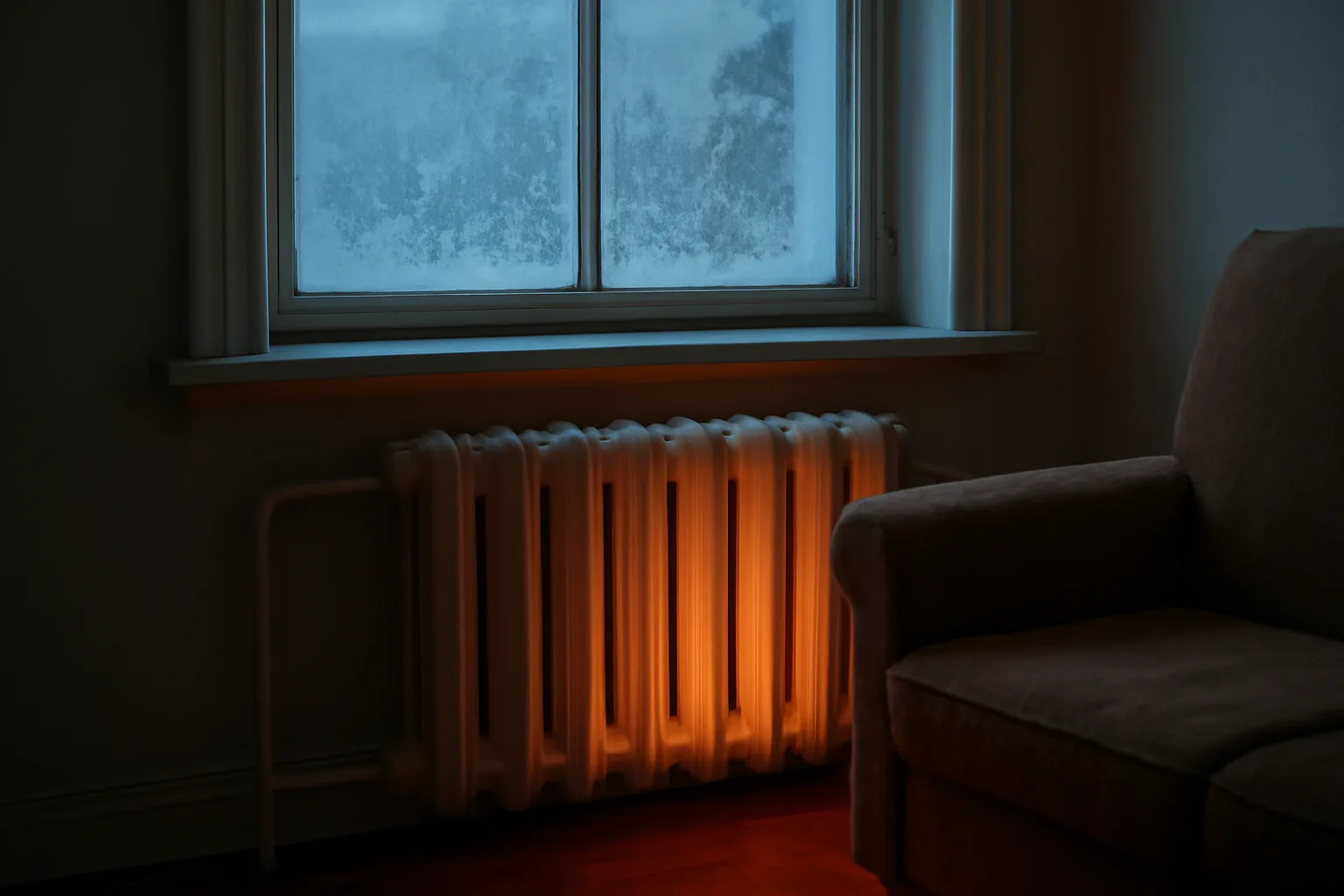
Yes. New York City law requires owners of residential buildings to provide heat from October 1 through May 31 (the "Heat Season") and hot water year round, under the city's Housing Maintenance Code. Minimum indoor temperatures are set by outdoor readings during the day and a flat minimum at night. Failing to provide heat can bring HPD violations and civil penalties.
are landlords required to pay for heat in nyc?
Yes. Under the New York City Housing Maintenance Code, owners of Class A multiple dwellings (most apartment buildings) must provide heat during "Heat Season," which runs October 1 through May 31, and must provide hot water at a minimum of 120 degrees Fahrenheit every day of the year [1]. This isn't a lease negotiation point. It's baked into the Administrative Code, specifically Title 27, Chapter 2, and enforced by the NYC Department of Housing Preservation and Development (HPD) [1]. The rule applies whether or not the lease says anything about heat. A landlord can't shift the cost or the legal duty onto the tenant by writing it into the lease, at least not for the heat itself. Some buildings do pass through fuel costs in commercial leases or in certain co-op/condo arrangements, but for standard residential rentals covered by the Housing Maintenance Code, supplying heat is the owner's job [1]. If you own a 2-family or larger residential building in NYC and you're getting your first ordinance notice or violation letter about heat, don't panic, but don't ignore it either. HPD complaints about heat and hot water are some of the most common 311 calls in the city, and repeat violations escalate fast in both frequency and dollar amount.
what are the exact temperature rules landlords must follow?
| 6:00 a.m. to 10:00 p.m. | Below 55°F | At least 68°F | |
|---|---|---|---|
| 10:00 p.m. to 6:00 a.m. | Any temperature | At least 62°F | During the day, the rule only kicks in when it's colder than 55°F outside. If it's 60°F outside at 2 p.m., the owner doesn't have to keep the apartment at 68°F. But once the outdoor temperature drops below 55°F between 6 a.m. and 10 p.m., indoor temperature must hit at least 68°F [2]. Overnight, the rule doesn't care what it's doing outside at all: indoor temperature must stay at or above 62°F from 10 p.m. to 6 a.m., every night of Heat Season [2]. Hot water is separate and simpler: 120°F minimum, 365 days a year, no exceptions for season or outdoor temperature [1]. A building can have perfect heat in January and still get hit with a hot water violation in July if the water heater is undersized or poorly maintained. |
NYC's heat rule is split into a daytime rule tied to outdoor temperature, and a nighttime rule that's a flat indoor minimum. Here's the breakdown, straight from HPD's own guidance [2]: | Time | Outdoor Temp | Required Indoor Temp |
what happens if a landlord doesn't provide heat in nyc?
Tenants can call 311 to file a heat or hot water complaint, and HPD can send an inspector, sometimes the same day during Heat Season, since heat complaints get priority. If HPD confirms the violation, the owner gets a Housing Maintenance Code violation, and if the problem isn't fixed, civil penalties start stacking. HPD's own fee schedule lists per-day civil penalties for heat and hot water violations that scale with the size of the building and whether it's a repeat offense within the same heat season [3]. Penalties are assessed per day the condition continues, which means a heat outage that drags on for a week or two during a cold snap can turn into a real bill, more than a citation. Beyond HPD violations, tenants in NYC also have the option to sue in Housing Court for lack of essential services, which can lead to rent abatements ordered by a judge, on top of whatever HPD assesses separately [4]. A landlord who ignores heat complaints is exposed on two fronts at once: the regulatory penalty track through HPD, and the private legal track through the tenant's own court case. If you're managing a small building and you got a violation notice, the fastest move is usually to fix the mechanical problem first (boiler, thermostat, fuel supply) and then deal with the paperwork. HPD violations don't go away by themselves, and unresolved Class C violations (which heat violations often are, since lack of heat is considered hazardous) carry higher penalties than lower-class violations [3].
does the heat law apply to every rental in nyc?
The Housing Maintenance Code heat and hot water requirements apply to Class A multiple dwellings, which generally means buildings with three or more residential units, along with many 2-family buildings depending on how they're classified [1]. Owner-occupied 2-family homes have some different treatment under city and state law, so if you're renting out one unit of a 2-family house you live in, it's worth confirming your building's exact classification with HPD or the NYC Department of Buildings rather than assuming. If you're a landlord in a smaller building elsewhere in New York State, outside NYC, note that the state's own Multiple Residence Law and Multiple Dwelling Law have separate heat provisions, and individual cities and towns often layer their own housing codes on top. New York City's rule is one of the most detailed in the country, but it is not universal even within the state. This is also a good moment to check whether your building falls under any other NYC-specific licensing or registration program. If you're new to owning rental property in a city with mandatory rules like this, our landlord basics guide walks through what "landlording" actually involves day to day, separate from the heat-specific rules covered here.
what is landlording, and what does it actually involve?
"Landlording" is the day-to-day work of owning and operating rental property: collecting rent, keeping the building in code-compliant condition, handling repair requests, managing turnover between tenants, and staying current on local licensing, registration, and inspection rules. It's part maintenance manager, part bookkeeper, part compliance officer. In a heat-regulated city like New York, landlording during the winter months specifically means monitoring your boiler, keeping fuel supply arranged, and being ready to respond to a heat complaint within hours, not days. A lot of new landlords underestimate this part. You're more than collecting a check. You're on the hook for a building system (the heating plant) that has legal minimum performance standards attached to it, enforced by an agency that can and does show up unannounced. If you're asking "what is a landlord" in the most basic sense: a landlord is the owner of a residential property who leases it to a tenant in exchange for rent, and who, in nearly every U.S. jurisdiction, takes on a legal duty to keep the unit habitable. Habitability standards vary by state and city, but heat, working plumbing, and structural safety show up in nearly every code, and NYC's Housing Maintenance Code is one of the more detailed and enforced versions of that standard [1].
how do you become a landlord in a city with heat and inspection rules?
Becoming a landlord in a regulated city like New York involves more steps than just buying a building and finding a tenant. At minimum, you generally need to: register the property with the appropriate city agency (in NYC, that's a Property Registration with HPD for most rental buildings), understand the applicable maintenance code (heat, hot water, smoke and carbon monoxide detectors, lead paint disclosure), and get comfortable with the idea that inspectors can and will show up in response to tenant complaints. Many landlords starting out focus entirely on the lease and the rent number, and treat code compliance as an afterthought. That's backwards in a mandatory-licensing or mandatory-registration city. HPD registration in NYC, for example, isn't optional paperwork, it's a requirement tied directly to your ability to bring certain court actions against a tenant later, and failing to register can limit your legal options if you ever need to go to Housing Court [5]. If you're setting up your first rental and want a structured way to organize the registration, inspection prep, and documentation pieces, that's exactly the gap our $79 City Rental License & Inspection Prep Packet is built to close. It's a one-time purchase, not a subscription, and it's meant to help you walk into an inspection or a registration deadline with your paperwork actually organized instead of scrambled together the night before.
what can a landlord look at during a rental inspection?
During a routine or complaint-driven rental inspection, whether it's an HPD heat inspection in New York or a general rental housing inspection in another city, the inspector is generally checking for code compliance, not doing a general property assessment for the landlord's benefit. That means smoke and carbon monoxide detector presence and function, heat and hot water performance if that's the complaint category, structural hazards, pest evidence, peeling paint (especially relevant for lead paint rules in pre-1978 buildings), and working plumbing and electrical systems [6]. A landlord conducting their own pre-inspection walk-through, separate from a government inspection, can reasonably look at the same categories: smoke detector batteries, visible leaks, working outlets, window locks, and general wear that could become a code violation later. What a landlord generally cannot do is use an inspection as a pretext to search a tenant's personal belongings or go through areas unrelated to the unit's condition. The inspection is about the property's condition and code compliance, not the tenant's possessions. In California, responsibility for a rental property walk-through inspection (move-in and move-out condition checks) typically falls on the landlord or their property manager, and California Civil Code Section 1950.5 requires landlords to give tenants the option of an initial move-out inspection before the final one, specifically so tenants can fix deficiencies themselves and avoid deductions from the security deposit [7]. That's a different kind of inspection than a city code-enforcement visit, but landlords sometimes conflate the two, so it's worth knowing they're governed by different rules and different purposes.
how much notice does a landlord have to give before entering a unit?
Notice requirements vary significantly by state and city, so there's no single national number. New York State generally expects "reasonable notice" for non-emergency entry, and many New York City leases specify 24 to 48 hours in writing, though the exact figure often comes from the lease itself rather than a single statewide statute [8]. California, by contrast, has a specific statutory default: Civil Code Section 1954 sets 24 hours as presumptively reasonable notice for non-emergency entry, unless the rental agreement specifies otherwise [9]. Emergencies are the universal exception. If there's a gas leak, active flooding, or fire risk, most states and cities allow landlords to enter without advance notice, and that includes emergency heat repair situations. If a boiler failure creates a health or safety risk in freezing weather, that's generally treated as an emergency for entry purposes, separate from the routine notice rules. Because this varies so much city to city, the safest move for any landlord is to check both their specific state's landlord-tenant statute and their local municipal code, since some cities layer on their own notice requirements independent of the state law. When in doubt, giving more notice than required rarely causes a problem, while giving less than required can create a real legal exposure, especially if a tenant later claims a pattern of improper entry.
why do landlords require renters insurance?
Landlords require renters insurance mainly to shift liability risk away from their own policy and to make sure a tenant's personal property loss (fire, theft, water damage) doesn't turn into a dispute over who was supposed to cover what. A landlord's own property insurance covers the building structure; it typically does not cover a tenant's furniture, electronics, or clothing, and it often doesn't cover a tenant's liability if the tenant accidentally causes damage (like an overflowing bathtub that damages the unit below). Requiring renters insurance, commonly in the range of $100,000 to $300,000 in liability coverage, is a common risk-management practice, though it isn't a universal legal requirement. Some cities and some subsidized housing programs do mandate it, but for standard private-market leases, it's typically a landlord's lease clause rather than a citywide law. Landlords like it because it means a tenant's own insurer, not the landlord's policy or the landlord's bank account, absorbs the first layer of loss when something goes wrong inside the unit. This ties loosely back to heat: if a frozen, unrepaired pipe bursts because heat wasn't maintained and it damages a tenant's belongings, the liability picture gets complicated fast, and it's exactly the kind of scenario where both a landlord's habitability duty and a tenant's insurance coverage both come into play at once.
what rights do tenants have without a lease?
A tenant without a signed lease, sometimes called a tenant-at-will or a month-to-month tenant depending on the state, still generally has the same basic legal protections as a tenant with a written lease: the right to a habitable unit, the right to proper notice before eviction, and in NYC's case, the same right to heat and hot water under the Housing Maintenance Code, since that duty attaches to the building and the tenancy, not to the existence of a written document [1]. What changes without a lease is usually the notice period for ending the tenancy and the specifics of what's been agreed to about rent amount, pet policies, and other terms. Many states default month-to-month tenancies to a 30-day notice requirement for termination, though some jurisdictions scale this up (60 or 90 days) for longer-term tenants, and NYC itself has specific escalating notice requirements tied to how long someone has lived in a unit . The absence of a lease doesn't waive a tenant's rights, and it doesn't waive a landlord's obligations either. Landlords sometimes assume that skipping a written lease gives them more flexibility on things like heat or repairs. It doesn't. Code-based habitability duties, including NYC's heat rule, exist independent of any lease document [1].
what can't a landlord do in ohio?
Ohio's landlord-tenant law, codified largely in Ohio Revised Code Chapter 5321, prohibits a number of common landlord actions. Landlords in Ohio cannot lock a tenant out without a court order (no self-help evictions), cannot shut off utilities to force a tenant out, and cannot retaliate against a tenant for reporting a code violation or exercising a legal right, such as by raising rent or attempting eviction shortly after a complaint . Ohio law also requires landlords to maintain the premises in a fit and habitable condition, including keeping electrical, plumbing, heating, and sanitary systems in good working order . Ohio's statute specifically states that a landlord must "make all repairs and do whatever is reasonably necessary to put and keep the premises in a fit and habitable condition" (Ohio Revised Code Section 5321.04) . That general habitability language is similar in spirit to NYC's heat-specific rule, even though Ohio's statute doesn't spell out exact indoor temperature minimums the way NYC's code does. The self-help eviction ban is probably the most commonly violated Ohio rule among small landlords who don't know better. Changing locks, removing a tenant's belongings, or shutting off gas and electric to pressure someone to leave are all illegal shortcuts around the formal eviction process in Ohio, and they can expose a landlord to damages claims from the tenant.
how do heat rules compare in other major cities?
| New York City | Oct 1 to May 31 | 68°F (when outside is below 55°F) | 62°F | |
|---|---|---|---|---|
| Chicago | Sept 15 to June 1 | 68°F (when outside is below 65°F) | 66°F | The practical lesson for any landlord operating in more than one city: don't assume the rules transfer. A heat season and temperature threshold that's compliant in one city can put you in violation in another, and the enforcement agency, penalty schedule, and complaint process are all going to be different too. Always confirm the exact numbers with your specific city's housing or code enforcement office rather than working from memory or a general sense of "the law." |
NYC's rule is detailed and well-enforced, but it's not the only city with a heat mandate. Chicago's municipal code requires building owners to maintain indoor temperatures of at least 68°F during the day (8:30 a.m. to 10:30 p.m.) when outdoor temperature is below 65°F, and at least 66°F overnight, during a heating season that runs September 15 through June 1, longer than NYC's . Philadelphia's heat season and minimums differ again, and many smaller cities have no codified heat minimum at all, leaving habitability disputes to general nuisance or health code language instead. | City | Heat Season | Daytime Minimum | Nighttime Minimum |
what should a landlord do right now if they got a heat violation notice?
First, read the notice carefully and note the deadline. HPD violation notices in NYC typically specify a correction timeframe, and Class C violations (which most heat and hot water issues fall under, since they're considered hazardous to health and safety) carry the shortest correction windows and highest penalty exposure of the violation classes [3]. Second, fix the actual mechanical problem before you worry about paperwork. A boiler repair, a fuel delivery, a broken thermostat, whatever's causing the outage. HPD and tenants both care more about restored heat than about how quickly you respond to the letter itself, though obviously you want to respond to both. Third, document everything: repair invoices, technician visit dates, thermostat logs if you have them, and any communication with the tenant about the timeline. If the violation escalates to a Housing Court proceeding, this documentation is what protects you. Fourth, check whether your building's registration with HPD is current. An expired or missing registration can complicate your legal standing in any follow-up dispute, and it's a separate, fixable problem from the heat issue itself [5]. If you're trying to get organized across registration, inspection readiness, and violation response all at once, that's the exact use case for our City Rental License & Inspection Prep Packet, a one-time $79 packet meant to walk a small landlord through what a given city typically expects, without guessing.
Frequently asked questions
Is heat required in NYC apartments in October?
Yes. NYC's Heat Season runs October 1 through May 31, so heat requirements are already in effect for the entire month of October, more than deep winter. During the day, if outdoor temperature drops below 55°F, indoor temperature must be at least 68°F; overnight the minimum is 62°F regardless of outdoor temperature.
What temperature does a NYC landlord have to keep an apartment at night?
At least 62°F, from 10 p.m. to 6 a.m., every night during Heat Season (October 1 to May 31), no matter what the outdoor temperature is. This is a flat minimum set by NYC's Housing Maintenance Code and enforced by HPD.
Does NYC require hot water year round?
Yes. Owners must supply hot water at a minimum of 120°F every day of the year, more than during Heat Season. Hot water violations can be issued in July just as easily as in January if the water heater isn't performing.
Can a landlord shut off heat to force a tenant out in NYC or Ohio?
No. In NYC, cutting off heat is a Housing Maintenance Code violation and can trigger HPD penalties plus a Housing Court case. In Ohio, Revised Code 5321 bans self-help measures like utility shutoffs used to pressure a tenant into leaving; it's an illegal alternative to formal eviction.
How to become a landlord in a mandatory-registration city?
Generally: buy or already own residential property, register it with the local housing agency (HPD in NYC), understand the applicable maintenance code covering heat, smoke detectors, and lead paint, and set up a lease. Registration is often a legal prerequisite to bringing certain tenant actions in court later.
Who is responsible for a rental property walk-through inspection in California?
The landlord or their property manager typically handles walk-through inspections. California Civil Code Section 1950.5 requires landlords to offer tenants an initial move-out inspection before the final one, so tenants get a chance to fix issues themselves before deposit deductions are made.
What is landlording?
Landlording is the ongoing work of owning and operating rental property: collecting rent, maintaining code compliance, handling repairs, managing tenant turnover, and keeping up with local licensing, registration, and inspection requirements. It's an operational job, not a passive investment.
What is a landlord?
A landlord is the owner of residential or commercial property who rents it to a tenant in exchange for payment, and who in nearly every U.S. jurisdiction takes on a legal duty to keep the property habitable, covering things like working heat, plumbing, and structural safety.
What rights do tenants have without a lease?
A tenant without a written lease generally keeps the same habitability rights as one with a lease, including the right to heat and hot water where required by local code. What differs is usually the notice period for ending the tenancy, which often defaults to 30 days for month-to-month arrangements depending on the state.
Why do landlords require renters insurance?
To shift the risk of a tenant's personal property loss and personal liability away from the landlord's own insurance policy. A landlord's building insurance generally doesn't cover a tenant's belongings or a tenant-caused accident, so renters insurance fills that gap.
How much notice does a landlord have to give before entering a unit?
It varies by state. California sets 24 hours as the presumptive standard under Civil Code Section 1954. New York doesn't set one statewide number for all situations; NYC leases commonly specify 24 to 48 hours. Emergencies (gas leaks, flooding, heat failure creating a safety risk) allow entry without advance notice in most places.
What can a landlord look at during an inspection?
A code-enforcement inspection covers smoke and carbon monoxide detectors, heat and hot water performance, structural hazards, pest evidence, peeling paint, and working plumbing and electrical systems. Inspectors are checking code compliance, not searching a tenant's personal belongings or unrelated areas.
What can't a landlord do in Ohio?
Under Ohio Revised Code Chapter 5321, a landlord can't lock a tenant out without a court order, can't shut off utilities to force a move-out, can't retaliate against a tenant for reporting code violations, and must keep the unit's heating, plumbing, and electrical systems in fit, habitable condition.
Sources
- NYC Administrative Code, Title 27, Chapter 2 (Housing Maintenance Code, Heat and Hot Water): Owners must provide heat during Heat Season (Oct 1-May 31) and hot water at 120°F year round
- NYC Housing Court / NY Real Property Actions and Proceedings Law: Tenants can pursue a Housing Part (HP) proceeding for essential services like heat and seek rent abatement
- NYC HPD, Property Registration: Owners of most residential rental buildings must register with HPD, and registration affects legal standing in Housing Court
- NYC HPD, Housing Maintenance Code Inspections: HPD inspections check for code violations including detectors, heat, hot water, structural hazards, and lead paint
- California Civil Code Section 1950.5: California landlords must offer tenants an initial move-out inspection before the final deposit-related inspection
- New York Real Property Law Section 235-b (Warranty of Habitability): New York tenants are entitled to habitable premises regardless of specific lease terms
- California Civil Code Section 1954: 24 hours is the presumptively reasonable notice period for landlord entry in California absent other agreement
- New York Real Property Law Section 226-c: New York requires escalating notice periods (30, 60, or 90 days) for ending certain tenancies based on length of occupancy
- Ohio Revised Code Chapter 5321 (Landlord and Tenant): Ohio law requires landlords to keep premises fit and habitable and prohibits self-help evictions and retaliatory conduct