Last updated 2026-07-26
TL;DR
No single California statute forces landlords to put a fire extinguisher in every rental unit. State law (Health & Safety Code, Title 19 fire regs) sets requirements mainly for common areas, larger buildings, and specific occupancy types. Many cities layer on their own rules through local fire codes or rental licensing programs, so you have to check your specific city or county fire marshal.
are landlords required to provide fire extinguishers in california
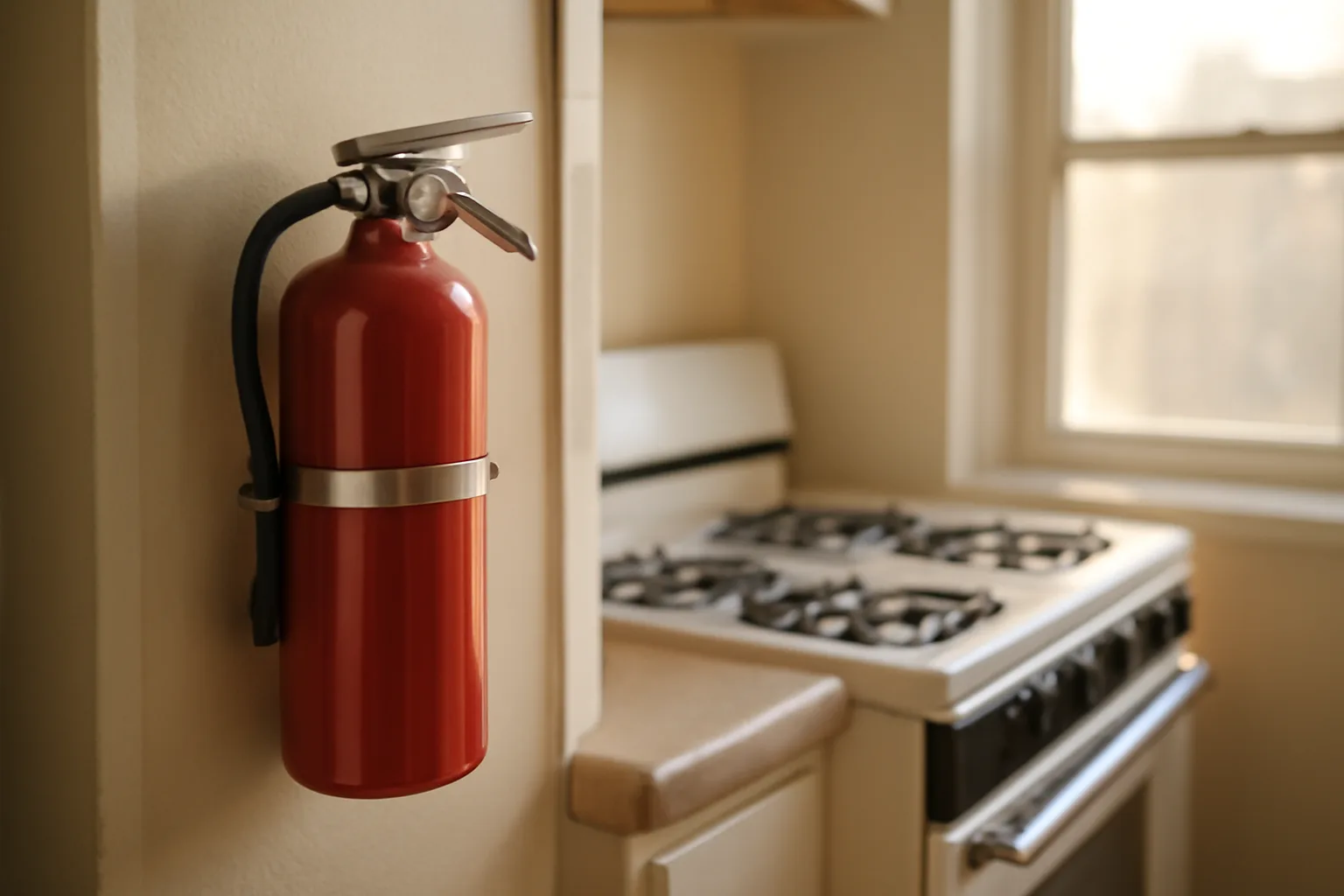
There's no blanket California law that says every rental unit, house, duplex, or apartment must have a fire extinguisher inside it. What exists instead is a patchwork: state fire and building codes that kick in based on occupancy type and building size, plus local ordinances that some cities and counties layer on top. California's Health and Safety Code Section 13143 directs the State Fire Marshal to adopt building standards for fire protection, and those standards get published in the California Fire Code (part of Title 24, incorporating the International Fire Code with state amendments) [1]. The Fire Code requires portable fire extinguishers in specific situations, commercial kitchens, certain hazardous occupancies, and multi-family buildings above certain thresholds, but a single-family rental home or a small duplex often falls outside those specific triggers. That means the honest answer is: it depends on your building type, your unit count, and your city. A landlord with a fourplex in a city with its own rental inspection program is in a very different spot than someone renting out a single detached house in an unincorporated county. The safest move, and the one most experienced landlords actually take, is to install one anyway. A basic 5-lb ABC extinguisher costs somewhere around $30 to $60 at a hardware store, and it's cheap insurance against a much bigger argument with a tenant, an inspector, or an insurance adjuster later. If you want to know exactly what's required in your specific city (more than state minimums), check with your local building or fire department before you assume you're in the clear.
what does california's fire code actually require in rental buildings
California enforces the California Fire Code as part of Title 24 of the California Code of Regulations, which local fire departments then apply and sometimes amend further. The Fire Code sets extinguisher requirements based on occupancy classification, not simply "is this a rental." Apartment buildings classified as Group R occupancies (multi-family residential) often trigger different rules than a single Group R-3 dwelling (a standard single-family home). Larger residential buildings, especially those with common corridors, parking garages, or on-site laundry rooms, frequently need extinguishers in common areas under the Fire Code's general provisions for portable fire extinguishers, which typically follow spacing and rating standards drawn from NFPA 10, the national standard for portable fire extinguisher installation and maintenance [2]. NFPA 10 sets travel distance rules: for light hazard occupancies (which includes most residential common areas), an extinguisher should be reachable within 75 feet of travel distance, and extinguishers generally need a minimum rating of 2-A [2]. That's a national consensus standard, and many state and local fire codes reference it directly rather than rewriting the same rules themselves. What this means in practice: if you own a small multi-unit building, your local fire marshal may require extinguishers in hallways, stairwells, or laundry rooms even if nothing forces you to put one inside each individual unit. Ask your city fire prevention bureau directly, because enforcement varies a lot between, say, Los Angeles and a smaller Central Valley city.
do california cities add their own fire extinguisher rules for rentals
Yes, and this is where things get genuinely inconsistent. Cities with mandatory rental inspection or licensing programs often use their local checklist to require items the state code doesn't specifically mandate for single units, including fire extinguishers. Some cities' rental inspection checklists list a fire extinguisher as a pass/fail item for units above a certain size or age. Others don't mention extinguishers at all and instead focus on smoke alarm placement, carbon monoxide detectors, and egress windows, which are separately mandated statewide. Because this varies city to city, there is no way to give you one number that's true everywhere in California. If your city sent you an ordinance notice, an inspection checklist, or a violation notice referencing a fire extinguisher requirement, that's a local rule layered on top of state law, and you should confirm the exact language with your city rental licensing office or fire prevention division before you spend money guessing at compliance. If you're trying to get organized for an upcoming inspection across multiple requirements at once, more than extinguishers, our $79 City Rental License & Inspection Prep Packet walks through the common checklist categories cities use, so you're not caught off guard by one line item you didn't know existed.
what smoke and carbon monoxide detector rules apply statewide (and how they differ from extinguisher rules)
This is the part of California fire safety law that actually is mandatory everywhere, and landlords sometimes confuse it with the extinguisher question. California Health and Safety Code Section 13113.7 requires smoke detectors in all dwelling units intended for human occupancy, and landlords are responsible for installing and maintaining them in units they rent out [3]. Separately, California's Carbon Monoxide Poisoning Prevention Act (Health and Safety Code Section 13260 and following) requires carbon monoxide detectors in dwelling units with a fossil fuel source or an attached garage [4]. Those two requirements apply statewide, no exceptions for building size or city. Fire extinguishers don't have that same blanket statewide mandate for individual dwelling units. So if you've been told "California requires safety devices in rentals" and you're trying to figure out which ones, smoke alarms and CO detectors are the two that are non-negotiable everywhere; fire extinguishers are the one that depends on your specific building and city. Landlords sometimes get these three requirements bundled together in their head, which causes confusion during an inspection when the inspector flags a missing CO detector but says nothing about an extinguisher, or vice versa.
should landlords provide fire extinguishers even if not legally required
Most experienced landlords do it anyway, and for good reason beyond just covering a hypothetical inspection. A small kitchen fire that gets put out with a $40 extinguisher is a non-event. The same fire without one can become a total loss claim, a tenant injury claim, and months of vacancy while you rebuild. Insurance carriers increasingly ask about fire safety equipment on landlord policy applications, and having extinguishers in place, documented with dates and inspection tags, can matter if you ever need to argue you took reasonable precautions in a liability dispute. Here's what I'd actually do if I owned 1 to 10 units in California: put a 5-lb ABC-rated extinguisher in the kitchen of every unit, mount it visibly (not stuffed under the sink), and put a reminder on your calendar to check the pressure gauge once a year. It costs maybe $30 to $60 per unit up front and takes ten minutes to install. That's a rounding error compared to what you'd spend disputing a fire-related insurance claim or tenant injury lawsuit down the line. Don't buy the cheapest tiny 1-lb extinguishers meant for cars and boats; they clear code minimums in almost nothing and won't handle a real kitchen fire. Spend the extra $15 for a real 5-lb unit.
how to become a landlord in california
Becoming a landlord in California doesn't require a special license at the state level for renting out property you own, but it does require you to get several pieces of compliance in place before you hand over keys. First, check whether your city or county requires rental registration or a business license. Many California cities, especially larger ones, require landlords to register rental units and pay an annual fee, sometimes tied to a rent registry used for rent control enforcement. Second, make sure your unit passes basic habitability requirements under California Civil Code Section 1941.1, which lists the conditions a rental must meet, including effective weatherproofing, working plumbing, and safe electrical systems [5]. Third, install the mandatory smoke and CO detectors mentioned above. Beyond legal compliance, becoming a landlord means setting up a lease that complies with California's specific disclosure requirements (lead paint disclosure for pre-1978 buildings, for example), a security deposit process that follows Civil Code Section 1950.5's limits and return timelines, and a system for handling maintenance requests and habitability complaints. If you're starting from zero, the realistic order is: confirm local registration/licensing requirements first, get the unit inspection-ready second, then write your lease and screen tenants. Skipping the local registration step is the most common mistake first-time landlords make, because it's easy to assume state compliance is the whole picture when your city has its own separate rental program.
what is landlording and what is a landlord, exactly
A landlord is the owner (or an authorized agent of the owner) of real property who rents that property to another person, the tenant, in exchange for rent. That's the legal core of it. "Landlording" is the informal industry term for the day-to-day work of managing rental property: collecting rent, handling repairs, managing tenant relationships, keeping up with local ordinance changes, and staying compliant with state and local law. In California, being a landlord carries specific legal obligations that go beyond just collecting a check. You're responsible for maintaining habitable conditions under Civil Code 1941.1, following strict rules on security deposits, giving proper notice before entering the unit, and, depending on your city, following local rent control or just-cause eviction ordinances. Small landlords (1 to 10 units) often self-manage everything, which is exactly the audience that gets blindsided by a city ordinance notice or inspection deadline they didn't know existed. Larger operations usually have a property manager or management company handling this, but the legal responsibility still sits with the owner.
who is responsible for the rental property walk-through inspection in california
In most cases, the landlord (or their designated property manager) is responsible for scheduling and being present for a rental property walk-through inspection, whether that's a routine city rental licensing inspection, a move-in/move-out condition inspection, or a habitability inspection triggered by a tenant complaint. For city-mandated rental inspection programs, the local building or housing department typically sends notice to the property owner of record, and the owner is responsible for making the unit accessible on the scheduled date, unless the tenant refuses entry, at which point the process for handling that varies by city ordinance. For entry to conduct inspections or repairs during an active tenancy, California Civil Code Section 1954 requires landlords to give tenants reasonable notice, presumed to be 24 hours, before entering for most non-emergency purposes, including inspections [6]. The landlord has to actually give this notice and can only enter during normal business hours absent an emergency or the tenant's agreement otherwise. So to be precise: the landlord is responsible for making the inspection happen and complying with entry-notice rules, but it's a two-party process, since the tenant has a right to that 24-hour notice and can't simply be shown up on unannounced.
how much notice does a landlord have to give before entering or inspecting a unit
California Civil Code Section 1954 sets 24 hours as the standard presumed to be reasonable notice for a landlord to enter a rental unit for purposes like repairs, inspections, or showing the unit to prospective tenants or buyers [6]. Notice can be given in person, by phone (if reasonable time is confirmed), or left in a conspicuous place, and it must state the date, approximate time, and purpose of entry. The entry itself generally has to happen during "normal business hours" unless the tenant agrees to a different time. Emergencies are the one clear exception, no notice is required if a landlord reasonably believes there's an emergency, such as a fire, flooding, or a gas leak. Some cities with rent control or tenant protection ordinances add stricter rules on top of the state 24-hour minimum, for example, requiring longer notice periods or limiting the frequency of routine inspections. So 24 hours is your statewide floor, not necessarily your city's ceiling; check local tenant protection ordinances if you're in a city known for stronger renter protections, like San Francisco or Los Angeles.
what can a landlord look at during an inspection
During a routine or move-in/move-out inspection, a landlord can generally document the condition of the unit: walls, floors, fixtures, appliances, plumbing, electrical outlets, windows, doors, smoke and CO detectors, and any damage beyond normal wear and tear. The purpose is to establish a baseline condition and to check for habitability issues or lease violations, not to go through personal belongings. What a landlord generally cannot do is use an inspection as a pretext to search through a tenant's private property, closets full of personal items, drawers, or similar spaces, beyond what's needed to verify the condition of the rental itself (a leak under a sink, a smoke detector battery, evidence of unauthorized pets or occupants tied to a lease violation). Courts and tenant advocacy guidance generally frame the landlord's right of entry as limited to the stated purpose of the visit, consistent with Civil Code 1954's requirement to state the purpose in the entry notice [6]. For rental licensing inspections done by a city inspector rather than the landlord, the scope is usually defined by the local housing code checklist, typically things like functioning smoke/CO alarms, no exposed wiring, working plumbing, adequate heat, secure locks, and (in some cities) fire extinguisher presence in common areas or specific unit types. If you want a sense of what's typically on these checklists before your own city notice arrives, our prep packet breaks down the common categories cities check for, though your specific city's list is the one that actually governs.
why do landlords require renters insurance
Landlords require renters insurance, when they do, mainly to shift liability and personal property risk away from the landlord's own policy. A landlord's insurance typically covers the physical building and the landlord's liability, not the tenant's personal belongings, and it often doesn't fully cover a tenant's liability if the tenant, say, accidentally starts a fire or causes water damage that affects other units. Requiring renters insurance (commonly with a minimum liability coverage amount, often $100,000, though this varies by landlord and by lease terms) means the tenant has their own coverage for personal property loss and their own liability protection, which reduces the odds a landlord ends up in a costly dispute or lawsuit trying to recover damages the tenant caused. California doesn't have a statewide law requiring landlords to mandate renters insurance, but it's increasingly common as a lease condition, especially in multi-unit buildings where one tenant's negligence (a grease fire, an overflowing tub) can damage neighboring units. If you require it, that requirement needs to be clearly stated in the lease itself, and you shouldn't apply it selectively between tenants in ways that could raise fair housing concerns.
what rights do tenants have without a written lease
Tenants without a written lease in California still have real legal protections. California recognizes oral rental agreements and month-to-month tenancies, and a tenant paying rent, even without signed paperwork, is generally treated as a tenant-at-will with rights under state law, including the right to a habitable unit under Civil Code 1941.1, the right to proper notice before entry under Civil Code 1954, and the right to advance notice before termination of tenancy. For month-to-month tenancies without a lease, California Civil Code Section 1946 generally requires 30 days' written notice to terminate a tenancy under one year, and many cities with just-cause eviction ordinances require even more, plus a stated legal reason for ending the tenancy, more than a landlord's preference. Without a lease, terms default to whatever was orally agreed (rent amount, due date) plus whatever state and local law fills in as a baseline, security deposit limits, habitability standards, notice periods, and anti-retaliation protections under Civil Code Section 1942.5. A landlord and tenant without a written lease are still both bound by these statutory defaults; the absence of paperwork doesn't erase the tenant's rights, it just makes them harder to prove if there's a dispute.
what a landlord cannot do in ohio (out-of-state comparison)
Since California landlords sometimes also own property in other states, it's worth flagging that Ohio's rules differ meaningfully from California's, especially around fire safety and entry notice. Ohio law (Ohio Revised Code Section 5321.04) requires landlords to maintain the premises in a fit and habitable condition and to comply with building, housing, and fire codes that materially affect health and safety, but Ohio does not set a specific statewide fire extinguisher mandate for single-family rentals any more than California does; it again depends on local fire code and occupancy type [7]. Ohio landlords generally cannot enter a rental unit without reasonable notice (Ohio courts have generally treated 24 hours as a reasonable benchmark, similar to California, though Ohio's statute doesn't specify an exact number the way California's does) and cannot enter for reasons unrelated to inspection, repair, or showing the unit. Ohio landlords also cannot shut off utilities, change locks, or remove a tenant's belongings to force them out (self-help eviction is illegal in Ohio just as it is in California); they have to go through formal eviction proceedings in court. If you own property in both states, don't assume California-specific numbers (the 24-hour entry notice, the specific habitability code sections) transfer directly to Ohio; the underlying principles are similar but the citations and specific thresholds are different.
where to check your city's actual fire extinguisher and inspection requirements
Since state law leaves a real gap on fire extinguishers for individual rental units, your city's fire prevention bureau or building/housing department is the actual authority you need to call. Ask specifically: does your rental inspection checklist require a fire extinguisher inside individual units, in common areas only, or not at all for your building type and unit count. While you're on the phone, it's worth asking about the full checklist at once, more than extinguishers, since most cities bundle fire safety, electrical, plumbing, and occupancy questions into one inspection visit. Getting the complete list up front saves you a second inspection trip and a second violation notice. If you're juggling this across an already-tight inspection deadline and don't want to track down every city-specific requirement piecemeal, that's exactly the gap our $79 City Rental License & Inspection Prep Packet is built to close, walking you through the common categories cities check so you can confirm and prep methodically rather than guessing. For more general grounding on tenant and landlord rights that intersect with inspections and notices, see our related guides on tenants rights, tenant rights, and renters rights, plus our broader landlord and landlord landlords reference pieces.
Frequently asked questions
Does California law require a fire extinguisher in every rental unit?
No. There's no single statewide statute mandating a fire extinguisher inside every rental unit. The California Fire Code sets requirements based on occupancy type and building size, often triggering common-area requirements in larger multi-family buildings rather than a blanket rule for every single unit or house.
What size fire extinguisher should a landlord buy for a rental unit?
A 5-lb ABC-rated extinguisher is the practical minimum most landlords use, covering ordinary combustibles, flammable liquids, and electrical fires. It costs roughly $30 to $60 and meets the light-hazard rating guidance (minimum 2-A) referenced in NFPA 10, the national fire extinguisher installation standard [2].
Are smoke detectors mandatory in California rentals even if fire extinguishers aren't?
Yes. California Health and Safety Code Section 13113.7 requires smoke detectors in all dwelling units, and landlords must install and maintain them [3]. This is a separate, statewide requirement that applies regardless of what your local fire extinguisher rules say.
How much notice does a California landlord have to give before an inspection?
California Civil Code Section 1954 presumes 24 hours' notice is reasonable for a landlord to enter a rental unit for inspections, repairs, or showings, generally during normal business hours [6]. Some cities with stronger tenant protections require longer notice periods, so check local ordinances too.
Who is responsible for scheduling the rental property walk-through inspection?
The landlord or their property manager is responsible for scheduling the inspection and complying with any city rental licensing program's process. The tenant still has a right to the state-mandated 24-hour entry notice, so it functions as a two-party process even though the landlord initiates it.
What can a landlord check for during a rental inspection?
A landlord can generally document the physical condition of the unit: appliances, plumbing, electrical, windows, doors, and safety devices like smoke and CO detectors. Landlords generally cannot search through a tenant's personal belongings or use the inspection as a pretext unrelated to the stated purpose in the entry notice.
Why do some landlords require tenants to carry renters insurance?
Landlords require renters insurance to shift liability for a tenant's personal property loss and tenant-caused damage (like a kitchen fire or water leak) away from the landlord's own policy. It's not state-mandated in California, but it's an increasingly common lease requirement, especially in multi-unit buildings.
What rights does a tenant have in California without a written lease?
Tenants without a written lease still have full statutory protections: habitability rights under Civil Code 1941.1, entry-notice protections under Civil Code 1954, and termination notice requirements (generally 30 days for tenancies under one year) under Civil Code 1946. Oral agreements are legally recognized month-to-month tenancies.
How do I become a landlord in California starting from scratch?
Check your city or county for rental registration or licensing requirements first, then confirm your unit meets habitability standards under Civil Code 1941.1 and has required smoke and CO detectors installed. After that, prepare a compliant lease with required disclosures before screening tenants.
What can't a landlord do in Ohio compared to California?
Ohio landlords, like California landlords, cannot use self-help eviction (changing locks, shutting off utilities) and must maintain habitable conditions under Ohio Revised Code Section 5321.04. Ohio doesn't specify an exact statutory entry-notice number the way California's 24-hour rule does, but courts generally expect reasonable advance notice.
Do apartment buildings in California need fire extinguishers in hallways?
Often yes, particularly in larger multi-family buildings with common corridors, based on California Fire Code provisions that frequently reference NFPA 10's placement standards (roughly one extinguisher within 75 feet of travel distance in light-hazard areas) [2]. Confirm the exact requirement with your local fire prevention bureau, since enforcement varies by city.
What happens if a city inspection finds a missing fire extinguisher?
If your city's local ordinance or rental checklist requires a fire extinguisher and the inspector finds it's missing, you'll typically get a violation notice with a correction deadline rather than an immediate fine, though repeat or unaddressed violations can lead to fees. Requirements and fine amounts vary by city, so confirm specifics with your local rental licensing office.
Is a landlord's legal responsibility different from what 'landlording' means day to day?
Yes. A landlord's legal responsibility is the set of obligations owed under state and local law (habitability, notice, deposit handling). 'Landlording' is the broader informal term for the ongoing work of managing the property, tenants, repairs, and compliance, which includes but goes beyond the strict legal minimums.
Sources
- California Health and Safety Code Section 13143: State Fire Marshal authority to adopt building standards for fire protection in the California Fire Code
- NFPA 10, Standard for Portable Fire Extinguishers: Travel distance and rating standards (75 feet, minimum 2-A rating) for portable fire extinguishers in light hazard occupancies
- California Health and Safety Code Section 13113.7: Statewide requirement for smoke detectors in dwelling units, landlord installation and maintenance duty
- California Health and Safety Code Section 13260: Carbon Monoxide Poisoning Prevention Act requiring CO detectors in dwelling units with fossil fuel sources or attached garages
- California Civil Code Section 1941.1: List of conditions required for a rental unit to be considered habitable in California
- California Civil Code Section 1954: 24-hour notice presumption and normal business hours requirement for landlord entry into a rental unit
- Ohio Revised Code Section 5321.04: Ohio landlord obligation to maintain premises in fit and habitable condition and comply with applicable housing and fire codes