Last updated 2026-07-26
TL;DR
No federal law requires landlords to test for mold. There's no OSHA or EPA standard mold level, and no state mandates routine testing. Some states and cities require disclosure of known mold or prompt remediation once reported. Your real obligation almost everywhere is to fix leaks, address visible mold, and respond quickly once a tenant reports it.
are landlords required to test for mold?
No, not as a general rule. There's no federal law requiring landlords to test rental units for mold, and the EPA has never set a numeric exposure limit for mold spores in the air. The EPA's own guidance is blunt about this: "There are no EPA or other federal government limits set for mold or mold spores." [1] That's not a loophole, it's the actual state of the science. Mold levels vary so much by climate, building type, and even time of day that regulators haven't been able to agree on a testable threshold. What you do owe tenants, in nearly every state, is a habitable unit under the implied warranty of habitability. That means no active leaks, no standing water, no visible mold colonies growing on walls or in HVAC systems. If a tenant reports a moldy bathroom ceiling and you ignore it for three months, you're not going to save yourself by pointing at the lack of a testing requirement. Courts and housing courts look at whether you responded reasonably, not whether you ran a lab test. A few states go further than "respond to complaints." California, for instance, requires landlords to disclose known mold problems to prospective tenants under its Toxic Mold Protection Act framework, though the mandatory disclosure form itself was never finalized by the state health department, which has created some ambiguity in practice [2]. Other states, like New Jersey and Maryland, have passed more specific mold-related landlord duties in the last few years, mostly focused on subsidized or public housing. Check with your state law context page or your city's rental licensing office before assuming your state has zero rules.
is there a legal mold exposure limit landlords have to meet?
No. There is no OSHA permissible exposure limit (PEL) for mold, and no EPA numeric standard either. OSHA regulates some workplace mold exposure scenarios under its general duty clause, but it has not set a specific airborne mold spore limit for residential or occupational settings. This is why mold lawsuits almost never turn on lab numbers. They turn on notice: did the tenant tell you, in writing if possible, and how fast did you act. This absence of a hard number frustrates a lot of landlords who want a clean pass/fail test. It doesn't exist. What insurers, courts, and code inspectors actually look at is visible growth, moisture source, and repair timeline. A cracked window seal that's let water in for two years and grown a black patch behind the drywall is a real problem regardless of what any air-quality meter says.
do any states or cities require mold testing or disclosure?
A small number do, mostly around disclosure rather than testing. California's Toxic Mold Protection Act (Health & Safety Code Section 26100-26156) directed the state to develop permissible exposure limits and a disclosure form, but as of now no numeric standard has been formally adopted, so the disclosure piece functions more as a duty to inform tenants of known, existing mold conditions [2]. New York City doesn't have a citywide testing mandate, but its Indoor Air Quality guidance requires landlords in certain buildings to address mold within specific timeframes once notified, and the city's Asthma-Free Housing Act (Local Law 55 of 2018) requires proactive prevention of mold and pest conditions in class A multiple dwellings [3]. Most mandatory rental-licensing cities don't ask about mold at the licensing stage at all. Your inspection checklist is far more likely to focus on smoke detectors, egress windows, electrical panels, and structural issues than on air quality. That said, if a city inspector sees visible mold during a routine rental inspection, expect it to get flagged as a habitability violation, which then puts you on a repair clock, sometimes 30 days, sometimes shorter for active water intrusion. Always confirm with your city rental licensing office what its specific mold or moisture provisions say, because language varies a lot city to city.
what should a landlord do when a tenant reports mold?
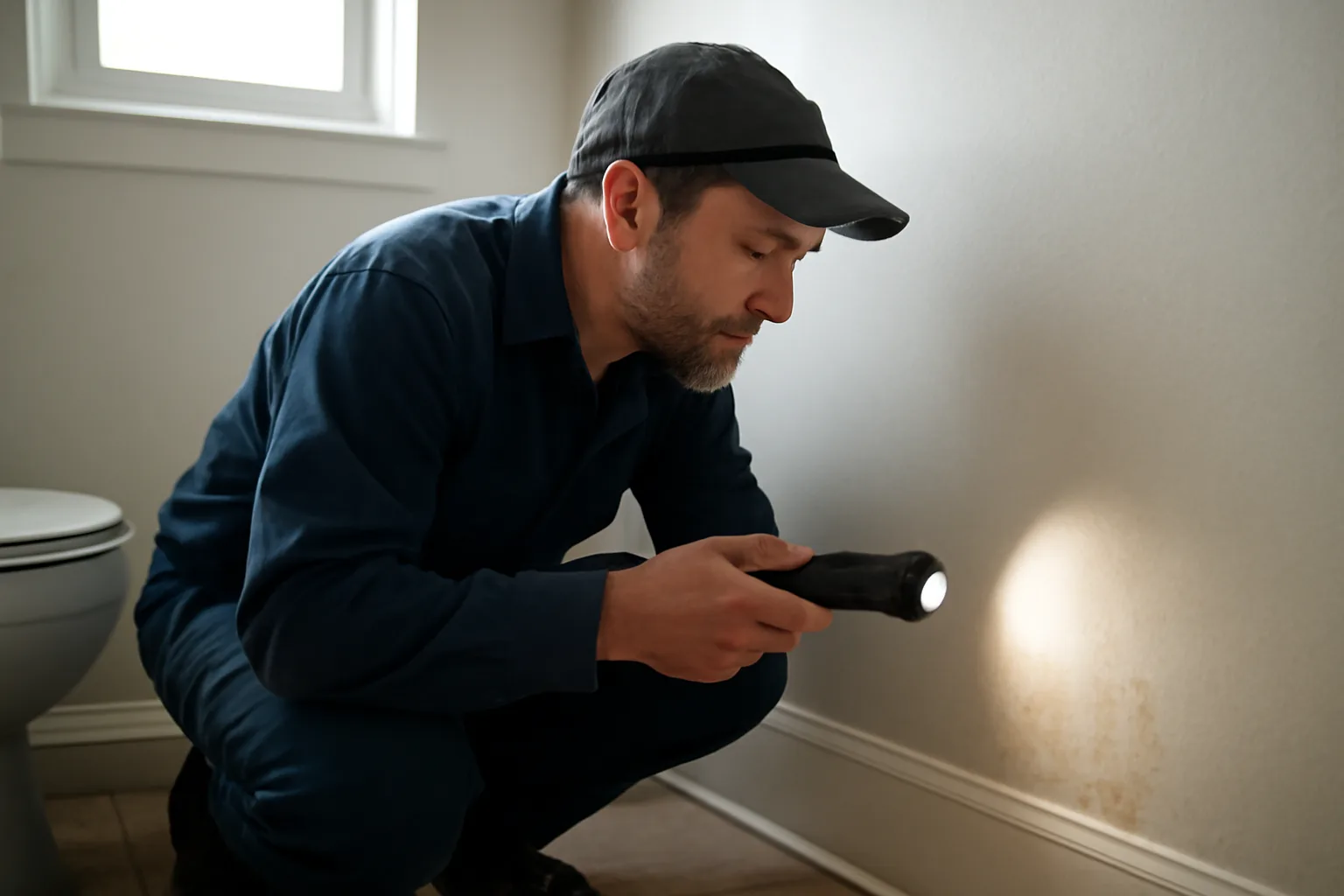
Move fast, document everything, and fix the moisture source, more than the mold. The sequence that protects you legally and practically looks like this: get the complaint in writing (email is fine), inspect within a few days, identify the water or humidity source, remediate the mold itself, and follow up with the tenant to confirm it's resolved. Small mold patches (under about 10 square feet, per older EPA mold remediation guidance for building professionals) can typically be cleaned by a competent contractor without hiring a specialized remediation firm [4]. Bigger infestations, especially from prolonged flooding or sewage backup, usually call for a licensed remediation company, and some states require certification for anyone doing large-scale mold removal for hire. Don't paint over mold and call it done. That's the single most common landlord mistake, and it's the fastest way to turn a $300 repair into a habitability lawsuit. Fix the leak, remove the moldy material (drywall, insulation, sometimes flooring), and dry the area completely before repainting.
what can a landlord look at during an inspection?
A landlord conducting a routine or move-in/move-out inspection can generally check for safety hazards, property damage, cleanliness, unauthorized occupants or pets, and signs of lease violations. That includes checking under sinks and around windows for moisture or mold, testing smoke and CO detectors, and confirming appliances work. What a landlord typically cannot do is search through a tenant's personal belongings, open locked containers, or use the inspection as pretext to harass a tenant or retaliate against one who filed a complaint. Most states require advance notice before an inspection, commonly 24 to 48 hours, and entry has to be at a reasonable time. California's notice standard defaults to 24 hours under Civil Code Section 1954, which also spells out the specific purposes for which a landlord may enter, including to make repairs, show the unit, or in emergencies [5]. If you're inspecting specifically because of a mold complaint, treat it like any other maintenance access request: give notice, state the purpose, and keep it focused on the reported issue.
who is responsible for rental property walk-through inspections in california?
In California, the landlord is responsible for conducting move-in and move-out walk-through inspections when requested, but the process is a shared one. Under California Civil Code Section 1950.5, a tenant has the right to request an initial inspection before move-out, and the landlord must give at least 48 hours' written notice of that inspection and provide an itemized list of deficiencies afterward, giving the tenant a chance to fix them before the final move-out inspection determines security deposit deductions [6]. The landlord (or their agent, like a property manager) does the actual inspecting and documents the unit's condition, ideally with photos and a written checklist both parties sign. Local rental licensing programs, in cities like Los Angeles or Oakland with mandatory rental registration, may add their own inspection requirements on top of this, usually tied to habitability and safety rather than move-in/move-out deposit disputes. Those are separate processes; a city rental inspection under a local licensing ordinance is not the same as the state-mandated move-out walk-through.
how much notice does a landlord have to give before entering?
Most states require 24 to 48 hours' written or verbal notice before a landlord enters an occupied rental unit for a non-emergency reason, though the exact number and the acceptable notice method vary by state. California requires 24 hours under Civil Code Section 1954 [5]. Some states, like Texas, don't set a specific statutory notice period for private landlords at all, leaving it to lease terms and reasonableness standards, though "reasonable notice" is still generally read as at least 24 hours in practice. Emergencies are the universal exception. A burst pipe, a gas leak, or a fire lets a landlord enter without advance notice in essentially every state, because delaying to give notice would make the emergency worse. If you're entering specifically to check on a reported mold or moisture issue and it's not an active emergency, treat it as routine maintenance access and give the standard notice period your state or lease requires. Always check your specific state's landlord-tenant statute or your city's tenant protection ordinance, since notice requirements sometimes get layered by local rent control or just-cause eviction laws on top of the state baseline.
why do landlords require renters insurance?
Landlords require renters insurance mainly to shift liability for the tenant's personal property and personal liability claims away from the landlord's own policy. A standard landlord (dwelling) insurance policy covers the building structure but generally excludes a tenant's belongings and doesn't cover a tenant's liability if, say, their guest is injured in the unit or their dog bites a neighbor. Renters insurance is cheap by comparison, commonly in the range of $15 to $30 a month depending on coverage and location, per typical industry rate summaries, though costs vary by state and coverage limits. Requiring it in the lease is legal in nearly every state and is increasingly standard practice for landlords managing even small portfolios of 1 to 10 units, because it reduces the odds that a tenant's water damage claim, fire, or injury turns into a dispute over who pays. On the mold front specifically, renters insurance sometimes covers a tenant's personal property damaged by mold, but only if the underlying cause (like a covered water damage event) triggers coverage, and many renters policies explicitly exclude mold damage caused by long-term neglect or lack of maintenance. That's one more reason for landlords to fix leaks quickly: a slow, ignored moisture problem is exactly the kind of claim that gets denied.
what a landlord cannot do in ohio
Ohio landlords cannot shut off utilities, change locks, or remove a tenant's belongings to force them out, a practice generally banned as "self-help eviction" under Ohio Revised Code Section 5321.15, which requires landlords to use the court eviction process instead [7]. Ohio landlords also cannot retaliate against a tenant for reporting a code violation, requesting repairs, or joining a tenant union, under Ohio Revised Code Section 5321.02, and cannot enter a unit without reasonable notice except in emergencies, per Ohio Revised Code Section 5321.04's landlord duties provisions . On habitability, Ohio Revised Code Section 5321.04 requires landlords to keep the premises in a fit and habitable condition and to comply with building, housing, and health codes that materially affect health and safety . Chronic moisture and mold problems that violate a local housing code would fall under this duty, even though Ohio doesn't have a standalone statewide mold-testing statute. If you're a landlord in Ohio dealing with a mold complaint, the safest read of state law is: respond promptly, document the fix, and don't use lockouts or utility shutoffs as pressure tactics, ever, for any reason.
what rights do tenants have without a written lease?
A tenant without a written lease still has full legal protections under state landlord-tenant law, including the right to habitable housing, protection from illegal lockouts, and the right to proper notice before eviction. No lease just means the tenancy defaults to whatever your state calls an "at-will" or month-to-month tenancy, typically governed by the same statute that covers written leases. This matters for mold specifically: a tenant on a verbal or month-to-month arrangement has exactly the same right to a habitable, mold-free unit as one with a signed 12-month lease. The implied warranty of habitability isn't a lease clause, it's a legal doctrine that exists independent of what's on paper (or not on paper) in most states. If anything, the lack of a written lease tends to work against the landlord in disputes, since there's no document spelling out maintenance responsibilities or notice terms, so courts fall back entirely on the statutory defaults, which usually favor tenant protections.
what is landlording, and what is a landlord, exactly?
A landlord is a person or entity that owns residential or commercial property and rents it to a tenant in exchange for payment, taking on legal duties around habitability, repairs, and lawful eviction procedures under state law. "Landlording" is the informal industry term for the ongoing work of managing that relationship: collecting rent, handling maintenance requests, doing inspections, staying current on local licensing rules, and responding to tenant complaints, including mold and moisture issues. Small landlords (the 1-10 unit range this article is written for) often do all of this themselves rather than hiring a property manager, which means the mold question isn't abstract. You're the one who gets the 11pm text about a water stain spreading across the ceiling. Understanding your state's basic landlord duties, usually spelled out in a single landlord-tenant statute chapter, is the fastest way to know what's actually required of you versus what's just good practice.
how to become a landlord (and how to actually run it well)
Becoming a landlord legally usually means: owning or co-owning residential property, registering the rental with your city or county if local law requires it, carrying appropriate landlord insurance, and complying with your state's landlord-tenant code from day one. Many mandatory-licensing cities require you to obtain a rental license or register the unit before you can legally collect rent or advertise it, sometimes with an inspection required before the license issues. Step one is confirming whether your city is a licensing jurisdiction at all. Not every city requires it. Where it does, expect a fee (commonly in the range of confirm with your city rental licensing office, since these vary widely, from under $50 to several hundred dollars per unit per year in different cities) and a habitability inspection covering things like smoke detectors, egress, electrical safety, and plumbing. Mold specifically is rarely a line item on these checklists, but active leaks and visible moisture damage usually are, since they're proxies for future mold risk. Beyond the paperwork, being a competent landlord long-term comes down to a short list: respond to maintenance requests fast (especially anything involving water), keep clear written records of every repair and inspection, know your state's notice-and-entry rules cold, and don't cut corners on renters insurance requirements or security deposit handling. If you're prepping for a first-time license application or a re-inspection after a violation notice, a structured tenant rights reference and a document checklist built for your specific city save a lot of back-and-forth with the inspector. That's exactly the gap our $79 City Rental License & Inspection Prep Packet is built to close: a packet tailored to your city's actual checklist and forms, not a generic national template. Find it at /rental-packet-builder.
how do you tell the difference between a mold problem and a maintenance problem?
| Active water leak causing mold | Repair source + remediate mold | Often 24-72 hours for active leak (varies by state/city) | |
|---|---|---|---|
| Visible mold, no active leak identified | Investigate source, remediate | Commonly 7-30 days depending on state habitability law | |
| Tenant reports musty smell, no visible growth | Inspect promptly, document findings | Days, not weeks, to avoid escalation | |
| City rental inspection flags moisture damage | Repair before re-inspection/license renewal | Set by city notice, confirm with your city rental licensing office | These are general patterns, not statutory guarantees. Actual deadlines depend on your state's habitability statute and, if applicable, your city's housing code enforcement timeline. |
Almost every mold problem in a rental unit is actually a moisture problem wearing a mold costume. Mold needs a water source to grow, so the presence of mold nearly always points to a leak, condensation issue, poor ventilation, or grading problem that's letting water into the structure. Treating the mold without fixing the water source means it comes right back within weeks. Common culprits: a bathroom exhaust fan that's broken or never used, a roof or flashing leak, a slow supply-line leak under a sink, poor dryer venting, or a foundation/grading issue letting groundwater into a basement. If you get a mold complaint and can't immediately identify the moisture source, that's the first thing to run down, not the mold itself. A $150 plumber visit to fix a slow leak is a lot cheaper than repeat mold remediation calls every six months. Here's a rough comparison of typical response expectations across a few situations landlords commonly face: | Situation | Typical landlord obligation | Typical timeframe |
Frequently asked questions
Are landlords required to test for mold before renting a unit?
No. There's no federal or state law requiring pre-rental mold testing in the vast majority of jurisdictions. Some states, like California, require disclosure of known mold conditions rather than testing. If you have no reason to suspect mold, you generally aren't required to test before signing a new lease.
Can a tenant demand a mold test?
A tenant can request one, but in most states a landlord isn't legally required to pay for or arrange a mold test just because a tenant asks. What landlords are required to do is investigate visible mold or moisture complaints and remediate confirmed problems, regardless of whether a lab test was run.
What happens if a landlord ignores a mold complaint?
Ignoring a documented mold complaint can expose a landlord to habitability claims, rent withholding or repair-and-deduct remedies in states that allow them, and in serious cases, tenant lawsuits for health effects or property damage. Housing court outcomes generally hinge on documented notice and response time, not lab results.
Does renters insurance cover mold damage?
Sometimes, but only if a covered peril (like a burst pipe) caused it, and many renters policies specifically exclude mold caused by long-term neglect or poor maintenance. Coverage details vary significantly by insurer and policy, so tenants and landlords should check the specific policy language rather than assume.
How much notice does a landlord have to give before an inspection?
Most states require 24 to 48 hours' notice for non-emergency entry; California sets 24 hours under Civil Code Section 1954. Some states don't set a specific number and rely on a 'reasonable notice' standard instead. Emergencies like active leaks or gas hazards are exceptions everywhere.
What can a landlord look at during a routine inspection?
A landlord can generally check for safety hazards, damage, cleanliness, unauthorized occupants, and maintenance issues, including signs of moisture or mold. They typically cannot search personal belongings or use the inspection to harass or retaliate against a tenant.
Who does the walk-through inspection in California, the landlord or the tenant?
The landlord conducts it, but the tenant can request an initial pre-move-out inspection under California Civil Code Section 1950.5, which requires 48 hours' written notice and an itemized deficiency list so the tenant can fix issues before the final move-out inspection.
What rights does a tenant have without a signed lease?
The same core protections as a tenant with a lease: habitable housing, protection from illegal lockouts, and required notice before eviction. No written lease just means the tenancy defaults to an at-will or month-to-month arrangement under state law, not that protections disappear.
Why do landlords require renters insurance?
To cover the tenant's personal belongings and personal liability, which a landlord's own dwelling policy doesn't cover. It reduces disputes over who pays when a tenant's property is damaged or a guest is injured, and it's cheap, often $15 to $30 a month depending on coverage.
What can't a landlord do in Ohio?
Ohio landlords cannot use self-help eviction tactics like lockouts or utility shutoffs (Ohio Revised Code Section 5321.15), cannot retaliate against tenants for complaints (Section 5321.02), and must maintain habitable, code-compliant housing (Section 5321.04).
Is there a legal mold exposure limit for rental units?
No. Neither OSHA nor the EPA has set a numeric permissible exposure limit for airborne mold spores. The EPA states plainly that no such federal limit exists, which is why mold disputes focus on visible growth and moisture source rather than lab thresholds.
How fast does a landlord have to fix mold once it's reported?
There's no single national deadline. Timeframes depend on your state's habitability statute and any local housing code; active leaks typically demand faster action (days) than a reported musty smell with no visible growth. Confirm specifics with your state landlord-tenant code or city housing office.
Sources
- EPA, A Brief Guide to Mold, Moisture and Your Home: No EPA or federal government limits are set for mold or mold spores
- California Health & Safety Code, Toxic Mold Protection Act: California's Toxic Mold Protection Act framework and disclosure requirements for known mold
- EPA, Mold Remediation in Schools and Commercial Buildings Guide: Small mold areas under about 10 square feet can typically be handled without specialized remediation firms
- California Civil Code Section 1954: California requires 24 hours' notice before landlord entry and specifies permissible purposes for entry
- California Civil Code Section 1950.5: Tenant right to request initial move-out inspection with 48 hours' written notice and itemized deficiency list
- Ohio Revised Code Section 5321.15: Ohio bans self-help evictions including lockouts and utility shutoffs
- Ohio Revised Code Section 5321.04: Ohio landlord duties to maintain habitable, code-compliant premises and provide reasonable entry notice