Last updated 2026-07-26
TL;DR
No general NYC law forces every landlord to install air conditioning. But NYC's 2024 cooling law (Local Law 96) requires owners of buildings built or substantially renovated after January 1, 2008 to keep common cooling systems at 78°F or below, and owners must let tenants install window units if wiring supports it. Older buildings mostly fall outside the mandate.
are nyc landlords required to provide ac?
Mostly no, with a real exception that trips people up every summer. New York City does not have a blanket law saying every rental unit must have air conditioning, the way it has a blanket heat law for winter. What NYC does have is a patchwork: a cooling requirement for newer or gut-renovated buildings, a right for tenants to install their own window units in most buildings, and a heat mandate that's been on the books for decades and gets confused with a cooling mandate. The piece that actually creates AC obligations for some landlords is Local Law 96 of 2024, which added Section 27-2029.1 to the NYC Housing Maintenance Code. It requires owners of multiple dwellings built, or substantially rehabilitated, on or after January 1, 2008 to provide and maintain a cooling system capable of keeping habitable rooms at or below 78°F when outdoor temps exceed 82°F, starting in cooling season 2025 [1]. If your building predates that construction cutoff, you're generally not swept into this rule just because summer got hot. Separately, since a 2008 amendment to the Housing Maintenance Code, landlords in most residential buildings cannot unreasonably refuse to let a tenant install a window air conditioner, and cannot charge more than what the local utility or Public Service Commission allows for the added electric load, unless the landlord's lease already includes AC costs [2]. That's a right for tenants to self-install, not a mandate that the landlord buy the unit. So three different rules, three different triggers. Building age determines whether the cooling mandate applies. Tenant behavior (wanting to install their own unit) triggers the access rule. And none of this touches the heat law, which is a separate, much older requirement covering October through May [3].
what nyc's cooling law (local law 96) actually requires
Local Law 96 of 2024 is the one most people mean when they ask about an 'AC law' in NYC, and it's narrower than the headlines suggest. It amended the Housing Maintenance Code to add a cooling requirement, codified at NYC Admin. Code § 27-2029.1, that applies specifically to multiple dwellings constructed or substantially rehabilitated on or after January 1, 2008 [1]. For covered buildings, the law requires the owner to provide a cooling system, central or otherwise, that can maintain an indoor temperature of 78°F or lower in every habitable room whenever the outdoor temperature rises above 82°F. The obligation runs during the borough's designated 'cooling season,' which NYC has generally aligned with the summer months. Buildings that already have central air as part of original construction typically use that system to comply; buildings without central systems may need supplemental equipment. The law came out of NYC Council's response to rising heat deaths and the well-documented fact that indoor heat exposure, more than outdoor heat, is a major public health risk in older housing stock. The city's own Department of Health has tracked heat-related deaths and found that most occur indoors in homes without adequate cooling [4]. If you own a pre-2008 building (no substantial rehab after that date), Local Law 96's cooling mandate does not apply to you directly. That covers a huge share of NYC's rental stock, especially the small 1-4 unit buildings a lot of individual landlords hold. Confirm your building's construction and rehab history with your city rental licensing office or HPD records before assuming you're exempt, because 'substantially rehabilitated' has its own regulatory definition and disputes do happen.
do tenants have a right to install their own window ac unit?
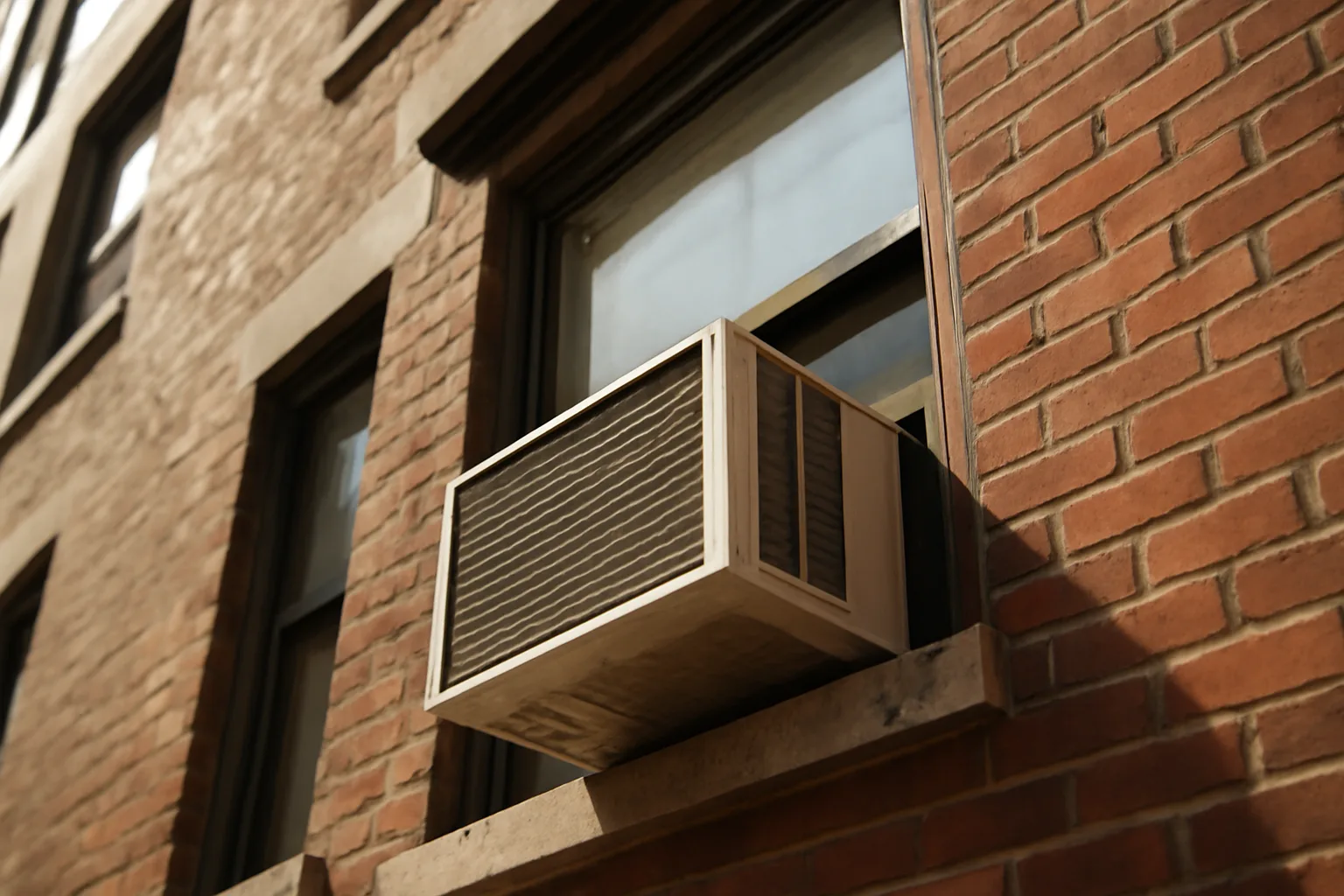
Yes, in most NYC apartments tenants can install a window air conditioner without needing special landlord permission, as long as the building's wiring and structure can safely handle it. This right came from a 2008 local law amendment to the Housing Maintenance Code and is separate from the 2024 cooling mandate. The rule (NYC Admin. Code § 27-2047, sometimes cited alongside related HMC provisions) generally bars owners from unreasonably withholding consent for a tenant to install a personal AC unit, and caps what the landlord can charge for the resulting electricity use. The surcharge, when the landlord doesn't otherwise include electric in rent, is tied to rates set by the New York Public Service Commission or the local utility, not whatever the landlord wants to charge [2]. What landlords can still do: require the unit be installed safely (proper bracket, no overhang risk), ask for advance notice, and bill a reasonable AC electric surcharge if the lease doesn't already cover it. What they generally can't do is flatly refuse installation for no safety reason, or charge an inflated flat fee unrelated to actual electric cost. A lot of individual landlords in 2-6 unit buildings get this backwards. They think the building's age gives them a pass on cooling entirely. It might exempt them from the Local Law 96 mandate, but it doesn't give them the right to block a tenant's own window unit.
is nyc's winter heat law the same as an ac requirement?
No, and this mix-up causes a lot of confused ordinance notices. NYC's heat law, sometimes called the 'Heat Season' rule, requires owners of residential buildings to provide heat, not cooling, from October 1 through May 31. During that window, if outdoor temperature falls below 55°F between 6 a.m. and 10 p.m., indoor temp must be at least 68°F; overnight (10 p.m. to 6 a.m.), indoor temp must stay at least 62°F regardless of outdoor temperature [3]. This is codified in the NYC Housing Maintenance Code and is one of the most enforced provisions HPD deals with every winter, generating thousands of heat complaints logged through 311. The heat law has nothing to do with air conditioning. But because both rules live in the same code chapter and both involve temperature thresholds, landlords sometimes assume a summer cooling complaint falls under heat season enforcement. It doesn't. If a tenant calls 311 about heat in July, that's not a heat law violation; it may or may not implicate Local Law 96 depending on the building's age.
what happens if a landlord doesn't provide required cooling?
For buildings covered by Local Law 96 (built or substantially rehabbed post-January 1, 2008), failing to maintain the required 78°F cooling threshold when outdoor temps exceed 82°F can generate an HPD violation, similar to how heat complaints generate violations during heat season [1]. HPD enforces Housing Maintenance Code violations broadly, and repeat or unaddressed violations can escalate to civil penalties. For buildings not covered by the cooling mandate, there's no equivalent 'no AC' violation just for lacking central air. A tenant in an older, non-rehabbed building generally cannot file a valid HPD cooling violation solely because the building has no AC system, though they retain other habitability protections (like the general warranty of habitability under New York Real Property Law § 235-b, which covers things like non-functioning ventilation or extreme heat buildup from structural defects) [5]. Specific fine amounts and violation classes (Class A, B, or C) depend on HPD's current schedule, which changes. Confirm current civil penalty amounts for cooling-related violations with HPD or your city rental licensing office rather than relying on a fixed number here, since these schedules get updated and vary by violation class.
how do landlords know if their building is covered by the cooling law?
The trigger is the construction or substantial rehabilitation date, not the building's current age or how it looks. Local Law 96's cooling mandate applies to multiple dwellings built, or substantially rehabilitated, on or after January 1, 2008 [1]. 'Substantially rehabilitated' is a defined regulatory concept in NYC housing law, generally meaning the building underwent gut renovation essentially equivalent to new construction (stripped to the shell, systems replaced). A cosmetic renovation, even an expensive one, usually doesn't meet this bar. If you're unsure whether your building's renovation history counts, HPD's building records and your certificate of occupancy history are the starting point, and it's worth confirming directly with your city rental licensing office before assuming either way. Owners of small 1-4 unit buildings built well before 2008, which describes a large share of individual NYC landlords, are typically outside this mandate unless there's been a genuine gut rehab since then.
can nyc landlords charge tenants extra for ac electric use?
Yes, within limits. If a lease doesn't already fold electric costs into rent, a landlord can charge a surcharge for the additional electric load from a tenant's window AC unit, but that charge has to track the rate the utility or the New York Public Service Commission has approved, not an arbitrary flat fee [2]. In practice, a lot of small landlords set a flat seasonal AC fee (something like a set dollar amount per unit per summer) without documenting how that number maps to actual utility rates. That's a soft spot if a tenant challenges it. The safer approach is pricing based on the unit's wattage, expected hours of use, and the current utility rate per kilowatt-hour, then keeping that math on file. This is one spot where a rental license and inspection prep packet earns its keep: if you're already assembling your compliance paperwork for a licensing renewal, it's worth adding your AC surcharge calculation to the file so you're not improvising an answer during an inspection or a tenant dispute. Some landlords use a City Rental License & Inspection Prep Packet to organize exactly this kind of documentation alongside registration and inspection records.
how much notice does a landlord have to give before an inspection or ac-related repair visit?
New York generally requires 'reasonable notice' for landlord entry into an occupied unit, and while state statute doesn't spell out an exact number of hours for every situation, NYC and many local practices treat 24 hours' advance notice as the customary standard for non-emergency entry, including for repairs, inspections, or installing/servicing cooling equipment [6]. Emergency situations, like an active leak, don't require advance notice. If you're coming to install a supplemental cooling unit to meet Local Law 96 obligations, or to inspect a tenant's window AC installation for safety, treat it like any other repair visit: written notice, a reasonable proposed window, and documentation that notice was given. That paperwork matters more once a housing court dispute starts, because 'I told them' isn't as useful as a dated notice with a delivery record. Cities that require rental registration or licensing (NYC among them) often expect landlords to keep records of tenant communications as part of an inspection file. If your city has a rental licensing office, ask what documentation, if any, it wants on file for entry notices.
what can a landlord look at during an inspection?
During a code compliance or licensing inspection, an inspector (from HPD, a city building department, or similar agency) is generally limited to checking conditions relevant to the housing code or licensing standard being enforced, not going through personal belongings. That typically covers things like smoke and carbon monoxide detectors, heating and (where applicable) cooling systems, structural integrity, plumbing, electrical safety, pest evidence, window guards where required, and egress/exit conditions [3]. An inspector checking on a cooling complaint under Local Law 96 would look at whether the building's cooling system can reach and hold 78°F in habitable rooms when it's hot outside, and whether that system is functioning as installed. They're not there to evaluate your furniture or tenant's personal property. Landlords should show up prepared with maintenance records, past violation history, and proof of any repairs made. If your city requires periodic rental inspections as part of licensing (this varies widely; NYC's system differs from cities that require a formal rental license inspection on a fixed cycle), knowing what's actually in scope keeps the visit shorter and less stressful. For a broader look at what inspectors check across different city programs, see our guide on tenant rights related to inspections and access.
what a landlord cannot do (general habitability and access limits)
Broadly, across most states including New York, a landlord cannot enter without proper notice except in an emergency, cannot shut off utilities to force a tenant out, cannot retaliate against a tenant for filing a habitability complaint, and cannot refuse reasonable requests tied to code-required systems like heat (and, where applicable, cooling) [5]. New York's implied warranty of habitability, under Real Property Law § 235-b, requires that leased premises be fit for human habitation and free of conditions dangerous to life, health, or safety [5]. Ohio's landlord-tenant law runs on a similar backbone even though it's a different state entirely: Ohio Revised Code § 5321.04 requires landlords to keep premises in a fit and habitable condition, maintain common areas, and keep electrical, plumbing, heating, and other systems in good working order, while § 5321.05 sets tenant obligations [7]. Ohio law also generally requires 24 hours' notice for landlord entry absent emergency, per court interpretation of reasonable notice standards tied to the same statutory chapter [7]. So a landlord in Columbus and a landlord in the Bronx are both bound by some version of 'give notice, keep the place habitable, don't retaliate,' even though the specific cooling obligations differ sharply between the two states. The common thread nationally: no state or city requires a landlord to hand a tenant a working AC unit just because it's hot outside, unless that specific city or state has passed a targeted law like NYC's Local Law 96. Absent that kind of statute, cooling generally falls under the looser 'fit and habitable' standard rather than a hard temperature number.
why do landlords require renters insurance if this is about ac?
It's a fair tangent question landlords ask alongside cooling and heating obligations, because both relate to risk management around the unit's systems. Renters insurance isn't required by law in most states, including New York, but a huge share of landlords require it by lease clause because it shifts liability for tenant personal property damage and certain injury claims away from the landlord's own policy . If a tenant's window AC unit leaks, falls, or causes electrical damage, a renters insurance policy can cover the tenant's own property loss and, depending on the policy, some liability exposure. Landlords who require it are generally trying to avoid being the only party financially exposed when a tenant-installed appliance, like a window AC unit, causes damage. It's not a substitute for the landlord's own hazard or liability coverage, which should already address structural and building-wide risk. This isn't a codified requirement tied to any cooling law. It's a lease term landlords choose to add, and its enforceability depends on state landlord-tenant law and how the lease is written.
how to become a landlord and what does landlording actually involve?
Becoming a landlord, at the basic level, means acquiring a rental property (or converting a home you own into a rental), meeting any local registration or licensing requirements, and taking on the legal responsibilities that come with renting to someone else. There's no single national license; requirements are set city by city and state by state. Many mandatory rental-licensing cities (NYC has registration requirements through HPD for most multiple dwellings) require an owner to register the property, sometimes obtain a rental license or certificate, and pass a periodic inspection before renting legally . 'Landlording' is the informal term for the ongoing work: screening tenants, drafting or using a compliant lease, collecting rent, handling maintenance and repair requests, keeping the unit habitable under state law, managing notices and entry properly, and staying current on local ordinance changes (like a new cooling law). It's part legal compliance, part property maintenance, part customer service, and small landlords with 1-10 units often underestimate how much of it is paperwork and deadline tracking rather than hands-on repair work. A 'landlord' in the legal sense is simply the party who owns and leases residential or commercial property to a tenant under a lease agreement, taking on obligations set by state landlord-tenant statutes (like NY Real Property Law Article 7 or Ohio Rev. Code Chapter 5321) and any local housing code [5][7]. If you're just getting oriented on what registration and licensing your specific city expects, our overview on landlord landlords basics and landlord responsibilities is a reasonable starting point before you dig into city-specific ordinance pages.
who handles rental property walk-through inspections, and what rights do tenants without a lease have?
In most states, including California, the responsibility for a move-in or move-out walk-through inspection sits with the landlord (or their designated property manager), though many states, California among them, give the tenant the right to request the landlord conduct the move-out inspection jointly and provide an itemized list of proposed deductions in advance. California Civil Code § 1950.5 requires that, on request, the landlord give the tenant a reasonable opportunity to remedy any deficiencies before the final move-out deduction is made . The landlord is the one legally required to document the unit's condition to justify any security deposit deductions later; the tenant's role is participating and requesting that pre-move-out inspection if they want one. As for tenants without a written lease: most states, including New York, still recognize an oral or month-to-month tenancy once rent has been accepted, and standard landlord-tenant protections still apply even without paper. That generally includes the right to habitable premises, protection from illegal lockout or self-help eviction, the right to proper notice before entry, and the right to proper notice (usually 30 days in many month-to-month arrangements, though this varies by state and by how long the tenancy has run) before the landlord can terminate the tenancy. Lack of a written lease doesn't strip a tenant of these baseline statutory protections; it mainly removes whatever extra terms a written lease would have spelled out. If you want the fuller breakdown of what protections apply with or without a signed lease, see our page on tenants rights and renters rights.
Frequently asked questions
are nyc landlords legally required to provide air conditioning?
Only in buildings built or substantially rehabilitated on or after January 1, 2008, under Local Law 96's cooling mandate (NYC Admin. Code § 27-2029.1), which requires keeping habitable rooms at 78°F or below when it's over 82°F outside. Older buildings generally aren't required to provide AC, though tenants there can usually install their own window units.
can a nyc landlord refuse to let a tenant install a window ac unit?
Generally no, absent a legitimate safety concern. Since a 2008 Housing Maintenance Code amendment, landlords in most NYC residential buildings can't unreasonably withhold consent for tenant-installed window AC units, though they can require safe installation and charge a properly calculated electric surcharge.
does nyc's heat law also cover air conditioning?
No. NYC's heat law runs October 1 through May 31 and requires minimum indoor temperatures (68°F daytime, 62°F overnight when it's cold out). It has nothing to do with summer cooling; that's governed separately by Local Law 96 for qualifying buildings.
what temperature must nyc landlords keep an apartment at in summer under local law 96?
Covered buildings (built or substantially rehabbed on or after January 1, 2008) must maintain 78°F or below in habitable rooms whenever outdoor temperature exceeds 82°F, per NYC Admin. Code § 27-2029.1, starting with the 2025 cooling season.
can a landlord charge extra for a tenant's window ac electric use?
Yes, if electric isn't already included in rent, but the surcharge must reflect the actual added electric cost based on utility or Public Service Commission rates, not an arbitrary flat fee, under NYC's Housing Maintenance Code AC provisions.
what happens if my nyc building has no ac and it's not covered by local law 96?
There's generally no separate HPD 'no AC' violation available in that case. The building falls under the general habitability standard rather than a specific cooling mandate, though tenants can still request permission to install their own window unit.
how much notice does a landlord have to give before entering for repairs or inspection?
New York doesn't set one fixed statutory hour count for all situations, but 24 hours' notice is the widely used practical standard for non-emergency entry, including repair visits and cooling equipment servicing. Emergencies don't require advance notice.
what can a landlord check during a rental inspection?
Inspectors typically check code-relevant items: smoke/CO detectors, heating and cooling system function, plumbing, electrical safety, structural condition, pest evidence, and egress. They're not authorized to inspect personal belongings unrelated to code compliance.
what can't a landlord do in ohio regarding habitability and access?
Under Ohio Rev. Code § 5321.04, landlords must keep the unit in a fit and habitable condition and maintain electrical, plumbing, and heating systems. Landlords generally can't enter without reasonable notice (commonly treated as 24 hours) except in emergencies, and can't retaliate against tenants who report code violations.
why do landlords require renters insurance?
It's not legally mandated in most states, but landlords often require it by lease term to shift liability for tenant property damage and certain injury claims away from the landlord's own insurance, especially relevant when tenants install their own appliances like window AC units.
what rights do tenants have if they don't have a written lease?
Tenants without a written lease generally still get baseline statutory protections once rent is accepted, including habitability rights, protection from illegal lockout, and required notice before entry or termination. A missing lease removes extra negotiated terms, not core legal protections.
who is responsible for the move-in or move-out walk-through inspection?
The landlord is generally responsible for documenting unit condition, though many states, including California under Civil Code § 1950.5, give tenants the right to request a joint pre-move-out inspection so they can address issues before final deposit deductions.
Sources
- NYC Housing Maintenance Code, air conditioner installation and surcharge provisions: Landlords cannot unreasonably refuse tenant window AC installation and surcharges must track utility/PSC rates
- New York Real Property Law § 235-b: Implied warranty of habitability requiring premises fit for human habitation
- NYC Rent Guidelines Board / general NY landlord entry notice practice: 24 hours is the customary standard for non-emergency landlord entry notice in NYC
- Ohio Revised Code § 5321.04: Ohio landlord obligations to maintain habitable premises and functioning systems
- Consumer Financial Protection Bureau, renters insurance overview: Renters insurance covers tenant personal property and liability, not mandated by law generally
- NYC HPD, Property Registration requirements: NYC requires owners of most multiple dwellings to register rental property with HPD
- California Civil Code § 1950.5: Tenant right to request pre-move-out inspection and opportunity to remedy deductions