Last updated 2026-07-26
TL;DR
Becoming a landlord means more than buying a property and finding a tenant. Depending on your city, you may need a rental license, a pre-rental inspection, and proof of insurance. You're also on the hook for state and local rules on notice periods, habitability, and tenant rights, even for tenants with no written lease.
how to become a landlord
Becoming a landlord starts before you ever hand over a key. You need to check whether your city or county requires a rental registration or rental license (many do, and the requirement often applies even to a single rented bedroom or a duplex you live in part-time). You need a lease or written rental agreement that matches your state's landlord-tenant statute. You need to understand habitability rules, security deposit limits, and notice requirements before you post a listing. Most people become landlords by accident or by inheritance rather than by plan. A property they lived in becomes a rental when they move, or a parent's house gets passed down. That's fine, but it means a lot of new landlords skip the legal homework that someone buying a rental as an investment would do upfront. The practical checklist looks like this: confirm your city's rental licensing office requirements (fees and renewal periods vary widely by city, so confirm with your city rental licensing office), get a compliant lease, screen tenants consistently using the same criteria for every applicant (this matters for Fair Housing Act compliance under 42 U.S.C. § 3601 et seq. [1]), get landlord insurance, and set up a system for maintenance requests and rent collection before you have a tenant, not after. If your city requires a rental license or registration, budget time before your first tenant moves in. Some cities require the inspection before you can legally rent the unit at all, and reinspection after a failed initial inspection can add weeks to your timeline.
what is landlording and what is a landlord
A landlord is the owner (or an entity with legal authority over the owner's interest) who rents real property to a tenant in exchange for rent, typically under a lease. "Landlording" is the day-to-day work of that role: collecting rent, maintaining the property, handling repair requests, following notice and eviction procedures correctly, and staying compliant with local licensing and safety codes. It's more than collecting a check. A landlord has legal duties that vary by state but generally include maintaining a habitable unit (working heat, plumbing, no serious pest infestations, functioning smoke detectors), giving proper notice before entry, and returning security deposits within state-mandated timeframes. Many states also require landlords to disclose known lead-based paint hazards in units built before 1978, per the federal Residential Lead-Based Paint Hazard Reduction Act and its implementing disclosure rule at 24 C.F.R. Part 35, Subpart A [2]. Small landlords (1 to 10 units) often underestimate how much of "landlording" is paperwork and deadlines rather than fixing things. Missing a rental license renewal date or an inspection window is one of the most common ways small landlords rack up fines they never expected.
who is responsible for a rental property walk-through inspection in california
In California, the landlord is responsible for arranging and conducting the move-in and move-out walk-through inspections, but the tenant has a right to participate. Under California Civil Code § 1950.5(f), a landlord must, upon request, conduct an initial inspection before the tenant moves out (an "initial inspection") and give the tenant a written itemized statement of deficiencies so the tenant has a chance to fix them before move-out and avoid deposit deductions [3]. The landlord's staff or the landlord personally has to do the inspection, not the tenant alone, and the landlord must give at least 48 hours' written notice before the initial inspection unless the tenant waives that requirement (Cal. Civ. Code § 1950.5(f)(1)) [3]. The tenant is entitled to be present. After the actual move-out, the landlord (again, not the tenant) must inspect the unit and provide an itemized statement of deductions along with any deposit refund within 21 calendar days, per Cal. Civ. Code § 1950.5(g)(1) [3]. This is separate from any rental housing inspection program a specific California city runs (Los Angeles, Oakland, and others have their own rental registration and habitability inspection programs on top of the state deposit law). Those city-level inspections are usually conducted by city code enforcement or housing department staff, not the landlord.
what can a landlord look at during a rental inspection
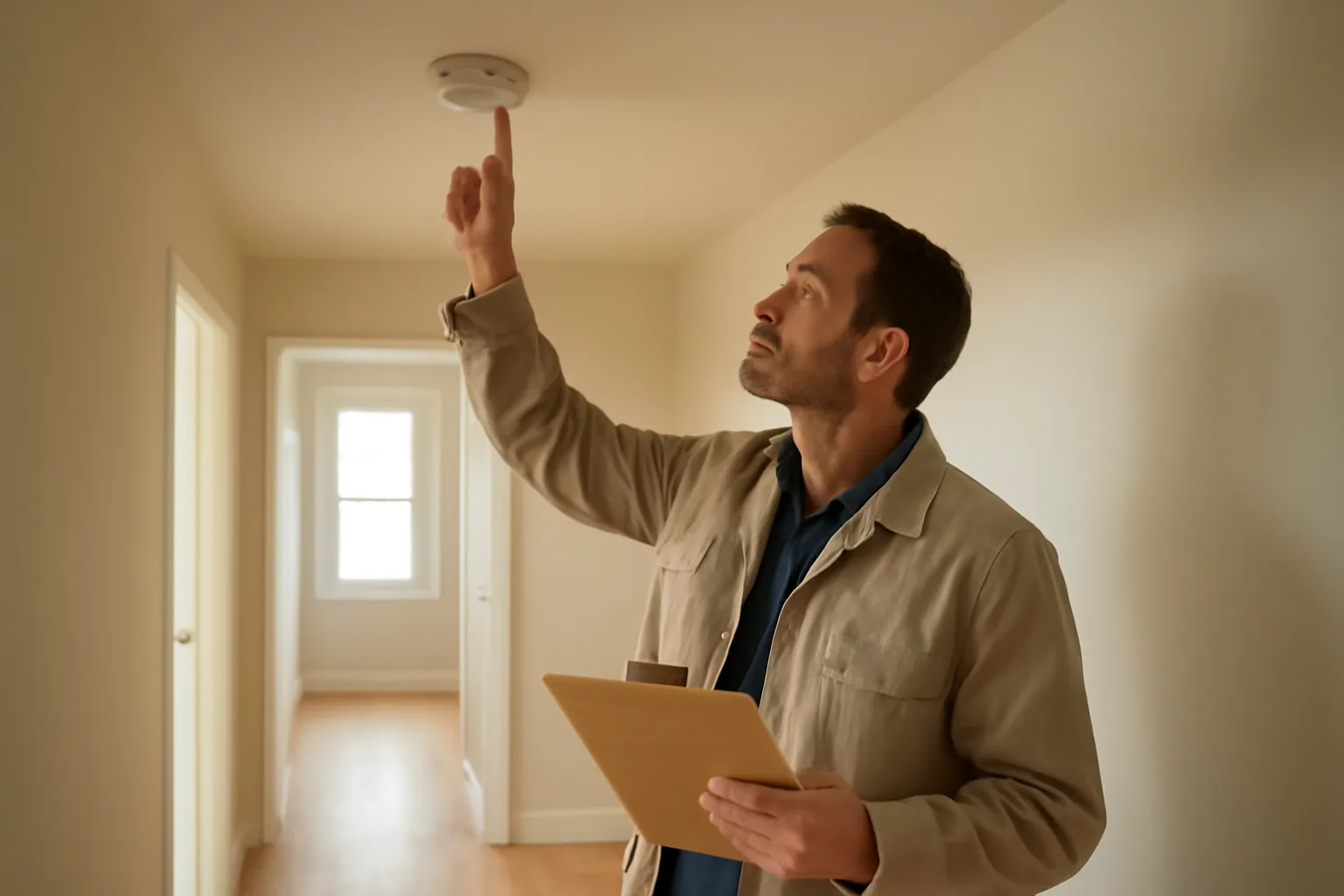
During a routine or move-in/move-out inspection, a landlord can generally look at the physical condition of the unit: walls, floors, ceilings, appliances, plumbing fixtures, windows, doors, smoke and carbon monoxide detectors, and evidence of pest problems or unauthorized alterations. The point is documenting condition and safety, not searching personal belongings. A landlord conducting a habitability or code-compliance inspection (the kind a city rental licensing office requires) is typically checking for working smoke and CO detectors, secure locks, adequate heat, no exposed wiring, no active leaks, and functioning egress windows in bedrooms. Cities that run mandatory rental inspection programs usually publish an inspection checklist matching their local housing code; ask your city rental licensing office for the current checklist before your inspection date so you're not guessing. What a landlord generally cannot do is open drawers, closets, or containers unrelated to the inspection's purpose, or use an inspection as a pretext to search for a tenant's personal items or activities. Entry itself has to follow your state's notice rules regardless of what the inspection is checking for. If you're prepping for a first-time city license inspection, a lot of landlords find it easier to work from a document that maps your specific city's checklist against what you actually have in the unit rather than guessing from a generic list. That's the kind of prep the $79 City Rental License & Inspection Prep Packet is built for: matching your city's actual inspection requirements to a room-by-room checklist before the inspector shows up.
how much notice does a landlord have to give before entering a rental unit
| California | 24 hours ("reasonable notice" presumed) | Cal. Civ. Code § 1954(a) [4] | |
|---|---|---|---|
| Arizona | 2 days | Ariz. Rev. Stat. § 33-1343(D) [5] | |
| Florida | 12 hours | Fla. Stat. § 83.53(2) [6] | Always confirm the current statute for your specific state before relying on any notice period; these numbers can change and some cities layer additional notice rules on top of state law. |
Notice requirements are set state by state, and there's no single national rule. California requires "reasonable notice," which state law defines as no less than 24 hours in most circumstances, per Cal. Civ. Code § 1954(a)(1)-(2) [4]. Many other states use a similar 24-hour standard, though a handful (like Arizona, under Ariz. Rev. Stat. § 33-1343) also set a 2-day floor for routine entry [5]. Notice rules typically don't apply to emergencies (a burst pipe, a gas leak, or a fire) where a landlord can enter without advance notice to protect the property or occupants. They also usually don't apply if the tenant has already moved out or abandoned the unit. Here's the part landlords miss: notice requirements almost always apply for routine inspections too, more than repairs. If your city requires periodic rental license inspections, you still need to give your tenant proper notice under state law before the inspector or you enter, even though the inspection itself is a city requirement. | State (example) | Standard notice for entry | Statute |
what rights do tenants have without a lease
A tenant without a written lease still has legal rights. Most states treat a tenant paying rent with no written agreement as a month-to-month tenant, and that tenant gets the same basic protections as someone with a lease: the right to a habitable unit, the right to proper notice before entry, and the right to proper notice before eviction. Without a written lease, the terms default to whatever your state's landlord-tenant statute says for oral or implied tenancies, usually month-to-month with rent due on whatever schedule the parties have been following. A landlord generally still needs a legally valid reason (in "just cause" eviction states) or, in states without just-cause requirements, proper notice to end the tenancy: commonly 30 days for month-to-month tenancies, though some states require 60 days once a tenant has lived there over a year (California's Cal. Civ. Code § 1946.1(b)-(c) is one example of that rule) [7]. The absence of a lease also cuts against the landlord in disputes. Courts generally read ambiguity against the party who could have written things down and didn't, and an oral agreement makes it much harder to enforce specific rules (no pets, no subletting, rent increase terms) that were never put in writing. If you're renting without a lease right now, get one signed as soon as possible; it protects both sides.
why do landlords require renters insurance
Landlords require renters insurance mainly to shift liability and property-damage risk away from themselves. A landlord's own property insurance covers the building structure, but it generally doesn't cover a tenant's personal belongings or liability if the tenant's actions (an unattended candle, a bathtub overflow) damage the unit or a neighboring unit. Renters insurance policies typically include personal liability coverage, often $100,000 or more depending on the policy, which can cover the landlord's repair costs if the tenant is found responsible for the damage. That protects the landlord from having to pursue the tenant directly for reimbursement or file a claim on the landlord's own policy (which can raise the landlord's premiums). Many states allow landlords to require renters insurance as a lease condition, and some jurisdictions cap what a landlord can require in terms of coverage amount. There's no federal law mandating renters insurance, so whether you can require it, and what you can require, depends on your state and sometimes your city. If you require it, put the minimum coverage amount and the requirement to name you as an "interested party" or provide proof of coverage directly in the lease, and verify coverage at move-in and renewal rather than just taking the tenant's word for it.
how to be a landlord day to day
Day-to-day landlording is mostly about consistency: respond to repair requests promptly (many states set an implied "reasonable time" standard for habitability repairs, and some set explicit deadlines, like 7 days for serious health/safety issues under some state codes), document everything in writing, and apply your rules the same way to every tenant. A few habits separate landlords who avoid fines and disputes from those who don't: keep a written maintenance log with dates and photos, save every notice you send with proof of delivery, renew your rental license or registration before it lapses (a lapsed license is one of the most common sources of city fines for small landlords), and do a documented inspection at move-in, ideally with the tenant present and a signed condition report both sides keep a copy of. Small landlords with 1 to 10 units often try to run this from memory or a shoebox of receipts. That works until a city inspection notice arrives with a deadline, or a tenant disputes a deposit deduction and you can't produce your move-in photos. A simple system, even a spreadsheet with dated entries, beats no system every time.
what a landlord cannot do in ohio
Ohio landlord-tenant law, primarily Ohio Revised Code Chapter 5321, sets out specific things a landlord cannot do. A landlord cannot shut off utilities, change locks, or remove a tenant's belongings to force them out ("self-help eviction"); Ohio requires landlords to go through the court eviction process (forcible entry and detainer action) instead [8]. Ohio Rev. Code § 5321.04 requires landlords to keep the premises fit and habitable, keep common areas safe, and maintain all electrical, plumbing, heating, and other facilities supplied by the landlord in good working order [9]. A landlord cannot ignore these duties and still enforce rent obligations without risk of a tenant defense or counterclaim. Ohio Rev. Code § 5321.05 also outlines tenant obligations and, correspondingly, limits on landlord retaliation: Ohio Rev. Code § 5321.02 specifically prohibits a landlord from retaliating against a tenant (through eviction, rent increase, or service reduction) because the tenant complained to a government agency about a building or housing code violation, or because the tenant joined a tenants' union . Ohio also requires "reasonable notice" before landlord entry under Ohio Rev. Code § 5321.04(A)(8), generally interpreted by courts and practitioners as 24 hours in normal circumstances, though the statute itself doesn't specify an exact number of hours the way California's does [9].
where to check your city's specific rental licensing rules
Every mandatory rental-licensing city sets its own fees, renewal periods, and inspection checklists, and there's no national database that keeps all of them current. Rules change: a city might raise its license fee, add a new inspection trigger (like tenant turnover or a complaint), or shift from self-certification to mandatory in-person inspection. The only reliable source for your specific city's current fee and deadline is your city rental licensing office (sometimes called the housing department, code enforcement division, or rental registration office depending on the city). Don't rely on a blog post, a real estate agent, or a forum thread for the actual dollar amount or renewal date; confirm it directly. If you manage properties in a city with mandatory licensing and you've got an inspection or renewal coming up, start by pulling your city's actual ordinance or program page rather than assuming it works like the last city you dealt with. Fee structures range enormously (some cities charge under $50 per unit annually, others charge several hundred dollars, and per-unit vs. per-property structures both exist), and inspection frequency ranges from every year to once every few years or only at tenant turnover.
putting it together: your first-year landlord checklist
If you're becoming a landlord this year, here's a realistic order of operations. First, confirm your city's rental licensing or registration requirement and get on file before you advertise the unit; some cities prohibit renting an unlicensed unit at all. Second, get a lease that matches your state's statute, not a generic template pulled from another state. Third, screen every applicant with the same criteria to stay compliant with the Fair Housing Act [1]. Fourth, do a documented move-in inspection with photos and a signed condition report. Fifth, calendar your license renewal date and any recurring inspection cycle now, not after you get a violation notice. The fines for missing a licensing deadline or failing an inspection without fixing cited items in time vary by city, sometimes reaching hundreds of dollars per violation or per day of noncompliance, so treat the deadline like a tax deadline, not a suggestion. If you want a head start on the inspection piece specifically, the City Rental License & Inspection Prep Packet is a one-time $79 tool built to help you map your city's inspection checklist against your actual unit before the inspector arrives, rather than finding out what you missed during the visit. It's not a substitute for confirming your city's specific requirements, but it saves the guesswork on what inspectors typically check for.
Frequently asked questions
How to become a landlord if I've never rented a property before?
Start by checking whether your city requires rental licensing or registration, since some cities won't let you legally rent until you're registered and, in some cases, pass an inspection. Then get a lease that matches your state's landlord-tenant statute, screen tenants consistently, and set up systems for maintenance requests and rent collection before your first tenant moves in.
Who is responsible for a rental property walk-through inspection in California?
The landlord is responsible for conducting the inspection, though the tenant has a right to be present. Under Cal. Civ. Code § 1950.5(f), the landlord must give at least 48 hours' notice for the initial (pre-move-out) inspection and provide the tenant a written list of deficiencies so they can fix them before moving out.
What is landlording?
Landlording is the ongoing work of owning and managing a rental property: collecting rent, maintaining habitability, handling repair requests, following notice and entry rules, and staying compliant with local licensing or inspection requirements. It's an active role, not a passive investment.
What is a landlord, legally speaking?
A landlord is the party (owner or authorized agent) who leases real property to a tenant in exchange for rent. Legally, a landlord takes on duties defined by state statute, including habitability, deposit handling, and notice requirements, in exchange for the right to collect rent and enforce lease terms.
What rights do tenants have without a written lease?
A tenant without a written lease is generally treated as a month-to-month tenant under state law and still has rights to habitability, proper entry notice, and proper eviction notice. The exact terms (rent amount, rules) default to whatever's been established through practice, which makes disputes harder to resolve without documentation.
How to be a landlord without getting overwhelmed?
Build simple systems early: a written maintenance log, saved copies of every notice sent, a calendar reminder for license renewals and inspection cycles, and a documented move-in condition report. Consistency in applying your rules to every tenant is what keeps you out of Fair Housing and dispute trouble.
Why do landlords require renters insurance?
Renters insurance shifts liability for tenant-caused damage and personal property loss away from the landlord's own policy. It typically includes liability coverage (often $100,000+) that can cover repair costs if the tenant is at fault, sparing the landlord from filing a claim that could raise their own premiums.
How much notice does a landlord have to give before entering a rental unit?
It depends on the state. California requires at least 24 hours' notice under Cal. Civ. Code § 1954(a). Arizona requires 2 days under Ariz. Rev. Stat. § 33-1343(D). Florida requires 12 hours under Fla. Stat. § 83.53(2). Always confirm your specific state's current statute.
What can a landlord look at during a rental inspection?
A landlord can inspect the physical condition of the unit: appliances, plumbing, smoke/CO detectors, signs of pest issues, and general safety items tied to habitability or a city's inspection checklist. A landlord generally cannot search personal belongings, drawers, or closets unrelated to the inspection's stated purpose.
What a landlord cannot do in Ohio?
Under Ohio Rev. Code Chapter 5321, a landlord cannot perform a self-help eviction (shutting off utilities, changing locks, removing belongings) and must use the court eviction process instead. Landlords also cannot retaliate against tenants for reporting code violations, under Ohio Rev. Code § 5321.02, and must maintain habitability under § 5321.04.
Do all cities require a rental license or registration?
No. Rental licensing and registration requirements are set city by city (sometimes county by county), and there's no national requirement. Some cities have no program at all, others require registration only, and others require registration plus periodic inspections. Confirm with your specific city rental licensing office.
What happens if I miss my rental license renewal deadline?
Consequences vary by city but often include late fees, an inability to legally collect rent or evict until you're back in compliance, or a formal violation notice with escalating fines. Some cities also require a reinspection before reinstating a lapsed license. Confirm the specific penalty structure with your city rental licensing office.
Can a landlord require proof of renters insurance before move-in?
In most states, yes, as long as it's stated as a lease condition and doesn't conflict with local law. There's no federal renters insurance mandate, so requirements and any coverage caps depend on your state and city. Verify coverage at move-in and each renewal rather than relying on the tenant's word.
Sources
- U.S. Department of Justice, Fair Housing Act Overview: Fair Housing Act requires consistent tenant screening criteria under 42 U.S.C. § 3601 et seq.
- California Legislative Information, Civil Code § 1950.5: California landlord duties for initial move-out inspection notice and itemized deposit deduction statement within 21 days
- California Legislative Information, Civil Code § 1954: California requires reasonable notice, presumptively 24 hours, before landlord entry
- Arizona State Legislature, A.R.S. § 33-1343: Arizona requires 2 days' notice before landlord entry for repairs or inspection
- Online Sunshine (Florida Legislature), Florida Statutes § 83.53: Florida requires at least 12 hours' notice before landlord entry
- California Legislative Information, Civil Code § 1946.1: California requires 60 days' notice to terminate a month-to-month tenancy after one year of occupancy
- Ohio Legislature, Ohio Revised Code Chapter 5321: Ohio landlord-tenant law prohibits self-help eviction and requires court process
- Ohio Legislature, Ohio Revised Code § 5321.04: Ohio landlord obligations to maintain habitability and give reasonable notice before entry
- Ohio Legislature, Ohio Revised Code § 5321.02: Ohio prohibits landlord retaliation against tenants who report code violations