Last updated 2026-07-26
TL;DR
Becoming a landlord means more than buying a property and finding a tenant. Most cities with rental licensing require registration, a fee, and sometimes an inspection before you can legally rent. Add state landlord-tenant law on notice periods, security deposits, and habitability, and the paperwork side is bigger than most first-time landlords expect.
what is a landlord, exactly?
A landlord is the owner (or authorized agent of the owner) of real property who rents that property to someone else, the tenant, in exchange for regular payment. That's the plain-English version. Legally, the relationship is defined by a lease or rental agreement, and it triggers a set of duties under state and sometimes local law, things like keeping the unit habitable, handling security deposits correctly, and giving proper notice before entry or termination. The word covers a huge range of people. Some landlords own one duplex and self-manage everything. Others own ten single-family homes across a metro area and hire a property manager. Others are LLCs where a person signs as the managing member. In most state statutes, the legal term is 'landlord' or 'lessor,' and it applies the same whether you own one unit or five hundred. What changes with scale isn't the legal definition. It's the compliance burden. A landlord with one rental in a city that requires rental registration has one license to track. A landlord with eight units across three cities is juggling three sets of deadlines, three fee schedules, and possibly three different inspection cycles.
what is landlording? is it a full-time job or a side gig?
"Landlording" is the informal term for the practical, day-to-day work of owning and managing rental property: screening tenants, collecting rent, handling maintenance calls, tracking lease renewals, and staying current on local ordinance changes. It's not a licensed profession in most states. Property management for other people's properties often does require a real estate license, but managing your own property generally does not. For most people with 1 to 10 units, landlording is a part-time job that occasionally spikes into a very demanding one, usually around a tenant turnover, a maintenance emergency, or a licensing renewal that you almost missed. The recurring tasks are predictable: rent collection, lease renewal, response to maintenance requests, annual license renewal if your city requires one, and periodic inspections. The unpredictable tasks are what wear people out: an eviction filing, a code violation notice, a tenant dispute over the security deposit, or an ordinance change you didn't know about until a notice showed up. That last one is worth planning for. Cities update rental registration rules more often than landlords expect, and missing a renewal deadline is one of the more common ways small landlords end up with a fine.
how do you become a landlord? the actual steps
Becoming a landlord legally involves more than closing on a property and putting up a listing. Here's the realistic sequence for a first-time landlord in a city with rental licensing requirements. First, confirm your city's rental registration or licensing rules before you advertise the unit. Many cities (not all, but a growing number, especially in the Midwest and Northeast) require landlords to register the rental with a city office, sometimes annually, sometimes at a one-time fee tied to unit count. Skipping this step is one of the most common early mistakes, because the requirement often isn't obvious from the property listing or the deed. Confirm with your city rental licensing office directly, since the rules and fees vary block by block in some metro areas. Second, get the property inspection-ready if your city requires a pre-rental or periodic inspection. This usually covers smoke and carbon monoxide detectors, working locks, no obvious electrical hazards, functioning plumbing, and adequate egress from bedrooms. Some cities inspect every unit before the first tenant moves in; others do it on a rotating multi-year cycle. Third, understand your state's landlord-tenant statute basics: security deposit limits and return timelines, notice periods for entry and termination, and habitability standards. These vary by state, sometimes significantly. A security deposit cap that's normal in one state can be double or triple what's allowed next door. Fourth, set up the practical systems: a written lease, a way to collect rent and document it, a maintenance request process, and renters insurance requirements if you're using them. Fifth, screen tenants consistently and legally, using the same criteria for every applicant to avoid fair housing complaints. The federal Fair Housing Act prohibits discrimination based on race, color, national origin, religion, sex, familial status, or disability in any housing transaction [1]. If you're managing this across a licensing deadline or a violation notice you just received, a structured checklist for your specific city saves real time. That's the gap our City Rental License & Inspection Prep Packet is built to close: a $79 one-time packet that walks through what a typical rental licensing office asks for, so you're not guessing at requirements from a notice letter.
who is responsible for the rental property walk-through inspection in California?
In California, the landlord is generally responsible for scheduling and coordinating any move-in or move-out walk-through inspection, but the process is designed to include the tenant directly. California Civil Code Section 1950.5 gives tenants the right to request an initial inspection before move-out, conducted no earlier than two weeks before the tenancy ends, so the tenant can fix any deductible issues before the final deposit accounting [2]. The landlord must give at least 48 hours' written notice of the date and time of that initial inspection, unless the tenant waives that notice, and must provide an itemized statement of proposed deductions after the walk-through so the tenant has a chance to address them [2]. The landlord is also the party required to send a final itemized statement of deductions, along with any deposit balance, within 21 calendar days after the tenant moves out, per the same statute [2]. So the honest answer is shared responsibility with the landlord holding the administrative duty: the landlord must offer the inspection, give notice, and issue the paperwork; the tenant decides whether to request the initial walk-through and whether to attend. Some California cities layer their own rental inspection or licensing programs on top of this. Los Angeles' Systematic Code Enforcement Program is one well-known example, and it's a separate process from the security deposit walk-through, usually involving a city inspector rather than just the landlord and tenant [3].
what rights do tenants have without a lease?
Tenants without a written lease still have real legal protections. In every state, an oral or implied rental agreement (sometimes called a month-to-month tenancy) still creates a landlord-tenant relationship, and the tenant keeps rights under state law even with nothing signed. Those rights typically include the right to a habitable unit (working plumbing, heat, and structural safety), protection from illegal lockouts or utility shutoffs used to force a move-out, the right to proper notice before the landlord can end the tenancy, and the right to the return of any security deposit under the state's deposit rules. In most states, a tenant without a written lease is treated as a month-to-month tenant, and standard notice periods still apply. What a tenant without a lease usually does not have is a fixed-term guarantee. Without a written lease specifying a term (say, one year), either party can typically end a month-to-month tenancy with proper notice, and the terms (rent amount, rules) can be changed with that same notice, subject to any local rent control ordinance. This cuts both ways. It protects the landlord's flexibility, but it also means the landlord can't skip statutory notice periods just because there's no paper lease. Verbal agreements are legally enforceable in most states; they're just much harder to prove in a dispute.
how much notice does a landlord have to give?
Notice requirements split into two very different categories: notice to enter the unit, and notice to end the tenancy. Both vary by state, so what follows is the general pattern, not a specific state's rule. For entry notice, many states require 24 hours' written or oral notice before a landlord can enter for a non-emergency reason like a repair or inspection, though some states set it lower (as little as 12 hours in a few) or don't set a specific number at all and instead require 'reasonable notice.' Emergencies (fire, flooding, gas leak) generally allow immediate entry without advance notice in every state. For ending a month-to-month tenancy, the common baseline is 30 days' written notice from either party, though a growing number of states require 60 days' notice once the tenant has lived there past a certain threshold, often one year. Some cities layer additional "just cause" eviction protections on top of the state minimum, meaning even a full notice period isn't enough without a legally valid reason for ending the tenancy. For rent increases, notice periods often mirror the termination notice: 30 days for smaller increases, sometimes 60 or 90 days for increases above a certain percentage, particularly in states with rent stabilization laws. Because these numbers genuinely differ by state and sometimes by city, the only safe move is checking your specific state's landlord-tenant statute or your city's rental licensing office before sending any notice.
why do landlords require renters insurance?
Landlords require renters insurance mainly to shift liability and loss risk away from themselves. A landlord's own property insurance covers the building structure, but it typically does not cover a tenant's personal belongings, and it often doesn't fully cover liability if the tenant (or the tenant's guest) causes an incident, like a kitchen fire or a bathtub overflow that damages a unit below. Renters insurance usually costs relatively little, commonly cited in the range of roughly $15 to $30 a month depending on coverage level and location, according to industry rate data tracked by the Insurance Information Institute [4]. Requiring it is cheap insurance for the landlord too. If a tenant's negligence causes damage, the tenant's policy is the first line of financial recovery instead of the landlord's own claim history taking the hit. Many landlords write a renters insurance requirement directly into the lease, sometimes requiring the landlord be listed as an "interested party" or additional insured so they're notified if the policy lapses. This is a lease-drafting decision specific to your state and situation, so it's worth confirming enforceability with a local attorney or your state's landlord-tenant statute rather than copying a clause from another state's template.
what can a landlord look at during an inspection?
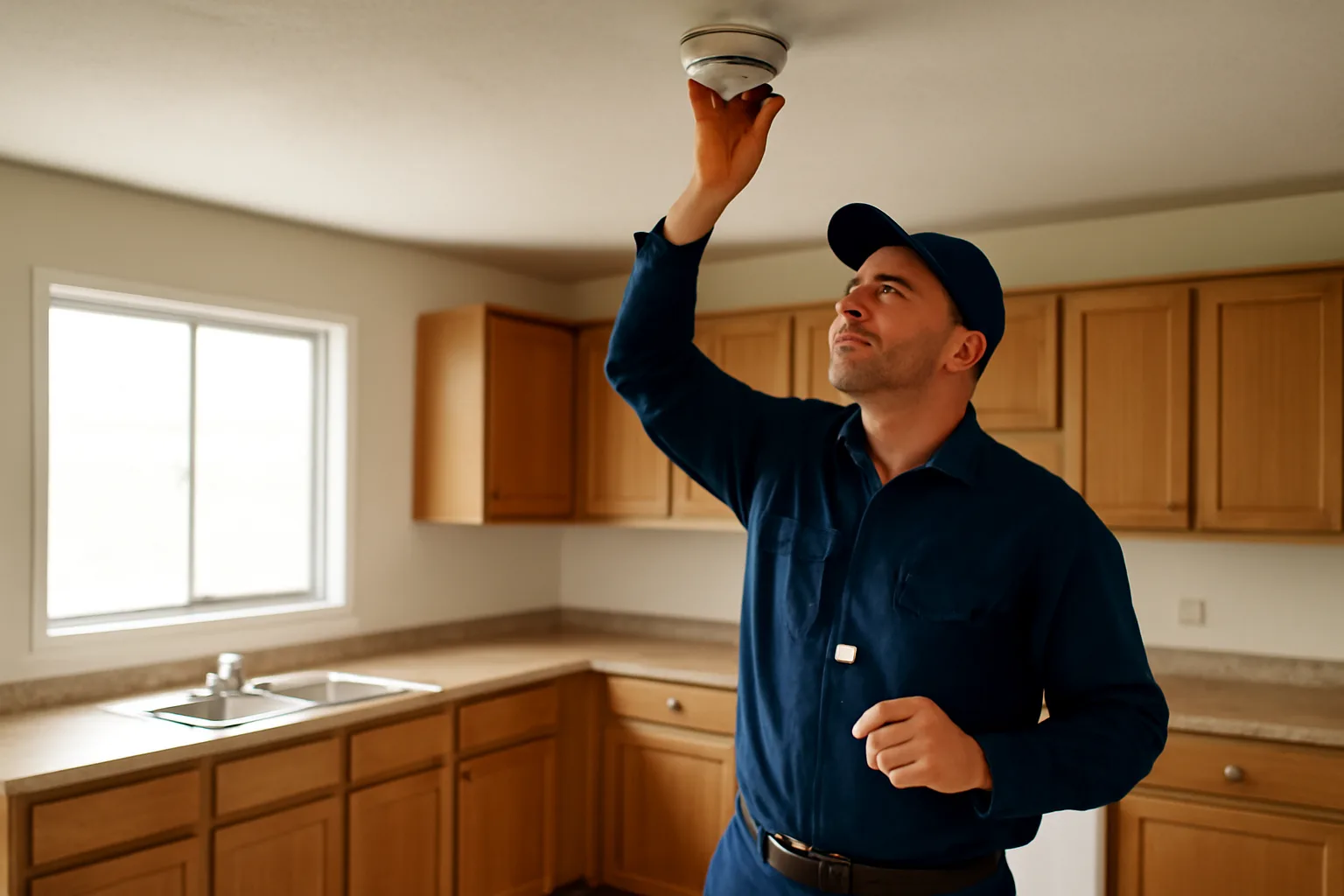
During a routine or move-in/move-out inspection, a landlord (or city inspector, if it's a licensing inspection) can generally look at anything relevant to the condition and safety of the unit: working smoke and carbon monoxide detectors, plumbing fixtures, electrical outlets and panels, HVAC function, window and door locks, signs of pest infestation, mold or water damage, and general cleanliness that could affect the unit's condition. What a landlord generally cannot do during an inspection is search through a tenant's personal belongings, closets, drawers, or private files beyond what's needed to check the condition of the space itself. The inspection is about the property, not the tenant's possessions. A landlord also can't use a routine inspection as a pretext for harassment, like showing up unannounced repeatedly or timing inspections to intimidate a tenant who filed a complaint. For city-mandated rental licensing inspections, the scope is usually narrower and defined by a checklist, often covering egress windows in bedrooms, functioning smoke detectors on every level, no exposed wiring, working locks on exterior doors, and adequate heat source. These checklists differ by city; some publish them online, others hand them out at the licensing office. If you've gotten a notice about an upcoming inspection and don't know what's on the list, that's exactly the kind of gap our $79 City Rental License & Inspection Prep Packet is meant to fill: a plain checklist approach so you walk in prepared instead of guessing.
what a landlord cannot do in Ohio
Ohio's landlord-tenant law, codified in Ohio Revised Code Chapter 5321, sets specific limits on landlord conduct. A landlord cannot shut off utilities, change the locks, or remove a tenant's belongings to force them out, a practice known as "self-help eviction." Ohio law requires landlords to use the court eviction process (forcible entry and detainer action) instead [5]. Ohio law also requires landlords to maintain the unit in a fit and habitable condition, comply with building and housing codes affecting health and safety, keep common areas safe, and maintain electrical, plumbing, and heating systems in good working order, per ORC 5321.04 [5]. A landlord cannot retaliate against a tenant for exercising a legal right, such as filing a code complaint or joining a tenant organization. ORC 5321.02 specifically bars a landlord from raising rent, decreasing services, or threatening eviction in response to that kind of protected activity [6]. On entry, Ohio landlords must give "reasonable notice" of intent to enter and can only enter at reasonable times, generally understood in practice as 24 hours' notice, though the statute itself uses the more flexible "reasonable" standard rather than a fixed number [5]. As with every state, the statute language matters more than general summaries like this one, so read ORC Chapter 5321 directly or talk to a local attorney if you're dealing with an active dispute.
what happens if you skip rental licensing or miss an inspection deadline?
Consequences vary a lot by city, but the common pattern is escalating fines followed by potential legal action if the landlord keeps renting without a valid license. Some cities issue a warning notice first with a grace period to register or schedule the inspection. Others go straight to a fine, and repeat or ignored violations can climb into the thousands of dollars in some jurisdictions. Beyond the fine itself, an unlicensed rental can create bigger problems. Some cities bar a landlord from filing an eviction case in court until the rental license is current, which can leave a landlord stuck with a problem tenant and no legal path to remove them until the paperwork is fixed. Others flag the property for more frequent inspections going forward once a violation is on record. If you've already gotten a violation notice, the fastest path out is usually direct contact with your city's rental licensing office to find out exactly what's missing (registration, fee payment, inspection scheduling) and what the cure period looks like. Don't assume the fine is the whole story. Ask specifically whether it affects your ability to collect rent or file eviction until it's resolved.
Frequently asked questions
How do I become a landlord for the first time?
Buy or already own a property, confirm your city's rental registration or licensing requirements before advertising it, prepare the unit for any required inspection, understand your state's landlord-tenant statute (deposits, notice periods, habitability), and set up a written lease and rent collection system. Screen every applicant consistently to stay compliant with the federal Fair Housing Act.
Who is responsible for the rental property walk-through inspection in California?
The landlord is responsible for offering the initial inspection, giving at least 48 hours' notice, and issuing the itemized deduction statement under California Civil Code Section 1950.5. The tenant decides whether to request the pre-move-out walk-through and whether to attend it.
What is landlording?
Landlording is the everyday work of owning and managing rental property: collecting rent, screening tenants, handling repairs, tracking license renewals, and staying current with local ordinances. It's not a licensed profession for owners managing their own property, though managing property for others often does require a real estate license.
What is a landlord, legally speaking?
A landlord is the owner or authorized agent who rents real property to a tenant under a lease or rental agreement. State landlord-tenant statutes define specific duties, including habitability, security deposit handling, and notice requirements for entry and termination.
What rights do tenants have without a signed lease?
Tenants without a written lease are usually treated as month-to-month tenants and keep rights to a habitable unit, protection from illegal lockouts, proper notice before eviction, and return of any security deposit under state law. What they lack is a guaranteed fixed term; either party can typically end the tenancy with standard notice.
How much notice does a landlord have to give before entering?
Most states require 24 hours' notice for non-emergency entry, though a few set it lower and some just require 'reasonable notice' without a fixed number. Emergencies allow immediate entry in every state. Check your specific state's landlord-tenant statute for the exact figure.
How much notice does a landlord have to give to end a month-to-month tenancy?
The common baseline is 30 days' written notice, though several states require 60 days once a tenant has lived there past a certain period, often one year. Some cities add just-cause eviction rules on top of the state notice minimum.
Why do landlords require renters insurance?
Renters insurance shifts liability and personal property loss risk to the tenant's policy instead of the landlord's. It typically costs $15 to $30 a month per Insurance Information Institute data, making it cheap protection for both sides if a tenant causes accidental damage.
What can a landlord look at during a rental inspection?
A landlord can check smoke and CO detectors, plumbing, electrical systems, HVAC function, locks, and signs of damage or pests. A landlord generally cannot search personal belongings, drawers, or private files beyond what's needed to assess the unit's condition.
What can't a landlord do in Ohio?
Under Ohio Revised Code 5321, a landlord cannot shut off utilities or change locks to force a tenant out (self-help eviction), must maintain the unit in habitable condition, and cannot retaliate against a tenant for filing a code complaint or exercising a legal right.
Do I need a rental license to rent out one property?
It depends entirely on your city. Many cities with mandatory rental licensing apply the requirement to any rented unit, including a single-family home rented by an individual owner. Confirm with your specific city's rental licensing office, since some exempt owner-occupied duplexes or units rented to family.
What happens if I miss my city's rental inspection deadline?
Consequences vary by city but often start with a fine and can escalate to blocking your ability to file an eviction until the license or inspection is current. Contact your city's rental licensing office directly to find out the cure period and whether the violation affects your legal standing as a landlord.
Can a landlord require renters insurance in every state?
Most states allow landlords to require renters insurance as a lease condition, but enforceability details (like naming the landlord as an interested party) vary by state. Check your state's landlord-tenant statute or consult a local attorney before drafting the specific clause.
Sources
- U.S. Department of Housing and Urban Development, Fair Housing Act overview: Federal Fair Housing Act prohibits discrimination based on race, color, national origin, religion, sex, familial status, or disability
- California Legislative Information, Civil Code Section 1950.5: California security deposit and pre-move-out inspection notice requirements, including 48-hour notice and 21-day final accounting
- City of Los Angeles Housing Department, Systematic Code Enforcement Program (SCEP) overview: Los Angeles operates a citywide systematic rental inspection program separate from security deposit walk-throughs
- Insurance Information Institute, Renters Insurance facts and statistics: Renters insurance typically costs in the range of $15 to $30 per month depending on coverage and location
- Ohio Laws and Rules, Ohio Revised Code Section 5321.04: Ohio landlord obligations to maintain habitability and code compliance, and reasonable notice standard for entry
- Ohio Laws and Rules, Ohio Revised Code Section 5321.02: Ohio law bars landlord retaliation against tenants for exercising legal rights such as filing a code complaint