Last updated 2026-07-26
TL;DR
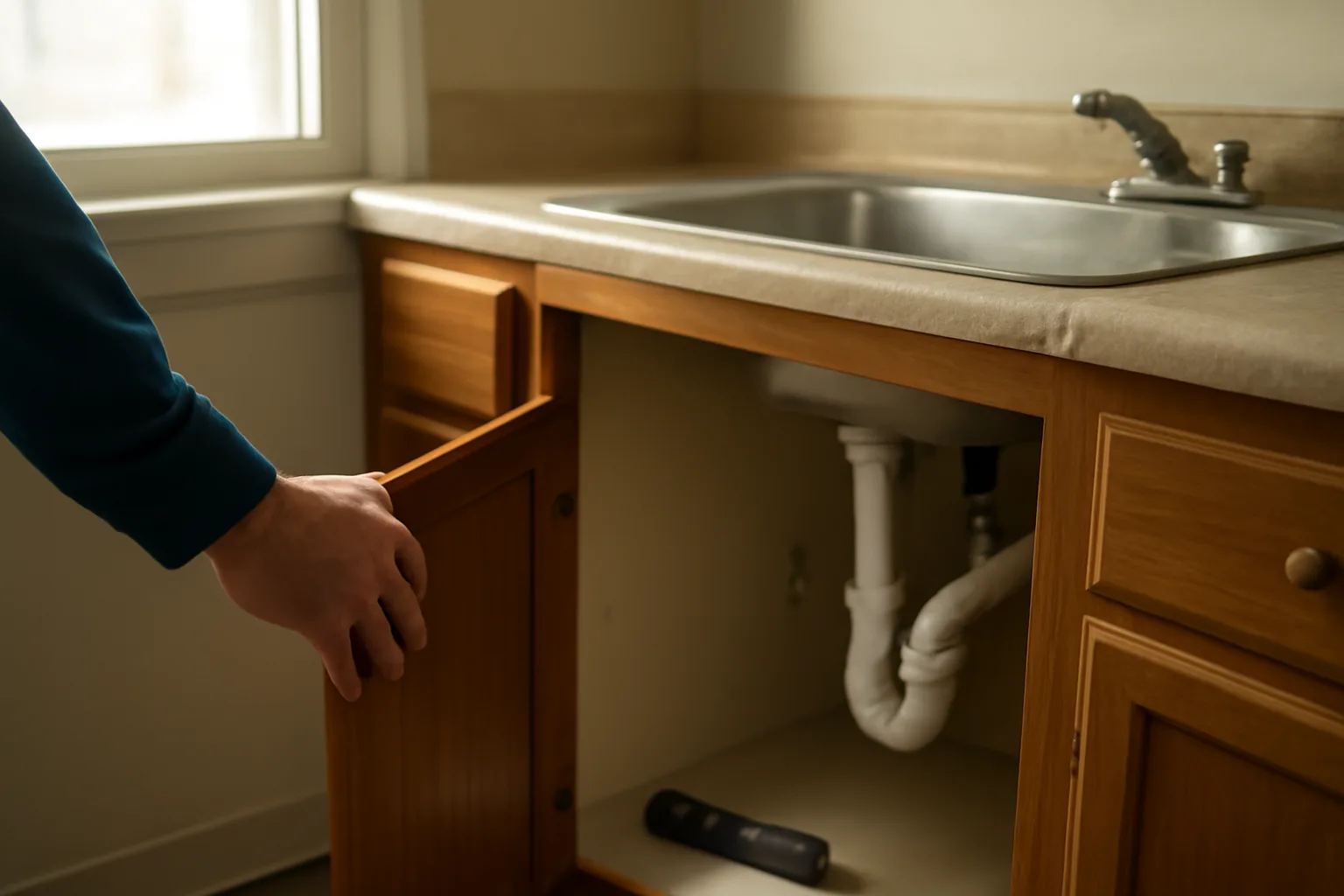
Yes, in most cities a rental inspector can open cabinets, cupboards, and closets if the inspection covers plumbing, pest evidence, or fire safety inside those spaces. Inspectors generally can't search personal belongings, open locked containers without cause, or rummage through drawers for anything unrelated to code compliance. Scope depends on your city's rental inspection ordinance, so check the specific checklist your city issues before the visit.
can rental inspections open cupboards and cabinets?
In most mandatory rental-licensing cities, yes. A code inspector doing a rental license or registration inspection can open kitchen and bathroom cabinets to check for active leaks, mold, rodent droppings, or missing shutoff valves. Cupboards under sinks are a common trouble spot because that's where slow leaks hide, so inspectors are trained to look there. The legal basis is usually the city's housing or property maintenance code, most of which are adapted from the International Property Maintenance Code (IPMC). The IPMC gives code officials authority to inspect "every structure or premises" for violations of the code's health and safety provisions, which include plumbing fixtures and pest conditions typically found inside cabinets [1]. What inspectors are generally not doing is opening cabinets to see what's inside your food pantry or check whether you own particular items. The inspection is tied to code compliance: is there a leak, is there evidence of pests, is the space free of the specific hazards on that city's checklist. If an inspector starts going through personal items, drawers, or storage that has nothing to do with a code item, that's outside the normal scope, and you can ask what specific violation they're checking for. Because every city writes its own rental inspection ordinance, the exact list of what gets opened, tested, or run varies. Some cities test every faucet and flush every toilet. Others do a lighter walk-through. Confirm the specific checklist with your city rental licensing office before the appointment so nothing surprises you or the inspector.
what can a landlord look at during an inspection?
A landlord doing their own periodic inspection (separate from the city's licensing inspection) generally can look at anything reasonably related to the condition of the unit: appliances, plumbing under sinks, smoke detector batteries, signs of pest activity, HVAC filters, and general wear. Most state landlord-tenant statutes allow landlords to enter for inspection purposes with proper notice, but the entry has to be for a legitimate purpose tied to the property, not a fishing expedition through tenant belongings. California law, for example, permits landlord entry "to make necessary or agreed repairs, decorations, alterations or improvements, supply necessary or agreed services, or exhibit the dwelling unit to prospective or actual purchasers, mortgagees, tenants, workmen, or contractors" and requires "reasonable notice in writing," which state law presumes to be 24 hours absent an emergency [2]. During a landlord inspection, cabinets and cupboards are fair game for the same reason city inspectors check them: leaks and pest evidence often start under sinks. But a landlord walking through shouldn't be searching drawers, reading mail, or photographing personal items. If a tenant has a security concern about scope, the lease terms and your state's entry statute are the first place to look. See our related guide on tenant rights for how notice and scope interact under different state laws.
who is responsible for rental property walk-through inspection in california?
There isn't one single statewide answer, because California doesn't have a uniform mandatory rental inspection program. Instead, individual cities and counties run their own rental inspection or proactive rental inspection programs (sometimes called RRIO, systematic code enforcement, or similar names), and each ordinance assigns responsibility differently. In general, the landlord (property owner or their designated agent) is responsible for scheduling the inspection, paying any associated fee, and making the unit available, while the city's code enforcement or building department conducts the actual walk-through. Los Angeles, for example, runs its Systematic Code Enforcement Program (SCEP) inspections through the Housing Department, funded by an annual per-unit fee charged to the property owner [3]. For move-in and move-out condition walk-throughs (a different thing from a city licensing inspection), California Civil Code Section 1950.5 gives tenants the right to request an initial inspection before move-out so they can fix issues before the landlord assesses deductions from the security deposit [4]. That inspection is initiated by the tenant's request and conducted jointly with the landlord or their representative, not by a city inspector. Bottom line: for the licensing-type inspection, confirm with your specific city's rental housing or code enforcement office who conducts it and what they check. For move-out deposit inspections, the landlord or their agent does the walk-through, and the tenant has a statutory right to be present if they requested it.
how much notice does a landlord have to give before an inspection?
Notice requirements vary by state, but 24 hours is the most common default when there's no specific statute or lease term overriding it. California's Civil Code Section 1954 presumes 24 hours written notice is reasonable for landlord entry to inspect, repair, or show the unit [2]. Other states set different defaults: some require 24 hours, some allow "reasonable notice" without a fixed number, and a few states have no statutory notice requirement at all for landlord entry outside of emergencies. City-mandated rental license inspections often follow a separate notice process set by the ordinance itself, sometimes requiring the city to notify the tenant directly, sometimes routing all notice through the landlord. Some cities require 48 hours notice for a compliance inspection; others allow shorter windows for re-inspections tied to a violation deadline. Emergencies are the universal exception. If there's a fire, flooding, a gas leak, or a similarly urgent hazard, landlords and inspectors generally can enter without advance notice under most state laws and under IPMC-based codes that authorize emergency entry to abate imminent hazards [1]. If you're unsure what applies to your building, check your state's landlord-tenant statute plus your city's specific rental inspection ordinance. They aren't always the same notice period.
what a landlord cannot do in ohio
Ohio's landlord-tenant law (Ohio Revised Code Chapter 5321) sets specific limits. Under ORC 5321.04, a landlord cannot enter the rental unit except at reasonable times and after giving "reasonable notice," and the statute specifies that except in emergencies, a landlord shall give notice at least 24 hours before entry [5]. Ohio landlords also can't retaliate against a tenant for reporting code violations. ORC 5321.02 prohibits a landlord from increasing rent, decreasing services, or bringing an eviction action against a tenant primarily because the tenant complained to a government agency about a building, housing, or health code violation [6]. Ohio landlords are barred from certain lease terms too: ORC 5321.13 makes void any rental agreement provision waiving the tenant's rights under Chapter 5321, including the right to notice before entry, the right to a habitable unit, and protections against retaliatory eviction [7]. So in Ohio specifically, a landlord cannot enter without proper notice (barring emergency), cannot retaliate for a code complaint, and cannot use lease language to strip away those statutory protections. These same three categories (entry notice, anti-retaliation, and non-waivable rights) show up in some form in most states' landlord-tenant codes, just with different specific numbers and citations.
why do landlords require renters insurance?
Landlords require renters insurance mostly to shift liability and property-damage risk away from their own policy. A landlord's dwelling insurance covers the building structure, not the tenant's personal belongings, and it typically doesn't cover a tenant's liability if the tenant accidentally causes damage (a kitchen fire, an overflowing tub that floods the unit below). Renters insurance usually includes personal liability coverage, often starting around $100,000 in coverage limits on basic policies, which can cover the tenant's responsibility if they cause damage to the unit or a neighboring unit. It also covers the tenant's own belongings if there's a fire, theft, or water damage, which matters because the landlord's policy won't reimburse a tenant for a ruined couch or damaged electronics. Requiring renters insurance is legal in most states as a lease condition, as long as it's disclosed and applied consistently. It's not federally mandated, and individual state law rarely bans the requirement outright, but a handful of jurisdictions restrict how landlords can enforce it (for example, some cities cap what landlords can charge if a tenant fails to obtain a policy and the landlord force-places one). Check your state and city rules, since the details differ. For small landlords with 1-10 units, requiring renters insurance is a low-cost way to reduce exposure to a tenant-caused loss that might otherwise come straight out of pocket.
what rights do tenants have without a lease?
A tenant without a written lease, sometimes called a month-to-month tenant or tenant-at-will, still has legal rights under state landlord-tenant law. The absence of a written lease doesn't strip away statutory protections; it just means the terms default to what state law provides rather than what a written agreement specifies. Tenants without a lease generally still have the right to: a habitable unit (working plumbing, heat, and structural safety), advance notice before the landlord enters (the same notice statutes discussed above apply regardless of lease status), advance notice before the tenancy is terminated (commonly 30 days for month-to-month tenancies, though this varies by state and sometimes by how long the tenant has lived there), and protection from retaliatory or discriminatory eviction under fair housing law. The federal Fair Housing Act (42 U.S.C. Section 3601 et seq.) applies regardless of lease status and prohibits discrimination based on race, color, religion, sex, national origin, disability, and familial status in the terms of a tenancy [8]. What a tenant without a lease usually does not have is a fixed-term guarantee; the landlord can typically end a month-to-month tenancy with proper notice for any legal reason, whereas ending a fixed-term lease early generally requires cause. See our related guide on tenants rights and renters rights for more on how notice and termination work state by state.
what is landlording and what is a landlord?
A landlord is the owner (or an owner's authorized agent) of real property who rents that property to another party, called a tenant, in exchange for rent. The relationship is defined by a lease or rental agreement, written or verbal, and governed by state landlord-tenant statutes plus, in many cities, a rental licensing or registration ordinance. "Landlording" is the informal term for the ongoing work of operating rental property: screening tenants, collecting rent, handling maintenance requests, complying with habitability and safety codes, managing lease renewals and terminations, and keeping up with local licensing or inspection requirements. It's part legal compliance, part maintenance management, and part customer service, and small landlords with a handful of units often do all three roles themselves rather than hiring a property manager. The core legal obligations that come with being a landlord, regardless of portfolio size, generally include: maintaining the unit in habitable condition (most states have an implied warranty of habitability), following state-mandated notice periods for entry and termination, complying with fair housing law, and, in a growing number of cities, registering or licensing the rental unit and passing a periodic inspection. Cities including many in California, Ohio, and elsewhere have their own local licensing regimes layered on top of state law, which is why a landlord's actual compliance checklist depends heavily on the specific city.
how to become a landlord (and how to be a landlord day to day)
Becoming a landlord starts with acquiring rental property, whether that's a single unit or a small multifamily building, and then meeting the legal requirements to rent it out lawfully. The basic steps most new landlords go through are: confirm zoning allows rental use, register the property with the city if required, get any required rental license or permit, obtain landlord insurance (different from a homeowner policy), set up a compliant lease, and screen tenants under fair housing law. A growing number of cities require a rental license or registration before you can legally rent out a unit at all, and many pair that requirement with a mandatory inspection. Skipping this step is one of the most common (and most expensive) mistakes new landlords make, since operating without a required license can trigger fines, and some cities bar landlords from collecting rent or pursuing eviction until the unit is properly licensed. Day to day, being a landlord means responding to maintenance requests promptly (habitability law in most states requires timely repair of things like heat, plumbing, and safety hazards), giving proper notice before entry or termination, keeping records of inspections and repairs, and renewing the rental license or registration on whatever cycle your city requires (annually, biennially, or on a rolling inspection schedule in many programs). If you're getting ready for a first-time or renewal rental inspection, our $79 one-time City Rental License & Inspection Prep Packet walks through a general pre-inspection checklist so you know roughly what to expect walking in, though you should always confirm the specific checklist with your city rental licensing office since requirements differ block to block, let alone city to city.
what happens if you refuse a rental inspection?
Refusing a city-mandated rental license inspection usually doesn't make the inspection go away; it typically triggers a warrant process or code enforcement action instead. Most municipal codes modeled on the IPMC give code officials the authority to seek an administrative or judicial warrant to inspect a property if the owner or occupant refuses consent, based on the general inspection authority granted under the code [1]. Refusing your own landlord's routine inspection (as a tenant) is a different situation, governed by your lease and state entry law rather than a city ordinance. A tenant generally can't refuse a lawful, properly-noticed landlord entry outright, though a tenant can dispute the timing or scope if it doesn't match what the notice or state statute allows. For landlords refusing or missing a city rental license inspection, the practical consequence is usually a fine, a delayed or denied license, and in some cities, a bar on collecting rent or initiating eviction proceedings until the unit passes inspection. Fine amounts and enforcement mechanisms vary enormously by city, so check the specific ordinance and penalty schedule with your city rental licensing office rather than assuming a number.
do inspectors need a warrant to open cabinets or enter a unit?
Generally no, if the tenant or owner consents to the inspection, which is what happens in the overwhelming majority of routine rental license inspections. The warrant question only becomes relevant when someone refuses entry. The U.S. Supreme Court addressed administrative housing inspections directly in Camara v. Municipal Court, 387 U.S. 523 (1967), holding that the Fourth Amendment requires a warrant for routine municipal housing code inspections absent consent, but also holding that the standard for such a warrant is lower than for a criminal search; it doesn't require probable cause tied to a specific violation, just a showing that the inspection follows reasonable administrative standards, such as the area's age and condition or a general inspection schedule . In practice, most cities avoid this entirely by requiring the landlord to schedule and consent to the inspection as a condition of the rental license, and many require the landlord to secure tenant access or notify the tenant directly. If a tenant refuses access on inspection day, the outcome depends on the ordinance: some cities will reschedule, some will treat it as grounds to deny or revoke the license until the landlord/tenant work out access, and in rare contested cases, code enforcement can pursue an administrative warrant under the Camara standard.
how do city rental inspection checklists usually differ from landlord walk-throughs?
| Smoke/CO detectors | Checked for presence and function, often required by code | Usually checked too | |
|---|---|---|---|
| Under-sink cabinets | Opened for leaks, pest evidence | Opened for leaks, general condition | |
| Personal belongings | Not searched | Not searched (absent specific lease terms) | |
| Cosmetic wear (paint, carpet) | Usually not a violation unless it's a health/safety issue | Often noted for maintenance planning | |
| Water heater TPR valve | Commonly checked, required by plumbing code in many jurisdictions | Sometimes checked | |
| Locked closets/rooms tenant uses | Generally not opened without specific cause | Generally not opened without specific cause | The overlap is bigger than people expect: both types of inspection care about leaks, pests, and working safety devices, because those are the things that turn into real damage or real injury claims later. The difference is mostly that a city inspector is checking against a specific code section (and can write a violation notice), while a landlord's own walk-through is checking against the lease and general maintenance standards. |
City rental license inspections check code compliance items: smoke and CO detector presence and function, egress windows, electrical panel condition, plumbing leaks, water heater safety (temperature/pressure relief valve, proper venting), pest evidence, handrails, and structural hazards. Landlord walk-throughs (for lease renewal or maintenance purposes) tend to be broader and can include cosmetic condition, appliance function, and general wear that wouldn't necessarily be a code violation. | Item | City license inspection | Landlord walk-through |
Frequently asked questions
Can a rental inspector open my kitchen cabinets during a city inspection?
Yes, in most jurisdictions, if the inspection covers plumbing or pest conditions. Under-sink cabinets are commonly checked for leaks and rodent evidence. The authority comes from local housing codes based on the International Property Maintenance Code, which gives inspectors broad access to check code-related conditions throughout the unit [1].
Can an inspector look inside my closets?
Often yes, especially bedroom closets checked for smoke detector coverage or egress window access, and utility closets checked for water heater or furnace safety. Inspectors generally aren't searching closets for personal belongings; they're checking for a specific code item like a detector, vent, or shutoff valve.
Can a landlord search my drawers during an inspection?
No. Even where cabinets and closets are fair game for leak or pest checks, going through drawers, personal papers, or belongings unrelated to a code or maintenance item falls outside a normal inspection's scope. If this happens, review your lease and your state's entry statute; some tenants raise this with local housing counsel or a tenant rights organization.
How much notice does a landlord have to give before an inspection?
Most states default to 24 hours written notice, as in California's Civil Code Section 1954 [2] and Ohio's Revised Code 5321.04 [5]. Some cities require more (48 hours is common for certain compliance inspections). Emergencies are an exception; landlords and code officials can generally enter without notice to address an imminent hazard.
Who is responsible for a rental property walk-through inspection in California?
It depends on the type of inspection. For city-mandated rental licensing inspections, the property owner schedules and pays for it while the city's code enforcement or housing department conducts it. For move-out deposit inspections under Civil Code Section 1950.5, the landlord or their agent does the walk-through, and the tenant can request to be present [4].
What can a landlord look at during an inspection?
A landlord can generally look at anything reasonably tied to the unit's condition: plumbing, appliances, smoke detectors, signs of leaks or pests, and general habitability items. They generally shouldn't be searching personal belongings, reading mail, or photographing items unrelated to maintenance or code compliance.
What rights do tenants have without a lease?
Tenants without a written lease still have rights under state landlord-tenant law, including habitability protections, entry notice requirements, notice before termination (commonly 30 days for month-to-month), and Fair Housing Act protections against discrimination [8]. A lease being verbal or expired doesn't eliminate these statutory protections.
What is landlording?
Landlording is the day-to-day work of owning and operating rental property: screening tenants, collecting rent, handling repairs, maintaining habitability, following entry and notice laws, and keeping up with local licensing or inspection requirements. Small landlords with a handful of units typically handle all of this directly rather than hiring a property manager.
What is a landlord?
A landlord is the owner of real property, or their authorized agent, who rents that property to a tenant under a lease or rental agreement in exchange for rent. The relationship is governed by state landlord-tenant law and, in many cities, local rental licensing or registration ordinances.
Why do landlords require renters insurance?
Renters insurance shifts liability and personal-property risk off the landlord's own policy. It typically covers a tenant's liability for accidental damage and covers the tenant's belongings, neither of which a landlord's dwelling policy covers. Requiring it is legal in most states as a standard lease condition.
What can't a landlord do in Ohio?
Ohio landlords can't enter without reasonable notice (24 hours, per ORC 5321.04) except in emergencies [5], can't retaliate against a tenant for reporting code violations (ORC 5321.02) [6], and can't use lease language to waive a tenant's statutory rights under Chapter 5321 (ORC 5321.13) [7].
Do rental inspectors need a warrant to enter and inspect a unit?
Not if the owner or tenant consents, which covers most routine rental license inspections. If someone refuses, Camara v. Municipal Court, 387 U.S. 523 (1967) allows code officials to seek an administrative warrant under a lower standard than criminal search warrants, based on general inspection standards rather than specific suspected violations [9].
Can I refuse to let a city inspector in for my rental license inspection?
You can refuse, but it usually doesn't stop the inspection from eventually happening; it typically leads to a warrant process, delayed or denied licensing, and possible fines. Practical consequences (fine amounts, license holds, rent-collection restrictions) vary by city, so confirm specifics with your city rental licensing office.
How is a city rental inspection different from my landlord's own walk-through?
City inspections check compliance with specific code sections (detectors, egress, plumbing, electrical) and can result in a formal violation notice. A landlord's own walk-through checks lease compliance and general maintenance condition, and usually covers more cosmetic ground, but both commonly involve opening cabinets to check for leaks or pests.
Sources
- International Code Council, International Property Maintenance Code (2021), Section 104: Code officials have authority to inspect structures for property maintenance code violations, including plumbing and pest conditions
- California Legislative Information, Civil Code Section 1954: California presumes 24 hours written notice is reasonable for landlord entry to inspect, repair, or show a unit
- California Legislative Information, Civil Code Section 1950.5: Tenants have the right to request an initial move-out inspection before the landlord assesses security deposit deductions
- Ohio Legislature, Ohio Revised Code Section 5321.04: Ohio landlords must give reasonable notice, at least 24 hours except in emergencies, before entering a rental unit
- Ohio Legislature, Ohio Revised Code Section 5321.02: Ohio law prohibits landlords from retaliating against tenants who report code violations to a government agency
- Ohio Legislature, Ohio Revised Code Section 5321.13: Ohio law voids lease provisions that waive a tenant's statutory rights under Chapter 5321
- U.S. Department of Justice, Fair Housing Act overview (42 U.S.C. 3601 et seq.): Federal fair housing protections apply to tenants regardless of whether they have a written lease
- Justia U.S. Supreme Court Center, Camara v. Municipal Court, 387 U.S. 523 (1967): Routine municipal housing inspections require a warrant absent consent, under a lower administrative standard than criminal searches