Last updated 2026-07-26
TL;DR
Becoming a landlord means buying or converting a property, meeting your city's registration and inspection rules, screening tenants legally, and managing repairs, rent collection, and notices under your state's landlord-tenant law. Most cities require a rental license or registration before you can legally rent out a unit, and rules on notice, inspections, and tenant rights vary by state and city.
what is landlording, exactly?
Landlording is the day-to-day work of owning and renting out residential property to someone else in exchange for rent. It's more than collecting a check. It covers screening tenants, writing and enforcing a lease, keeping the unit habitable, handling repairs, following your state's notice and eviction rules, and dealing with your city's rental registration or licensing program if one applies. The legal term for a landlord is usually "lessor" and the tenant is the "lessee," though most statutes just say "landlord" and "tenant." A landlord's core legal duty in nearly every state is to provide a habitable dwelling, meaning working plumbing, heat, electricity, and structural safety. This comes from the implied warranty of habitability, a doctrine that exists in some form in most states. Many states trace it back to state supreme court decisions in the early 1970s that rejected the old rule treating a lease like a pure land transfer with no ongoing duties, and instead recognized that residential leases carry a continuing obligation to keep the place livable [1]. Some people think landlording is passive income. It isn't, not really. Even with a property manager, you're still the one legally responsible for the building, the license, and the tenant relationship. If you want a truly hands-off asset, landlording is the wrong vehicle. If you don't mind maintenance calls and paperwork, it can work.
what is a landlord, legally speaking?
A landlord is the owner (or the owner's authorized agent) of a residential property who rents it to a tenant under a lease or rental agreement, in exchange for rent. That's the plain-English version. Legally, most state landlord-tenant statutes define "landlord" to include the owner, lessor, sublessor, or anyone managing the property on the owner's behalf. For example, Ohio's landlord-tenant law defines "landlord" as "the owner, lessor, or sublessor of the residential premises or the agent or person the owner, lessor, or sublessor authorizes to manage the premises" [2]. That agent language matters if you hire a property manager: the manager can be held to the same legal duties as you are, but you as owner usually can't fully offload liability just by hiring someone else to run the building. A landlord also has legal obligations beyond just fixing things when asked. Depending on your state, you may need to give notice before entering, return security deposits within a set number of days, keep the property insured, and register or license the rental with your city before you ever collect the first month's rent.
how to become a landlord: the realistic step-by-step version
There's no license exam to become a landlord the way there is for a real estate agent. But there are practical and legal steps most people skip at their own risk. 1. Buy or convert a property, and check zoning first. Some cities restrict how many unrelated people can live in a unit or require a conditional use permit for rentals in certain zones. Check with your city's planning or zoning office before you close. 2. Register or license the rental with your city, if required. Many cities with mandatory rental licensing require you to register the property, pay a fee, and pass an inspection before you can legally rent it out. Fees, forms, and inspection cycles vary a lot by city, so confirm with your city rental licensing office what applies to your address. 3. Get landlord insurance, more than a standard homeowner's policy. A landlord (dwelling) policy covers loss of rental income and liability for tenant injuries in ways a standard homeowner's policy typically doesn't. 4. Set a lease-compliant rent and security deposit amount. Some states cap security deposits (for example, at one or two months' rent) and set deadlines for returning them after move-out. 5. Screen tenants under the Fair Housing Act. You cannot discriminate based on race, color, national origin, religion, sex, familial status, or disability under 42 U.S.C. § 3604 [3]. Many states and cities add protected classes like source of income or sexual orientation. 6. Write or use a compliant lease, keep records of rent payments, repairs, and communications, and know your state's notice periods before you ever need to serve one. If your city requires a rental license, budget real time for it. Inspection backlogs in some cities run weeks to months, and a failed inspection means a re-inspection fee and a delay before you can legally lease the unit.
how to be a landlord day-to-day (more than on paper)
Getting licensed is the easy part. Staying a landlord tenants don't dread is the harder, ongoing part. Respond to repair requests fast, especially for anything touching heat, water, or safety. Slow response on habitability issues is one of the most common triggers for tenants withholding rent or calling code enforcement, which can then trigger a city inspection you didn't ask for. Keep a paper trail. Text messages, emails, and dated photos of unit condition protect you in a dispute far more than a verbal agreement ever will. Budget for turnover. Vacancy, cleaning, minor repairs, and re-marketing between tenants typically eat more of your annual return than people expect going in. A single-unit landlord who doesn't plan for a month or two of vacancy a year is planning to be surprised. Know your local rules cold: rent increase notice periods, security deposit deadlines, and habitability standards differ by state and sometimes by city. What's legal in one state (say, a 30-day notice to raise rent) may require 60 or 90 days somewhere else.
what rights do tenants have without a lease?
A tenant without a written lease still has real legal protections in every state. No lease doesn't mean no rights, it usually just means a month-to-month tenancy governed by state statute instead of a written contract. Even without a signed lease, a tenant paying rent and living in a unit generally gets: the right to a habitable dwelling, the right to proper notice before eviction, the right to privacy and advance notice before the landlord enters (in most states), and protection from illegal lockouts or utility shutoffs used to force them out. Self-help eviction, meaning changing the locks or cutting off utilities instead of going to court, is illegal in nearly every state. Without a written lease, the tenancy is typically classified as "month-to-month" or "tenancy at will," and it's governed by whatever your state's default landlord-tenant statute says about notice periods, since there's no lease clause to fall back on. That usually means either side can end the tenancy with statutory notice, commonly 30 days, though some states require more depending on how long the tenant has lived there. Landlords sometimes assume no lease equals no protections for the tenant, or worse, no obligations for the landlord. That's wrong and can get a landlord sued or fined. If you're renting without paper, you're not renting without rules.
who is responsible for a rental property walk-through inspection in California?
In California, the landlord is responsible for offering an initial move-out walk-through inspection, but the tenant decides whether to accept it. California Civil Code § 1950.5(f) requires that if the tenant requests it, the landlord must give at least 48 hours' written notice before conducting an initial inspection of the unit prior to the tenant vacating, so the tenant has a chance to fix any deficiencies before the final move-out deposit accounting [4]. The point of this initial inspection is to give the tenant an opportunity to remedy any damage or cleaning issues before move-out, so they can potentially avoid deductions from the security deposit. After the tenant actually moves out, the landlord (or their agent) conducts the final inspection to assess damage against normal wear and tear, and must provide an itemized statement of deductions within 21 days of the tenant vacating, per the same statute [4]. Separate from move-out inspections, routine mid-tenancy entry for repairs or general inspection in California requires "reasonable notice," which Civil Code § 1954 presumes to be 24 hours in writing, absent an emergency [5]. So there are really two different "inspections" people mean when they ask this: the pre-move-out walkthrough (tenant-requested, 48 hours' notice) and routine entry during the tenancy (24 hours' notice, landlord-initiated for repairs or inspection).
what can a landlord look at during an inspection?
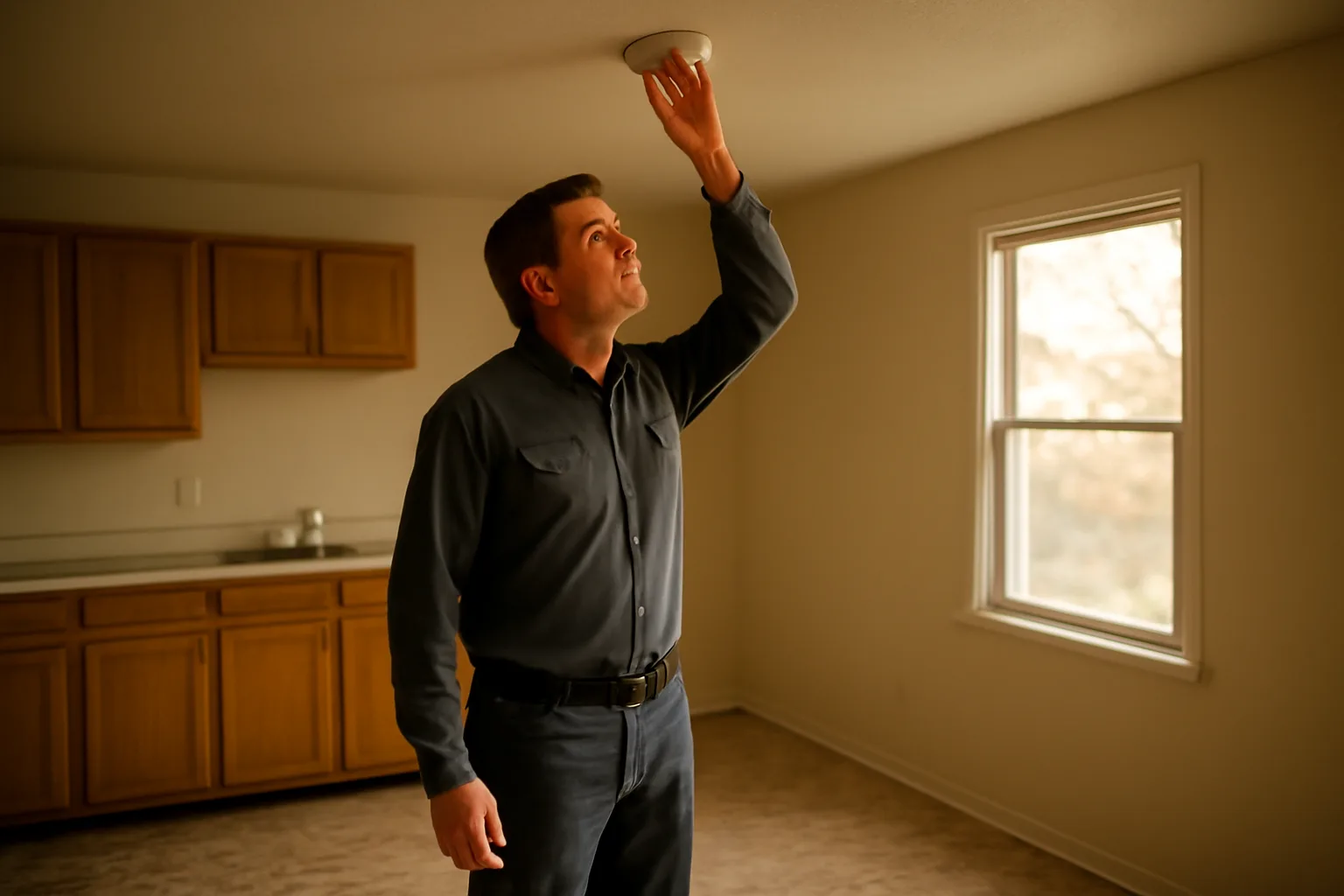
A landlord conducting a routine or move-out inspection can generally look at the general condition and cleanliness of the unit, check for damage beyond normal wear and tear, verify smoke and carbon monoxide detectors are working, look for unauthorized occupants or pets, and check for maintenance issues like leaks, mold, or pest problems. What a landlord typically cannot do is search through a tenant's personal belongings, closets, drawers, or containers unless there's a specific safety reason (like an active gas leak) or the tenant is present and consents. The inspection is about the condition of the premises, not an excuse to go through someone's things. Most states require advance written notice before entry for a non-emergency inspection, commonly 24 to 48 hours, though the exact number and required format (written vs. verbal, and how it must be delivered) varies by state statute. Some leases specify a longer notice period than the state minimum, and if so, the lease terms usually govern as long as they don't fall below the statutory floor. During city rental license inspections (different from a landlord's own routine walkthrough), the city inspector is generally checking code compliance items: smoke and CO detector placement, egress window sizes in bedrooms, electrical panel condition, water heater venting and pressure relief valves, handrails and guardrails, and pest or moisture issues. This is a code compliance check, not a tenant behavior check, and the city inspector generally isn't there to assess the tenant's housekeeping.
why do landlords require renters insurance?
Landlords require renters insurance mainly to shift liability for the tenant's personal property and personal liability away from the landlord's own policy. If a pipe bursts and ruins a tenant's furniture, or a tenant's dog bites a visitor, renters insurance covers that, not the landlord's dwelling policy. A standard landlord (dwelling) insurance policy covers the building structure and the landlord's liability as property owner. It typically does not cover a tenant's personal belongings or liability for incidents the tenant causes inside the unit. Requiring renters insurance, commonly with a minimum liability coverage amount like $100,000, pushes that risk onto a policy the tenant pays for. Requiring renters insurance is legal in most states as a lease condition, though a handful of jurisdictions have specific rules about how landlords can enforce it. Check your state and city rules before making it a strict lease requirement, and never make renters insurance a workaround for illegal screening criteria.
how much notice does a landlord have to give?
The notice a landlord has to give depends on what kind of notice it is: entry for inspection or repairs, ending a month-to-month tenancy, or evicting for nonpayment or lease violation. There's no single national number. For routine entry (repairs, inspections, showing the unit), most states require 24 to 48 hours' advance notice. California presumes 24 hours is reasonable under Civil Code § 1954 [5]. Other states set their own defaults in their landlord-tenant statutes, so check your specific state code rather than assuming California's rule applies everywhere. For ending a month-to-month tenancy, many states require 30 days' notice, though some jurisdictions require 60 or 90 days once a tenant has lived there past a certain length of time (commonly one year). For nonpayment of rent, notice periods to "pay or quit" are typically much shorter, often 3 to 14 days depending on the state, before a landlord can file for eviction. Because these numbers vary so much by state, and some cities layer additional local requirements (like just-cause eviction ordinances) on top of state law, the honest answer is: look up your specific state's residential landlord-tenant act and your city's ordinance before serving any notice. Getting the number wrong can void the notice and force you to start over.
what a landlord cannot do in Ohio
Ohio law sets specific limits on landlord conduct under Ohio Revised Code Chapter 5321, the Ohio Landlords and Tenants Act. A landlord in Ohio cannot use "self-help" eviction methods, meaning they cannot shut off utilities, change the locks, or remove a tenant's belongings to force them out without going through the court eviction process [2]. Ohio law also requires landlords to maintain the premises in a fit and habitable condition, keep common areas safe, maintain electrical, plumbing, heating, and other facilities supplied, and comply with building and housing codes that materially affect health and safety, under R.C. 5321.04 [2]. A landlord who fails to do this can be sued by the tenant, and the tenant may have remedies including rent escrow deposited with the court. Ohio also restricts retaliatory conduct: under R.C. 5321.02, a landlord generally cannot retaliate against a tenant (by raising rent, ending the tenancy, or reducing services) because the tenant complained to a government agency about a building or housing code violation, or because the tenant joined a tenant organization, as long as the tenant isn't in default on rent [6]. On entry, Ohio Revised Code 5321.04(A)(8) requires landlords to give "reasonable notice" of intent to enter, which Ohio courts and the statute generally treat as at least 24 hours except in emergencies, and only enter at reasonable times [2].
how city rental licensing and registration fit into all of this
Separate from state landlord-tenant law, a growing number of cities require landlords to register or license each rental unit before renting it out, and to pass a periodic inspection. This is a city ordinance requirement, layered on top of, not instead of, your state's landlord-tenant law. These programs vary enormously. Some cities require simple annual registration with a modest fee and no inspection. Others require a full code inspection every one to three years, covering smoke detectors, egress windows, electrical panels, water heaters, and structural items, with re-inspection fees if you fail the first time. Violation fines for operating an unregistered or unlicensed rental can run from a warning notice up to daily accruing fines in some cities, so it pays to check before you list a unit, not after a neighbor complains. Because every city's fee schedule, inspection checklist, and renewal cycle is different, and these change over time, always confirm current fees and deadlines with your city's rental licensing office directly rather than relying on a number you saw somewhere else, including here. If you're staring down a licensing notice or an upcoming inspection and don't want to guess what the inspector is going to check, a packet built specifically around your city's checklist can save real time. RentalPermitPath's $79 one-time City Rental License & Inspection Prep Packet at /rental-packet-builder walks through common inspection items city by city, so you're not improvising the morning the inspector shows up.
what happens if you skip licensing or ignore an inspection notice
Ignoring a rental licensing requirement doesn't make it go away, it usually makes it more expensive. Common consequences across cities with mandatory rental licensing include fines (sometimes daily, sometimes a flat penalty per violation), an order to stop renting the unit until it's licensed, and in some cities, a bar on filing an eviction case against a tenant while the property is unlicensed. That last point catches a lot of small landlords off guard. Several cities and even some state courts have held that a landlord can't collect rent or pursue eviction through an unlicensed or unregistered unit, which means an unresolved licensing problem can directly block your ability to remove a nonpaying tenant. This varies by jurisdiction, so it's worth confirming with your city's housing or code enforcement office and, if you're unsure how it affects an active eviction, talking to a local landlord-tenant attorney. The fix is almost always cheaper before a violation notice than after. Register or renew before your deadline, keep your inspection checklist ready, and treat your city's rental licensing office as a resource, not an adversary. Most inspectors would rather see you pass on the second visit than issue escalating fines.
landlord vs. tenant: who's responsible for what
| Responsibility | Landlord | Tenant | |
|---|---|---|---|
| Habitability (heat, plumbing, structure) | Yes, under implied warranty of habitability [1] | No | |
| City rental license/registration | Yes | No | |
| Renters insurance | Can require it, doesn't carry it for tenant's property | Yes, if required by lease | |
| Notice before entry | Must give it (24-48 hrs typical) | Can request initial move-out inspection (CA: 48 hrs) [4] | |
| Rent payment | N/A | Yes, on time per lease | |
| Reporting code violations | Must fix | Can report to city without retaliation (Ohio: R.C. 5321.02) [6] | |
| Security deposit return | Yes, within state deadline | N/A | This split is the practical core of the landlord-tenant relationship: the landlord owns the structural and legal compliance burden, the tenant owns the day-to-day payment and reasonable-use burden. Where people get into trouble is blurring these, like a landlord skipping repairs because "the tenant should just deal with it," or a tenant assuming no lease means no rent obligation. |
Frequently asked questions
How to become a landlord if you already own the property?
Check zoning to confirm rentals are allowed, register or license the unit with your city if required, get a landlord insurance policy, set a lease-compliant rent and deposit, screen tenants under the Fair Housing Act, and use a written lease. Confirm your city's specific registration steps with its rental licensing office before advertising the unit.
What is landlording as a business, more than an activity?
As a business, landlording means treating the rental as an ongoing operation: tracking income and expenses for taxes, budgeting for vacancy and repairs, maintaining insurance, staying current on license renewals, and following state and local landlord-tenant law for every notice, deposit, and entry.
What is a landlord under most state laws?
Most states define a landlord as the owner, lessor, or an authorized agent managing the property on the owner's behalf. Ohio Revised Code 5321.01 uses nearly this exact definition, including agents the owner authorizes to manage the premises [2].
What rights do tenants have without a lease in most states?
A tenant without a lease is typically a month-to-month tenant under state law, with rights to habitability, notice before entry, statutory notice before eviction (often 30 days), and protection from illegal lockouts. No lease means no written contract, not no rights.
Who is responsible for a rental property walk-through inspection in California?
The tenant can request an initial move-out walk-through, and the landlord must give at least 48 hours' written notice before conducting it, under California Civil Code § 1950.5(f). The landlord then does the final inspection after move-out and must itemize deductions within 21 days [4].
How to be a landlord without getting overwhelmed by paperwork?
Keep everything in writing: lease, notices, repair requests, and inspection dates. Use a simple spreadsheet or property management app for rent and expenses. Renew your city license before the deadline rather than after a fine notice, and keep a folder per unit with all compliance documents.
Why do landlords require renters insurance from tenants?
Landlord insurance generally doesn't cover a tenant's personal belongings or liability for incidents the tenant causes. Requiring renters insurance, often with a minimum liability amount like $100,000, shifts that risk to the tenant's own policy instead of the landlord's.
How much notice does a landlord have to give before entering the unit?
Most states require 24 to 48 hours' advance notice for non-emergency entry. California presumes 24 hours is reasonable under Civil Code § 1954 [5]. Ohio requires 'reasonable notice,' generally treated as at least 24 hours, under R.C. 5321.04(A)(8) [2]. Check your specific state statute.
What can a landlord look at during an inspection?
A landlord can check general condition, damage beyond normal wear and tear, working smoke and CO detectors, signs of unauthorized occupants or pets, and maintenance issues like leaks or pests. They generally can't search personal belongings, drawers, or closets without a specific safety reason.
What can a landlord not do in Ohio specifically?
An Ohio landlord cannot use self-help eviction (changing locks, shutting off utilities, removing belongings) instead of going through court, per R.C. 5321.04. They also cannot retaliate against a tenant for reporting code violations, under R.C. 5321.02, as long as the tenant isn't behind on rent [2][6].
Does every city require a rental license or registration?
No. Only some cities have mandatory rental licensing, registration, or inspection ordinances, and requirements vary widely where they exist. Check with your specific city's rental licensing or code enforcement office to see if your address is subject to a program.
What happens if a landlord rents a unit without the required city license?
Consequences vary by city but often include fines, an order to stop renting until licensed, and in some jurisdictions a block on filing eviction against a tenant while the unit is unlicensed. Confirm the specific consequence with your city's housing or code enforcement office.
Is a landlord responsible for the tenant's personal property if it's damaged?
Generally no, unless the damage results from the landlord's failure to maintain the property (like an unrepaired known leak). This is a major reason landlords require renters insurance: it covers the tenant's belongings independent of who caused the damage.
Sources
- Javins v. First National Realty Corp., 428 F.2d 1071 (D.C. Cir. 1970), via Justia: The implied warranty of habitability requiring landlords to maintain livable conditions was recognized in this foundational appellate decision from 1970, cited by many state courts that adopted the doctrine in the years after.
- Ohio Revised Code Chapter 5321, Landlords and Tenants: Ohio's landlord-tenant law defines landlord, sets habitability duties, prohibits self-help eviction, and requires reasonable notice before entry.
- 42 U.S.C. § 3604, Fair Housing Act, via Cornell LII U.S. Code: The Fair Housing Act prohibits discrimination in rental housing based on race, color, national origin, religion, sex, familial status, and disability.
- California Legislative Information, Civil Code Section 1950.5: California requires 48 hours' written notice for a tenant-requested initial move-out inspection and 21 days for the landlord to itemize security deposit deductions after move-out.
- California Legislative Information, Civil Code Section 1954: California presumes 24 hours' notice is reasonable for landlord entry to a rental unit for repairs or inspection.
- Ohio Revised Code Section 5321.02, Retaliatory Conduct: Ohio law prohibits landlords from retaliating against tenants who report code violations or join a tenant organization, as long as the tenant is not in default on rent.