Last updated 2026-07-26
TL;DR
Becoming a landlord means registering your rental (many cities require it), following state notice rules before entry or rent changes, and knowing tenants have rights even without a written lease. Inspections vary by city and state; California generally requires landlord notice before entry, and Ohio law (ORC 5321) sets specific limits on what a landlord can and can't do.
how do you become a landlord?
Becoming a landlord starts before you ever hand over a key. You need the property itself (owned outright or with a mortgage that allows rentals), and then a stack of local paperwork that most first-time owners underestimate. The basic sequence looks like this: confirm your city or county requires a rental license or registration (many do, especially in cities with over 4-6 rental units per landlord being common triggers), get the property inspected if required, set a legal rent amount and security deposit within your state's cap (if one exists), draft a lease that follows state disclosure rules, and screen tenants under the Fair Housing Act's protected classes [1]. A lot of new landlords skip step one and just start advertising. That's the mistake that generates a certified-mail notice six months later with a fine attached. Cities like Los Angeles, Minneapolis, and dozens of mid-size municipalities require landlords to register a rental before occupancy, sometimes before you even list it. Confirm with your city rental licensing office before you sign a lease with a tenant, not after. You also need landlord liability insurance (a standard homeowner's policy usually excludes rental use), a way to collect rent and track expenses for taxes, and a plan for maintenance requests. None of that is optional once you have a paying tenant in the unit. If you're just starting out, read tenant rights before you write your first lease. Knowing what tenants are legally owed protects you from disputes that cost far more than the time it takes to learn the rules upfront.
what is landlording, exactly?
Landlording is the ongoing work of owning and managing a rental property: collecting rent, maintaining the unit, handling repairs, screening tenants, and staying compliant with local, state, and federal housing law. It's not passive. Even a single-unit landlord spends real hours per month on it, more if the property has deferred maintenance or the tenant relationship gets rocky. The word gets used loosely, but functionally it covers three buckets of responsibility. First, legal compliance: leases, notices, licensing, habitability standards. Second, financial management: rent collection, security deposit handling (many states require deposits held in a separate account or with interest, like Illinois and Pennsylvania), and tax reporting under IRS rules for rental income (Schedule E) [2]. Third, physical upkeep: repairs, inspections, and responding to maintenance requests within a reasonable time, which some states define explicitly (California gives landlords a presumptive 30 days to fix non-emergency issues, faster for things like no heat or no water) [3]. People who do this well treat it like a small business, because it is one. People who treat it as a side hobby tend to be the ones showing up in local housing court dockets.
what is a landlord, legally speaking?
A landlord is the party that owns or controls a residential rental property and leases it to a tenant in exchange for rent, taking on legal duties around habitability, notice, and fair treatment in return. This applies whether you own one house or fifty units. The law doesn't scale duties down for small landlords in most states, though some cities do exempt owner-occupied duplexes or very small buildings from licensing rules. Under most state landlord-tenant statutes, being a landlord triggers specific legal obligations: maintaining the unit in habitable condition, following state rules on security deposits, giving proper notice before entry or lease termination, and not retaliating against tenants who report code violations. The implied warranty of habitability exists in nearly every state in some form, meaning a landlord can't rent out a unit that lacks working plumbing, heat, or a sound structure, lease or no lease. One thing new landlords miss: being a landlord is a status the law assigns based on the relationship, not based on paperwork. If you accept rent from someone living in your property, you're a landlord under the law even if you never wrote a lease. That status brings the same habitability and notice duties as a formal tenancy in most states.
how do you actually become a landlord day to day (practical steps)?
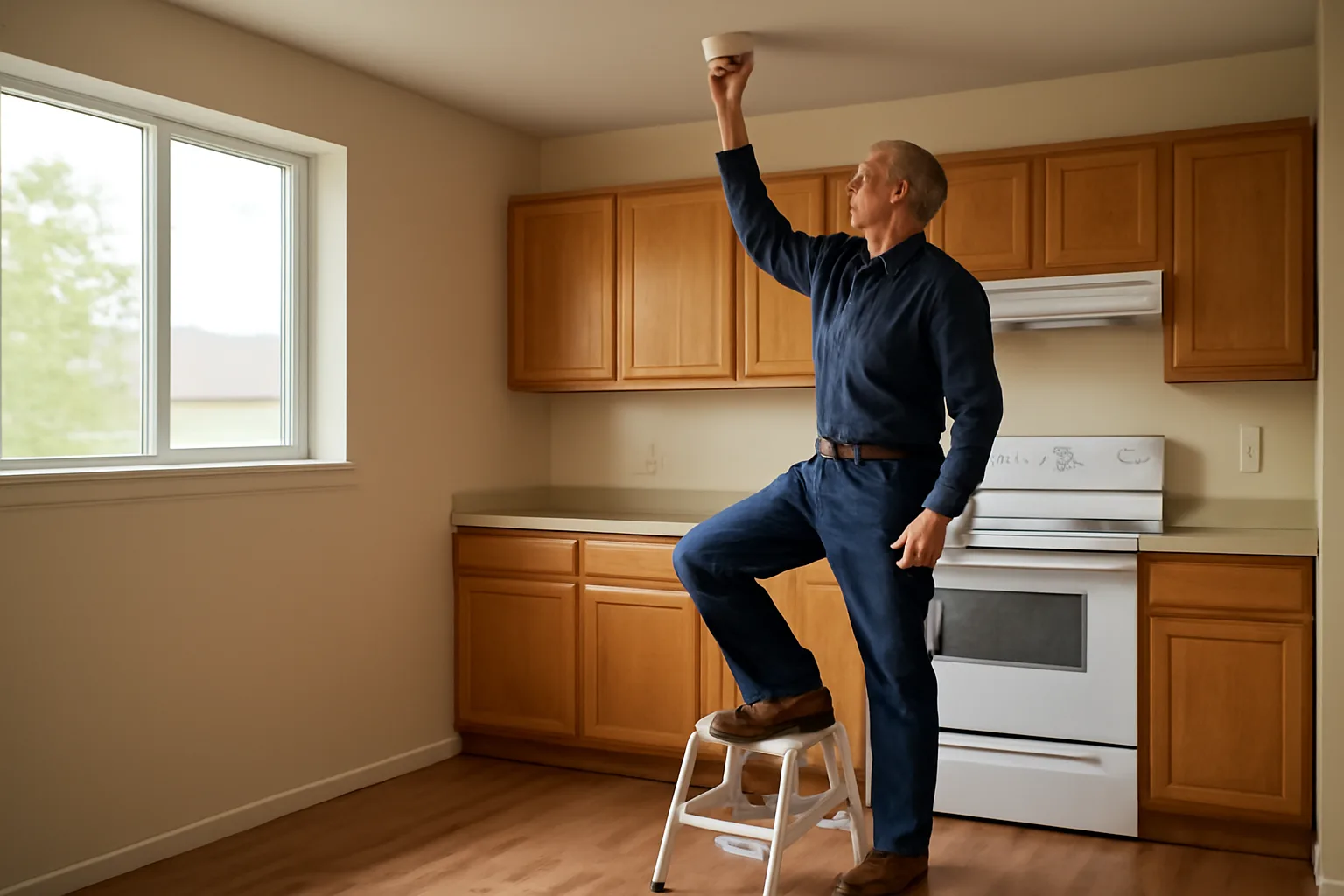
If you want the practical checklist instead of the legal theory, here it is, in the order most experienced landlords actually do it. 1. Check zoning and licensing. Call your city's rental licensing or code enforcement office and ask directly: does this address need a rental license, registration, or inspection before I can rent it? Get the answer in writing if you can. 2. Get the unit inspection-ready. Working smoke and carbon monoxide detectors, no exposed wiring, functioning heat, no active leaks. These are the top items that fail city inspections across most municipal rental inspection programs. 3. Set rent and deposit within legal limits. Some states cap security deposits (Massachusetts caps deposit plus first/last month's rent combined; other states have no cap at all). 4. Screen tenants consistently. Use the same income and credit criteria for every applicant to stay compliant with the Fair Housing Act, which bars discrimination based on race, color, national origin, religion, sex, familial status, and disability [1]. 5. Sign a lease that matches state disclosure law. Some states require lead paint disclosure for pre-1978 housing (federal requirement under 42 U.S.C. § 4852d), mold disclosure, or specific security deposit receipt language. 6. Register with the city if required, before or shortly after the tenant moves in, depending on your city's deadline. Most of this is a one-time setup per property, but the licensing and inspection step often repeats annually or every 2-3 years depending on the city. Build a repeatable file (photos, receipts, inspection reports) so renewal isn't a scramble each cycle. Some landlords use a packet to keep documents organized before a scheduled inspection; our $79 City Rental License & Inspection Prep Packet is built for exactly that one-time prep, not a subscription.
who is responsible for a rental property walk-through inspection in California?
In California, the landlord is generally responsible for arranging and conducting move-in and move-out walk-through inspections, though the tenant has a legal right to participate. California Civil Code Section 1950.5 gives tenants the right to request an initial move-out inspection before the final one, so the landlord can identify repair issues the tenant might fix themselves to avoid deposit deductions [4]. The landlord must give the tenant at least 48 hours' written notice before the initial inspection, and the tenant can waive that notice. After the inspection, the landlord has to give the tenant an itemized statement of anything that needs repair or cleaning to avoid a deposit deduction, along with a chance to fix it before move-out [4]. For city-level rental inspections (separate from the tenant walk-through), the responsibility shifts. Cities with mandatory rental inspection programs, and several California cities do have them, typically require the landlord to schedule the inspection with a city inspector, not the tenant. The landlord pays the inspection fee in nearly every program of this kind. Confirm with your city rental licensing office whether your city runs its own inspection program on top of the state's move-out inspection rules, since the two are legally separate.
what can a landlord look at during an inspection?
A landlord conducting a routine or move-out inspection can generally look at anything related to the physical condition of the unit: walls, floors, appliances, plumbing, electrical fixtures, smoke detectors, and evidence of damage beyond normal wear and tear. What a landlord can't do is search personal belongings, closets, or drawers as part of that inspection, and can't use the visit as a pretext to go through the tenant's things. Most states require the inspection to be for a legitimate purpose (making repairs, showing the unit to prospective tenants or buyers, checking for lease violations) and require advance notice, commonly 24 hours, though some states specify 48 hours minimum, like California for move-out inspections [4]. City code inspectors, when a rental license or point-of-sale inspection is involved, generally check for life-safety items: smoke and CO detector function, egress windows in bedrooms, electrical panel condition, water heater venting, and any visible structural or plumbing hazards. They're not typically checking cosmetic wear like paint color or carpet age, since those fall under normal wear and tear rather than code violations. A landlord also cannot use a routine inspection to intimidate a tenant, show up unannounced without an emergency, or inspect so frequently it amounts to harassment. Several states, including California, treat repeated unnecessary entry as a violation of the tenant's right to quiet enjoyment.
what rights do tenants have without a lease?
Tenants without a written lease still have real legal rights in every U.S. state. A tenancy without a written lease is usually treated as a month-to-month tenancy at will, and the tenant keeps the same habitability protections, notice rights, and fair housing protections as someone with a signed lease. Specifically, a tenant without a lease is still entitled to: a habitable unit (working plumbing, heat, structural safety), proper notice before eviction (state law sets the minimum, often 30 days for month-to-month tenancies, sometimes longer depending on how long the tenant has lived there), return of any security deposit collected minus lawful deductions, and protection from retaliatory eviction if they report a code violation. What changes without a written lease is mostly evidentiary, not substantive. Rent amount, due date, and any specific rules (pets, subletting, parking) default to whatever was verbally agreed or, absent proof, to reasonable assumptions a court would make. This is exactly why verbal-only tenancies generate more disputes: neither side has anything to point to when they disagree about what was promised. A landlord who wants to end a no-lease tenancy still has to follow the state's standard notice-to-vacate process. You can't remove a tenant overnight just because there's no signed document. Read tenants rights for more on what protections carry over regardless of lease status.
how much notice does a landlord have to give?
| Entry for repairs/inspection | 24-48 hours | California: 24 hours (Civ. Code 1954) [5] | |
|---|---|---|---|
| Rent increase under 10% | 30 days | Common baseline, varies by state | |
| Rent increase over 10% | 60-90 days | California: 90 days (AB 1482) [6] | |
| Nonpayment of rent | 3-14 days | Varies widely by state | |
| No-cause termination (month-to-month) | 30-60 days | Longer if tenant occupied over 1 year in some states | Always confirm your specific state's statute before sending any notice. These are ranges, not guarantees, and getting the number wrong can invalidate the notice entirely. |
The notice a landlord must give depends on what's happening: entering the unit, raising rent, or ending the tenancy, and the required period varies by state. For entry to the unit, most states require 24 hours' advance notice for non-emergency access (repairs, inspections, showings). California requires 24 hours by law under Civil Code 1954, with a presumption that 24 hours is reasonable notice [5]. Some states don't set a specific number of hours in statute but require "reasonable notice," which courts generally interpret as 24 hours absent other guidance. For rent increases, notice requirements track lease term length. Month-to-month tenants typically need 30 days' notice for a rent increase under 10%, and some states like California require 90 days' notice for increases above 10% in a 12-month period under the state's rent cap law (AB 1482) [6]. For ending a tenancy, notice periods range from 7 to 90 days depending on the state, the reason for termination, and whether the tenant has lived there over a year. Nonpayment of rent notices tend to be shorter (as little as 3 days in some states) than no-cause termination notices for month-to-month tenants. | Notice type | Typical range | Example |
why do landlords require renters insurance?
Landlords require renters insurance mainly to shift liability risk away from themselves. A standard landlord insurance policy covers the building and the landlord's own property, but it doesn't cover the tenant's personal belongings or protect the landlord if the tenant's negligence causes damage (a grease fire, an overflowing bathtub) that a landlord policy might not fully absorb. Renters insurance typically includes liability coverage, meaning if the tenant accidentally causes a fire or water damage that affects other units or the building itself, the tenant's policy can cover part of that cost instead of it falling entirely on the landlord's insurance and premiums. Many landlords also like that it protects the tenant's own belongings, reducing the odds a tenant tries to hold the landlord financially responsible for their damaged furniture or electronics after a covered event. Requiring it is legal in every state; landlords can generally make renters insurance a lease condition as long as it's disclosed and applied consistently to all tenants (singling out specific tenants for the requirement can raise fair housing concerns). Typical renters insurance policies cost relatively little, often in the range of $15 to $30 a month depending on coverage amount and location, according to industry rate data tracked by state insurance departments, though your state's actual average will vary and you should check your own state insurance department's consumer rate guidance rather than relying on any single national number. Some cities and states, and even some public housing programs, now require it outright for certain unit types. If you're building your lease terms, pair this with landlord landlords resources on standard lease clauses landlords commonly include.
what can't a landlord do in Ohio?
Ohio landlords are bound by the Ohio Landlord Tenant Act, primarily Ohio Revised Code Chapter 5321, which lists specific things a landlord cannot do regardless of what the lease says. A landlord in Ohio cannot: shut off or interrupt utilities to force a tenant out (a classic "self-help eviction" tactic that's illegal statewide), change the locks without a court order, remove a tenant's belongings without going through the formal eviction process, or retaliate against a tenant for exercising a legal right, such as reporting a housing code violation. ORC 5321.02 specifically prohibits landlord retaliation, including increasing rent, decreasing services, or threatening eviction, in response to a tenant's good-faith complaint about code violations [7]. Ohio law also requires landlords to maintain the premises in a fit and habitable condition, keep common areas safe, and make repairs the tenant reports within a reasonable time under ORC 5321.04 [8]. A landlord who ignores repair requests can face a tenant lawsuit for damages, or the tenant may be allowed to deposit rent with the court (an escrow remedy) rather than pay the landlord directly, under ORC 5321.07, until the repair is made [9]. Ohio also does not allow landlords to require a tenant to waive their statutory rights under Chapter 5321 as part of the lease; any lease clause attempting that is unenforceable, per ORC 5321.13 [10]. Self-help eviction, meaning any attempt to remove a tenant or their property without a court-ordered eviction (forcible entry and detainer action), is illegal statewide and can expose the landlord to statutory damages.
how does city rental licensing fit into all of this?
Everything above (habitability, notice, inspections) is state law. Rental licensing and registration is a separate, city-level layer that sits on top of state landlord-tenant law, and it's the piece most new landlords are least prepared for. Cities with mandatory rental licensing (think Baltimore, Minneapolis, Toledo, and hundreds of smaller municipalities) generally require landlords to register the property, sometimes pay an annual fee, and pass a periodic inspection, separate from anything California's Civil Code or Ohio's ORC 5321 requires. Miss the registration deadline and you can face fines that range widely by city, sometimes starting under $100 for a first offense and climbing steeply for repeat violations or unregistered rentals discovered during a tenant complaint or code sweep. The practical overlap: a city inspector checking for a rental license may look at the exact same life-safety items (smoke detectors, egress windows, electrical panels) that would also matter in a state habitability claim. Getting those right serves both purposes at once. If you got a notice from your city about a missing registration or an upcoming inspection deadline, don't guess at what they need. Call the office named on the notice and ask for the specific checklist. Confirm with your city rental licensing office before assuming your situation matches what worked in a different city you've owned in before, since requirements are genuinely not standardized nationally.
Frequently asked questions
How do I become a landlord with no experience?
Start by checking your city's rental licensing requirements before you list the unit. Then learn your state's landlord-tenant statute basics: habitability duties, notice periods, and security deposit rules. Get landlord insurance, screen tenants consistently under Fair Housing Act rules, and use a written lease. Most new landlords learn the licensing step exists only after a notice or fine, so call your city's rental office first.
Who is responsible for a rental property walk-through inspection in California?
The landlord arranges the move-in and move-out walk-through inspections in California, and must give at least 48 hours' notice before an initial move-out inspection under Civil Code 1950.5. The tenant has the right to be present. Separate city-run rental inspection programs, where they exist, are also scheduled and paid for by the landlord.
What is landlording?
Landlording is the day-to-day work of owning and operating a rental property: collecting rent, handling repairs, staying compliant with licensing and habitability law, and managing the tenant relationship. It's active work, not passive income, and it carries real legal duties around notice, deposits, and maintenance regardless of how many units you own.
What is a landlord?
A landlord is anyone who owns or controls residential property and rents it to a tenant for payment, taking on legal duties like habitability, proper notice, and non-discrimination. This status applies based on the rental relationship itself, not on whether a formal lease exists.
What rights do tenants have without a lease?
Tenants without a written lease still get habitability protections, proper eviction notice under state law, security deposit return rules, and Fair Housing Act protections. A no-lease tenancy is usually treated as month-to-month. What's missing is written proof of specific terms like rent amount, which can make disputes harder to resolve.
How much notice does a landlord have to give before entering?
Most states require 24 hours' notice for non-emergency entry. California sets this explicitly at 24 hours under Civil Code 1954. Some states use a 'reasonable notice' standard without a fixed number, which courts generally still interpret as roughly 24 hours.
Why do landlords require renters insurance?
Landlords require it to cover the tenant's personal belongings and to add a liability layer if the tenant accidentally causes damage, like a kitchen fire or water leak. It reduces the landlord's own claim exposure and is legal to require as a lease condition in every state, as long as it's applied to all tenants equally.
What can a landlord look at during an inspection?
A landlord can inspect the physical condition of the unit: appliances, plumbing, electrical, smoke detectors, and evidence of damage. They cannot search personal belongings, drawers, or closets, and can't use the inspection as a pretext to go through tenant possessions. Advance notice is required in almost every state.
What can't a landlord do in Ohio?
Under Ohio Revised Code 5321, an Ohio landlord cannot shut off utilities to force a move-out, change locks without a court order, remove a tenant's belongings outside the formal eviction process, or retaliate against a tenant for reporting a code violation. Lease clauses that try to waive these protections are unenforceable under ORC 5321.13.
Do all cities require rental registration or licensing?
No. Rental licensing and registration requirements exist at the city or county level, not nationwide, so whether you need one depends entirely on your specific municipality. Some states also have statewide registration for certain property types. Confirm with your city rental licensing office directly rather than assuming based on a different city's rules.
What happens if a landlord misses a rental license renewal deadline?
Consequences vary widely by city, from a late fee to a formal violation notice to a hold on renting the unit until the license is current. Some cities also bar eviction filings for unlicensed rentals until the license is brought current. Check your specific city's ordinance for the exact penalty structure.
Can a landlord require both a lease and renters insurance?
Yes. Requiring renters insurance as a lease condition is legal in every state as long as the requirement is disclosed in the lease and applied consistently to all tenants. It's a common and reasonable lease term, not a special restriction.
Sources
- U.S. Dept. of Housing and Urban Development, Fair Housing Act overview: Fair Housing Act protected classes landlords must screen tenants under
- IRS, Schedule E (Form 1040), Supplemental Income and Loss: Rental income is reported on Schedule E for tax purposes
- California Civil Code Section 1942: California landlord repair time standards for habitability issues
- California Civil Code Section 1950.5: California move-out inspection notice rights and 48-hour notice requirement
- California Civil Code Section 1954: California 24-hour landlord entry notice requirement
- California Civil Code Section 1947.12 (AB 1482): California rent increase cap and 90-day notice for increases over threshold
- Ohio Revised Code 5321.02: Ohio landlord retaliation prohibition against tenants exercising legal rights
- Ohio Revised Code 5321.04: Ohio landlord duty to maintain premises in fit and habitable condition
- Ohio Revised Code 5321.07: Ohio tenant rent escrow remedy for landlord failure to repair
- Ohio Revised Code 5321.13: Ohio prohibition on lease clauses waiving tenant statutory rights