Last updated 2026-07-26
TL;DR
Becoming a landlord means more than buying a property and finding a tenant. Most cities with rental licensing require registration, a pre-occupancy or periodic inspection, and compliance with state landlord-tenant law on notice, habitability, and security deposits. Requirements vary a lot by city, so confirm specifics with your local rental licensing office before you sign a lease.
what is landlording, and what is a landlord?
A landlord is the legal owner (or authorized agent of the owner) of a residential property who rents that property to someone else, called a tenant, in exchange for rent. "Landlording" is the informal term for the whole job: finding tenants, screening them, writing or using a lease, collecting rent, maintaining the unit, handling repairs, and following state and local law on everything from security deposits to eviction procedure. It sounds simple until you're in it. Landlording is really a mix of running a small business, doing basic facilities maintenance, and following a legal code that changes by state and often by city. A single-family rental in a rural county might have almost no local paperwork beyond a business license. The same house inside a city with mandatory rental registration, like Minneapolis, Los Angeles, or Baltimore, can require an annual license, a scheduled inspection, and fees that run from under $50 to several hundred dollars depending on unit count [1]. Most first-time landlords underestimate the compliance side. State law sets the floor (security deposit limits, notice periods, habitability standards). Cities layer rental licensing, registration, and inspection programs on top of that floor. Skipping the city step is the single most common way new landlords end up with a violation notice in year one.
how to become a landlord: the actual steps
Becoming a landlord is a sequence, not a single decision. Here's the order that actually works, based on how state and city rules stack: 1. Confirm the property is legally rentable. Check zoning, HOA rules if any, and whether the unit needs a certificate of occupancy or rental certificate before you can advertise it. 2. Register or license the rental with the city, if your city requires it. Many cities with over roughly 50,000 people run some form of rental registration or licensing program; smaller cities increasingly do too. Search "[your city] rental license" or check your city's housing or code enforcement department page directly, since program names vary (rental registration, certificate of occupancy, rental dwelling license). 3. Schedule and pass any required inspection. Some cities inspect before you can rent at all; others inspect on a rotating cycle (every 1 to 3 years is common) or only after a complaint. 4. Get landlord insurance, sometimes called a dwelling fire policy or landlord policy, which is different from a standard homeowner's policy and typically required by mortgage lenders on non-owner-occupied property. 5. Set your lease terms in writing, consistent with your state's landlord-tenant statute, covering rent amount, due date, security deposit amount and return timeline, and maintenance responsibilities. 6. Screen tenants consistently and legally under the Fair Housing Act, which bars discrimination based on race, color, national origin, religion, sex, familial status, and disability [2]. 7. Collect the security deposit and hold it according to your state's rules; many states cap the amount (often 1 to 2 months' rent) and set a deadline for return after move-out, commonly 14 to 30 days depending on the state. Skip step 2 and you're the landlord most likely to get a violation letter for operating an unlicensed rental. Some cities fine per unit per month of non-compliance, and back-fees can stack up before you even know there's a program.
who is responsible for the rental property walk-through inspection in california?
In California, the landlord is responsible for arranging and conducting move-in and move-out walk-through inspections, and the law gives tenants specific rights around the move-out version. Under California Civil Code Section 1950.5, if a landlord intends to withhold any part of a security deposit at move-out, the tenant has the right to request an initial inspection before they leave, so they can fix any issues themselves and avoid the deduction [3]. Here's how it works in practice. The landlord (or a property manager acting for them) must notify the tenant of their right to this pre-move-out inspection and, if the tenant wants one, schedule it within a reasonable time before the tenancy ends. The landlord must give the tenant an itemized statement of any proposed deductions found during that inspection, so the tenant has a chance to clean or repair the items before final move-out. This isn't the same as a city rental inspection for licensing purposes; that's a separate process run by local code enforcement, not the landlord. California doesn't have a single statewide rental licensing law that requires periodic city inspections everywhere, but individual cities do run their own programs. Los Angeles, for example, runs a Rental Escrow Account Program and separate systemic code enforcement inspections through the Rent Escrow Account Program (REAP) for habitability violations [4]. If you own in a city with a local rental inspection ordinance, that inspection is arranged through the city's housing or code enforcement department, not the landlord personally, though the landlord is the one who has to grant access and fix cited violations.
what can a landlord look at during an inspection?
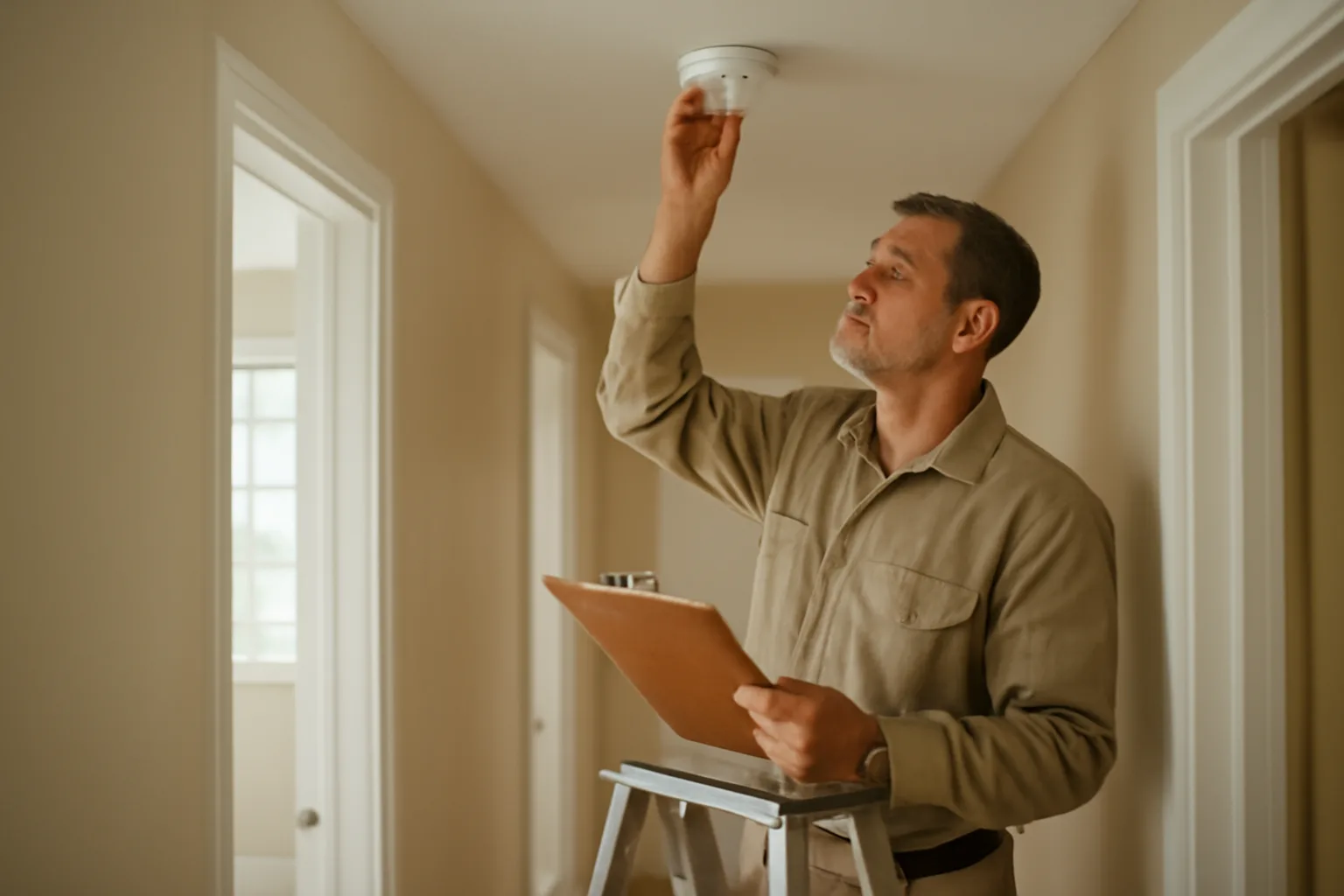
During a routine or city-mandated inspection, a landlord (or the city inspector) is generally allowed to check for health and safety conditions: working smoke and carbon monoxide detectors, functioning heat and hot water, no active leaks or mold, safe electrical wiring, secure locks on exterior doors, and no pest infestation. City rental inspection checklists typically focus on these habitability basics rather than the tenant's belongings or lifestyle. What an inspector or landlord should not do is search personal belongings, closets, or drawers beyond what's needed to check a fixture or system, photograph personal items unrelated to the inspection, or use the inspection as a pretext to look for lease violations unrelated to the stated purpose (like counting occupants when the inspection notice said "annual safety check"). Tenants can refuse consent to anything outside the inspection's stated scope, though refusing a legally required city inspection entirely can put the landlord's license at risk, which then becomes the tenant's problem too if the unit gets flagged as unlicensed. Most states require landlords to give advance written notice before entering for a non-emergency inspection, commonly 24 to 48 hours, though the exact number is set by state statute and varies. Always confirm your state's specific notice requirement rather than assuming 24 hours applies everywhere.
how much notice does a landlord have to give before entering or inspecting?
It depends entirely on the state, but 24 hours' written or verbal notice is the most common baseline for non-emergency entry, including routine inspections. California requires "reasonable notice," which state law presumes to be 24 hours in writing unless circumstances make that impossible [3]. Other states set slightly different windows: some require 24 hours, some require 48, and a handful don't specify an exact number and instead just require "reasonable" notice, leaving the specifics to case law or local custom. Emergency situations are the exception everywhere. If there's a fire, flood, gas leak, or another situation threatening health or safety, a landlord can enter without advance notice. Outside of emergencies, entering without proper notice, even to "just check something quick," can expose a landlord to a tenant complaint or, in some states, statutory damages. City-mandated rental inspections work a little differently. The city typically sets the inspection date and notifies both landlord and tenant directly, and the landlord's job is to make sure the tenant knows the date is coming and grants access. Missing a scheduled city inspection without rescheduling is one of the more common ways landlords rack up violation notices and reinspection fees, so treat that notice like a deadline, not a suggestion.
what rights do tenants have without a lease?
A tenant without a written lease still has real legal protections. In every state, an oral or implied rental agreement (sometimes called a month-to-month tenancy at will) still requires the landlord to provide a habitable unit, honor whatever rent and payment terms were verbally agreed to, and give proper notice before ending the tenancy or raising rent, exactly as if there were a written lease. Without a written lease, a tenant paying rent regularly is generally treated as a month-to-month tenant under state law. That means the landlord typically has to give the same notice to end the tenancy that a written month-to-month lease would require, commonly 30 days, though some states require 60 or even 90 days depending on how long the tenant has lived there and local rules. The tenant, in turn, usually owes the same notice if they want to move out. What a tenant without a lease does not get is protection against terms nobody ever discussed. If rent amount, due date, or pet policy were never actually agreed on verbally, there's often a dispute about what the "agreement" even was, which is exactly why oral leases cause so many landlord-tenant conflicts. A tenant without a lease still has full protection under state habitability law, security deposit law (if any deposit was collected), and fair housing law regardless of whether anything was in writing. For guidance geared to tenants navigating this, see tenants rights and renters rights.
why do landlords require renters insurance?
Landlords require renters insurance mainly to shift liability and property-damage risk away from their own policy. A landlord's dwelling insurance covers the building itself, not the tenant's personal belongings, and typically doesn't cover a tenant's liability if the tenant (or their guest, or their dog) causes an injury or damage inside the unit. Renters insurance usually costs relatively little, commonly cited in the range of $15 to $30 a month depending on coverage limits and location, and it covers the tenant's personal property against fire, theft, and certain water damage, plus liability protection if someone is injured in the unit or the tenant accidentally causes damage (a kitchen fire, an overflowing tub) that affects the landlord's building. For landlords, requiring it is a straightforward way to reduce the odds of getting stuck covering a tenant's losses or a liability claim that has nothing to do with the building's condition. It's legal to require renters insurance as a lease condition in nearly every state, though a few jurisdictions have specific rules about how it can be enforced, so it's worth confirming local rules if a tenant refuses. This is a landlord protection strategy, not a habitability requirement, so state law rarely mandates it either way; it's the landlord's own risk management choice.
what a landlord cannot do in ohio
Ohio landlord-tenant law, found in Ohio Revised Code Chapter 5321, sets specific limits on landlord conduct. A landlord in Ohio cannot shut off utilities, change the locks, or remove a tenant's belongings to force them out; this is sometimes called "self-help eviction," and Ohio law requires landlords to go through the court eviction process (forcible entry and detainer action) instead [5]. A landlord in Ohio also cannot enter the rental unit without giving reasonable notice, generally interpreted as 24 hours, except in a genuine emergency. Ohio Revised Code 5321.04 requires the landlord to maintain the property in a fit and habitable condition, keep common areas safe, and maintain electrical, plumbing, and heating systems in good working order; failing to do this while also collecting rent normally is itself a violation of the landlord's statutory duties [6]. Ohio law also prohibits retaliatory action, meaning a landlord cannot raise rent, decrease services, or attempt to evict a tenant specifically because that tenant complained to a housing authority, joined a tenants' union, or asserted a legal right under the lease or state law (Ohio Revised Code 5321.02) [7]. And a landlord cannot keep a security deposit without providing an itemized, written list of deductions; Ohio requires the deposit (minus any lawful deductions) to be returned within 30 days of the tenant vacating .
how do city rental licensing and inspection rules typically work?
| Registration/license fee | roughly $20 to $300+ per unit per year | varies hugely by city size and unit count; confirm with your city rental licensing office | |
|---|---|---|---|
| Inspection cycle | annual, every 2 years, every 3 years, or complaint-based | some cities inspect only on new tenancy or ownership change | |
| Late/non-compliance penalty | flat fine or daily/monthly accrual | some cities double the fee for late renewal | |
| Reinspection fee | often charged if the unit fails the first inspection | confirm exact amount locally | The honest answer is that there's no national standard. A landlord in one city might pay a modest annual registration fee and never see an inspector unless a tenant complains. A landlord two counties over might face a mandatory walk-through inspection every year with a real checklist covering smoke detectors, egress windows, handrails, and water heater venting. Always check your specific city's current fee schedule and inspection cycle directly with the housing or code enforcement department, since these numbers change year to year and this article can't guarantee any single city's current figures. Getting organized before an inspection date matters more than most new landlords expect. A missed item on a checklist, an expired smoke detector battery, a loose handrail, can turn a routine pass into a reinspection fee and a delay in getting the unit re-licensed. If you're staring down a notice letter and don't know where to start, the $79 City Rental License & Inspection Prep Packet walks through what most city checklists actually look for, so you're not guessing the week before an inspector shows up. |
Most mandatory rental-licensing cities follow a similar structure, even though the fee amounts and inspection cycles differ. Here's the general pattern, with a comparison of how a few programs are typically described: | Program element | Typical range or pattern | Notes |
what should a first-time landlord budget for beyond the mortgage?
New landlords often price out the mortgage, taxes, and insurance, then get surprised by the licensing and compliance layer on top. Depending on the city, budget for a rental registration or license fee (commonly under $100 to a few hundred dollars per unit annually), a possible inspection fee separate from the license fee, and a reinspection fee if the unit doesn't pass the first time. Add landlord insurance, which typically costs more than a standard homeowner's policy because it covers loss of rental income and liability exposure tied to renting the unit out. Add a maintenance reserve; a commonly cited rule of thumb among property managers is to budget 1% of the property's value per year for maintenance and repairs, though older properties or older systems (HVAC, roof, water heater) can run higher. And budget time, more than money. Tracking renewal dates, inspection cycles, and lease compliance across even 2 or 3 units by memory is how landlords miss a renewal deadline and end up with a late fee or a lapsed license. If you're managing multiple units across different city programs, it's worth a spreadsheet at minimum, tracking license expiration date, last inspection date, next inspection due date, and renewal fee amount for each unit.
Frequently asked questions
How to become a landlord if I just bought my first rental property?
Confirm zoning allows rental use, check whether your city requires rental registration or licensing, schedule any required inspection, get landlord insurance, write a lease consistent with your state's landlord-tenant law, and screen tenants under Fair Housing Act rules. Do the city licensing step early; it's the one most new landlords skip and later get fined for.
What is landlording, exactly?
Landlording is the ongoing work of owning and renting out residential property: screening tenants, maintaining the unit, collecting rent, handling repairs, and staying compliant with state landlord-tenant law and any city rental licensing or inspection requirements. It's part small business, part maintenance, part legal compliance.
What is a landlord under the law?
A landlord is the property owner or their authorized agent who rents residential space to a tenant under a lease or rental agreement, in exchange for rent, and who takes on legal duties like habitability, proper notice before entry, and lawful handling of security deposits under state law.
Who is responsible for the rental property walk-through inspection in California?
The landlord is responsible for offering and scheduling the move-out walk-through inspection under California Civil Code 1950.5, giving the tenant a chance to fix issues before final deductions are made from the security deposit. Separate city-run inspections for licensing are handled by local code enforcement, not the landlord directly.
What rights do tenants have without a lease?
A tenant without a written lease is usually treated as a month-to-month tenant under state law, still entitled to a habitable unit, proper notice before the tenancy ends (commonly 30 days, sometimes more), and full protection under fair housing and security deposit statutes, even though the specific terms were never put in writing.
Why do landlords require renters insurance?
Landlords require renters insurance to shift the tenant's personal property and liability risk off the landlord's own dwelling policy, which typically doesn't cover a tenant's belongings or a tenant-caused injury or damage claim. It's a risk-management choice, not a legal habitability requirement.
How much notice does a landlord have to give before entering the unit?
Most states require 24 to 48 hours' notice for non-emergency entry, including inspections; California presumes 24 hours in writing is reasonable. The exact requirement is set by state statute and varies, so confirm your specific state's law rather than assuming a single national standard.
What can a landlord look at during an inspection?
A landlord or city inspector can check habitability items: smoke and CO detectors, heating and hot water systems, electrical safety, plumbing, pest issues, and structural safety features like handrails and egress windows. They should not search personal belongings or use the inspection as a pretext for unrelated snooping.
What a landlord cannot do in Ohio?
Under Ohio Revised Code Chapter 5321, a landlord cannot shut off utilities or change locks to force a tenant out, cannot enter without reasonable notice except in an emergency, cannot retaliate against a tenant for asserting legal rights, and cannot withhold a security deposit without an itemized statement within 30 days of move-out.
Do all cities require a rental license or registration?
No. Mandatory rental licensing is common in larger cities and a growing number of mid-size ones, but there's no national law requiring it everywhere. Whether your city has a program, and what it costs, depends entirely on local ordinance, so check directly with your city's housing or code enforcement department.
What happens if I rent out a unit without a required city license?
Penalties vary by city but commonly include fines (sometimes charged per unit per month of non-compliance), a stop-rent order, or difficulty enforcing an eviction in court until the unit is properly licensed. Some cities also charge back fees covering the entire unlicensed period once discovered.
How often do cities re-inspect a rental property once it's licensed?
It depends on the city's program; common cycles are annual, every 2 years, or every 3 years, and some cities only re-inspect after a complaint or a change in tenancy. Confirm your city's specific inspection cycle with the local rental licensing office since there's no uniform national schedule.
Sources
- U.S. Department of Housing and Urban Development, Fair Housing Act overview: Fair Housing Act bars discrimination based on race, color, national origin, religion, sex, familial status, and disability
- California Legislative Information, Civil Code Section 1950.5: California tenants have the right to an initial move-out inspection before final security deposit deductions, and 24 hours is presumed reasonable notice for entry
- City of Los Angeles Housing Department, Rent Escrow Account Program (REAP): Los Angeles runs a Rent Escrow Account Program for systemic code enforcement on habitability violations
- Ohio Legislature, Ohio Revised Code 5321.15: Ohio landlords cannot use self-help measures like lockouts or utility shutoffs and must use the court eviction process
- Ohio Legislature, Ohio Revised Code 5321.04: Ohio landlords must maintain the property in a fit and habitable condition including electrical, plumbing, and heating systems
- Ohio Legislature, Ohio Revised Code 5321.02: Ohio law prohibits retaliatory conduct against a tenant for asserting legal rights
- Ohio Legislature, Ohio Revised Code 5321.16: Ohio landlords must return the security deposit with an itemized list of deductions within 30 days of move-out