Last updated 2026-07-25
TL;DR
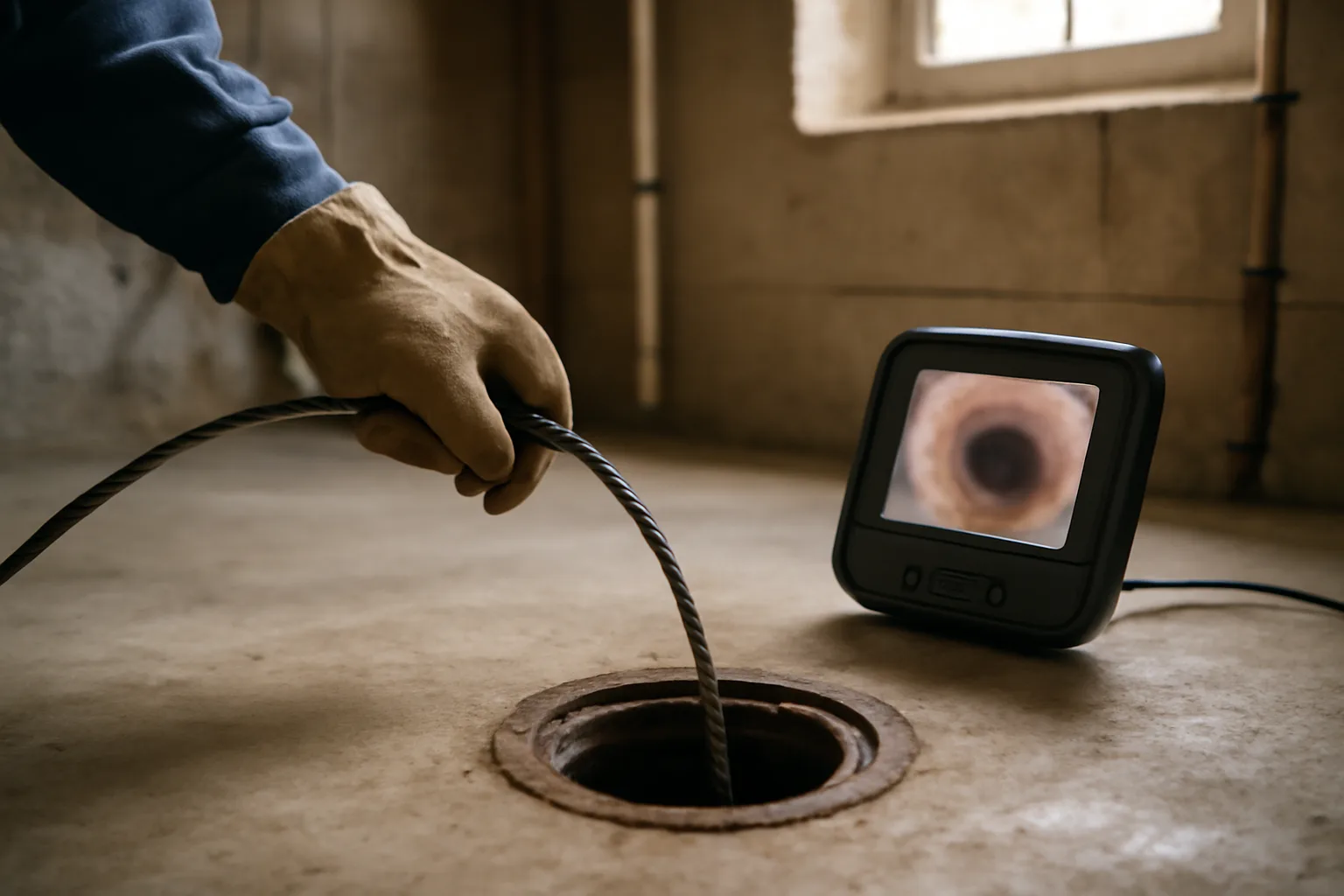
A drain inspection camera rental typically costs $75 to $300 per day at hardware or tool rental stores, with weekly rates around $200-$450. Landlords rent one before a rental inspection or after a tenant complaint to check sewer lateral condition, since many cities now ask about backups or plumbing history as part of licensing.
What does a drain inspection camera rental actually cost?
Expect to pay somewhere between $75 and $300 for a single day, depending on the camera's reach and whether it includes a locator (a device that finds the camera head's exact position underground from the surface). Home Depot's tool rental program lists sewer/drain inspection cameras in that general daily range, with 4-hour, 24-hour, weekly, and monthly options, and pricing varies by store and region [1]. Sunbelt Rentals and United Rentals carry similar equipment aimed more at contractors, and their rates run higher, often $200 to $400 a day, because the units have longer cable runs (200 feet or more) and better optics. A basic push camera with a 100-foot cable and a small monitor is enough for most 1-4 unit residential properties. If you own a building with a long main line to the street, or you suspect a break further out, you'll want the version with a locator wand, and that's the pricier tier. Buying one outright costs more upfront but pencils out fast if you own several properties. Consumer-grade drain cameras (Ridgid, Vevor, and similar brands) run $300 to $900 retail, and pro-grade units with locators run well over $2,000. If you're only ever going to use one once or twice a year, renting is the better math. If you manage inspections across five or more units regularly, buying starts to make sense within two or three rental cycles. One cost people forget: some rental counters require a deposit equal to the replacement value of the camera, sometimes $500 or more, refunded when you bring it back undamaged. Ask about this before you commit to a rental window, especially if you're planning to snake the line yourself and risk snagging the cable.
When do landlords actually need to rent a drain camera?
Three situations come up most often: before a rental inspection in a city that asks about plumbing condition, after a tenant reports repeat backups, and before buying or selling a property with an unknown sewer lateral history. Some cities with mandatory rental inspection programs ask landlords to certify that plumbing is functioning and free of active leaks or blockages, though very few require a camera scope specifically as part of licensing. Confirm with your city rental licensing office whether a camera inspection is ever required, because most jurisdictions leave the method up to you and just want the outcome (no active leaks, functioning fixtures, adequate drainage). Where a camera earns its cost is diagnosing repeat problems. If a tenant reports the same toilet backing up every few months, a $150 camera rental for an afternoon tells you in ten minutes whether it's roots in the lateral, a bellied pipe, or just grease buildup that a plumber can jet out cheap. Without the camera, you're guessing, and a plumber's diagnostic visit alone often costs $200-$500 before any repair even starts. Before closing on a property, a sewer scope is standard advice from real estate inspectors, especially on homes built before 1980 with clay or Orangeburg pipe. The American Society of Home Inspectors doesn't require sewer scoping as part of a standard home inspection, so it's almost always an add-on service you request separately, whether from an inspector or a plumber [2].
How to become a landlord (and where drain camera checks fit in)
Becoming a landlord isn't a licensed profession in the way being a contractor or real estate agent is; there's no national exam. What you actually need varies by state and city, but the common thread is: buy or already own residential property, meet your city's landlord registration or rental licensing rules if they exist, get proper insurance, and understand your local tenant law before you sign a first lease. Many cities require a rental license or registration before you can legally rent out a unit, and some tie that license to a passed inspection. Camera drain checks aren't usually a formal requirement, but they're a smart pre-inspection step if your property is older or you've had any drainage complaints, because a failed plumbing item on inspection day can delay your license and cost you rent while it's fixed. A reasonable first-year checklist looks like this: confirm your city or county's rental licensing requirement, get landlord liability insurance (a standard homeowners policy usually excludes rental use), draft a lease that matches your state's required disclosures, and walk the unit yourself with a checklist before any official inspection. If you want a structured starting point built around what inspectors actually check for, city-by-city guides like tenant rights breakdowns and licensing checklists save a lot of trial and error. The $79 City Rental License & Inspection Prep Packet exists for exactly this stage: a one-time reference that walks you through what most cities check for before licensing, so you're not improvising the week before your inspection.
What is landlording and what is a landlord, exactly?
A landlord is the owner of a residential or commercial property who rents it to someone else (a tenant) in exchange for regular payment, usually under a lease or rental agreement. Landlording is the ongoing work of managing that relationship: collecting rent, maintaining the property, handling repairs, following state and local law on notices and evictions, and keeping the unit habitable. Habitability isn't just a courtesy, it's a legal standard in most states. It generally means the property has working plumbing, heat, hot water, structural safety, and freedom from serious pest infestation. Courts and housing codes describe this as the "implied warranty of habitability," a legal doctrine that exists independent of what the lease says, meaning a landlord can't contract around basic livability requirements [3]. Drain and sewer function falls squarely inside habitability. A backed-up main line or a toilet that won't flush isn't a cosmetic issue, and ignoring tenant reports of it is one of the more common ways landlords end up on the wrong side of a habitability complaint or a housing code violation.
Who is responsible for a rental property walk-through inspection in California?
In California, the landlord is responsible for offering an initial move-in inspection and, on request, a pre-move-out inspection, but the tenant has the right to be present for both. California Civil Code Section 1950.5 requires that if a landlord intends to withhold any part of a security deposit for repairs at move-out, they must first offer the tenant a reasonable opportunity to request an initial inspection, conducted no earlier than two weeks before the tenancy ends, and give the tenant an itemized list of deficiencies with a chance to fix them first [4]. The landlord (or their agent) typically performs the physical walk-through, but the tenant's presence isn't optional if the tenant requests it; California law gives the tenant the right to attend. Separately, some California cities layer their own rental inspection program on top of state deposit law, requiring periodic habitability inspections tied to a rental license or registration, distinct from the move-in/move-out deposit inspection. Confirm with your specific city's rental licensing office whether such a program applies, since it varies widely between, say, Los Angeles and a smaller Central Valley city. Drain and plumbing condition is a standard item on both types of inspection, since backed-up drains or leaks are one of the most common deposit disputes and one of the most common code violations.
How do I become a landlord and what steps come first?
If you're asking "how to be a landlord" for the first time, the order that saves you the most headaches is: confirm zoning and licensing rules first, then get insurance, then write your lease, then screen tenants, then set up your maintenance system. 1. Check your city or county rental licensing rules before you list the unit. Some cities require registration even for a single rented room; ignoring this risks fines that stack up per unit, per month, in many ordinances. 2. Get landlord (dwelling) insurance, not a standard homeowner's policy, since most homeowner policies exclude rental use entirely or void coverage if they later discover the property is tenant-occupied. 3. Write a lease that matches your state's required disclosures (lead paint disclosure is federally required for pre-1978 housing under 24 CFR Part 35 [5]). 4. Screen tenants consistently and document your criteria, since inconsistent screening is one of the more common grounds for fair housing complaints. 5. Set up a maintenance and inspection routine, including a plan for what you'll do if a tenant reports drainage or plumbing problems, before it happens rather than during a crisis. New landlords often skip step 1 and find out about registration requirements only after a neighbor complaint or a random compliance sweep, at which point some cities charge back-fees or double the standard registration cost as a penalty.
Why do landlords require renters insurance?
Landlords require renters insurance mainly to shift liability for a tenant's personal belongings and personal liability claims away from the landlord's own policy. A standard landlord dwelling policy covers the building structure and the landlord's own liability, but it does not cover a tenant's furniture, electronics, or clothing if there's a fire, burst pipe, or theft. Renters insurance also typically includes liability coverage if the tenant accidentally causes damage (a kitchen fire, an overflowing tub) that affects a neighboring unit or the building itself. Without it, that cost can land back on the landlord's policy, raising the landlord's own premiums or exceeding coverage limits. There's no federal law requiring renters insurance, but many state landlord-tenant statutes explicitly permit landlords to require it as a lease condition, and it's become close to standard practice in multi-unit buildings. Typical renters insurance costs $15 to $30 a month depending on coverage limits and location, a small ask relative to what a tenant-caused water or fire loss can run.
How much notice does a landlord have to give before entering or ending a tenancy?
Notice periods vary by state and by the reason for entry, and this is one of the most misquoted areas of landlord-tenant law because people assume a single national rule exists. It doesn't. For routine entry (repairs, inspections, showings), many states require 24 to 48 hours' written or verbal notice. California requires "reasonable notice," which state law presumes to be 24 hours for most purposes, under Civil Code Section 1954 [6]. Other states set their own number; some are silent on entry notice entirely and leave it to lease terms and local reasonableness standards. For ending a month-to-month tenancy, notice is typically 30 days if the tenant has lived there under a year, and some states require 60 days if the tenancy has run a year or more (California again splits it this way under Civil Code Section 1946.1 [6]). For nonpayment of rent or lease violations, most states set a shorter notice-to-cure period, often 3 to 14 days, before an eviction filing can proceed, and that window is set by state statute, not landlord preference. The short version: check your specific state's landlord-tenant statute for both entry notice and termination notice, because assuming a national standard is the single most common way landlords accidentally violate tenant rights.
What can a landlord look at during an inspection?
A landlord (or their inspector) can generally check anything related to habitability, safety, and lease compliance: smoke and carbon monoxide detectors, plumbing and drain function, HVAC operation, signs of pest infestation, window and door locks, electrical outlets, and general property condition. Some cities' rental inspection checklists also cover things like handrail stability, egress window function in bedrooms, and water heater temperature/pressure relief valves. What a landlord generally cannot do during a routine inspection is search through a tenant's personal belongings, closets, or drawers beyond what's necessary to check the item in question (a running toilet doesn't justify opening a dresser). Inspections also have to follow the proper notice period for that state, and a landlord showing up unannounced outside of an emergency (active flooding, fire, gas leak) is usually a violation of the lease and possibly state law. Drain and plumbing checks are a normal, expected part of almost every rental inspection checklist, whether it's a city-mandated licensing inspection or the landlord's own routine walk-through. If you've had any tenant complaints about slow drains or backups, that's exactly the situation where renting a $100-$200 camera for a day before the official inspection can save you a failed inspection and a re-inspection fee, which some cities charge separately from the original inspection fee.
What rights do tenants have without a lease?
A tenant without a written lease still has legal rights; verbal or "holdover" tenancies are still tenancies under most state law, typically treated as month-to-month. The tenant is still entitled to habitability protections, proper notice before entry, proper notice before eviction, and, in states with rent control, still covered by those protections regardless of paperwork. What changes without a written lease is proof. Terms like rent amount, who pays for what utility, and pet policies become harder to enforce for either side if there's a dispute, since there's nothing signed to point to. Courts generally look at conduct and payment history (rent receipts, texts, bank records) to establish what the informal agreement was. A landlord still has to follow the same state-mandated notice periods to end a no-lease, month-to-month tenancy as they would for a written one; the lack of a lease doesn't give a landlord shortcut rights to remove a tenant faster. For more detail on this specific to your situation, tenants rights and renters rights resources cover state-by-state variation in more depth than a single national answer can.
What can't a landlord do in Ohio?
Ohio landlord-tenant law is set out in Ohio Revised Code Chapter 5321, and it restricts several things landlords sometimes assume they can do. A landlord cannot shut off utilities, change locks, or remove a tenant's belongings to force them out, a practice known as "self-help eviction." Ohio law requires landlords to go through the court eviction process (a forcible entry and detainer action) even if the tenant is behind on rent [7]. Ohio Revised Code 5321.04 also requires landlords to keep the premises in a fit and habitable condition, comply with building and housing codes, and keep common areas safe; a landlord who ignores repeated plumbing or drainage complaints can be found in violation of this section [7]. Retaliation is also restricted: Ohio Revised Code 5321.02 prohibits landlords from raising rent, decreasing services, or threatening eviction specifically because a tenant complained to a housing authority or asserted a legal right . Ohio also caps what a landlord can charge for certain fees and sets rules around security deposit handling and itemized deduction lists, so it's worth reading Chapter 5321 directly, or a current summary of it, before assuming a lease clause overrides state law; it generally can't.
Renting vs. buying a drain camera: quick comparison
| Factor | Renting | Buying | |
|---|---|---|---|
| Typical cost | $75-$300/day, $200-$450/week [1] | $300-$900 consumer grade, $2,000+ pro grade | |
| Best for | 1-3 uses per year, single-unit or small landlords | 4+ units, frequent tenant turnover inspections | |
| Includes locator wand | Sometimes, costs more | Only if you buy the higher-tier model | |
| Deposit required | Often, $500+ refundable | N/A | |
| Learning curve | Same either way, budget 30-60 min to learn the controls | Same | For most landlords with 1-10 units, renting wins on math unless you're dealing with recurring drainage problems across multiple properties in the same year. If you rent more than three times in twelve months, price out a basic consumer unit; you'll likely break even by the third or fourth rental. |
Frequently asked questions
How much does it cost to rent a drain inspection camera for one day?
Most hardware and tool rental stores charge $75 to $300 for a single day, depending on cable length and whether a locator wand is included. Home Depot's tool rental program lists sewer camera rentals with 4-hour, daily, weekly, and monthly rate tiers, and exact pricing varies by store location [1].
Do I need a professional plumber or can I run the camera myself?
You can rent and run a basic push camera yourself for diagnostic purposes; it's not licensed work. But if the camera reveals a break, root intrusion, or collapsed section of pipe, you'll need a licensed plumber for the actual repair, and many plumbers offer their own camera inspection as a cheaper bundled service than a standalone rental plus your time.
How to become a landlord if I've never rented out a property before?
Confirm your city or county's rental licensing and registration rules first, then get landlord (not homeowner) insurance, write a lease matching your state's disclosure requirements, screen tenants consistently, and set up a maintenance routine before you list the unit. Order matters: licensing rules can affect timeline and cost before you ever show the unit.
Who is responsible for a rental property walk-through inspection in California?
The landlord is responsible for offering the inspection and generally conducts it, but California Civil Code 1950.5 gives tenants the right to request an initial move-out inspection and be present for it, with an itemized list of needed repairs provided afterward [5]. Some California cities also run separate license-tied inspection programs on top of this deposit-related process.
What is landlording, in plain terms?
Landlording is the ongoing work of owning and managing a rental property: collecting rent, maintaining habitability, following notice and eviction law, and handling tenant relationships. It's distinct from simply owning property, since it involves active legal and maintenance responsibilities that don't apply to owner-occupied homes.
What is a landlord, legally speaking?
A landlord is the party who owns residential or commercial property and leases it to a tenant in exchange for rent, under either a written lease or a verbal/informal agreement. The landlord holds specific legal duties around habitability, notice, and deposit handling that vary by state statute.
What rights do tenants have without a signed lease?
Tenants without a written lease still have full habitability rights, entry-notice rights, and eviction-notice protections under state law; verbal tenancies are typically treated as month-to-month. What's harder without a lease is proving specific terms like rent amount or pet policy if a dispute arises.
Why do landlords require renters insurance if they already have their own policy?
A landlord's own policy covers the building and the landlord's liability, not the tenant's personal belongings or tenant-caused liability incidents. Requiring renters insurance (typically $15-$30/month) shifts that risk to the tenant's policy instead of exposing the landlord to claims beyond their coverage.
How much notice does a landlord have to give before entering a unit?
It depends on the state. California presumes 24 hours is reasonable notice under Civil Code 1954 [7]; many other states set their own number, commonly 24-48 hours, and some leave it to lease terms. Always check your specific state's statute rather than assuming a national standard.
What can a landlord look at during a routine inspection?
A landlord can check habitability and safety items: smoke/CO detectors, plumbing and drain function, HVAC, pest signs, locks, electrical outlets, and general condition. They generally cannot search personal belongings, closets, or drawers beyond what's needed to check the specific item in question.
What can't a landlord do in Ohio specifically?
Ohio landlords cannot use self-help eviction (shutting off utilities, changing locks, removing belongings) under ORC Chapter 5321, and cannot retaliate against tenants for complaints or asserted rights under ORC 5321.02. Ohio also requires landlords to maintain habitable conditions and follow code under ORC 5321.04 [8][9].
Is renting a drain camera worth it before a rental inspection?
If you've had any tenant complaint about slow drains or repeat backups, yes: a $100-$200 day rental can catch a problem before an inspector does, letting you fix it on your own timeline instead of risking a failed inspection and a re-inspection fee.
Should I buy or rent a sewer camera as a landlord with multiple units?
If you own 4 or more units and deal with plumbing complaints more than 2-3 times a year, a consumer-grade camera ($300-$900) typically pays for itself within a few rental cycles. For occasional use, renting at $75-$300/day stays cheaper long-term.
Sources
- The Home Depot, Tool & Truck Rental: Sewer/drain inspection camera rentals are offered in 4-hour, daily, weekly, and monthly increments with pricing that varies by store
- Cornell Law School Legal Information Institute, Implied Warranty of Habitability: The implied warranty of habitability is a legal doctrine requiring livable conditions independent of lease terms
- California Legislative Information, Civil Code Section 1950.5: California landlords must offer tenants an initial move-out inspection and itemized deficiency list before withholding deposit funds for repairs
- U.S. Department of Housing and Urban Development, 24 CFR Part 35: Federal law requires lead paint disclosure for housing built before 1978
- California Legislative Information, Civil Code Section 1954: California presumes 24 hours is reasonable notice for landlord entry
- Ohio Legislative Service Commission, Ohio Revised Code Section 5321.04: Ohio landlords must keep premises in a fit and habitable condition and comply with housing codes, and cannot use self-help eviction methods
- Ohio Legislative Service Commission, Ohio Revised Code Section 5321.02: Ohio law prohibits landlord retaliation against tenants who assert legal rights or file complaints