Last updated 2026-07-26
TL;DR
There's no single federal or state rule. Cities with rental licensing programs set their own inspection cycle, commonly every 1 to 3 years, plus complaint-driven inspections that can happen anytime. State law usually sets a minimum notice period (often 24 to 48 hours) for entry, separate from how often the city can inspect.
How often can a rental property be inspected?
There's no nationwide answer because inspection frequency comes from two different sources that don't always agree: your city's rental licensing ordinance and your state's landlord-tenant entry law. Cities that require a rental license typically set a routine inspection cycle, often every 1, 2, or 3 years, tied to license renewal. Complaint-based inspections (a tenant calls code enforcement about no heat, a pest problem, or a broken smoke detector) can happen anytime, regardless of where you are in that cycle. Separately, your state's entry statute controls how much notice a landlord (or an inspector accompanying the landlord) has to give before walking onto the property. California requires "reasonable notice," which the statute defines as 24 hours unless circumstances make that unreasonable [1]. That notice rule applies to routine entry and inspections alike, on top of whatever the city's licensing calendar says. So the real answer is: check two documents. First, confirm with your city rental licensing office what cycle your specific program uses (annual, biennial, or on a complaint basis only). Second, check your state's entry notice statute for the minimum notice period that has to be given regardless of why the landlord or an inspector wants in. If you manage property in a city with mandatory licensing, the city guides on this site break down individual program cycles as we cover more municipalities.
How much notice does a landlord have to give before an inspection?
Most states require somewhere between 24 and 48 hours of advance notice before a landlord or an inspector can enter an occupied unit, though the exact wording and exceptions vary by state. California Civil Code Section 1954 says a landlord may enter for specified purposes (including "to make necessary or agreed repairs") after giving "reasonable notice in writing," and the code specifies that 24 hours is presumed reasonable absent evidence to the contrary [1]. Some cities layer their own inspection notice rules on top of that state minimum, so a municipal rental inspection appointment might come with its own written notice requirement from the code enforcement office, separate from the landlord's routine entry notice. Emergencies are the universal exception. Nearly every state entry statute, including California's, allows entry without advance notice when there's an emergency (fire, flooding, a gas leak) [1]. Outside of emergencies, skipping the notice period is one of the fastest ways to turn a routine inspection into a tenant complaint or a habitability dispute, so it's worth building the correct notice period into your calendar the same day you get a licensing renewal notice, not the week before the inspector shows up.
Who is responsible for a rental property walk-through inspection in California?
In California, responsibility splits three ways depending on the type of inspection. For routine landlord entry to inspect the unit, make repairs, or show it to prospective tenants, the landlord (or an authorized agent) handles the walk-through directly under Civil Code Section 1954, with the notice rules described above [1]. For move-in and move-out condition documentation, California Civil Code Section 1950.5 gives tenants the right to request a pre-move-out inspection so they can fix any deficiencies before the landlord assesses deductions from the security deposit. The landlord must give at least 48 hours' notice before that inspection and must provide the tenant an itemized statement of needed repairs afterward [2]. For code compliance and rental licensing inspections, that's the city or county code enforcement or building department's job, not the landlord's. Some California cities (Los Angeles has its Systematic Code Enforcement Program, for example) send their own inspectors on a set cycle to check for habitability violations, and the landlord's role there is to schedule access and correct any cited issues, not to conduct the inspection itself. If you're unsure which office runs your city's program, confirm with your city rental licensing office directly, since program names and inspection cycles differ block by block in some regions.
What can a landlord look at during an inspection?
| Landlord routine entry | Landlord or property manager | Damage, lease compliance, general condition | |
|---|---|---|---|
| Move-out pre-inspection | Landlord, at tenant's request | Deposit-related repairs, cleanliness | |
| City rental license inspection | Municipal code enforcement officer | Smoke/CO detectors, structural safety, egress, pests | |
| Complaint-driven inspection | Code enforcement, sometimes with health dept. | The specific condition reported | If you want a head start organizing what a city inspector will actually ask for on inspection day (documentation, detector logs, common violation categories), that's exactly the gap our $79 City Rental License & Inspection Prep Packet is built to close, since most cities publish a checklist but don't explain what "in working order" or "proper egress" means in practice. |
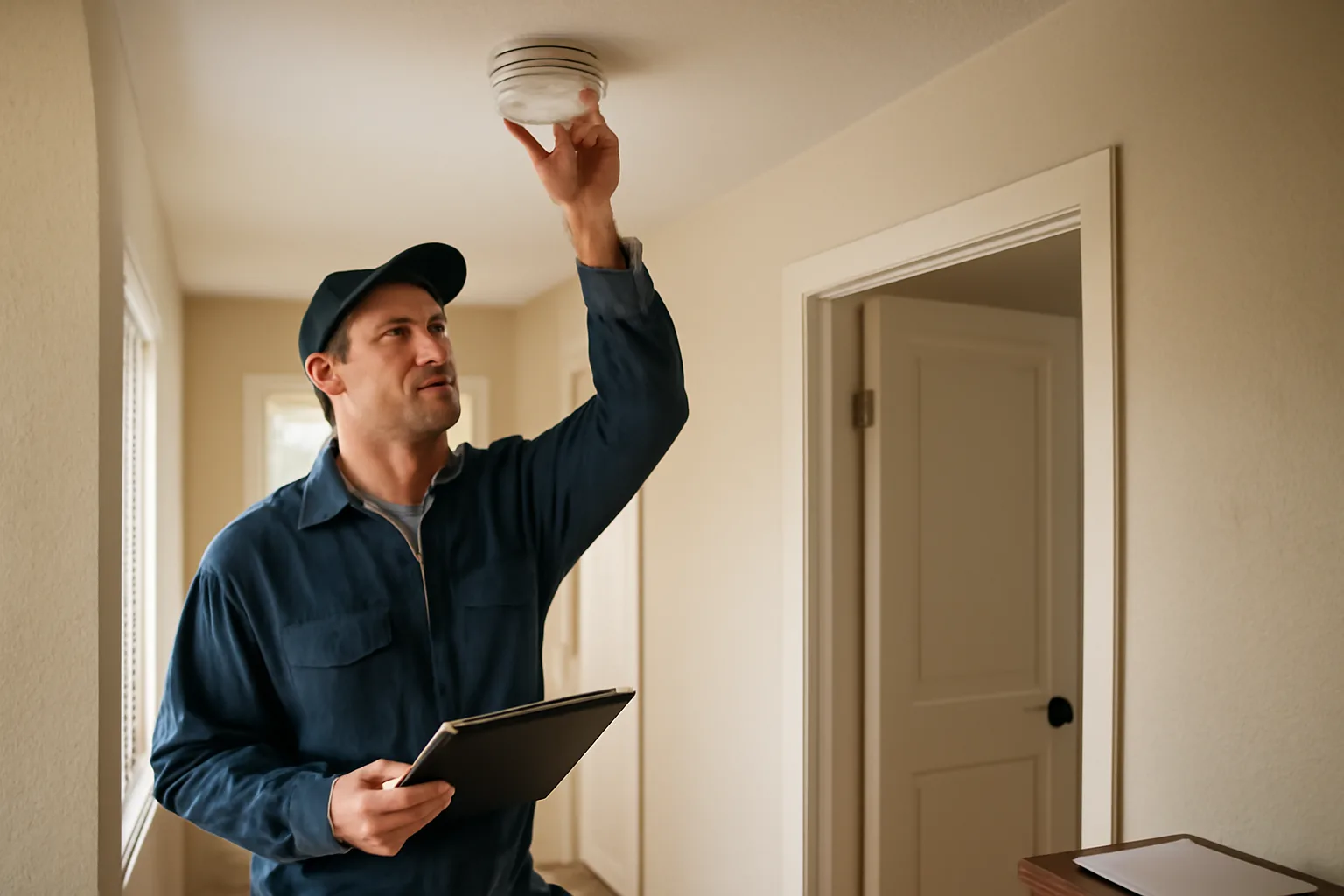
A landlord conducting a routine inspection can generally check for property damage, safety hazards, unauthorized occupants or pets, cleanliness that could cause pest or mold problems, and confirmation that smoke and carbon monoxide detectors are present and working. What a landlord cannot do is turn an inspection into a general search of the tenant's belongings, closets, or personal papers unrelated to habitability or lease compliance. Municipal rental inspectors, by contrast, are usually checking against a specific code checklist: working smoke and CO detectors, secure handrails, no exposed wiring, functioning heat, no active leaks, proper egress from bedrooms, and pest or rodent evidence. These are the categories that most local housing codes trace back to state-adopted versions of the International Property Maintenance Code (IPMC), which many jurisdictions use as their local housing code framework [3]. Here's a rough comparison of what each type of inspector typically checks: | Inspection type | Who conducts it | Typical focus |
What a landlord cannot do in Ohio
Ohio's landlord-tenant law, codified at Ohio Revised Code Section 5321.04, lays out landlord obligations, and Section 5321.05 lays out tenant obligations, but the entry rule that trips people up is in Ohio Revised Code Section 5321.04(A)(8), which requires the landlord to give "reasonable notice" and to enter "only at reasonable times." Ohio courts and the statute itself treat 24 hours as the customary benchmark for reasonable notice, though the statute doesn't fix that exact number the way California's does [4]. What a landlord cannot do in Ohio includes entering without notice except in a genuine emergency, changing the locks or shutting off utilities to force a tenant out (a "self-help eviction"), retaliating against a tenant who's called code enforcement or joined a tenant union, and refusing to maintain the unit in a habitable condition as required under ORC 5321.04(A)(1) through (A)(4) [4]. Ohio law also prohibits a landlord from entering "in a manner that harasses the tenant," which case law has interpreted to mean repeated unnecessary entries can themselves become a violation even if each one technically had notice. Ohio has no single statewide rental licensing program, so inspection frequency there depends entirely on whether your specific city (Cleveland, Columbus, Cincinnati, and several others run their own rental registration or licensing ordinances) has adopted one. Confirm with your city's rental licensing office directly, since Ohio's home-rule structure means requirements differ significantly from one municipality to the next.
What is landlording, and what is a landlord?
A landlord is the person or entity that owns residential or commercial property and leases it to someone else (the tenant) in exchange for rent. Landlording is the informal term for the day-to-day work of managing that relationship: collecting rent, handling repairs, screening applicants, keeping the property compliant with local codes, and responding to tenant issues. It sounds simple until you're the one doing it. Landlording covers everything from the legal side (leases, notices, security deposit rules, fair housing compliance under the federal Fair Housing Act) to the practical side (finding a plumber at 9pm, tracking which unit's smoke detector battery died last). Most landlords with 1 to 10 units don't have a property management company handling this, which means the license renewal notice, the inspection appointment, and the tenant's maintenance request all land on the same desk: yours. The federal Fair Housing Act (42 U.S.C. Section 3601 et seq.) sets the floor for how landlords have to treat applicants and tenants regardless of state: no discrimination based on race, color, national origin, religion, sex, familial status, or disability [5]. States and cities can add protected categories on top of that federal floor, but they can't remove any of it.
How to become a landlord (and how to be a landlord day to day)
Becoming a landlord starts before you own the property: check your local zoning to confirm rental use is allowed, budget for a rental license or registration fee if your city requires one, and get familiar with your state's landlord-tenant statute before you sign a single lease. Many first-time landlords skip this step and find out about a mandatory rental registration requirement only after a neighbor complaint or a routine city sweep flags the address. Once you own the property, the practical steps are: register or license the unit with your city if required (confirm with your city rental licensing office for the specific form and fee), screen tenants consistently and in writing to avoid fair housing complaints, use a written lease that matches your state's required disclosures, and set a maintenance response process before you need one, not after. Being a landlord day to day means: responding to repair requests within a reasonable time (some states set a specific number of days by statute for essential services like heat or water), giving the legally required notice before entry, keeping the rental in compliance with your local housing code year-round rather than scrambling before a scheduled inspection, and documenting everything, because in a dispute, the party with the paper trail usually wins. Landlords should also review landlord landlords guidance for city-specific breakdowns once yours is up on the site.
What rights do tenants have without a lease?
A tenant without a written lease isn't unprotected. Most states treat an unwritten rental arrangement as a month-to-month tenancy at will, governed by the same statutory protections that apply to written leases: the right to a habitable unit, the right to proper notice before entry, and the right to a specific notice period before the landlord can terminate the tenancy or raise the rent. Without a lease, the terms default to state law and local custom rather than a negotiated document. That typically means: rent is due on whatever schedule has been established by actual practice (usually monthly), either party can end the tenancy with statutory notice (commonly 30 days, though some states and cities require more for longer tenancies), and the landlord still has to comply with the state's habitability and entry-notice statutes exactly as if a lease existed. What a tenant without a lease does not automatically get is a locked-in rent amount or term length, since without a written agreement there's nothing preventing the landlord from raising rent with proper notice at the end of any rental period (subject to any local rent control ordinance). Readers curious about the tenant side of this relationship can check tenants rights and tenant rights for more detail, and renters rights covers habitability and entry protections specifically.
Why do landlords require renters insurance?
Landlords require renters insurance mainly to shift liability risk off their own policy. A landlord's own property insurance covers the building and the landlord's own belongings and liability, but it does not cover a tenant's personal property or a tenant's liability if, say, the tenant's dog bites a guest or the tenant's unattended candle starts a fire. Requiring renters insurance (commonly a policy with $100,000 to $300,000 in liability coverage, though this range is a common industry norm rather than a legal requirement) means that if a tenant causes damage or an injury happens in the unit, the tenant's own policy responds first. Without it, a tenant with no insurance and no assets may be effectively judgment-proof, leaving the landlord's policy, or the landlord personally, to absorb the loss. Renters insurance is also generally cheap. The average cost nationally runs in the range of roughly $15 to $30 per month depending on coverage level and location, based on industry rate surveys rather than a government source, so requiring it as a lease condition is a low-cost way for a landlord to reduce exposure. Most states allow landlords to require renters insurance as a lease condition as long as the requirement is disclosed and applied consistently to all tenants, since inconsistent application can trigger a fair housing complaint even if the underlying requirement itself is legal.
How does inspection frequency differ between routine, complaint-driven, and licensing-cycle inspections?
These three inspection types run on completely different clocks, and mixing them up is the single most common mistake new landlords make when they get a notice in the mail. Routine landlord entry (checking on the unit, doing a seasonal maintenance walk-through) happens on whatever schedule the landlord sets, subject only to the state notice requirement. There's no cap on how often a landlord can do this as long as proper notice is given each time and the visits don't rise to the level of harassment. Licensing-cycle inspections are set by the municipality and tied to the rental license renewal calendar. Common cycles run annually, every two years, or every three years, though some cities inspect every unit at initial registration and then only re-inspect on renewal or complaint. This is the cycle you'll see referenced in the license renewal notice that likely brought you to this article. Complaint-driven inspections have no fixed frequency at all. A single verified complaint (no heat in winter, a suspected gas leak, a bedbug report) can trigger an inspection at any point in the cycle, independent of when the last scheduled inspection happened or when the next one is due. Cities generally prioritize these over routine cycle inspections because they involve an active habitability or safety concern, so if a tenant calls code enforcement, expect a response measured in days, not in whatever years are left on your license cycle.
What happens if you fail a rental inspection or miss the notice window?
Failing a rental inspection usually triggers a re-inspection period rather than immediate license revocation. Cities typically give landlords a set number of days (commonly 30, though this varies by jurisdiction, so confirm with your city rental licensing office for the exact window) to correct cited violations before a follow-up inspection or before fines and license suspension kick in. Missing the notice window is a separate problem. If a landlord doesn't respond to the inspection notice at all, or fails to provide access on the scheduled date, most ordinances treat that as a missed inspection, which can itself become a violation subject to a fine and can delay license renewal independent of whether the property would have passed. Some cities escalate faster for repeat no-shows than for a failed inspection with correctable violations, on the theory that a landlord who won't schedule access is a bigger enforcement problem than one with a broken smoke detector. The practical fix is the same either way: treat the inspection notice as a deadline the moment it arrives, not a suggestion. Walk the unit yourself against your city's published checklist before the inspector does, fix what you can cheaply (detector batteries, loose handrails, visible leaks), and call the licensing office proactively if you can't make the scheduled date rather than letting it lapse silently.
Frequently asked questions
How often can a rental property be inspected by the city?
It depends entirely on your city's rental licensing ordinance. Common cycles are annual, every two years, or every three years, tied to license renewal, plus any complaint-driven inspection that can happen at any point in between. Confirm with your city rental licensing office for the exact cycle your property falls under.
Can a landlord inspect a rental property whenever they want?
No. Even routine landlord entry requires advance notice under state law, commonly 24 to 48 hours depending on the state, except in a genuine emergency. There's no cap on how many times a landlord can inspect as long as proper notice is given each time, but repeated unnecessary entries can be treated as harassment in some states.
How much notice does a landlord have to give before an inspection?
Most states require 24 to 48 hours of written notice before entry for a non-emergency inspection. California's Civil Code Section 1954 treats 24 hours as presumptively reasonable [1]. Check your specific state's landlord-tenant statute, since the exact number and required delivery method (written vs. verbal) vary.
Who is responsible for a rental property walk-through inspection in California?
The landlord conducts routine entry and repair inspections under Civil Code Section 1954, and move-out pre-inspections under Civil Code Section 1950.5 with 48 hours' notice [2]. City or county code enforcement handles rental licensing and habitability inspections, which are separate from the landlord's own walk-through.
What can a landlord look at during an inspection?
A landlord can check for property damage, safety hazards, working smoke and carbon monoxide detectors, unauthorized occupants or pets, and general lease compliance. A landlord generally cannot search personal belongings or use the inspection as a pretext to go through a tenant's private papers unrelated to the property's condition.
What is landlording?
Landlording is the everyday work of owning and managing rental property: collecting rent, handling maintenance, screening tenants, staying compliant with local housing codes, and managing the legal side of the landlord-tenant relationship, including notices, leases, and inspections.
What is a landlord?
A landlord is the owner (person or entity) of residential or commercial property who leases it to a tenant in exchange for rent, taking on legal responsibilities for habitability, repairs, and fair treatment under federal, state, and local law.
What rights do tenants have without a lease?
Tenants without a written lease still get the full protection of state landlord-tenant law: habitability, proper entry notice, and a statutory notice period (commonly 30 days) before the tenancy can be ended or the rent raised. The arrangement is generally treated as a month-to-month tenancy at will.
How do I become a landlord?
Check local zoning for rental use, budget for any required rental license or registration fee, learn your state's landlord-tenant statute, use a compliant written lease, and register the property with your city if mandatory rental licensing applies. Confirm requirements with your local rental licensing office before you advertise the unit.
Why do landlords require renters insurance?
Renters insurance shifts liability for a tenant's belongings and tenant-caused injuries or damage onto the tenant's own policy instead of the landlord's. It typically costs $15 to $30 a month and protects the landlord from absorbing losses if a tenant has no assets to cover a claim.
What can a landlord not do in Ohio?
Under Ohio Revised Code Section 5321.04, a landlord cannot enter without reasonable notice except in an emergency, cannot perform a self-help eviction (lockouts, utility shutoffs), cannot retaliate against a tenant who reports code violations, and cannot fail to maintain the unit in habitable condition [4].
Does a failed rental inspection mean the landlord loses the license immediately?
Usually not. Most cities give a correction period, commonly around 30 days depending on jurisdiction, to fix cited violations before a re-inspection. License suspension or a fine typically follows only if the landlord misses that correction deadline, not from the failed inspection itself.
Sources
- California Legislative Information, Civil Code Section 1954: California landlords must give reasonable notice, presumed to be 24 hours, before entering for repairs or inspection, with an emergency exception
- California Legislative Information, Civil Code Section 1950.5: California tenants can request a pre-move-out inspection with at least 48 hours' notice before the landlord assesses security deposit deductions
- International Code Council, International Property Maintenance Code: Many local housing codes adopt the International Property Maintenance Code framework covering smoke detectors, egress, and structural safety checks
- Ohio Laws, Ohio Revised Code Section 5321.04: Ohio landlords must give reasonable notice and enter only at reasonable times, and must maintain the unit in habitable condition
- U.S. Department of Justice, Fair Housing Act text (42 U.S.C. Section 3601 et seq.): Federal fair housing law prohibits discrimination in housing based on race, color, national origin, religion, sex, familial status, and disability
- Ohio Laws, Ohio Revised Code Section 5321.05: Ohio tenant obligations, referenced alongside landlord duties, are codified in the same chapter of Ohio's landlord-tenant law