Last updated 2026-07-26
TL;DR
There's no single national answer. Mandatory rental inspection frequency is set city by city, typically ranging from annual to every 3-5 years, or triggered by tenant turnover or a complaint. You have to check your specific municipal rental licensing office because state law almost never sets this; cities do.
how often does a rental property get inspected?
It depends entirely on where the property sits. There's no federal rule and almost no state rule that sets a uniform inspection interval for rental housing. Instead, cities and counties that run mandatory rental licensing or registration programs set their own inspection cycles, and those cycles vary a lot. Some cities inspect every unit every year. Others do it every 2 years, every 3 years, or on a rolling cycle where roughly a third of licensed units get inspected annually so the whole stock cycles through every 3 years. Some cities only inspect when a unit changes tenants, when a complaint comes in, or when a license is up for renewal. A few smaller towns with newer ordinances inspect once at initial licensing and then only on complaint after that. Because the range is this wide, the honest starting point is not a national average, it's your own city's rental licensing office. Search '[your city name] rental license inspection' and look for the municipal code section or the housing department's rental program page. If you got a postcard, notice, or fine, it should reference an ordinance number. That number is your fastest path to the real schedule; confirm the exact interval and fee with your city rental licensing office, since ordinances get amended and fee schedules change most fiscal years. If you own in a city with a known program, here's the general shape those programs take, so you know what questions to ask.
what are the common rental inspection cycle types?
Most mandatory rental inspection programs fall into a handful of patterns. Knowing which type your city uses tells you what to expect next. Annual inspection. Every licensed rental unit gets inspected once a year, tied to license renewal. This is common in older, established rental licensing cities in the Midwest and Northeast. Multi-year cycle (2-5 years). The city divides the rental stock into zones or cohorts and inspects a portion each year, so every unit gets seen on a fixed rotation. A 3-year cycle is common; some cities stretch it to 4 or 5 years for units with a clean history. Turnover-triggered. Inspection happens when a new tenant moves in, not on a calendar. This is common for cities that care most about move-in condition and don't have staff to do blanket annual sweeps. Complaint-based only. No routine schedule at all. An inspector comes out only if a tenant files a complaint or the city receives a referral from code enforcement, fire, or health departments. This is more common in smaller municipalities with newer ordinances and thin staff. Risk-tiered or self-certification hybrids. A newer approach: units with no violation history or that pass a self-certification checklist get inspected less often (say, every 3-5 years), while units with a violation history or unresolved complaints get inspected annually until they clear. Some cities call this a 'good landlord' or 'crime free' discount program. The practical move: pull up your municipal code's housing or rental licensing chapter, or call the office directly, and ask which of these five patterns applies and what your specific unit's next inspection date is.
who is responsible for a rental property walk-through inspection in california?
California doesn't run a single statewide rental inspection program, so responsibility depends on the specific city or county ordinance and on what kind of walk-through you mean. There are really three separate walk-through situations landlords in California deal with, and they have different rules and different people responsible. First, move-in and move-out condition walk-throughs are a landlord-tenant matter, not a city inspector matter. California Civil Code Section 1950.5 gives tenants the right to request an initial inspection before move-out specifically tied to the security deposit, so the landlord can identify repairs the tenant could fix before the deposit gets calculated [1]. The landlord (or their agent) does this walk-through, and the tenant has the right to be present. This has nothing to do with municipal rental licensing inspections; it's a deposit-protection mechanism. Second, cities like Los Angeles, Oakland, Berkeley, and San Francisco run their own rental registration and habitability inspection programs where a city housing inspector, not the landlord, does the walk-through, usually on a multi-year cycle. Los Angeles runs its Systematic Code Enforcement Program (SCEP) under Los Angeles Municipal Code Section 162.00 et seq., which requires periodic inspection of every residential rental unit in the city and funds the program through an annual per-unit fee charged to the property owner [2]. Confirm the current cycle and fee with your city's housing department, since these get adjusted. Third, if a tenant files a habitability complaint, a local code enforcement officer or health department inspector handles that walk-through, triggered by the complaint rather than the calendar. So: for security-deposit-related walk-throughs, the landlord is responsible under state law. For routine code compliance, it's whichever city inspector is assigned under that municipality's ordinance.
how much notice does a landlord have to give before an inspection?
This splits into two different notice requirements, and mixing them up gets landlords in trouble. For a landlord's own entry to inspect the unit (not a city inspection), most states require advance written notice, commonly 24 hours, though the exact number and the acceptable delivery method vary by state. California, for instance, presumes 24 hours' written notice is reasonable under Civil Code Section 1954, though it allows exceptions for emergencies [1]. Other states set 24 hours as well, some use 48 hours, and a few don't specify a number at all, just 'reasonable notice.' Check your specific state's landlord-tenant statute before entering, and always confirm the local rule since a city ordinance can add stricter notice requirements on top of the state floor. For a city's mandatory rental license inspection, notice practice varies by municipality. Many cities mail or email a scheduled inspection date weeks in advance, sometimes with a window (like a two-week date range) and a phone number to reschedule. A few programs allow surprise or short-notice inspections specifically for complaint-driven cases, since advance notice would defeat the purpose of checking on an active hazard complaint. Ask your city's rental licensing office how much lead time they give for routine cycle inspections versus complaint inspections, because the answer differs. Either way, the tenant generally has to be told before someone enters their home, whether that someone is the landlord, a contractor, or a city inspector. Document how and when you gave notice; it protects you if a tenant later claims you entered without warning.
what can a landlord look at during an inspection?
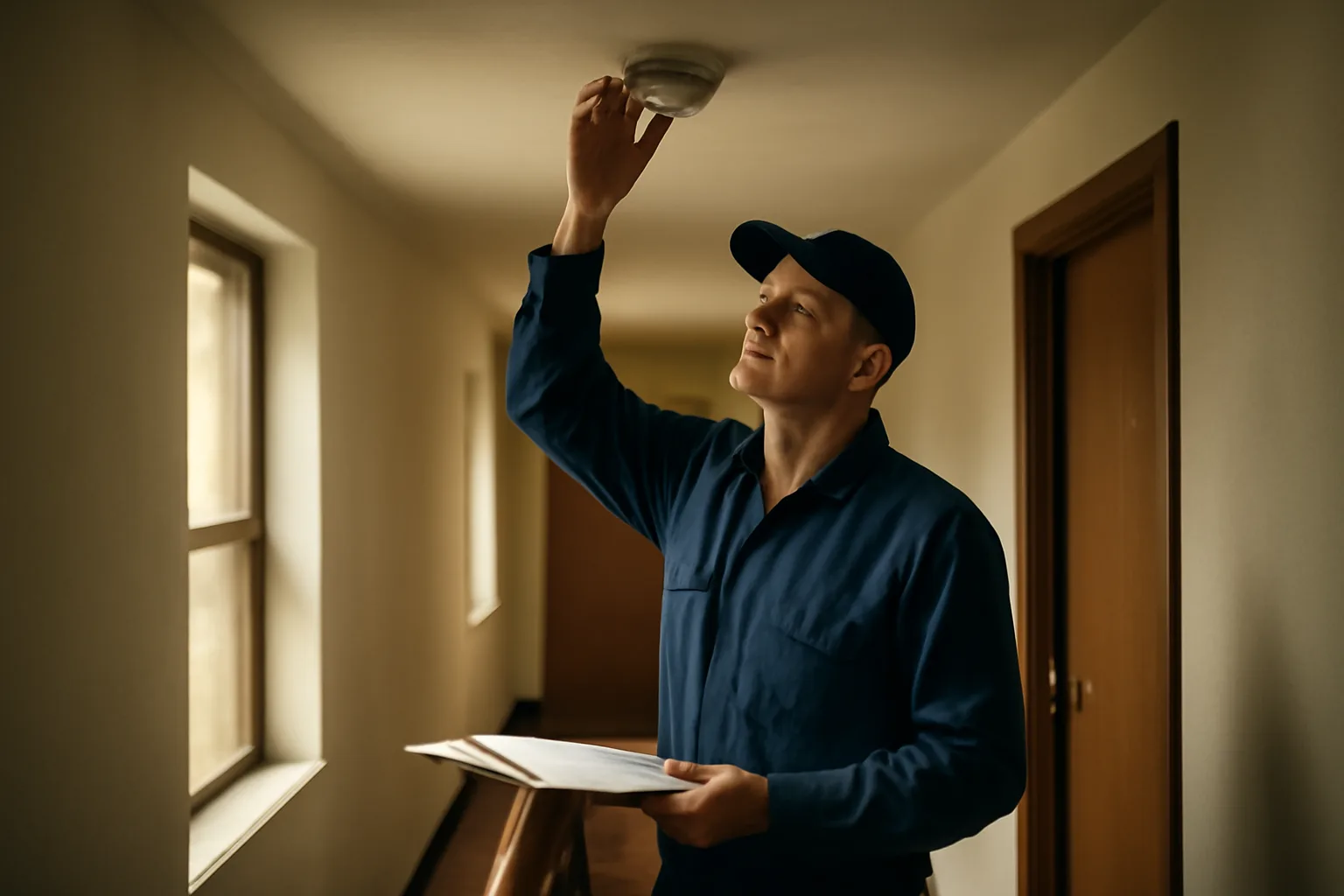
During a landlord's own inspection (not a city code inspection), you can generally check for lease violations, property damage, and habitability or safety issues while you're inside. Typical scope: smoke and carbon monoxide detector function, HVAC filters and function, plumbing leaks, signs of pest activity, mold, unauthorized occupants or pets, unauthorized alterations, and general wear versus damage. What you generally cannot do: search through the tenant's personal belongings, closets, or drawers unrelated to a maintenance issue, or use the inspection as a pretext to harass a tenant or retaliate for a complaint. Entry law in most states requires the purpose be legitimate (repairs, showing the unit, agreed inspection, court order, or emergency), not open-ended snooping. During a city's mandatory rental license inspection, the inspector is checking against the municipal housing or property maintenance code, not your lease. Common check items include: - Working smoke and carbon monoxide detectors, correctly placed per local code
- Egress windows in bedrooms (size and operability)
- Electrical panel condition, no exposed wiring, adequate outlets
- Plumbing: no active leaks, functioning hot water, proper venting
- Heating system function and, in some climates, a minimum temperature the unit must be able to reach
- Structural issues: peeling paint (especially lead paint in pre-1978 housing), rotted framing, unsafe stairs or railings
- Pest and sanitation conditions
- Proper exits, fire separation in multi-unit buildings
- Posted occupancy limits or unit numbering, in some cities Many cities publish the exact checklist their inspectors use. Pull that document before your inspection date rather than guessing; a lot of failed first inspections come down to small, cheap fixes (a missing detector, a loose handrail) that would've taken twenty minutes to handle beforehand.
what a landlord cannot do in ohio
Ohio's landlord-tenant law lives mainly in Ohio Revised Code Chapter 5321, and it lays out specific things a landlord cannot do, regardless of what the lease says. Under ORC 5321.04, a landlord cannot shut off utilities, change locks, or remove a tenant's belongings to force them out; that's illegal self-help eviction, and Ohio requires landlords to go through the court eviction process (forcible entry and detainer) instead [3]. A landlord also cannot enter the unit without giving reasonable notice, generally interpreted as 24 hours except in an emergency, and cannot enter at unreasonable times or with unreasonable frequency, per ORC 5321.04 and 5321.05 [3]. Ohio law also prohibits retaliatory conduct: a landlord cannot raise rent, decrease services, or start eviction proceedings specifically because a tenant complained to a housing authority about a code violation or joined a tenant union, under ORC 5321.02 [4]. A landlord cannot rent a unit that has a building or housing code violation that's a serious threat to health or safety, and cannot include lease clauses that waive the tenant's statutory rights under Chapter 5321, since ORC 5321.13 voids those waivers [3]. Ohio doesn't run a single statewide rental licensing or inspection program; individual cities (Columbus doesn't have one, but some Ohio municipalities do) set their own registration and inspection rules on top of this state floor, so check your specific city's health or building department for any local licensing layer.
how to become a landlord (and what 'landlording' actually means)
Landlording just means renting out property you own to a tenant in exchange for rent, and taking on the legal responsibilities that come with that, maintaining habitability, handling deposits correctly, following notice and eviction procedure, and complying with any local licensing or inspection ordinance. A landlord is the person or entity (individual, LLC, or company) that owns or controls the rental unit and holds those obligations under the lease and under state and local law. Becoming a landlord in practice means a handful of concrete steps, roughly in this order: 1. Confirm your property is legally allowed to be rented (zoning, HOA rules if applicable, and any local rental registration requirement). 2. Register or license the rental with your city or county if one is required; this is where mandatory inspection programs plug in. 3. Get landlord-specific insurance (a standard homeowners policy usually excludes rental use). 4. Set a legally compliant lease that matches your state's required disclosures. 5. Screen tenants under fair housing law (the federal Fair Housing Act, 42 U.S.C. 3601 et seq., bars discrimination based on race, color, national origin, religion, sex, familial status, and disability [5]). 6. Collect and hold the security deposit per your state's rules on limits, holding, and return timelines. 7. Set up a system for maintenance requests, rent collection, and required notices. 8. Learn your state's entry-notice rule and your city's inspection cycle, if any, before your first tenant moves in. If your city runs a rental licensing program, this is the point where a lot of new landlords get caught off guard. The registration deadline, first inspection, and fee schedule often aren't obvious until you get a notice in the mail. If you're staring down a first-time license application or inspection date and don't want to guess at what the city expects, a packet like our $79 City Rental License & Inspection Prep Packet walks through the common checklist items and paperwork before your inspection date, though the actual fee schedule and inspection interval always come from your specific city.
why do landlords require renters insurance?
Landlords require renters insurance mainly to shift liability and personal-property risk off themselves. A landlord's own property insurance covers the building and the landlord's own liability, but it typically doesn't cover a tenant's personal belongings (furniture, electronics, clothing) if there's a fire, burst pipe, or theft. Without renters insurance, a tenant who loses everything in a fire has no coverage, and some tenants in that position try to argue the landlord should pay for their losses, even when the landlord wasn't at fault. Renters insurance also typically includes liability coverage, so if the tenant accidentally causes damage (a kitchen fire, an overflowing tub that damages the unit below), the tenant's policy pays for it instead of the landlord's insurance taking the hit and the landlord's premiums going up. Many landlords require a minimum liability amount, commonly $100,000, though there's no universal standard and this figure varies by landlord and by state guidance. Requiring it is generally legal (it's a lease term, not a fee), but check your state and city; a few jurisdictions restrict how landlords can enforce or verify it, and it can't be used as a pretext for discrimination under the Fair Housing Act [5].
what rights do tenants have without a lease?
A tenant without a written lease, sometimes called a tenant-at-will or a month-to-month tenant by default, still has real legal rights. The absence of a signed lease doesn't strip away state landlord-tenant law; it just means the rental defaults to whatever your state statute says applies when there's no written agreement, typically a month-to-month tenancy. Tenants without a lease generally still have the right to: - A habitable unit (working plumbing, heat, structural safety), under whatever your state's implied warranty of habitability requires
- Advance notice before the landlord raises rent or ends the tenancy, commonly 30 days for month-to-month tenancies, though some states or cities require more (60 or 90 days) especially for longer-tenured tenants
- Protection from illegal lockouts, utility shutoffs, or self-help eviction; the landlord still has to go through the court eviction process
- Return of their security deposit (if one was paid) under the state's deposit rules, notice or lease notwithstanding
- Protection from retaliation for complaining about conditions or contacting code enforcement
- Fair housing protections regardless of lease status [5] What a tenant without a lease usually does not have is a fixed-term guarantee: the landlord (or tenant) can typically end a month-to-month tenancy with proper notice, without needing 'cause,' in most states. Some cities with just-cause eviction ordinances (parts of California, for example) require a stated reason even without a lease, so check local rules on top of state ones. See our related guide on tenant rights for state-by-state specifics.
what happens if you fail a rental inspection?
Failing a rental inspection almost always means you get a written list of violations and a re-inspection deadline, not an immediate fine in most cities. The typical sequence: the inspector documents each code violation with a citation to the specific code section, gives you a correction period (commonly somewhere between 14 and 60 days depending on severity and your city's ordinance), and schedules a re-inspection. If you fix everything and pass re-inspection, you're done until the next cycle. If you don't fix things by the deadline, cities typically escalate: a late fee, a formal notice of violation, then civil penalties or fines that can range from small daily fines to several hundred dollars per violation per day in cities with aggressive enforcement, and in serious or repeated cases, denial or revocation of the rental license, which can mean you're not legally allowed to rent the unit until it's resolved. Emergency-level hazards (no heat in winter, exposed electrical wiring, a collapsing structure) sometimes get a much shorter correction window, sometimes just days, because they're treated as immediate life-safety issues rather than routine code items. Because the fine structure and correction timeline is entirely a local ordinance matter, confirm your city's specific violation and fine schedule with your city rental licensing office before you assume a number. If you got a notice with a fine amount on it already, that number is city-specific and it's the one that matters, not any general figure.
how do i find my city's actual rental inspection schedule?
Start with the notice or postcard in front of you, if you have one. It should have an ordinance number, a department name, and often a case or license number. That's your fastest path to the real answer, faster than any general search. If you're starting from scratch, here's the order that actually works: 1. Search '[city name] rental registration' or '[city name] rental license' plus 'inspection.' 2. Look for the housing department, code enforcement department, or building department, not the general city homepage. 3. Find the specific municipal code chapter (cities usually number their housing or property maintenance code, like Chapter 150 or Title 9, and it'll be posted through Municode or a similar codification service). 4. Call the office directly and ask three things: what cycle applies to your unit type, what the inspection checklist covers, and what the current fee is. Cities differ enough that a general answer, even a good one, can't replace this step. Some cities inspect annually and charge a modest per-unit fee; others run a 3-year rolling cycle with a much higher one-time or biennial fee. Always confirm the current fee and cycle with your city rental licensing office directly, since these get updated in city budget cycles and old blog posts (including general guides like this one) can go stale fast.
Frequently asked questions
How often are rental inspections required by law?
There's no single legal answer; it's set city by city. Common patterns are annual inspections, a 2 to 5 year rolling cycle, turnover-triggered inspections, or complaint-only inspections. Check your specific city's rental licensing or housing code, since state law almost never sets a uniform inspection frequency.
Do all cities require rental inspections?
No. Mandatory rental licensing and inspection programs exist in a meaningful number of U.S. cities and counties, but plenty of jurisdictions have no registration or inspection requirement at all, relying instead on complaint-based code enforcement. Confirm with your specific city or county whether a program exists.
How much notice does a landlord have to give before an inspection?
For a landlord's own entry, most states require written notice, commonly 24 hours (California's presumption under Civil Code 1954), though some states specify different periods. For a city's mandatory license inspection, notice practice varies; many cities schedule weeks ahead, though complaint-driven inspections can happen with less notice.
What can a landlord look at during an inspection?
A landlord can generally check for damage, lease violations, and safety issues (smoke detectors, leaks, HVAC, unauthorized occupants), but not search personal belongings unrelated to maintenance. A city code inspector checks against the municipal housing code: detectors, egress windows, electrical, plumbing, heating, and structural condition.
What a landlord cannot do in Ohio?
Under Ohio Revised Code 5321.04, a landlord cannot shut off utilities, change locks, or remove belongings to force a tenant out; illegal self-help eviction is barred. Landlords also cannot enter without reasonable notice, retaliate against tenants who complain (ORC 5321.02), or include lease clauses waiving Chapter 5321 rights (ORC 5321.13).
Who is responsible for a rental property walk-through inspection in California?
It depends on the type. Move-out condition walk-throughs, under Civil Code 1950.5, are the landlord's responsibility. Routine code compliance inspections in cities with registration programs (like Los Angeles's SCEP) are done by a city housing inspector. Complaint-driven inspections go through local code enforcement.
What is landlording?
Landlording means renting out property you own to a tenant for rent, taking on the legal duties that come with it: keeping the unit habitable, handling the security deposit correctly, following notice and eviction rules, and complying with any local rental registration or inspection ordinance.
What is a landlord?
A landlord is the person, LLC, or company that owns or controls a rental unit and is legally responsible for it under the lease and under state and local landlord-tenant law, including habitability, deposit handling, and any municipal licensing or inspection requirements that apply to the property.
What rights do tenants have without a lease?
A tenant without a written lease still keeps core rights: a habitable unit, advance notice before rent increases or ending the tenancy (commonly 30 days), protection from illegal lockouts or utility shutoffs, return of any deposit under state rules, and fair housing protections. No lease usually means a default month-to-month tenancy under state law.
Why do landlords require renters insurance?
Mainly to cover the tenant's personal belongings and liability, since a landlord's building insurance usually doesn't cover a tenant's furniture or electronics after a fire or leak, and doesn't cover damage the tenant accidentally causes. Requiring a policy, often with a set liability minimum, shifts that risk off the landlord's own coverage.
How to become a landlord?
Confirm the property can legally be rented, register or license it if your city requires that, get landlord insurance, use a compliant lease, screen tenants under fair housing law, follow your state's deposit rules, and learn your local entry-notice and inspection requirements before your first tenant moves in.
What happens if a rental unit fails inspection?
Typically you get a written violation list and a correction deadline (often 14 to 60 days depending on severity) before re-inspection. Missing the deadline usually brings escalating fines and, in serious or repeated cases, license denial or revocation. Emergency hazards can carry much shorter correction windows.
Is a rental inspection the same as a move-in or move-out walkthrough?
No. A city rental license inspection checks code compliance (safety, structural, mechanical) on a set cycle and is done by a municipal inspector. A move-in or move-out walkthrough is a landlord-tenant matter about unit condition and the security deposit, and the landlord (or their agent) does it, not the city.
Sources
- California Civil Code Section 1950.5 and 1954: California tenants can request an initial move-out inspection tied to the security deposit, and 24 hours' written notice is presumed reasonable for landlord entry
- Los Angeles Municipal Code Section 162.00 et seq., Systematic Code Enforcement Program: Los Angeles requires periodic inspection of residential rental units citywide under its Systematic Code Enforcement Program, funded through a per-unit fee
- Ohio Revised Code Chapter 5321 (Landlords and Tenants): Ohio bars self-help eviction, sets entry notice rules, and voids lease clauses that waive Chapter 5321 tenant rights
- Ohio Revised Code Section 5321.02: Ohio prohibits landlord retaliation against tenants who complain about code violations or join a tenant union
- U.S. Department of Housing and Urban Development, Fair Housing Act overview: Federal fair housing law bars discrimination in rental housing based on race, color, national origin, religion, sex, familial status, and disability
- Ohio Revised Code Section 5321.04 (Obligations of landlord): Ohio landlords must give reasonable notice before entry and cannot use self-help methods like shutting off utilities or changing locks to remove a tenant