Last updated 2026-07-26
TL;DR
A property manager inspection checks habitability, safety systems, and lease compliance, and it isn't optional in most licensed rental cities. Notice requirements vary by state (California requires 24 hours; other states set their own minimums), and inspections generally can't be used to harass tenants or search for unrelated items. Owners stay legally responsible even when a manager handles the walk-through.
What is a property manager inspection, exactly?
A property manager inspection is a scheduled walk-through of a rental unit, done by the property manager (or the owner, if there's no manager) to check the condition of the property, confirm smoke and carbon monoxide detectors work, spot maintenance problems before they get expensive, and document lease compliance. It's different from a city rental inspection, which a local housing or code enforcement office runs to confirm the unit meets that city's licensing and habitability standards. Most licensed rental cities require both types eventually. The property manager's internal inspection usually happens first, often as prep for the official city inspection tied to a rental license or registration renewal. If you're in a city that mandates rental licensing, you can check what your specific jurisdiction requires by searching your city name plus "rental license inspection" on your municipal website, since program names and fee schedules vary widely and change often. Think of the property manager inspection as the dress rehearsal. It's where you find the loose handrail, the dead battery in the smoke detector, or the water stain under the sink, before a code inspector finds it and writes it up as a violation with a deadline attached.
Who is responsible for a rental property walk-through inspection in California?
In California, the landlord (or their designated property manager) is responsible for scheduling and conducting move-in and move-out walk-through inspections, but tenants have specific rights around them too. California Civil Code Section 1950.5 requires landlords to give tenants the option of an initial move-out inspection, conducted no earlier than two weeks before the tenancy ends, so the tenant can fix any deficiencies before final move-out and avoid deductions from the security deposit [1]. The landlord must give at least 48 hours' written notice before that initial inspection, unless the tenant waives the notice [1]. After the inspection, the landlord has to give the tenant an itemized statement of anything that needs repair or cleaning to avoid a deduction. This is one of the more tenant-protective walk-through laws in the country, and it exists specifically to stop landlords from surprising tenants with a huge deposit deduction list after they've already moved out. Separately, ordinary periodic inspections (not tied to move-out) fall under California's general entry notice rule: 24 hours is presumed reasonable notice for entry to make repairs or show the unit, per Civil Code Section 1954 [2]. A property manager conducting a routine inspection needs to follow that same 24-hour standard unless there's an emergency.
How much notice does a landlord have to give before an inspection?
| California | 24 hours (48 hours for move-out inspection) | Civil Code §1954, §1950.5 [1][2] | |
|---|---|---|---|
| Florida | "Reasonable notice," 12 hours presumed reasonable | Fla. Stat. §83.53 [3] | |
| Texas | No statewide statute; follow lease terms | N/A | |
| Washington | Two days' notice | RCW 59.18.150 [4] | If your city has a mandatory rental inspection program, the notice for that official inspection is usually spelled out separately in the local ordinance, and it can be longer, sometimes 7 to 30 days, since the city has to schedule an inspector and mail a formal notice. Don't confuse your state's landlord entry notice period with your city's inspection scheduling notice. They're not the same clock. |
Most states set 24 hours as the standard, but it isn't universal, and a few states don't have a statewide statute at all, leaving it to local ordinance or lease language. California presumes 24 hours reasonable for general entry, with the 48-hour rule specifically for the pre-move-out walk-through [1][2]. Florida law requires landlords to give "reasonable notice," and the statute specifically names 12 hours before entry as presumed reasonable when entering to make repairs [3]. Here's a quick comparison of how a few states handle it. Always confirm the current statute for your state, since legislatures amend these periodically. | State | Standard notice for entry | Statute |
What can a landlord or property manager look at during an inspection?
A property manager can generally check anything tied to habitability, safety, and lease compliance: smoke and carbon monoxide detectors, HVAC function, plumbing for leaks, electrical outlets and panels, signs of pest infestation, mold or moisture damage, window and door locks, and general cleanliness that could create a health hazard. Many state landlord-tenant statutes tie habitability standards directly to what's inspectable, since the inspection exists to confirm the unit still meets those standards. What's off-limits is anything unrelated to the property's condition or the lease. A manager doing a routine inspection shouldn't be searching drawers, photographing personal belongings unrelated to damage, or using the visit as a pretext to intimidate a tenant about an unrelated dispute (a noise complaint, a pending eviction, a fair housing complaint). Courts and fair housing agencies have found that pretextual or excessive entries can amount to harassment or even retaliation, which opens the landlord up to liability separate from anything found in the inspection itself. A reasonable inspection checklist typically covers: - Smoke detectors and CO detectors: present, powered, tested
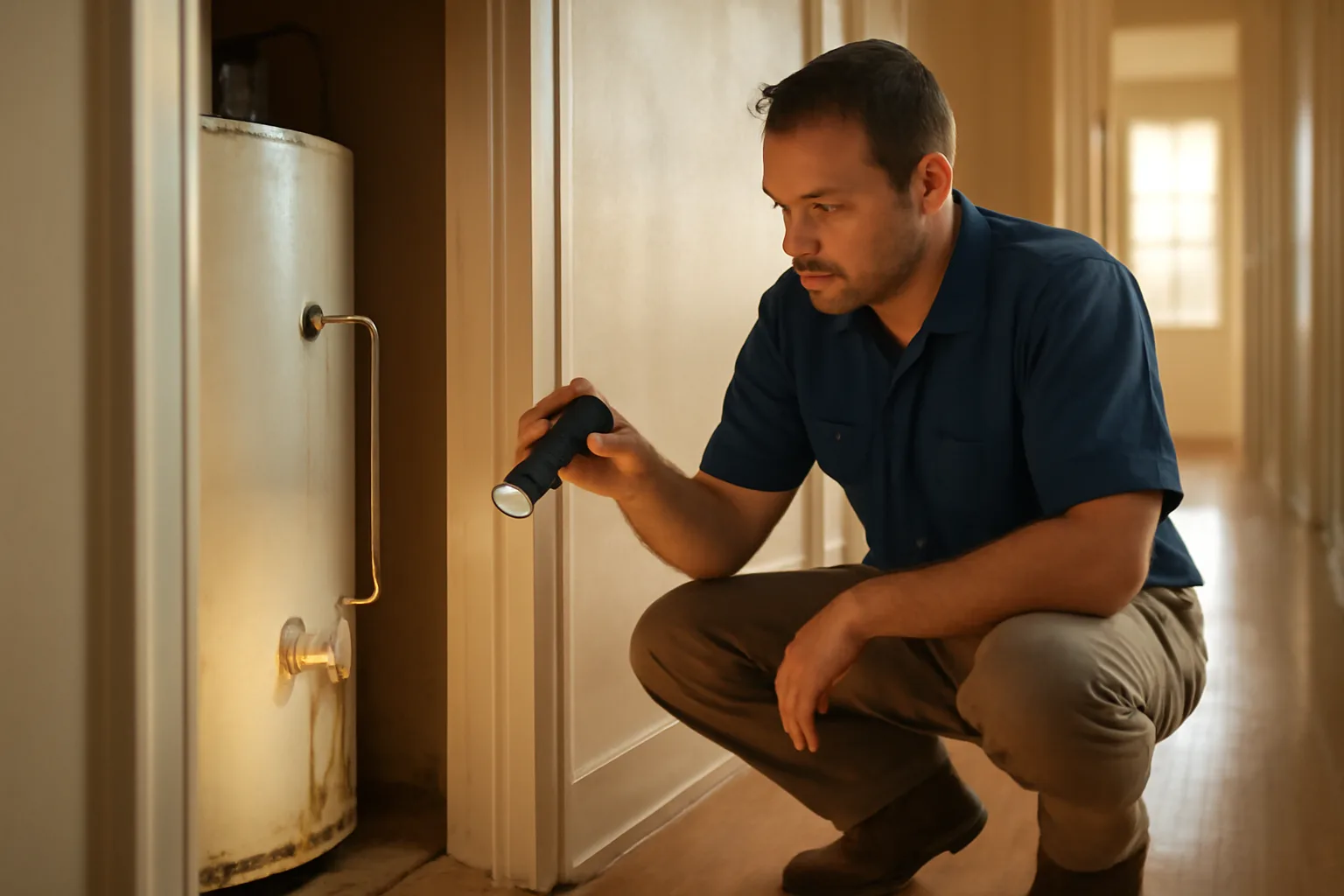
- Water heater: temperature/pressure relief valve, visible leaks, strapping (required in some states, notably California under Health and Safety Code §19211)
- Plumbing: active leaks, water damage, functioning fixtures
- Electrical: exposed wiring, overloaded outlets, GFCI in wet areas
- Windows and doors: functioning locks, no broken glass
- HVAC: filter condition, basic function
- Structural: visible cracks, pest damage, mold
- General condition: hoarding-level clutter, unauthorized occupants, unauthorized pets If you manage a licensed rental and want a structured way to track this against your city's specific checklist before the official inspection, our /rental-packet-builder walks through the documentation most cities ask for, alongside the $79 City Rental License & Inspection Prep Packet built for that purpose.
What can't a landlord do in Ohio during an inspection or entry?
Ohio law doesn't set a specific hours-notice requirement in its landlord-tenant statute the way California does, but Ohio Revised Code Section 5321.04 requires landlords to give "reasonable notice" and to enter "at reasonable times," and it limits the purpose of entry to inspecting the property, making repairs, or showing the unit to prospective tenants or buyers [5]. The statute language: a landlord "may enter the dwelling unit only... after reasonable notice to the tenant" for these specified purposes [5]. What this means practically: an Ohio landlord can't enter whenever they feel like it, can't use entry as a tool to harass a tenant, and can't enter for reasons outside repairs, inspection, or showing the unit, without violating the statute. Ohio courts have also recognized that repeated unreasonable entries can support a claim under the landlord-tenant act separate from any lease violation the tenant may have committed. Ohio also has no statewide rent control and, unlike California, doesn't have a statewide statute mandating a pre-move-out inspection option, though individual cities may layer on their own rental registration or point-of-sale inspection rules. If you're managing in an Ohio city with a rental registration ordinance, check that city's code directly, since Cincinnati, Cleveland, Columbus, and smaller municipalities each run separate programs with separate fee schedules and inspection cycles.
What rights do tenants have if there's no lease?
A tenant without a written lease still has real legal rights, they're just governed by state statute and the terms implied by however rent gets paid (month-to-month is the default assumption in most states). Verbal or "tenancy at will" arrangements still carry basic habitability protections, protection from illegal lockouts, and a right to proper notice before termination or entry. The habitability floor doesn't disappear without a lease. Every state has some version of an implied warranty of habitability, meaning the landlord still has to provide a unit with working plumbing, heat, electrical, and structural safety, lease or no lease. A property manager inspection on a no-lease tenant follows the same entry notice rules as a leased tenant, since those rules attach to the tenancy, not the paper. What changes without a lease is mostly around termination and rent increases: without a fixed term, either party can generally end a month-to-month tenancy with proper notice (commonly 30 days, though some states and cities require more, and just-cause eviction cities may require even longer or a specific reason). Security deposit rules, entry notice rules, and habitability rules typically apply regardless of whether there's a written lease at all.
Why do landlords require renters insurance?
Landlords require renters insurance mainly to shift liability risk off their own policy and to make sure the tenant, not the landlord, is financially responsible if the tenant's belongings are damaged or if the tenant accidentally causes damage (a kitchen fire, an overflowing tub, a burst hose on a washing machine). The landlord's own property insurance covers the building's structure, but it typically doesn't cover a tenant's personal belongings, and it may not fully cover liability if the tenant's negligence caused the loss. The Insurance Information Institute notes that a standard renters insurance policy covers personal property, liability, and additional living expenses if the unit becomes uninhabitable, and that average renters insurance costs roughly $15 to $30 a month depending on coverage amount and location [6]. Requiring it is legal in nearly every state as a lease condition, as long as it's applied consistently to all tenants and disclosed before move-in. For a landlord doing a property manager inspection, renters insurance also matters practically: if an inspection turns up tenant-caused damage (not normal wear and tear), having that policy in place means the tenant's insurer, not the landlord's, often pays for the repair. That's a meaningful reason many landlords now make it a standard lease requirement rather than an optional suggestion.
What is landlording, and what is a landlord?
A landlord is the person or entity that owns real property and rents it out to a tenant in exchange for regular payment, typically under a lease or rental agreement that defines the terms, rent amount, and responsibilities of each side. Landlording is the informal term for the practice of managing that relationship day to day: collecting rent, maintaining the property, handling repairs, screening tenants, and staying compliant with state and local landlord-tenant law. A landlord's core legal obligations, which show up in nearly every state's landlord-tenant code, generally include: keeping the property habitable, making timely repairs, respecting the tenant's right to quiet enjoyment, following the state's rules for entry notice, and handling the security deposit according to statute (timeline for return, allowed deductions, sometimes a requirement to hold it in a separate account). A property manager isn't the same as a landlord legally, even though the terms get used loosely. The property manager is typically an agent, hired by the landlord (owner), to carry out these duties on the owner's behalf. The owner remains the party ultimately liable under most state landlord-tenant statutes, even when a management company signs the lease and handles every interaction with the tenant.
How do you become a landlord, and how do you actually be one day to day?
Becoming a landlord starts with owning (or having authority to rent) residential property, then meeting your city and state's requirements before you can legally rent it out. Depending on where the property sits, that can mean registering the rental with the city, getting a rental license or certificate of occupancy, passing a habitability or safety inspection, and setting up a compliant lease. A practical starting checklist: 1. Confirm zoning allows rental use for the property type (single-family, duplex, etc.) 2. Check whether your city requires a rental license, registration, or business license for landlords, since many cities do and treat renting without one as a code violation with fines 3. Get the property inspection-ready: working smoke/CO detectors, no active leaks, functioning heat, secure locks 4. Set up a lease that complies with your state's required disclosures (lead paint disclosure is federally required for pre-1978 housing under 42 U.S.C. §4852d, for example [7]) 5. Screen tenants consistently and legally under the Fair Housing Act, which bars discrimination based on race, color, religion, sex, national origin, disability, and familial status 6. Set up how you'll handle maintenance requests, rent collection, and record-keeping Being a landlord day to day is mostly about consistency and paperwork: responding to repair requests within your state's required timeframe, tracking the security deposit correctly, doing periodic inspections with proper notice, and renewing whatever license or registration your city requires on schedule. Landlords who skip the licensing step, thinking it's optional or that nobody checks, tend to find out the hard way when a tenant complaint or a routine city sweep turns up an unregistered unit and a fine follows. If your city has one of these mandatory rental licensing programs, our /rental-packet-builder packages the standard prep steps and checklist items most cities inspect for into a single $79 packet, built so a first-time landlord isn't guessing at what the inspector will actually look at.
Frequently asked questions
How much notice does a landlord have to give before an inspection?
It depends on the state. California presumes 24 hours reasonable for general entry and requires 48 hours for the pre-move-out inspection specifically (Civil Code §1954, §1950.5). Florida presumes 12 hours reasonable for repair entry. Many states don't set a specific number of hours and just require "reasonable notice," so check your state's landlord-tenant statute directly.
Who is responsible for the rental property walk-through inspection in California?
The landlord or their property manager is responsible for scheduling it. California Civil Code §1950.5 gives tenants the right to request an initial move-out inspection at least two weeks before move-out, with the landlord giving 48 hours' written notice, so the tenant can fix issues before final deductions are assessed.
What can a landlord look at during an inspection?
Smoke and CO detectors, plumbing leaks, electrical safety, HVAC function, pest or mold issues, window and door locks, and general habitability conditions tied to the lease and local code. A landlord generally can't search personal belongings or use the inspection as a pretext for harassment or retaliation.
What can't a landlord do in Ohio during an inspection?
Ohio Revised Code §5321.04 requires "reasonable notice" and entry "at reasonable times," limited to inspection, repairs, or showing the unit to prospective tenants or buyers. A landlord can't enter for unrelated reasons or repeatedly enter without cause, since that can support a claim under the state's landlord-tenant act.
What rights do tenants have without a lease?
Tenants without a written lease still get habitability protections, protection from illegal lockout, and the state's standard entry notice rules, since these attach to the tenancy itself rather than to a signed document. Rent increases and termination typically follow month-to-month rules, commonly 30 days' notice, though this varies by state and city.
Why do landlords require renters insurance?
Mainly to move liability and personal-property risk off the landlord's own policy. A landlord's building insurance usually doesn't cover a tenant's belongings or fully cover damage the tenant's negligence caused. Renters insurance averages roughly $15 to $30 a month according to the Insurance Information Institute, making it a low-cost requirement for tenants.
What is landlording?
Landlording is the day-to-day practice of owning and renting out residential property: collecting rent, handling repairs, screening tenants, maintaining habitability, and complying with state and local landlord-tenant law. It's an informal umbrella term, not a legal designation.
What is a landlord, legally?
A landlord is the owner (or authorized agent) of a rental property who leases it to a tenant in exchange for rent, under obligations set by state landlord-tenant statutes, covering habitability, repairs, entry notice, and security deposit handling. A property manager who signs the lease on the owner's behalf is still acting as the owner's agent, not as the legal landlord in most states' eyes.
How do you become a landlord?
Own or control rental-eligible property, confirm zoning allows it, check whether your city requires a rental license or registration, get the unit inspection-ready (detectors, no leaks, working heat and locks), draft a legally compliant lease with required disclosures, and screen tenants consistently under the Fair Housing Act.
What's the difference between a city rental inspection and a property manager's own inspection?
A city rental inspection is done by a code enforcement or housing official to confirm the unit meets that city's licensing and habitability rules, tied to a rental license or registration. A property manager's inspection is an internal check, often done to prep for that official inspection or as routine maintenance oversight.
Can a property manager inspection be used against a tenant in an eviction?
Documentation from a legitimate inspection (unauthorized occupants, serious lease violations, safety hazards caused by the tenant) can be used as evidence. But an inspection conducted as a pretext for retaliation, or one that violates the state's required notice period, can undermine the landlord's case or expose the landlord to a retaliation claim instead.
Do all cities require a rental license or inspection?
No. Requirements vary enormously by city and even by neighborhood in some cases. Many cities have no rental licensing program at all, others require simple registration, and others run full inspection-based licensing with renewal cycles and fees. Always confirm directly with your specific city's rental licensing or code enforcement office.
Sources
- California Legislature, Civil Code Section 1950.5: California landlords must offer an initial move-out inspection with 48 hours' written notice
- California Legislature, Civil Code Section 1954: 24 hours is presumed reasonable notice for landlord entry in California
- Online Sunshine, Florida Statutes Section 83.53: Florida requires reasonable notice for entry, with 12 hours presumed reasonable for repairs
- Washington State Legislature, RCW 59.18.150: Washington requires two days' notice before landlord entry
- Ohio Legislature, Revised Code Section 5321.04: Ohio requires reasonable notice and reasonable-time entry limited to specific purposes
- U.S. Code, 42 U.S.C. 4852d, Lead Disclosure Requirement: Federal lead paint disclosure requirement for pre-1978 housing
- HUD, Fair Housing Act overview: Fair Housing Act protected classes for tenant screening