Last updated 2026-07-26
TL;DR
A property manager inspection checklist covers structural systems, smoke and CO detectors, plumbing, electrical, exits, and pest signs, room by room. Most states require 24 to 48 hours notice before entry. City rental licensing inspections add code-specific items (egress windows, handrails, water heater strapping) that vary by jurisdiction, so always confirm local rules before the walkthrough.
What should a property manager inspection checklist include?
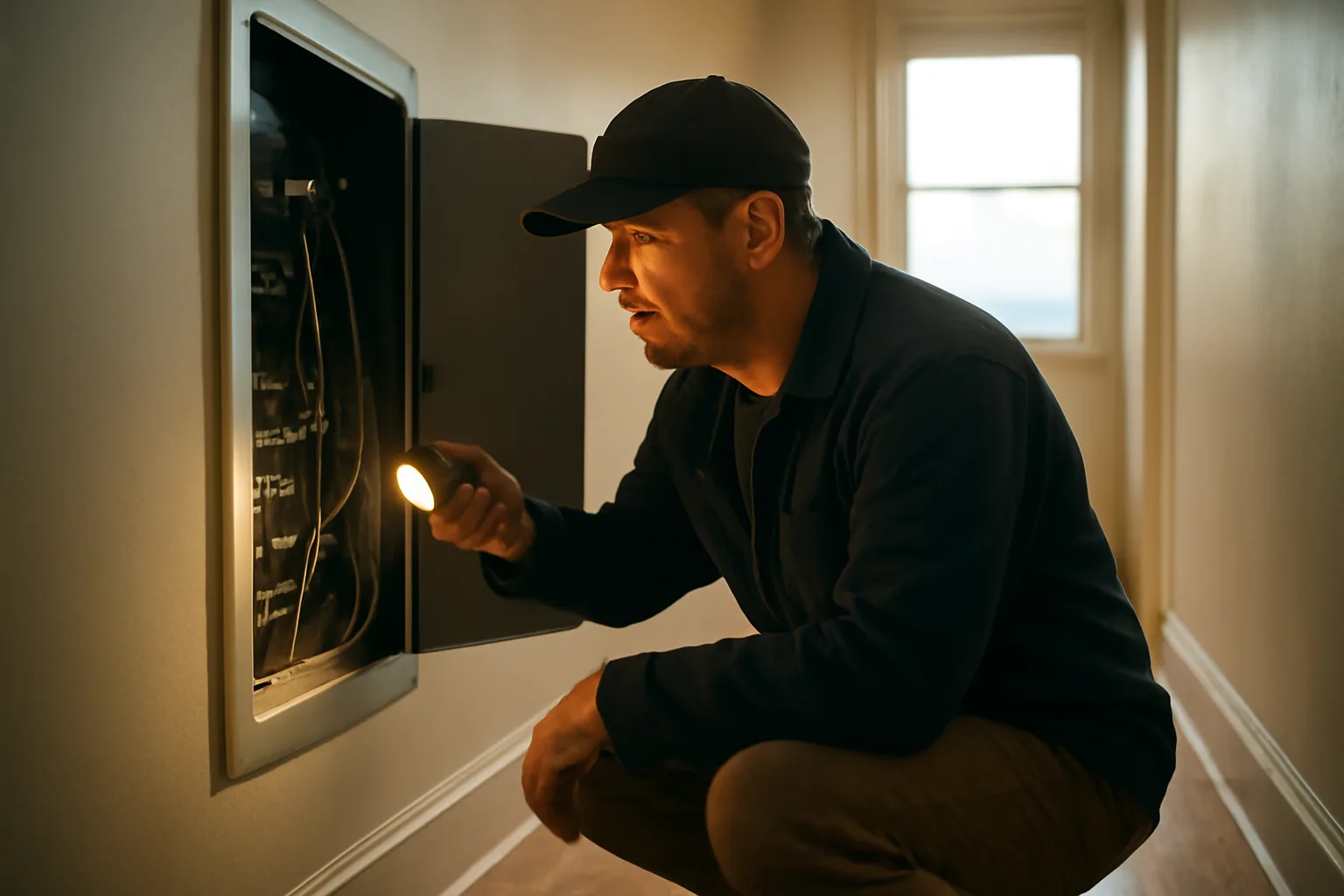
A solid inspection checklist moves through the unit systematically: exterior first, then entry points, then room by room, then mechanical systems last. Skipping around means missed items and a second trip. At minimum, cover these categories: smoke and carbon monoxide detectors (test each one, check battery date), electrical outlets and panel access, plumbing fixtures and visible leaks, HVAC filter and unit condition, window and door locks, flooring and wall condition, and pest or moisture signs (water stains, droppings, soft spots near baseboards). Many cities require specific items beyond this general list. Some jurisdictions check for working handrails on any staircase with more than a few steps, egress window sizing in bedrooms, water heater seismic strapping, or GFCI outlets in kitchens and bathrooms. These requirements come from local building or housing code, not a universal standard, so a checklist built for one city won't necessarily satisfy another. Confirm the exact criteria with your city rental licensing office before the appointment. A good habit: photograph every room before and after tenant turnover, and keep those photos with the inspection notes. If a dispute over damage or code compliance ever comes up, dated photos are worth more than your memory. For a structured starting point built around actual city licensing categories, see the rental packet builder, which organizes documentation by the kind of proof most inspectors ask for.
What can a landlord look at during an inspection?
A landlord conducting a routine inspection can generally check smoke detectors, look for water damage or mold, inspect major systems (HVAC, plumbing, electrical), verify no unauthorized occupants or pets, and confirm the unit is being maintained in a habitable condition. The inspection is supposed to be for a legitimate purpose tied to the lease or to code compliance, not a general search of the tenant's belongings. Landlords typically cannot open locked personal containers, search through drawers or closets item by item, or use the visit to question the tenant about unrelated matters. Courts in several states have found that inspections exceeding the stated purpose, or occurring with unreasonable frequency, can amount to a violation of the tenant's right to quiet enjoyment. California Civil Code Section 1954 lists the specific reasons a landlord may enter an occupied unit: to make necessary repairs, show the unit to prospective tenants or buyers, respond to an emergency, or when the tenant has abandoned the property. The statute also caps normal entry to 'during normal business hours' unless the tenant agrees otherwise [1]. If a city inspector is present for a licensing inspection, their authority is defined by that city's housing code, and it's usually narrower still: they're checking specific safety items, not evaluating cleanliness or personal property. Ask the inspector directly what triggers a failed inspection versus what's just a recommendation.
Who is responsible for a rental property walk-through inspection in California?
In California, the landlord (or their property manager) is responsible for scheduling and conducting move-in and move-out walk-through inspections, and state law gives tenants specific rights around that process. Under California Civil Code Section 1950.5(f), a tenant vacating a unit has the right to request an initial inspection before move-out, giving them the chance to fix any issues before the final assessment affects their security deposit [2]. The landlord must give the tenant at least 48 hours written notice before that initial inspection, and must provide an itemized statement of any deficiencies found, along with the opportunity to remedy them before move-out. If the tenant doesn't request the initial inspection, the landlord still must return the deposit itemization within 21 calendar days after the tenant moves out, per the same statute. City-level rental licensing programs in California (Los Angeles's Rent Escrow Account Program, Oakland's Rent Adjustment Program, and others) sometimes add separate inspection requirements tied to habitability standards, independent of the security deposit walk-through. These are handled by city housing departments, not by the landlord alone, and often require the landlord to register the unit first. Confirm with your city rental licensing office whether your jurisdiction has its own inspection mandate layered on top of state deposit law.
How much notice does a landlord have to give before an inspection?
| California | 24 hours (presumed reasonable) | Civil Code § 1954 [1] | |
|---|---|---|---|
| Washington | 2 days | RCW 59.18.150 [3] | |
| Oregon | 24 hours | ORS 90.322 [4] | |
| Texas | No statewide minimum specified | Property Code Ch. 92 [5] | Always check your specific state's landlord-tenant statute, because these numbers shift with legislative sessions, and city rental licensing inspections may have separate notice rules from the state deposit or entry statute. |
Most states require 24 to 48 hours advance notice before a landlord or property manager enters an occupied rental unit for a non-emergency inspection. The exact number and the required format (written vs. verbal) varies significantly by state. California requires 'reasonable notice,' which the statute defines as 24 hours presumed reasonable, delivered in writing (Civil Code Section 1954) [1]. Florida requires notice but doesn't specify hours in the general entry statute, though many leases and local practice default to 12 to 24 hours. Some states, like Texas, don't have a statewide statutory notice requirement for entry at all, leaving it to the lease terms, though good practice is still to give at least 24 hours. Emergency situations (fire, flooding, gas leak, or immediate safety hazard) are the standard exception in nearly every state's statute, allowing entry without advance notice. Here's a rough comparison of common notice periods: | State | Typical Statutory Notice | Source |
What a landlord cannot do in Ohio
Ohio law, under Ohio Revised Code Section 5321.04, requires landlords to give 'reasonable notice' of intent to enter, generally interpreted as 24 hours, and restricts entry to reasonable times for reasonable purposes: inspection, repairs, or showing the unit [6]. A landlord in Ohio cannot enter without notice except in a genuine emergency, cannot enter repeatedly or at odd hours as a form of harassment, and cannot shut off utilities, change locks, or remove a tenant's belongings to force them out. That last category, sometimes called 'self-help eviction,' is illegal in essentially every state, more than Ohio. Ohio Revised Code Section 5321.15 specifically prohibits landlords from using self-help remedies such as lockouts or utility shutoffs to force a tenant out. Only a court-ordered eviction through the proper legal process is valid [7]. Ohio landlords also cannot retaliate against a tenant for reporting a code violation or exercising a legal right (like requesting repairs), under Section 5321.02. If a landlord raises rent, reduces services, or files an eviction shortly after a tenant complaint, that timing itself can become evidence of retaliation in court. For property managers running inspections in Ohio, the practical takeaway is: give real notice, keep visits during daylight hours, document your stated purpose, and never combine an inspection with any kind of pressure tactic around rent or lease renewal.
How to become a landlord (and what actually changes once you are one)
Becoming a landlord legally usually requires three things: owning or controlling a rental property, complying with your state's landlord-tenant law, and, in many cities, registering or licensing the rental unit with a local housing office before you can legally rent it out. There's no license or exam required in most of the U.S. simply to own rental property, but plenty of cities require a rental registration or license once you start renting units out, and skipping that step is where the fines usually come from. Start with your state's landlord-tenant statute; every state has one, and it covers security deposits, notice periods, habitability standards, and eviction procedure. Then check your specific city or county for a rental licensing ordinance. This is the step new landlords miss most often, because it's a local rule, not a state one, and city websites don't always surface it clearly. Get a lease that matches your state's requirements (not a generic template pulled from another state), set up a system for collecting rent and documenting maintenance requests, and decide early whether you're self-managing or hiring a property manager. Self-managing a single unit is very doable for a first-time landlord; managing five or more units without help gets time-consuming fast. Most new landlords underestimate the paperwork side: security deposit handling rules, required disclosures (lead paint for pre-1978 properties, under federal law, 24 CFR Part 35 ), and now, in a growing number of cities, mandatory rental registration or licensing before the first tenant even moves in.
What is landlording, and what is a landlord?
A landlord is a person or entity that owns residential or commercial property and rents it to another party (the tenant) in exchange for regular payment, under the terms of a lease or rental agreement. 'Landlording' is the informal term for the ongoing work of managing that rental relationship: collecting rent, maintaining the property, handling repairs, and staying compliant with landlord-tenant law. The legal definition varies slightly by state, but generally, a landlord is anyone who has a rental agreement with a tenant, regardless of whether they own the property outright, hold it in an LLC, or manage it through an estate or trust. Property managers, by contrast, are typically hired agents acting on the landlord's behalf, and many states require property managers handling multiple properties for other owners to hold a real estate broker's license. Day to day, landlording means: responding to maintenance requests within a reasonable time (often defined by state statute for urgent repairs, such as no heat or water), keeping the unit habitable under your state's warranty of habitability, handling security deposits correctly, and following notice and entry rules for inspections. It's less about ownership and more about the ongoing legal relationship and obligations that come with renting to someone.
How to be a landlord: the practical day-to-day version
Being a landlord in practice comes down to four recurring jobs: collecting rent on time, keeping the property habitable, responding to tenant communication promptly, and staying current on the rules that apply to your specific city and state. None of these are complicated individually. Doing all four consistently, over years, is where most of the actual skill lives. Set clear rent collection systems from day one. Late fees, grace periods, and accepted payment methods should all be spelled out in the lease and applied consistently, because inconsistency is what gets landlords in trouble in court. Respond to maintenance requests quickly, especially anything touching heat, water, or safety. Many states set specific timeframes for urgent repairs (sometimes as short as 24 to 72 hours for no-heat situations in cold climates), and failing to act within that window can trigger tenant remedies like repair-and-deduct or rent withholding, depending on the state. Keep records of everything: entry notices, inspection reports, repair requests and responses, and deposit itemizations. If a dispute lands in small claims court, whoever has the paper trail generally wins. Finally, track your city's specific requirements separately from the state ones. A growing number of cities require annual or biennial rental inspections tied to licensing renewal, and missing that renewal deadline is one of the most common (and avoidable) ways landlords rack up fines. Related reading: tenant rights and tenants rights cover the flip side of these obligations from the tenant's perspective.
What rights do tenants have without a lease?
Tenants without a written lease still have legal protections in every state, they just fall under whatever the state's default tenancy rules say, usually treated as a month-to-month tenancy. A verbal agreement to pay rent in exchange for occupying a unit generally creates a legal tenancy, even without paper. Without a written lease, tenants are typically still entitled to: the warranty of habitability (a livable, safe unit), proper notice before eviction (usually 30 days for month-to-month tenancies, though this varies by state and by how long the tenant has lived there), protection from illegal lockouts or utility shutoffs, and, in many states, the same entry notice requirements that apply to leased tenants. The main practical difference without a lease is around terms that aren't covered by default state law: rent amount, increase notice, and specific rules about guests or pets fall back to whatever was verbally agreed or, absent that, to local custom and state statute. This ambiguity is exactly why verbal-only tenancies create so many disputes; neither side has a document to point to when memories differ. For landlords, the lesson is straightforward: even a simple written lease, even for a month-to-month arrangement, prevents most of these disputes before they start. It costs nothing but ten minutes to draft and eliminates the single biggest source of landlord-tenant conflict.
Why do landlords require renters insurance?
Landlords require renters insurance mainly to shift liability for the tenant's personal property and personal liability claims away from the landlord's own insurance policy. A landlord's policy typically covers the building structure and the landlord's own liability, but not the tenant's furniture, electronics, or clothing, and not claims arising from the tenant's own negligence (like a kitchen fire the tenant caused). Renters insurance is generally inexpensive, commonly in the range of $15 to $30 per month depending on coverage amount and location, according to industry rate surveys from major insurers, though actual premiums vary by state, coverage limits, and provider. Requiring it as a lease condition is legal in most states and is increasingly standard practice, especially for landlords with multiple units, because it reduces the odds of a costly dispute if a tenant's negligence causes property damage or an injury to a guest. From the landlord's side, the real benefit isn't just protecting the tenant, it's protecting the landlord's own liability exposure. If a tenant's guest is injured in the unit due to something the tenant did (an unattended candle, an overloaded space heater), the tenant's renters insurance liability coverage can absorb that claim instead of it landing on the landlord's policy or out of the landlord's pocket directly. Most states allow landlords to require proof of renters insurance as a lease condition, though a few jurisdictions restrict how landlords can enforce it (for example, restrictions on requiring the landlord be named as an additional insured beyond reasonable limits). Check your state's specific rules before writing insurance requirements into a lease.
How city rental licensing inspections differ from routine property manager inspections
A routine property manager inspection and a city rental licensing inspection are not the same event, even though landlords often lump them together mentally. A routine inspection is something you, the landlord or manager, schedule on your own timeline to check on the unit's condition and catch small issues before they become expensive ones. A city licensing inspection is a mandatory event scheduled by (or with) a city inspector, tied to a specific ordinance, with a pass/fail outcome that affects your legal right to rent the unit out at all. Routine inspections are flexible in scope, you decide what to check and how often, subject to your state's entry notice rules. City licensing inspections follow a fixed checklist defined by that city's housing code, covering items like smoke detector placement, egress window dimensions, handrail height, electrical panel labeling, and pest evidence. Failing specific items usually triggers a re-inspection deadline and, if unresolved, fines that can run from under $100 to several hundred dollars per violation depending on the city and the severity of the issue. The practical move is to run your own pre-inspection using a checklist built around your specific city's actual code requirements, before the official city inspector shows up. That catches fixable problems (a missing CO detector, an unlabeled panel, a loose handrail) while they're still cheap and easy to fix, rather than after a failed inspection report starts a fine clock. That's the specific gap our $79 rental packet builder is built to close: a one-time packet organized around the categories most city rental inspections actually check, so you walk in already knowing where the soft spots are.
Frequently asked questions
How to become a landlord if I've never rented out property before?
Buy or already own a property, review your state's landlord-tenant statute, check whether your city requires rental registration or licensing (many now do), get a lease that matches state law, and set up systems for rent collection and maintenance requests before you list the unit. There's no license required in most states just to own rental property, but city-level licensing is increasingly common.
Who is responsible for a rental property walk-through inspection in California?
The landlord or property manager is responsible for scheduling it. California Civil Code Section 1950.5(f) gives tenants the right to request an initial move-out inspection with at least 48 hours notice, and requires an itemized list of deficiencies so the tenant can fix them before the final deposit deduction.
What is landlording?
Landlording is the informal term for the ongoing work of owning and managing a rental property: collecting rent, handling repairs, maintaining habitability, following notice and entry rules, and staying compliant with state and local landlord-tenant law. It's the verb form of being a landlord, describing the day-to-day responsibilities rather than the legal title.
What is a landlord, legally speaking?
A landlord is any person or entity that rents residential or commercial property to a tenant under a lease or rental agreement, in exchange for payment. This includes individual owners, LLCs, trusts, and estates, regardless of whether they manage the property directly or hire a property manager to do it.
What rights do tenants have without a lease?
Tenants without a written lease are still protected under state landlord-tenant law, typically as month-to-month tenants. This generally includes the right to a habitable unit, proper notice before eviction (often 30 days), protection from illegal lockouts, and the same entry notice rules that apply to leased tenants, though specifics vary by state.
How to be a landlord day to day, once you have tenants in place?
Collect rent on a consistent schedule, respond to maintenance requests promptly (especially heat, water, or safety issues), follow your state's notice requirements before entering the unit, keep records of all communication and repairs, and track your city's rental licensing renewal deadlines separately from state-level rules.
Why do landlords require renters insurance?
Renters insurance covers the tenant's personal property and personal liability, which the landlord's own policy typically does not. Requiring it protects the landlord from disputes over tenant-caused damage or guest injuries, and it's inexpensive, commonly $15 to $30 a month depending on coverage and location.
How much notice does a landlord have to give before entering for an inspection?
Most states require 24 to 48 hours notice for non-emergency entry. California treats 24 hours as presumptively reasonable under Civil Code Section 1954. Washington requires 2 days under RCW 59.18.150. Some states, like Texas, don't set a statutory minimum, so check your specific state statute and your lease terms.
What can a landlord look at during an inspection?
A landlord can check smoke and CO detectors, look for water damage or mold, inspect major systems like HVAC and plumbing, and confirm no unauthorized occupants or pets. Landlords generally cannot search personal belongings, open locked containers, or use the visit for unrelated questioning beyond the inspection's stated purpose.
What a landlord cannot do in Ohio?
Ohio landlords cannot enter without reasonable notice (generally 24 hours) except in an emergency, cannot use self-help evictions like changing locks or shutting off utilities (illegal under Ohio Revised Code Section 5321.15), and cannot retaliate against a tenant for reporting a code violation, under Section 5321.02.
Do city rental inspections check the same things as a routine property manager inspection?
Not exactly. Routine inspections are flexible and set by the landlord. City licensing inspections follow a fixed checklist from local housing code, often including egress window sizes, handrail specs, and smoke detector placement. Confirm your specific city's checklist with its rental licensing office, since requirements vary widely between cities.
What happens if a rental unit fails a city licensing inspection?
Most cities give the landlord a re-inspection deadline to fix the cited items, often 30 to 60 days depending on the jurisdiction. Unresolved violations after that window typically trigger fines, and continued non-compliance can lead to license suspension, meaning the unit legally cannot be rented until it passes. Confirm timelines with your specific city.
Sources
- California Civil Code Section 1954: Landlord entry to occupied rental units in California is limited to specific purposes and requires reasonable notice
- California Civil Code Section 1950.5: Tenants can request an initial move-out inspection with 48 hours notice and an itemized deficiency list
- Revised Code of Washington 59.18.150: Washington requires 2 days notice before landlord entry into a rental unit
- Oregon Revised Statutes 90.322: Oregon requires 24 hours notice for landlord entry under specified conditions
- Texas Property Code Chapter 92: Texas landlord-tenant law does not set a statewide statutory minimum notice period for routine entry
- Ohio Revised Code Section 5321.04: Ohio landlords must give reasonable notice and enter at reasonable times for reasonable purposes
- Ohio Revised Code Section 5321.15: Ohio law prohibits landlord self-help remedies such as lockouts or utility shutoffs to force a tenant out