Last updated 2026-07-26
TL;DR
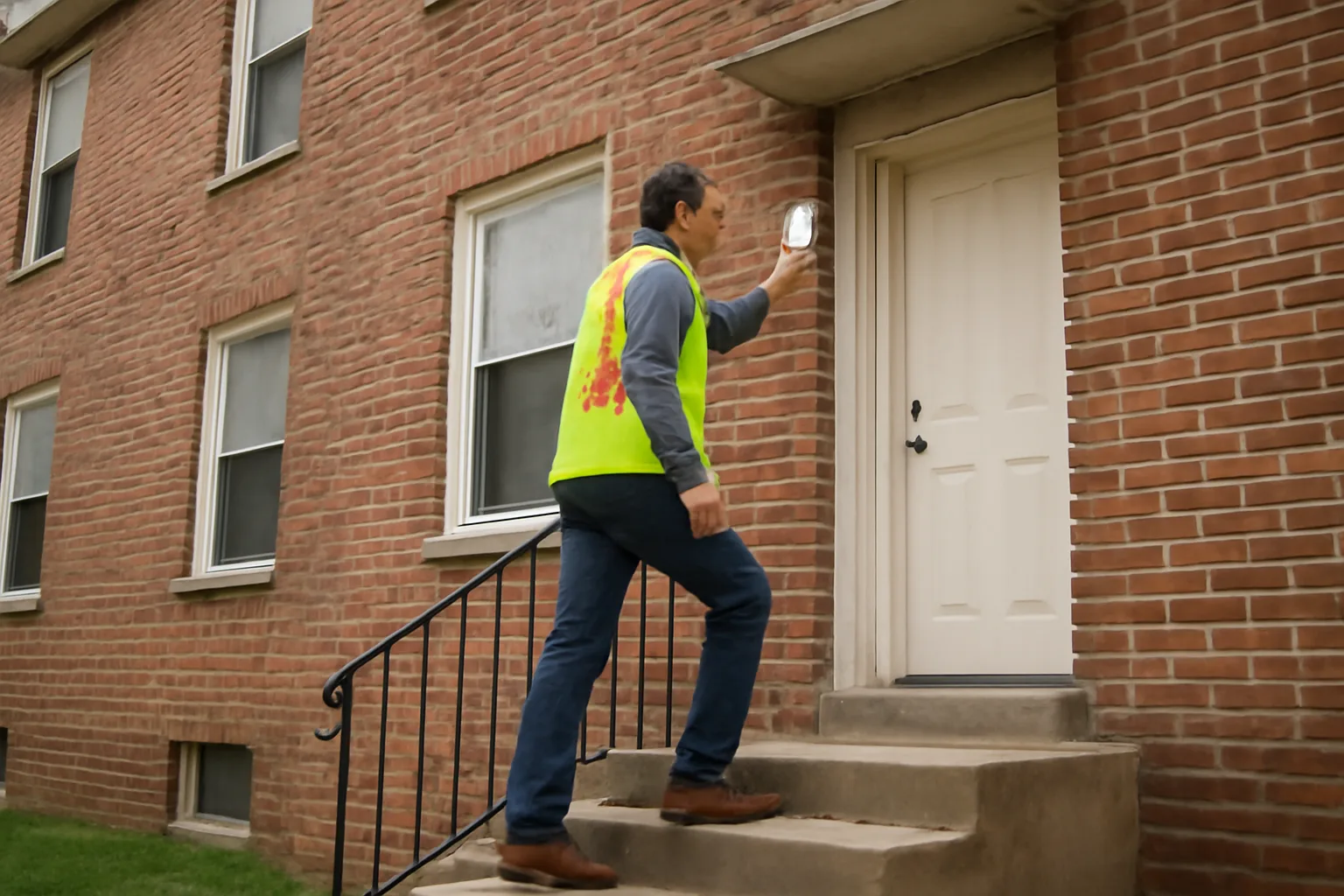
Who inspects your rental depends on your city: usually a municipal code enforcement or housing inspector, sometimes a fire marshal or health department, occasionally a licensed third-party contractor the city approves. In California, walk-through move-in/move-out inspections are handled by the landlord and tenant together under Civil Code Section 1950.5, not a city inspector.
Who actually inspects rental properties in most cities?
In cities with rental licensing or registration programs, the inspection is almost always done by a government employee, usually someone with a title like code enforcement officer, housing inspector, or property maintenance inspector. They work for the city's building department, code enforcement division, or sometimes a combined housing and community development office. A smaller number of cities contract this out. Some municipalities allow or require landlords to hire a licensed private inspector who follows the city's checklist and submits results on the city's form. Detroit's rental certification program, for example, requires a third-party inspector certified by the city rather than a city employee showing up at the door [1]. Other cities, like Minneapolis, use city rental licensing inspectors directly and schedule inspections on a rotating cycle tied to the property's license category [2]. Fire departments get involved too, especially for smoke detector placement, fire extinguisher checks, and egress window compliance in multi-unit buildings. Health departments sometimes inspect for pest infestation, mold, or sanitation issues, particularly if a tenant complaint triggered the visit rather than a routine licensing cycle. The short version: there's no single national inspector. It's whoever your specific ordinance names, and that's almost always spelled out in the municipal code section that created the rental licensing program. Always confirm with your city rental licensing office which department handles your inspection, because the name changes constantly from city to city.
How to become a landlord
Becoming a landlord legally isn't just buying a property and putting up a listing. Most states require you to follow specific steps before you can lawfully rent out a unit, and cities with rental licensing programs add more. At minimum, you generally need to: hold clear title or a legal right to lease the property, register the rental with your city or county if required, obtain a rental license or certificate of occupancy where mandated, carry the right insurance (a landlord policy, not a standard homeowner's policy), and understand your state's landlord-tenant statute for things like security deposit handling and notice periods. Many states also require landlords to disclose specific things in writing before a tenant signs, like lead paint hazards in pre-1978 housing under the federal Residential Lead-Based Paint Hazard Reduction Act [3]. Some cities require a business license too, since renting out property is legally a business activity even for a single-unit landlord. If you're renting your first unit in a city that requires registration or licensing, don't wait for a notice to show up. Check your city's website for terms like 'rental registration,' 'rental license,' or 'certificate of occupancy for tenancy' before you list the unit. Fines for operating unregistered rentals can run from under $100 to well over $1,000 per violation depending on the city, and some municipalities charge per day the violation continues.
What is landlording, and what is a landlord?
A landlord is the legal owner (or an owner's authorized agent) who leases real property to someone else, the tenant, in exchange for rent. That's the legal definition baked into basically every state's landlord-tenant act. 'Landlording' is the informal term for the ongoing work of managing that relationship: collecting rent, handling repairs, following notice requirements, keeping the unit habitable, and staying compliant with local licensing rules. It's not a licensed profession in most states (property managers who manage other people's units for a fee often do need a real estate license, but owners renting their own property usually don't). The practical job includes things a lot of new landlords underestimate: responding to maintenance requests fast enough to avoid a habitability claim, keeping records of every notice and repair, budgeting for vacancy and turnover costs, and tracking whatever local rental registration or license renewal cycle applies. Most state landlord-tenant statutes (see, for example, California Civil Code Section 1941.1 on habitability [4]) put a legal duty on the landlord to maintain the property in a livable condition, more than a moral one.
Who is responsible for the rental property walk-through inspection in California?
In California, the move-in and move-out walk-through inspection is a landlord-tenant matter, not a city inspection. California Civil Code Section 1950.5(f) gives tenants the right to request an initial inspection before move-out, done jointly with the landlord, specifically so the tenant can fix any deductible issues before losing part of the security deposit [5]. The landlord must give the tenant at least 48 hours' written notice of the date and time of that initial inspection unless the tenant waives the notice, and the landlord must provide an itemized statement of proposed repairs or deductions at that time [5]. This is separate from any city rental inspection program. Some California cities, like Los Angeles under its Rent Escrow Account Program (REAP) or Systematic Code Enforcement Program (SCEP), also run separate habitability inspections done by city housing inspectors, but that's a code compliance check, not the same thing as the move-in/move-out walk-through [6]. Don't confuse the two. The walk-through inspection protects the tenant's deposit; the city habitability inspection protects the building's licensing status.
What can a landlord look at during an inspection?
During a routine inspection, whether it's a city licensing inspection or a landlord's own periodic check, what gets looked at generally falls into a few buckets: life safety, structural condition, sanitation, and code compliance. Common inspection items include: working smoke and carbon monoxide detectors, secure handrails and stairs, functioning locks on doors and windows, no exposed wiring, working heat source, no active leaks or mold, pest-free conditions, proper egress from bedrooms (a legal escape window or door), and functioning plumbing fixtures. Some cities add checks for peeling lead paint in pre-1978 units, since HUD and EPA lead safety rules apply to pre-1978 rental housing regardless of city licensing status [3]. A city code inspector is generally limited to checking for code violations, not personal belongings or cleanliness beyond what affects habitability or safety. A landlord doing their own periodic inspection (separate from the city's cycle) has more latitude but still has to respect the tenant's right to quiet enjoyment and give proper notice, which is where most disputes come from. One thing that trips up new landlords: an inspector showing up for a rental license renewal is not there to evaluate your interior design or count your tenant's furniture. They're checking a specific list tied to a municipal code section. Ask for that checklist in advance if your city has one posted; a lot of them publish a PDF inspection checklist right on the rental licensing page.
How much notice does a landlord have to give before an inspection?
Notice requirements vary by state, but 24 hours' advance written notice is the most common standard in the U.S. for landlord entry to inspect, repair, or show a unit. California requires 'reasonable notice,' which state law presumes to be 24 hours unless circumstances suggest otherwise, under Civil Code Section 1954 [7]. Some states set a different number. Florida generally requires at least 12 hours' notice for entry to make repairs under Florida Statutes Section 83.53 [8]. Other states don't specify an exact number of hours and just use a 'reasonable notice' standard, which courts have generally interpreted as 24 to 48 hours depending on the circumstances. City code inspections for licensing purposes work a little differently. Cities often schedule these by mail or email weeks in advance and require the landlord to coordinate access with the tenant, since a code inspector isn't the landlord and doesn't automatically have the same entry rights. If a tenant refuses entry for a scheduled city inspection, that can delay the license renewal, so it helps to give tenants their own separate heads-up, in writing, well before the scheduled date. Emergencies are the one carve-out almost everywhere: a burst pipe, gas leak, or fire hazard generally lets a landlord enter without advance notice, though the standard is usually described as when there's imminent danger to the property or the tenant's safety.
Why do landlords require renters insurance?
Landlords typically require renters insurance for one core reason: it shifts liability for the tenant's personal property and personal liability claims away from the landlord's own policy. A standard landlord (dwelling) insurance policy generally covers the building itself and the landlord's liability, but it doesn't cover a tenant's furniture, electronics, or clothing if there's a fire, burst pipe, or theft. Without renters insurance, a tenant who loses everything in a covered event has no way to recoup losses except suing the landlord, which is exactly the scenario landlords want to avoid. Renters insurance also typically includes personal liability coverage, which matters if the tenant's dog bites a guest or the tenant accidentally causes a kitchen fire that damages a neighboring unit. That liability coverage can reduce claims against the landlord's own policy. Cost-wise, renters insurance is cheap relative to what it covers. National average premiums for renters insurance run in the range of roughly $15 to $30 a month depending on coverage amount and location, according to insurance industry rate data compiled by the National Association of Insurance Commissioners in its residential insurance reports [9]. Requiring it as a lease condition is legal in every state as long as it's applied consistently to all tenants and disclosed in the lease.
What a landlord cannot do in Ohio
Ohio's landlord-tenant law, chapter 5321 of the Ohio Revised Code, lays out specific things landlords are barred from doing . A landlord in Ohio cannot shut off utilities, change the locks, or remove a tenant's belongings to force them out, a practice generally called self-help eviction. Ohio Revised Code Section 5321.15 specifically prohibits a landlord from using 'any means other than a legal proceeding' to recover possession of the unit . Ohio landlords also can't retaliate against a tenant for reporting a code violation, joining a tenant union, or otherwise exercising a legal right, under Section 5321.02 . Retaliation is defined broadly enough to include raising rent, reducing services, or threatening eviction shortly after a tenant complaint. Beyond Ohio specifically, most states share a similar core list of things landlords can't do: they generally can't enter without proper notice except in an emergency, can't discriminate based on protected classes under the federal Fair Housing Act (race, color, religion, sex, national origin, disability, and familial status) , and can't keep a security deposit without an itemized reason where state law requires one. If you're renting in Ohio, Section 5321.04 also spells out landlord obligations, including keeping common areas safe and clean and maintaining all electrical, plumbing, and heating systems in good working order . That's the flip side of the 'what a landlord cannot do' question, since a lot of prohibited actions are really about a landlord failing an affirmative duty rather than doing something actively wrong.
What rights do tenants have without a lease?
A tenant without a signed lease, sometimes called a tenant at will or a month-to-month tenant by operation of law, still has real legal rights. Most state landlord-tenant statutes apply regardless of whether there's a written lease, because the tenancy itself is created by paying and accepting rent, not by a signed document. Without a written lease, a tenant generally still has the right to: a habitable unit under the state's implied warranty of habitability, proper notice before eviction (usually the same as a month-to-month tenancy, often 30 days), protection from retaliation and discrimination, and the return of any security deposit paid, with an itemized accounting where state law requires one. What a tenant without a lease usually doesn't have is a fixed term. A landlord can generally end a month-to-month tenancy with proper notice and without stating a reason (subject to any local just-cause eviction ordinance, which some cities like Los Angeles, Oakland, and Portland have on the books). Without a lease, either side can also typically change terms, like the rent amount, with proper advance notice, since there's no fixed contract locking in those terms. This is exactly why the landlord landlords relationship benefits from a written lease even in states that don't require one. Verbal agreements make notice periods and rent terms much harder to prove if there's ever a dispute.
How to be a landlord without getting blindsided by licensing rules
The single most common way new landlords get in trouble isn't a bad tenant, it's not knowing their city required a rental license or registration in the first place. Cities including Los Angeles, Minneapolis, Detroit, and hundreds of smaller municipalities require some form of rental registration, licensing, or periodic inspection before you can legally rent out a unit [2] [6]. Before you list a unit, check three things with your city: whether a rental license or registration is required, what the inspection cycle looks like (annual, biennial, or complaint-triggered), and what the license fee and renewal timeline are. Confirm all of this directly with your city rental licensing office, since fee amounts and renewal cycles change often and vary by unit count and building age. If you already got a notice, a fine, or a failed inspection report, don't panic and don't ignore it either. Most cities give a cure period, often 30 days, to fix cited violations before escalating to a higher fine tier or a hearing. Read the notice carefully for the specific code section cited; that tells you exactly what the inspector flagged and what standard you need to meet to pass reinspection. This is the exact gap our $79 City Rental License & Inspection Prep Packet is built for: a structured way to walk through what your city's inspection checklist likely covers before the inspector shows up, so you're not guessing at code sections on a Sunday night before a Monday deadline.
What happens if you fail a rental inspection?
Failing a rental inspection doesn't usually mean losing your license immediately. Most cities issue a notice of violation with a specific list of cited items and a deadline, commonly 30 days, to correct them before a reinspection. If the violations aren't fixed by the deadline, cities typically escalate through fines, which can range widely: some cities start around $50 to $150 per violation for a first offense and increase for repeat or unresolved violations, sometimes reaching several hundred dollars per day for ongoing noncompliance. The exact fine schedule always lives in your specific city's municipal code, so confirm current amounts with your city rental licensing office rather than relying on a number from a different city's ordinance. In serious cases, especially where there's an immediate health or safety hazard like no working smoke detectors or a gas leak, cities can red-tag a unit, meaning tenants can't legally occupy it until it's fixed, or in extreme cases move to revoke the rental license entirely. The best move after a failed inspection is to request the reinspection as soon as the repairs are done rather than waiting until the deadline. Inspectors are generally more lenient with landlords who show quick, documented follow-through than ones who wait until the last possible day.
Frequently asked questions
Who inspects rental properties for licensing purposes?
Usually a city code enforcement officer, housing inspector, or building department employee. Some cities use fire marshals for life-safety checks or health department staff for sanitation complaints. A few cities, like Detroit, allow or require licensed third-party inspectors instead of a city employee. Always confirm which department handles it with your specific city rental licensing office.
Who is responsible for the rental property walk-through inspection in California?
The landlord and tenant handle the move-in and move-out walk-through themselves under California Civil Code Section 1950.5(f), not a city inspector. The landlord must give at least 48 hours' notice for the pre-move-out inspection and provide an itemized list of proposed deductions at that time.
How do I become a landlord legally?
Hold legal title or lease authority, register with your city or county if required, get any mandatory rental license or certificate of occupancy, carry landlord insurance, and learn your state's landlord-tenant statute on deposits and notice. Check your city's website for rental registration or licensing requirements before listing the unit.
What is landlording?
Landlording is the ongoing work of managing a rental: collecting rent, handling repairs, meeting notice requirements, keeping the unit habitable, and staying current on any local rental license or registration renewal. It's not a licensed profession for owners renting their own property in most states, though property managers acting for others often need a real estate license.
What is a landlord, legally speaking?
A landlord is the property owner or authorized agent who leases real property to a tenant in exchange for rent. This definition comes from state landlord-tenant statutes and applies whether there's a written lease or just a verbal or month-to-month arrangement.
What rights do tenants have without a lease?
A tenant without a written lease still gets habitability protections, proper eviction notice (often 30 days for month-to-month), protection from retaliation and discrimination, and return of any security deposit with an itemized accounting where required. What they usually lack is a fixed term, so either side can change terms with proper notice.
Why do landlords require renters insurance?
It shifts liability for the tenant's belongings and personal liability claims off the landlord's own policy. A landlord's dwelling policy doesn't cover a tenant's furniture or electronics, so requiring renters insurance protects both sides. Average premiums run roughly $15 to $30 a month according to industry rate surveys.
How much notice does a landlord have to give before entering to inspect?
Most states require 24 hours' notice, though the exact figure varies. California presumes 24 hours is 'reasonable notice' under Civil Code Section 1954. Florida requires at least 12 hours for repair entry under Florida Statutes Section 83.53. Emergencies are generally exempt from advance notice everywhere.
What can a landlord look at during an inspection?
Life safety items (smoke detectors, egress windows, secure locks), structural condition, plumbing and heating function, pest and mold conditions, and code compliance items specific to the city's checklist. A city inspector checks code compliance, not personal belongings or general cleanliness beyond safety and sanitation concerns.
What a landlord cannot do in Ohio
Ohio landlords can't use self-help eviction (shutting off utilities, changing locks, removing belongings) under Ohio Revised Code Section 5321.15, and can't retaliate against a tenant for reporting a code violation under Section 5321.02. They also can't discriminate under the federal Fair Housing Act or skip required maintenance duties under Section 5321.04.
What happens if a rental fails its city inspection?
Most cities issue a violation notice with a cure period, often 30 days, before escalating to fines or a hearing. Fines vary widely by city, sometimes starting around $50 to $150 and increasing for unresolved or repeat violations. Serious safety hazards can trigger immediate occupancy restrictions.
Is a rental inspector the same as a home inspector?
No. A home inspector is hired privately, usually during a sale, to assess overall condition for a buyer. A rental license inspector works for or on behalf of the city and checks a specific code compliance list tied to the local rental licensing ordinance, not general home condition.
Can a tenant refuse to let a city inspector in?
It depends on the city's ordinance and how access rights are written into it, since a code inspector isn't the landlord and doesn't automatically share the landlord's entry rights. If a tenant refuses, it can delay license renewal, so landlords should give tenants separate advance notice of the scheduled city inspection.
Sources
- U.S. EPA/HUD, Residential Lead-Based Paint Hazard Reduction Act of 1992, 42 U.S.C. 4852d: Lead paint disclosure is required for pre-1978 rental housing
- California Legislative Information, Civil Code Section 1941.1: California law defines the landlord's duty to maintain a habitable unit
- California Legislative Information, Civil Code Section 1950.5: California tenants can request a pre-move-out walk-through inspection with 48 hours' notice
- California Legislative Information, Civil Code Section 1954: California presumes 24 hours is reasonable notice for landlord entry
- Florida Legislature, Florida Statutes Section 83.53: Florida requires at least 12 hours' notice for landlord entry to make repairs
- Ohio Legislature, Ohio Revised Code Section 5321.15: Ohio law prohibits self-help eviction methods by landlords
- Ohio Legislature, Ohio Revised Code Section 5321.02: Ohio law prohibits landlord retaliation against tenants for exercising legal rights
- U.S. Department of Housing and Urban Development, Fair Housing Act overview: The federal Fair Housing Act bars discrimination based on protected classes including race, sex, disability, and familial status
- Ohio Legislature, Ohio Revised Code Section 5321.04: Ohio law sets landlord obligations to maintain common areas and building systems