Last updated 2026-07-26
TL;DR
Yes. Property management companies check rental licenses before signing on a property, and cities cross-check business licenses, tax records, and tenant complaints to find unregistered rentals. If you're renting out a unit, assume your city already knows or will find out, and that unlicensed operation usually triggers fines, more than a warning.
do rental companies check license before managing a property?
Yes. Most legitimate property management companies check whether a rental license exists before they'll take on a unit, because operating an unlicensed rental exposes them to the same fines the owner faces in many cities. A property manager who signs a lease on an unlicensed unit can be named in a city violation notice right alongside the owner, so it's in their interest to ask. What they actually check varies. Some just ask the owner to confirm verbally. Others pull the city's public rental registry (many mid-size and large cities publish a searchable database of licensed addresses) and cross-reference the address before agreeing to manage it. A few require the owner to provide a copy of the current license or registration certificate as a condition of the management agreement. This matters because cities themselves increasingly do the checking independently of any property manager. Cities like Minneapolis and Milwaukee, for example, cross-reference utility hookups, code complaints, and business tax filings to identify addresses that look like rentals but have no license on file [1][2]. If a management company doesn't check and the city finds the gap first, the fine notice often goes to whoever's name is on the lease or the water bill, which is sometimes the property manager, more than the owner.
how does a city actually find out a rental is unlicensed?
Cities use a mix of tenant complaints, utility records, code enforcement sweeps, and cross-referencing with the county assessor's rental or homestead exemption status. If a property doesn't claim an owner-occupied exemption and utilities are billed to a different name than the deed holder, that's a common trigger for a compliance letter. Minneapolis requires all rental properties in the city to carry a rental license, and the city's licensing program page describes ongoing enforcement through inspections and complaint response as part of keeping the rental registry current [1]. Some cities also mail notices anytime a property changes ownership and the new owner doesn't record it as owner-occupied, since that's often the first sign a house has become a rental. Tenant complaints are probably the single biggest source. A tenant who calls code enforcement about a broken heater in December will often get asked for the address, and that address gets checked against the license roster automatically. If you're not licensed, that complaint call is what starts the fine clock. Not the broken heater itself.
what happens if you get caught renting without a license?
Penalties range widely by city, from a warning letter with a short cure period up to daily fines that stack fast. Some cities charge a flat civil penalty per violation (often in the low hundreds of dollars), while others charge per day the property remains unlicensed after notice. Because every city sets its own fine schedule and cure period, don't assume your city works like the one your cousin mentioned on Facebook. Confirm the exact fine amount and grace period with your city rental licensing office before you do anything else, since acting on the wrong number can cost you an extra billing cycle of penalties. A second, quieter cost matters too. Unlicensed rental agreements can sometimes affect your ability to evict a nonpaying tenant. Some jurisdictions won't let a landlord file an eviction (unlawful detainer) action on a property that isn't properly licensed, which means the license gap you ignored for a year becomes the thing standing between you and getting a bad tenant out. Check your local eviction rules or tenant rights resources before assuming licensing is a paperwork-only issue.
how to become a landlord (the licensing side, step by step)
Becoming a landlord legally usually means four things in this order: confirm your city's rental licensing requirement, register the property, pass any required inspection, and get renters insurance requirements sorted for tenants if your city or lender requires it. Step one is figuring out if your city even has a mandatory program. Not every city does. Where they do, the registration is usually annual or biennial, and many require an initial inspection before the first license is issued. Step two is the paperwork itself, usually an online portal where you enter owner name, property address, unit count, and sometimes a local contact person if you don't live nearby. Step three, the inspection, is where most first-time landlords get tripped up, because they don't know what inspectors actually check (more on that below). Step four is making sure your lease and insurance situation match what your city or mortgage lender expects. None of this is complicated individually, but skipping steps in the wrong order (like renting the unit out before the license clears) is exactly the scenario that gets flagged first.
what is landlording and what is a landlord, exactly?
A landlord is the legal owner (or an authorized agent of the owner) who rents real property to a tenant in exchange for payment, and who's responsible for maintaining the property in a habitable condition under state and local law. Landlording is the ongoing job of managing that relationship: collecting rent, handling repairs, following notice requirements, and keeping the property compliant with local rental codes. It's more than owning a rental unit. Landlording includes the operational parts: responding to maintenance requests within legally required timeframes, keeping the unit habitable under your state's warranty of habitability, following your state's security deposit rules, and giving proper notice before entry or lease changes. Most states' landlord-tenant statutes (often part of the state's civil code or a dedicated landlord-tenant act) spell out these duties explicitly. If you own the property but hire a management company to do all of this, you're still legally the landlord in most jurisdictions, and you're still the one whose name usually ends up on the rental license, even if the management company handles day-to-day operations. Licensing responsibility generally follows ownership, not who happens to answer the phone. See our landlord overview for more on the basic legal role.
who is responsible for a rental property walkthrough inspection in california?
In California, the landlord is generally responsible for conducting a joint pre-move-out inspection with the tenant if the tenant requests one, and for the initial move-in condition documentation. California Civil Code Section 1950.5 requires landlords, upon a tenant's request, to inspect the unit before the tenant moves out and give the tenant an itemized statement of deficiencies that could lead to deductions from the security deposit, with enough time for the tenant to fix them [3]. Specifically, the statute requires the landlord to give at least 48 hours' written notice before that pre-move-out inspection unless the tenant waives the notice [3]. This is separate from any city rental licensing inspection, which is a code compliance check done by a municipal inspector, not the landlord-tenant walkthrough covered by Civil Code 1950.5. So there are actually two different 'inspections' California landlords deal with: the security-deposit walkthrough (landlord and tenant, governed by state civil code) and the rental licensing or habitability inspection (city inspector, governed by local ordinance in cities that require one, like parts of Los Angeles County under its Systematic Code Enforcement Program). Don't confuse the two when a notice arrives. Read the letterhead.
what can a landlord look at during an inspection?
| City rental license inspection | Municipal code inspector | Smoke/CO detectors, egress, electrical, plumbing, heating, structural safety | Confirm with your city rental licensing office | |
|---|---|---|---|---|
| Move-in/move-out walkthrough | Landlord (and tenant if requested) | Unit condition, damage, deposit-related items | Often 48 hours (varies by state) [3] | |
| Routine lease inspection | Landlord | Lease compliance, general condition | Commonly 24 hours (varies by state) | If your city sends a notice referencing a specific code section, look it up before the inspection date. Knowing exactly which items the inspector is required to check (versus what they might flag as a courtesy) saves a lot of stress on inspection day. If you want a structured way to walk your own unit before the city does, a City Rental License & Inspection Prep Packet ($79 one-time) gives you a room-by-room checklist built around the categories most cities actually inspect, so you're not guessing what to fix first. |
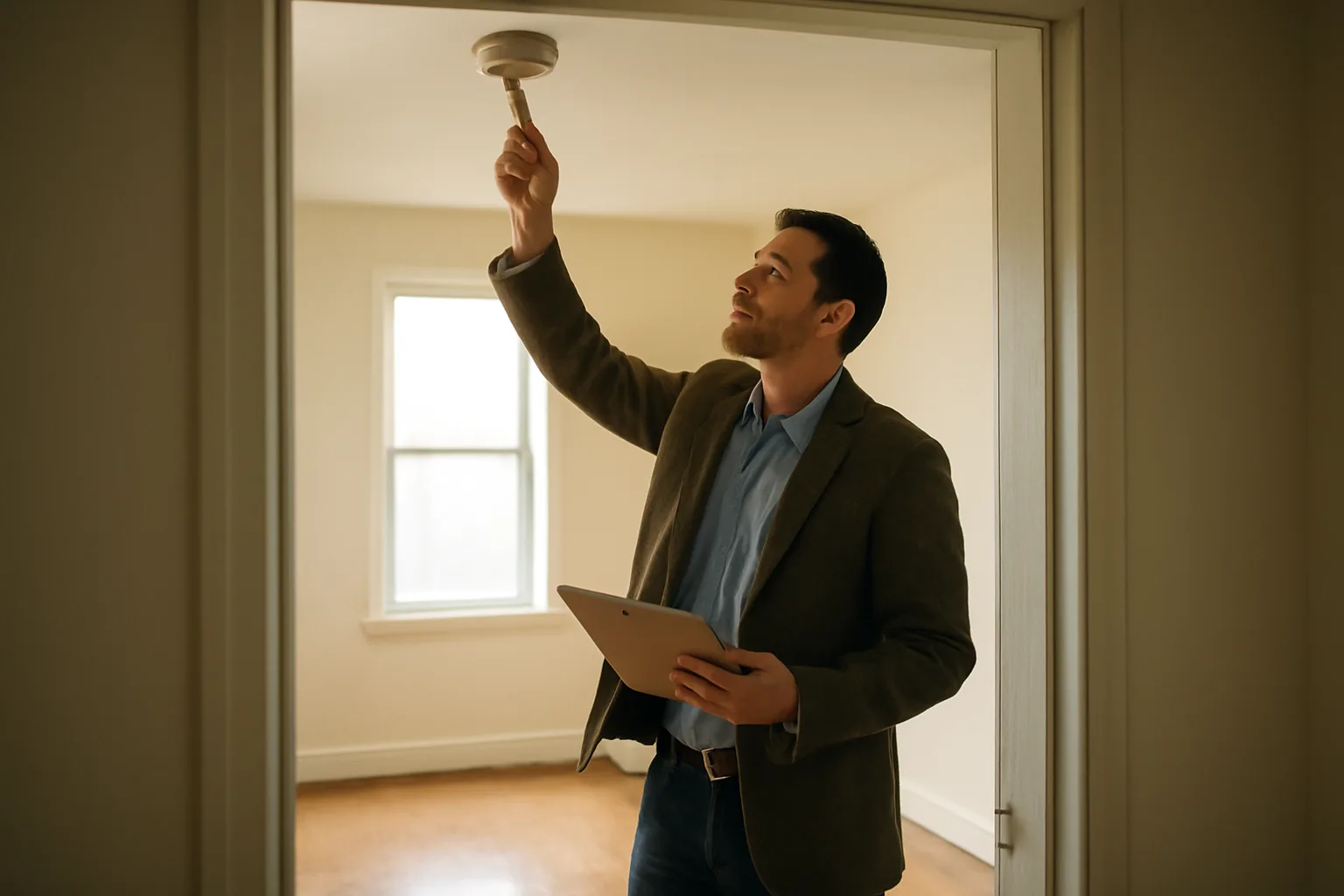
During a city rental licensing inspection, the inspector typically checks life-safety items: smoke detectors, carbon monoxide detectors, egress windows in bedrooms, electrical panel condition, working plumbing, heating system function, and general structural safety (railings, stairs, exterior condition). They are not there to critique your paint color or furniture choices. During a landlord-conducted walkthrough (move-in, move-out, or periodic inspection under a lease clause), what the landlord can look at is generally limited to the physical condition of the unit and confirming the tenant isn't violating lease terms (unauthorized pets, unauthorized occupants, property damage). Landlords cannot use an inspection as a pretext to search personal belongings, go through drawers, or inspect areas unrelated to the property's condition. Many states require the landlord to give notice before entry for a routine inspection, commonly 24 hours, though the exact number varies by state statute. Here's a rough comparison of what each type of inspection actually covers: | Inspection type | Who conducts it | What's checked | Typical notice required |
what rights do tenants have without a lease?
Tenants without a written lease (month-to-month or verbal tenancy) still have the same basic legal protections as tenants with a lease: the right to habitable housing, the right to proper notice before eviction, and the right to have a security deposit handled according to state law. What they lose, generally, is the certainty of fixed terms like rent amount and lease length being locked in for a set period. Most states treat a tenant without a written lease as a month-to-month tenant by default once they've paid rent and the landlord has accepted it, which means either party can end the tenancy with proper notice (commonly 30 days, though some states or cities with just-cause eviction rules require more, or require a specific reason). The tenant still has the right to habitability, the right to quiet enjoyment, and the right to proper notice before the landlord enters. A lack of a written lease also tends to hurt the landlord more than the tenant in a dispute. Courts often resolve ambiguity (what was agreed on rent, pets, or repairs) in favor of the tenant when there's no document to point to. See our tenant rights and renters rights guides for state-specific notice periods.
how much notice does a landlord have to give before entering or ending a tenancy?
Notice requirements split into two very different categories: notice to enter the unit, and notice to end the tenancy. They are not the same number, and mixing them up is a common landlord mistake. For routine entry (repairs, inspections, showing the unit to prospective tenants), most states require 24 hours' written or verbal notice, though a handful require 48 hours and a few states don't specify an exact number in statute at all, just 'reasonable notice.' California, for example, presumes 24 hours is reasonable notice for entry under Civil Code Section 1954, separate from the 48-hour rule for the move-out inspection under Section 1950.5 [3][4]. For ending a month-to-month tenancy, notice is usually 30 days if the tenant has lived there less than a year, and some states require 60 days once the tenant has been there a year or longer. Cities with just-cause eviction ordinances (San Francisco, Los Angeles, and others) may require even longer notice periods or a specific legal reason regardless of tenancy length. Because these numbers vary so much by state and even by city, confirm your specific notice period with your state's landlord-tenant statute before sending anything in writing.
why do landlords require renters insurance?
Landlords require renters insurance mainly to shift liability for the tenant's personal property and personal liability claims away from the landlord's own policy. A landlord's dwelling policy typically covers the building and the landlord's own liability, but it generally does not cover a tenant's furniture, electronics, or clothing if there's a fire or burst pipe, and it may not cover a tenant's liability if a guest gets hurt in the tenant's unit. Requiring renters insurance (often with a minimum liability coverage amount, commonly $100,000, written into the lease) also protects the landlord in a specific practical way. If the tenant's negligence causes damage (a candle fire, an overflowing tub) and the tenant has no insurance, the landlord's own insurer may end up covering more of the loss and raising the landlord's premium. Renters insurance policies are also cheap, commonly running $15 to $30 a month depending on coverage and location, so requiring it is a low-cost, high-leverage risk transfer for the landlord. Some cities and some HUD-related housing programs have their own rules about whether and how a landlord can require renters insurance. If you manage subsidized units, check program rules before adding a hard insurance requirement to your lease.
what a landlord cannot do in ohio
Ohio law, under the Ohio Revised Code Chapter 5321 (the Ohio Landlord-Tenant Act), prohibits several specific landlord actions: a landlord cannot shut off utilities, change the locks, or remove a tenant's belongings to force them out without going through the formal eviction (forcible entry and detainer) process in court [5]. This is often called a 'self-help eviction' and it's illegal in Ohio regardless of how far behind on rent the tenant is. Ohio landlords also cannot retaliate against a tenant for exercising a legal right, such as complaining to a code enforcement agency about a housing code violation or joining a tenant union. Ohio Revised Code 5321.02 specifically bars a landlord from raising rent, decreasing services, or bringing an eviction action in retaliation for a tenant's good-faith complaint [6]. A landlord in Ohio also cannot enter the unit without reasonable notice except in a genuine emergency; the statute generally expects landlords to give notice and enter at reasonable times. Beyond Ohio specifically, most states share these same core prohibitions (no lockouts, no utility shutoffs, no retaliation) even where the exact statute numbers differ. If you're not in Ohio, look up your own state's landlord-tenant act for the equivalent language before taking any self-help action against a tenant.
how to be a landlord without missing a licensing requirement
The single biggest mistake new landlords make is assuming their city doesn't have a rental licensing program because nobody's mentioned it. Many mandatory-licensing cities don't proactively notify new landlords; the burden is on you to check. Start by searching your city name plus 'rental license' or 'rental registration' on the city's own .gov site, not a third-party blog, since requirements change and a two-year-old article might be wrong about the fee or deadline. Once you know a license is required, get on the city's timeline early. Programs that require an initial inspection can take weeks to schedule during busy seasons, and a failed inspection often means a re-inspection fee plus a delay before you can legally rent the unit. Budget both time and money for this: confirm the license fee and inspection fee with your city rental licensing office, since these numbers range enormously by jurisdiction and by unit count. If you're managing the process yourself and want a structured way to prep for the inspection instead of guessing what the inspector will flag, the $79 one-time City Rental License & Inspection Prep Packet walks through the common inspection categories (smoke/CO detectors, egress, electrical, plumbing) so you can fix obvious problems before the city's inspector shows up rather than after a failed inspection report. It's not a substitute for your city's actual checklist, but it's a reasonable starting point if you've never been through one before.
Frequently asked questions
Do property management companies check if a rental license exists before taking a property?
Most reputable property management companies do check, either by asking the owner directly, requiring a copy of the license, or searching the city's public rental registry. They have their own liability exposure if they manage an unlicensed unit, so it's in their interest to verify before signing a management agreement.
How does a city find unlicensed rentals?
Cities commonly use tenant complaints, utility billing records, county assessor homestead exemption status, and neighborhood code enforcement sweeps. A tenant calling about a maintenance issue is one of the most common ways an unlicensed rental gets flagged.
How to become a landlord?
Confirm whether your city requires rental licensing, register the property if it does, complete any required initial inspection, and set up a lease with proper notice and insurance provisions. Check your city's specific process since requirements vary widely by jurisdiction.
Who is responsible for a rental property walkthrough inspection in California?
The landlord is responsible for conducting a pre-move-out inspection if the tenant requests one, under California Civil Code Section 1950.5, giving at least 48 hours' written notice. This is different from a city's separate rental licensing or code compliance inspection.
What is landlording?
Landlording is the ongoing work of owning and operating a rental property: collecting rent, maintaining habitability, following notice and entry rules, handling security deposits, and keeping the property compliant with local rental licensing and code requirements.
What is a landlord?
A landlord is the property owner, or an authorized agent acting for the owner, who rents real property to a tenant for payment and is legally responsible for maintaining habitable conditions under state and local landlord-tenant law.
What rights do tenants have without a lease?
Tenants without a written lease still have habitability rights, proper notice requirements before eviction, and security deposit protections under state law. They're generally treated as month-to-month tenants, meaning either party can end the tenancy with proper notice, commonly 30 days.
Why do landlords require renters insurance?
Landlords require renters insurance to shift liability for the tenant's belongings and personal liability claims away from the landlord's own policy, and to reduce the landlord's exposure if tenant negligence causes damage. It's also inexpensive, often $15 to $30 a month.
How much notice does a landlord have to give before entering a unit?
Most states require 24 hours' notice for routine entry, though some require 48 hours or use a 'reasonable notice' standard without a fixed number. California presumes 24 hours is reasonable under Civil Code Section 1954, separate from the 48-hour rule for move-out inspections.
What can a landlord look at during an inspection?
A city licensing inspector checks life-safety items like smoke and CO detectors, egress windows, electrical and plumbing condition, and structural safety. A landlord's own walkthrough is limited to unit condition and lease compliance, not personal belongings or unrelated areas.
What can a landlord not do in Ohio?
Under Ohio Revised Code Chapter 5321, a landlord cannot shut off utilities, change locks, or remove belongings to force a tenant out without a court eviction process. Landlords also cannot retaliate against a tenant for filing a code complaint, per ORC 5321.02.
What happens if a rental company finds out a property isn't licensed?
A management company that discovers an unlicensed property typically requires the owner to register before continuing management, since they share liability exposure. Some will pause showings or new leases until the license is confirmed, to avoid being named in a city violation notice themselves.
Can I rent out my property before the license is approved?
In most mandatory-licensing cities, no. Renting before the license clears is treated the same as operating unlicensed, and it can trigger the same fines. Confirm your city's exact rule on this timing with your local rental licensing office before signing a lease.
Sources
- City of Minneapolis, Rental Licenses: Minneapolis requires all rental properties to be licensed and identifies unlicensed rentals through complaints and inspection activity
- City of Milwaukee, Rental Registration and Certificate of Registration Program: Milwaukee cross-references records to identify rental properties for its registration program
- California Legislative Information, Civil Code Section 1950.5: California landlords must give at least 48 hours' notice before a pre-move-out inspection and provide an itemized deficiency statement
- California Legislative Information, Civil Code Section 1954: California presumes 24 hours is reasonable notice for landlord entry into a rental unit
- Ohio Legislative Service Commission, Ohio Revised Code 5321: Ohio's Landlord-Tenant Act prohibits self-help evictions such as utility shutoffs and lockouts without a court eviction process
- Ohio Legislative Service Commission, Ohio Revised Code 5321.02: Ohio law prohibits landlords from retaliating against tenants who file good-faith housing code complaints