Last updated 2026-07-26
TL;DR
Yes, but two different things get checked. Rental car and equipment companies verify your driver's license as ID and proof you can legally drive. Separately, cities with rental registration laws require landlords (not tenants) to hold a rental license for the property itself. If you're asking as a tenant, your landlord's license status is public record in most licensing cities.
do rental places check your license, and which "rental" do you mean
This question gets asked two completely different ways, so let's separate them first. If you mean a car rental counter, equipment rental shop, or apartment leasing office checking your driver's license: yes, almost always. Car rental companies check that your license is valid, unexpired, and matches the renter's name before handing over keys. Apartment leasing offices ask for a government ID (often a driver's license) as part of tenant screening, mostly to confirm identity and cross-check against the application and any background or credit check. If you mean a rental property license, meaning the permit a landlord needs from the city to legally rent out a unit, that's a different animal entirely. That license belongs to the landlord and the property, not the tenant. A tenant doesn't need one and won't be asked to produce one. But a growing number of cities require landlords to register or license every rental unit, and cities enforce that through inspections, complaint records, and fines, not through checking a driver's license at all. This article covers both angles briefly, then spends most of its time on the landlord licensing side, since that's where the real compliance risk and cost sits for anyone who owns 1 to 10 units.
what is a landlord, and what is landlording
A landlord is the owner (or an owner's authorized agent) who rents real property to someone else in exchange for money, under a lease or rental agreement. Landlording is the ongoing job of managing that arrangement: collecting rent, handling repairs, following local and state landlord-tenant law, keeping the unit habitable, and dealing with turnover. Landlording isn't just collecting a check. It includes legal duties that vary by state and city: maintaining a habitable unit, following notice rules before entry or termination, handling security deposits correctly, and in many cities, registering the rental with a local licensing office. The U.S. Department of Housing and Urban Development maintains a state-by-state directory of landlord-tenant resources because these duties differ so much by jurisdiction. If you're new to this, understanding what is landlording matters more than most people assume going in. Plenty of accidental landlords, people who inherited a house or moved and kept their old place as a rental, get blindsided by a city registration notice or an inspection letter because they thought landlording just meant finding a tenant and cashing rent.
how to become a landlord (the real checklist, not the fantasy version)
Becoming a landlord isn't one certification, it's a stack of smaller legal and practical steps. Here's the realistic order: 1. Confirm the property is zoned and legally allowed to be rented (check with your city or county planning department). 2. Register or license the rental unit if your city requires it. Many mid-size and large cities do; plenty of small towns don't. There's no national database, so you confirm with your specific city rental licensing office. 3. Get a compliant lease. Many states require specific disclosures (lead paint for pre-1978 housing is a federal requirement under 42 U.S.C. § 4852d, for example) [1]. 4. Get landlord insurance and decide your renters insurance policy for tenants. 5. Set up rent collection, a habitable unit, and a system for handling repair requests and notices. 6. Screen tenants consistently and legally, following Fair Housing Act rules (42 U.S.C. § 3601 et seq.) [2]. Most of the actual legal risk in step 1 through 3 is invisible until a city sends a notice, a neighbor complains, or a tenant calls code enforcement. That's usually when a landlord discovers, often the hard way, that becoming a landlord also meant becoming a licensee under a local ordinance they didn't know existed.
how to be a landlord day to day, once you're licensed and rented
Being a landlord day to day is mostly about consistency: same rent due date every month, same response time for maintenance requests, same notice period before you enter a unit, applied to every tenant the same way. Inconsistency is what turns a minor dispute into a fair housing complaint or a habitability lawsuit. The daily and monthly mechanics include: collecting rent and tracking late fees per your lease and state law, responding to repair requests within the timeframe your state's habitability statute expects (often "reasonable time," sometimes a specific number of days for essential services), keeping records of all notices and inspections, and renewing your rental license or registration before it expires. Missing a renewal deadline is one of the most common ways landlords rack up avoidable fines, since many cities charge a late renewal penalty on top of the base fee. If your city requires periodic inspections as part of licensing, being a landlord also means scheduling those, fixing anything flagged, and keeping the paperwork trail. For a full walkthrough of what that inspection paperwork prep should look like, see tenant rights and landlord landlords for jurisdiction-specific breakdowns.
who is responsible for rental property walk-through inspection in california
In California, the landlord is responsible for arranging and conducting a move-out inspection if the tenant requests one, and for any city-required rental inspections tied to local licensing programs. California Civil Code Section 1950.5(f) gives tenants the right to request an initial inspection before move-out, done at a reasonable time, with at least 48 hours written notice given to the tenant of the date and time [3]. That's the security-deposit-related walkthrough, separate from any municipal rental inspection. California doesn't have one statewide mandatory rental licensing law, but individual cities do. Los Angeles runs the Systematic Code Enforcement Program (SCEP), which requires periodic inspections of most rental units in the city and charges an annual per-unit fee that funds the inspections [4]. San Francisco, Oakland, and other California cities run their own separate rental inspection or registration programs, so "who's responsible" for scheduling and paying for a walkthrough always comes down to that specific city's ordinance, not a single statewide rule. Bottom line for a California landlord: you (or your property manager) schedule and pay for the city inspection if your city runs a program like SCEP. You also owe the tenant the 1950.5(f) move-out walkthrough if they ask for one, on a separate 48-hour notice track.
what can a landlord look at during an inspection
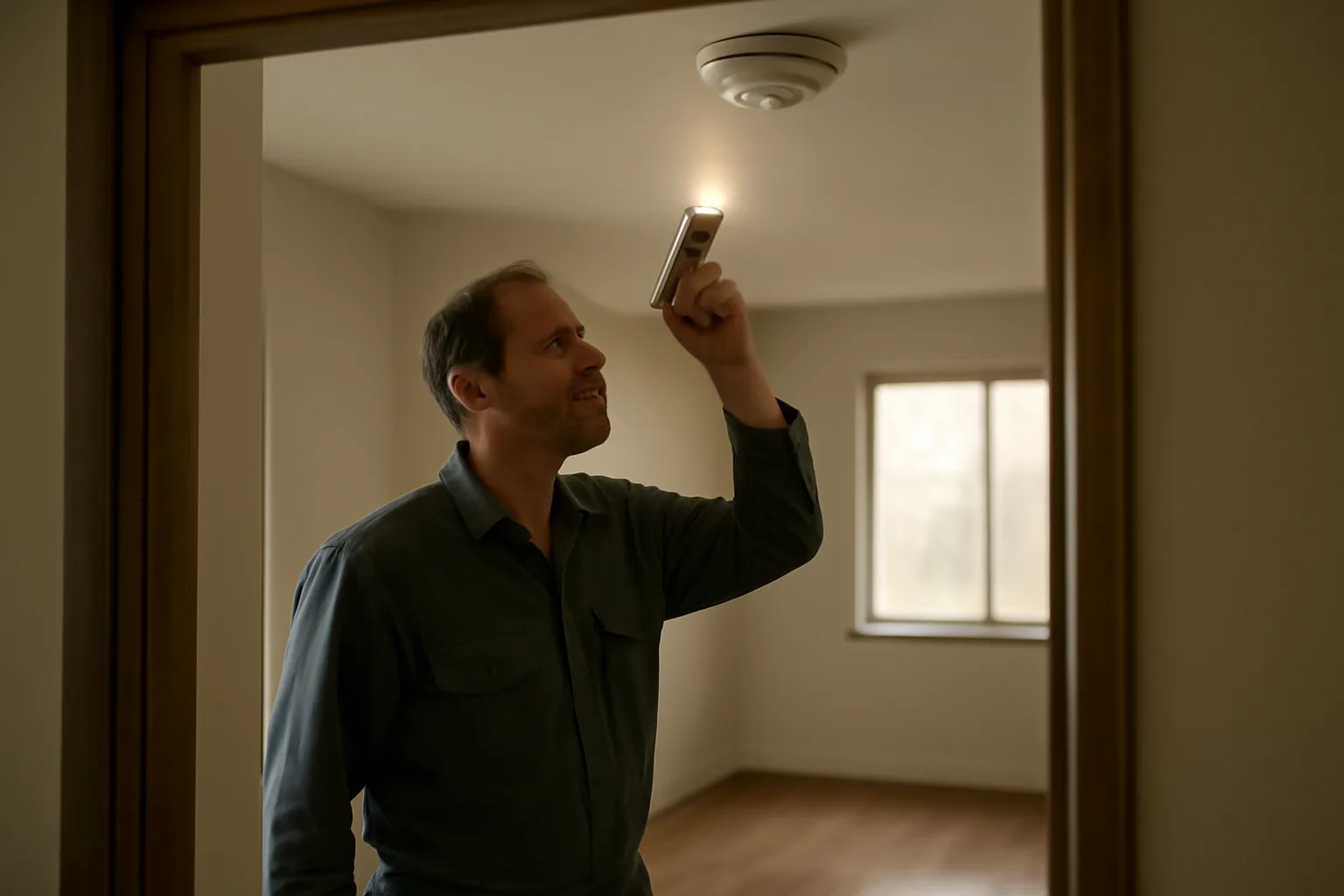
During a routine or city-mandated inspection, a landlord (or the city inspector) can generally look at anything related to habitability and code compliance: smoke and carbon monoxide detectors, electrical outlets and panels, plumbing fixtures and signs of leaks, heating systems, window and door locks, evidence of pest infestation, mold, and general structural safety. Most city inspection checklists focus narrowly on life-safety and code items, not on how clean or tidy the unit is. What a landlord generally cannot do is search through a tenant's personal belongings, open closed drawers or closets without cause tied to the inspection's purpose, or use the inspection as a pretext to snoop. Entry itself has to follow your state's notice rules (see the section below on notice), and the inspection has to be for a legitimate purpose: repairs, safety compliance, showing the unit to a prospective buyer or tenant, or a required city inspection. City rental inspections specifically (the kind tied to a licensing program) typically check: working smoke detectors and CO detectors, secure locks on doors and windows, no exposed wiring, functioning heat, no active leaks or standing water, and clear egress from bedrooms (a legal second exit, usually a window of a minimum size). These are the items that generate violation notices most often, and they're exactly what a $79 prep packet is built to help you walk through before an inspector does, at rental-packet-builder.
how much notice does a landlord have to give before entering
| California | 24 hours (presumed reasonable) | Civil Code § 1954 [5] | |
|---|---|---|---|
| Florida | At least 12 hours | Fla. Stat. § 83.53 [6] | |
| Texas | No statewide statute; follow lease terms | N/A | |
| Ohio | Reasonable notice, presumed 24 hours | ORC § 5321.04, § 5321.05 [7] | Emergencies (fire, flooding, a burst pipe) are the standard exception across nearly every state. No advance notice is required when there's an immediate threat to life or property. Outside of emergencies, entering without proper notice is one of the fastest ways a landlord ends up on the wrong end of a tenant complaint or a habitability countersuit. |
Notice requirements vary by state, but 24 hours is the most common standard, with California requiring "reasonable notice," which the law presumes to be 24 hours in writing under Civil Code Section 1954 [5]. Some states set it differently: Florida requires at least 12 hours notice for non-emergency entry under Florida Statutes Section 83.53 [6]. Always check your specific state's landlord-tenant statute, since the number isn't universal. | State | Standard notice for non-emergency entry | Statute |
what a landlord cannot do in ohio
Ohio landlord-tenant law (Ohio Revised Code Chapter 5321) spells out several things a landlord cannot do, and violating them can expose a landlord to tenant lawsuits, more than city fines. Ohio Revised Code Section 5321.04 requires landlords to keep the premises in a fit and habitable condition, and Section 5321.15 specifically bars landlords from using "self-help" eviction, meaning a landlord cannot lock out a tenant, shut off utilities, or remove belongings to force someone out without a court order [8]. Specifically, an Ohio landlord cannot: shut off electricity, water, or gas to pressure a tenant to leave; change the locks without a court-ordered eviction; remove a tenant's possessions without legal process; retaliate against a tenant for reporting a code violation or joining a tenant union (barred under ORC 5321.02) ; or enter the unit without reasonable notice except in an emergency, per ORC 5321.05. These aren't just theoretical protections. A tenant who's illegally locked out or has utilities shut off in Ohio can sue for damages, and courts have consistently sided against landlords who skip the eviction process. If you're a landlord anywhere, more than Ohio, the safest rule of thumb is: never do anything to a tenant's access or utilities without a court order in hand.
what rights do tenants have without a lease
A tenant without a written lease still has real legal rights. Once someone moves in and pays rent, most states treat that as a month-to-month tenancy at will, governed by the same basic landlord-tenant statutes that apply to written leases: right to habitability, right to notice before entry, right to proper eviction procedure, and right to the return of any security deposit under the rules that apply in that state. Without a written lease, the terms default to state law and, often, to a court's interpretation of the parties' conduct (how much rent was paid, how often, what was verbally agreed). The tenant generally still can't be evicted without proper notice, and that notice period is usually tied to how often rent is paid, commonly 30 days for a month-to-month tenancy, though some states allow shorter or require longer depending on how long the tenant has lived there. A verbal agreement to rent is still a legal lease in most states. It's just harder to prove specific terms if a dispute comes up. For that reason alone, both landlords and tenants are better off with something in writing, even a short one-page agreement, rather than relying on rights that only kick in by default. See tenants rights and renters rights for state-specific default rules.
why do landlords require renters insurance
Landlords require renters insurance mainly to shift liability, not to make extra money. If a tenant's negligence causes a fire, a burst pipe, or water damage that destroys the tenant's own belongings, the landlord's own property insurance typically covers the building structure, but not the tenant's personal property, and often not liability if the tenant caused the damage. Renters insurance is generally inexpensive, often in the range of $15 to $30 a month depending on coverage and location, and it covers the tenant's belongings plus liability if the tenant is responsible for damage or an injury inside the unit. Requiring it protects the landlord in two ways: it reduces the chance a landlord eats an uninsured loss, and it reduces the chance a tenant tries to hold the landlord liable for the tenant's own missing or damaged belongings after a covered event. Many landlords also require it because it's one of the few conditions they can legally add to a lease that measurably lowers their own risk exposure, without running into rent control or habitability restrictions. It's become common enough that some states, and many large property management companies, treat it as a standard lease condition rather than an unusual add-on.
so, does a rental company check your driver's license, specifically
Yes. Car rental companies verify a driver's license as a condition of the rental contract, confirming it's valid, not expired, and belongs to the person signing. Some states and rental companies also run a driving record check for major violations before approving a rental, particularly for luxury or specialty vehicles. This is separate from, and unrelated to, rental property licensing for landlords. Apartment or home rental applications (leasing side) typically ask for a government-issued ID, often a driver's license, primarily to confirm identity for the background check, credit check, and to match the name on the application to the name on any prior eviction or credit record. Leasing offices are not checking whether you personally hold a "rental license," because tenants don't need one. The license requirement in rental housing law falls entirely on the property owner or manager, not the renter.
what happens if a landlord skips the local rental license
Operating without a required rental license is one of the most common and most avoidable violations landlords rack up, and the penalties vary widely by city. Some cities issue a warning and a grace period on the first offense; others levy a fine per unit per month the property operated unlicensed, and a few can bar the landlord from collecting rent at all until the unit is licensed, a remedy some courts have upheld in tenant defense cases against eviction for nonpayment. Because every city sets its own fee schedule, inspection cycle, and penalty structure, there's no single number to quote here honestly. What's consistent across licensing cities is the pattern: a notice arrives, there's a response window (often 30 to 60 days), and the fine or escalation kicks in if the landlord doesn't register or schedule an inspection in that window. If you've gotten a notice, your first move should be confirming the exact fee, deadline, and required documents with your city rental licensing office directly, since guessing wrong on any of those three things is what turns a routine registration into a drawn-out fine dispute. This is the exact gap the $79 one-time City Rental License & Inspection Prep Packet is built to close: a structured way to gather what most cities ask for (proof of ownership, unit details, safety equipment confirmation, inspection prep checklist) before you're standing in front of an inspector or a fine notice. Check it out at rental-packet-builder if you'd rather not build that checklist from scratch.
Frequently asked questions
Do rental car companies check your driving record, more than your license?
Sometimes. Most car rental companies verify the license is valid and unexpired, and some run a driving record check for serious violations (DUIs, multiple recent accidents) before approving certain rentals, especially for younger drivers or premium vehicles. Policies vary by company, so check the specific rental company's rental agreement terms before assuming.
Does a landlord need a special license to rent out one house?
It depends entirely on the city and sometimes the state. Many cities require a rental license or registration even for a single-family home rented out by an owner, especially if the city runs a proactive rental inspection program. Confirm with your city rental licensing office, since there's no single national rule.
Can a landlord ask for my driver's license as part of a rental application?
Yes. Landlords commonly request a copy of a government-issued ID, often a driver's license, to confirm identity and match it against the background and credit check. This is standard tenant screening practice and is separate from any property-level rental license the landlord itself must hold.
What is the difference between rental registration and rental licensing?
Registration usually just means the city has your property on file, sometimes with a small or no fee. Licensing usually requires an inspection, a fee, and renewal on a set cycle (often annual or every 2 to 3 years), with fines for operating unlicensed. Terminology varies by city, so read your specific ordinance.
Do I need a business license to be a landlord?
Some cities require a general business license in addition to, or instead of, a rental-specific license, especially if you're renting more than one or two units. This varies by city and sometimes by how many units you own. Check with your city's business licensing office and rental licensing office separately, since they're sometimes different departments.
Can a landlord evict a tenant without a written lease?
Yes, but the landlord still has to follow standard eviction procedure and notice requirements under state law, which apply regardless of whether there's a written lease. A tenant without a lease still has tenancy rights, most commonly treated as month-to-month, and can't be removed without proper notice and, if needed, a court order.
What is the most common rental inspection violation for small landlords?
Missing or non-functioning smoke detectors and carbon monoxide detectors show up constantly across city rental inspection reports, along with issues like inadequate egress windows in basement bedrooms and minor electrical code violations. These are cheap to fix in advance but expensive in fines if an inspector finds them first.
How often do cities re-inspect a licensed rental unit?
It varies widely: some cities inspect annually, others every 2 to 3 years, and some only inspect on a complaint basis or at tenant turnover. Los Angeles's Systematic Code Enforcement Program, for example, inspects most units on a multi-year cycle rather than annually. Confirm your city's specific inspection cycle directly.
Can a landlord require proof of renters insurance before move-in?
Yes, in most states a landlord can require renters insurance as a lease condition, provided it's disclosed in the lease and applied consistently to all tenants. It's a common and generally enforceable requirement, though a few local rent-control or affordable housing programs restrict what conditions landlords can add.
Does a landlord have to give notice before a city rental inspection?
Usually yes, both the tenant and often the landlord get advance notice of a scheduled city rental license inspection, since the inspector needs access to the unit. Exact notice periods are set by the city ordinance, not by general landlord-tenant entry law, so check your city's specific rental inspection notice rule.
What happens if a landlord fails a rental license inspection?
Most cities issue a violation notice listing the specific problems found, with a deadline (often 30 to 60 days) to fix them and request a re-inspection. Fees for re-inspection and fines for uncorrected violations vary by city. Repeated failures can sometimes lead to license suspension or a bar on collecting rent until compliant.
Sources
- 42 U.S.C. § 4852d, Lead Disclosure: Federal lead paint disclosure is required for pre-1978 housing rentals
- Fair Housing Act, 42 U.S.C. § 3601 et seq.: Federal fair housing law governs tenant screening practices
- California Civil Code § 1950.5(f): Tenants can request an initial move-out inspection with 48 hours written notice of date and time
- California Civil Code § 1954: California presumes 24 hours notice is reasonable for landlord entry
- Florida Statutes § 83.53: Florida requires at least 12 hours notice for landlord entry in non-emergency situations
- Ohio Revised Code § 5321.04 and § 5321.05: Ohio landlords must maintain habitability and give reasonable notice before entry
- Ohio Revised Code § 5321.15: Ohio bars landlords from self-help eviction including lockouts and utility shutoffs
- Ohio Revised Code § 5321.02: Ohio prohibits landlord retaliation against tenants who report code violations or join tenant organizations