Last updated 2026-07-26
TL;DR
Most rental licenses take somewhere between 2 and 8 weeks from application to approval, mostly because of inspection scheduling backlogs, not paperwork. Simple registration-only cities can process in days. Cities requiring a walkthrough inspection almost always take longer, especially if you fail the first inspection and need a re-inspection slot.
How long does it actually take to get a rental license?
For most cities, plan on 2 to 8 weeks from the day you submit your application to the day you get an approved license in hand. That's a wide range on purpose, because the real bottleneck almost never is the paperwork itself. It's getting an inspector out to the property. Cities that only require registration (you fill out a form, pay a fee, no inspector ever shows up) can turn around a license in a few business days to two weeks. Cities that require a physical inspection before they'll issue the license routinely take 4 to 8 weeks, and that's assuming you pass on the first try. Fail the inspection, and you're waiting for a re-inspection slot, which in busy cities can add another 2 to 6 weeks on its own. A few concrete examples help calibrate this. Philadelphia requires a rental license for any residential property offered for rent, and units built before 1978 also need a separate lead-safe or lead-free certification before the license can be issued, which is its own scheduling step on top of the license application itself [1]. Minneapolis runs rental licenses through a tiered inspection system, where a property's inspection history determines how often it gets re-inspected, and initial licensing inspections are scheduled after the application is filed, which is where most of the real delay sits [2]. Chicago's Residential Landlord and Tenant Ordinance governs the landlord-tenant relationship citywide and works alongside the Municipal Code's building inspection requirements, and there is no single fixed statewide timeline you can bank on for how fast an inspection gets scheduled [3]. The honest answer is: nobody can give you a single number that applies to every city, because every city runs its own program on its own schedule with its own backlog. What you can control is how fast you submit a complete application and how ready your unit is for inspection on the first attempt.
What actually determines how fast (or slow) the process moves?
Four things drive your timeline more than anything else: whether your city requires a pre-license inspection, how backed up that city's inspection department is, whether your application is complete on day one, and whether you pass the first inspection. Application completeness is the easiest one to control and the one landlords screw up most. Missing a notarized owner affidavit, a lead paint disclosure, a certificate of occupancy, or proof of insurance can bounce your application back to the bottom of the queue. Some cities won't even schedule an inspection until every document is in and the fee is paid in full. Inspection backlog is the one you can't control at all. Cities with small code enforcement staffs and thousands of rental units (which describes a lot of mid-size cities that adopted licensing programs in the last 10 to 15 years) can run inspection queues 4 to 6 weeks out just to get a first appointment. If your city sends inspectors seasonally, or is catching up after a staffing shortage, add more time. Whether you pass on the first try matters more than most new landlords expect. A failed inspection doesn't just cost you a re-inspection fee (often $50 to $150, but confirm with your city rental licensing office). It puts you back in line for another appointment slot, and in a backed-up department that's not a same-week fix. If you're just getting oriented on what the licensing process even involves before you touch a timeline question, our guide on landlord landlords walks through the basics of how these programs work city to city.
What's the fastest way to shorten the timeline?
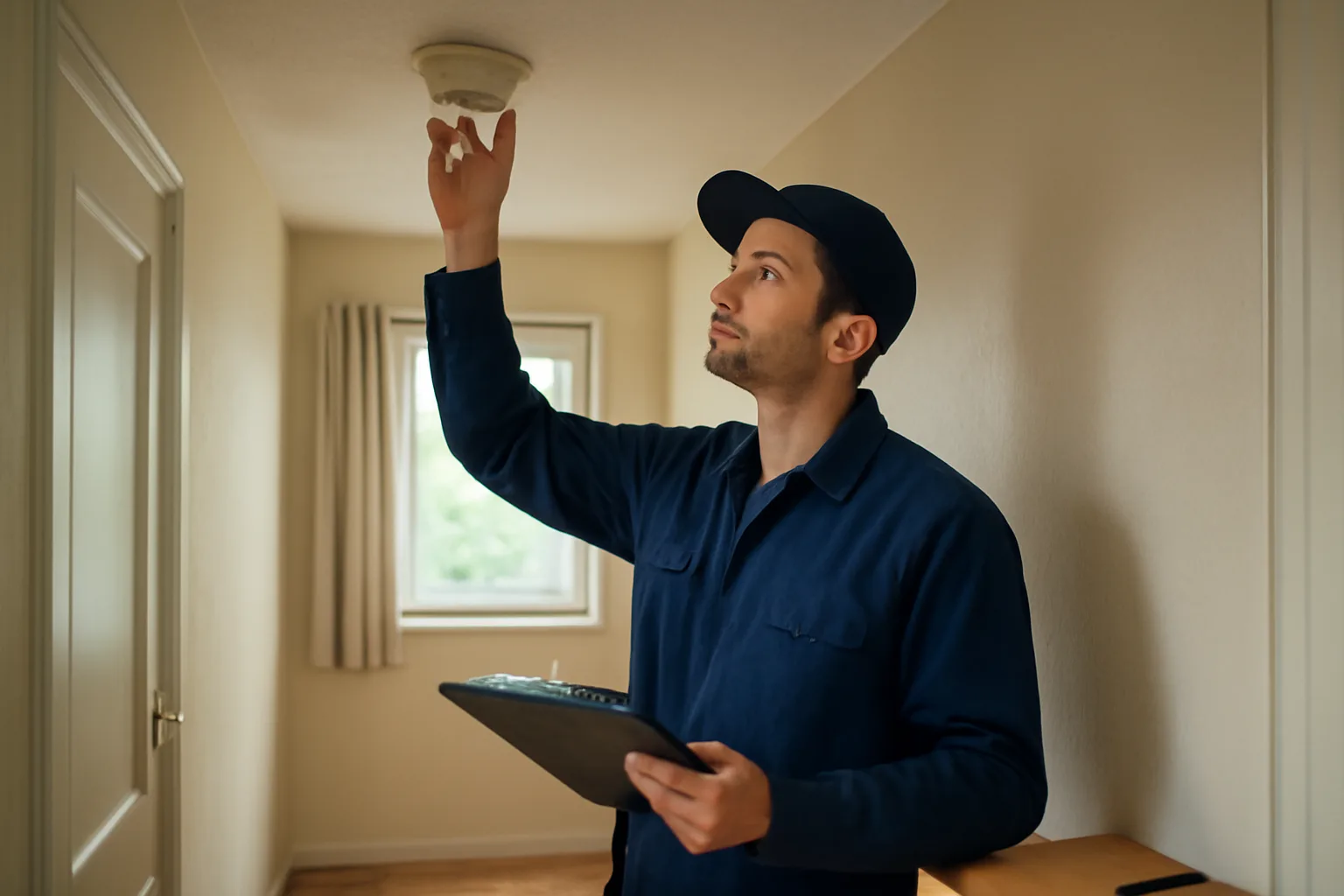
Submit a genuinely complete application the first time, and get your unit inspection-ready before you request the appointment, not after. That sounds obvious, but the data on code enforcement backlogs suggests incomplete applications and failed first inspections are the two most common self-inflicted delays. Call your city's rental licensing office (or check its website) and get the actual checklist: what documents, what fee, what inspection standard. Don't guess. Cities publish these lists precisely because incomplete submissions clog their queues too, and they want you to get it right the first time as much as you do. Before you request an inspection, walk the unit yourself with the checklist your city publishes (working smoke detectors, GFCI outlets near water sources, handrails on stairs with more than a few steps, no exposed wiring, functioning heat source, egress windows in bedrooms are common items across most municipal housing codes). If you fix the obvious stuff before the inspector ever shows up, you dramatically cut your odds of a failed inspection and the re-inspection delay that comes with it. This is the exact gap our $79 City Rental License & Inspection Prep Packet is built to close: a structured way to walk through your city's likely requirements and get your paperwork and unit condition sorted before you're standing in front of an inspector holding a clipboard. It won't guarantee you pass (no service honestly can, since every city's inspector applies their own code), but it cuts down on the unforced errors that turn a 3-week process into a 10-week one.
How to become a landlord (the licensing side of it)
Becoming a landlord, legally speaking, usually means three separate steps: getting the property itself compliant with local building and housing code, registering or licensing the rental with your city or county, and setting up the tenant-facing pieces (lease, insurance requirements, security deposit handling per your state's rules). The licensing step is where most first-time landlords get surprised. Owning a property and renting it out is not automatically legal in a lot of cities. Municipalities with mandatory rental registration or licensing ordinances require you to file before you ever put a tenant in the unit, and some require the inspection to happen before occupancy, not after. Rent out a unit without the required license and you can be looking at fines that in some cities run into the hundreds of dollars per violation, sometimes per day the violation continues, though the exact structure and dollar figures vary a lot by city and you should confirm with your city rental licensing office. Practically, the sequence looks like this: confirm whether your city requires registration, licensing, or both (they're not the same thing everywhere), get your unit up to local housing code standards, submit the application and fee, schedule and pass the inspection if one's required, and get the license or registration number before you sign a lease. Some cities also require a separate certificate of occupancy for a first-time rental conversion, which is its own process on its own timeline.
What is landlording, and what is a landlord, exactly?
A landlord is the owner (or owner's authorized agent) of real property who rents that property to another person, the tenant, in exchange for rent, under a lease or rental agreement. Landlording is the informal term for the ongoing work of managing that relationship and that property: collecting rent, handling maintenance and repairs, complying with local housing code and licensing rules, managing turnover, and dealing with tenant communication and, when necessary, the legal eviction process. Most state landlord-tenant statutes define the landlord's core legal duties fairly consistently: keep the unit habitable (working plumbing, heat, electricity, structural safety), make repairs within a reasonable time after notice, and follow state-specific rules on security deposits, entry notice, and lease termination. California's landlord-tenant law, for example, is codified largely under the state Civil Code sections governing habitability and repair obligations [4]. Landlording isn't a licensed profession in the way real estate brokerage is. You don't need a state landlord license to own and rent property. What you do need, in mandatory-licensing cities, is a local rental license or registration for each unit you rent out, which is a municipal requirement layered on top of, not instead of, your general legal obligations as a landlord under state law.
Who is responsible for the rental property walkthrough inspection in California?
In California, the walkthrough inspection responsibility splits depending on what kind of inspection you're talking about. For move-in and move-out condition documentation tied to security deposits, California Civil Code Section 1950.5 puts the responsibility on the landlord to conduct (or offer to conduct) an initial inspection before the tenant moves out, giving the tenant the chance to fix deficiencies before final deductions are made from the deposit [5]. The landlord must give the tenant at least 48 hours' written notice of this pre-move-out inspection, unless the tenant waives that notice [5]. For code compliance inspections tied to rental licensing or habitability enforcement, that's a different animal entirely and it's run by the local city or county, not the state. Some California cities (Los Angeles, San Francisco, and others) run their own rental inspection or proactive rental housing programs through city building and safety departments, and it's the city's inspector, not the landlord, who conducts that walkthrough. The landlord's job there is to schedule access, be present or have a representative present, and address any violations cited. So the short version: for the state-mandated pre-move-out deposit inspection, the landlord is responsible for offering and conducting it. For municipal rental housing code inspections, the city's inspector does the walkthrough, and the landlord is responsible for cooperating and providing access.
What can a landlord look at during an inspection?
During a routine habitability or code compliance inspection (the kind tied to rental licensing), the inspector or landlord typically checks smoke and carbon monoxide detectors, electrical outlets and wiring, plumbing fixtures and water heater condition, heating system function, window and door locks, evidence of pest infestation, mold or moisture damage, and general structural safety items like handrails and stair condition. This is a health-and-safety walkthrough, not a search of personal belongings. For the California pre-move-out inspection specifically, the scope is narrower: the landlord is checking the unit's condition against what it looked like at move-in, to identify what might get deducted from the security deposit, and giving the tenant a chance to fix those items themselves before move-out [5]. What a landlord or inspector generally should not do during any inspection is search through a tenant's personal belongings, drawers, or closets beyond what's needed to check the item being inspected (a smoke detector, an outlet, a window). Most state laws require inspections to happen at reasonable times, with proper notice, and for a legitimate purpose tied to the property's condition, not as a pretext to monitor the tenant's lifestyle.
How much notice does a landlord have to give before entering or inspecting?
Notice requirements vary by state, but 24 hours' written notice is the most common standard across the country for routine, non-emergency entry. California requires "reasonable notice," which state law presumes to be 24 hours in writing for most purposes, though the pre-move-out inspection specifically requires at least 48 hours' notice under Civil Code Section 1950.5 [5]. Emergencies are the standard exception almost everywhere. If there's a fire, flood, gas leak, or similar immediate threat to life or property, a landlord can enter without advance notice. Outside of an emergency, entering without proper notice, or using an inspection as a pretext to enter repeatedly without cause, can expose a landlord to a claim for violating the tenant's right to quiet enjoyment of the unit. Municipal rental licensing inspections layer on top of these entry rules. In a licensing city, the city typically schedules the inspection appointment directly and coordinates notice through the landlord, so the landlord still needs to give the tenant proper advance notice under state law even though the city, not the landlord, is conducting the inspection.
What rights do tenants have without a lease?
A tenant without a written lease is not without rights. Most states recognize a tenancy even when there's no signed document, based on the fact that rent is being paid and accepted, and that tenancy defaults to whatever the state's statutory rules say for an unwritten or month-to-month arrangement. Without a written lease, a tenant still generally has the right to a habitable unit, the right to proper notice before entry, the right to proper notice before the tenancy is terminated (commonly 30 days for month-to-month tenancies in many states, though this varies), and the right to the return of any security deposit under the timelines and deduction rules their state sets. What they typically lose, without a written lease, is any negotiated term that isn't otherwise guaranteed by state law: a specific rent amount lock-in period, specific maintenance responsibilities beyond the statutory minimum, or specific rules about subletting or guests. For a landlord, renting without any written lease is legal in most places but risky. Verbal agreements are hard to prove in a dispute, and you lose the ability to spell out house rules, late fee structures, or pet policies in a way that holds up. If you're licensing a unit in a mandatory registration city, many of those cities' applications ask whether a written lease is in place, and some require one as a condition of the license, so check your city's specific rule before assuming a handshake deal is enough. Our overview on tenant rights goes deeper on what varies state to state.
Why do landlords require renters insurance?
Landlords require renters insurance mainly to shift liability and personal property risk off themselves and onto the tenant, and to reduce the landlord's own exposure when something goes wrong inside the unit that isn't the landlord's fault. A landlord's own property insurance covers the building and the landlord's own liability, but it typically does not cover a tenant's personal belongings if there's a fire, burst pipe, or theft. It also often doesn't cover liability if a guest of the tenant is injured inside the unit due to something the tenant did or failed to do. Renters insurance (which is inexpensive, commonly in the range of $15 to $30 a month depending on coverage and location) fills that gap, protecting both the tenant's belongings and giving the landlord a layer of liability protection if the tenant is the party at fault in an incident. Some mandatory rental licensing cities and some state laws now allow or require landlords to mandate renters insurance as a lease condition, and a few even let landlords enroll non-compliant tenants in a master policy and bill it back as an added fee. Whether that's allowed, and under what terms, depends entirely on your state and lease law, so this isn't something to assume is fine everywhere without checking.
What can't a landlord do in Ohio?
Ohio's landlord-tenant law is set out in Ohio Revised Code Chapter 5321, and it prohibits several specific landlord actions. A landlord cannot retaliate against a tenant for exercising a legal right, such as complaining to a government agency about a code violation or joining a tenant union; Ohio Revised Code Section 5321.02 specifically bars a landlord from increasing rent, decreasing services, or threatening eviction in retaliation for such actions [6]. A landlord in Ohio also cannot engage in "self-help" eviction: locking a tenant out, shutting off utilities, or removing a tenant's belongings without going through the formal court eviction process. Ohio law requires landlords to use the courts to remove a tenant, not direct action [6]. A landlord also can't fail to maintain the unit in a fit and habitable condition; Ohio Revised Code Section 5321.04 lays out specific landlord obligations including keeping the premises in compliance with health and safety codes, keeping common areas safe, and maintaining electrical, plumbing, heating, and other systems in good working order [7]. Ohio landlords also have specific notice obligations before entering the unit: the statute requires "reasonable notice" of the landlord's intent to enter, and courts and the statute generally treat 24 hours as reasonable absent an emergency [6]. Violating these provisions can expose a landlord to a tenant's civil claim for damages, and in some cases attorney's fees, under Ohio Revised Code Chapter 5321.
How to be a landlord day to day (beyond just getting licensed)
Getting the license is step one. Staying a compliant landlord month over month is the actual job, and it's mostly about paperwork discipline and responsiveness, not property management theory. The recurring items that keep landlords out of trouble: renewing the rental license or registration on time (most cities require annual or biennial renewal, and missing the deadline can mean late fees or a lapse that triggers a new inspection), keeping smoke and CO detectors tested and documented, responding to maintenance requests within the timeframe your state's habitability law expects, handling security deposits according to your state's specific deduction and return-timeline rules, and giving proper notice before any entry. If you're renting in a city with mandatory registration or licensing, put the renewal date on a calendar the day you get the license, not the week before it expires. Inspection backlogs that stretch your initial license application can just as easily stretch a renewal inspection, and a lapsed license in some cities means the unit legally can't be rented until it's cured, which can mean lost rent while you wait for a new inspection slot. For a broader look at what varies most from one licensing city to the next, tenants rights and renters rights cover the tenant side of these same rules, which is worth understanding since a lot of licensing disputes start as tenant complaints that trigger a city inspection in the first place.
Frequently asked questions
How long does it take to get a rental license approved?
Most cities take 2 to 8 weeks total. Registration-only programs with no inspection can approve in days to two weeks. Programs requiring an inspection before approval usually take 4 to 8 weeks, longer if the first inspection fails and you need a re-inspection slot.
Can I rent out my property while the license application is pending?
In most mandatory-licensing cities, no. Renting before the license is approved can expose you to fines and, in some cities, can void your ability to collect rent or evict a tenant until the license is issued. Confirm the specific rule with your city rental licensing office before signing a lease.
What documents do I need to apply for a rental license?
Requirements vary by city, but commonly include proof of ownership, a completed application form, the license fee, proof of liability insurance, a lead paint disclosure for pre-1978 units, and sometimes a certificate of occupancy. Check your specific city's checklist before submitting, since incomplete applications are the most common source of delay.
How to become a landlord if I've never rented a property before?
Confirm whether your city or county requires rental registration or licensing, bring the unit up to local housing code, apply and pay the fee, pass any required inspection, and set up a written lease that follows your state's landlord-tenant law before you accept a tenant.
Who is responsible for the rental property walkthrough inspection in California?
For the pre-move-out deposit inspection, the landlord is responsible for offering and conducting it under California Civil Code Section 1950.5, with at least 48 hours' written notice. For municipal code compliance inspections tied to local rental programs, the city's own inspector conducts the walkthrough.
What is landlording?
Landlording is the day-to-day work of owning and renting property: collecting rent, handling repairs, complying with local licensing and state habitability law, managing tenant turnover, and following legal procedures for entry, notice, and eviction. It's not a licensed profession itself, but it comes with real legal obligations.
What is a landlord legally required to do?
A landlord is legally required to keep the rental unit habitable (working plumbing, heat, electricity, structural safety), make repairs within a reasonable time, follow state rules on security deposits and entry notice, and comply with any local rental registration or licensing ordinance where one exists.
What rights do tenants have without a signed lease?
Tenants without a written lease still generally have the right to a habitable unit, proper notice before entry, proper notice before termination (often 30 days for month-to-month), and return of any security deposit under state rules. They lose whatever negotiated terms a written lease would have locked in.
Why do landlords require renters insurance?
Renters insurance covers the tenant's personal belongings and adds liability protection that a landlord's own property policy typically doesn't provide. It reduces the landlord's exposure if a tenant's guest is injured or the tenant's belongings are damaged, and some cities now allow landlords to require it as a lease condition.
How much notice does a landlord have to give before entering the unit?
24 hours' written notice is the most common standard nationwide for routine entry. California requires 24 hours as presumptively reasonable, and 48 hours specifically for the pre-move-out inspection under Civil Code Section 1950.5. Emergencies are an exception almost everywhere.
What can a landlord look at during an inspection?
Inspectors typically check smoke and CO detectors, electrical and plumbing systems, heating function, window and door locks, and signs of pest or moisture damage. It's a health-and-safety check, not a search of personal belongings, and should stay limited to items relevant to the inspection's purpose.
What can't a landlord do in Ohio?
Under Ohio Revised Code Chapter 5321, a landlord cannot retaliate against a tenant for exercising a legal right, cannot self-help evict (locking out or shutting off utilities), and must maintain the unit in compliance with health and safety codes. Entry requires reasonable notice, generally treated as 24 hours.
What happens if my rental license expires while I have tenants?
This depends entirely on your city, but many programs require you to reapply, sometimes triggering a fresh inspection, before the unit is legally licensed again. Some cities restrict rent collection or eviction rights during a lapse. Confirm the specific consequence with your city rental licensing office well before the expiration date.
Sources
- City of Philadelphia, Department of Licenses and Inspections, Rental License: Philadelphia rental license application and lead-safe certification requirement for pre-1978 units
- Minneapolis Code of Ordinances, Chapter 244 (Rental Dwelling Licenses): Minneapolis rental license inspection categories and licensing structure under city ordinance
- Municipal Code of Chicago, Chapter 5-12 (Residential Landlord and Tenant Ordinance): Chicago Residential Landlord and Tenant Ordinance governs landlord-tenant relationship and habitability obligations
- California Legislative Information, Civil Code: California landlord-tenant law habitability and repair obligations codified in Civil Code
- California Legislative Information, Civil Code Section 1950.5: Landlord must offer pre-move-out inspection with at least 48 hours written notice under Civil Code 1950.5
- Ohio Revised Code Section 5321.02: Ohio prohibits landlord retaliation and requires court process for eviction under Revised Code Chapter 5321
- Ohio Revised Code Section 5321.04: Ohio landlord obligations to maintain premises in compliance with health and safety codes