Last updated 2026-07-26
TL;DR
There's no single national or state license required to be a landlord in the US. What you actually need depends on your city and county: a rental registration, a rental license (often $50 to $300+ per unit per year), a business license, and sometimes a passed inspection. Check with your local rental licensing office before you list a unit.
Do you need a license to be a landlord?
Mostly no, at least not a single universal one. There's no federal landlord license and no state issues a general "landlord license" the way states license contractors or real estate agents. What trips people up is that hundreds of individual cities and some counties do require something: rental registration, a rental unit license, a certificate of occupancy for rentals, or a local business license that applies to anyone renting out property. So the honest answer is: it depends entirely on where the property sits. Chicago doesn't require a citywide rental license, but it does require registration under its Residential Landlord and Tenant Ordinance in some cases and a business license for certain rental activity [1]. Baltimore requires every rental dwelling unit to be licensed annually, with fees currently set at $50 per unit for licenses issued through mid-2025 under its rental licensing program [2]. Los Angeles requires most rental units built before October 1, 1978 to register under the Rent Stabilization Ordinance, with an annual per-unit registration fee [3]. Three different cities, three different systems, and none of them look like a "landlord license" you'd carry around like a driver's license. The practical move: search "[your city name] + rental registration" or "rental license" and look for the.gov result, not a landlord forum. If your city has a housing department or code enforcement division, that's usually who runs the program. Some counties layer on their own requirements too, separate from the city, so check both levels if you're outside a big incorporated city.
How to become a landlord (the actual steps)
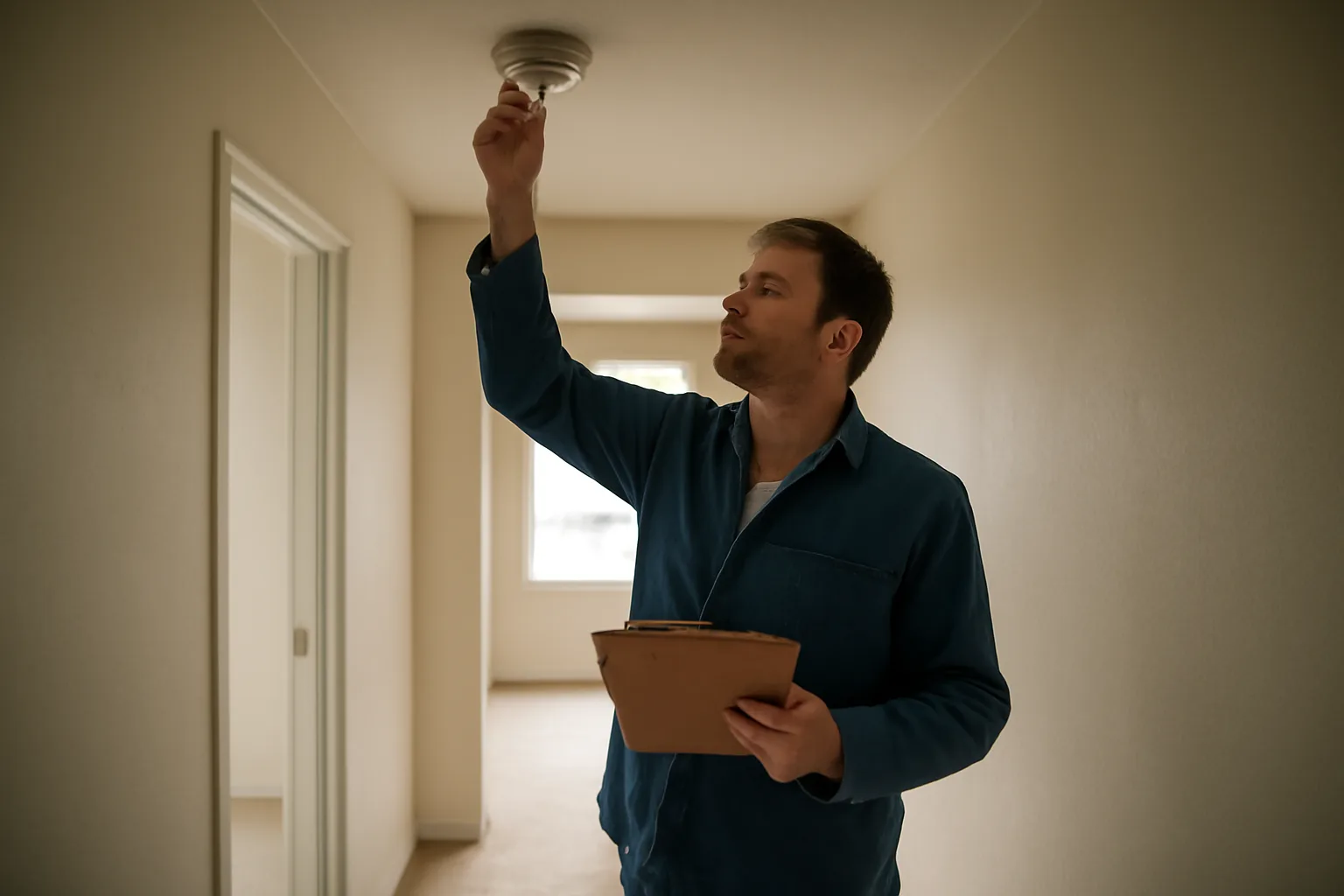
Becoming a landlord is mostly a paperwork and compliance process, not a licensing exam. Here's the order that actually makes sense, based on how most local programs are structured. First, confirm you can legally rent the property at all. Check zoning (some residential zones restrict short-term or multi-unit rentals), check your HOA or condo bylaws if applicable, and check whether your city requires a certificate of occupancy or a rental-specific permit before you can advertise a vacancy. Second, register or license the property with your city if required. This is the step people skip and then get a notice about, sometimes with a fine attached. Cities that require registration usually want it done before the first tenant moves in, not after. Third, get the unit inspection-ready if your city requires a pre-rental or periodic inspection. Working smoke and carbon monoxide detectors, no exposed wiring, functioning heat, and no obvious structural or pest issues are the baseline almost every jurisdiction checks. Fourth, screen tenants and use a written lease. No state requires a landlord to hold a special certification to screen tenants, but you are bound by the Fair Housing Act, which prohibits discrimination based on race, color, national origin, religion, sex, familial status, and disability in any housing transaction [4]. Fifth, get landlord insurance (different from homeowner's insurance) and set up a system for security deposits, since most states cap deposit amounts and set return deadlines by statute. None of this requires a state-issued "landlord license." It requires knowing your city's specific ordinance and following it before, not after, you have a tenant in place.
What is landlording, exactly?
Landlording is the day-to-day work of owning and managing a rental property, as opposed to just holding real estate as an investment. It covers finding and screening tenants, handling leases, collecting rent, maintaining the property, responding to repair requests, and dealing with turnover, code compliance, and local licensing. It's a mix of property management and small-business operations. Some landlords do all of it themselves (self-managing), others hire a property management company to handle tenant-facing work while the landlord still owns the compliance and financial responsibility. Either way, the landlord (the property owner or the entity holding title) is who cities hold accountable for rental license violations, not the property manager, unless the manager is separately named on the license.
What is a landlord under the law?
A landlord is the party that owns or leases out real property to a tenant in exchange for rent, under a lease or rental agreement. Legally, a landlord holds the title (or a leasehold interest they're subletting) and is the party bound by state landlord-tenant statutes and, where applicable, local rental licensing ordinances. Most states define "landlord" in their landlord-tenant code. Ohio, for example, defines "landlord" under its Landlords and Tenants chapter as "the owner, lessor, or sublessor of the residential premises," including anyone who owns or manages a building with rental units [3]. That statutory definition matters because it determines who has to follow the state's disclosure rules, repair obligations, and deposit rules, more than whoever collects the rent check.
What rights do tenants have without a lease?
A tenant without a written lease usually becomes a month-to-month tenant at will, and still has real legal protections. Most states treat an oral or unwritten rental arrangement as a periodic tenancy, meaning the tenant has the right to notice before eviction, the right to a habitable unit, protection from illegal lockouts or utility shutoffs, and in many states the right to a written notice period before the landlord can raise rent or end the tenancy. Ohio law, for instance, applies its landlord-tenant obligations chapter (Ohio Revised Code 5321) to residential rental agreements regardless of whether they're written, and requires landlords to keep premises in a fit and habitable condition and to comply with building and housing codes for any tenant, lease or no lease [5]. What a tenant without a lease typically doesn't have is a fixed term. Either party can usually end a month-to-month arrangement with proper notice, and the notice period is set by state statute (commonly 30 days, but check your state).
Who is responsible for a rental property walk-through inspection in California?
In California, the landlord is responsible for arranging the move-out (and, if requested, the pre-move-out) inspection walk-through, but the tenant has the right to be present. Under California Civil Code Section 1950.5, if a landlord intends to withhold any part of a tenant's security deposit for damage or cleaning, the tenant has the right to request an initial inspection before the tenancy ends and to be present during it [3]. The landlord must give the tenant at least 48 hours written notice of that inspection date and time, and afterward must provide an itemized statement of any proposed deductions along with a chance to fix issues before move-out [3]. This is a tenant-initiated right, not an automatic requirement. If the tenant doesn't ask for the pre-move-out walk-through, the landlord still does a final inspection after move-out to assess damage against the deposit, but there's no separate statutory requirement that the landlord invite the tenant to that final one, only the mandatory itemized deposit statement (Civ. Code 1950.5(g)) within 21 days of move-out [3]. This is separate from municipal rental inspections that some California cities run under their own rental housing inspection or proactive rental inspection programs (San Francisco, Los Angeles, and Oakland all have versions of this), which are administered by the city's housing or building department, not tied to the security deposit statute at all. Confirm with your city's rental housing inspection office which kind of inspection applies to your situation.
What can a landlord look at during an inspection?
This depends on which kind of inspection you mean, because "inspection" covers at least three different things landlords deal with. A city rental license inspection typically checks health and safety items: working smoke and carbon monoxide detectors, functioning heat and hot water, no exposed electrical wiring, secure locks on doors and windows, no active leaks or mold, adequate egress from bedrooms, and pest control. Inspectors generally aren't there to judge cleanliness or decor, just code compliance. A landlord's own routine or move-in/move-out inspection is broader, since it's about documenting the unit's condition, not code compliance. Landlords can note wear and tear on floors, walls, appliances, fixtures, and check that nothing is damaged beyond normal use. What a landlord generally cannot do during any inspection is search personal belongings, closets, or drawers unrelated to habitability or safety, or use the inspection as a pretext to intimidate a tenant. Most states require landlords to give reasonable advance notice, commonly 24 to 48 hours, before entering an occupied unit for non-emergency inspections, and to enter only at reasonable times. Ohio's statute, for example, requires landlords to give tenants "reasonable notice" of intent to enter, and specifies 24 hours is presumed reasonable, except in emergencies [6].
Why do landlords require renters insurance?
Landlords require renters insurance mainly to shift liability risk off themselves. A landlord's own property insurance covers the building and the landlord's own possessions and liability, but it typically does not cover a tenant's personal belongings if there's a fire, burst pipe, or theft, and it may not fully cover a lawsuit if the tenant's negligence (an unattended candle, an overflowing tub) causes damage to a neighbor's unit or the building. Requiring renters insurance, usually with a modest liability minimum like $100,000 and sometimes naming the landlord as an "additional interest" or "interested party," means the tenant's own policy is first in line to pay for the tenant's losses and for damage the tenant's negligence causes, instead of the landlord's policy (and premiums) absorbing it. It's a completely standard lease clause; most states allow landlords to require it as a lease condition, though a handful of jurisdictions restrict how it can be enforced, so check your state and city rules before making it a strict requirement. From a practical standpoint, renters insurance is cheap. National average renters insurance premiums run somewhere in the range of $15 to $30 a month depending on coverage and location, according to insurance industry data, which is a small ask relative to the protection it buys both parties.
How much notice does a landlord have to give?
Notice requirements vary by state and by the type of notice, so there's no single national number, but here's the general shape. For entering an occupied unit for non-emergency reasons (repairs, inspections, showing the unit), most states that specify a number require 24 to 48 hours advance notice. Ohio presumes 24 hours is reasonable notice under its entry statute [6]. For ending a month-to-month tenancy or raising rent on one, many states require 30 days notice, though some require 60 or 90 days for longer-term tenants or bigger rent increases, and some cities layer on their own longer notice requirements through local rent stabilization ordinances. For eviction after a lease violation or nonpayment, notice periods range widely by state, commonly somewhere between 3 and 30 days depending on the reason and the state's statute. Because this varies so much, the only reliable way to get the right number for your situation is to check your specific state's landlord-tenant statute (usually titled something like "Landlord and Tenant" in your state's revised code) and, separately, your city's rental ordinance if one applies. Don't rely on a number you saw for a different state.
What can a landlord not do in Ohio?
Ohio Revised Code Chapter 5321 sets out specific landlord obligations and prohibited actions. A landlord in Ohio cannot retaliate against a tenant for exercising a legal right, such as complaining to a building inspector or joining a tenant union; ORC 5321.02 prohibits a landlord from increasing rent, decreasing services, or bringing eviction action in retaliation for a tenant's good-faith complaint or code enforcement request . A landlord in Ohio also cannot enter a tenant's unit without reasonable notice except in an emergency, cannot shut off utilities to force a tenant out (a "self-help" eviction), and cannot remove a tenant's belongings or change the locks without going through the court eviction process. Ohio law requires landlords to comply with all applicable building, housing, and health codes, keep common areas safe, keep plumbing and electrical systems in good working order, and supply running water and reasonable amounts of hot water and heat, under ORC 5321.04 . Ohio landlords also cannot include certain waiver clauses in a lease. ORC 5321.13 voids any rental agreement provision that tries to waive a tenant's rights under this chapter, meaning a lease can't legally strip away these statutory protections even if the tenant signs it .
What license, permit, or registration should you actually check for?
| Rental registration | Listing the property and owner contact info with the city, sometimes free or low-cost | City housing or clerk's office | |
|---|---|---|---|
| Rental license | Annual or biennial license per unit, often tied to a fee and sometimes an inspection | City housing/code department | |
| Business license | General local business license applied to rental income activity | City finance or licensing department | |
| Certificate of occupancy/compliance | One-time or renewal certificate confirming the unit meets code, often required before a new tenant moves in | Building or code enforcement department | |
| Short-term rental permit | Separate permit for Airbnb-style stays, distinct from long-term rental rules | Varies, often planning department | Baltimore's program, for example, is explicitly called a "rental license," required annually per dwelling unit, currently $50 per unit through licenses issued via June 30, 2025 [2]. Los Angeles calls its version "registration" under the Rent Stabilization Ordinance and ties it to a per-unit annual fee that funds the Rent Adjustment Commission [3]. Same basic idea, completely different name and fee structure. Always confirm the exact term, fee, and renewal cycle with your specific city's rental licensing office, since these numbers change and vary block to block in some metro areas with overlapping jurisdictions. |
Here's a quick reference for the different names this shows up under, because the terminology changes city to city and that's part of why people get confused. | Term | What it usually means | Who runs it |
What happens if you skip the license or registration?
Consequences vary, but they tend to escalate the same general way in most cities: a notice of violation first, then a fine, then in some cities a bar on collecting rent or filing an eviction until you're compliant. Some cities impose fines per unit per day of noncompliance once a notice period passes. Others (again, city by city) will actually block a landlord from using the courts to evict a nonpaying tenant until the rental license is current, which can be the more painful consequence in practice since it ties your hands right when you need the eviction process most. If you've gotten a notice, the fastest path is usually to contact the rental licensing office directly, ask what's needed to cure the violation, and get current before the fine escalates. Waiting rarely helps since most of these ordinances charge daily or monthly penalties that compound. This is the kind of gap where a lot of small landlords get caught, not because they're trying to dodge the rules, but because they didn't know their city had a rental licensing program at all, especially if they inherited a property or converted a former primary residence into a rental. If you want a structured way to gather what your specific city requires (forms, inspection checklist items, typical fee ranges) before you're staring down a violation notice, the $79 City Rental License & Inspection Prep Packet walks through what to pull together for your municipality's process.
Where to check your specific city's requirements
Search your city's name plus "rental registration," "rental license," or "rental housing inspection" and look for a.gov domain. Most mid-size and large US cities with any kind of rental oversight program publish it under the housing department, code enforcement division, or sometimes the city clerk's business licensing page. If you can't find anything, that doesn't automatically mean there's no requirement, some smaller cities bury this under county health department pages or under a generic "business license" application. Call the city clerk's office and just ask directly: "Does this city require rental property owners to register or license their units?" That single phone call clears up more confusion than an hour of googling. If you own units in more than one city, keep a simple table of deadlines, since renewal cycles (annual, biennial) and fee amounts vary property to property, and missing a renewal is one of the most common ways landlords end up with an avoidable fine.
Frequently asked questions
Is there a national landlord license in the US?
No. There's no federal or nationwide landlord license. Requirements come from individual cities and counties, and sometimes states set baseline landlord-tenant law without requiring a license at all. What you need depends entirely on the property's specific city and county jurisdiction, so always check locally rather than assuming a national standard applies.
Do you need an LLC to be a landlord?
No, an LLC isn't legally required to rent out property. Many landlords form one for liability protection and tax structuring, but you can be a landlord as an individual owner. An LLC doesn't replace any city rental license or registration requirement either; those apply based on the property, not your ownership structure.
How to become a landlord with no experience?
Start by confirming your city's rental registration or licensing rules, get landlord insurance, use a written lease that complies with your state's landlord-tenant statute, and get familiar with the Fair Housing Act's protected classes before you screen your first tenant [4]. Many first-time landlords also read their state's specific landlord-tenant code chapter start to finish once, since it answers most day-to-day questions.
What is the difference between a landlord and a property manager?
A landlord owns the property and holds the legal responsibilities under the lease and local law. A property manager is hired to handle day-to-day tasks like rent collection, maintenance requests, and tenant communication, but the landlord (owner) usually remains the party responsible for city rental license compliance, unless the manager is separately listed on the license.
What rights do tenants have without a written lease?
A tenant without a written lease generally becomes a month-to-month tenant, with rights to notice before eviction, a habitable unit, protection from illegal lockouts, and applicable state landlord-tenant protections, since most state codes apply regardless of whether the agreement is written [6]. What's usually missing is a fixed lease term, so either party can end the tenancy with proper notice.
Can a landlord require renters insurance?
Yes, in most states a landlord can require tenants to carry renters insurance as a lease condition, often with a minimum liability amount like $100,000. It protects the tenant's belongings and shifts liability for tenant-caused damage away from the landlord's own policy. A few jurisdictions restrict enforcement details, so check state and city rules.
How much notice does a landlord have to give before entering a unit?
Most states with a specific rule require 24 to 48 hours notice for non-emergency entry. Ohio presumes 24 hours is reasonable notice under its entry statute [8]. Emergencies (fire, major leak, imminent danger) typically don't require advance notice. Always confirm your specific state's statute since the exact number varies.
What can a landlord not do in Ohio?
An Ohio landlord cannot retaliate against a tenant for a good-faith complaint (ORC 5321.02) [9], cannot enter without reasonable notice absent an emergency, cannot shut off utilities or change locks to force a move-out, and cannot include lease clauses waiving a tenant's statutory rights, since ORC 5321.13 voids those waivers [11].
What can a landlord look at during a rental inspection?
A city licensing inspection generally checks safety items: smoke and carbon monoxide detectors, heat, hot water, exposed wiring, secure locks, pest issues, and egress. A landlord's own move-in/move-out inspection documents general unit condition. Inspectors and landlords generally cannot search personal belongings unrelated to habitability or safety during either type.
Who does the move-out walk-through inspection in California?
The landlord arranges it, but under California Civil Code 1950.5, the tenant has the right to request a pre-move-out inspection and be present, with at least 48 hours written notice from the landlord [7]. Separately, some California cities run their own rental housing inspections tied to local licensing, not the deposit statute.
What happens if you don't register your rental property with the city?
Consequences vary by city but commonly include a notice of violation, then escalating fines (sometimes daily), and in some cities a block on filing eviction actions until you're compliant. Contact your city's rental licensing office as soon as you get a notice, since most fine structures compound the longer you wait.
Is landlording considered a business?
Yes, functionally it is, even for a single-unit owner. Rental income is generally reported as business or rental income on tax returns, and many cities treat rental activity as subject to local business license or rental registration rules regardless of how many units you own.
Sources
- HUD, Fair Housing Act protected classes: The Fair Housing Act prohibits housing discrimination based on race, color, national origin, religion, sex, familial status, and disability
- Ohio Revised Code 5321.01, Definitions: Ohio statutory definition of 'landlord' as owner, lessor, or sublessor of residential premises
- Ohio Revised Code 5321.04, Landlord obligations: Ohio landlord obligations to maintain fit and habitable premises apply to residential rental agreements including unwritten/oral ones
- California Civil Code Section 1950.5: Tenant's right to request a pre-move-out inspection with 48 hours notice and landlord's itemized deposit deduction statement requirement within 21 days
- Ohio Revised Code 5321.02, Retaliation prohibited: Ohio law prohibits landlord retaliation against a tenant for a good-faith complaint or code enforcement request
- Ohio Revised Code 5321.13, Waiver prohibited: Ohio voids lease provisions attempting to waive a tenant's statutory rights under chapter 5321