Last updated 2026-07-26
TL;DR
Boston requires certificate-of-fitness inspections for most rental units at least once every five years, plus a re-inspection whenever a unit turns over to a new tenant. Owner-occupied buildings with fewer units are sometimes exempt. Inspections check smoke and CO alarms, egress, sanitation, and electrical safety. Confirm current fees and scheduling with the Inspectional Services Department before your deadline.
Does Boston require rental inspections?
Yes. Boston's rental inspection rule lives in the city's Municipal Code, specifically the sanitary and housing provisions enforced by the Inspectional Services Department (ISD), and it works alongside the statewide State Sanitary Code, 105 CMR 410, which governs minimum standards of fitness for human habitation across Massachusetts [1][2]. The city ordinance (commonly cited as Chapter III-1900 in Boston's code of ordinances dealing with the inspection of residential rental units) requires that most non-owner-occupied rental units get inspected periodically, generally on a cycle of at least once every five years, with additional inspections tied to tenant turnover [3]. The idea is to catch code violations, like broken smoke detectors, blocked exits, or pest infestations, before they turn into emergencies or lawsuits. If you own a triple-decker with an owner-occupied unit, or a smaller building where you live on-site, you may qualify for a partial exemption. Owner-occupied buildings of certain sizes are treated differently than fully rented multi-family properties under Boston's rules, so don't assume the standard cycle applies to your situation without checking [3]. Confirm your building's exact classification and inspection cycle with Boston's Inspectional Services Department before you plan around any assumed schedule. This matters even if you only have one or two units. Boston doesn't reserve inspection requirements for big corporate landlords. A single-family home you rent out, a two-family you inherited, a basement unit in your own house, all of these can trigger inspection obligations depending on occupancy and ownership structure.
How often does Boston inspect rental units?
| Routine cycle | At least every 5 years | Full unit inspection | |
|---|---|---|---|
| Tenant turnover | Each new tenancy | Full unit inspection | |
| Tenant complaint | As filed | Focused, but can expand | If you're managing several units across different buildings, staggered turnover means staggered inspection dates. Keep a simple spreadsheet. It's the cheapest compliance tool you'll ever use. |
The baseline cycle is once every five years for most rental units subject to the ordinance, but two other triggers matter more in daily practice: tenant turnover and complaints [3]. Every time a unit gets a new tenant, Boston's rule generally requires a fresh inspection before or shortly after occupancy begins, separate from the five-year cycle. That means a landlord who turns over units frequently, say an owner running short-term or high-turnover leases, may face inspections far more often than once every five years. If you've got stable long-term tenants who never move, you might only see the inspector once every five years like clockwork. Complaint-driven inspections are the third path. A tenant who calls 311 or files directly with ISD about a leaking roof, no heat, or pest problems can trigger an inspection at any time, independent of your scheduled cycle. These inspections tend to be narrower, focused on the specific complaint, but inspectors are allowed to note other visible violations while they're there. | Trigger | Frequency | Scope |
What does a Boston rental inspection check?
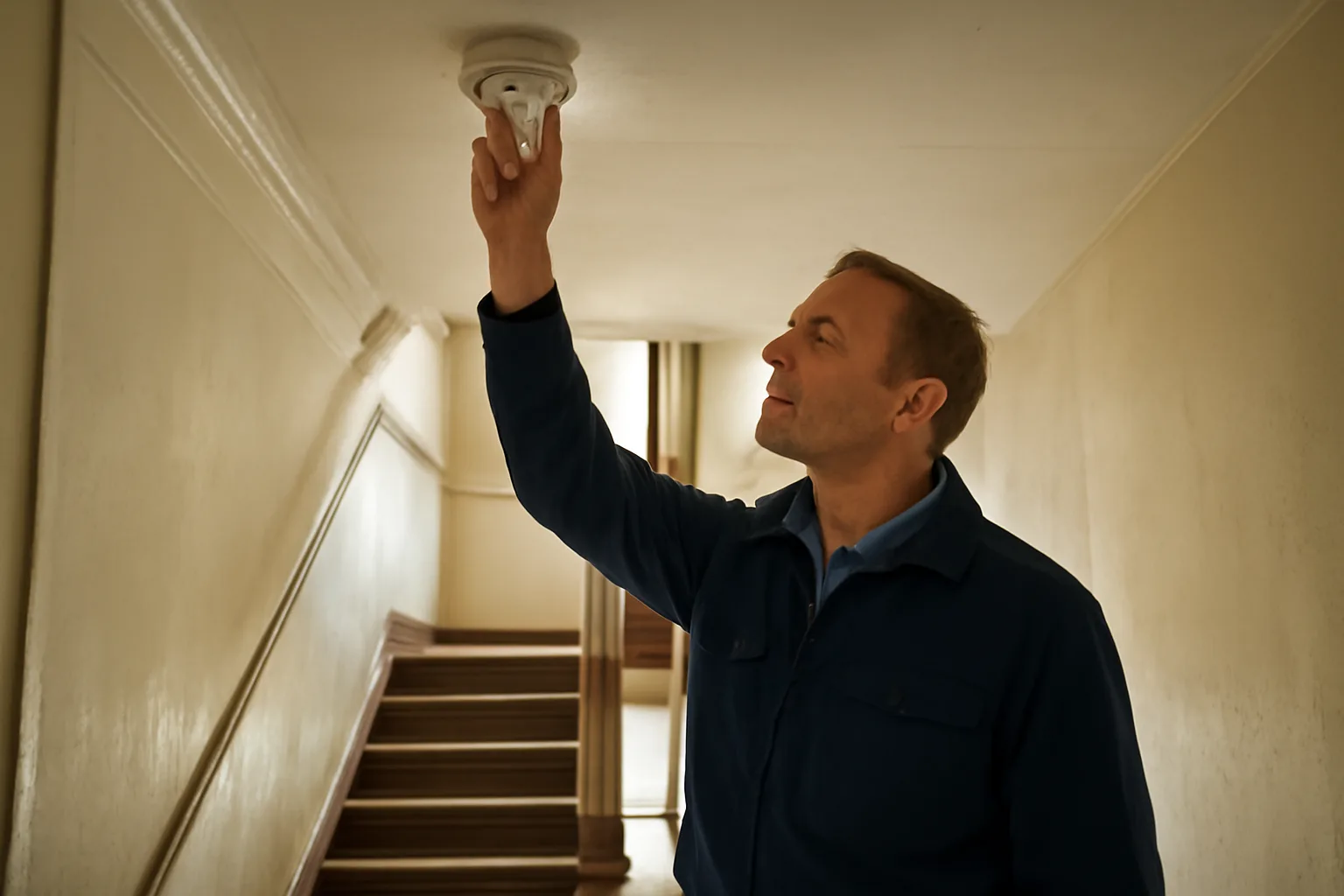
Inspectors are looking at the same baseline that shows up in the State Sanitary Code: structural safety, sanitation, and life-safety systems [2]. In practice that means: Smoke and carbon monoxide alarms, correctly placed and functioning. Massachusetts law under M.G.L. c. 148, § 26F requires smoke detectors in specific locations depending on when the building was constructed and how many units it has, and CO alarms are required under M.G.L. c. 148, § 26F1/2 in most residential occupancies [4][5]. Boston inspectors check both. Egress. Are windows operable? Are fire escapes and stairwells clear? Is there a legal second means of exit where required? This is one of the most common failure points in older triple-deckers where a previous owner boarded up a window or blocked a fire escape with storage. Electrical and plumbing basics. Exposed wiring, missing GFCI outlets near water sources, working hot water, no active leaks. Inspectors aren't doing a full electrical audit, but obvious hazards get flagged. Sanitation and pest control. Signs of rodent or insect infestation, working trash disposal, no accumulated garbage. General habitability. Adequate heat (Massachusetts requires heat to be maintained at specific minimum temperatures during the heating season under 105 CMR 410.201), working locks on exterior doors, and no structural hazards like crumbling ceilings [2]. This question comes up constantly, and it's more than a Massachusetts issue: who is responsible for rental property walk through inspection California style questions get searched everywhere because tenants and owners often disagree about who has to be present and who bears the cost of repairs found. In Boston, the inspection itself is coordinated through ISD and the landlord is responsible for scheduling access to the unit; tenants generally must allow entry for a legally required inspection, though normal notice rules still apply for routine, non-emergency access.
How much does a Boston rental inspection cost?
Fees vary by unit count and inspection type, and the city updates its fee schedule periodically. Rather than guess, confirm the current fee with Boston's Inspectional Services Department before budgeting, since municipal fee schedules change and a wrong number here just wastes your time. What you can plan around: most cities running similar programs charge somewhere in the range of $50 to $150 per unit for a registration or inspection fee, plus potential re-inspection fees if you fail the first visit and need a follow-up. Boston's actual fee should be confirmed directly rather than assumed from that range. The bigger cost isn't the fee. It's the repair work uncovered during inspection. A blocked fire escape, missing smoke detectors, or an outdated electrical panel can run from a $30 hardware store fix to a four-figure repair depending on what's wrong. Budgeting time and a small repair fund before your inspection date is smarter than hoping nothing gets flagged. If you fail and don't fix the issue by the reinspection deadline, you're looking at code enforcement action, which in Massachusetts housing court can include fines. Under M.G.L. c. 111, § 127A, local boards of health (and by extension inspectional services departments enforcing sanitary code violations) can pursue orders and penalties for uncorrected violations, and repeated non-compliance escalates quickly [6].
What happens if you fail a Boston rental inspection?
You get a written list of violations and a deadline to correct them, typically ranging from immediate (for emergency hazards like no heat or a gas leak) to 30 days or more for less urgent items, depending on the nature of the violation under 105 CMR 410 [2]. Emergency violations, meaning conditions that endanger health or safety right now, get the shortest fix windows, sometimes 24 hours. Non-emergency violations get longer, and the inspector's report should specify the exact deadline for each item. Miss the deadline and you're subject to re-inspection fees, and potentially a citation. Massachusetts sanitary code enforcement gives local boards of health authority to condemn a unit as unfit for habitation if violations are severe enough and uncorrected, which can force you to stop renting the unit until it's fixed [2]. That's the outcome every landlord wants to avoid: lost rent plus repair costs plus the reputational hit of a condemned unit on public record. The good news is most failures are fixable fast. A missing smoke detector costs under $20 and ten minutes to install. A blocked fire escape just needs the junk removed. The violations that actually hurt are structural (foundation issues, failing roofs) or systemic (outdated knob-and-tube wiring throughout a building), and those you should know about long before an inspector shows up, ideally from your own periodic walk-throughs.
How to become a landlord in Massachusetts
There's no single state license required just to become a residential landlord in Massachusetts. What you need instead is a combination of local registration, tax registration, and compliance with state landlord-tenant law. Start with the property itself: does it meet the State Sanitary Code baseline for habitability before you list it? Then check your city or town's local rental registration or licensing rules; Boston, Cambridge, Worcester, and a growing list of Massachusetts municipalities require some form of rental registration or inspection program, and the rules differ by city [3]. You'll also need to register with the Massachusetts Department of Revenue if you're collecting rent, since rental income is taxable, and depending on your structure you may want an LLC to separate personal and rental liability (this is a legal and tax decision worth discussing with an accountant or attorney, not something to DIY from a blog post). Basic landlord tasks: a lease or written tenancy terms, a system for collecting rent and tracking maintenance requests, insurance (see below), knowledge of security deposit rules under M.G.L. c. 186, § 15B (which is strict in Massachusetts, requiring deposits held in a separate interest-bearing account with specific receipt and return timelines), and a plan for what happens when something breaks at 11pm on a Sunday [7]. If you're just getting started, resources like landlord landlords basics guides and general landlord primers can walk through the fundamentals before you sign your first lease.
What is landlording, and what exactly is a landlord?
A landlord is the owner (or authorized agent of the owner) of real property who rents that property to another person, called a tenant, in exchange for payment, usually monthly rent. That's the legal core of it. Everything else, maintenance, screening, collections, is operational detail layered on top. "Landlording" is the informal term for the ongoing work of managing rental property: screening tenants, handling repairs, collecting rent, managing turnover, staying compliant with local and state law, and dealing with the unglamorous stuff like snow removal and trash schedules. It's part business, part facilities management, part legal compliance. People treat it as a side hustle and some treat it as a full career, and the amount of hands-on work scales with unit count and how much you self-manage versus hire out to a property manager. A single-unit landlord renting out a basement apartment in their own home has a very different day-to-day than someone running twenty scattered-site units. What doesn't change with scale is the legal responsibility. One unit or fifty, you're bound by the same state sanitary code, the same security deposit law, and in cities like Boston, the same inspection ordinance.
What rights do tenants have without a lease?
Even without a written lease, tenants in Massachusetts have real legal protections, because a tenancy can exist orally or simply by the tenant paying rent and the landlord accepting it. This creates what's called a tenancy at will under M.G.L. c. 186, § 12 [8]. A tenant-at-will still gets the full protection of the State Sanitary Code: the unit has to be habitable, heat and hot water have to be maintained, and the landlord can't retaliate against a tenant for reporting code violations. Security deposit rules under c. 186 § 15B still apply if a deposit was collected. Eviction still requires proper legal process through housing court; a landlord cannot simply lock a tenant out or shut off utilities to force them out, and doing so can expose the landlord to statutory damages. The main practical difference without a lease is notice. A tenancy-at-will in Massachusetts generally requires notice equal to the rental period (commonly 30 days for a month-to-month tenancy) to terminate, versus whatever term is specified in a written lease. Rent can also be raised more easily without a lease locking in a fixed term, but the landlord still has to give proper notice before changing terms. This is a topic worth reading further on if you're managing any month-to-month arrangement; resources on tenants rights and tenant rights go deeper into what protections carry over even without a signed lease.
How much notice does a landlord have to give before entering or ending a tenancy?
For entry into an occupied unit, Massachusetts law doesn't set one universal statewide notice number for routine non-emergency entry the way some states do, but the standard practice, and what most leases specify, is 24 hours advance notice for non-emergency access like repairs or showings. Emergency entry (fire, gas leak, burst pipe) doesn't require advance notice. For ending a tenancy-at-will, M.G.L. c. 186, § 12 requires notice equal to the length of the tenancy interval, which for a standard month-to-month tenancy means 30 days notice, given at least 30 days before the end of a rental period [8]. A tenancy for a fixed term under a lease simply ends on the date specified, no additional notice needed unless the lease says otherwise, though many landlords send a courtesy non-renewal notice anyway. For inspections specifically tied to Boston's rental inspection ordinance, ISD or the property owner typically needs to arrange access with the tenant in advance; reasonable notice for a scheduled compliance inspection is standard practice even though the exact number of hours isn't uniformly codified the same way entry-for-repair notice is. Confirm specific inspection scheduling and notice expectations directly with Boston's Inspectional Services Department, since the exact administrative process can differ from routine landlord-initiated entry.
Why do landlords require renters insurance?
Renters insurance covers a tenant's personal belongings and personal liability, which matters to a landlord for a very specific reason: your own landlord/property insurance policy generally does not cover a tenant's possessions, and it may not fully cover liability if a tenant's guest gets injured or a tenant's negligence (like an unattended candle) causes a fire. Requiring renters insurance shifts a meaningful chunk of liability exposure off the landlord's policy and onto a separate, cheap policy the tenant holds. Renters insurance nationally tends to run in the range of roughly $15 to $30 per month depending on coverage limits and location, which is a small ask relative to the protection it buys both parties. It also protects the landlord indirectly: if a tenant's stuff burns up in a fire that started in a shared wall or from a plumbing failure, a tenant without insurance has a much stronger incentive to sue the landlord to recover their losses. A tenant with their own policy has another avenue first. Massachusetts landlords can generally require renters insurance as a lease condition, though the specifics of what you can require and how you enforce it should be spelled out clearly in the lease itself, and this is exactly the kind of clause worth having reviewed by an attorney rather than copied from a template.
What can a landlord look at during an inspection, and what can't a landlord do?
During a scheduled inspection, whether it's Boston's ISD or your own periodic walk-through, you or the inspector can look at life-safety systems (smoke detectors, CO alarms, egress routes), general condition of fixtures (plumbing, electrical, heating), sanitation, and structural safety. Inspectors are not there to judge how tidy a tenant keeps their belongings or to search personal items; the focus is code compliance, not housekeeping style. What a landlord cannot do, in Massachusetts or in most states including the frequently-searched question about what a landlord cannot do in Ohio, tends to rhyme across jurisdictions even though specific statutes differ: a landlord generally cannot enter without proper notice except in a genuine emergency, cannot retaliate against a tenant for requesting repairs or reporting code violations, cannot shut off utilities or change locks to force a tenant out, and cannot discriminate based on protected characteristics under fair housing law (race, color, national origin, religion, sex, familial status, disability, and additional state-protected categories like age, marital status, and source of income under Massachusetts's own fair housing statute, M.G.L. c. 151B) [9]. Ohio's specific landlord-tenant law lives in Ohio Revised Code Chapter 5321, which similarly bars retaliatory conduct and requires habitability standards, but the exact notice periods and remedies differ from Massachusetts, so a landlord operating in both states needs to track two separate statutory frameworks rather than assuming one state's rules apply in the other [10]. If you're prepping multiple units for a compliance inspection and want a structured way to organize the paperwork, checklists, and documentation cities typically ask for, that's the kind of prep work our $79 City Rental License & Inspection Prep Packet is built around, though the packet is a documentation and prep aid, not a legal service or a guarantee you'll pass.
Frequently asked questions
How often does Boston require rental inspections?
Boston generally requires rental units to be inspected at least once every five years under the city's rental inspection ordinance, plus an additional inspection each time a unit changes tenants. Complaint-driven inspections can also happen anytime a tenant reports a problem to 311 or Inspectional Services. Confirm your building's exact cycle with Boston ISD.
Are owner-occupied buildings exempt from Boston's rental inspection ordinance?
Some owner-occupied buildings, particularly smaller multi-family properties where the owner lives on-site, get different treatment under Boston's rental inspection rules than fully-rented buildings. Exemption details depend on unit count and occupancy status, so confirm your building's classification directly with Boston's Inspectional Services Department rather than assuming you qualify.
How to become a landlord?
There's no single license required in most states. You need a property that meets local habitability code, local rental registration if your city requires it, tax registration for rental income, a lease or written tenancy terms, insurance, and working knowledge of your state's landlord-tenant law, including security deposit and notice rules.
Who is responsible for a rental property walk-through inspection in California?
In California, the landlord is generally responsible for scheduling and conducting the move-in/move-out walk-through inspection, and state law (Civil Code Section 1950.5) gives tenants the right to request an initial move-out inspection before vacating so they can fix issues before final deposit deductions are made.
What is landlording?
Landlording is the everyday work of owning and managing rental property: screening tenants, collecting rent, handling repairs, managing turnover, and staying compliant with local and state housing law. It ranges from a light side activity for a one-unit owner to a full operational job for owners running many scattered-site properties.
What is a landlord, exactly?
A landlord is the owner of real property, or their authorized agent, who rents that property to a tenant in exchange for payment. The legal relationship is defined by state landlord-tenant statutes and, for rentals, often a lease or oral tenancy agreement.
What rights do tenants have without a lease?
A tenant without a written lease still has full legal protection under state sanitary and habitability codes, security deposit law where applicable, and protection from illegal lockout or retaliation. In Massachusetts this is called a tenancy at will and generally requires 30 days notice to terminate under M.G.L. c. 186, Section 12.
How much notice does a landlord have to give before entering a unit?
Massachusetts doesn't set one universal statewide notice number for routine entry, but 24 hours advance notice for non-emergency access is standard practice and commonly written into leases. Emergency entry, like a gas leak or active flooding, doesn't require advance notice.
What can a landlord look at during an inspection?
A landlord or city inspector can check smoke and CO alarms, egress routes, plumbing and electrical basics, heating, sanitation, and general structural condition. Inspections focus on code compliance and safety, not on judging how a tenant keeps their personal belongings.
What can't a landlord do in Ohio?
Under Ohio Revised Code Chapter 5321, a landlord cannot retaliate against a tenant for reporting code violations, cannot shut off utilities or change locks to force a tenant out, must maintain the unit in a habitable condition, and cannot discriminate based on protected characteristics under fair housing law.
Why do landlords require renters insurance?
A landlord's own property insurance typically doesn't cover a tenant's belongings or fully cover liability from a tenant's negligence. Requiring renters insurance, usually $15 to $30 a month, shifts that risk off the landlord's policy and gives tenants their own recovery path if there's a fire, theft, or injury claim.
What happens if a Boston rental unit fails inspection?
You get a written violation list with correction deadlines, often immediate for emergency hazards and up to 30 days or more for lesser issues. Miss the deadline and you risk re-inspection fees, citations, or in serious uncorrected cases, the unit being declared unfit for habitation under the State Sanitary Code.
Does Boston charge a fee for rental inspections or registration?
Yes, Boston charges fees tied to its rental inspection and registration program, but the exact current amount changes periodically. Confirm the current fee schedule directly with Boston's Inspectional Services Department before budgeting, since published third-party estimates can go stale.
Sources
- Mass.gov, State Sanitary Code overview: Massachusetts enforces a statewide minimum standard of fitness for human habitation under the State Sanitary Code.
- Massachusetts 105 CMR 410, State Sanitary Code Chapter II: Minimum standards for heat, sanitation, egress, and habitability that Boston inspections check against.
- City of Boston, Rental Housing / Inspectional Services rental inspection program: Boston requires periodic inspection of rental units and different rules apply to owner-occupied buildings.
- Massachusetts General Laws c. 148, Section 26F: Smoke detector requirements for residential buildings in Massachusetts.
- Massachusetts General Laws c. 148, Section 26F1/2: Carbon monoxide alarm requirements for most residential occupancies in Massachusetts.
- Massachusetts General Laws c. 111, Section 127A: Local boards of health authority to enforce sanitary code violations and pursue penalties.
- Massachusetts General Laws c. 186, Section 15B: Security deposit handling rules including separate account and receipt/return timelines.
- Massachusetts General Laws c. 186, Section 12: Notice requirement to terminate a tenancy at will, generally equal to the rental period.
- Massachusetts General Laws c. 151B: Massachusetts fair housing law prohibiting discrimination based on protected categories including source of income and age.
- Ohio Revised Code Chapter 5321: Ohio landlord-tenant law governing habitability, retaliation, and landlord obligations.
- California Civil Code Section 1950.5: California tenant right to request an initial move-out inspection before final deposit deductions.