Last updated 2026-07-26
TL;DR
Landlording means managing rental property: screening tenants, collecting rent, handling repairs, and following state notice and inspection rules. Notice periods for entry typically run 24 to 48 hours depending on state law. Tenants without a written lease still have rights under state landlord-tenant statutes, including habitability protections and required notice before entry or eviction.
What is landlording, exactly?
Landlording is the day-to-day work of owning and managing a rental property: finding tenants, signing leases, collecting rent, handling maintenance calls, and staying compliant with local and state law. It's a mix of bookkeeping, customer service, and light legal work, and most people learn it by doing it, often after inheriting a property or buying their first duplex. The term shows up a lot in real estate forums and older property management books, but there's no formal licensing requirement to call yourself a landlord in most states. You don't need a real estate license to rent out your own property. You do, in a growing number of cities, need a rental registration or rental license before you can legally rent it out at all. That's a separate, city-level requirement layered on top of state landlord-tenant law. If you're new to this, the learning curve is mostly about paperwork and deadlines. Security deposit handling rules. Notice periods. Habitability standards. And, if your city requires it, inspection scheduling. None of it is hard, but missing a step, like renting out a unit without a required city license, can mean fines or an inability to evict a nonpaying tenant until you fix it.
What is a landlord, legally speaking?
A landlord is the party who owns or controls a rental property and grants a tenant the right to occupy it in exchange for rent, under a lease or rental agreement. Legally, the landlord carries specific duties: keeping the unit habitable, honoring the lease terms, and following state-mandated procedures for entry, deposits, and eviction. Most state landlord-tenant statutes define this relationship explicitly. Ohio's landlord-tenant law spells out landlord obligations under Ohio Revised Code 5321.04, including keeping the premises "in a fit and habitable condition" and maintaining common areas [1]. California's Civil Code Section 1941 similarly requires landlords to maintain rental units so they're fit for human occupation [2]. The legal definition matters because it triggers obligations regardless of whether you think of yourself as a "real" landlord or just someone renting out a spare unit. If you collect rent for occupancy of a dwelling you own, you're a landlord under your state's law, full stop.
How to become a landlord: the practical steps
Becoming a landlord is less about credentials and more about sequencing. Here's the rough order most first-timers follow: 1. Buy or convert a property into a legal rental unit, checking local zoning first (some cities restrict rentals in single-family zones or cap the number of units). 2. Check whether your city requires rental registration, a rental license, or a pre-rental inspection. This is the step people skip and regret; violation fines in some cities run from under $100 to several hundred dollars per unit per year for operating unregistered. 3. Get landlord liability insurance (a standard homeowner's policy usually doesn't cover rental use). 4. Set your rent based on comparable local listings and any local rent control rules. 5. Screen tenants (credit, income, rental history, background check) within the bounds of the Fair Housing Act, which bars discrimination based on race, color, national origin, religion, sex, familial status, and disability [3]. 6. Sign a written lease. It's not always legally required, but it protects both sides and sets clear terms. 7. Collect the security deposit within your state's cap and handle it according to your state's escrow or interest rules. 8. Register with your city's rental program if applicable, and schedule any required inspection. Most of the early mistakes new landlords make aren't about tenants. They're about missing a local registration step, or assuming their city doesn't have one. If you're in a city with mandatory rental licensing, check with your city rental licensing office before you list the unit, not after.
Who is responsible for a rental property walkthrough inspection in California?
In California, the landlord is responsible for conducting move-in and move-out walkthrough inspections, and state law gives tenants a specific right to request an initial inspection before move-out. California Civil Code Section 1950.5(f) requires landlords, at the tenant's request, to conduct an initial inspection "no earlier than two weeks before the termination... occurs" and to give the tenant an itemized list of deficiencies with a chance to fix them before the final deposit deduction [2]. The landlord (or their property manager) schedules and performs the inspection, but the tenant has the right to be present. The landlord must give reasonable notice of the date and time. For the final move-out inspection and any deposit deductions, landlords have 21 days after the tenant vacates to return the deposit along with an itemized statement of deductions, per the same code section [2]. This is separate from any city-required rental inspection program. Some California cities, like Los Angeles under its Systematic Code Enforcement Program, run their own periodic habitability inspections independent of the tenant move-in/move-out process. Check with your specific city's housing or rent stabilization department to see if a program applies to your unit.
What can a landlord look at during an inspection?
During a routine or move-out inspection, a landlord can generally check for property damage beyond normal wear and tear, safety hazards (smoke detectors, exposed wiring, mold), unauthorized occupants or pets, cleanliness, and whether major systems (plumbing, heating, appliances) are functioning. What a landlord cannot do is treat the inspection as a pretext to search personal belongings, go through drawers or closets unrelated to the property's condition, or use the visit to harass a tenant or retaliate for a complaint. Most state laws require landlords to give notice before entering for an inspection, even a routine one, and to limit the visit to reasonable purposes and hours. Some leases specify what's covered, but the baseline rule is simple: the landlord is checking the condition of the property, not conducting a personal inspection of the tenant's belongings. City-mandated rental inspections, the kind tied to a rental license renewal, are usually narrower and code-focused. Smoke and carbon monoxide detectors. Egress windows. Electrical panel condition. Water heater venting. Handrails. Pest or mold issues. Building inspectors doing a licensing inspection are not there to assess cleanliness or personal property; they're checking code compliance items on a specific checklist, which your city's rental licensing office can usually provide in advance.
How much notice does a landlord have to give before entering?
| California | 24 hours presumed reasonable | Cal. Civ. Code Section 1954 [2] | |
|---|---|---|---|
| Ohio | 24 hours | Ohio Rev. Code 5321.04(A)(8) [1] | |
| Florida | 12 hours | Fla. Stat. 83.53 [4] | |
| Washington | 2 days (48 hours) | Wash. Rev. Code 59.18.150 [5] | Emergencies (fire, burst pipe, gas leak) are the standard exception; landlords can enter without advance notice when there's immediate danger to life or property. Outside of emergencies, entering without proper notice can expose a landlord to a claim for violation of the tenant's right to quiet enjoyment, and in some states, statutory damages. |
Notice requirements vary by state, but most fall between 24 and 48 hours for non-emergency entry. California requires "reasonable notice," which the same Civil Code Section 1954 defines as presumed to be 24 hours in writing, absent evidence otherwise [2]. Many states, like Texas, don't set a specific statutory number of hours in their landlord-tenant code but require notice be reasonable under the circumstances. Here's a rough comparison of common notice standards: | State | Standard notice before entry | Source |
What rights do tenants have without a written lease?
Tenants without a written lease still have full rights under their state's landlord-tenant statute; the lack of paperwork doesn't strip away legal protections. An oral or month-to-month tenancy is still a legal tenancy. Tenants without a lease generally keep the right to a habitable unit, protection from illegal lockouts or utility shutoffs, required notice before entry, and required notice before eviction. Ohio Revised Code 5321.04 applies to landlords regardless of whether the tenancy is written or oral, requiring habitability maintenance and code compliance [1]. Most states treat an unwritten, month-to-month arrangement as a periodic tenancy, meaning either party can end it with proper notice, usually 30 days, but the landlord still can't just change the locks or shut off power to force someone out. What tenants without a lease usually don't have is certainty on rent increase timing or renewal terms. Without a written document, those defaults fall back to whatever your state's statute says for periodic tenancies, and can be changed by the landlord giving the same notice required to terminate the tenancy (commonly 30 days).
Why do landlords require renters insurance?
Landlords require renters insurance mainly to shift liability and personal property risk off their own policy. A landlord's property insurance covers the building itself, not the tenant's belongings, and it typically doesn't cover a tenant's liability if they cause a fire, a bathtub overflow that damages the unit below, or a dog bite in a common area. Requiring renters insurance, usually with a minimum liability coverage amount, often $100,000, and sometimes naming the landlord as an "interested party" on the policy, means the tenant's own carrier handles those claims instead of the landlord's policy taking the hit. That matters because a claim against the landlord's policy would raise premiums or trigger a coverage dispute. It's a cheap requirement for tenants too. Renters insurance in the US commonly runs $15 to $30 a month depending on coverage and location, according to industry rate surveys, though your state's insurance department is the best source for local averages. Many leases now make renters insurance a lease condition, which is generally legal to require as long as it doesn't function as a way to discriminate against protected classes under the Fair Housing Act [3].
What can a landlord not do in Ohio?
In Ohio, a landlord cannot shut off utilities, change the locks, or remove a tenant's belongings to force them out, a practice generally called "self-help eviction." Ohio Revised Code 5321.15 specifically prohibits a landlord from causing the interruption of any utility service to a tenant's dwelling, and bars removing outside doors or windows, or removing the tenant's possessions, except through a proper legal eviction process [6]. Ohio landlords also cannot retaliate against a tenant for exercising a legal right, like reporting a code violation. Ohio Revised Code 5321.02 bars retaliatory conduct, including increasing rent, decreasing services, or threatening eviction, within specified circumstances after a tenant complaint [7]. And under Ohio Revised Code 5321.04, landlords cannot ignore their duty to keep the unit in a fit and habitable condition, maintain common areas, keep electrical, plumbing, and heating systems in good working order, and comply with local building and housing codes [1]. Eviction itself has to go through Ohio's forcible entry and detainer process in court. A landlord who locks a tenant out or removes their property without a court order can face liability for actual damages, and the tenant may be entitled to recover possession or terminate the rental agreement [6].
How does city rental licensing fit into all this?
A growing number of US cities layer a rental registration, license, or inspection requirement on top of state landlord-tenant law. These programs exist separately from the tenant-facing rules above, and they're enforced by a city housing or code department, not by your lease. Typically, a mandatory rental licensing city will require you to register each rental unit (sometimes annually, sometimes every two or three years), pay a per-unit fee (commonly ranging from under $50 to a few hundred dollars depending on the city, confirm with your city rental licensing office for the current fee), and pass a habitability or safety inspection covering things like smoke detectors, egress, electrical panels, and pest issues. Miss the deadline or operate without registering, and many cities allow fines that stack per unit per year. In some cities a landlord can't even file an eviction case until the property is properly licensed. If you're facing a first inspection or registration deadline notice, the fastest way to get organized is pulling together what most cities ask for: proof of ownership, a unit floor plan or count, smoke/CO detector compliance, and any prior violation history. Our City Rental License & Inspection Prep Packet is a $79 one-time tool built to help landlords assemble exactly that packet before their scheduled inspection, since scrambling the week before a code inspector shows up is how avoidable violations happen.
What should a first-time landlord do before their first rental inspection?
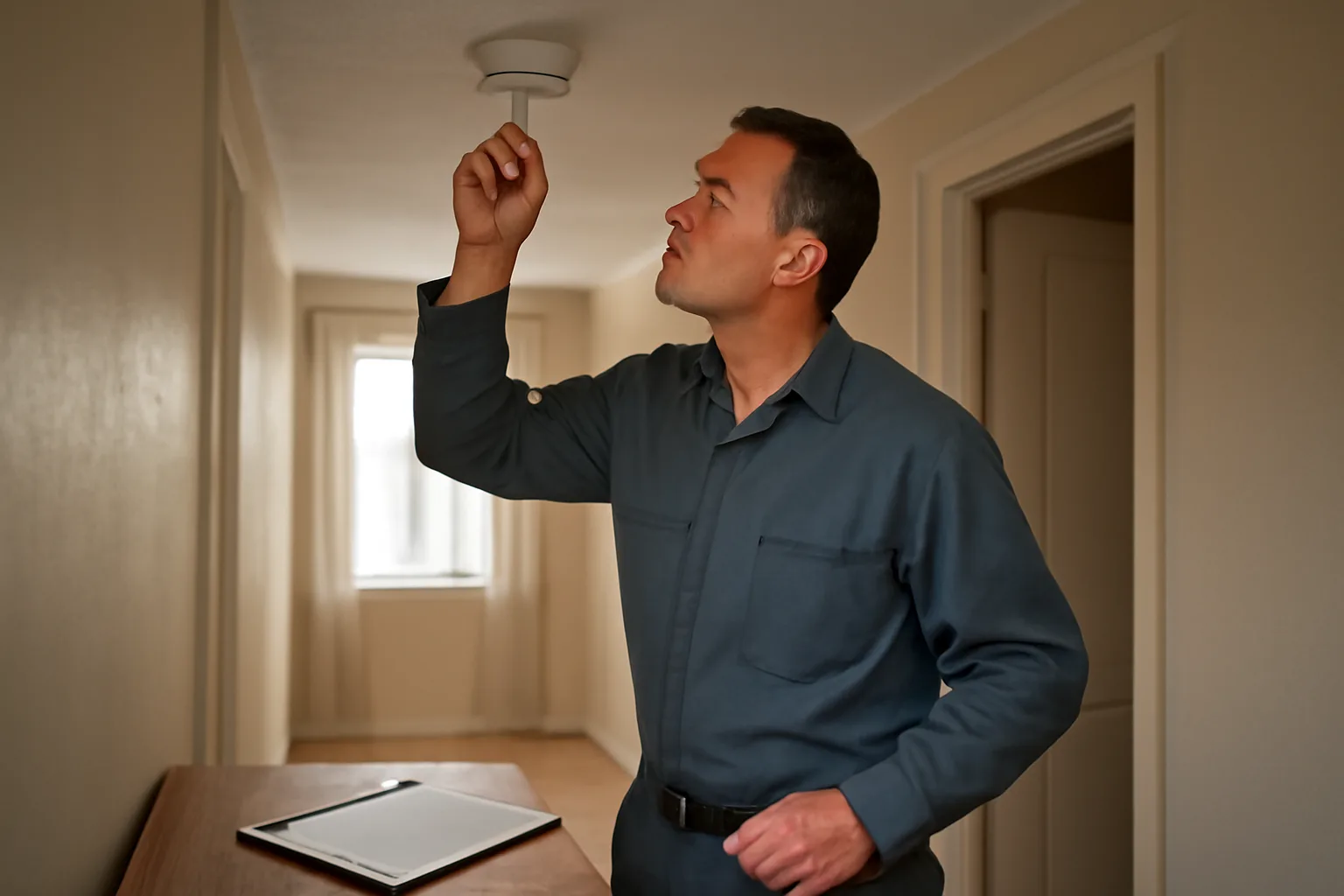
Before any inspection, whether it's a state-law move-in walkthrough or a city licensing inspection, walk the unit yourself first with a flashlight and a checklist. Test every smoke and carbon monoxide detector, check GFCI outlets in kitchens and bathrooms, confirm handrails are secure on any stairs with more than a few steps, and look for obvious water damage or pest signs. Most city inspection failures aren't about major structural issues. They're about small, fixable things: a missing smoke detector in a bedroom, an extension cord used as permanent wiring, a blocked second exit, or expired fire extinguisher tags. Fixing those before the inspector arrives is far cheaper than a reinspection fee, which in many cities runs $50 to $150 or more per reinspection (confirm with your city rental licensing office for the exact figure). Keep a folder, physical or digital, with your rental license or registration certificate, your last inspection report, receipts for any repairs made in response to violations, and your lease template. When an inspector or a tenant dispute references the property's condition, having dated documentation is the difference between a quick resolution and a drawn-out argument.
Frequently asked questions
How to become a landlord for the first time?
Buy or legally convert a property, check zoning and any city rental registration or licensing requirement, get landlord insurance, screen tenants under Fair Housing Act rules, sign a lease, and collect a deposit within your state's cap. Then register with your city's rental program if one applies and schedule any required inspection before you advertise the unit.
Who is responsible for a rental property walkthrough inspection in California?
The landlord is responsible for scheduling and conducting the walkthrough, but California Civil Code Section 1950.5(f) gives tenants the right to request an initial pre-move-out inspection, with the landlord required to provide an itemized list of deficiencies and a chance to fix them before final deposit deductions.
What is landlording?
Landlording is the practical work of owning and managing rental property: screening and leasing to tenants, collecting rent, handling repairs, and complying with state landlord-tenant law and any local rental registration or licensing rules. There's no license required to be a landlord in most states, but many cities require registration for the property itself.
What is a landlord?
A landlord is the person or entity that owns or controls a rental dwelling and grants occupancy rights to a tenant in exchange for rent. State law imposes specific duties on landlords, including habitability maintenance, as seen in Ohio Revised Code 5321.04 and California Civil Code Section 1941.
What rights do tenants have without a lease?
Tenants without a written lease keep full protections under state landlord-tenant law, including habitability rights, required notice before entry, and required notice before eviction. An oral or month-to-month tenancy is still legally binding; landlords generally must give the same notice (often 30 days) to end it or change terms as they would with a written lease.
How to be a landlord without making rookie mistakes?
Check your city's rental registration or licensing requirement before you list the unit, since operating unregistered can bring fines and block evictions in some cities. Screen tenants consistently under Fair Housing Act rules, put everything in writing, handle deposits per your state's cap and timeline, and keep dated records of every repair and notice.
Why do landlords require renters insurance?
Renters insurance shifts the tenant's personal property and liability risk off the landlord's own policy. If a tenant causes a fire or water damage, the tenant's insurer pays instead of the landlord's carrier, protecting the landlord's premiums and covering incidents a standard landlord policy excludes.
How much notice does a landlord have to give before entering?
It depends on the state. California presumes 24 hours written notice is reasonable under Civil Code Section 1954. Ohio also requires 24 hours under Revised Code 5321.04(A)(8). Florida requires 12 hours under Florida Statute 83.53. Washington requires two days under Revised Code of Washington 59.18.150.
What can a landlord look at during an inspection?
A landlord can check for property damage, safety issues (smoke detectors, wiring, mold), unauthorized occupants or pets, and whether major systems work. A landlord cannot search personal belongings unrelated to the unit's condition or use the inspection to harass or retaliate against a tenant.
What a landlord cannot do in Ohio?
Ohio landlords cannot shut off utilities, change locks, or remove a tenant's belongings to force them out; this self-help eviction is barred under Ohio Revised Code 5321.15. Landlords also cannot retaliate against tenants for legal complaints (5321.02) or ignore habitability duties under 5321.04.
Does every city require a rental license or inspection?
No. Rental licensing and inspection requirements are set city by city, not nationwide or even statewide in most cases. Some cities have no program at all, others require annual registration and periodic inspections. Always confirm directly with your specific city's rental licensing or housing office.
What happens if a landlord fails a rental inspection?
Most cities give landlords a set window, often 30 to 60 days, to fix cited violations and schedule a reinspection, which commonly carries its own fee. Continued noncompliance can lead to escalating fines, denial of license renewal, or in serious cases, an order restricting the unit from being rented until it passes. Confirm timelines with your city's rental licensing office.
Can a landlord charge a fee for a rental inspection?
In cities with mandatory rental licensing, the inspection fee is typically set by the city and paid by the landlord, not passed directly to the tenant as a separate charge, though it factors into overall rental costs. Fee amounts vary widely by city and unit count; confirm the current fee schedule with your city rental licensing office.
Sources
- Ohio Revised Code 5321.04, Landlord obligations: Ohio landlord habitability and maintenance duties, and 24-hour entry notice requirement
- California Civil Code Section 1950.5 and 1954 (via California Legislative Information): California security deposit, move-out inspection, and 24-hour entry notice rules
- HUD, Fair Housing Act overview: Fair Housing Act protected classes for tenant screening
- Florida Statute 83.53, Landlord's access to dwelling unit: Florida's 12-hour entry notice requirement
- Revised Code of Washington 59.18.150: Washington's 48-hour (2-day) entry notice requirement
- Ohio Revised Code 5321.15, Prohibited acts by landlord (self-help eviction): Ohio bars utility shutoffs, lockouts, and property removal without court eviction process
- Ohio Revised Code 5321.02, Retaliatory conduct by landlord prohibited: Ohio bars landlord retaliation against tenants for legal complaints