Last updated 2026-07-26
TL;DR
Boston requires most rental units to pass a code inspection at least once every 5 years under its rental inspection ordinance (or every 2 years for larger buildings and lodging houses), with landlords or their agents registering units and scheduling inspections through the Inspectional Services Department. Fines for unregistered or failed units can run into hundreds of dollars per violation.
What is Boston's rental inspection ordinance, and does it apply to my unit?
Boston's rental inspection program comes out of a city ordinance (Boston Municipal Code, Chapter IX, Section 9-1.3, sometimes cited as the Rental Unit Inspection Program) that requires most residential rental units in the city to be registered and inspected on a recurring schedule. The Inspectional Services Department (ISD) runs the program. The basic idea is simple: if you rent out a unit in Boston, the city wants proof, at least periodically, that it meets the State Sanitary Code (105 CMR 410) [1]. That means working smoke and carbon monoxide detectors, no active pest infestations, functioning heat, safe electrical, and no obvious structural hazards. Most owner-occupied two- and three-family homes where the owner lives in one unit get a partial exemption from the routine cycle in many Massachusetts inspection ordinances, but Boston's rules have specific carve-outs and you should not assume you're exempt just because you live on-site. Boston's ISD rental registration and inspection page and the ordinance text itself lay out which unit types are exempt and which aren't, so if you own a small multifamily in Boston, check with Boston ISD directly before assuming you're covered or excluded. If you're just getting oriented to the whole idea of city rental licensing, our city guides hub has a broader overview of how registration and inspection programs work across different municipalities, since Boston's model (recurring inspection cycle, no annual license fee model like Chicago's) is different from cities that charge yearly per-unit license fees.
How often does Boston require a rental inspection?
For most one-to-four unit rental buildings, Boston's ordinance calls for an inspection at least once every 5 years. Buildings with five or more units, and lodging or rooming houses, are typically inspected on a shorter cycle, often every 2 years, because turnover and life-safety risk are higher in those buildings. These cycles are baseline minimums, not guarantees you'll only see an inspector once every five years. ISD can and does inspect sooner in response to a tenant complaint, a 311 report, a fire or utility shutoff, or a code violation that surfaced through some other channel. A single bad tenant complaint about no heat in January can trigger an inspection well outside the routine cycle. If you own multiple small buildings around the city, don't assume they're all on the same clock. Registration dates and inspection cycles are often tied to when a specific building was first registered or last inspected, so a triple-decker you bought in 2019 might be due well before one you bought in 2022.
How do I register my rental property with the City of Boston?
Registration happens through Boston's Inspectional Services Department, and in most cases it's the property owner's legal responsibility, not the tenant's, to get the unit registered. You'll typically need the property address, unit count, owner or authorized agent contact information, and sometimes a copy of a valid lease or occupancy information depending on current ISD procedure. Fees for registration and inspection scheduling change periodically, so confirm the current per-unit or per-building fee with Boston ISD rather than relying on a number from an old blog post. As of recent cycles the city has charged a modest per-unit registration fee, but because ordinances get amended, treat any number you see online (including here) as something to verify directly with ISD before you budget for it. Landlords who skip registration entirely aren't just risking a missed inspection appointment. Under the ordinance, operating an unregistered rental unit is itself a violation separate from any code issue found inside the unit, and ISD can issue citations for both problems at once.
What does a Boston rental inspector actually check?
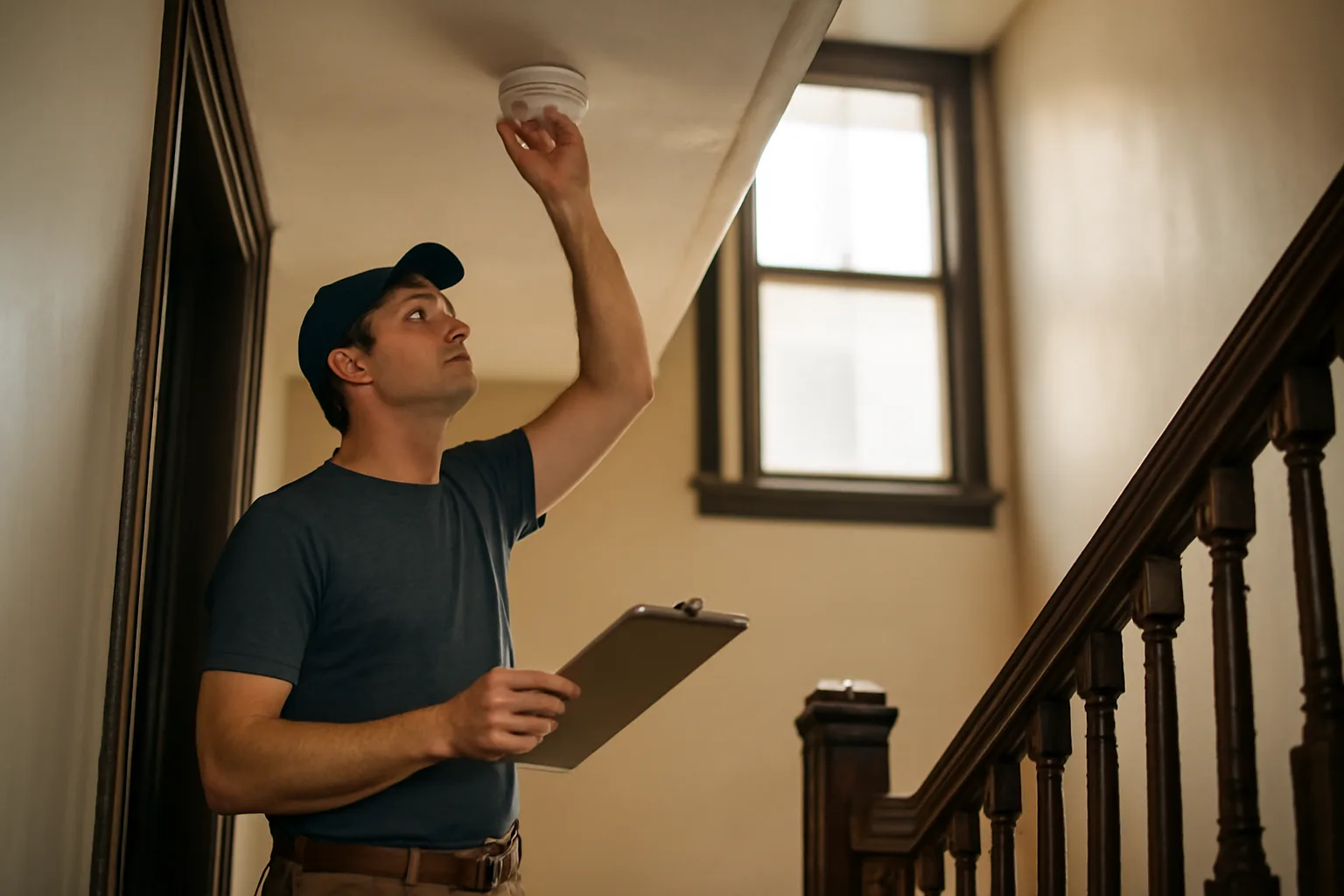
Inspectors are checking compliance with the Massachusetts State Sanitary Code, 105 CMR 410, which is the statewide minimum housing standard that every Massachusetts city and town rental inspection program enforces on top of any local ordinance [1]. In Boston, that means the inspector is looking at life-safety items first and general habitability second. Expect the inspector to check: working smoke detectors and carbon monoxide detectors in the required locations, functioning heating equipment capable of maintaining minimum temperatures (105 CMR 410.201 sets the minimum habitable temperature standard tied to heating season) [1], secure and code-compliant electrical outlets and wiring, no active leaks or moisture damage, egress windows and doors that open and close properly, handrails on stairs, and no evidence of pest infestation. They'll also generally check that the unit isn't overcrowded relative to the number of legal bedrooms and that any smoke/CO detectors meet current Massachusetts placement requirements under 527 CMR 31 for smoke detectors. This is roughly the same list a private property manager should walk through before every tenant turnover, which is part of why our City Rental License & Inspection Prep Packet exists: a lot of landlords fail their first inspection on something completely avoidable, like a missing CO detector on a floor that doesn't have a fuel-burning appliance, or a smoke detector too close to a bathroom door. A $79 one-time prep packet is a lot cheaper than a failed inspection and a re-inspection fee, and it saves you the guesswork of figuring out what an inspector is actually going to look at before they show up. A general question landlords ask across every city with an inspection program is what can a landlord look at during an inspection versus what a government inspector checks. The two are different. A landlord's own periodic walkthrough (for lease compliance, unauthorized occupants, property condition, unauthorized pets) is governed by your lease and state landlord-tenant law on notice and access. A government code inspector is checking the unit against the sanitary code regardless of your lease terms, and tenants generally cannot refuse entry to a government inspector enforcing code without risking their own housing situation, though Massachusetts law still requires some form of reasonable notice for routine inspections in most cases.
What happens if my Boston rental unit fails inspection?
If ISD finds violations, you'll get a written notice describing each specific defect and a deadline to fix it, called a correction order or notice of violation depending on severity. Minor items (a loose handrail, a missing weatherstrip) usually get a longer correction window, often 30 days, while immediate life-safety hazards (no working smoke detector, no heat during winter) can require correction within 24 hours under Massachusetts sanitary code enforcement practice [1]. Once you fix the issues, you typically need to request and pass a re-inspection before the unit is considered compliant again. Re-inspection sometimes carries its own fee, so a failed first inspection isn't free even after you fix the problem. Ignoring the correction order is the expensive path. Under Massachusetts General Laws Chapter 111, Section 127A, local boards of health and, in cities with sanitary code enforcement departments, the equivalent inspectional agency, have authority to pursue fines, and repeated or unaddressed violations can escalate into court action [2]. Boston's own municipal code sets specific fine ranges for ordinance violations, and you should confirm current fine amounts with Boston ISD since these figures get updated periodically. Treat any specific dollar figure you find for Boston rental inspection fines as something to verify directly with the department before assuming it's current.
What rights do tenants have if there's no written lease in Massachusetts?
A tenant without a written lease in Massachusetts is what's called a tenant-at-will, and tenants-at-will still have real legal protections, they're not unprotected just because nothing's on paper. Under Massachusetts General Laws Chapter 186, Section 12, a tenancy-at-will can generally be terminated by either party with proper written notice, and the standard baseline is notice equal to one full rental period (commonly interpreted as 30 days for month-to-month tenancies) or the length of time between rent payments, whichever is longer [3]. A verbal or implied lease doesn't reduce a landlord's obligations under 105 CMR 410 either. The unit still has to meet the same sanitary code standards as a unit with a full written lease, and Boston's rental inspection program doesn't care whether there's a signed lease in the file, it cares whether the address is a rental unit. Tenants-at-will in Massachusetts also retain protections against retaliatory eviction under Massachusetts General Laws Chapter 186, Section 18, meaning a landlord generally can't terminate a tenancy in direct response to a tenant reporting a code violation or requesting repairs [4]. If you're dealing with tenant relations questions beyond just inspection prep, our tenant rights and renters rights pages cover the broader landscape landlords should understand before they hand over keys.
How much notice does a landlord have to give before entering a unit?
Massachusetts doesn't have one single statute that spells out a specific number of hours or days of notice for routine landlord entry the way some states do (California's 24-hour standard under Civil Code Section 1954 is the most commonly cited comparison point) [5]. Instead, Massachusetts leans on the lease terms plus general legal principles that a landlord's entry has to be reasonable and can't amount to harassment or violate the tenant's right to quiet enjoyment. Most Massachusetts leases specify 24 or 48 hours of advance notice for non-emergency entry, and it's smart practice to put that in writing even though state law doesn't mandate a specific number. For emergencies (a burst pipe, a gas smell, a fire), no advance notice is required or realistic. When it's a government inspection rather than a landlord's own visit, ISD generally schedules inspections with the property owner or agent ahead of time and expects the owner to coordinate access with tenants. If a tenant refuses access to a legitimate ISD inspection, that can complicate compliance for the owner, so building a cooperative relationship with your tenants before inspection season matters more than most landlords expect.
Why do landlords require renters insurance in Boston?
Landlords require renters insurance mainly to shift liability for tenant belongings and certain injury claims off the landlord's own policy. A landlord's property insurance covers the building structure, not a tenant's furniture, electronics, or clothing, so if a fire, burst pipe, or theft destroys a tenant's belongings, the landlord's policy typically won't pay for any of it unless the tenant has their own coverage. Renters insurance also often includes personal liability coverage, which matters if a tenant's guest is injured in the unit or if the tenant accidentally causes damage to a neighboring unit (a bathtub overflow into the unit below is a classic case). Without that coverage, a landlord can end up as the only deep pocket in a lawsuit even when the tenant caused the damage. Massachusetts law doesn't require renters insurance statewide, but landlords are generally allowed to require it as a lease condition, and many Boston landlords do exactly that for multi-unit buildings where one unit's disaster can easily become every unit's problem.
How do I actually become a landlord in Boston, step by step?
Becoming a landlord isn't a licensing process the way becoming a real estate agent is; there's no statewide landlord license exam in Massachusetts. What you actually need to handle before you rent out a unit in Boston looks more like this: 1. Confirm the property is legally zoned and permitted for the rental use you intend (a legal two-family versus an unpermitted in-law apartment matters a lot here). 2. Register the rental unit with Boston ISD under the rental inspection ordinance. 3. Get the unit through its required inspection cycle, or schedule the initial inspection if this is a newly registered unit. 4. Set up compliant lease paperwork, including required Massachusetts disclosures (lead paint disclosure under Massachusetts General Laws Chapter 111, Section 197 is mandatory for pre-1978 housing, security deposit receipt and interest rules under Chapter 186, Section 15B, and a statement of condition) [6][7]. 5. Decide your policy on renters insurance, pets, and any move-in requirements, and put them in writing. 6. Set up a system for handling repair requests promptly, since unaddressed maintenance issues are the single most common trigger for a tenant complaint call that brings ISD to your door outside the normal cycle. If any of this is new territory, our landlord and landlord landlords guides walk through the broader responsibilities that come with the job beyond just inspection compliance.
What does 'landlording' actually mean day to day?
Landlording is the ongoing work of owning and managing a rental property: collecting rent, handling maintenance requests, staying current on code compliance, managing tenant turnover, and keeping the property legally habitable year-round. It's distinct from just owning real estate, because a landlord has active, recurring legal duties, not a passive investment that runs itself. In a city like Boston with a mandatory inspection cycle, landlording specifically includes tracking your registration and inspection dates, keeping smoke and CO detectors current, and responding to 311 complaints or ISD notices promptly rather than letting them sit. A landlord who treats the inspection cycle as a five-year afterthought usually ends up scrambling and paying for rushed repairs right before a deadline, instead of maintaining the unit steadily and passing with little drama. The practical difference between a landlord who dreads inspection day and one who barely notices it is almost always preparation. Keeping a running maintenance log, replacing detector batteries on a schedule instead of waiting for a chirp, and doing a basic self-walkthrough using the same checklist an inspector uses (105 CMR 410's habitability standards) [1] turns inspection day into a formality instead of a scramble.
What is a landlord, legally speaking?
A landlord is the party who owns or controls a rental property and leases it to a tenant in exchange for rent, taking on legal obligations to keep the unit habitable and to follow state and local landlord-tenant law. In Massachusetts, that includes obligations under the State Sanitary Code (105 CMR 410), security deposit law (Chapter 186, Section 15B), and lead paint disclosure law (Chapter 111, Section 197) among others [1][6][7]. A landlord isn't required to be an individual; it can be an LLC, a trust, or a property management company acting as an authorized agent. What matters legally is who holds the responsibility for maintenance, code compliance, and lease enforcement, and that party is who ISD and the courts will hold accountable if something goes wrong. If you're renting out a unit for the first time, even a spare room in your own house, you become a landlord under the law the moment you accept rent in exchange for occupancy, regardless of whether you have a written lease.
Who is responsible for a rental property walk-through inspection, in California and elsewhere?
This is a common cross-state question, since landlord obligations differ significantly by state even though the underlying logic is similar. In California, landlords are generally responsible for conducting move-in and move-out walk-through inspections, and California Civil Code Section 1950.5 specifically gives tenants the right to request an initial inspection before move-out so they have a chance to fix issues before facing deposit deductions [8]. Massachusetts doesn't have an identical statute mandating landlord-conducted walk-throughs, but Massachusetts landlords are strongly advised to document unit condition at move-in and move-out anyway, both for security deposit disputes and to have a paper trail if a tenant later claims a defect existed before they moved in. Given that Massachusetts security deposit law under Chapter 186, Section 15B requires a detailed statement of condition to be given to the tenant within 10 days of move-in, a documented walk-through is functionally required here too, just through a different statute [6]. Whoever is legally the landlord (owner or property manager acting as agent) is the one responsible for the walk-through, not the tenant, in essentially every state's framework, since the burden of proving unit condition for deposit purposes generally falls on the landlord.
What can't a landlord do, and how does this vary by state (example: Ohio)?
Every state restricts landlord behavior around entry, retaliation, discrimination, and deposit handling, though the specifics differ. Ohio's landlord-tenant law, under Ohio Revised Code Chapter 5321, prohibits landlords from making unauthorized entry without reasonable notice (Ohio courts and the statute generally point to 24 hours as reasonable, per ORC 5321.04) and prohibits retaliatory conduct against tenants who report code violations or join tenant organizations (ORC 5321.02) [9][10]. Ohio landlords also can't shut off utilities, change locks, or remove a tenant's belongings to force them out, a practice sometimes called a 'self-help eviction,' which is illegal in essentially every state including Massachusetts. Only a court-ordered eviction process can lawfully remove a tenant. Massachusetts has its own version of these same restrictions. Chapter 186, Section 14 prohibits landlords from interrupting utilities like heat, water, or electricity to force a tenant out, and violations can carry damages of up to three times actual damages plus attorney's fees [11]. If you're comparing landlord restrictions across states because you own property in more than one, our tenants rights and tenant and tenant resources cover more of these state-by-state distinctions.
How can I actually prepare for a Boston rental inspection without wasting money?
The cheapest way to pass a Boston rental inspection is to walk your own unit using the same checklist ISD uses, months before your registration or inspection date comes up, not the week before. Test every smoke and CO detector, confirm they're placed per 527 CMR 31 requirements, check that all windows open and have functioning locks, run the heating system even in summer to confirm it works, and look for any active leaks or pest signs. Don't spend money on cosmetic upgrades an inspector doesn't care about. A dated kitchen or worn paint isn't a sanitary code violation; a cracked outlet cover, a missing detector, or a blocked fire egress is. Spend your prep budget on the things that actually fail inspections, which according to most state sanitary code enforcement data cluster around detectors, heating, pest issues, and structural/egress problems, not aesthetics [1]. If you'd rather not build that checklist from scratch every cycle across multiple units, our $79 City Rental License & Inspection Prep Packet gives you a structured pre-inspection checklist built around what code inspectors actually check, so you can walk through your own unit like an inspector would before ISD ever shows up. It's a one-time cost that's usually cheaper than a single re-inspection fee, and it saves you the time of researching sanitary code requirements section by section.
Frequently asked questions
How often does the City of Boston inspect rental units?
Most 1-4 unit rental buildings in Boston are inspected at least once every 5 years under the city's rental inspection ordinance. Larger buildings (5+ units) and lodging houses are typically on a shorter cycle, often every 2 years. Tenant complaints or code reports can trigger inspections outside that schedule at any time.
Do owner-occupied duplexes and triplexes need a Boston rental inspection?
Some owner-occupied 2- and 3-family properties get partial exemptions from Boston's routine inspection cycle, but the exact exemption terms depend on current ordinance language and unit configuration. Confirm your specific exemption status with Boston's Inspectional Services Department rather than assuming owner-occupancy automatically excludes you.
What happens if I never register my Boston rental unit?
Operating an unregistered rental unit is a separate ordinance violation from any code defect found inside it, and Boston ISD can cite both at once. Fines and enforcement mechanisms are set locally and change periodically, so confirm current registration fees and violation amounts directly with Boston ISD.
How much notice does a landlord have to give before entering a rental unit in Massachusetts?
Massachusetts doesn't set one statutory number of hours for routine entry; it depends on lease terms and the general legal requirement that entry be reasonable and not violate quiet enjoyment. Most Massachusetts leases specify 24 to 48 hours notice for non-emergency entry, and emergencies require none.
What can a landlord look at during an inspection?
A landlord's own periodic inspection, under lease terms, generally covers property condition, unauthorized occupants or pets, and lease compliance issues. A government code inspection (like Boston's) checks compliance with the State Sanitary Code, 105 CMR 410, covering detectors, heat, pests, electrical safety, and egress, regardless of lease terms.
What rights do tenants have without a written lease in Massachusetts?
A tenant without a written lease is a tenant-at-will under Massachusetts General Laws Chapter 186, Section 12, and still has full legal protections including sanitary code habitability rights and protection from retaliatory eviction under Chapter 186, Section 18. Termination generally requires notice equal to one rental period or 30 days, whichever is longer.
Why do landlords require renters insurance?
Renters insurance shifts liability for a tenant's personal belongings and certain injury or damage claims away from the landlord's own policy, which typically covers only the building structure. It also protects landlords from being the sole target of a lawsuit when a tenant's negligence damages another unit or injures a guest.
What can't a landlord do in Ohio?
Under Ohio Revised Code Chapter 5321, landlords can't enter without reasonable notice (generally 24 hours), can't retaliate against tenants who report code violations, and can't perform self-help evictions like shutting off utilities or changing locks to force a tenant out. Only a court-ordered eviction can lawfully remove a tenant.
Who is responsible for a move-in or move-out walk-through inspection?
The landlord or their property manager is generally responsible for conducting and documenting the walk-through, not the tenant. In California, Civil Code Section 1950.5 gives tenants the right to request a pre-move-out inspection specifically so they can fix issues before facing deposit deductions.
What is landlording?
Landlording is the ongoing work of managing a rental property: collecting rent, handling repairs, staying current on registration and inspection requirements, and keeping the unit legally habitable. It's an active, recurring legal responsibility, not a passive investment that runs on its own.
How do I become a landlord in Boston?
Confirm your property is legally zoned for rental use, register the unit with Boston ISD, get through the required inspection cycle, prepare compliant lease paperwork with required Massachusetts disclosures, and set policies on renters insurance and maintenance response before you rent it out. There's no statewide landlord license or exam required.
What happens if my Boston rental fails inspection?
You'll get a written correction order listing each defect and a deadline to fix it, ranging from 24 hours for immediate hazards to about 30 days for minor issues. You'll then typically need to pass a re-inspection, which may carry its own fee, before the unit is considered compliant.
Does Massachusetts require renters insurance by law?
No, Massachusetts doesn't have a statewide law requiring tenants to carry renters insurance. Landlords are generally allowed to require it as a lease condition though, and many Boston multi-unit landlords do, mainly to limit liability exposure from one unit's damage or loss affecting others.
Sources
- Massachusetts Executive Office of Energy and Environmental Affairs, State Sanitary Code Chapter II, 105 CMR 410: Massachusetts minimum housing habitability standards including heating requirements
- Massachusetts General Laws, Chapter 111, Section 127A: Local board of health/inspectional authority to enforce sanitary code and pursue violations
- Massachusetts General Laws, Chapter 186, Section 12: Tenancy-at-will termination notice requirements in Massachusetts
- Massachusetts General Laws, Chapter 186, Section 18: Protection against retaliatory eviction for tenants reporting code violations
- California Civil Code Section 1954: California's 24-hour landlord entry notice standard used as comparison point
- Massachusetts General Laws, Chapter 186, Section 15B: Massachusetts security deposit law requiring statement of condition within 10 days
- Massachusetts General Laws, Chapter 111, Section 197: Lead paint disclosure requirement for pre-1978 Massachusetts housing
- California Civil Code Section 1950.5: Tenant right to request pre-move-out inspection in California
- Ohio Revised Code Section 5321.04: Ohio landlord obligations and entry notice standards
- Ohio Revised Code Section 5321.02: Ohio prohibition on retaliatory conduct against tenants
- Massachusetts General Laws, Chapter 186, Section 14: Prohibition on utility shutoffs to force tenant out, with treble damages provision