Last updated 2026-07-26
TL;DR
Dayton, Ohio requires most rental units to register with the city and pass a habitability inspection tied to the rental code. Landlords should confirm current fees and cycle length with the City of Dayton's Division of Planning, Neighborhoods & Development, since amounts and inspection intervals change and vary by property type.
Does Dayton, Ohio actually require rental inspections?
Yes. The City of Dayton regulates rental housing under its Property Maintenance Code and a rental registration program administered through the city's Division of Planning, Neighborhoods & Development (sometimes routed through Code Enforcement, depending on how the city has organized departments in a given year). The core idea: if you rent out residential property in Dayton, the city wants to know it exists, and it wants someone to periodically look inside. This isn't unique to Dayton. Cities across Ohio, including Cincinnati, Cleveland, Columbus, and Toledo, run some version of a rental registration or inspection program, usually justified under the state's general grant of municipal police power to protect health and safety in housing stock. Ohio Revised Code Chapter 713 and related planning statutes give municipalities authority to adopt housing and zoning codes, and Dayton's rental program sits on that foundation [1]. What this means practically: if you own a rental in Dayton city limits, you almost certainly need to register the property, and depending on the property type and the city's current inspection cycle, you may need to schedule or pass an inspection before you can legally rent it out or renew your registration. Confirm the current specifics (fee amount, inspection interval, which property types are exempt) with the City of Dayton rental office directly, because program details get updated through city council action and administrative rule changes more often than most landlords expect.
Who has to register a rental property in Dayton?
Generally, anyone who owns residential property in Dayton and rents it to a tenant who isn't an immediate family member has to register that unit with the city. This covers the classic small landlord situation: a single-family house you bought as a rental, a duplex, a triplex, or a handful of units spread across a few addresses. Owner-occupied properties where the owner lives in one unit and rents out the others sometimes get treated differently in rental codes elsewhere in Ohio, but Dayton's own rule on this should be confirmed directly rather than assumed. Some cities exempt owner-occupied duplexes from registration; some don't. Don't guess. Call the city's rental registration line before you decide you're exempt, because getting this wrong is what turns into a violation notice later. If you own property through an LLC (common for landlords who've read anything about liability protection), you'll typically need to register using the LLC's information and may need to designate a local agent or property manager the city can contact, especially if the LLC's registered agent is out of state. This is standard in municipal rental ordinances around the country and worth sorting out before your first inspection notice arrives, not after.
What does the Dayton rental inspection actually check?
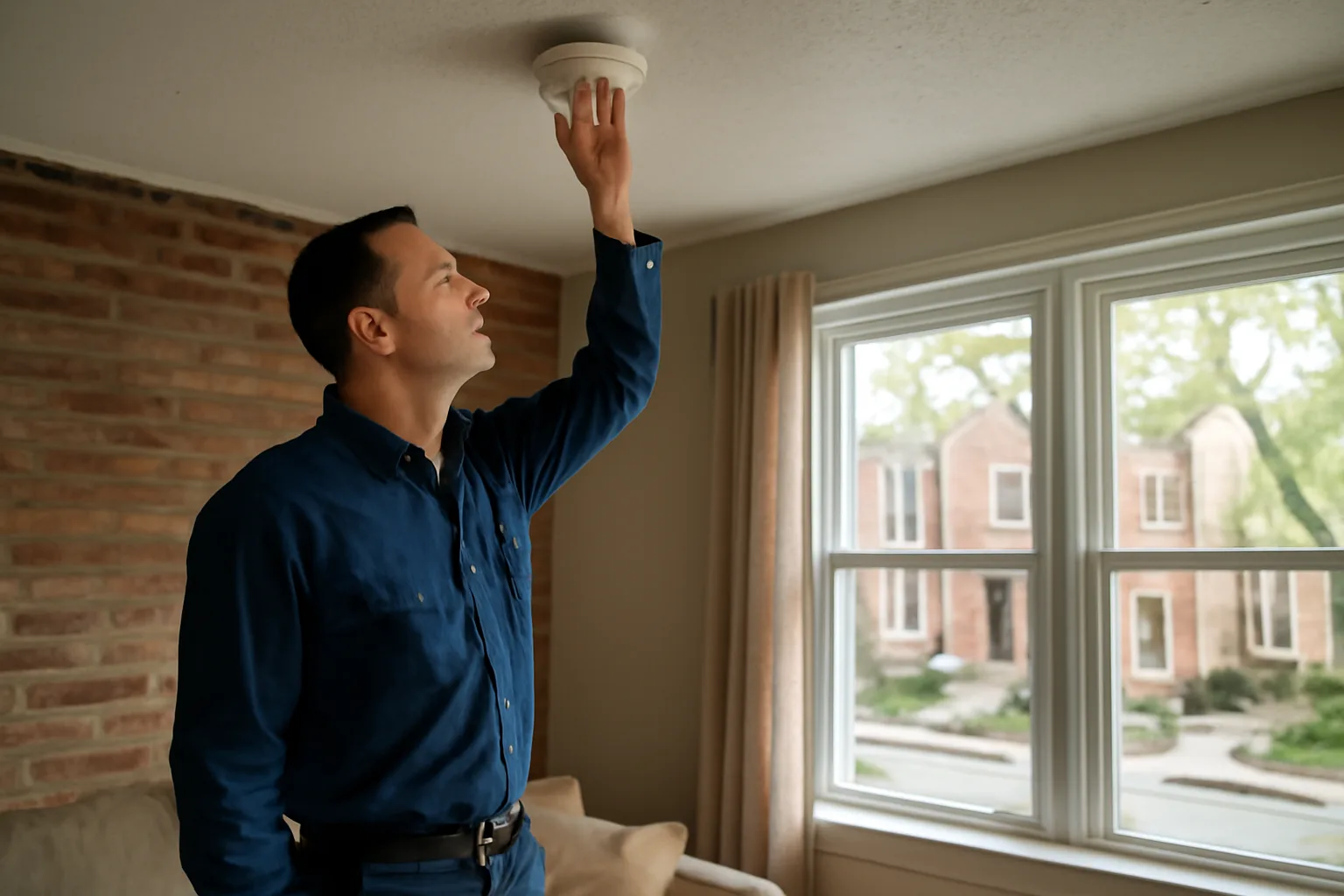
Rental inspections in Ohio municipalities are built around habitability and safety, not cosmetics. Inspectors are generally trained to check the bones of the property: is the structure sound, are the systems safe, is the unit fit to live in. Dayton's program follows this same general framework, rooted in property maintenance code standards. Common inspection points across Ohio rental programs, and very likely part of what a Dayton inspector walks through, include: - Working smoke alarms in required locations, and carbon monoxide alarms where fuel-burning appliances or attached garages are present
- Functioning heating system able to maintain a minimum interior temperature during cold months
- No exposed wiring, overloaded circuits, or obviously unsafe electrical work
- Plumbing that doesn't leak and drains that work, with hot and cold water at fixtures
- Windows and doors that open, close, lock, and aren't broken or painted shut
- No structural hazards: rotted stairs, unstable railings, holes in floors or roofs
- Reasonable pest and rodent control, no active infestation
- Adequate egress, meaning at least two ways out in case of fire, especially from bedrooms
- Exterior conditions: peeling paint (lead paint concerns in pre-1978 housing), broken gutters, unsafe porches, trip hazards in walkways Inspectors are not grading your paint color choices or judging your furniture. They're looking for things that could hurt a tenant or make the unit unlivable. That said, deferred maintenance items (a leaking faucet, a cracked window, a smoke detector with a dead battery) are exactly the kind of small, cheap-to-fix problems that fail inspections and generate re-inspection fees. If you want a structured way to walk your own property before the city does, a rental packet built around your city's actual checklist saves you from getting surprised by something you could have fixed for twenty dollars.
What can a landlord look at during an inspection?
This question comes up two ways: what can the city inspector look at, and what can a landlord look at when doing their own walk-through of a unit (either before a tenant moves in, during tenancy, or before a city inspection). For a landlord's own walk-through, you generally can inspect anything related to the condition of the property and compliance with the lease: appliances, walls, floors, plumbing fixtures, smoke detectors, evidence of pest problems, unauthorized occupants, unauthorized pets, and general upkeep. You're checking condition, not going through personal belongings, drawers, or private areas beyond what's reasonably necessary to assess the property. Most state landlord-tenant statutes, including Ohio's, require advance notice before entry except in emergencies, and the walk-through has to be for a legitimate purpose (inspection, repairs, showing the unit) rather than harassment. Ohio Revised Code 5321.04 lays out a landlord's duties, and Ohio Revised Code 5321.05 covers tenant obligations, including the tenant's duty to allow the landlord reasonable access [2][3]. The statute doesn't specify an exact notice period the way some states do (California, for example, generally requires 24 hours written notice under Civil Code 1954), but Ohio courts and standard practice treat 24 hours as reasonable in most residential situations. Reasonable notice, delivered in a way the tenant can actually receive and understand, is the safer standard to follow even where the statute is less specific than other states'.
How much notice does a landlord have to give before entering?
In Ohio, landlords must give tenants "reasonable notice" before entering a rental unit for non-emergency purposes, and entry has to happen at a reasonable time. Ohio Revised Code 5321.04(A)(8) requires the landlord to give the tenant reasonable notice of intent to enter and to enter only at reasonable times, except in cases of emergency [2]. Ohio law doesn't pin "reasonable" to a specific number of hours the way some states do. Twenty-four hours' notice is the commonly used standard in Ohio practice and is what most local landlord associations and legal aid resources recommend, but it isn't a hard statutory floor the way it is in states like California (24 hours under Civil Code 1954) [4]. If a lease specifies a notice period, follow the lease. If it doesn't, 24 hours in writing (text, email, or a note on the door, dated and timed) is the safest practical standard because it's defensible if a dispute ever comes up. Emergencies are the one clear exception. If there's a fire, a burst pipe, a gas leak, or another situation threatening life or property, a landlord can enter without notice. Routine inspections, repairs, and showings for prospective tenants or buyers don't qualify as emergencies and need advance notice.
What can a landlord not do in Ohio?
Ohio Revised Code Chapter 5321 (the Ohio Landlords and Tenants Act) draws some hard lines. A landlord in Ohio cannot: - Shut off utilities to force a tenant out, sometimes called a "self-help eviction." Ohio law requires landlords to go through the court eviction process (forcible entry and detainer action) rather than locking out a tenant or cutting off power or water [5]
- Remove a tenant's belongings or change the locks without a court order
- Enter the unit without reasonable notice except in an emergency, as covered above
- Retaliate against a tenant for complaining to a code enforcement agency or asserting a legal right. Ohio Revised Code 5321.02 specifically prohibits retaliatory conduct, including eviction, rent increases, or reduced services, in response to a tenant reporting a code violation or joining a tenant union [6]
- Discriminate based on protected classes under the federal Fair Housing Act (race, color, religion, sex, national origin, disability, familial status) and any additional classes protected under Ohio Revised Code 4112.02, which also covers housing discrimination [7]
- Ignore their own maintenance obligations under Ohio Revised Code 5321.04, which requires landlords to keep the premises in a fit and habitable condition, comply with building and housing codes, and keep common areas safe [2] The self-help eviction ban is the one landlords most often trip over without meaning to. If a tenant stops paying rent and a landlord's instinct is to just change the locks while they're at work, that's the exact scenario Ohio law is built to prevent, and it can expose the landlord to damages in a lawsuit, more than an eviction delay.
What rights do tenants have without a written lease?
A tenant without a written lease in Ohio still has real legal protections. Ohio's landlord-tenant statute doesn't require a written lease to apply; it governs the rental relationship whenever rent is paid in exchange for occupancy, written agreement or not. Without a written lease, Ohio generally treats the arrangement as a month-to-month tenancy if rent is paid monthly. That means either party can end the tenancy with proper notice, typically 30 days in Ohio for month-to-month tenancies, though local practice and any implied agreement about payment timing can affect the exact number. A tenant without a lease still has the right to: - A habitable unit under Ohio Revised Code 5321.04, including working plumbing, heat, and structural safety
- Reasonable notice before the landlord enters, per Ohio Revised Code 5321.04(A)(8) [2]
- Protection from retaliatory eviction under Ohio Revised Code 5321.02 [6]
- The same discrimination protections under fair housing law that any tenant has
- A formal eviction process through the courts rather than a lockout, even without a lease What a tenant without a lease doesn't have is the fixed-term protection a written lease can provide, like a guaranteed 12-month term. Without that written term, either side can generally end the tenancy with standard notice, subject to any local rules. If you're dealing with an existing no-lease tenant and thinking about formalizing things, that's worth handling carefully. See tenant rights and tenants rights for more on where written and unwritten tenancies diverge.
Who is responsible for a rental property walk-through inspection?
This depends on what kind of walk-through you mean, and the answer differs by state and by context (move-in, move-out, or city code inspection). For a city rental license inspection (Dayton or elsewhere), the property owner or their designated agent is responsible for scheduling the inspection, being present or arranging access, and fixing whatever the inspector flags. The city inspector, an employee of the municipal code enforcement or planning department, performs the actual inspection. For move-in and move-out condition walk-throughs, some states put specific legal weight on this. California, for example, gives tenants a right to request an initial move-out inspection before the final one, under California Civil Code 1950.5, so they have a chance to fix issues before losing security deposit money [8]. Ohio doesn't have an identical statutory requirement for a pre-move-out inspection, but doing one anyway is smart practice: it gives both sides a documented, dated record of condition, which matters enormously if there's ever a security deposit dispute. Ohio Revised Code 5321.16 governs security deposits and requires landlords to provide an itemized list of deductions within 30 days of the tenant vacating [9], and a walk-through with photos is the easiest way to back up whatever you list. Bottom line: for city inspections, it's on the owner. For condition walk-throughs, it's a shared interest, but the landlord typically initiates and documents it, and doing it well protects the security deposit accounting on both ends.
What is landlording, and what is a landlord?
A landlord is the owner (or an authorized agent of the owner) of residential or commercial property who rents that property to another party, called a tenant, in exchange for rent. "Landlording" is the informal term for the actual work of managing rental property: screening tenants, collecting rent, handling repairs, staying compliant with local codes, managing turnover, and dealing with the legal side of the landlord-tenant relationship. It's a real job, even for someone with just one or two units, and it comes with legal duties, more than financial upside. Ohio Revised Code 5321.04 spells out a landlord's core obligations: keep the property in compliance with building and housing codes, keep common areas safe and sanitary, maintain electrical, plumbing, heating, and other systems in good working order, and provide running water and reasonable amounts of hot water [2]. Those are legal duties, not suggestions, and a city rental inspection program (like Dayton's) is essentially a mechanism to check whether landlords are actually meeting them. For a broader look at what the role covers day to day, see landlord and landlord landlords.
How do you become a landlord, and how do you actually do it well?
Becoming a landlord legally requires a few concrete steps, and doing it well requires ongoing attention that a lot of new landlords underestimate. The basic path: buy or already own a residential property, decide to rent it out, and then handle the compliance side before you hand over keys. That compliance side is where new landlords get tripped up, because it varies heavily by city and state. In a city like Dayton with mandatory rental registration, you need to register the property with the city, likely pay a registration or license fee (confirm the current amount with Dayton's rental office), and pass or schedule the required inspection before renting legally. Beyond the paperwork, being a landlord day to day involves: - Screening tenants consistently and legally (same criteria for everyone, applied the same way, to avoid fair housing exposure)
- Using a written lease that spells out rent, term, deposit terms, and maintenance responsibilities
- Budgeting for repairs and vacancy, more than collecting rent and assuming it's all profit
- Responding to maintenance requests promptly, both because it's required by law (Ohio Revised Code 5321.04) and because deferred maintenance turns into inspection failures and tenant disputes
- Knowing your local rental registration and inspection requirements cold, since fines for operating an unregistered rental or missing an inspection deadline are real money, more than paperwork nags Many new landlords treat the first year as a crash course. The property management side (leases, screening, maintenance) is mostly the same skill set anywhere. The compliance side (registration, inspection, fees, renewal timing) is different in every city, which is exactly why a city-specific approach matters more than a generic landlord guide. A $79 City Rental License & Inspection Prep Packet built around Dayton's specific process is a cheap way to avoid guessing on deadlines and checklist items that differ from the last city you might have rented in.
Why do landlords require renters insurance?
Landlords require renters insurance for a simple reason: their own property insurance covers the building and their own belongings, not the tenant's personal property, and it generally doesn't cover a tenant's liability if the tenant causes damage or someone gets hurt in the unit. If a tenant's stove fire destroys their furniture, the landlord's policy typically pays to fix the building; it doesn't replace the tenant's couch or laptop. If a tenant's dog bites a visitor, or the tenant accidentally floods the unit below by leaving a tub running, the landlord's liability coverage may not extend to cover a claim caused by the tenant's own actions, and the landlord doesn't want to be the only insured party standing there when a lawsuit shows up. Requiring renters insurance, typically a modest policy in the $10 to $20 a month range depending on coverage and location, shifts a meaningful chunk of risk off the landlord's own policy and reduces the odds a landlord ends up covering a tenant's loss or a liability claim out of pocket. It's a legal requirement in some states and cities and just standard lease language in most others, since it's cheap for the tenant and meaningfully reduces the landlord's downside exposure.
What fees and fines should Dayton landlords expect?
| Registration/license fee | Annual or biennial fee per rental unit or property | Roughly $30 to $150 per unit, city-dependent (confirm with Dayton's rental office) | |
|---|---|---|---|
| Inspection fee | Cost of the scheduled inspection | Often bundled into registration, sometimes billed separately (confirm with city) | |
| Re-inspection fee | Charged if the unit fails and needs a follow-up visit | Commonly $25 to $100 per re-inspection (confirm with city) | |
| Late registration penalty | Charged for registering after the deadline or after a complaint | Varies widely, can double the base fee or more | |
| Code violation fine | Charged for confirmed housing code violations found during inspection | Municipal code violations in Ohio cities are frequently classified as minor misdemeanors, which under Ohio Revised Code 2929.28 can carry fines up to $150, with repeat or more serious code violations potentially charged as higher-level misdemeanors carrying larger fines [10] | The honest takeaway: fees themselves usually aren't what wrecks a landlord's year. Missed deadlines and unregistered properties are. A landlord who registers on time, keeps smoke detectors working, and fixes small maintenance items before they pile up rarely sees the higher end of these numbers. A landlord who ignores a registration notice for a year, then gets caught by a tenant complaint or a neighbor complaint, is the one who ends up paying re-inspection fees, late penalties, and possibly a misdemeanor citation stacked together. |
Rental registration and inspection programs typically layer a few different costs, and Dayton is no exception in structure, even if exact numbers change over time. Expect these general categories, and confirm current amounts directly with the City of Dayton's rental licensing office: | Cost type | What it covers | Typical range across Ohio cities |
What happens if you skip registration or ignore an inspection notice?
Ignoring a rental registration requirement or an inspection notice doesn't make the obligation disappear. It usually escalates. The typical sequence in Ohio municipal rental programs: the city sends a registration or inspection notice, often by mail to the property owner of record. If there's no response, a follow-up notice or a formal violation notice usually follows, sometimes with an escalating fee attached. If the property still isn't registered or inspected, the city can pursue it as a code violation, which in many Ohio municipalities is charged as a minor misdemeanor under the local housing code, carrying fines governed by Ohio Revised Code 2929.28 for misdemeanor fine limits [10]. Some cities also have authority to pursue civil injunctions to stop illegal rental use of a property, or to red-tag a unit as unfit for occupancy in serious cases. The other real cost, less discussed, is that unregistered or uninspected rentals can become a problem in a tenant dispute. If a tenant sues over habitability and it comes out the unit was never registered or inspected as required, that's not a good look in front of a judge or magistrate, and it can undercut a landlord's credibility on other disputed facts. Getting current with registration, even late, is almost always better than staying invisible and hoping the city doesn't notice.
Frequently asked questions
Does Dayton, Ohio require a rental license for a single rental house?
Most likely yes. Dayton's rental registration program generally covers residential rentals of any size, including a single rental house, more than multi-unit buildings. Confirm the exact scope and any owner-occupied exemptions with the City of Dayton's rental licensing office, since program rules can change through city council action.
How often does Dayton inspect rental properties?
Inspection cycles in Ohio rental programs commonly run annually or every two to three years, but the exact interval for Dayton depends on current city policy, property type, and past inspection history. Confirm the current cycle length directly with the City of Dayton's rental licensing office rather than assuming a fixed number.
What happens if a Dayton rental fails inspection?
The city typically issues a list of required repairs and a deadline to fix them, followed by a re-inspection. If the landlord doesn't fix the issues or misses the re-inspection deadline, the city can escalate to fines or, in serious safety cases, restrict occupancy of the unit until it passes.
How much notice does a landlord have to give before entering a rental in Ohio?
Ohio Revised Code 5321.04(A)(8) requires "reasonable notice" and entry at a reasonable time, except in emergencies. Ohio doesn't set an exact hour count in statute, but 24 hours' written notice is the commonly used standard in practice and the safest approach if your lease doesn't specify something different.
What can a landlord not do in Ohio?
A landlord in Ohio cannot shut off utilities or change locks to force a tenant out (self-help eviction is banned), cannot enter without reasonable notice except in an emergency, cannot retaliate against a tenant for reporting code violations under Ohio Revised Code 5321.02, and cannot discriminate based on protected classes under federal and Ohio fair housing law.
What rights does a tenant have without a written lease in Ohio?
A tenant without a written lease in Ohio is generally treated as a month-to-month tenant and still has full statutory protections: a habitable unit, reasonable notice before entry, protection from retaliatory eviction, and the right to a court eviction process rather than a lockout. What's missing is a fixed lease term.
What can a landlord look at during a rental inspection?
A city inspector checks safety and habitability items: smoke and CO alarms, heating, electrical safety, plumbing function, structural condition, egress routes, and pest issues. A landlord doing their own walk-through can check condition, appliances, and lease compliance, but shouldn't go through personal belongings beyond what's needed to assess the unit.
Why do landlords require renters insurance?
Landlords require renters insurance because their own property policy covers the building, not the tenant's belongings or the tenant's personal liability. Renters insurance shifts risk off the landlord's policy for things like tenant-caused fires, water damage, or injury claims, typically for $10 to $20 a month in premium.
Who is responsible for a rental property walk-through inspection?
For a city rental license inspection, the property owner or their agent is responsible for scheduling access and fixing flagged issues; the city inspector performs the inspection. For move-in and move-out condition walk-throughs, the landlord typically initiates and documents the process, though it protects both parties.
What is landlording?
Landlording is the practical work of owning and managing rental property: screening tenants, collecting rent, handling repairs, staying compliant with local registration and inspection rules, and managing the legal landlord-tenant relationship. It's a real operational role, more than passive income, even for a one- or two-unit owner.
How do you become a landlord?
You become a landlord by owning residential property and renting it to a tenant for payment, but doing it legally means registering with your city if required, passing any mandatory inspection, using a compliant lease, and understanding your state's landlord duties, like Ohio Revised Code 5321.04's habitability requirements.
Are Dayton rental inspection fees the same for every property type?
Not necessarily. Many Ohio rental registration programs price single-family homes, duplexes, and larger multi-unit buildings differently, sometimes per unit and sometimes per property. Confirm the current fee structure for your specific property type with the City of Dayton's rental licensing office.
Can a Dayton landlord be fined for an expired rental registration?
Yes, in general. Operating an unregistered or improperly licensed rental in an Ohio municipality with a mandatory program typically counts as a housing code violation, which can be charged as a misdemeanor with fines governed by Ohio Revised Code 2929.28. Exact penalty structure and enforcement pattern should be confirmed with Dayton's rental office.
Sources
- Ohio Revised Code Chapter 713, Municipal Planning: Ohio law grants municipalities authority to adopt planning, zoning, and housing regulations
- Ohio Revised Code 5321.04, Landlord obligations: Landlord duties including habitability, notice before entry, and maintaining systems in good working order
- Ohio Revised Code 5321.05, Tenant obligations: Tenant's duty to allow landlord reasonable access to the premises
- California Civil Code Section 1954: California requires 24 hours written notice before landlord entry in most cases
- Ohio Revised Code Chapter 1923, Forcible Entry and Detainer: Ohio landlords must use the court eviction process rather than self-help eviction
- Ohio Revised Code 5321.02, Retaliation prohibited: Ohio law prohibits landlord retaliation against tenants who report code violations or assert legal rights
- Ohio Revised Code 4112.02, Unlawful discriminatory practices: Ohio law prohibits housing discrimination based on protected classes
- California Civil Code Section 1950.5: California tenants have a right to an initial move-out inspection before final deposit deductions
- Ohio Revised Code 5321.16, Security deposits: Ohio landlords must provide an itemized list of security deposit deductions within 30 days
- Ohio Revised Code 2929.28, Misdemeanor fines: Ohio misdemeanor fine limits, including minor misdemeanor fines up to $150