Last updated 2026-07-26
TL;DR
Most cities with mandatory rental inspection programs must give landlords written notice before entering a unit, commonly 24 to 48 hours, though the exact rule depends on your city ordinance and your state's entry statute. The notice usually lists a scheduled date, what the inspector checks (smoke detectors, egress windows, electrical, plumbing), and the reinspection or fine process if you fail or miss it.
what does an "inspection notice all rental units" mean when it shows up in your mailbox
If you own rental property in a city with a mandatory rental licensing program, you'll eventually get a letter that says something like "notice of inspection, all rental units" or "citywide rental inspection cycle." This isn't random. It means your property has come up in the city's rotation, usually because your rental license or registration is due for renewal, a tenant complaint triggered it, or your address is on this year's inspection cycle list. Cities that run these programs treat rental housing differently from owner-occupied housing. Once you register a unit as a rental, it typically goes into a database that flags it for periodic inspection, often every one, two, or three years depending on the city and sometimes depending on the property's inspection history (a clean record can push you to a longer cycle in some cities, a violation history can shorten it). The notice itself usually isn't the actual inspection. It's the required legal heads-up that one is coming, at a specific address, sometime in a specific window. Read it twice. It usually includes a date range, a phone number to reschedule, a list of what will get checked, and a warning about the fine or reinspection fee if you no-show or if the inspector finds unresolved violations. If you manage units in more than one city, don't assume the process is identical. [Confirm with your city rental licensing office] for the specific notice period, inspection scope, and fee schedule that applies to your address, because ordinances vary block by block in some metro areas.
how much notice does a landlord have to give (and how much does the city have to give you)
This question actually has two separate answers, and people mix them up constantly. One is about landlord-to-tenant notice: how much warning you owe your tenant before you or a city inspector enters their unit. Many states set this by statute. California, for example, requires "reasonable notice in writing," and state law creates a presumption that 24 hours is reasonable absent circumstances suggesting otherwise (Cal. Civil Code Section 1954) [1]. Ohio's landlord-tenant statute similarly requires the landlord to give the tenant "reasonable notice" of intent to enter and to enter only at reasonable times, with 24 hours generally treated as reasonable, though the statute itself doesn't fix an exact hour count (Ohio Rev. Code Section 5321.04) [2]. The other is about city-to-landlord notice: how much advance warning the municipality has to give you before a rental inspector shows up. This is set entirely by local ordinance, not state law, and it varies. Some cities require the inspection notice to go out a set number of days before the scheduled visit; others simply require "reasonable notice" without a fixed number. Because there's no national standard here, don't assume your neighboring city's rule applies to you. Practical rule of thumb: if your notice letter doesn't state a specific number of days, call the office that sent it and ask them to confirm the minimum notice period in writing. That confirmation matters if you ever need to reschedule or push back on a violation for lack of proper notice.
who is responsible for a rental property walk-through inspection in california
In California, the person responsible for coordinating and being present for the walk-through is the landlord or the landlord's authorized agent, not the tenant, and not the city by default unless the city runs its own municipal rental inspection program. California state law (Civil Code Section 1950.5) requires landlords to offer tenants an initial move-out inspection before the final walk-through, if the tenant requests it, so the tenant has a chance to fix problems before losing security deposit money [3]. That's a distinct process from a city's rental housing inspection program, which checks the unit against health, safety, and building code standards, not against the condition of the tenant's belongings or cleaning. Several California cities, including Los Angeles through its Systematic Code Enforcement Program (SCEP), require landlords to register rental units and pay an inspection fee, and the property owner is responsible for making the unit accessible for the inspector and for correcting any violations found (LAHD Systematic Code Enforcement Program) [4]. The landlord is on the hook for scheduling access, not the tenant, though tenants generally must allow reasonable entry once proper notice is given under Civil Code Section 1954 [1]. If you're an out-of-state or absentee owner, you can designate a property manager or agent to handle the walk-through, but you're still legally responsible for the outcome. The city holds the license holder accountable, not whoever happens to open the door.
what can a landlord look at during an inspection
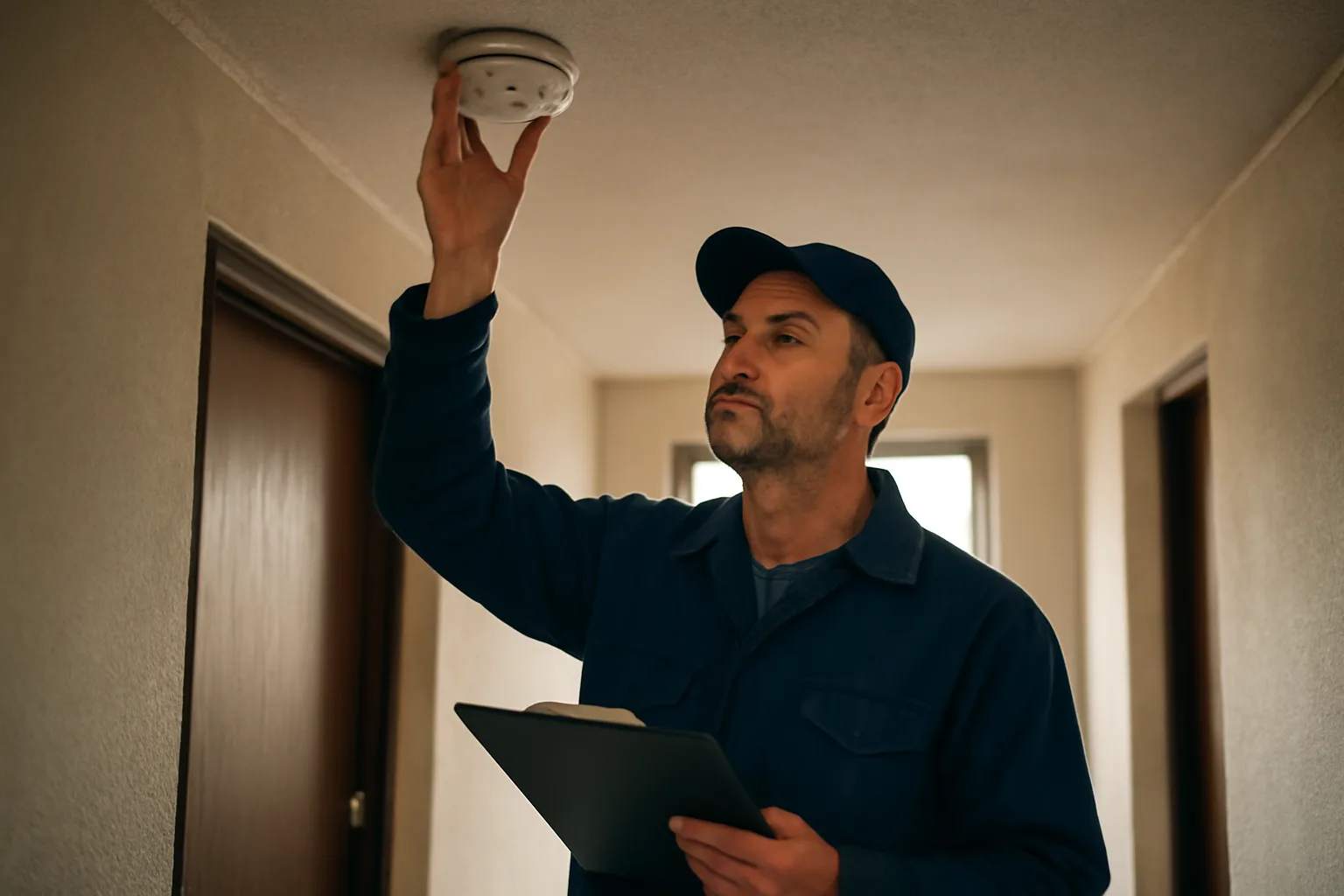
A rental inspector (and by extension, you, if you're doing a pre-inspection walkthrough) is generally checking for life-safety and habitability issues, not decor. Common items on a municipal rental inspection checklist include: - Working smoke alarms and, in many jurisdictions, carbon monoxide detectors, placed per code
- Two means of egress from sleeping rooms, including functional egress windows in basements and bedrooms
- No exposed wiring, overloaded outlets, or unpermitted electrical work
- Functioning heat source capable of maintaining a minimum interior temperature (commonly around 68 degrees Fahrenheit in many local codes, though the exact number is set locally)
- No active plumbing leaks, proper hot water function, and no sewage backup
- Handrails and guardrails on stairs and elevated platforms
- No pest infestation, mold, or structural decay visible in accessible areas
- Proper address numbering visible from the street (a surprisingly common fail item)
- Working locks on all exterior doors HUD's Housing Quality Standards, used as a baseline for federally subsidized housing inspections, cover a similar list: sanitary facilities, food preparation and refuse disposal, space and security, thermal environment, illumination and electricity, structure and materials, interior air quality, water supply, and smoke detectors (24 CFR Section 982.401) [5]. Many municipal rental inspection checklists borrow heavily from this same framework even if the property isn't Section 8 housing. What inspectors generally are not there to check: your tenant's housekeeping, personal belongings, or lease compliance issues unrelated to safety. If an inspector starts commenting on clutter that isn't a fire or egress hazard, that's outside a typical inspection scope, though it's worth confirming your specific city's checklist since scope does vary.
what a landlord cannot do in ohio
Ohio landlord-tenant law (Ohio Rev. Code Chapter 5321) spells out several things landlords are barred from doing, and these come up constantly around inspection time because tenants sometimes worry the visit is a pretext for retaliation or eviction. A landlord in Ohio cannot retaliate against a tenant for complaining to a government agency about a building, housing, or safety code violation. Ohio Rev. Code Section 5321.02 specifically prohibits a landlord from increasing rent, decreasing services, bringing or threatening an eviction action, or otherwise retaliating against a tenant who has complained to a governmental agency about a violation, complained to the landlord, or joined a tenant organization [6]. A landlord also cannot enter the rental unit without giving reasonable notice and without entering at a reasonable time, per Ohio Rev. Code Section 5321.04, except in genuine emergencies [2]. That statute also requires the landlord to keep the premises in a fit and habitable condition, comply with building and housing codes materially affecting health and safety, keep common areas safe, and maintain electrical, plumbing, sanitary, heating, and ventilating systems in good working order. Ohio law also doesn't allow a landlord to shut off utilities, change locks, or remove a tenant's belongings to force them out, sometimes called a "self-help eviction." Only a court-ordered eviction through the proper legal process can remove a tenant. If an inspection turns up violations, the fix is code compliance and possibly a court-supervised process, not a lockout.
how to become a landlord (the practical version)
Becoming a landlord in a city with mandatory rental licensing isn't just "buy a property and rent it out." There's a compliance layer most first-time landlords underestimate. At minimum, expect these steps in a licensing city: 1. Register the rental property with the city's rental housing or code enforcement office, often within a set window after you start renting it out (commonly 30 days, though this varies by city) 2. Pay a registration or license fee, which ranges widely, commonly somewhere between $25 and a few hundred dollars per unit depending on the city, unit count, and whether it's a first-time or renewal fee 3. Schedule or await your initial inspection, which checks the unit against local housing code before or shortly after your first tenant moves in 4. Get a certificate of occupancy or rental license number, which some cities require you to disclose to tenants or post in the building 5. Renew on whatever cycle the city sets, commonly annually or every two to three years, with a new inspection each renewal Beyond the paperwork, actually landlording well means understanding your state's security deposit rules, your notice-to-enter obligations, fair housing law (the federal Fair Housing Act bars discrimination based on race, color, religion, sex, national origin, disability, and familial status, per 42 U.S.C. Section 3604) [7], and your local eviction process. A lot of first-year landlords learn the hard way that the city inspection notice is just one thread in a much bigger compliance picture. If you're setting up a new rental in a licensing city, working through the landlord basics checklist before your first tenant moves in saves a lot of scrambling later.
what is landlording, and what is a landlord, exactly
A landlord is the legal owner (or their authorized agent) who leases real property to a tenant in exchange for rent, taking on the legal responsibilities that come with that relationship under state landlord-tenant law and local housing code. "Landlording" is the informal industry word for the day-to-day work of running that relationship: collecting rent, handling maintenance requests, managing turnover, keeping up with code compliance, and dealing with the occasional dispute. It's not a licensed profession in most states the way real estate brokerage is, but a growing number of cities require landlords specifically (as opposed to owner-occupants) to register, license, and periodically prove their units are habitable through inspection. The legal definition of "landlord" or "lessor" generally traces back to common law property concepts, but state statutes now define the term explicitly for purposes of the rights and duties involved. Ohio, for instance, defines "landlord" under Ohio Rev. Code Section 5321.01 as the owner, lessor, or sublessor of residential premises, or the agent of any of these [8]. Practically speaking, being a landlord means you're the one legally on the hook when the city inspection notice arrives, when a smoke detector needs replacing, or when a tenant calls about a leak at 11pm. It's a business relationship with legal weight, not a passive investment.
what rights do tenants have without a lease
A tenant without a written lease, sometimes called a tenant-at-will or a month-to-month tenant by operation of law, still has real legal protections. No written lease doesn't mean no rights. Most states treat an oral or unwritten rental arrangement as a month-to-month tenancy once rent has been accepted and possession given, and that tenancy carries the same basic statutory protections as a written lease: the right to habitable premises, protection from illegal lockouts and utility shutoffs, the right to proper notice before the landlord enters, and the right to proper notice before the tenancy is terminated. Ohio law, for example, applies its landlord obligations statute (Ohio Rev. Code Section 5321.04) [2] regardless of whether there's a written lease, because the statute applies to any "landlord who is a party to a rental agreement," and Ohio Rev. Code Section 5321.01 defines "rental agreement" broadly enough to include oral agreements [8]. California similarly protects month-to-month tenants under the same entry-notice and habitability statutes that apply to tenants with a fixed-term lease (Civil Code Sections 1941, 1954) [1]. What a tenant without a lease usually doesn't get is a locked-in rent amount or fixed term. A landlord can typically raise rent or end a month-to-month tenancy with proper notice (commonly 30 days, sometimes 60 days for longer tenancies or in certain states), but they still can't skip the notice-to-enter rules, can't retaliate for a code complaint, and can't use a self-help eviction instead of going through court. If you want the fuller breakdown of what unwritten-lease tenants can and can't demand, see tenant rights and tenants rights.
why do landlords require renters insurance
Landlords require renters insurance mostly to shift liability risk off themselves and to make sure a tenant's own belongings and liability exposure are covered by the tenant's policy, not the landlord's. A landlord's own property insurance covers the building structure, not the tenant's furniture, electronics, or clothing. If a fire, burst pipe, or theft destroys a tenant's belongings, the landlord's policy generally won't pay for it, and without renters insurance the tenant has no coverage at all, which sets up disputes and sometimes lawsuits over who's responsible. Renters insurance also typically includes personal liability coverage, commonly in the range of $100,000 to $300,000 depending on the policy, which protects the tenant (and indirectly the landlord) if the tenant accidentally causes damage, like a kitchen fire or a bathtub overflow that floods the unit below. Insurance Information Institute data has repeatedly found that a large share of renters, historically over half in various surveys, don't carry renters insurance unless required to, which is part of why so many landlords now write it into the lease as a mandatory condition . Requiring it is legal in most states as a standard lease condition, as long as it's applied consistently and disclosed up front. It's not a substitute for the landlord's own liability and property coverage; it's a second, separate layer that protects a different set of risks.
what happens if you miss an inspection or fail one
Missing a scheduled inspection or failing one triggers a fairly predictable sequence in most licensing cities, though the specific fees and deadlines are set locally. Typical sequence: 1. No-show or failed inspection gets logged, often with a reinspection fee (commonly somewhere between $50 and $200 per reinspection in many municipal fee schedules, though this varies significantly by city) 2. A written notice of violation goes out, listing each code section violated and a compliance deadline, often 30 days but sometimes shorter for serious life-safety items like a missing smoke detector 3. A reinspection is scheduled to confirm the fix 4. If violations remain uncorrected past the deadline, the city can issue fines, which in some cities escalate daily or per violation, and in serious or repeat cases can lead to license suspension, meaning you legally cannot rent the unit until it's resolved 5. In the worst cases, persistent uncorrected life-safety violations can lead to a vacate order The fastest way to avoid this chain reaction is to do your own pre-inspection walkthrough using the same checklist categories the city uses (smoke detectors, egress, electrical, heat, plumbing, guardrails) before the scheduled date, and fix anything obvious yourself. A lot of landlords get blindsided by small, cheap-to-fix items, like a missing smoke detector battery or a blocked egress window, that turn into a failed inspection and a reinspection fee purely because nobody looked before the inspector did. This is exactly the gap the $79 one-time City Rental License & Inspection Prep Packet is built to close: a structured, city-specific prep checklist so you walk into inspection day already knowing what the inspector will check, instead of finding out the hard way. You can start one at [/rental-packet-builder].
how do inspection cycles and notice periods actually compare across cities
| Tenant entry notice (landlord to tenant) | Commonly 24 to 48 hours | State statute, e.g., Cal. Civil Code Section 1954 [1], Ohio Rev. Code Section 5321.04 [2] | |
|---|---|---|---|
| City inspection notice (city to landlord) | Commonly 1 to 4 weeks advance mailing | Local ordinance, confirm with city rental licensing office | |
| Inspection cycle frequency | Commonly every 1 to 3 years | Local ordinance, sometimes risk-tiered by violation history | |
| Reinspection fee | Commonly $50 to $200 per visit | Local fee schedule | |
| Violation correction deadline | Commonly 14 to 30 days, shorter for life-safety items | Local ordinance | The pattern worth remembering: state law almost always governs the tenant-facing notice-to-enter rule, while your city ordinance governs the inspection scheduling, fee, and violation-deadline rules. Mixing those two up is one of the most common landlord mistakes when reading an inspection notice for the first time. |
There's no federal rental inspection law and no single national notice period, which is exactly why so many landlords get tripped up moving between cities or managing units in more than one jurisdiction. Every number below is illustrative of the range landlords commonly report; always confirm the actual figure with your specific city's rental licensing office before relying on it. | Program element | Typical range reported across licensing cities | Set by |
Frequently asked questions
How much notice does a landlord have to give a tenant before an inspection?
It depends on your state's entry statute, but 24 hours is a common benchmark. California presumes 24 hours written notice is reasonable under Civil Code Section 1954 [1]. Ohio requires "reasonable notice," generally treated as 24 hours, under Ohio Rev. Code Section 5321.04 [2]. Always confirm your specific state statute since some states set different minimums.
Who is responsible for a rental property walk-through inspection in California?
The landlord, or their authorized agent, is responsible for scheduling access and correcting any violations found. City programs like Los Angeles's Systematic Code Enforcement Program require the property owner, not the tenant, to register the unit and comply with inspection requirements [4]. Tenants must allow reasonable entry once proper notice is given [1].
What can a rental inspector look at during a unit inspection?
Inspectors generally check smoke and carbon monoxide detectors, egress windows and exits, exposed wiring, heat and hot water function, plumbing leaks, handrails, pest and mold issues, and exterior address numbering. HUD's Housing Quality Standards cover a similar list as a baseline framework (24 CFR Section 982.401) [5]. They typically don't assess tenant housekeeping or personal belongings unless it creates a safety hazard.
What can't a landlord do in Ohio?
Ohio landlords cannot retaliate against a tenant who complains to a government agency about code violations (Ohio Rev. Code Section 5321.02) [6], cannot enter without reasonable notice except in emergencies, and cannot use "self-help" evictions like changing locks or shutting off utilities. Only a court-ordered eviction can legally remove a tenant.
What rights does a tenant have without a signed lease?
A tenant without a written lease is usually treated as a month-to-month tenant under state law and keeps the core statutory protections: habitable premises, proper notice before entry, protection from illegal lockouts, and proper notice before the tenancy ends. They generally don't get a locked-in rent amount or fixed term the way a written lease provides.
Why do landlords require renters insurance?
Landlords require it to cover the tenant's personal belongings and liability, since the landlord's own property policy covers the building structure, not the tenant's possessions. Renters policies commonly include $100,000 to $300,000 in liability coverage, protecting both parties if the tenant accidentally causes damage like a fire or flood.
How do I become a landlord in a city that requires rental licensing?
Register the property with the city's rental housing office, pay the registration or license fee (commonly $25 to a few hundred dollars, confirm with your city), pass the initial inspection, get your license or certificate of occupancy, and renew on the city's set cycle, usually annually or every one to three years with reinspection each time.
What happens if I miss my scheduled rental inspection?
You'll typically get logged as a no-show, owe a reinspection fee (commonly $50 to $200 depending on the city), and receive a new scheduled date. Repeated no-shows or unresolved violations can escalate to fines or, in serious cases, suspension of your rental license until the inspection is completed and passed.
What is landlording?
Landlording is the day-to-day work of owning and managing rental property: collecting rent, handling repairs, managing tenant turnover, and staying compliant with local housing code and state landlord-tenant law. It's not a licensed profession in most states, though many cities now require landlords specifically to register and periodically inspect their units.
What is the legal definition of a landlord?
A landlord is the owner, lessor, or authorized agent of residential rental property who has entered into a rental agreement with a tenant. Ohio Rev. Code Section 5321.01 defines it as the owner, lessor, or sublessor of residential premises or their agent [8]. State definitions vary slightly but generally track this structure.
Do I have to let the city inspector inside if I disagree with the notice?
You should still cooperate and can raise concerns with the rental licensing office directly rather than refusing entry outright, since refusal can itself trigger fines or a warrant process in some cities. If you think the notice period was too short or improperly served, ask the issuing office to confirm the ordinance requirement in writing before the scheduled date.
Does a rental inspection notice mean I'm already in trouble?
No. Most inspection notices are routine, tied to your city's regular inspection cycle, a license renewal, or a random rotation, not necessarily a complaint against you. Some notices are triggered by a tenant complaint, but the letter itself doesn't automatically mean a violation exists; it means an inspection is scheduled.
What's the difference between rental registration and rental licensing?
Registration usually just means telling the city a unit is a rental, often for a small fee and minimal review. Licensing usually adds a compliance requirement, typically a passed inspection, before the city issues the actual license number allowing you to legally rent the unit. Many cities require both, with licensing renewed on a set cycle.
Sources
- California Legislative Information, Civil Code Section 1954: California landlord entry notice requirements and 24-hour reasonable notice presumption
- Ohio Laws, Revised Code Section 5321.04: Ohio landlord obligations including reasonable notice before entry and habitability duties
- California Legislative Information, Civil Code Section 1950.5: California requirement for landlords to offer an initial move-out inspection before final walk-through
- Electronic Code of Federal Regulations, 24 CFR Section 982.401: HUD Housing Quality Standards categories used as a baseline for rental unit inspections
- Ohio Laws, Revised Code Section 5321.02: Ohio prohibition on landlord retaliation against tenants who report code violations
- U.S. Department of Justice, Fair Housing Act, 42 U.S.C. Section 3604: Federal Fair Housing Act protected classes for rental housing
- Ohio Laws, Revised Code Section 5321.01: Ohio statutory definition of landlord and rental agreement, including oral agreements
- Insurance Information Institute, Facts + Statistics: Renters Insurance: Share of renters historically without renters insurance coverage