Last updated 2026-07-26
TL;DR
Becoming a landlord means registering your rental with the city if required, screening tenants legally, carrying the right insurance, and knowing your state's notice and inspection rules. Many cities require a rental license or registration before you can legally rent a unit, and skipping it can mean fines even if the tenant never complains.
What is landlording, and what does a landlord actually do?
Landlording is the business of renting out real property you own to someone else in exchange for regular payment. It sounds simple. It isn't, not once you own more than one unit or you're in a city with a rental registration ordinance. A landlord is the legal owner (or their authorized agent) who leases residential or commercial space to a tenant under a rental agreement or lease. The relationship is defined by state landlord-tenant law, plus whatever your city or county adds on top through rental licensing, registration, or inspection ordinances. That second layer is the part most new landlords miss. Day to day, landlording means collecting rent, handling maintenance requests, keeping the property in habitable condition, managing turnover between tenants, and staying current on whatever local paperwork your jurisdiction requires. It also means bookkeeping. The IRS treats rental income as its own category (Schedule E), and even a single-unit landlord needs to track expenses, depreciation, and repairs separately from personal finances [1]. If you're renting in a city that requires a rental license or registration, landlording also means renewing that license, passing periodic inspections, and paying the associated fee on a schedule your city sets, not one you choose.
How do you become a landlord, step by step?
Becoming a landlord takes more than buying a house and putting up a listing. Here's the realistic order of operations. First, check your city's rental licensing rules before you list the unit. A growing number of cities require landlords to register or license a rental unit before the first tenant moves in, and some require a passed inspection before the license issues. Skipping this step is the single most common way new landlords end up with a fine notice in their first year. Second, get your insurance right. A standard homeowner's policy usually excludes rental use once you stop living there yourself; you generally need a landlord (dwelling) policy instead. Third, learn your state's landlord-tenant statute, particularly the sections on security deposits, notice periods, and habitability. Fourth, set up separate finances: a business bank account, a bookkeeping system, and a plan for the Schedule E filing at tax time [1]. Fifth, screen tenants consistently and legally. The Fair Housing Act prohibits discrimination based on race, color, national origin, religion, sex, familial status, or disability in any housing-related decision, including tenant screening [2]. Apply the same criteria to every applicant and document it. Sixth, get the lease and move-in paperwork right, including any state-mandated disclosures (lead paint disclosure for pre-1978 buildings is federal, not optional, under 42 U.S.C. § 4852d [3]). This article won't draft that paperwork for you, since lease terms are state-specific and a bad clause can cost you more than a lawyer's fee would have.
Who is responsible for a rental property walk-through inspection in California?
In California, the landlord is responsible for scheduling and conducting the move-out walk-through inspection, and state law gives the tenant the right to be present. Under California Civil Code § 1950.5(f), if a tenant is moving out, the landlord must notify the tenant of the right to request an initial inspection before the actual move-out, conducted no earlier than two weeks before the tenancy ends [4]. The point of that pre-move-out inspection is simple: give the tenant a chance to fix any deductible damage before the landlord takes it out of the security deposit. The landlord has to give the tenant an itemized list of what needs fixing or cleaning after that inspection, and the tenant then has a chance to address it before the final walk-through [4]. Separately from move-out inspections, many California cities also require periodic rental housing inspections tied to a rental registration or Rental Housing Inspection Program (Los Angeles's RHIP administered under the Housing Department is one well-known example), where a city inspector, not the landlord, checks the unit against habitability and code standards. Confirm with your city rental licensing office which type of inspection applies to your property and on what schedule.
What can a landlord look at during an inspection?
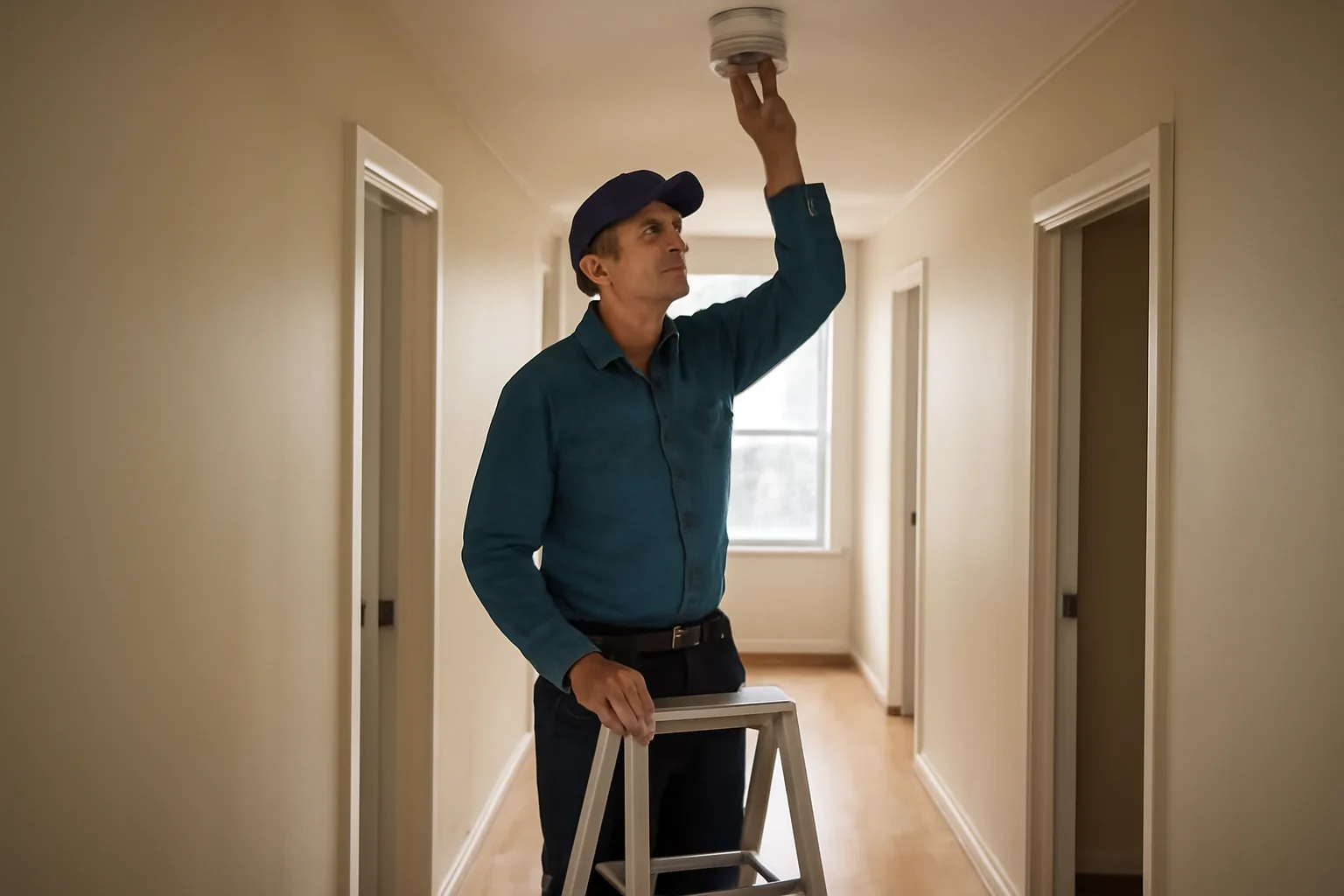
A landlord (or a city inspector, if it's a licensing inspection) can generally check on habitability items, code compliance, and property condition, but not go through personal belongings or search for evidence unrelated to the lease. For a routine or move-in/move-out inspection, that typically includes: smoke and carbon monoxide detector function, plumbing and water damage, electrical outlets and panel condition, HVAC operation, evidence of pest infestation, structural issues (cracked walls, ceiling damage), window and door function, and general cleanliness relative to move-in condition. For city rental licensing inspections, the inspector is checking against the local housing code, things like egress windows in bedrooms, working locks, adequate heat, and no illegal occupancy or unpermitted units. What a landlord can't do is treat an inspection as a pretext to rummage through drawers, photograph personal items, or show up unannounced. Nearly every state requires advance notice for entry (see the notice section below), and the inspection has to be for a legitimate purpose stated in the notice, like checking a maintenance issue, or a scheduled licensing or code inspection. If your city requires a rental license, expect the inspector's checklist to be public. Many cities post their inspection checklist online before the visit; it's worth requesting or downloading it in advance so you're not guessing what they'll flag.
How much notice does a landlord have to give before entering or inspecting?
| California | 24 hours (presumed reasonable) | Civ. Code § 1954 [5] | |
|---|---|---|---|
| Florida | 12 hours (presumed reasonable) | Fla. Stat. § 83.53 [6] | |
| Texas | No statutory minimum; lease governs | Tex. Prop. Code Ch. 92 | |
| Oregon | 24 hours | ORS 90.322 | City rental license inspections are a separate notice question from routine landlord entry. Some cities give tenants and landlords a scheduled appointment window with several days or weeks of lead time; others allow announced inspections with shorter notice. Confirm with your city rental licensing office how much notice they give before a compliance inspection, since it's set by the ordinance, not by state landlord-tenant law. |
Notice periods vary by state, but 24 hours is the most common standard, and a growing number of states now write that number directly into their statutes. California requires 'reasonable notice,' which the statute defines as 24 hours in writing being presumed reasonable, under Civil Code § 1954 [5]. Florida law similarly presumes 12 hours' notice is reasonable, per Florida Statutes § 83.53 [6]. No notice period covers a genuine emergency. If there's a burst pipe flooding the unit below or a gas leak, the landlord (or a maintenance person acting on their behalf) can typically enter without advance notice, because the entry is to prevent immediate harm, not to inspect or show the unit. Here's the practical range across states: | State | Standard notice for entry | Statute |
Why do landlords require renters insurance?
Landlords require renters insurance mainly to shift liability and personal property risk away from themselves. A tenant's own possessions (furniture, electronics, clothing) are not covered by the landlord's property insurance policy. Full stop. If a pipe bursts or a fire starts, the landlord's policy covers the building; the tenant's stuff is only covered if the tenant has their own policy. Renters insurance also typically includes personal liability coverage, which matters if a tenant's guest is injured in the unit or the tenant accidentally causes damage (a kitchen fire, an overflowing tub that damages the unit below). Without that coverage, the landlord's policy, or the landlord personally, may end up absorbing costs that should have been the tenant's responsibility. Many landlords now require proof of renters insurance as a lease condition, naming the landlord as an 'interested party' on the policy so they're notified if it lapses. This is legal in nearly every state as a standard lease term, though a few jurisdictions restrict how much a landlord can require or bundle. It's a cheap ask for tenants, too: renters insurance nationally tends to run in the range of roughly $15 to $30 a month depending on coverage and location, though your local market may vary and this isn't a guaranteed quote.
What rights do tenants have without a signed lease?
A tenant without a signed lease still has legal protections. Most states treat an unwritten or expired-lease arrangement as a month-to-month tenancy-at-will, governed by the same core landlord-tenant statute that applies to written leases. That means a tenant without a lease still generally has the right to: a habitable unit (working plumbing, heat, structural safety), advance notice before the landlord enters, advance notice before the tenancy is terminated (often 30 days for month-to-month, though this varies by state and by how long the tenant has lived there), and protection from retaliatory or discriminatory eviction. A landlord can't just change the locks or remove a tenant's belongings without going through the formal eviction process in state court, lease or no lease. What a no-lease tenant usually loses is certainty. Rent can typically be raised with proper notice more easily than under a fixed-term lease, and either party can end the tenancy with standard notice rather than waiting for a lease term to expire. If you're a landlord operating without a written lease, that's a real exposure for you too; verbal agreements are hard to enforce and even harder to prove in a dispute. For related reading on tenant protections, see our overview of tenant rights and renters rights.
What can a landlord not do in Ohio?
Ohio law, under Ohio Revised Code § 5321.04, sets specific limits on landlord conduct, and violating these obligations can expose a landlord to a tenant lawsuit or a rent escrow action. Ohio landlords cannot ignore their duty to keep the premises in a fit and habitable condition, comply with building and housing codes affecting health and safety, and keep common areas safe and sanitary [7]. Ohio landlords also cannot enter the rental unit without reasonable notice and at a reasonable time, except in an emergency, per O.R.C. § 5321.05 [8]. There's no fixed statutory number of hours specified in the Ohio code the way California's 24-hour presumption works; 'reasonable' is the operative standard, so most Ohio landlords use 24 hours as a practical norm to avoid disputes. Ohio also prohibits retaliatory conduct: a landlord cannot terminate a tenancy, refuse to renew a lease, or increase rent specifically because a tenant complained to a government agency about a code violation or joined a tenants' union, under O.R.C. § 5321.02 [9]. And Ohio landlords cannot shut off utilities, change the locks, or remove a tenant's belongings to force them out, a practice generally referred to as 'self-help eviction,' which is illegal; the landlord has to go through the municipal or county court eviction process instead.
Does my city require a rental license, and how do I find out?
There's no national database that tells you this; rental licensing is set city by city (sometimes county by county), and it's grown a lot over the past two decades as cities try to track substandard housing and absentee owners. Cities that require some form of rental registration, licensing, or periodic inspection generally fall into a few patterns: a flat annual registration fee with no inspection, a license that requires a passed inspection before issuance and periodic reinspection after, or a complaint-based inspection system where the city only inspects if a tenant files a complaint. The fee structures, inspection cycles, and penalties for operating unlicensed are set entirely at the local level, so a landlord in one city might pay a modest annual fee with no inspection, while a landlord two towns over faces a mandatory inspection every two to three years plus a per-unit fee. The only reliable way to find your specific requirement is to search your city name plus 'rental registration' or 'rental license' and look for a.gov result, or call your city's housing, code enforcement, or building department directly. Don't rely on general web results or what a landlord in another city tells you; confirm with your own city rental licensing office, since fees, deadlines, and inspection cycles change and vary block by block in some larger metros. If you own in more than one city, keeping track of each jurisdiction's renewal date, fee, and inspection checklist gets complicated fast. This is the exact gap our $79 one-time City Rental License & Inspection Prep Packet is built for: a structured way to track what your specific city requires and prep for the inspection, rather than guessing from a fine notice.
What happens if you rent without a required license?
Consequences vary widely by city, but they generally fall into three buckets: fines, a court order to stop renting until compliant, and in some cities, an inability to legally collect rent or evict a tenant until the license issue is resolved. Some cities issue escalating fines for operating without a rental license, sometimes per day of noncompliance, which can add up fast if a landlord doesn't catch a renewal notice for a few months. Other cities have gone further: some jurisdictions have case law or ordinance language that bars an unlicensed landlord from pursuing eviction or rent collection through the courts until the unit is properly licensed. That's a serious problem if you need to remove a nonpaying tenant and discover mid-case that your license lapsed eighteen months ago. The fix is almost always cheaper before a violation than after. A first-time compliance inspection and license fee is typically far less than the fines, legal fees, and lost rent that come from an enforcement action. If you got a notice already, don't ignore it; most cities have a cure period where you can register, pay the fee, and schedule an inspection before the fine escalates further. Confirm with your city rental licensing office what the current cure period and fine schedule are, since both change often.
What's the difference between rental registration, rental licensing, and inspection ordinances?
These three terms get used loosely, but they mean different things depending on the city, and knowing which one your city runs matters for what you need to do. Rental registration usually just means telling the city you have a rental unit and who owns and manages it, often for a modest annual fee, with no inspection attached. It exists mainly so code enforcement and emergency services know who to contact and so the city can track how many rental units exist. Rental licensing goes a step further: you need an approved license before you can legally rent the unit, and getting that license often requires passing an initial inspection. Renewal usually requires reinspection on a set cycle, commonly every one to three years depending on the city. Inspection ordinances can exist on their own too, separate from any licensing requirement, sometimes triggered only by a tenant complaint or a change in ownership. A city might not require a license at all but still reserves the right to inspect if a tenant reports a code violation. The practical difference for you as a landlord: registration is mostly paperwork and a fee. Licensing means you need to pass a physical inspection, which means fixing anything that would fail before the inspector shows up, not after.
Frequently asked questions
How do you become a landlord if you've never rented out a property before?
Start by checking your city's rental registration or licensing rules before you list the unit, get a landlord (dwelling) insurance policy instead of a standard homeowner's policy, learn your state's landlord-tenant statute on deposits and notice periods, and set up separate bookkeeping since rental income gets reported on Schedule E [1]. Screen every applicant using the same written criteria to stay compliant with the Fair Housing Act [2].
What is a landlord, legally speaking?
A landlord is the property owner, or their authorized agent, who leases residential or commercial space to a tenant in exchange for rent under a lease or rental agreement. The relationship is governed by state landlord-tenant law and, in many cities, by local rental registration or licensing ordinances layered on top of state law.
Who is responsible for a rental property walk-through inspection in California?
The landlord is responsible for offering and conducting the move-out walk-through, and California Civil Code § 1950.5(f) gives tenants the right to request an initial inspection no earlier than two weeks before move-out, so they can fix deductible issues before the final inspection and deposit deduction [4].
What is landlording?
Landlording is the ongoing business of owning and renting out property: collecting rent, maintaining habitability, handling turnover, and complying with local licensing or registration rules. It's a legal and financial role, more than property ownership, and it comes with obligations under both state landlord-tenant statutes and city ordinances.
What rights do tenants have without a signed lease?
A tenant without a written lease is usually treated as a month-to-month tenant-at-will under state law, with the same core rights as a leased tenant: a habitable unit, advance notice before entry, advance notice before termination, and protection from illegal lockouts or retaliatory eviction. The landlord still has to go through formal eviction, not self-help, to remove them.
Why do landlords require renters insurance?
Renters insurance covers the tenant's personal belongings and liability, neither of which the landlord's building policy covers. Requiring it shifts risk for fire, theft, water damage to the tenant's stuff, and injury liability away from the landlord, and it's a standard, low-cost lease condition in most states.
How much notice does a landlord have to give before entering the unit?
It depends on the state. California presumes 24 hours' written notice is reasonable under Civil Code § 1954 [6]; Florida presumes 12 hours under Florida Statutes § 83.53 [7]. Emergencies (fire, flooding, gas leaks) don't require advance notice. Check your specific state statute, since the number varies.
What can a landlord look at during an inspection?
A landlord or city inspector can check habitability and code items: smoke detectors, plumbing, electrical systems, HVAC, pest evidence, structural condition, and general cleanliness. They can't search personal belongings or use the inspection as a pretext unrelated to the stated purpose in the entry notice.
What can a landlord not do in Ohio?
Under Ohio Revised Code § 5321.04, a landlord can't fail to maintain a habitable, code-compliant unit [8]. Under § 5321.05, a landlord can't enter without reasonable notice except in an emergency [9]. Under § 5321.02, a landlord can't retaliate against a tenant for reporting code violations [10], and self-help eviction (changing locks, shutting off utilities) is illegal statewide.
How do I find out if my city requires a rental license?
Search your city name plus 'rental registration' or 'rental license' for a .gov result, or call your city's housing, code enforcement, or building department directly. There's no national list; requirements, fees, and inspection cycles are set city by city and change often, so confirm directly with your city's office.
What happens if I rent out a unit without a required city license?
Consequences vary by city but often include escalating fines, a compliance order, and in some jurisdictions an inability to collect rent or file for eviction until the unit is properly licensed. Cure periods exist in most cities; registering and scheduling an inspection promptly after a violation notice is almost always cheaper than letting fines accrue.
Is rental registration the same as a rental license?
No. Registration typically just tells the city who owns and manages a rental unit, usually for a fee, with no inspection required. A rental license usually requires passing an inspection before issuance and on a renewal cycle, commonly every one to three years depending on the city.
Sources
- IRS, Topic No. 414 Rental Income and Expenses: Rental income and expenses are reported on Schedule E and tracked separately from personal finances
- HUD, Fair Housing Act overview: The Fair Housing Act prohibits discrimination in tenant screening based on protected classes
- 42 U.S.C. § 4852d, Residential Lead-Based Paint Hazard Reduction Act: Lead paint disclosure is federally required for pre-1978 rental housing
- California Civil Code § 1950.5(f): California tenants have the right to an initial move-out inspection no earlier than two weeks before tenancy ends
- California Civil Code § 1954: California presumes 24 hours' written notice before landlord entry is reasonable
- Florida Statutes § 83.53: Florida presumes 12 hours' notice before landlord entry is reasonable
- Ohio Revised Code § 5321.04: Ohio landlords must maintain habitable, code-compliant premises and safe common areas
- Ohio Revised Code § 5321.05: Ohio landlords must give reasonable notice before entering a rental unit except in emergencies
- Ohio Revised Code § 5321.02: Ohio prohibits landlord retaliation against tenants who report code violations