Last updated 2026-07-26
TL;DR
A rental walkthrough checklist should cover every room, all systems (electrical, plumbing, HVAC, smoke/CO detectors), exterior conditions, and photo documentation. Landlords typically must give 24 to 48 hours notice before entering, per state law. Use the same checklist for move-in, move-out, and city compliance inspections so nothing gets missed and you have a paper trail if a dispute or fine comes up.
What should a rental walkthrough checklist actually include?
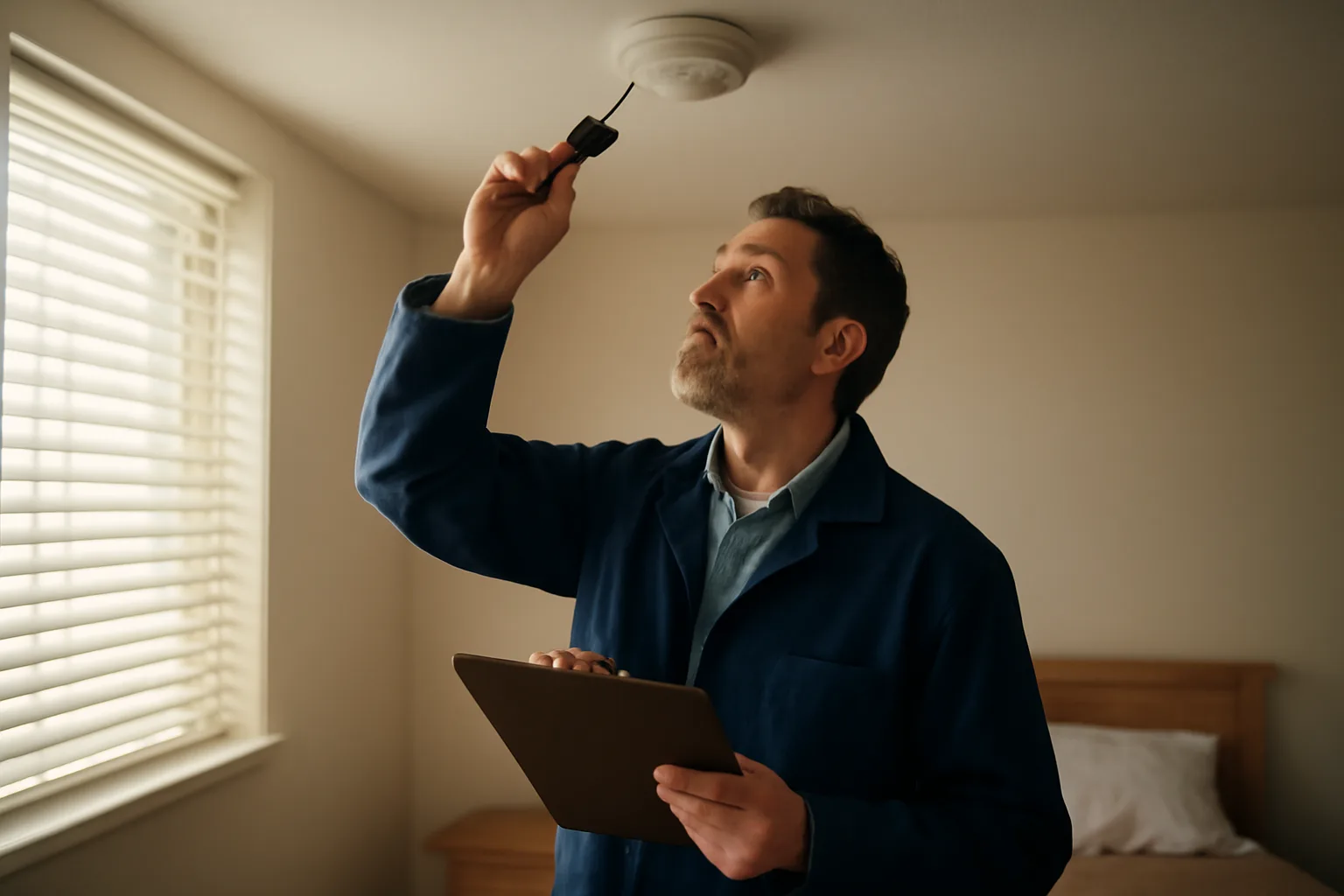
A solid rental walkthrough checklist covers five zones every time: entry points and exterior, kitchen, bathrooms, bedrooms/living areas, and life-safety systems. Skip any of these and you're gambling on either a security deposit dispute or a failed city inspection. Here's the core list, room by room: Exterior and entry: locks function on all doors, no broken or cracked windows, house numbers visible (many cities require this by code), steps and railings stable, no trip hazards on walkways, exterior lighting works, mailbox intact, gutters not overflowing onto siding. Kitchen: stove and oven burners all light, range hood or exhaust fan works, refrigerator seals and cools, sink has no active leaks under the cabinet, garbage disposal (if present) runs, cabinet doors and drawers open fully, countertop has no unsealed gaps that could harbor pests. Bathrooms: toilet flushes and doesn't run continuously, no leaks at the base, tub/shower caulking intact, exhaust fan vents to outside (more than into the attic), water heater temperature isn't scalding (most codes cap it around 120°F), grout not moldy. Bedrooms and living areas: windows open and lock, at least one egress window per bedroom (this is a fire code issue, more than comfort), outlets covered and functional, flooring has no trip hazards, closet doors operate. Life safety systems: smoke detectors in every bedroom and on every level, carbon monoxide detectors near sleeping areas (required in most states if there's gas or an attached garage), fire extinguisher accessible in the kitchen, electrical panel labeled and accessible, no visible exposed wiring. If you're prepping for an actual city rental inspection rather than just a routine walkthrough, the requirements get more specific and vary a lot by jurisdiction. A City Rental License & Inspection Prep Packet built for your specific city's checklist can save you from guessing what your inspector is going to flag, since many cities publish their own inspection forms that differ meaningfully from a generic landlord checklist.
How to become a landlord (the practical starting checklist)
Becoming a landlord isn't a licensed profession in most states the way being a real estate agent is, but it does come with legal obligations you take on the moment you rent out a unit. There's no national test or certification. What you need instead is a working knowledge of your state's landlord-tenant law and your city's rental registration rules, if any. The practical steps: confirm the property is zoned for rental use and check whether your city requires a rental license or registration before you can legally lease it out. Many cities with mandatory licensing programs (think Minneapolis, Baltimore, or dozens of mid-size cities) will fine you for renting without registering first, sometimes before you've even had a chance to get a tenant in. Next, get landlord liability insurance (a standard homeowner's policy usually doesn't cover a rental you don't live in). Then set up a compliant lease, screen tenants under the Fair Housing Act (42 U.S.C. § 3601 et seq.), which prohibits discrimination based on race, color, national origin, religion, sex, familial status, and disability [1], and learn your state's rules on security deposits, notice periods, and habitability. Most new landlords underestimate the compliance side and overestimate the property management side. Screening a tenant and fixing a faucet is the easy part. Knowing that your city requires a rental inspection every two years, or that your state caps security deposits at one or two months' rent, is the part that actually gets people fined.
What is landlording and what is a landlord, exactly?
A landlord is the owner (or an owner's authorized agent) who rents real property to a tenant in exchange for payment, under a lease or rental agreement. Landlording is the ongoing work of managing that relationship and the property: collecting rent, maintaining habitability, handling repairs, following notice rules, and keeping the unit compliant with local codes. Legally, most states define landlord duties through an implied "warranty of habitability," a doctrine that says a rental unit must be fit for human habitation regardless of what the lease says. This came out of case law starting in the 1970s (Javins v. First National Realty Corp., 428 F.2d 1071, D.C. Cir. 1970, is the case most law students read) and has since been codified into most state landlord-tenant statutes. In practice, landlording means you're responsible for structural safety, working plumbing and heat, functioning locks, and pest control in most jurisdictions, even if your lease doesn't spell every item out. A walkthrough checklist is really just a tool for proving you met that standard, both at move-in and on an ongoing basis.
Who is responsible for a rental property walkthrough inspection in California?
In California, the landlord is responsible for conducting move-in and move-out inspections, though the tenant has a legal right to participate. California Civil Code Section 1950.5(f) requires landlords to offer tenants a "initial inspection" before move-out, at the tenant's request, so the tenant has a chance to fix issues before final deductions are made from the deposit [2]. The code states: "the landlord shall notify the tenant in writing of his or her option to request an initial inspection and of his or her right to be present at the inspection" [2]. If the tenant requests it, the landlord must do the walkthrough no earlier than two weeks before the lease ends, and must give the tenant an itemized list of any deficiencies afterward, along with a chance to correct them before the final move-out. For city-level rental inspections (health and safety, not deposit-related), responsibility shifts depending on your municipality's program. Many California cities including Los Angeles run a Systematic Code Enforcement Program that requires periodic inspections of rental units, and the landlord is responsible for scheduling and paying inspection fees, not the tenant [3]. If you rent in California and haven't confirmed whether your city has a program like this, check with your city's housing or building department directly since enforcement varies significantly by jurisdiction.
How much notice does a landlord have to give before entering or inspecting?
| California | 24 hours (presumed reasonable) | Cal. Civ. Code § 1954 [4] | |
|---|---|---|---|
| Florida | 12 hours | Fla. Stat. § 83.53 [5] | |
| Texas | No statutory minimum; lease governs | N/A | |
| Washington | 2 days (48 hours) | RCW 59.18.150 [6] | |
| New York | "Reasonable notice" (typically interpreted as 24 hours) | N.Y. Real Prop. Law § 235-f context varies by locality | Emergencies (fire, flooding, gas leak) are the standard exception. Nearly every state statute allows landlords to enter without advance notice when there's an immediate threat to life or property. Outside of emergencies, entering without proper notice can expose you to a tenant claim for violation of quiet enjoyment, and in some cities, a fine on top of that. For a scheduled city rental inspection, notice rules are separate from your state's landlord-entry statute; check your city's ordinance, since inspection notice is often a fixed period like 10 or 14 days written into the municipal code rather than the shorter notice period that applies to routine landlord visits. |
Notice requirements vary by state, but 24 hours is the most common standard, with a handful of states requiring less or more. California requires "reasonable notice," which the statute presumes to be 24 hours absent circumstances suggesting otherwise (Cal. Civ. Code § 1954) [4]. Texas doesn't set a statutory minimum notice period for routine entry, which is unusual, though most Texas leases specify one anyway. Here's a comparison of common state notice requirements for non-emergency entry: | State | Standard notice | Statute |
What can a landlord look at during an inspection?
A landlord doing a routine walkthrough can generally look at the condition of the unit itself: walls, floors, fixtures, appliances, smoke detectors, plumbing, and signs of damage or unauthorized alterations. What a landlord generally cannot do is search personal belongings, closets, drawers, or anything not related to verifying the physical condition of the property. The legal boundary is usually framed around purpose. Most state statutes (including California's Section 1954 [4]) limit landlord entry to specific purposes: making repairs, showing the unit to prospective tenants or buyers, or verifying the tenant is complying with the lease. Entry for the purpose of general snooping isn't a listed purpose in any state statute, and doing so repeatedly can support a tenant harassment claim. During a city compliance inspection, the inspector is typically checking a fixed list tied to the local housing code: smoke and CO detector placement and function, egress window compliance, electrical panel condition, presence of GFCI outlets in wet areas, water heater temperature and pressure relief valve, visible mold or moisture damage, and structural issues like porch railings or foundation cracks. Inspectors generally do not open closets or check personal property either, since city inspections are about the building's condition, not the tenant's belongings. It helps to walk the same checklist yourself before the city inspector shows up. If you're managing a unit in a city with a mandatory inspection program, our City Rental License & Inspection Prep Packet is built around exactly this kind of pre-inspection walkthrough, so you catch a loose handrail or missing CO detector before it becomes a citation.
What rights do tenants have without a lease?
Tenants without a written lease, sometimes called month-to-month or "tenants at will," still have the full protection of their state's landlord-tenant law. A verbal agreement to pay rent in exchange for occupancy creates a legal tenancy in every U.S. state, even without paper. That means a tenant without a lease still has a right to habitability, still gets notice before entry, still gets proper notice before termination (usually equal to the rental period, so 30 days for a month-to-month tenancy in most states), and still can't be evicted without going through the formal court process. In most states, without a lease specifying otherwise, tenancy defaults to month-to-month, terminable by either party with standard statutory notice, typically 30 days. What a tenant without a lease loses is the certainty a written lease provides: rent can typically be raised with proper notice at any point rather than being locked in for a fixed term, and there's more room for dispute about what was agreed to regarding pets, subletting, or included utilities. If you're renting without a written lease, that ambiguity usually hurts the landlord more than the tenant in a dispute, since courts often interpret unclear terms against the party who drafted (or failed to draft) the agreement.
Why do landlords require renters insurance?
Landlords require renters insurance mainly to shift liability for the tenant's personal property and personal liability away from the landlord's own policy. A landlord's dwelling insurance covers the building itself and the landlord's own liability, but it typically does not cover a tenant's furniture, electronics, or clothing if there's a fire, burst pipe, or theft. Requiring renters insurance also protects the landlord from a specific bad scenario: a tenant's negligence (say, an unattended stove fire, or a bathtub overflow that damages the unit below) causing damage that the tenant can't pay for out of pocket. A renters insurance policy typically includes liability coverage, often $100,000 or more, that can cover the landlord's losses in that situation instead of the landlord having to sue an uninsured tenant directly. Cost isn't much of a barrier. The average renters insurance policy costs roughly $148 to $174 per year nationally according to industry data compiled by the Insurance Information Institute, though costs vary by state and coverage level [7]. Many landlords require proof of a policy (often $100,000 in liability coverage minimum) as a lease condition, and some require the landlord be listed as an "interested party" on the policy so they're notified if it lapses.
What can't a landlord do in Ohio?
Ohio landlords are bound by Ohio Revised Code Chapter 5321, the Ohio Landlords and Tenants Act, which spells out specific things landlords cannot do. A landlord in Ohio cannot enter the rental unit without giving "reasonable notice" (Ohio courts have generally interpreted this as 24 hours, though the statute itself doesn't fix a number) except in an emergency [8]. Ohio landlords also cannot shut off utilities, change the locks, or remove a tenant's belongings to force them out, a practice known as "self-help eviction." Ohio Rev. Code § 5321.15 explicitly prohibits this: a landlord cannot cause, directly or indirectly, the interruption of any utility service, and cannot seize the tenant's property, even if rent is unpaid, without going through formal eviction proceedings in court [9]. Ohio landlords also can't retaliate against a tenant for exercising a legal right, like reporting a code violation or joining a tenant union; ORC § 5321.02 protects tenants from retaliatory eviction, rent increases, or service reductions for at least the specific actions listed in the statute [10]. And under the state's habitability requirements (ORC § 5321.04), a landlord can't rent out a unit that doesn't comply with building, housing, and health codes, or one that lacks working plumbing, heat, and hot water . If you're not sure which specific Ohio city ordinance applies on top of the state law, check with your city's building or housing department, since cities like Cleveland and Columbus run their own rental registration and inspection programs layered on top of the statewide landlord-tenant rules.
Move-in vs. move-out vs. city inspection checklist: what's different?
The core checklist items are the same across all three, but the purpose and paper trail differ enough that you shouldn't treat them interchangeably. Move-in walkthrough: Document existing damage, take dated photos or video of every room, and have the tenant sign off on a condition form. This protects you when the tenant moves out and disputes a deposit deduction, and it protects the tenant from being blamed for damage they didn't cause. Most states require this kind of documentation implicitly through their security deposit statutes, since you generally can't deduct for damage you can't prove existed. Move-out walkthrough: Compare against the move-in documentation, item by item. Note anything beyond normal wear and tear (a legal standard, more than an opinion, since most states allow deductions only for damage beyond ordinary use). In California, remember the tenant's right to request an initial inspection two weeks before move-out gives them a chance to fix issues themselves first [2]. City compliance inspection: This one isn't about tenant condition at all, it's about code compliance. The inspector is checking against a fixed municipal checklist (smoke detectors, egress, electrical, structural). A failed city inspection typically results in a re-inspection deadline and, if unresolved, fines that can run from under $100 to several hundred dollars per violation depending on the city, and repeat or serious violations in some cities can trigger daily accruing fines. Because these checklists are specific to your municipality's code rather than general landlord-tenant law, generic checklists you find online often miss line items your inspector will actually flag.
How to be a landlord who avoids fines and disputes
The landlords who avoid fines and tenant disputes aren't the ones who are lucky, they're the ones who document everything and use the same process every time. That means a written checklist for every walkthrough, dated photos stored somewhere retrievable, and a habit of checking your city's rental registration status before problems come up rather than after a notice arrives. A few habits that consistently keep landlords out of trouble: renew your rental registration or license before it expires rather than waiting for a reminder notice (many cities charge a late fee or penalty on top of the base renewal fee if you miss the deadline), respond to any city violation notice within the stated cure period rather than ignoring it (most cities give 30 days or less to fix a violation before penalties escalate), and keep a maintenance log so you can show a pattern of responsiveness if a tenant or inspector claims otherwise. If your city requires periodic inspections and you've never been through one, don't assume you know what it covers. Pull your city's actual inspection checklist off their housing department website, if they post one, or check directly with the office handling rental licensing. Cities that run these programs, like Minneapolis with its rental license inspection checklist or Baltimore with its housing inspection requirements, publish specifics that generic landlord advice won't cover. Understanding tenants rights and tenant rights more broadly also keeps you out of disputes, since a lot of landlord violations happen from ignorance of a specific state rule rather than bad intent.
Frequently asked questions
What's the difference between a rental walkthrough and a rental inspection?
A walkthrough is typically done by the landlord and tenant together to document unit condition at move-in or move-out, mainly for deposit purposes. An inspection is usually done by a city official checking compliance with local housing code, covering things like smoke detectors, electrical safety, and structural issues, independent of tenant condition disputes.
How to become a landlord if I've never rented out a property before?
Check your city's zoning and rental registration requirements first, get landlord liability insurance, and set up a legally compliant lease that follows your state's security deposit and notice rules. Screen tenants under Fair Housing Act guidelines, which prohibit discrimination based on race, religion, sex, disability, and other protected classes under 42 U.S.C. § 3601 et seq.
Who is responsible for the rental walkthrough inspection in California?
The landlord is responsible for conducting it, but California Civil Code § 1950.5(f) gives tenants the right to request an initial inspection before move-out, with two weeks' notice, so they can fix any deficiencies before final deposit deductions are made.
What is landlording, in plain terms?
Landlording is the ongoing work of owning and managing a rental property: collecting rent, maintaining habitability, handling repairs, following legal notice requirements, and keeping the unit compliant with local building and housing codes, whether or not the lease spells all of that out explicitly.
What rights do tenants have without a signed lease?
A tenant without a written lease still has full legal protection under state landlord-tenant law, including habitability rights, entry notice requirements, and formal eviction procedures. Absent a written term, tenancy typically defaults to month-to-month, terminable by either party with standard notice, usually 30 days in most states.
Why do landlords require tenants to carry renters insurance?
Renters insurance covers the tenant's personal belongings and liability for damage they cause, which a landlord's own dwelling policy usually doesn't cover. It shifts risk away from the landlord if a tenant's negligence causes a fire or water damage, and average policies cost only around $148 to $174 a year nationally.
How much notice does a landlord have to give before an inspection?
Most states require 24 hours notice for routine, non-emergency entry, though some vary: Florida requires 12 hours, Washington requires 48 hours, and Texas has no statutory minimum absent a lease provision. Emergencies allow entry without any advance notice in nearly every state.
What can a landlord actually look at during an inspection?
A landlord can check the physical condition of the unit: appliances, plumbing, smoke detectors, walls, and evidence of unauthorized alterations or lease violations. A landlord generally cannot search personal belongings, drawers, or closets unrelated to verifying the property's condition.
What can't a landlord do in Ohio specifically?
Ohio landlords can't shut off utilities or change locks to force a tenant out (a self-help eviction, prohibited under ORC § 5321.15), can't retaliate against a tenant for reporting code violations (ORC § 5321.02), and can't enter without reasonable notice except in an emergency.
Do I need a different checklist for move-in versus move-out?
Use the same core checklist, but compare move-out results directly against your move-in documentation to identify damage beyond normal wear and tear. Most states only allow security deposit deductions for damage exceeding ordinary use, which you can't prove without dated move-in photos or a signed condition form.
What happens if I fail a city rental inspection?
Most cities give a re-inspection window, often 30 days or less, to fix cited violations before fines apply. Fines vary widely by city, from under $100 to several hundred dollars per violation, and some cities add daily accruing penalties for unresolved serious violations. Confirm your city's specific cure period and fee schedule with its rental licensing office.
Is a free rental walkthrough checklist enough to pass a city inspection?
A general checklist covers the basics (detectors, electrical, plumbing, egress) but city inspection standards vary by municipality and change over time. Confirm your city's actual published inspection checklist with its housing or building department before relying on any generic template as your final prep.
Sources
- U.S. Department of Justice, Fair Housing Act overview: Fair Housing Act prohibits discrimination based on race, color, national origin, religion, sex, familial status, and disability
- California Legislative Information, Civil Code Section 1950.5: California landlords must offer tenants an initial move-out inspection with written notice of that right
- California Legislative Information, Civil Code Section 1954: California presumes 24 hours notice is reasonable for landlord entry
- Online Sunshine (Florida Legislature), Statute 83.53: Florida requires 12 hours notice for landlord entry
- Washington State Legislature, RCW 59.18.150: Washington requires two days notice for landlord entry
- Insurance Information Institute, Facts + Statistics: Renters insurance: Average renters insurance costs roughly $148 to $174 per year nationally
- Ohio Legislature, Revised Code Chapter 5321 (Landlords and Tenants): Ohio landlord-tenant law requires reasonable notice for entry except in emergencies
- Ohio Legislature, Revised Code Section 5321.15: Ohio prohibits self-help evictions including utility shutoffs and lockouts
- Ohio Legislature, Revised Code Section 5321.02: Ohio prohibits retaliatory conduct against tenants who exercise legal rights
- Ohio Legislature, Revised Code Section 5321.04: Ohio requires landlords to maintain units in compliance with building, housing, and health codes