Last updated 2026-07-26
TL;DR
A single-unit rental inspection typically takes 15 to 45 minutes. Multi-unit buildings run longer, often 20 to 30 minutes per unit plus common areas. City-mandated inspections (fire, health, building code) tend to run longer than a routine landlord walk-through, and reinspections after violations add days or weeks to the overall process, not the visit itself.
How long does a rental inspection actually take?
For one unit, plan on 15 to 45 minutes with the inspector physically inside. That's the honest range you'll hear from most city rental inspection programs and from landlords who've been through it more than once. A studio or one-bedroom with no obvious problems can be done in under 20 minutes. A three-bedroom house with a basement, garage, and multiple bathrooms can push past 45 minutes, especially if the inspector is working through a long municipal checklist rather than eyeballing the place. Multifamily buildings take longer overall but not necessarily longer per unit. Many cities inspect a percentage of units in a building rather than every single one. Minneapolis, for example, inspects a sample of units in larger rental properties rather than every unit every cycle, which is a common approach among city rental licensing programs [1]. If your city does full-building inspections, expect the inspector to move through units back to back, so a 12-unit building might take most of a morning or afternoon. The visit itself is usually the fast part. The paperwork, scheduling, and any reinspection after a failed item is what stretches the process out to weeks. Don't confuse "the inspection" (one appointment) with "the inspection process" (from notice to final passing certificate), because cities and landlords use those terms loosely and it causes real confusion when someone says an inspection "took three weeks."
What makes an inspection run long or short?
| Studio or 1BR apartment | 15 to 25 minutes | |
|---|---|---|
| 2 to 3BR single-family house | 25 to 45 minutes | |
| Duplex (both units) | 40 to 70 minutes | |
| Small multifamily (5 to 10 units, sample inspected) | 2 to 4 hours total | |
| Large multifamily (building-wide) | Half day to full day | These are general ranges pulled from how municipal inspection programs typically operate, not a promise about your specific city. Always confirm with your city rental licensing office for the exact scope and expected duration of your inspection type. |
A few things reliably add time: clutter that blocks access to a water heater, electrical panel, or attic hatch; pets that need to be secured before the inspector will enter certain rooms; a tenant who isn't home and has to be worked around; and any obvious code issue that the inspector stops to document with photos and notes. A few things reliably keep it short: every room accessible, smoke and carbon monoxide detectors already installed and tested, no visible plumbing or electrical hazards, and a landlord or property manager present who can answer questions on the spot instead of the inspector having to schedule a callback. Here's a rough breakdown by property type: | Property type | Typical inspection time |
What can a landlord look at during an inspection?
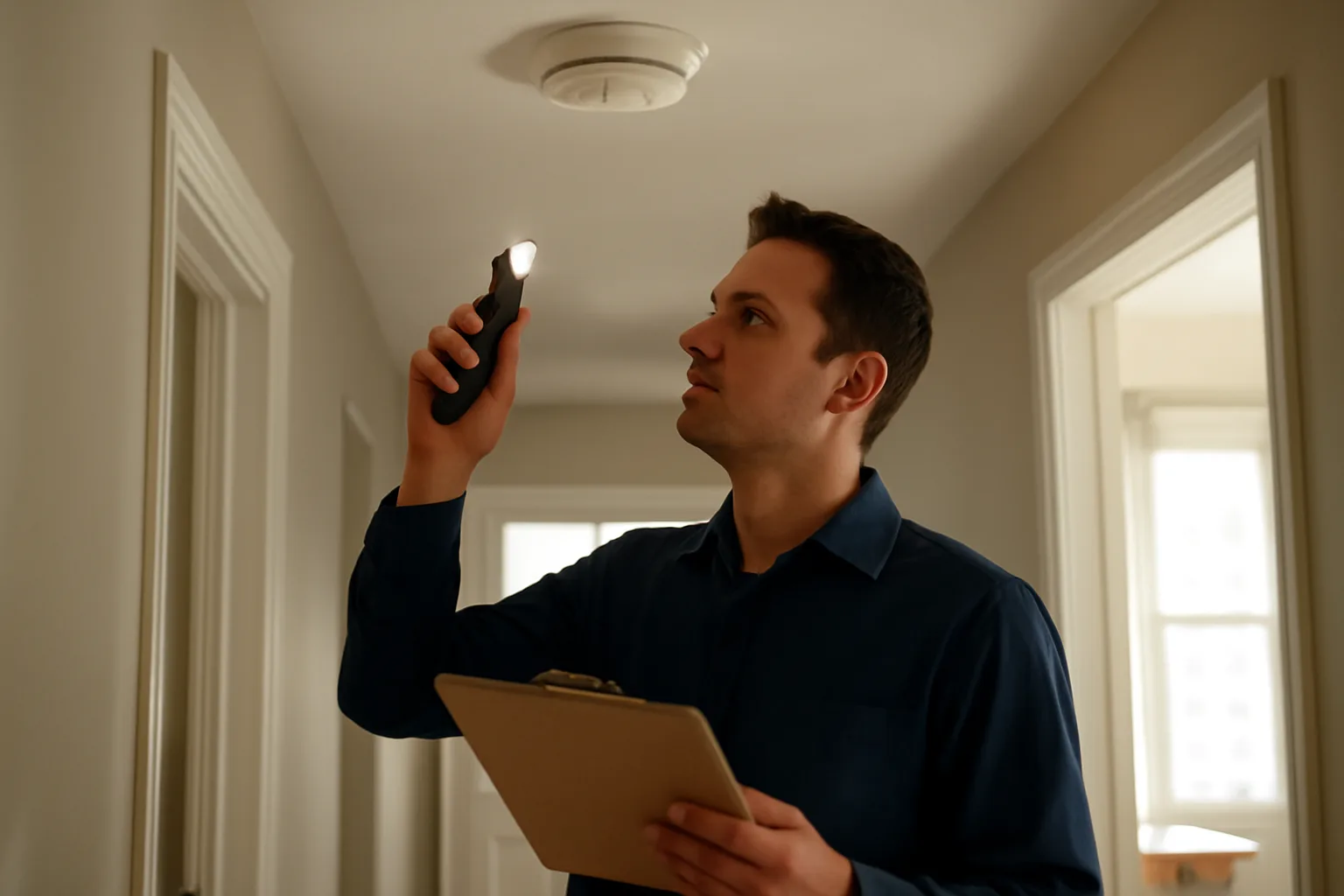
A landlord conducting their own walk-through, separate from a city inspector, can generally check anything related to the condition of the unit and compliance with the lease: smoke detector function, HVAC filters, visible water damage, signs of pest activity, unauthorized occupants or pets, and general upkeep. What a landlord cannot do is search personal belongings, go through drawers or closets, or use the visit as a pretext to harass a tenant. City code inspectors typically check a defined list: smoke and carbon monoxide alarms, egress windows in bedrooms, electrical panel condition and any exposed wiring, plumbing leaks, water heater temperature-pressure relief valve and strapping, handrails and guardrails on stairs, exterior conditions like peeling paint or unsecured railings, and heating system function. Many cities publish their actual checklist. Milwaukee's rental inspection checklist, for instance, lists specific items like working smoke detectors on every level and in every sleeping room, and GFCI protection in bathrooms and kitchens [2]. The inspector is not there to judge your decorating or clutter unless the clutter blocks access to something they need to check (an electrical panel, an attic hatch, a window that's supposed to open for emergency egress). Cosmetic issues generally don't fail an inspection. Safety and code issues do.
How much notice does a landlord have to give before an inspection?
This varies by state, and it's one of the most misunderstood parts of the whole process. Many states set a default notice period for landlord entry, commonly 24 hours, though the exact number and the situations it applies to differ by state statute. California's Civil Code sets a presumption that 24 hours' written notice is reasonable for landlord entry to make repairs or show the unit, and requires notice to be given during normal business hours absent emergency or tenant agreement [3]. City-mandated rental inspections usually require more advance notice than the day-to-day entry rule, because the inspection has to be scheduled with both the landlord and the tenant, sometimes weeks ahead. It's common for cities to mail an inspection notice 2 to 4 weeks before the scheduled date, though the exact window is set by local ordinance and you should confirm with your city rental licensing office. Separately, if a tenant does not have a written lease, they generally still have the same notice-before-entry rights as a tenant with a lease, because those protections usually come from state landlord-tenant statute or common law tenancy rules, not from the lease document itself. A verbal or month-to-month arrangement doesn't waive a tenant's right to notice before entry in most states.
Who is responsible for the rental property walk-through inspection in California?
In California, the landlord is generally responsible for arranging move-in and move-out condition documentation, and California Civil Code section 1950.5 specifically gives tenants the right to request an initial inspection before move-out. Under that section, if a landlord intends to deduct from the security deposit for anything other than normal wear and tear, the landlord must, upon the tenant's request, conduct an initial inspection no earlier than two weeks before the end of the tenancy and give the tenant an itemized list of deficiencies with an opportunity to fix them [4]. California Civil Code 1950.5(f) states the landlord "shall give the tenant reasonable notice of the date and time of the inspection" and shall attempt to schedule at a time convenient to both parties [4]. This is separate from any city-mandated rental inspection tied to a rental license or registration program (like those in Los Angeles or other California cities with proactive rental inspection programs), which follows the local ordinance's notice and scope rules, not the deposit statute. So the short answer: for the security deposit walk-through, it's on the landlord to offer it and to document the results. For a municipal rental inspection under a city ordinance, the landlord is responsible for scheduling access and being present or arranging access, but the city's inspector conducts the actual inspection.
What is landlording, and what is a landlord?
A landlord is the person or entity that owns residential or commercial property and rents it to someone else (the tenant) in exchange for payment, usually under a lease or rental agreement. Landlording is the day-to-day work of running that arrangement: collecting rent, maintaining the property, handling repairs, screening tenants, following state and local landlord-tenant law, and keeping up with rental licensing or registration requirements in cities that mandate them. It's not a passive activity, even though people sometimes talk about rental property as passive income. A landlord with even one unit has legal obligations around habitability, security deposits, notice periods for entry, and often local registration or licensing. Skip those and you can end up with fines, a failed inspection, or in the worst cases a habitability lawsuit. Some landlords are individuals with one rental unit who inherited a house or bought a duplex to live in one side and rent the other. Others own or manage dozens of units through an LLC. The legal responsibilities scale with the number of units in some ways (bigger buildings often trigger more inspection requirements) but the core landlord obligations, habitability, notice, deposit handling, apply from unit one.
How do you become a landlord, and how do you actually do it well?
Becoming a landlord legally usually means: buying or already owning residential property, deciding to rent it out, and then following your state's and city's requirements before you hand over keys. That can include registering the rental with your city (many cities require this even for a single-family rental), getting a rental license or permit if your city mandates one, passing an initial inspection in mandatory-inspection cities, and setting up compliant lease paperwork. Doing it well is a different question than doing it legally. Practically, that means: screening tenants consistently (same criteria for everyone, to avoid fair housing problems), keeping a maintenance reserve so repairs don't wreck your cash flow, understanding your state's notice-to-enter rules before you ever need to use them, and knowing your local rental registration or licensing deadline before a code enforcement notice shows up in your mailbox. A lot of new landlords underestimate the administrative side. If your city requires rental licensing, that usually means an application, a fee, and a scheduled inspection, sometimes recurring every one to three years depending on the ordinance. Missing a renewal or inspection deadline is one of the most common ways landlords rack up avoidable fines. If you're trying to get organized before a first or renewal inspection, our $79 City Rental License & Inspection Prep Packet walks through the paperwork and pre-inspection checklist side of this, though the inspection itself is always conducted by your city, not by us.
Why do landlords require renters insurance?
Landlords require renters insurance mainly to shift liability and to protect against loss the landlord's own policy won't cover. A landlord's property insurance typically covers the building structure, not the tenant's personal belongings, and it often doesn't cover liability if the tenant causes a fire or water damage that harms someone else's property in the building. Renters insurance (often required to include a minimum liability coverage amount, commonly in the $100,000 range, though this varies by lease and by state) protects the tenant's possessions and gives the landlord a source of recovery if the tenant is at fault for damage. It also tends to reduce disputes over security deposit deductions, because tenant-caused damage claims can sometimes route through the renter's policy instead of straight to the deposit. Whether a landlord can require renters insurance as a lease condition is generally allowed in most states, though a few jurisdictions have specific rules about how it can be structured. This is exactly the kind of clause-level detail we'd point you to a local landlord-tenant attorney for, since it varies by state and by lease type.
What rights do tenants have without a lease?
A tenant without a written lease, sometimes called a month-to-month tenant or a tenant-at-will depending on the state, generally still has the core protections that come from state landlord-tenant statute: the right to a habitable dwelling, the right to notice before the landlord enters (usually the same 24-hour-type standard that applies to leased tenants), and the right to advance notice before the tenancy is terminated. The absence of a written lease does not mean the absence of rights. Most state landlord-tenant codes apply the same baseline protections regardless of whether there's a signed document, because the tenancy itself (paying rent, occupying the unit) is what creates the legal relationship. What a verbal or no-lease arrangement usually does change is the notice period for ending the tenancy and rent increases, since those are often tied to whether it's month-to-month versus a fixed term. If you're a landlord operating without written leases, that's a real gap worth closing, not because the tenant has fewer rights without one, but because you have almost no documentation if a dispute ends up in court. Note we're not providing lease language here since that's genuinely something to get from your state bar's landlord-tenant resources or a local attorney.
What can a landlord not do in Ohio?
Ohio's landlord-tenant law (Ohio Revised Code Chapter 5321) sets out specific limits. Ohio Revised Code 5321.04 lays out landlord obligations, including keeping the premises in a fit and habitable condition, maintaining common areas, and keeping electrical, plumbing, and heating systems in good working order [5]. A landlord who ignores these duties can face a tenant claim for damages or, in some cases, rent escrow through the local municipal court. Ohio Revised Code 5321.05 sets tenant obligations, and courts have applied 5321.04 and 5321.05 together to sort out habitability disputes. On entry specifically, Ohio landlords generally need to give reasonable notice, commonly treated as 24 hours in practice, and can only enter at reasonable times, for a legitimate purpose like repairs, inspection, or showing the unit. Ohio law also prohibits retaliatory conduct against a tenant who has, for example, complained to a code enforcement agency or asserted rights under the landlord-tenant statute [5]. What this means practically: an Ohio landlord can't shut off utilities to force a tenant out, can't change the locks without a court order (self-help eviction is not legal), can't enter without proper notice except in a genuine emergency, and can't retaliate against a tenant for reporting a housing code violation. If you're dealing with a specific Ohio dispute, Ohio State Legal Services and local legal aid organizations publish tenant and landlord guides that go deeper than general chapter citations, and a local attorney is the right call for anything approaching litigation.
How does inspection length differ from the overall inspection timeline?
| Notice received to scheduled date | 2 to 6 weeks | |
|---|---|---|
| The inspection visit itself | 15 minutes to a few hours | |
| Violation notice issued (if any) | Same day to a few days after | |
| Time to correct violations | Commonly 14 to 30 days, set by ordinance | |
| Reinspection scheduling | 1 to 3 weeks | |
| Final certificate or license issued | Days to a couple weeks after passing | Every number in that table is a general pattern, not a guarantee. Cities set their own correction periods and reinspection fees by ordinance, and busy seasons (spring and summer, when many cities see more license renewals and move-related registrations) can stretch scheduling considerably. Always confirm actual timelines with your city rental licensing office rather than assuming a range that applies elsewhere applies to you. |
This is the distinction that trips people up. The physical inspection, the appointment where someone walks through your unit, is usually 15 minutes to a couple of hours depending on unit size and program type. The overall process, from receiving a notice to getting your certificate or license renewed, commonly runs 4 to 8 weeks in cities with a scheduling backlog, though this varies enormously by city and by time of year. Here's roughly how the full timeline tends to break down: | Stage | Typical duration |
How can a landlord make the inspection go faster and smoother?
The single biggest time-saver is having every unit fully accessible when the inspector arrives. That means all rooms unlocked, no furniture blocking the electrical panel or water heater, and pets secured somewhere they won't interfere. Inspectors move faster when they're not waiting on you to find a key or move a couch. Before the appointment, test every smoke detector and carbon monoxide alarm and replace dead batteries. This is consistently one of the most common failure points in municipal rental inspections, and it's also the cheapest to fix ahead of time. Check that bedroom windows actually open (egress requirements are a standard check almost everywhere), that handrails on stairs with more than a few steps are secure, and that there's no obvious active leak under sinks or around the water heater. Having your paperwork organized, if your city asks for a copy of the rental license, proof of insurance, or a lead paint disclosure for older properties, matters too, because scrambling for documents is a common reason an inspection visit runs long or gets flagged incomplete. If you want a structured way to get ahead of this before your city's notice letter turns into a fine, our $79 City Rental License & Inspection Prep Packet is built around exactly this pre-inspection checklist, though we're not a law firm and the packet doesn't replace your city's own requirements or guarantee a passing result. For broader context on what tenants and landlords are each entitled to during and around an inspection, see our guides on tenants rights and renters rights.
Frequently asked questions
How long does a single rental unit inspection take?
Most single-unit inspections take 15 to 45 minutes with the inspector on-site, depending on unit size and whether they find anything that needs extra documentation. A clean, accessible one-bedroom apartment is often on the shorter end. Confirm the expected time with your city rental licensing office, since some programs use longer checklists than others.
Who is responsible for the rental property walk-through inspection in California?
For move-out deposit inspections, California Civil Code 1950.5 puts the responsibility on the landlord to offer and conduct the initial inspection if requested by the tenant, with reasonable notice. For a municipal rental inspection tied to a local licensing program, the city's code inspector conducts the inspection; the landlord is responsible for arranging access.
What is landlording?
Landlording is the ongoing work of owning and renting out residential property: collecting rent, handling maintenance and repairs, screening tenants, following state and local landlord-tenant law, and keeping up with any rental registration, licensing, or inspection requirements your city imposes.
What is a landlord, exactly?
A landlord is the owner (or an entity, like an LLC, acting through its owner or manager) of residential or commercial property who rents that property to a tenant under a lease or rental agreement in exchange for payment.
What rights do tenants have without a lease?
A tenant without a written lease generally keeps the same baseline rights as a leased tenant under state law: habitability, notice before entry, and notice before termination. What changes without a lease is usually the notice period for ending the tenancy, since that's often tied to whether the arrangement is month-to-month.
How do you become a landlord?
You become a landlord by owning residential property and renting it out, but doing it legally usually means registering with your city if required, getting a rental license if your city mandates one, passing any required inspection, and using compliant lease and deposit paperwork under your state's law.
Why do landlords require renters insurance?
Landlords require renters insurance to protect against liability for tenant-caused damage and to cover the tenant's belongings, since the landlord's own property policy usually covers only the building, not the tenant's possessions or tenant-caused liability.
How much notice does a landlord have to give before entering a unit?
It depends on the state. Many states treat 24 hours' notice as reasonable for routine entry like repairs or showings; California's Civil Code specifically presumes 24 hours is reasonable notice. Municipal rental inspections often require longer advance notice, sometimes weeks, because the visit has to be scheduled with the city.
What can a landlord look at during an inspection?
A landlord can generally check smoke detectors, HVAC condition, visible damage, signs of pests, and lease compliance issues like unauthorized occupants or pets. A landlord cannot search personal belongings or use the visit as a pretext to harass a tenant. City inspectors check a defined code checklist, not personal property.
What can a landlord not do in Ohio?
Under Ohio Revised Code Chapter 5321, an Ohio landlord can't ignore habitability duties (5321.04), enter without reasonable notice and a legitimate purpose, shut off utilities to force a tenant out, change locks without a court order, or retaliate against a tenant who reports a code violation.
Does a failed inspection mean I lose my rental license?
Not usually right away. Most cities give a correction period, commonly 14 to 30 days depending on the ordinance, to fix violations before any license suspension or serious fine kicks in. A reinspection is then scheduled to confirm the fix. Confirm your specific city's correction window and reinspection fee with the rental licensing office.
Do all units in a building get inspected, or just some?
It depends on the city. Some programs, like Minneapolis's rental licensing, inspect a sample of units in larger buildings rather than every unit each cycle. Others require full-building inspections every renewal period. Check your specific city ordinance since this affects both the visit length and the overall timeline.
Sources
- City of Minneapolis, Rental Licensing: Some cities inspect a sample of units in larger rental buildings rather than every unit each cycle
- City of Milwaukee, Rental Inspection Checklist: Municipal rental inspection checklists commonly include working smoke detectors and GFCI protection requirements
- California Civil Code Section 1954: California presumes 24 hours' written notice is reasonable for landlord entry
- California Civil Code Section 1950.5: California landlords must offer an initial move-out inspection with reasonable notice if requested by the tenant
- Ohio Revised Code Chapter 5321: Ohio landlord obligations for habitability, entry notice, and prohibition on retaliation
- Ohio Revised Code Section 5321.04: Ohio landlords must keep the premises in a fit and habitable condition and maintain electrical, plumbing, and heating systems