Last updated 2026-07-26
TL;DR
Most states set landlord entry notice at 24 to 48 hours for non-emergency inspections, though a handful require different windows and some states have no statute at all. California requires 24 hours notice as a default, with 48 hours advised in a few local ordinances. Always check your specific state's statute; city rental licensing inspections may add their own notice rules on top.
How much notice does a landlord have to give before an inspection?
| California | 24 hours (reasonable) | Civil Code § 1954 [1] |
|---|---|---|
| Florida | No fixed hours; "reasonable notice," 12 hours presumed reasonable | Fla. Stat. § 83.53 [4] |
| Hawaii | 2 days | Haw. Rev. Stat. § 521-53 [2] |
| Rhode Island | 48 hours (some entry types) | R.I. Gen. Laws § 34-18-26 [3] |
| Texas | No statutory notice requirement for entry | No statute; check lease [5] |
Most states with an entry-notice statute land on 24 hours. California requires "reasonable notice," defined in the Civil Code as 24 hours in the absence of contrary evidence [1]. Other states, like Delaware, Hawaii, and Alaska, also use 24 hours [2]. A smaller group asks for 48 hours or more; Rhode Island uses 48 hours for certain entry types [3]. The notice period is usually measured in calendar hours, not business hours, so weekends and holidays generally count unless the statute says otherwise. If your lease specifies a longer notice period than state law, the lease terms usually control since they can't reduce tenant protections below the statutory floor. About a dozen states, including Arkansas and a few others, don't have a specific statute setting a notice period for routine entry. That doesn't mean landlords can walk in anytime; courts still look at the implied covenant of quiet enjoyment and any lease language. If you're in one of these states, check with your local housing authority or a landlord-tenant attorney before scheduling a walkthrough, and don't rely on "my state has no law" as a green light. Here's a quick comparison of a few commonly cited state rules. Confirm current text before relying on any of these, since amendments happen. | State | Standard notice for entry | Statute |
What can a landlord look at during an inspection?
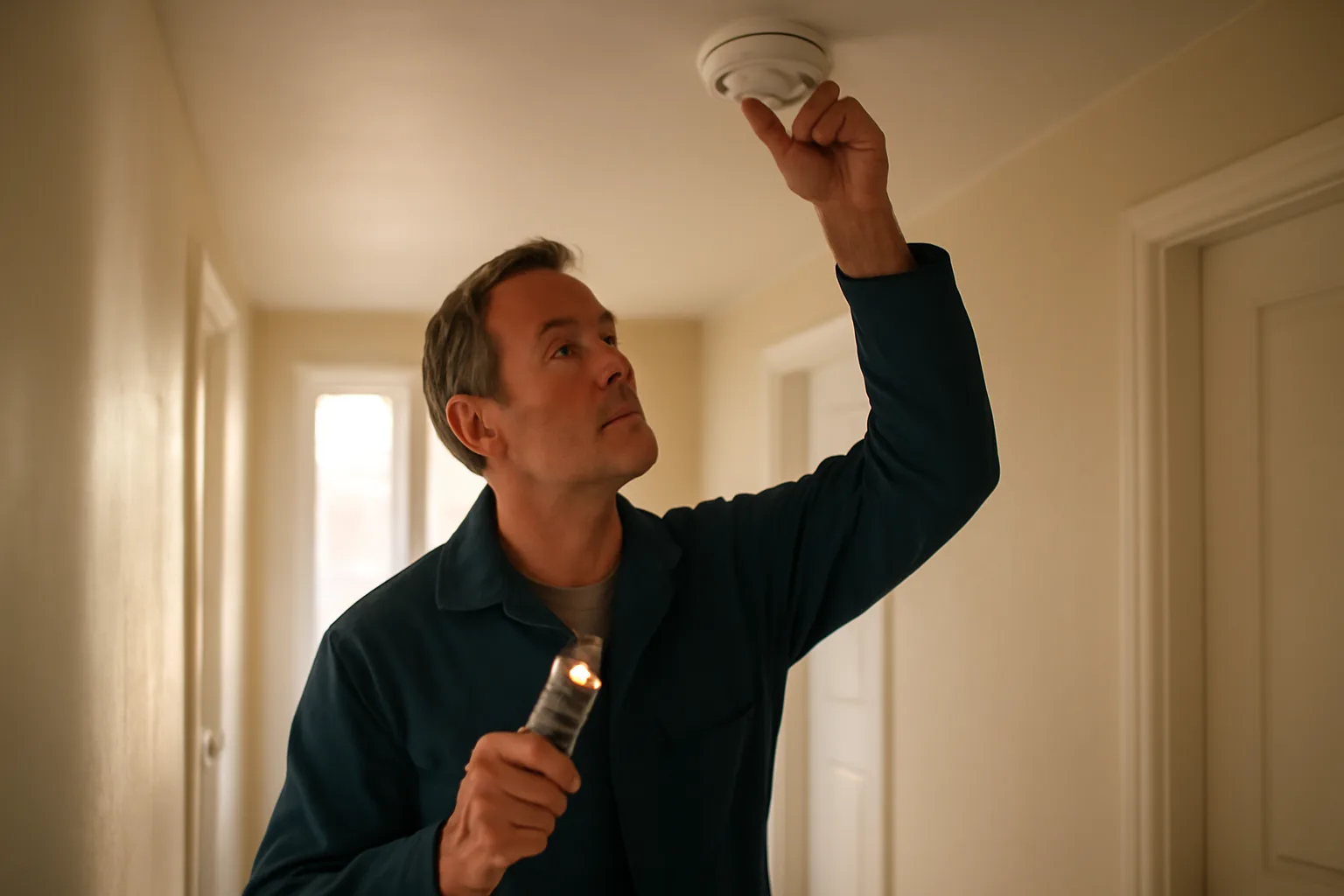
A landlord can generally check smoke and carbon monoxide detectors, plumbing fixtures for leaks, electrical outlets and panels, window and door locks, signs of pest infestation, mold or moisture damage, and general habitability conditions tied to the local housing code. City rental licensing inspections often use a standardized checklist matched to that municipality's property maintenance code, so the scope is usually broader than a routine landlord walkthrough. What a landlord generally cannot do is search through personal belongings, open closed drawers or containers unrelated to a maintenance issue, or use the inspection as a pretext to look for anything unrelated to habitability, safety, or lease compliance. The purpose of entry matters. Most state statutes list specific allowed reasons: repairs, showing the unit to prospective tenants or buyers, and inspections tied to code enforcement or lease terms. If your entry notice doesn't state a purpose, that itself can be a legal problem in states like California [1]. City-required rental inspections typically cover items like working smoke alarms per unit, secondary means of egress, functioning heat sources, no exposed wiring, and adequate weatherproofing. If you're preparing for a city inspection specifically (more than a routine landlord check-in), the list of code items is longer and more formal than what a private landlord walkthrough covers.
Who is responsible for a rental property walkthrough inspection in California?
In California, the landlord (or their authorized agent, like a property manager) is responsible for scheduling and conducting move-in and move-out walkthrough inspections, and for giving the tenant the legally required notice before entering for any inspection. California Civil Code § 1950.5 requires landlords to offer tenants a pre-move-out inspection if the tenant is moving out and the landlord intends to make deductions from the security deposit [6]. That pre-move-out inspection has to happen no earlier than two weeks before the tenancy ends, and the landlord has to give the tenant at least 48 hours written notice of the date and time, unless the tenant waives that notice in writing [6]. After the walkthrough, the landlord gives the tenant an itemized statement of anything that needs fixing before move-out to avoid deductions. For routine mid-tenancy inspections unrelated to move-out, the standard 24-hour notice rule under Civil Code § 1954 applies [1]. Local jurisdictions in California, like Los Angeles or San Francisco, may layer additional rental registration or inspection program requirements on top of state law, so check with your specific city's rental housing department for anything beyond the state floor.
How to become a landlord
Becoming a landlord starts before you own a rental unit: it means understanding your state's landlord-tenant law, your city's rental licensing rules if any apply, and your obligations around habitability, security deposits, and fair housing. There's no license required by most states just to rent out a house you own, but many cities require a rental license or registration once you start renting, sometimes triggered by even a single unit. Practical steps: get familiar with your state's landlord-tenant statute (most state attorney general or housing department sites publish a summary), check whether your city requires rental registration or a business license (common in cities like Baltimore, Minneapolis, and hundreds of others), get landlord insurance (different from a standard homeowner's policy), and set up a lease that matches your state's required disclosures. The Fair Housing Act also applies to almost all landlords, with narrow exemptions for owner-occupied buildings with four or fewer units in some cases [7]. If your city requires licensing or a pre-rental inspection, budget time for that process before you list the unit. Some cities take a few weeks to schedule an initial inspection, and if the unit fails, you'll need a re-inspection, which adds more time. If you're in a mandatory rental-licensing city, check with your city rental licensing office for the exact fee schedule and inspection timeline before you sign a lease with a tenant.
What is landlording, and what is a landlord?
A landlord is a person or entity that owns real property and rents it to a tenant in exchange for payment, usually under a written or oral lease. "Landlording" is the informal term for the day-to-day work of running that rental: collecting rent, handling maintenance requests, screening tenants, keeping up with local code requirements, and managing turnover between tenants. Landlording isn't a licensed profession in most states, but it comes with real legal obligations: implied warranty of habitability, security deposit handling rules, entry notice requirements, and anti-discrimination law under the federal Fair Housing Act [7] plus any state or local fair housing ordinances. Cities with mandatory rental registration or licensing add another layer: you may need to register the property, pay an annual fee, and pass a periodic inspection to keep renting legally. Many new landlords underestimate how much of the job is administrative rather than physical. Tracking notice periods, renewal deadlines, and inspection dates across multiple units gets complicated fast, especially in a city where the rental license renewal cycle doesn't match your lease renewal dates.
What rights do tenants have without a lease?
A tenant without a written lease, sometimes called a month-to-month or at-will tenant, still has most of the same rights as a tenant with a lease: the right to habitable housing, protection from illegal lockouts, the right to proper notice before eviction, and the right to advance notice before the landlord enters. Oral leases are enforceable in most states for month-to-month tenancies, though many states cap the enforceability of longer oral leases (commonly one year) under the statute of frauds. Without a written lease, the tenancy usually defaults to month-to-month, meaning either party can end it with proper notice, typically 30 days in many states, though this varies. Entry notice rules still apply regardless of whether there's a written lease. A tenant can't be evicted without proper legal process just because there's no lease in writing; landlords still have to follow their state's eviction procedure through the court system. A tenant without a lease can still refuse entry that doesn't meet the state's notice requirement, and can still expect the unit to meet basic habitability standards like working plumbing, heat, and structural safety.
Why do landlords require renters insurance?
Landlords require renters insurance mainly to shift liability risk: if a tenant's negligence causes a fire, water damage, or another loss, renters insurance covers the tenant's liability for damage to the building and to other tenants' property, plus the tenant's own belongings. Without it, a landlord's own property insurance might cover the building, but the tenant's belongings and certain liability exposures fall outside that policy. Renters insurance is inexpensive relative to the protection it buys. National average costs for a renters policy tend to run in the range of roughly $15 to $30 per month depending on coverage limits and location, according to insurance industry data tracked by state insurance departments and rate comparison services; exact pricing varies a lot by state and coverage amount, so treat any single number as a rough range rather than a guarantee. Requiring renters insurance in the lease is legal in most states as long as it's disclosed and applied consistently to all tenants (to avoid fair housing issues). It's a low-cost way for landlords to reduce the odds of an expensive out-of-pocket dispute over tenant-caused damage.
What can a landlord not do in Ohio?
Ohio law, under Ohio Revised Code § 5321.04, requires landlords to keep the premises fit and habitable, comply with building and housing codes, keep common areas safe, and maintain electrical, plumbing, heating, and other essential systems in good working order [8]. Landlords in Ohio cannot enter the rental unit without giving reasonable notice, and Ohio Revised Code § 5321.05 requires landlords to give tenants "reasonable notice" of intent to enter and to enter only at reasonable times, except in emergencies [9]. Ohio landlords also cannot shut off utilities, change locks, or remove a tenant's belongings to force them out; that's a "self-help eviction" and it's illegal statewide. Any eviction has to go through the Ohio court system (a forcible entry and detainer action), regardless of how far behind on rent a tenant is or how clear the lease violation seems. Ohio law doesn't specify an exact number of hours for "reasonable notice" the way California's 24-hour default does; courts interpret reasonableness case by case, though 24 hours is a commonly cited practical standard used by Ohio landlord-tenant attorneys and legal aid organizations as a safe benchmark.
What happens if a landlord doesn't give proper notice before entering?
If a landlord enters without the notice required by state law, the tenant generally has grounds to claim a violation of the lease or of the implied covenant of quiet enjoyment, and in some states this can support a claim for damages or even early lease termination in extreme or repeated cases. California courts have found that repeated improper entries can amount to a form of tenant harassment under local rent ordinances in cities like San Francisco and Los Angeles. Most disputes over improper entry don't end up in court; they end up as a documented complaint, a strained landlord-tenant relationship, or a local housing agency complaint if the city has a tenant hotline. Landlords who skip notice repeatedly also create exposure in eviction cases, since a judge weighing a retaliation or harassment defense may look unfavorably on a pattern of unnotified entries. The safer practice, regardless of your state's minimum, is to give notice in writing (text or email counts in most cases, but a paper trail helps), state the specific reason for entry, and offer a reasonable window rather than an exact minute. This lowers dispute risk and keeps you square with both state law and any city rental licensing program that expects documented, respectful landlord conduct.
Does a city rental inspection require different notice than a routine landlord walkthrough?
Yes, often. A city's mandatory rental inspection (required to obtain or renew a rental license) usually follows the notice rules set by that city's housing or code enforcement department, which can be different from your state's general landlord-entry statute. Some cities schedule inspections directly with the tenant and landlord together and give notice by mail weeks in advance; others coordinate scheduling through the landlord, who then has to give the tenant proper notice under state law separately. Because these two notice systems (state landlord-entry law and city inspection scheduling) don't always talk to each other, landlords sometimes get tripped up thinking the city's notice satisfies the tenant-facing notice requirement, or vice versa. It usually doesn't automatically. If your city mails you an inspection date, you likely still need to separately notify your tenant per your state's entry-notice statute unless your city's ordinance explicitly folds that requirement in. Confirm with your city rental licensing office how their inspection notice process interacts with your state's tenant-notice law; the office can tell you whether they notify tenants directly or expect the landlord to handle it. Building a simple annual checklist for this, tracking your state notice period alongside your city's inspection cycle, saves a lot of last-minute scrambling, which is part of why a lot of landlords put together a one-time reference packet covering their specific city's forms and deadlines, like the City Rental License & Inspection Prep Packet, rather than re-researching it every renewal cycle.
How to be a landlord who stays out of legal trouble
Staying out of trouble as a landlord comes down to a short list of habits: give proper written entry notice every time, document the condition of the unit at move-in and move-out, respond to repair requests within a reasonable time (many states set specific deadlines for essential repairs like heat or water, often 24 to 72 hours), and never attempt a self-help eviction. Follow fair housing law strictly. The Fair Housing Act prohibits discrimination based on race, color, national origin, religion, sex, familial status, and disability [7], and many states and cities add protected classes like source of income, sexual orientation, or age. Screening criteria should be applied the same way to every applicant, documented in writing. Keep your rental license or registration current if your city requires one. Letting a license lapse is one of the most common (and avoidable) violations that trigger fines in mandatory-licensing cities; renewal deadlines and inspection cycles vary by city, so confirm your specific city's renewal window with its rental licensing office well before the deadline rather than after a late notice arrives.
Frequently asked questions
How much notice does a landlord have to give before entering for an inspection?
Most states require 24 hours notice, including California under Civil Code § 1954 [1]. Some states, like Hawaii, require 48 hours (2 days) [3]. A handful of states have no fixed statutory notice period at all, so check your specific state's landlord-tenant law before relying on a general number.
Can a landlord inspect a rental property without notice?
Only in a genuine emergency, like a fire, flood, or gas leak, can most landlords enter without advance notice. For routine inspections, repairs, or showings, state law almost always requires notice, commonly 24 to 48 hours, given in writing or another documented form.
What can a landlord check during a rental inspection?
A landlord can generally check smoke and CO detectors, plumbing, electrical systems, locks, signs of pests or mold, and overall habitability tied to lease terms or local housing code. A landlord generally cannot search personal belongings or closed containers unrelated to maintenance or safety.
Who is responsible for the move-out walkthrough inspection in California?
The landlord is responsible for offering and scheduling the pre-move-out inspection under California Civil Code § 1950.5, giving the tenant at least 48 hours written notice of the date and time unless the tenant waives that notice in writing [6].
What is landlording?
Landlording is the day-to-day work of owning and managing rental property: collecting rent, handling maintenance, screening tenants, following entry notice and habitability law, and keeping any required city rental license or registration current.
What rights does a tenant have without a written lease?
A tenant without a written lease still has the right to habitable housing, proper eviction notice, protection from illegal lockouts, and advance notice before the landlord enters. Most oral tenancies default to month-to-month status with standard notice rules for ending the tenancy.
Why do landlords require renters insurance?
Landlords require renters insurance to cover tenant liability for damage the tenant causes (like a fire or water leak) and to protect the tenant's own belongings, since a landlord's property insurance usually doesn't cover tenant possessions or all tenant-caused liability.
What can a landlord not do in Ohio?
Ohio landlords cannot enter without reasonable notice except in emergencies, and cannot use self-help eviction methods like shutting off utilities or changing locks to force a tenant out; Ohio Revised Code § 5321.05 requires reasonable notice and reasonable timing for entry [9].
Does a lease override the state's notice requirement?
A lease can require longer notice than the state minimum, and that longer period generally controls. A lease usually can't legally shorten notice below the state's statutory floor, since most entry-notice statutes set a minimum tenant protection that leases can't waive away.
Is text message notice enough to satisfy entry notice rules?
In many states, yes, if the tenant has agreed to receive notices by text or email and the message includes the date, approximate time, and purpose of entry. Some states still expect written notice in a more formal form, so check your specific state statute's definition of acceptable notice.
Does a city inspection follow the same notice rules as a landlord's own inspection?
Not always. City rental license inspections often follow separate notice procedures set by the local housing or code enforcement department, which can differ from the state's landlord-entry statute. Confirm with your city rental licensing office how the two notice requirements interact.
How to become a landlord if you've never rented a property before?
Learn your state's landlord-tenant law, check whether your city requires rental registration or licensing, get landlord insurance, prepare a compliant lease with required disclosures, and budget time for any mandatory pre-rental inspection before listing the unit to a tenant.
Sources
- California Legislative Information, Civil Code § 1954: California requires 24 hours notice as reasonable notice for landlord entry
- Florida Statutes § 83.53: Florida requires reasonable notice for entry, with 12 hours presumed reasonable
- Hawaii Revised Statutes § 521-53: Hawaii requires two days notice before landlord entry
- Rhode Island General Laws § 34-18-26: Rhode Island requires 48 hours notice for certain landlord entry
- Texas Property Code Chapter 92: Texas has no general statutory notice requirement for landlord entry
- California Legislative Information, Civil Code § 1950.5: California requires landlords to offer a pre-move-out inspection with 48 hours written notice
- U.S. Dept. of Housing and Urban Development, Fair Housing Act overview: The Fair Housing Act prohibits discrimination based on race, color, national origin, religion, sex, familial status, and disability
- Ohio Revised Code § 5321.04: Ohio landlords must keep premises habitable and comply with housing codes
- Ohio Revised Code § 5321.05: Ohio landlords must give reasonable notice and enter at reasonable times, except in emergencies