Last updated 2026-07-26
TL;DR
There's no single national answer. Mandatory-licensing cities typically inspect rentals every 1 to 3 years, some annually, some only at license renewal or on complaint. The real schedule is set by your local ordinance, not state or federal law, so you have to check your city's rental licensing office directly for your property's cycle.
How often do rental inspections actually happen?
It depends entirely on the city, and the range is wide. Some cities inspect every unit annually. Others run a 2-year or 3-year cycle. A lot of smaller cities only inspect when a tenant moves out, when someone files a complaint, or when a license comes up for renewal. There's no federal rule setting inspection frequency for private rentals. Housing quality standards under federal law mostly apply to subsidized housing. For a Section 8 voucher unit, HUD requires an initial inspection before move-in and then at least once every 24 months under the Housing Quality Standards program, later folded into the Uniform Physical Condition Standards for Housing Choice Vouchers [1]. That 24-month cycle is often the closest thing to a national benchmark, and some cities borrow similar timing for their own ordinances even though they don't have to. Outside of voucher housing, frequency is a pure local-ordinance question. Milwaukee, for example, inspects licensed rooming houses and some rental properties on a schedule tied to code compliance history, with more frequent visits for properties that rack up violations [2]. Cities with proactive rental inspection programs (as opposed to complaint-based ones) tend to publish a specific cycle, commonly annual, biennial (every 2 years), or triennial (every 3 years). If you own in a city with mandatory licensing, the fastest way to know your real schedule is to call the rental licensing or code enforcement office and ask for your property's specific inspection cycle, because published cycles sometimes get adjusted based on your property's violation history.
What determines whether my city inspects annually or less often?
Three things usually drive it: the type of ordinance, your property's compliance record, and city budget or staffing. Proactive rental inspection programs are exactly what they sound like. The city inspects on a set calendar regardless of complaints. These programs became more common after research (including a widely cited 2014 study framework built around Rochester, NY's program) suggested that routine inspection reduces the odds of serious code violations sitting unaddressed for years [3]. Reactive or complaint-based cities only send an inspector when a tenant, neighbor, or code officer flags a problem. A clean violation history often earns you a longer interval. Some cities explicitly reward good properties: fewer prior violations means you might move from a 1-year to a 2-year or 3-year cycle. A rental with repeat violations can get flagged for annual or even more frequent checks, sometimes with a required reinspection 30 to 60 days after a violation notice to confirm the fix. Budget matters more than most landlords assume. Understaffed code enforcement departments sometimes fall behind on their own published schedule, which is one reason your city's official cycle and the actual inspection you get can drift apart in practice. If you haven't heard from your city in longer than the stated cycle, that's not necessarily good news. It might mean they're backlogged, not that you're exempt.
Do all cities require rental inspections?
No. Mandatory rental licensing and inspection is a local choice, not a universal requirement, and plenty of cities and most rural areas have no proactive inspection program at all. Where it does exist, it's usually paired with a rental registration or license requirement. You register the unit, pay a fee, and the inspection is the mechanism the city uses to confirm the unit meets its housing or property maintenance code before issuing or renewing that license. Many of these local codes are built on, or reference, the International Property Maintenance Code, which sets baseline standards for things like smoke alarms, exits, plumbing, and structural safety that inspectors check against [4]. If your city doesn't have a licensing program, you may still get an inspection triggered by something else: a tenant complaint to code enforcement, a fire department life-safety sweep, or a one-time inspection tied to a legal dispute. Those aren't scheduled and won't recur on a calendar.
Who is responsible for a rental property walk-through inspection in California?
In California, the landlord is generally responsible for arranging and paying for any required move-in and move-out condition documentation, and separately, local jurisdictions with proactive rental inspection programs (several California cities, including parts of Los Angeles County and various municipalities under Rental Housing Inspection Programs) assign inspections to city or county code enforcement staff, not the tenant. California state law does require landlords to give tenants a written notice of their right to request an initial move-out inspection before the tenant vacates, so the tenant can be present and fix issues before the final deposit deduction is calculated. This is set out in California Civil Code Section 1950.5, which requires the landlord to notify the tenant of this right and, if requested, conduct the joint walkthrough no earlier than two weeks before the tenancy ends [5]. Separately, city-level rental inspection programs (common in cities with proactive rental licensing, though not universal statewide) send a city or county inspector, not the landlord, to check code compliance. The landlord's job there is to schedule access, be present or arrange access, and fix cited items by the deadline. Confirm with your city rental licensing office whether your municipality runs a program like this, since it's not statewide and coverage varies city by city.
What can a landlord look at during an inspection?
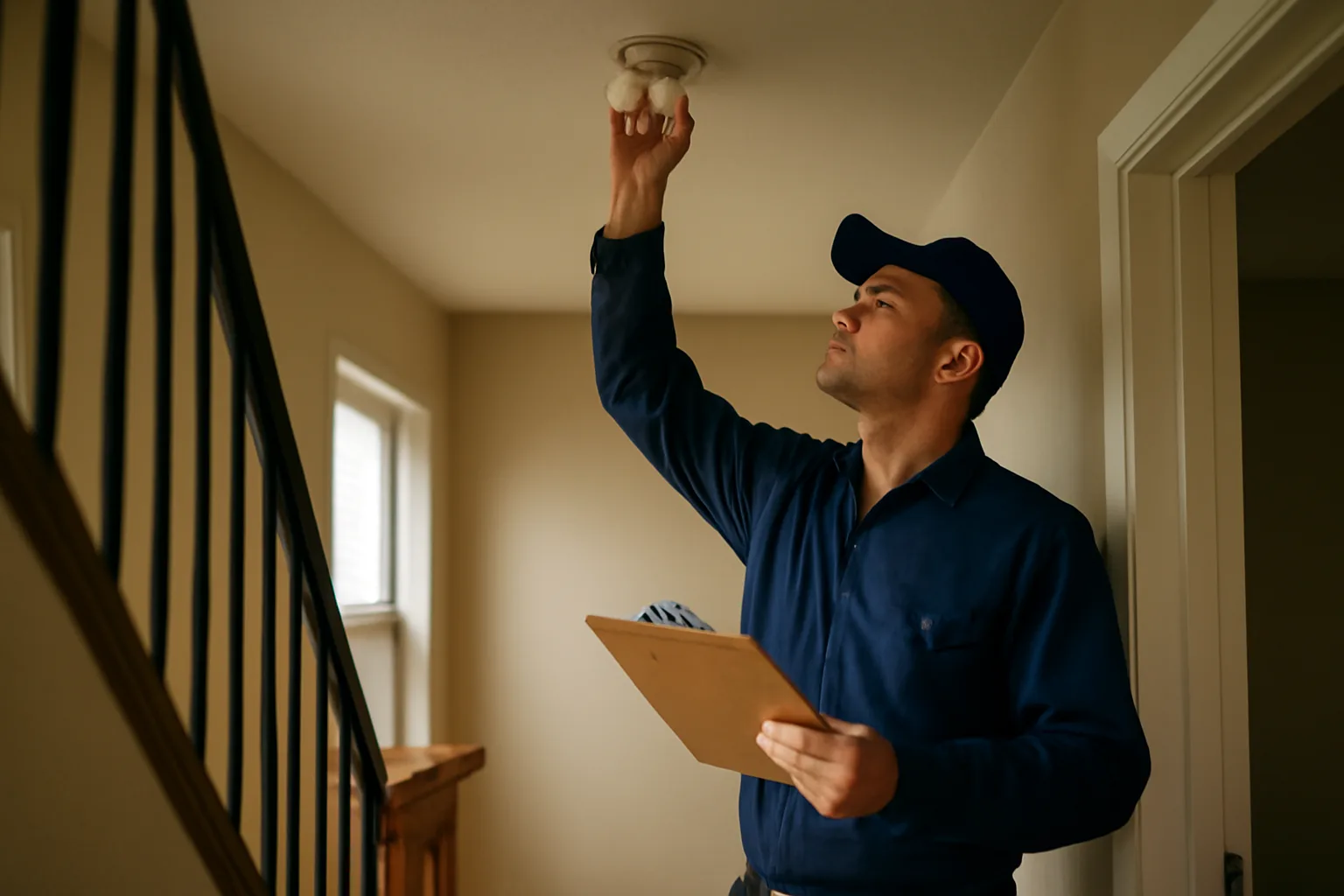
A code compliance inspector is checking the property against local housing and building code, not judging your décor. Typical items on the list: smoke and carbon monoxide detectors and whether they're working, egress windows and clear exit paths, electrical panel condition and obvious wiring hazards, plumbing leaks and water heater safety (temperature/pressure relief valve, proper venting), heating system function, handrails and stair condition, pest evidence, mold or moisture damage, and structural issues like broken steps or unsafe decks. Many local codes borrow language directly from the International Property Maintenance Code, which spells out minimums for things like ceiling height, light and ventilation, and sanitation facilities [4]. Your city's actual checklist may add local items: fire extinguisher requirements in some multi-unit buildings, exterior maintenance standards, or occupancy limits per bedroom. What inspectors generally are not there to check: whether you like the tenant's furniture, whether they've painted a wall a color you didn't approve (unless it violates a lease term you enforce separately), or anything unrelated to health, safety, and code compliance. If an inspector starts asking about things outside that scope, you can ask what code section they're citing. Before your inspection date, walking your own unit against your city's published checklist first catches the easy stuff: dead smoke detector batteries, a missing extension cord tucked behind a couch that's actually a permanent wiring situation, a leaking supply line under a sink. Fixing those before the inspector shows up is the cheapest violation you'll ever avoid.
How much notice does a landlord have to give before an inspection?
For routine, non-emergency entry (including most city inspections and landlord-initiated walkthroughs), the common state standard is 24 to 48 hours advance written notice, though the exact number and required format vary by state. California requires "reasonable notice," which state law presumes to be 24 hours unless circumstances indicate otherwise, delivered in writing under Civil Code Section 1954 [6]. Other states set their own numbers: some default to 24 hours, others allow up to 48 hours or specify particular delivery methods (posted notice, mail, or personal delivery). City-run inspections tied to a rental license usually don't follow the same rule as landlord entry. The city notifies the landlord directly, often by mail, with a scheduled date and a number of weeks' lead time that varies by program. If you can't make that date, most rental licensing offices let you reschedule if you call before the deadline. What you generally can't do is ignore the notice, since a missed inspection often triggers a re-inspection fee or, in cities with strict enforcement, a fine or license hold. Confirm your specific notice period and rescheduling policy with your city rental licensing office, since this is set locally, not by state law.
What is landlording, and what does it actually involve day to day?
Landlording is the ongoing work of owning and managing a rental property for tenants who pay rent, as distinct from just owning real estate. It covers marketing the unit, screening applicants, signing and enforcing a lease, collecting rent, handling repairs, and staying compliant with local housing codes and any rental registration or licensing requirement your city has. The unglamorous majority of the job is maintenance and paperwork, not property strategy. You're tracking lease renewal dates, responding to repair requests within whatever timeline your state requires (some states set specific deadlines for essential repairs like heat or water), keeping security deposit records, and renewing your rental license before it lapses. In a licensing city, missing a renewal deadline can mean fines or an inability to legally rent the unit until you catch up, so calendar tracking matters as much as tenant relations. If you're self-managing 1 to 10 units, which is most of the individual landlord market, you're doing all of this yourself without a property management company's systems. That's fine for a lot of owners, but it means the compliance side (registration, inspection prep, insurance requirements) tends to fall through the cracks unless you build your own checklist.
What is a landlord, exactly, in legal terms?
A landlord is the party who owns or controls rental property and grants a tenant the right to occupy it in exchange for rent, under a lease or rental agreement. Legally, this creates a landlord-tenant relationship governed by your state's landlord-tenant statute and, in licensing cities, local rental ordinances layered on top. The landlord role carries specific legal duties in nearly every state: maintaining the property in habitable condition, following state rules for security deposits (amount limits, return timelines, itemized deduction requirements), giving proper notice before entry or termination, and complying with fair housing law under the federal Fair Housing Act, which prohibits discrimination based on race, color, religion, sex, national origin, familial status, or disability [7]. Being a landlord doesn't require a license in most states just to own a unit, but your city might require a separate rental license or registration to legally operate that unit as a rental, distinct from the deed itself. Those are two different compliance layers: state landlord-tenant law and local rental licensing.
How do you become a landlord, step by step?
Becoming a landlord starts with the property, but the compliance side is where most first-timers get tripped up. Here's the realistic sequence: 1. Confirm the property can legally be rented. Check zoning, HOA rules if applicable, and whether your city requires rental registration or a license before you advertise the unit. 2. Register or license the rental if your city requires it. This is where the tenant rights landscape and your obligations both start, since licensing often comes with an inspection requirement attached. 3. Get the right insurance. A standard homeowners policy usually doesn't cover a tenant-occupied property; you generally need a landlord (dwelling) policy. 4. Set market rent and screen tenants consistently, using the same criteria for every applicant to stay compliant with fair housing law [7]. 5. Use a written lease. Even in states that allow verbal agreements, a written lease protects you on rent amount, due dates, maintenance responsibilities, and entry notice terms. 6. Track your city's inspection and renewal calendar from day one, not after you get a notice in the mail. If your city has a licensing program, this is exactly the kind of process our $79 City Rental License & Inspection Prep Packet is built to organize: a structured way to track your city's specific license steps, inspection checklist, and renewal dates so you're not reconstructing the process from scratch every year.
How do you be a good landlord once you're operating?
Being a landlord long-term comes down to three habits: respond fast, document everything, and don't skip compliance deadlines even when nothing seems urgent. Respond fast on repairs, especially anything touching heat, water, electrical, or safety. Many states set specific legal timelines for these (some require essential repairs within days, not weeks), and slow responses are the single most common source of landlord-tenant disputes and even rent withholding claims. Document every repair request, every entry notice, every deposit deduction with photos and dates. If a dispute ever lands in small claims court, whoever has the paper trail wins more often than whoever's simply right. Don't skip compliance deadlines. Rental license renewals, inspection dates, insurance renewals, these all have hard deadlines that don't care whether you're busy. A missed renewal in a licensing city can mean a fine, a inspection hold, or in some cities, an inability to legally collect rent until you're back in compliance. Set calendar reminders 60 and 30 days out, more than on the due date.
Why do landlords require renters insurance?
Landlords require renters insurance mainly to shift liability for the tenant's personal property and certain injury claims away from the landlord's own policy. A landlord's dwelling insurance covers the structure, not the tenant's furniture, electronics, or clothing, so if a pipe bursts or a fire starts, the tenant has no coverage for their own losses unless they carry a separate policy. Renters insurance also typically includes liability coverage, which protects the tenant (and indirectly the landlord) if a guest is injured in the unit or if the tenant accidentally causes damage, like a kitchen fire that spreads to a neighboring unit. Without that coverage, a landlord's own liability policy can end up absorbing claims that should have been the tenant's responsibility. Most states allow landlords to require renters insurance as a lease condition, though the specific enforceability and any notice requirements vary by state, so check your state's landlord-tenant statute or a local housing attorney before making it a strict lease term.
What rights do tenants have without a lease?
A tenant without a written lease, sometimes called a month-to-month or verbal tenancy, still has real legal protections under state landlord-tenant law. No lease doesn't mean no rights. At minimum, a tenant without a lease is entitled to habitable housing (working plumbing, heat, structural safety) under the implied warranty of habitability that most states recognize even without a written agreement. They're also entitled to proper notice before eviction, which for month-to-month tenancies is typically 30 days in many states, though some require 60 days depending on how long the tenant has lived there and local rules. They keep protection from illegal lockouts, utility shutoffs used as eviction tactics, and retaliatory eviction for reporting code violations, since most states prohibit landlords from retaliating against a tenant who exercises their legal rights, such as filing a habitability complaint. And they're covered by the same federal fair housing protections as any leased tenant [7]. What a verbal or no-lease tenant doesn't have is a documented record of the specific terms (rent amount, exact notice period, maintenance responsibilities), which is exactly why disputes without a lease get messier for both sides. If you're renting without a written lease, you're not off the hook for tenant rights; you've just made the terms harder to prove.
What can a landlord not do in Ohio?
Ohio landlord-tenant law, set out in Ohio Revised Code Chapter 5321, prohibits several specific things landlords cannot do regardless of what the lease says. A landlord cannot shut off utilities, change the locks, or remove a tenant's belongings to force them out without going through the formal eviction (forcible entry and detainer) process in court. Ohio Revised Code Section 5321.15 explicitly bars this kind of self-help eviction, stating a landlord "shall not cause, directly or indirectly, the interruption or termination of any utility service" or seize the tenant's possessions except through lawful process . A landlord also cannot retaliate against a tenant for reporting a code violation, joining a tenant union, or exercising a legal right, under the retaliation protections in the same chapter. Ohio law also requires landlords to maintain the property in a fit and habitable condition, comply with building and housing codes, and keep common areas safe under ORC 5321.04 . A landlord who ignores serious repair requests can face a rent escrow situation, where the tenant deposits rent with the court instead of paying the landlord directly until repairs are made. And like every state, Ohio landlords are bound by the federal Fair Housing Act's anti-discrimination protections regardless of what state law does or doesn't add on top [7].
How do I find my city's actual inspection schedule?
Skip the guessing and go straight to the source: your city's rental licensing office, sometimes housed under code enforcement, building department, or a dedicated rental housing division. Ask specifically for the inspection cycle attached to your license type and address, since some cities vary it by property size, unit count, or violation history. What to ask for on that call: the base inspection interval (annual, biennial, triennial, or complaint-based only), whether your specific property has a different cycle due to past violations, the notice period they'll give you before a scheduled visit, and the fee for a missed or rescheduled inspection. Get the answer in writing if you can, even just a confirmation email, because verbal answers from a busy office can shift between calls. If you're managing multiple units across different cities, or you're licensing a property for the first time, organizing this information once, rather than reconstructing it every renewal cycle, saves real time. That's the specific gap our $79 City Rental License & Inspection Prep Packet is meant to fill: a structured way to track your city's license requirements, inspection checklist, and renewal dates in one place, though it's a reference and organizing tool, not a legal service, and it doesn't guarantee any inspection outcome.
Frequently asked questions
How often do rental inspections occur in most cities?
Most cities with mandatory rental inspection programs use a 1 to 3 year cycle: annual, biennial, or triennial. Some cities only inspect at tenant turnover or in response to a complaint. There's no single national standard, so check with your specific city's rental licensing office for your property's cycle.
Do all rental properties get inspected on the same schedule?
No. Many cities adjust the schedule based on violation history, giving compliant properties longer intervals (like moving from annual to triennial) and putting properties with repeat violations on more frequent, sometimes annual, reinspection. Property type and unit count can also affect the cycle in some ordinances.
How to become a landlord if I've never rented a property before?
Confirm your property can legally be rented (zoning, HOA, city licensing), register or license it if your city requires that, get landlord (dwelling) insurance, screen tenants consistently under fair housing law, and use a written lease. Track your city's inspection and license renewal calendar from the start, not after a notice arrives.
Who is responsible for a rental property walk-through inspection in California?
The landlord is responsible for offering the move-out walkthrough required under California Civil Code Section 1950.5. For city-run rental inspection programs, which exist in some but not all California municipalities, a city or county inspector conducts the code compliance check, and the landlord arranges access.
What is landlording?
Landlording is the day-to-day work of owning and operating a rental property: marketing units, screening tenants, collecting rent, handling repairs, and complying with local housing codes and any rental licensing requirements. It's distinct from simply owning real estate, since it involves an active landlord-tenant relationship.
What is a landlord?
A landlord is the person or entity that owns or controls a rental property and grants a tenant the right to occupy it under a lease, in exchange for rent. Landlords have legal duties under state landlord-tenant law, including maintaining habitable conditions and following fair housing law.
What rights do tenants have without a lease?
Tenants without a written lease still have rights under state law, including habitable housing, proper notice before eviction (often 30 days for month-to-month tenancies), protection from illegal lockouts, and federal fair housing protections. A lack of a lease makes specific terms harder to prove, but it doesn't remove baseline tenant rights.
Why do landlords require renters insurance?
Renters insurance covers the tenant's personal property (which the landlord's dwelling policy doesn't) and typically includes liability coverage for injuries or accidental damage the tenant causes. Requiring it shifts that risk away from the landlord's own policy and reduces disputes over who pays for tenant-caused losses.
How much notice does a landlord have to give before entering or inspecting a unit?
Most states require 24 to 48 hours written notice for routine entry, though the exact number and delivery method vary by state statute. California presumes 24 hours reasonable under Civil Code Section 1954. City-run license inspections often follow a separate notice process set by local ordinance, so confirm both your state's entry law and your city's inspection notice policy.
What can a landlord look at during a rental inspection?
Inspectors typically check smoke and CO detectors, electrical and plumbing safety, heating function, exits and egress windows, structural condition, and pest or moisture issues, based on local housing code, often built on the International Property Maintenance Code. They're not there to judge décor or anything unrelated to health and safety code compliance.
What can a landlord not do in Ohio?
Under Ohio Revised Code 5321.15, a landlord cannot shut off utilities, change locks, or remove a tenant's belongings to force them out without a formal court eviction process. Ohio law also prohibits retaliation against tenants who report code violations and requires landlords to maintain habitable, code-compliant housing under ORC 5321.04.
What happens if I miss a scheduled rental inspection?
Policies vary by city, but missing a scheduled inspection commonly triggers a rescheduling fee, a follow-up notice, or in stricter enforcement cities, a hold on your rental license until the inspection happens. Call your rental licensing office before the missed date if you know you can't make it; most allow rescheduling if you contact them ahead of time.
Can a city inspect my rental more often if I've had violations before?
Yes, this is common. Many rental inspection ordinances shorten the inspection interval for properties with a history of code violations, sometimes to annual reinspection, while extending the interval for properties with clean records. Confirm your property's specific status with your city rental licensing office.
Sources
- City of Milwaukee, Rental Property Registration and Inspection program: Milwaukee ties rental inspection frequency to code compliance history
- International Code Council, International Property Maintenance Code: Local housing codes commonly adopt IPMC standards for smoke alarms, egress, sanitation, and structural safety
- California Legislative Information, Civil Code Section 1950.5: California requires landlords to notify tenants of their right to an initial move-out inspection
- California Legislative Information, Civil Code Section 1954: California presumes 24 hours written notice reasonable for landlord entry
- U.S. Department of Justice / HUD, Fair Housing Act overview: Federal Fair Housing Act prohibits discrimination based on race, color, religion, sex, national origin, familial status, or disability
- Ohio Revised Code Section 5321.15: Ohio law prohibits landlords from shutting off utilities or seizing tenant property to force eviction without court process
- Ohio Revised Code Section 5321.04: Ohio law requires landlords to maintain rental property in a fit and habitable condition and comply with housing codes