Last updated 2026-07-26
TL;DR
There's no single national answer. Rental inspection frequency is set city by city, ranging from annual (some Ohio and California cities) to once every 2-3 years, to only at tenant turnover. Some cities inspect on complaint only. You have to check your specific city's rental licensing ordinance to know your real schedule.
how often do rental properties need to be inspected
There is no federal or even consistent state answer to this. Inspection frequency is a local ordinance decision, and it varies enormously between cities that are sometimes only a few miles apart. Some cities inspect every rental unit annually. Others run a tiered system where units that pass clean get bumped to a 2 or 3 year cycle, and units with violations get inspected every year until they clear up. Some cities only inspect when a new tenant moves in or when the rental license changes hands. A smaller number of cities, especially ones without a formal licensing program, only send an inspector when a tenant files a complaint. Because this is set locally, the only reliable way to know your schedule is to confirm with your city rental licensing office. Ordinances get amended, and a city that inspected every 3 years in 2020 might have moved to annual inspections since then if it had enforcement problems. Don't rely on what a landlord friend in another town tells you, and don't assume last year's schedule still applies without checking. A few patterns show up often enough to be worth naming. Cities with a documented history of substandard housing (parts of Ohio, parts of California, older industrial Midwest cities) tend to run tighter, more frequent cycles. Newer or smaller licensing programs, especially in growing suburbs, often start with a lighter touch, like inspection only at initial licensing and then renewal paperwork with no physical walk-through unless something is flagged.
what determines how often my city inspects rental units
Three things usually drive the schedule: the city's ordinance language, your property's inspection history, and sometimes the age or type of building. First, read the actual ordinance or municipal code section for rental licensing, more than the summary page on the city website. Cities often bury the real interval, like 'inspected biennially' or 'inspected upon each change of occupancy,' in a code section rather than the plain-language FAQ. Second, your own compliance record matters. A property with recurring code violations frequently gets moved to a shorter cycle as an enforcement measure. A property that passes clean for several cycles in a row sometimes qualifies for an extended interval, which some cities call a 'good landlord' program. Third, building type and age matter in some jurisdictions. Multi-family buildings, buildings built before a certain year (often tied to lead paint rules), or buildings with a history of fire code issues sometimes get shorter intervals than single-family rentals in the same city. If you own in a city with a tenant and tenant turnover-based inspection model, your practical inspection frequency depends entirely on how often your units turn over, not a fixed calendar date.
who is responsible for the rental property walk-through inspection in california
In California, the answer splits into two very different categories: the state-mandated move-in/move-out walk-through and any local city rental inspection program, and they are not the same inspection done by the same people. For the move-in/move-out walk-through, California Civil Code Section 1950.5 gives tenants the right to request an initial inspection before move-out, and the landlord (or the landlord's authorized representative) conducts that inspection, not a city official. The statute requires the landlord to give the tenant reasonable notice of the date and time, and the tenant has the right to be present [1]. This walk-through is about identifying repair items that could otherwise be deducted from the security deposit, giving the tenant a chance to fix them first. For city rental inspection programs, the inspector is a city employee (usually from a code enforcement or housing department), and this is a completely separate process tied to a rental license, not the security deposit. Cities like Los Angeles run the Systematic Code Enforcement Program (SCEP), which requires periodic inspection of rental units citywide, with a per-unit annual fee that funds the inspections [2]. Other California cities have their own local rental inspection ordinances with their own schedules. So if you're a landlord in California asking who does 'the' walk-through, the honest answer is: it depends which walk-through you mean. For deposit-related move-out inspections, it's you or your agent. For code compliance inspections, it's the city.
what can a landlord look at during an inspection
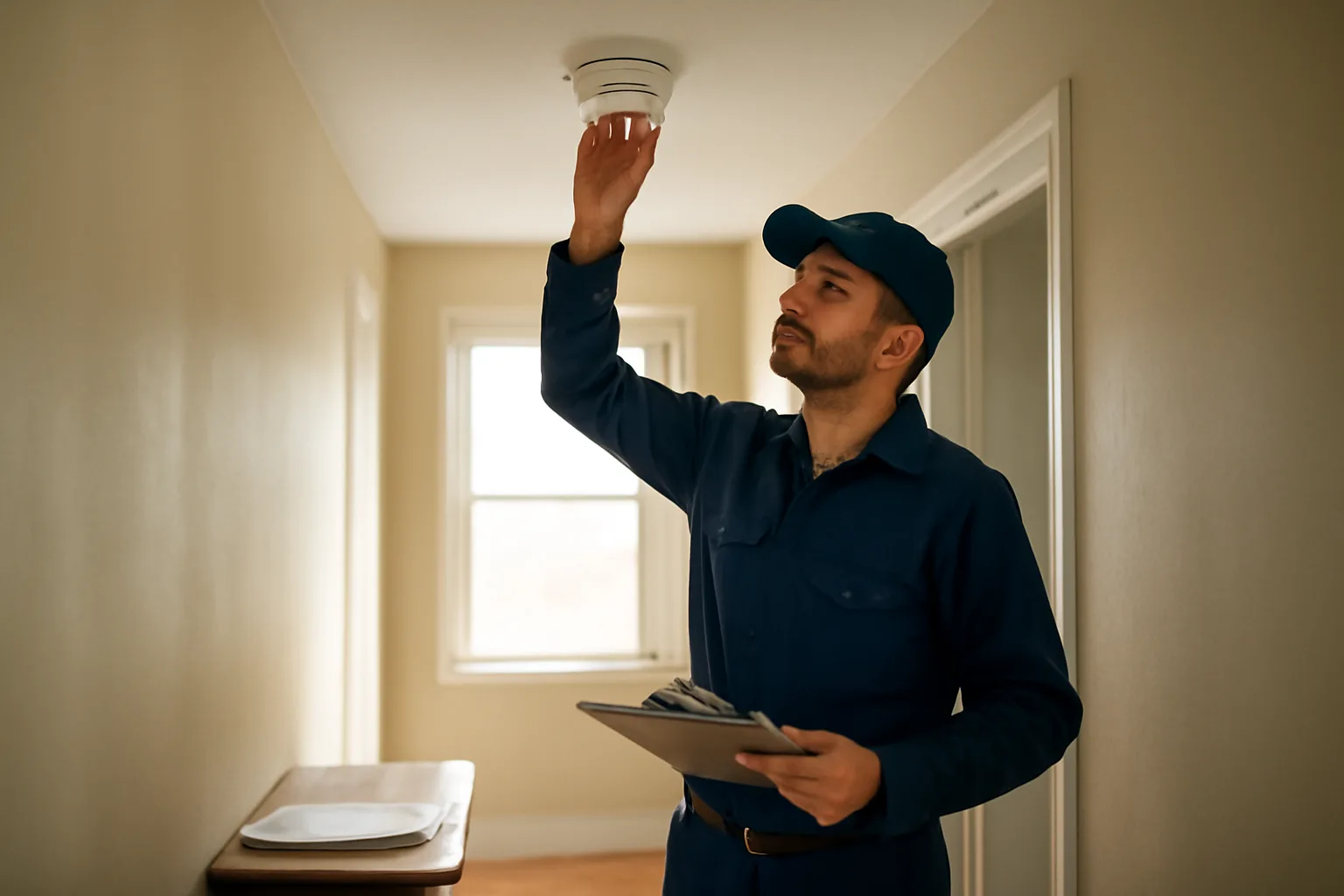
A rental inspection, whether it's a city code inspector or your own pre-tenancy walk-through, typically covers life-safety systems first and cosmetic condition second. Most municipal rental inspection checklists include: smoke and carbon monoxide detectors (presence and working condition), electrical systems (exposed wiring, overloaded outlets, missing outlet covers), plumbing (leaks, water heater condition, proper venting), heating system function, means of egress (windows that open, unobstructed exits, working locks), structural issues (cracked foundations, unsafe stairs or railings), and pest or mold evidence. Many cities also check for proper address numbering visible from the street and functioning exterior lighting. What inspectors generally do not look at: your tenant's personal belongings, whether the unit is tidy, or anything unrelated to code compliance and safety. A code inspection is not a cleanliness audit. For a landlord's own periodic walk-through (separate from any city inspection), reasonable items to check include appliance function, filter changes on HVAC systems, signs of water damage, and general wear that might need addressing before it becomes a bigger repair. This is also where you'd document existing condition for future deposit disputes. A quick note on scope: an inspector generally cannot search through drawers, closets, or personal items as part of a code inspection. Their job is habitability and safety, not surveillance.
how much notice does a landlord have to give before an inspection
Notice requirements come from two different sources, state landlord-tenant law for the landlord's own entry, and separately from your city's rental inspection ordinance for code inspections, and they sometimes require different amounts of notice. Under California law, for example, Civil Code Section 1954 generally requires 'reasonable notice,' which the statute defines as presumptively 24 hours in writing, before a landlord (or the landlord's agent) enters a rental unit for repairs, to show the unit, or for the initial move-out inspection [1]. Many other states have similar 24 to 48 hour reasonable-notice standards, though the exact language and hours vary by state, so confirm your specific state's statute rather than assuming California's rule applies everywhere. For city-run rental inspections, the notice requirement is set by the ordinance, not general landlord-tenant law, and this is where things diverge from state to state and city to city. Some cities mail a scheduled inspection date weeks in advance. Some require the landlord to coordinate access with the tenant directly, and if the tenant refuses access, the city has separate legal remedies (sometimes an administrative warrant) rather than the code inspector just showing up. As the landlord, you're often the middle party here. You need enough notice to give your tenant proper notice under state law, and enough lead time to prep the unit. If a city notice arrives with only a few days' turnaround, and your state requires 24 to 48 hours notice to your tenant, do the math backward so you're not scrambling.
how to become a landlord
Becoming a landlord legally means more than buying a property and finding a tenant. In a mandatory rental-licensing city, there's a real sequence, and skipping steps is how landlords end up with fines before they've collected their first month's rent. Start with the property itself: confirm it's zoned for rental use and check whether your city requires a rental license or registration before you can legally lease it out. Many cities require this license before you sign a lease, not after, and some charge daily fines for renting unlicensed. Next, check your city's inspection requirement. As covered above, some cities require an inspection before the first tenant moves in, others only after a complaint or at a set interval. Don't assume no news means no inspection needed; confirm with your city rental licensing office directly. After that, get your paperwork in order: a state-compliant lease, a plan for handling the security deposit (states have specific handling and return-timeline rules), and proof of any required landlord insurance or business license. Many cities also require landlords to register a local contact or property manager if they don't live within the city or county. Finally, budget for the ongoing side of it: annual license renewal fees, periodic inspection fees, and the actual maintenance costs of keeping the unit code-compliant year over year. New landlords often underestimate this ongoing compliance cost and only budget for the mortgage and repairs.
what is landlording, and what is a landlord
A landlord is the owner (or the owner's authorized agent) who rents real property to a tenant in exchange for rent, under a lease or rental agreement that creates a landlord-tenant relationship. Landlording is the informal term for the ongoing work of managing that relationship: collecting rent, maintaining the property, handling repairs, following notice and entry rules, and staying compliant with local licensing and inspection requirements. It sounds simple until you're actually doing it. Landlording day to day includes screening tenants, drafting or reviewing a lease, handling maintenance requests promptly (habitability laws in most states require it), managing the security deposit correctly, giving proper notice for entry or inspections, and keeping the rental licensed and inspection-compliant if your city requires it. The legal definition of landlord matters most when something goes wrong. If a property is owned by an LLC, the LLC is typically the landlord of record, and the individual managing it day to day may be acting as an agent. City rental licensing programs usually require the actual responsible party, sometimes called the local agent or resident agent, to be named on the license application, more than the LLC's registered agent in another state. For more on the practical side of managing across multiple properties, see landlord landlords.
how to be a landlord (what good landlording actually looks like day to day)
Being a good landlord, separate from the legal minimum, comes down to a short list of habits: respond to repair requests fast, document everything, communicate clearly, and stay ahead of your city's compliance calendar instead of reacting to notices. Repair response time matters legally, more than for tenant satisfaction. Most states require landlords to address habitability issues (no heat, no water, broken locks) within a defined reasonable period, and some states set specific timelines by statute for certain repairs. Slow response on a heat or water issue in winter is one of the fastest ways to end up in housing court or facing a rent withholding claim. Documentation protects you as much as the tenant. Photograph the unit at move-in, keep every maintenance request and your response in writing, and keep copies of every notice you send. Staying ahead of your compliance calendar means tracking your rental license renewal date, your inspection cycle, and any required disclosures (lead paint for pre-1978 housing under federal law is a big one landlords miss) [3]. A missed license renewal is often what triggers a surprise inspection or fine, not bad luck. If you own in more than one city, each one likely has a different renewal date, fee, and inspection interval. Track them separately. A shared spreadsheet with renewal dates, fees, and last inspection date per property saves a lot of stress compared to trying to remember it all.
why do landlords require renters insurance
Landlords require renters insurance mainly to shift liability for the tenant's personal property and personal liability risk off the landlord's policy, since a standard landlord (dwelling) insurance policy does not cover a tenant's belongings or personal liability inside the unit. If a pipe bursts and ruins a tenant's furniture, the landlord's property insurance covers the building and the landlord's own fixtures, not the tenant's couch or laptop, unless the landlord was negligent. Without renters insurance, a tenant with no coverage sometimes tries to make that a landlord liability claim instead, even when it isn't one. Renters insurance also usually includes liability coverage, which matters if a tenant's guest is injured in the unit or if the tenant accidentally causes damage (a kitchen fire, an overflowing tub) that spreads to a neighboring unit. Most states allow landlords to require renters insurance as a lease condition, though this is a lease term issue, not a rental licensing issue, so it's a topic for a lease review with your own attorney rather than something covered by city inspection ordinances. Some cities and some subsidized housing programs have their own rules about whether and how landlords can require it, so if you participate in a housing voucher program, check the program's specific rules before adding this as a blanket requirement.
what rights do tenants have without a lease
A tenant without a written lease still has real legal rights in every state, they're just governed by month-to-month tenancy rules and state statute rather than lease language. No written lease does not mean no rights, and it does not mean the tenant can be removed without process. Without a written lease, the tenancy is generally treated as month-to-month (sometimes called a periodic tenancy), governed entirely by the state's landlord-tenant statute. That means the tenant still has the right to habitable housing, the right to proper notice before entry, and the right to proper legal process before eviction, meaning the landlord still has to file in court and can't simply lock the tenant out or shut off utilities. Ending a no-lease, month-to-month tenancy still requires proper notice, and the notice period is set by state law, commonly 30 days in many states for tenancies under a year, though some states and some cities require longer, and just-cause eviction cities may require a legal reason even without a lease. Rent increases on a no-lease tenancy also generally require the same notice period as ending the tenancy, under most state statutes. Security deposit rules, habitability requirements, and anti-retaliation protections generally apply regardless of whether there's a written lease. The lease itself mainly documents terms like rent amount and specific rules; it doesn't create the tenant's baseline legal rights, state law does. For a broader look at these baseline protections, see tenants rights and renters rights.
what a landlord cannot do in ohio
Ohio landlord-tenant law, primarily Ohio Revised Code Chapter 5321, sets specific limits on what a landlord can and cannot do, and several of these trip up landlords who assume general 'common sense' rules apply. A landlord cannot enter the rental unit without giving reasonable notice, and Ohio Revised Code Section 5321.04 requires the landlord to give the tenant 'reasonable notice' of intent to enter, except in an emergency, and to enter only at reasonable times [4]. Ohio law doesn't specify an exact number of hours the way some states do, so 'reasonable' is generally interpreted in context, but 24 hours is the commonly used practical standard many Ohio landlords and courts treat as reasonable. A landlord cannot shut off utilities, change the locks, or remove the tenant's belongings to force the tenant out, sometimes called a 'self-help eviction.' Ohio Revised Code Section 5321.15 explicitly prohibits a landlord from using force or threat of force to remove a tenant or their possessions, or from interrupting utility service, without a court order [5]. Every removal has to go through the eviction process in court. A landlord also cannot retaliate against a tenant for exercising a legal right, like requesting repairs or reporting a code violation, per Ohio Revised Code Section 5321.02, which bars retaliatory eviction, rent increases, or reduced services in response to a tenant's good-faith complaint [6]. A landlord in Ohio also can't ignore the duty to maintain the unit in a fit and habitable condition. Ohio Revised Code Section 5321.04 spells out the landlord's maintenance obligations, including keeping the premises in compliance with building and housing codes, keeping common areas safe, and maintaining electrical, plumbing, and heating in good working order [4]. This is also the statute that underpins many city rental inspection programs across Ohio cities like Cleveland and Cincinnati, since a city code inspection is largely checking compliance with this same baseline.
how to find your city's exact inspection schedule
Since inspection frequency is set locally and changes over time, the only real answer is to go to the source. Search your city name plus 'rental registration' or 'rental license' on the city's official .gov or municipal website, and look for the code enforcement, housing, or building department page specifically. When you find it, look for three things: the inspection interval (annual, biennial, at turnover, on complaint), the license renewal fee, and whether there's a tiered or 'good landlord' program that extends the interval for clean properties. If the page doesn't say, call the office directly. Rental licensing staff field this question constantly and can usually give you a straight answer in one phone call. If you're getting ready for a first inspection or renewal and don't want to sort through a city's code enforcement pages line by line, the $79 City Rental License & Inspection Prep Packet walks through the common inspection categories city programs check and helps you organize your paperwork and pre-inspection checklist before the inspector shows up. It's not a substitute for calling your specific city office, but it saves the guesswork on what to expect the first time through.
Frequently asked questions
How often do rental properties need to be inspected?
It depends entirely on your city. Common patterns are annual inspection, inspection every 2 to 3 years, inspection only at tenant turnover, or inspection only after a complaint. There is no national standard; confirm the exact interval with your city's rental licensing or code enforcement office.
Who is responsible for the rental property walk-through inspection in California?
For the move-in/move-out deposit walk-through, the landlord or their agent conducts it, per California Civil Code Section 1950.5. For city code compliance inspections, a city inspector does it, under programs like Los Angeles's Systematic Code Enforcement Program. These are two separate processes.
How much notice does a landlord have to give before an inspection?
Under California Civil Code Section 1954, reasonable notice is presumptively 24 hours in writing for landlord entry. Other states have similar but not identical rules, commonly 24 to 48 hours. City rental inspection notice is set separately by local ordinance and can differ from state entry-notice law.
What can a landlord look at during an inspection?
Inspectors typically check smoke and carbon monoxide detectors, electrical safety, plumbing and water heater condition, heating function, safe exits and windows, structural condition, and pest or mold issues. They generally cannot search personal belongings or judge cleanliness; the focus is code compliance and life safety.
How to become a landlord in a city with rental licensing?
Confirm zoning allows rental use, get your rental license or registration before leasing (many cities require this before you sign a lease), check the required inspection timing, prepare a compliant lease and deposit process, and budget for ongoing license renewal and inspection fees.
What is landlording?
Landlording is the day-to-day work of owning and renting property: screening tenants, maintaining the unit, handling repairs, managing the deposit, giving proper entry notice, and keeping the property licensed and inspection-compliant if your city requires it.
What rights do tenants have without a lease?
A tenant without a written lease is generally a month-to-month tenant under state law, with full rights to habitable housing, proper entry notice, and legal eviction process. No lease does not mean no rights; the state's landlord-tenant statute governs the tenancy instead.
Why do landlords require renters insurance?
Because a landlord's own property insurance doesn't cover a tenant's belongings or personal liability inside the unit. Requiring renters insurance shifts that risk to the tenant's policy instead of leaving the landlord exposed to disputed damage or injury claims.
What a landlord cannot do in Ohio?
Under Ohio Revised Code Chapter 5321, a landlord cannot enter without reasonable notice, cannot shut off utilities or force a tenant out without a court order (self-help eviction), cannot retaliate against a tenant for a good-faith complaint, and cannot ignore the duty to keep the unit code-compliant and habitable.
Does a clean inspection history reduce how often I get inspected?
In some cities, yes. Certain municipalities run tiered or 'good landlord' programs that extend the inspection interval (for example from annual to every 2 or 3 years) for properties with a clean violation history. This isn't universal, so confirm whether your city offers it.
Can a city inspect my rental property without notice?
Generally no. Most rental inspection ordinances require scheduled notice to the landlord and tenant, and if a tenant refuses access, cities typically need a separate legal process (sometimes an administrative warrant) rather than entering without notice or consent.
What happens if I miss a scheduled rental inspection?
Consequences vary by city but commonly include a rescheduling fee, a formal notice of violation, or in repeat cases, suspension or non-renewal of the rental license. Missing an inspection is also a common trigger for a city to flag the property for closer future scrutiny.
Sources
- California Civil Code Section 1950.5: California tenants have the right to an initial move-out inspection with reasonable notice, conducted by the landlord or their representative
- U.S. EPA, Lead-Based Paint Disclosure Rule: Federal law requires lead paint disclosure for housing built before 1978
- Ohio Revised Code Section 5321.04: Ohio landlords must give reasonable notice before entry and must maintain the unit in compliance with housing codes
- Ohio Revised Code Section 5321.15: Ohio law prohibits landlords from using self-help methods like utility shutoff or lockouts to remove a tenant
- Ohio Revised Code Section 5321.02: Ohio law prohibits landlord retaliation against a tenant for a good-faith complaint
- California Civil Code Section 1954: California requires reasonable notice, presumptively 24 hours in writing, before landlord entry