Last updated 2026-07-26
TL;DR
Getting a rental license usually means registering the property with your city, paying a fee (often $50 to $300 per unit), passing a habitability inspection, and renewing on a set schedule, often annually or every 2 to 3 years. Requirements vary by city; always confirm with your city rental licensing office before you advertise a vacancy.
What is a rental license and do I actually need one?
A rental license (sometimes called a rental registration, certificate of occupancy for rental use, or residential rental permit) is a city's official permission to rent out a residential unit. It's separate from your property deed and separate from any HOA approval. Cities that require it treat renting without one as a code violation, and some won't let you file an eviction in court until the unit is licensed. Not every city requires this. It's a local ordinance thing, not a state law in most places, so whether you need one depends entirely on the municipality where the property sits. Some states, like New Jersey, require certain municipalities to inspect for a certificate of occupancy before a change of tenancy under the State Uniform Construction Code [1], while plenty of small towns have no program at all. The fastest way to find out: search "[your city] rental license" or "[your city] rental registration" and look for a .gov result, or call your city's code enforcement or housing department directly. Don't rely on what your neighbor's landlord told you five years ago. Ordinances change, fees go up, and inspection cycles get added. If you're renting in a city with a mandatory program and you skip it, you're more than risking a fine. Many ordinances also bar landlords from collecting rent or evicting a nonpaying tenant until the property is properly licensed, which turns a paperwork problem into a cash flow problem fast.
How to become a landlord: what actually has to happen before you list a unit
Becoming a landlord is really three separate tracks running at once: the business side, the legal side, and the local compliance side. People who skip the third one are the ones who end up here searching for how to fix it after a violation notice. On the business side, decide how you'll hold the property (personal name, LLC, or other entity), open a separate bank account for rent and expenses, and figure out your bookkeeping before your first tenant moves in, not after. The IRS treats rental income as reportable regardless of entity structure, and Schedule E is where most individual landlords report it [2]. On the legal side, get landlord-tenant law for your state and city, more than general internet advice. Security deposit limits, notice periods, and habitability standards differ by state, sometimes by city within the same state. On the compliance side, this is where rental licensing lives. Before you advertise, check: - Does your city require a rental license or registration?
- Is a pre-rental inspection required, and how far ahead do you need to schedule it?
- Are there separate requirements for lead paint (pre-1978 buildings), smoke and CO detectors, or occupancy limits?
- Is there a local business license or transient occupancy tax if you also do short-term rentals? Most cities publish a checklist or application on their housing or code enforcement department page. Read it fully before you sign a lease, because in inspection-required cities you may not legally be able to occupy the unit with a tenant until the inspection is done and the license is issued.
What is landlording, in practical terms?
Landlording is the day-to-day work of owning and managing rental property: screening tenants, collecting rent, handling maintenance requests, keeping the unit habitable, following notice and eviction procedures correctly, and staying current on whatever licensing or inspection cycle your city runs. It's part business operation, part compliance job. Most small landlords underestimate the compliance half. The U.S. Census Bureau's Rental Housing Finance Survey found that individual investors (not corporations) own the majority of rental properties in the country, and this group is exactly who mandatory rental licensing ordinances are aimed at catching, because unlicensed rentals tend to concentrate among smaller, less formal operators [3]. In a licensing city, landlording also means keeping a paper trail: your license certificate, your inspection report, your notice to tenants about lease terms, your record of when the smoke detectors were last tested. If a tenant ever files a code complaint, or if you need to evict for nonpayment, having that paperwork ready is what separates a quick resolution from a stalled case.
How do I actually apply for a rental license?
The application process is fairly consistent across cities even though names and forms differ. Here's the general path: 1. Find the ordinance or program page on your city's website (search "[city] rental registration" or check the building/housing/code enforcement department). 2. Complete the application, which usually asks for owner name and mailing address, property address, unit count, and a local contact or property manager if you don't live nearby. 3. Pay the fee. City fees for a rental license commonly run somewhere between $50 and $300 per unit depending on the municipality, though some charge per building instead of per unit, and some add an annual renewal fee separate from the initial license (confirm the exact number with your city rental licensing office, since it changes and varies widely city to city). 4. Schedule and pass the required inspection, if your city requires one before issuing the license. 5. Receive your license or certificate, and post it or keep it on file as required. 6. Track the renewal date. Most cities run this on an annual, biennial (every 2 years), or triennial (every 3 years) cycle; missing a renewal is one of the most common ways landlords end up with a late fee or violation notice. If you own multiple units across a few cities, this gets tedious fast because every city has its own portal, form, and fee schedule. A lot of landlords keep a simple spreadsheet with each property's license number, issue date, renewal date, and inspection date so nothing slips.
Who is responsible for the rental property walk-through inspection in California?
In California, the landlord (not the tenant) is responsible for scheduling and arranging the move-out inspection required under California Civil Code Section 1950.5. This code section gives tenants the right to request an initial inspection before they move out, so the landlord can identify repair items the tenant could fix themselves to avoid deposit deductions [4]. The statute requires the landlord to give the tenant "reasonable notice of no less than 48 hours" of the date and time of the initial inspection if the tenant doesn't request a specific time, and to give the tenant a copy of an itemized statement of proposed repairs or cleanings after that walk-through [4]. The landlord (or their agent) conducts the inspection; the tenant has the right to be present. This is separate from any city rental licensing inspection, which is about code compliance (working smoke detectors, no exposed wiring, functioning heat, etc.) rather than deposit deductions. Some California cities, like Los Angeles under its Systematic Code Enforcement Program, also run their own periodic habitability inspections tied to the rental registration fee, which is a different process from the Civil Code move-out walk-through [5]. Don't confuse the two. The move-out walk-through under 1950.5 protects the tenant's deposit; a city licensing inspection protects code compliance. As a landlord you may be dealing with both, on different timelines, for the same unit.
What can a landlord look at during an inspection?
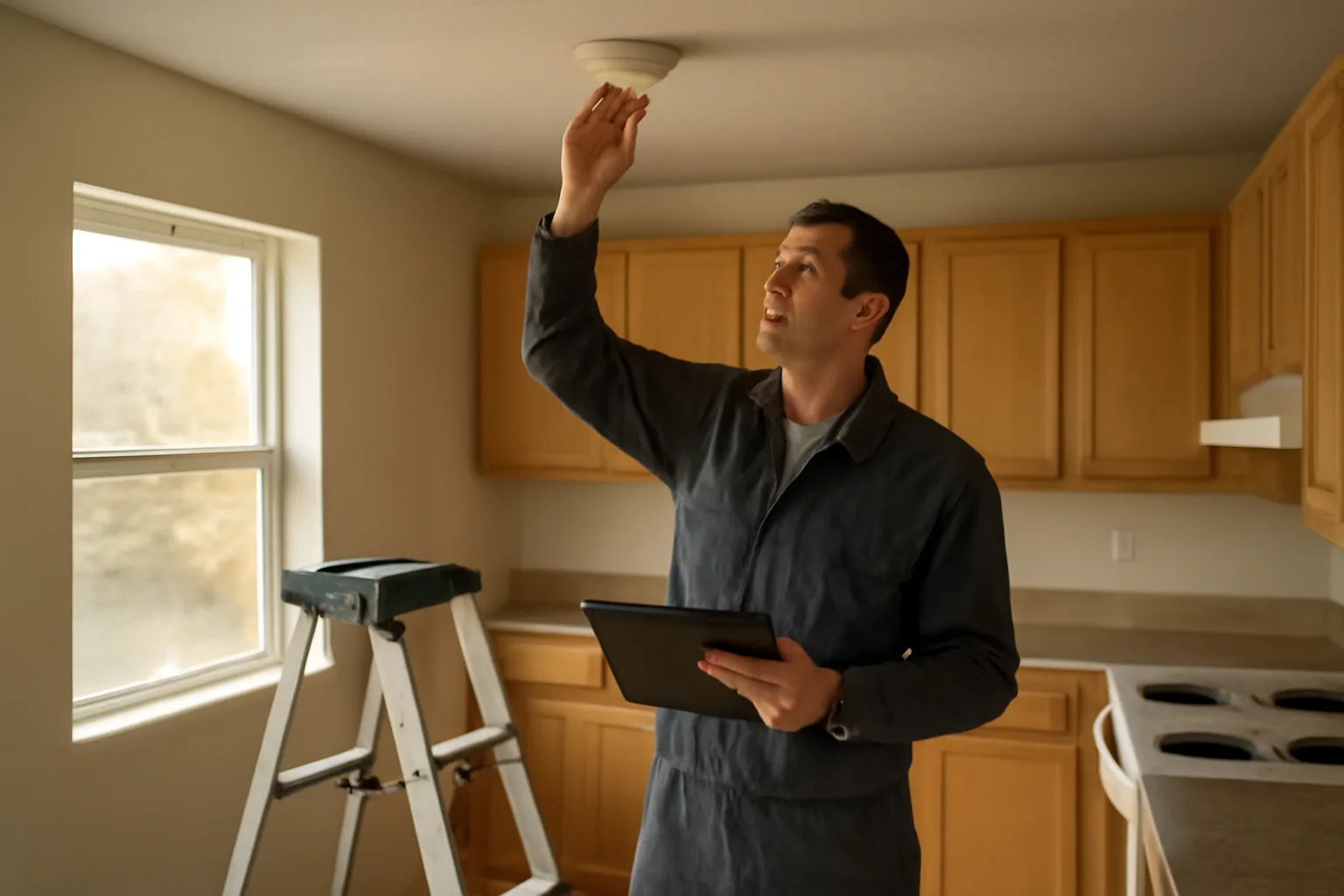
There are two different kinds of inspections landlords deal with, and what's allowed differs for each. For a routine or periodic maintenance/welfare check during an active tenancy, most state laws let a landlord inspect for habitability and maintenance issues (smoke detectors, HVAC function, plumbing leaks, visible safety hazards, pest issues) with proper advance notice, typically 24 to 48 hours depending on the state. The inspection is generally limited to checking the condition of the unit and confirming lease compliance (no unauthorized occupants, no unauthorized pets if the lease bars them, no obvious illegal activity in plain view). A landlord generally cannot search through a tenant's personal belongings, closets, or private papers during a habitability check; the inspection is about the condition of the property, not the tenant's possessions. For a city rental licensing inspection, the inspector is checking code compliance: working smoke and carbon monoxide detectors, functioning heat and hot water, no exposed electrical wiring, secure locks and windows, no significant structural damage, adequate egress, and sometimes occupancy limits based on square footage or number of bedrooms. These inspections are about the building's condition, not the tenant's belongings or behavior. Some cities require the tenant to be present or notified in advance; some inspect only common areas and mechanical systems. For the move-out walk-through under laws like California's Civil Code 1950.5, the inspection is limited to identifying deductible repair and cleaning items so the tenant has a chance to address them before move-out [4].
What rights do tenants have without a lease?
A tenant without a written lease still has legal rights. Most states treat an oral rental agreement, or a tenancy where rent is paid and accepted month to month with no lease at all, as a valid month-to-month tenancy under state landlord-tenant law. The tenant still has the right to a habitable unit, the right to proper notice before the landlord can raise rent or end the tenancy, and the right to their security deposit back under the same rules that would apply if they had a written lease. What mostly changes without a written lease is the term length and the specific terms (late fees, pet policies, who pays which utilities) that would otherwise be spelled out. Without a document to point to, a dispute becomes a matter of state default rules and whatever can be proven through rent receipts, texts, or witnesses. Landlords should not assume no lease means no obligations. Habitability standards (working plumbing, heat, structural safety) generally apply regardless of whether there's a written lease, because those obligations usually come from state housing code or the implied warranty of habitability, not from the lease document itself. If you're renting without a written lease and your city also requires a rental license, you still need the license. The city licensing requirement attaches to the property and the fact that you're renting it out, not to whether you used a written lease.
Why do landlords require renters insurance?
Renters insurance covers the tenant's personal belongings and gives them liability coverage if they accidentally cause damage (a kitchen fire, an overflowing bathtub that damages the unit below). The landlord's own property insurance covers the building itself, not the tenant's possessions and not the tenant's personal liability. Requiring renters insurance shifts risk. If a tenant's negligence causes a fire or a water leak that damages the unit, a renters insurance policy's liability coverage can pay for that damage instead of the landlord's policy absorbing the loss (or the landlord trying to collect directly from the tenant, which is often not realistic). It also protects the tenant financially, since most landlord policies exclude a tenant's belongings entirely. Whether a landlord can require it depends on state and local law, but requiring renters insurance as a lease condition is legal in most jurisdictions and is common practice, especially for landlords with multiple units who want consistent risk management across their portfolio. Some cities and some subsidized housing programs have their own rules about what a landlord can and can't require, so check local rules before adding it to a lease.
How much notice does a landlord have to give before entering or ending a tenancy?
This depends entirely on your state, and it splits into two very different situations: notice to enter for an inspection or repair, and notice to end a tenancy. For entry to inspect or repair during an active tenancy, most states require 24 to 48 hours advance notice, with exceptions for emergencies (fire, flooding, a gas leak). California requires "reasonable notice," which the state presumes to be 24 hours in most circumstances under Civil Code Section 1954 [6]. Some states specify 24 hours, others specify 48; a handful don't set a statutory number at all and just require "reasonable" notice, which is vaguer and more litigated. For ending a month-to-month tenancy, notice requirements are usually longer and vary more by state: 30 days is common, but some states or cities require 60 days if the tenant has lived there over a year, and some rent-stabilized cities require just cause plus a specific notice period regardless of tenancy length. Because this varies so much by state, and even by city ordinance in some rent-control jurisdictions, look up your specific state's landlord-tenant statute rather than assuming a national standard. A 24-hour rule in California is not automatically the rule in Texas or Ohio.
What can't a landlord do in Ohio?
Ohio's landlord-tenant law is codified in Ohio Revised Code Chapter 5321. Under this chapter, a landlord cannot shut off utilities, change the locks, or remove a tenant's belongings to force them out without going through the formal eviction process in court, sometimes called a "self-help eviction," and doing so exposes the landlord to liability [7]. Ohio law also requires landlords to keep the premises in a fit and habitable condition, comply with building and housing codes materially affecting health and safety, keep common areas safe and sanitary, and maintain electrical, plumbing, and HVAC systems in good working order under Ohio Revised Code 5321.04 [8]. A landlord who fails to meet these obligations can be sued by the tenant for damages or face a court order to make repairs. Ohio also caps and regulates how a landlord handles the security deposit: under Ohio Revised Code 5321.16, the landlord must return the deposit (minus any lawful deductions, itemized in writing) within 30 days of the tenant vacating, and a landlord who wrongfully withholds a deposit can be liable for the amount wrongfully withheld plus attorney's fees . Separately, some Ohio cities run their own rental registration or inspection ordinances on top of state law (Columbus and Cleveland both have rental registration and point-of-sale or point-of-rental inspection requirements, for example), so an Ohio landlord needs to check both the state code and their specific city's ordinance.
How much does a rental license cost and how long does it take?
| Initial license fee | $50 to $300 per unit | City budget, inspection cost recovery model | |
|---|---|---|---|
| Renewal cycle | 1 to 3 years | City ordinance | |
| Late fee | $25 to $100+ or % of fee | City ordinance | |
| Inspection wait time | 2 to 8+ weeks | Inspector staffing, backlog | |
| Inspection required before first tenant | Yes in many cities, no in some | Ordinance design | Because of this range, the only reliable number for your property is the one on your city's own rental licensing page or from a call to that office. If you're gathering documents ahead of an ordinance deadline, we built a $79 one-time City Rental License & Inspection Prep Packet at /rental-packet-builder that walks through the document checklist and inspection prep items landlords commonly need, so you're not scrambling the week before your inspection date. |
Costs and timelines vary enormously by city, which is exactly why we can't give you one number that's true everywhere. What we can tell you is the general shape. Most mandatory rental licensing cities charge somewhere in the range of $50 to $300 per unit for the initial license or registration, plus a renewal fee (sometimes the same amount, sometimes less) on a cycle of 1, 2, or 3 years. Some cities charge per building rather than per unit if you own a small multifamily property; some charge a flat fee regardless of size; some add a late fee (often a percentage of the license fee, or a flat penalty like $25 to $100) if you miss the renewal deadline. Timeline-wise, expect the application itself to take 15 to 30 minutes if you have your documents ready (deed or proof of ownership, unit count, contact information). The bigger time variable is inspection scheduling: some cities can inspect within a couple weeks, others have a backlog that pushes it out 4 to 8 weeks or more, especially in cities that inspect every rental on a rotating cycle. Here's a rough comparison of what varies by city type: | Factor | Typical range | Why it varies |
What happens if I skip the license or miss the deadline?
Consequences vary by city but generally fall into three buckets: fines, rent collection restrictions, and eviction-court restrictions. Fines for operating an unlicensed rental typically run from a flat penalty (some cities start around $100 to $500 for a first violation) up to daily accruing fines in cities that treat each day of unlicensed operation as a separate violation, which can add up fast if the property sits unlicensed for months. Rent collection and eviction restrictions are the sharper teeth in a lot of ordinances. Several cities' rental licensing laws bar a landlord from collecting rent, or from filing an eviction action, for a unit that isn't currently licensed. That means if you have a tenant who stops paying and you're not licensed, you may not be able to get a judge to hear the eviction case until you fix the licensing problem, which can add weeks or months to a process that was already going to take time. The fastest fix once you've gotten a notice is usually: read the notice for the specific cure period given, contact the city licensing office directly (don't guess at requirements), gather your documents, and schedule the inspection immediately rather than waiting. Cities are generally more lenient with a landlord who's actively working to comply than one who ignores the notice.
How do I keep a rental license current once I have it?
Getting the license is only step one; staying licensed is an ongoing task. Mark your renewal date the day you get the license, not the month before it's due. A lot of violation notices come from landlords who simply forgot the cycle, not from landlords who never applied. Keep a simple system: property address, license number, issue date, renewal date, last inspection date, and next inspection due date (if your city runs periodic re-inspections independent of the license renewal). If you own units across multiple cities, this is even more important because every city runs its own calendar. Stay current on required safety items between inspections too: smoke detector batteries, carbon monoxide detector function, visible structural issues. Some cities let inspectors write up violations for anything they observe during a routine visit, more than the item that triggered the inspection. If your city changes its ordinance (fee increase, new inspection requirement, new registration portal), that update usually comes as a mailed notice or a posting on the city website; it doesn't always come with a personal phone call. Checking your city's housing or code enforcement page once a year, even outside your renewal window, is a cheap way to avoid surprises.
Frequently asked questions
How to become a landlord for the first time?
Decide how you'll hold the property (personal name or LLC), learn your state's landlord-tenant law, check whether your city requires a rental license or inspection before you can legally rent it out, get landlord insurance, and set up separate bookkeeping for rent and expenses before you advertise the unit.
Who is responsible for the rental property walk-through inspection in California?
The landlord is responsible for scheduling the move-out inspection under California Civil Code Section 1950.5, giving the tenant at least 48 hours notice and an itemized list of proposed repair or cleaning deductions afterward. This is different from any city code-compliance rental inspection, which the landlord also arranges but which follows separate local ordinance rules.
What is landlording?
Landlording is the ongoing work of owning and operating rental property: screening tenants, collecting rent, keeping the unit habitable, handling repairs, following legal notice requirements, and staying current on any city rental licensing or inspection cycle. It's part business management and part legal compliance.
What is a landlord?
A landlord is the owner (or authorized agent) of residential or commercial property who rents it to a tenant in exchange for payment, and who takes on legal responsibilities for habitability, repairs, and following state and local landlord-tenant law and any city rental licensing requirements.
What rights do tenants have without a lease?
A tenant without a written lease generally still has a valid month-to-month tenancy under state law, with the right to habitable housing, proper notice before rent increases or termination, and return of any security deposit under the same rules as a written lease. Specific terms just default to state law instead of a written document.
How to be a landlord day to day?
Respond to repair requests promptly, keep the property up to code, follow your state's required notice periods for entry and lease changes, keep clear financial records, and stay current on any city rental license renewal or periodic inspection deadline. Treat compliance as a recurring task, not a one-time signup.
Why do landlords require renters insurance?
Renters insurance covers the tenant's belongings and gives them liability coverage for accidental damage they cause, which the landlord's own building insurance does not cover. Requiring it shifts financial risk away from the landlord if a tenant's negligence causes a fire, water damage, or other loss.
How much notice does a landlord have to give before entering the unit?
Most states require 24 to 48 hours advance notice for non-emergency entry. California presumes 24 hours is reasonable notice under Civil Code Section 1954, but requirements vary by state, so check your specific state's statute rather than assuming a national standard.
What can a landlord look at during an inspection?
During a habitability or licensing inspection, a landlord or city inspector can check the property's condition: smoke detectors, heat, plumbing, electrical safety, and visible code compliance. They generally cannot search a tenant's personal belongings or private papers; the inspection is about the unit's condition, not the tenant's possessions.
What can't a landlord do in Ohio?
Under Ohio Revised Code Chapter 5321, a landlord cannot shut off utilities, change locks, or remove belongings to force a tenant out without a court eviction order. Landlords also must keep the unit in fit condition and return security deposits within 30 days of move-out under ORC 5321.16.
How much does a rental license typically cost?
Most cities charge somewhere between $50 and $300 per unit for an initial rental license, with renewal fees on a 1 to 3 year cycle, though this varies widely and some cities charge per building instead. Always confirm the exact fee with your city's rental licensing office since figures change.
How long does it take to get a rental license approved?
The application itself usually takes under an hour if you have your ownership documents ready. The bigger variable is inspection scheduling, which can range from about 2 weeks to 8 or more weeks depending on how backed up your city's inspectors are.
What happens if I rent out a unit without a required license?
Consequences vary by city but often include fines (sometimes accruing daily), and in many ordinances, a bar on collecting rent or filing an eviction until the unit is licensed. Read any notice you receive for the specific cure period and contact your city's licensing office right away.
Sources
- New Jersey Department of Community Affairs, Uniform Construction Code: New Jersey requires certain certificate of occupancy inspections under the State Uniform Construction Code before change of tenancy
- IRS, Schedule E (Form 1040) instructions: Rental income is reported on Schedule E regardless of entity structure for most individual landlords
- U.S. Census Bureau, Rental Housing Finance Survey: Individual investors own the majority of rental properties in the United States
- California Legislative Information, Civil Code Section 1950.5: Landlords must give tenants at least 48 hours notice of an initial move-out inspection and provide an itemized statement of proposed deductions
- California Legislative Information, Civil Code Section 1954: California presumes 24 hours is reasonable notice for landlord entry in most circumstances
- Ohio Laws, Revised Code Chapter 5321: Ohio landlords cannot use self-help measures like shutting off utilities or changing locks to remove a tenant without court eviction proceedings
- Ohio Laws, Revised Code Section 5321.04: Ohio landlords must keep premises fit and habitable and maintain electrical, plumbing, and HVAC systems
- Ohio Laws, Revised Code Section 5321.16: Ohio landlords must return security deposits within 30 days of the tenant vacating, with itemized deductions