Last updated 2026-07-26
TL;DR
Mold inspection in a rental property checks for visible growth, moisture sources, and air quality problems that can trigger health complaints or code violations. There's no federal mold standard, so rules vary by state and city. Most landlords should fix moisture sources fast, document conditions, and know their local rental inspection program before a tenant complaint turns into a fine.
What is a mold inspection in a rental property?
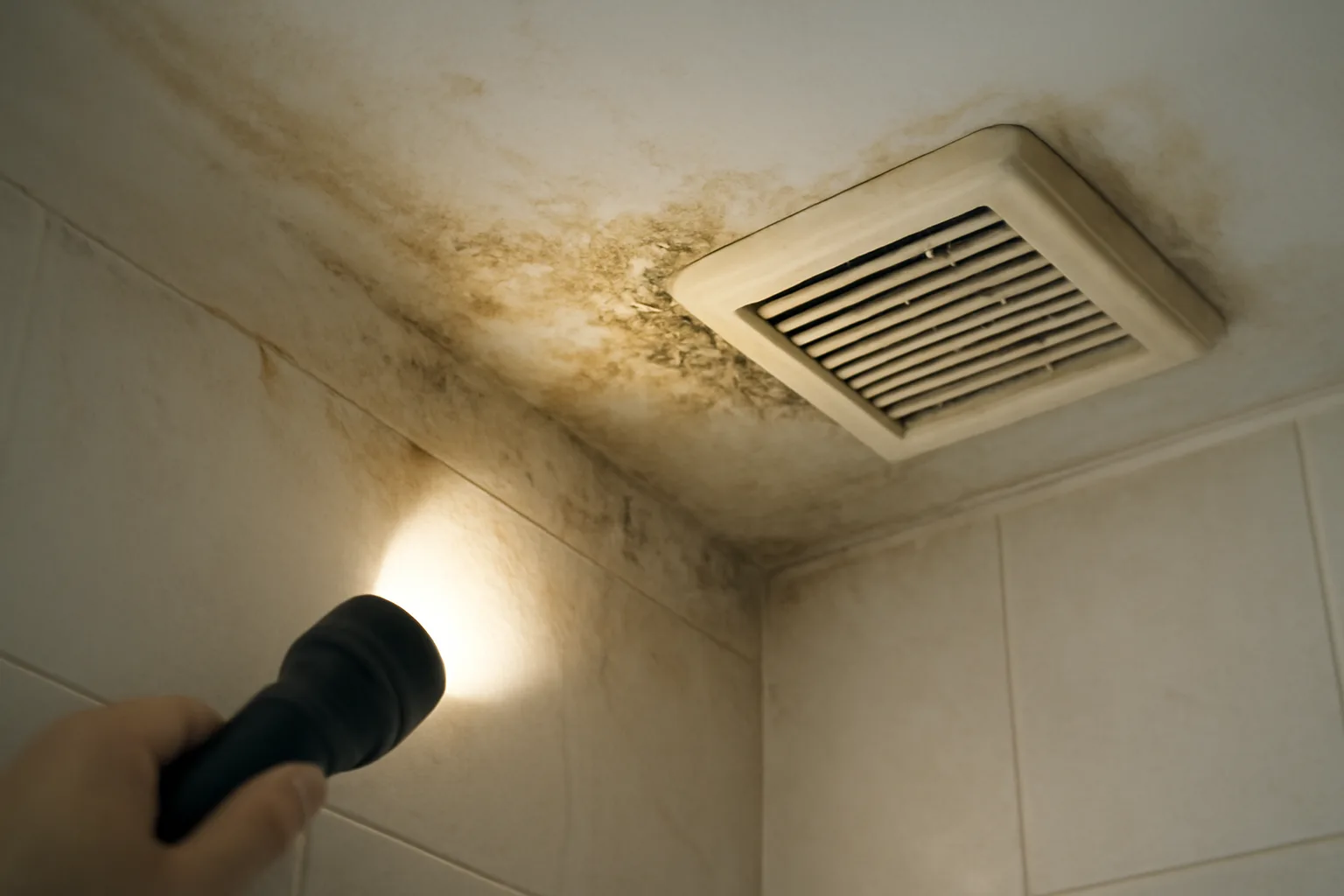
A mold inspection is a visual and sometimes instrumented check of a unit for active mold growth, water damage, and the moisture conditions that let mold grow. It's different from a full mold remediation job. An inspector (or a landlord doing a walkthrough) looks for staining, musty smells, peeling paint, condensation on windows, and soft or discolored drywall, usually in bathrooms, kitchens, basements, and around HVAC lines. The U.S. Environmental Protection Agency does not set a numeric limit for "how much mold" is too much in a home. Its guidance is blunt about this: "There are no EPA or other federal government limits set for mold or mold spores... Standards for judging what is an acceptable, tolerable, or normal quantity of mold have not been established" [1]. That means most mold inspections are really moisture inspections. If you find water intrusion, standing moisture, or humidity consistently above roughly 60%, you have a mold risk whether or not you can see growth yet. Some inspections do include air sampling or surface swabs sent to a lab, but the EPA also notes that "sampling for mold can be expensive... there are no standards for judging what is an acceptable quantity of mold" [1], so lab testing is usually only worth it in disputes, insurance claims, or when a tenant's doctor has flagged a specific health concern tied to the unit.
Who is responsible for a rental property walk-through inspection in California?
In California, the landlord is responsible for making sure the rental unit is habitable, and that includes addressing water intrusion and mold-friendly conditions under the state's implied warranty of habitability (Civil Code sections 1941 and 1941.1) [2]. A landlord or their agent typically conducts move-in and move-out walkthroughs, and California law (Civil Code 1950.5) requires landlords to offer tenants a pre-move-out inspection if the landlord intends to withhold any part of the security deposit, giving the tenant a chance to fix issues before move-out [3]. There isn't a single statewide "mold inspection" mandate for every rental in California, but several cities layer on their own rental inspection or registration programs (for example, proactive rental inspection ordinances in cities like Los Angeles and Oakland) that can include habitability checks where mold and moisture show up as violations. If your city requires periodic rental inspections, mold and water damage are almost always on the checklist, because they're a habitability issue, not a cosmetic one. Practically: the landlord (or a property manager acting for the landlord) is the one who has to schedule and conduct the walkthrough, document the unit's condition, and follow up on anything mold-related, even if a city inspector or a hired mold professional is the one physically doing the assessment.
What can a landlord look at during an inspection?
A landlord's routine inspection can generally cover the condition of the unit as it relates to safety, damage, and lease compliance, but it is not a blank check to go through personal belongings or search for lease violations unrelated to the property's condition. Typical scope includes: - Visible mold, water stains, or musty odors in bathrooms, kitchens, closets, and basements
- Plumbing leaks under sinks, around toilets, and at water heaters
- Window seals, weatherstripping, and signs of condensation
- HVAC filters, vents, and drain lines
- Smoke detector and carbon monoxide detector function
- General cleanliness and pest evidence, which often overlaps with moisture problems
- Structural issues: ceiling stains, warped flooring, peeling paint What a landlord generally cannot do is treat an inspection as a pretext to search drawers, closets, or personal property, or to inspect without proper notice except in a genuine emergency. Most state laws also require inspections happen at reasonable times and for a legitimate purpose tied to the property, not tenant surveillance. If your city has a mandatory rental inspection or licensing program, the inspector's checklist usually mirrors these same categories, plus code items like egress windows, handrails, and electrical panel access. If you're prepping for a formal city inspection tied to a rental license renewal, it helps to walk the unit yourself first using the same checklist the inspector will use. That's the kind of prep work covered in our $79 City Rental License & Inspection Prep Packet, which walks through a mold-and-moisture checklist alongside the rest of the pre-inspection punch list.
How much notice does a landlord have to give before an inspection?
Notice requirements vary by state, but 24 hours is the most common baseline for non-emergency entry, including inspections. California requires "reasonable notice," which state law presumes to be 24 hours unless circumstances suggest otherwise (Civil Code 1954) [4]. Other states set their own numbers: some require 24 hours, some allow same-day notice for certain purposes, and a few default to 48 hours in specific situations. For genuine emergencies, most states let landlords enter without advance notice at all. An active water leak that's actively damaging the unit or building typically qualifies. But "I think there might be mold" is not usually treated as an emergency justifying a no-notice entry; you still need to follow your state's standard notice rule for a routine mold check. Because notice rules are state-specific and sometimes further restricted by local ordinance, confirm the exact notice period and any required delivery method (written notice, posted notice, etc.) with your state statute or your city's rental licensing office before you schedule a mold inspection or any other routine walkthrough.
What is landlording, and what does the job actually involve?
"Landlording" is the day-to-day work of owning and operating rental property: screening tenants, handling leases, collecting rent, maintaining the property, responding to repair requests, and staying compliant with state and local housing law. It is part maintenance manager, part bookkeeper, part compliance officer. Mold and moisture management sits squarely inside this job because it touches habitability law, insurance, and (in many cities) rental licensing compliance all at once. A landlord who ignores a slow leak isn't just risking a mold problem; they're risking a habitability complaint, a possible rent withholding situation, and in licensed-rental cities, a failed inspection or fine. Good landlording on the mold front means responding to leak reports within days, not weeks, keeping written records of repairs, and understanding that mold complaints often escalate faster than other maintenance issues because tenants (correctly or not) associate mold with health risk.
What is a landlord, legally speaking?
A landlord is the party that owns or controls a rental property and grants a tenant the right to occupy it in exchange for rent, under a lease or rental agreement. Legally, this relationship creates duties on both sides: the landlord generally must provide a habitable unit and give proper notice before entry, and the tenant generally must pay rent and avoid damaging the property. The habitability duty is where mold comes in directly. Many states, including California through its implied warranty of habitability under Civil Code 1941.1, require rentals to have working plumbing and to be free from conditions that make the unit unsafe or unsanitary [2]. Chronic mold from an unrepaired leak can violate that standard, which is why mold complaints sometimes end up as habitability disputes rather than simple maintenance tickets.
How do you become a landlord, and what should you know before your first rental unit?
Becoming a landlord starts with acquiring a property you intend to rent out, then meeting whatever state and local requirements apply before you can legally lease it. Depending on where the property is, that can include registering the rental with the city, getting a rental license, passing an initial inspection, and carrying specific insurance. A rough first-year checklist looks like this: 1. Confirm zoning allows rental use for your property type (single-family, duplex, ADU, etc.) 2. Check whether your city requires rental registration or a rental license before you can advertise the unit; many mandatory-licensing cities require this before, not after, you sign a lease 3. Get the property inspection-ready: working smoke/CO detectors, no active leaks or visible mold, functioning heat, and clear egress 4. Line up landlord (more than homeowner's) insurance 5. Draft a lease that matches your state's required disclosures 6. Screen tenants consistently and legally under fair housing law Mold and moisture issues are worth handling before you ever list the unit, because they're one of the most common reasons a first-time landlord fails an initial rental inspection. A unit with a musty basement or a water-stained ceiling rarely passes on the first try in cities that require pre-rental inspections.
Why do landlords require renters insurance, and does it relate to mold?
Landlords require renters insurance mainly to cover the tenant's personal property and liability, shifting risk away from the landlord's own policy. If a pipe bursts and ruins a tenant's furniture, the landlord's property insurance generally covers the building, not the tenant's belongings; renters insurance fills that gap. On mold specifically, many standard homeowners and landlord insurance policies limit or exclude mold damage coverage, especially when the mold results from a long-term, unaddressed maintenance issue rather than a sudden pipe burst. Insurers increasingly treat mold as a maintenance and moisture-control issue rather than an insurable "occurrence," which is part of why prompt leak repair matters financially, more than for tenant relations. Requiring renters insurance doesn't solve a landlord's own mold exposure, but it does reduce the odds that a tenant tries to recover personal property losses from the landlord's policy or directly from the landlord after a mold-related incident.
What rights do tenants have without a lease?
Tenants without a written lease, sometimes called month-to-month or at-will tenants, still generally have the same basic legal protections as tenants with a signed lease: a right to a habitable unit, protection from illegal lockout or self-help eviction, and a right to proper notice before the landlord ends the tenancy or enters the unit. The absence of a written lease does not waive the landlord's habitability duty. This matters for mold specifically because a tenant without a lease can still file a habitability complaint over unaddressed mold or moisture damage, and in most states can still legally withhold rent, repair-and-deduct, or report the unit to a local code enforcement office, depending on state rules. Verbal or implied month-to-month tenancies are still tenancies under the law; what's usually different is the notice period required to end them (commonly 30 days, though this varies by state and by how long the tenant has lived there). If you want to understand tenant protections in more depth, see our related coverage on tenants rights and renters rights.
What can a landlord not do in Ohio?
Ohio landlord-tenant law, under Ohio Revised Code Chapter 5321, sets out specific things a landlord cannot do. Ohio law requires landlords to "maintain the premises in a fit and habitable condition" (ORC 5321.04) [5], and separately prohibits retaliatory conduct: a landlord cannot terminate a tenancy, refuse to renew, or otherwise retaliate against a tenant for complaining to a government agency about a building, housing, or health code violation, or for joining a tenant organization (ORC 5321.02) [6]. Ohio law also restricts self-help eviction. A landlord cannot lock a tenant out, shut off utilities, or remove a tenant's belongings without going through the court eviction process. On entry, Ohio landlords must give reasonable notice, generally interpreted as 24 hours, before entering except in an emergency (ORC 5321.04, tied to the landlord's habitability duty and reasonable access provisions) [5]. For mold specifically, if a tenant reports water damage or mold and the landlord ignores it, that tenant can report the condition to local code enforcement. Under ORC 5321.02, retaliating against that tenant afterward, by raising rent, refusing to renew, or trying to evict, is illegal in Ohio [6].
What mold conditions actually trigger a rental inspection failure or fine?
Cities that run mandatory rental inspection or licensing programs generally fail a unit for active, visible mold growth tied to an unresolved moisture source, not for any trace of mold spores (which exist in essentially all indoor and outdoor air). Common failure triggers include: - Visible mold growth on walls, ceilings, or around windows
- An active or recent leak with no completed repair
- Standing water in a basement or crawlspace
- Chronic condensation from inadequate ventilation, especially in bathrooms without working exhaust fans
- Missing or nonfunctional exhaust ventilation required by local code Fines for failing a rental inspection due to mold or moisture violations vary enormously by city and are usually tied to the general code violation fine schedule rather than a mold-specific line item. Some cities issue a notice-to-cure period (commonly 30 days) before any fine attaches, and re-inspection fees are common if a first inspection fails. Because these fee schedules and cure periods differ block by block, confirm exact fine amounts and cure periods with your city's rental licensing office rather than assuming a number from another city applies to you.
How should a landlord respond to a mold complaint or notice?
The fastest, cheapest path is almost always: fix the moisture source first, document everything, then decide if you need a professional mold assessment. Waiting to see if it "dries out on its own" is the single most expensive mistake landlords make with mold complaints. A reasonable response sequence looks like this: 1. Acknowledge the tenant's complaint in writing within a day or two 2. Inspect within the notice period required by your state (commonly 24 to 48 hours for non-emergency entry) 3. Identify and stop the moisture source (leak, condensation, poor drainage) before addressing visible mold 4. Remove and clean small areas of mold yourself if it's under roughly 10 square feet, per general EPA guidance for do-it-yourself cleanup, or hire a remediation contractor for larger areas [1] 5. Document the repair with photos, dated invoices, and a follow-up inspection 6. Keep copies of all correspondence in case the complaint later becomes a code enforcement matter or a habitability dispute If your city has an active rental license tied to the unit, a mold-related code complaint can sometimes trigger an unscheduled inspection, more than at renewal. Treating any mold or leak complaint as licensing-relevant, more than a maintenance ticket, is the safer default in mandatory-inspection cities.
How does mold tie into rental licensing and registration requirements?
In cities with mandatory rental licensing or registration, mold and water damage are treated as a subset of the general habitability and property maintenance code that inspectors check against at initial licensing, renewal, and in response to tenant complaints. There is no national rental licensing mold standard; each city's program defines its own checklist. What's consistent across most programs is that visible mold connected to an unaddressed moisture problem is treated as a fail item, while trace mold with no clear source usually is not, since (as EPA's guidance states) mold spores are unavoidable in normal indoor and outdoor air [1]. If you're a landlord in a city with a licensing renewal coming up, walking your own units for moisture and mold issues ahead of the city's inspection date is far cheaper than a failed inspection, a re-inspection fee, and the delay of relisting the unit while you wait for the next available inspection slot. That's the specific gap our $79 City Rental License & Inspection Prep Packet is built for: a pre-inspection walkthrough checklist, organized by the categories most city inspectors actually use, so mold and moisture issues get caught and fixed before an inspector catches them for you.
Frequently asked questions
How to become a landlord?
Acquire or already own a rental property, confirm local zoning allows rental use, check if your city requires rental registration or licensing before leasing, get the unit inspection-ready (no active leaks, working smoke detectors, no visible mold), secure landlord insurance, and draft a lease meeting your state's disclosure rules. Many first-time landlords fail their first city inspection over water damage or mold, so fix those before listing.
Who is responsible for a rental property walk-through inspection in California?
The landlord is responsible for scheduling and conducting habitability walkthroughs under California's implied warranty of habitability (Civil Code 1941.1). Civil Code 1950.5 also requires landlords to offer tenants a pre-move-out inspection if any deposit deduction is planned. Some California cities layer on their own rental inspection programs; confirm specifics with your city rental licensing office.
What is landlording?
Landlording is the ongoing work of operating rental property: screening tenants, maintaining the unit, handling repairs and complaints, collecting rent, and staying compliant with state and local landlord-tenant law. It includes responding promptly to moisture and mold issues, since those tie directly into habitability law and, in many cities, rental licensing inspections.
What is a landlord?
A landlord is the person or entity that owns or controls a rental property and grants a tenant occupancy rights in exchange for rent. Legally, a landlord typically owes the tenant a habitable unit and proper entry notice, while the tenant owes rent and reasonable care of the property, under state landlord-tenant statutes.
What rights do tenants have without a lease?
Tenants without a written lease still generally have a right to a habitable unit, protection from illegal lockout, and required notice before entry or termination of tenancy. A missing lease does not waive the landlord's habitability duty; tenants can typically still report mold or code violations and pursue remedies like repair-and-deduct where their state allows it.
How to be a landlord day to day?
Day-to-day landlording means responding to maintenance and mold complaints within days, documenting repairs with photos and dated records, giving proper notice before entry (commonly 24 hours), keeping insurance current, and treating every water leak as a priority since unresolved leaks are the main driver of mold problems and failed rental inspections.
Why do landlords require renters insurance?
Landlords require renters insurance mainly to cover the tenant's personal belongings and liability, since the landlord's own property insurance typically covers only the building. It also reduces disputes after incidents like leaks or mold damage, where a tenant might otherwise try to recover personal property losses directly from the landlord.
How much notice does a landlord have to give before entering for an inspection?
Most states default to 24 hours notice for non-emergency entry, including California under Civil Code 1954, which presumes 24 hours is reasonable. Some states use different periods, and emergencies (like active flooding) typically allow entry without advance notice. Confirm your specific state's notice statute before scheduling a routine inspection.
What can a landlord look at during an inspection?
A landlord can generally inspect the property's condition: mold and moisture, plumbing leaks, window seals, HVAC function, smoke and CO detectors, structural damage, and cleanliness or pest issues tied to the unit's condition. A landlord generally cannot search personal belongings or use an inspection as pretext for tenant surveillance unrelated to property condition.
What can a landlord not do in Ohio?
Under Ohio Revised Code Chapter 5321, a landlord cannot fail to maintain the unit in fit and habitable condition (ORC 5321.04), cannot retaliate against a tenant for reporting code violations (ORC 5321.02), and cannot use self-help eviction like lockouts or utility shutoffs instead of the court eviction process.
Does a landlord have to test for mold before renting a unit?
No federal or state law requires routine mold testing before renting in most jurisdictions, since the EPA does not set a numeric mold standard to test against. What's required is addressing visible mold and its moisture source and, in habitability states, delivering a unit free of conditions that make it unsafe or unsanitary.
Can a tenant withhold rent over a mold problem?
In many states, yes, if the mold results from an unresolved habitability violation and the tenant follows the state's specific notice and repair-and-deduct or rent-withholding procedure exactly. Rules on amount, timing, and required notice vary sharply by state, so a tenant (or landlord) should confirm the exact procedure under their state's landlord-tenant statute before acting.
How much does a professional mold inspection cost?
Professional mold inspections and testing vary widely by region and scope, commonly ranging from roughly $200 to $600 for a basic visual inspection with limited sampling, more if extensive air or surface lab testing is included. The EPA notes sampling can be costly and isn't necessary in most cases since there's no standard to test results against.
Sources
- U.S. EPA, "A Brief Guide to Mold, Moisture, and Your Home": No federal numeric standard exists for acceptable mold levels; EPA guidance on testing and DIY cleanup thresholds
- California Civil Code Section 1941.1: California's implied warranty of habitability requirements for rental units
- California Civil Code Section 1950.5: Requirement for landlords to offer a pre-move-out inspection before withholding security deposit
- California Civil Code Section 1954: 24-hour presumption of reasonable notice for landlord entry in California
- Ohio Revised Code Section 5321.04: Ohio landlord's duty to maintain premises in fit and habitable condition and entry notice provisions
- Ohio Revised Code Section 5321.02: Ohio's prohibition on landlord retaliation against tenants who report code violations