Last updated 2026-07-26
TL;DR
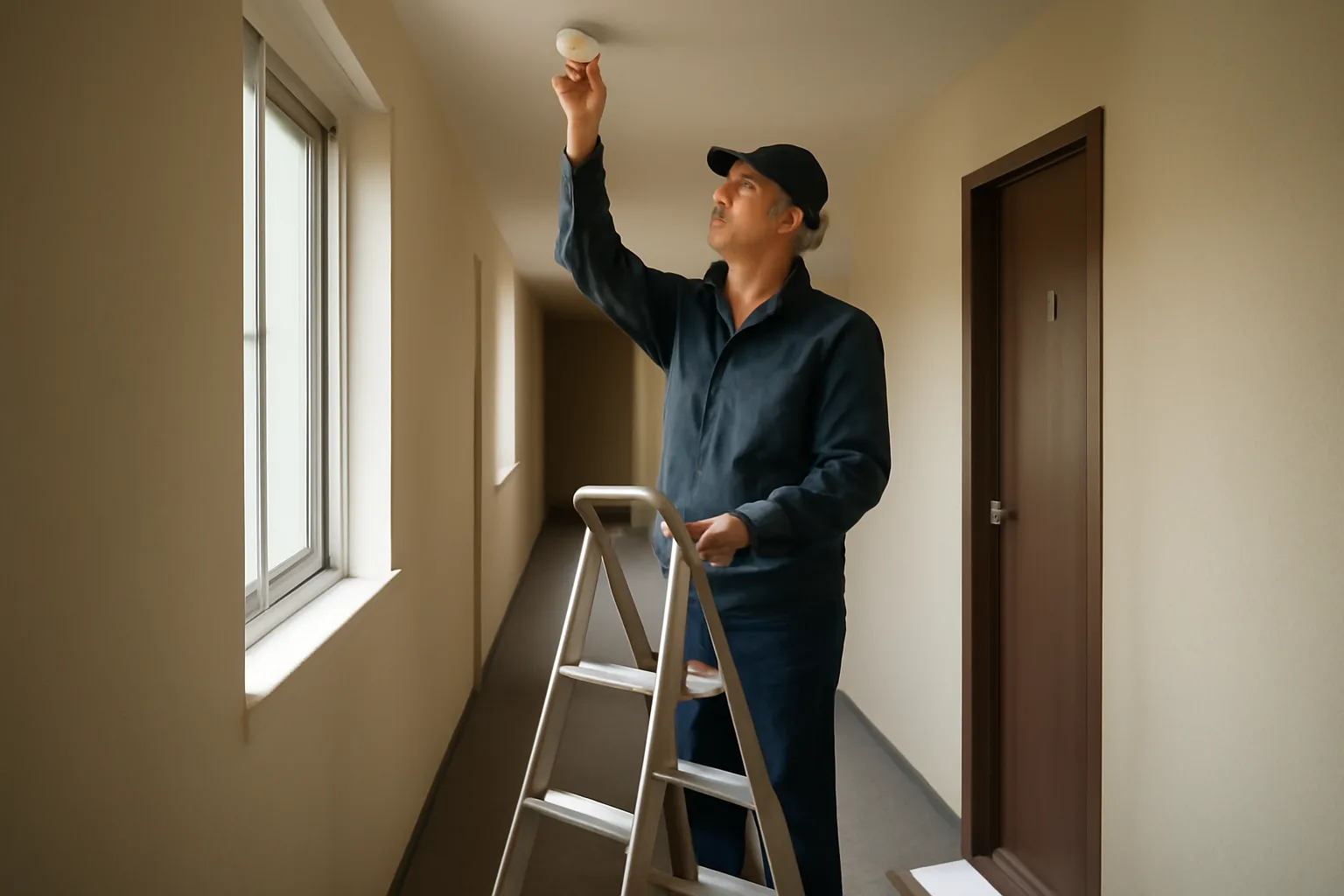
A rental license inspection is a city-run check of a rental property against local housing and safety codes, usually before a rental license is issued or renewed. An inspector looks at smoke detectors, electrical, plumbing, egress windows, and general condition. Fail items, and you get a corrections list and a re-inspection deadline before the license is granted or fines start.
What is a rental license inspection, exactly?
A rental license inspection is a physical walkthrough of a rental unit (or the whole building, if it's multi-unit) by a city inspector or licensed third-party inspector, done to confirm the property meets minimum housing and safety code before the city hands out or renews a rental license. It's not optional in cities that run these programs, and it's not the same thing as your own move-in or move-out walkthrough with a tenant. Most cities that require rental licensing tie the inspection to a cycle: some inspect every unit before the first license is issued, then again every one to three years, or whenever a unit changes tenants, or on a complaint basis. Minneapolis, for example, licenses rental property under its housing code and requires periodic inspections tied to the license term, with fees and cycle length set by ordinance and property type [1]. Philadelphia requires a rental license for any property leased to someone other than the owner and conditions the license on passing a habilitation-related inspection tied to lead and other code items depending on the property [2]. The inspector isn't grading your decor. They're checking a specific list: things like working smoke alarms, secure railings, functioning heat, no exposed wiring, proper egress from bedrooms, and no obvious structural or pest problems. Pass, and you get your license or renewal. Fail, and you get a written list of violations with a deadline to fix them, sometimes 30 days, sometimes less for anything that's an immediate safety hazard. If you're building out a compliance file for your first inspection, the City Rental License & Inspection Prep Packet walks through a general pre-inspection checklist you can adapt to your city's actual code, for $79 one time. It won't replace your city's own checklist, but it gives you a starting structure so you're not guessing the week before the inspector shows up.
Who is responsible for a rental property walk-through inspection in California?
In California, responsibility splits by type of inspection. For routine rental licensing or systematic code inspections (common in cities like Los Angeles under its Systematic Code Enforcement Program), the city's building and safety department sends its own inspector, and the landlord (as the registered property owner) is responsible for scheduling access and paying the inspection fee [3]. Los Angeles charges an annual SCEP fee per unit, billed to the property owner, to fund these inspections [3]. For entry-related walkthroughs tied to a tenancy, like a pre-move-out inspection, California Civil Code Section 1950.5 gives the tenant the right to request an initial inspection before move-out. The landlord, or their agent, does that inspection, then gives the tenant an itemized list of deficiencies with a chance to fix them before the final move-out inspection [4]. That's a different animal from a city licensing inspection: it's about security deposit deductions, not code compliance. So if you're asking specifically about who conducts the walkthrough: for licensing and code inspections, it's the city's inspector, and the landlord is on the hook for access and fees. For move-out inspections, it's the landlord or their designated agent, with statutory notice and itemization requirements under Civil Code 1950.5 [4].
What can a landlord look at during an inspection?
During a rental licensing inspection, the inspector, not the landlord, is the one doing the looking, and they're checking against a code checklist, not poking through your tenant's belongings. Typical items include: smoke and carbon monoxide detector placement and function, electrical panel condition and no unsafe wiring, plumbing leaks and water heater safety (temperature and pressure relief valve, proper venting), heating system function, window and door locks, egress windows in bedrooms, handrails and guardrails on stairs, and general structural condition (no collapsing ceilings, no active roof leaks, no pest infestation). Many city codes borrow language from the International Property Maintenance Code, which sets baseline standards like functioning smoke alarms, minimum ceiling heights, and structural soundness for habitable spaces [5]. Your city may have adopted this code wholesale or written its own local variant, so always check your city's actual rental housing code before assuming a national standard applies exactly as written. During a landlord's own periodic maintenance inspection, separate from licensing, what you can look at is more limited by your state's entry and privacy rules. You can generally check smoke detectors, look for obvious lease violations (unauthorized pets, unauthorized occupants, property damage), and confirm the unit is being kept in reasonably clean and safe condition. You generally can't search through drawers, closets, or personal papers, and you need proper notice before you go in for anything beyond an emergency.
How much notice does a landlord have to give before entering or inspecting?
Notice periods vary by state, and there's no single national rule, so check your own state's statute rather than assuming a number. California requires "reasonable notice," which state law defines as 24 hours in most non-emergency situations under Civil Code Section 1954 [6]. Many other states use a similar 24-hour or 48-hour standard, but plenty of states don't set a specific number in statute at all and just require "reasonable" notice, which courts interpret case by case. City rental license inspections are a separate track from landlord-initiated entry. The city usually schedules the inspection directly with the landlord, sometimes with the tenant present, sometimes not, and the notice period is whatever your local ordinance sets, often two weeks or more in writing so you can schedule access with tenants. This is not the same 24-hour clock as your Civil Code entry right. One practical wrinkle: if your city inspector needs interior access and your tenant refuses entry, you may need to give your tenant separate notice under your state's landlord-entry statute in addition to whatever the city already scheduled. Don't assume the city's notice to you satisfies your state's notice-to-tenant requirement. They're different obligations running to different people.
What rights do tenants have without a lease?
A tenant without a written lease, sometimes called a month-to-month or oral tenancy, still has real legal protections in nearly every state. The absence of a signed lease doesn't waive rights that come from state landlord-tenant statute or from the fact of tenancy itself. Generally, a tenant without a lease still has the right to: a habitable unit (working plumbing, heat, and structural safety), advance notice before the landlord raises rent or ends the tenancy (commonly 30 days for month-to-month tenancies under many state statutes), protection from illegal lockouts or utility shutoffs, and the same entry-notice protections a written-lease tenant would have. HUD's overview of tenant rights notes that even in the absence of a written lease, most jurisdictions treat an oral or implied month-to-month agreement as enforceable under state landlord-tenant law [7]. What a no-lease tenant usually doesn't have is a fixed term. Either side can typically end the tenancy with proper statutory notice, again, often 30 days, though it varies, rather than being locked into a 12-month commitment. If you're a landlord operating without written leases, that's worth fixing regardless of licensing requirements. A lease protects you as much as the tenant, and most rental licensing programs will ask whether you use one.
What is landlording, and what is a landlord?
A landlord is the person or entity that owns residential or commercial property and rents it to someone else (the tenant) in exchange for rent, under either a written lease or an oral/implied agreement. "Landlording" is the informal term for the ongoing work of running that rental: collecting rent, handling repairs, managing turnover, staying current on code and licensing requirements, and dealing with tenant communication. It's not a licensed profession in most states the way real estate brokering is. You don't need a landlord license to own a rental in most of the country. What you often do need, in cities with rental registration or licensing ordinances, is a separate rental business license or registration specific to that property, renewed on a set cycle and tied to inspection. That's the layer this whole site covers: not "can you legally own rental property" (you generally can, subject to zoning), but "does your city require you to register and inspect it before you rent it out." Landlording well means treating it like a small business with recurring compliance obligations, not a passive hands-off investment. Cities that run rental licensing programs exist specifically because some landlords treated it as passive and let units fall into disrepair; the inspection requirement is the city's response to that history.
How to become a landlord (and how to be a good one)
Becoming a landlord legally usually takes four things: owning or controlling residential property, complying with local zoning for rental use, registering with your city or county if a rental registration or licensing ordinance applies, and carrying appropriate insurance. There's no national landlord exam or certification. Some cities do require landlord training as a condition of a rental license (a small number of cities, often tied to Section 8 or nuisance-property programs, mandate a class), so check your specific city ordinance. Practically, here's the sequence most first-time landlords go through: confirm your local zoning allows rental use of the property, check whether your city or county requires rental registration or a rental license (search "[your city] rental registration" or check your city's housing or code enforcement department page), get the property inspected if your city requires it before you can legally rent, screen tenants under Fair Housing Act rules (you cannot discriminate based on race, color, national origin, religion, sex, familial status, or disability, per 42 U.S.C. Section 3604) [8], sign a written lease, and set up rent collection and a maintenance response system. Being a good landlord day to day comes down to responding to repair requests fast, following your state's entry-notice rules every time, more than when convenient, keeping records of everything (inspections, repairs, communications), and treating the security deposit and habitability obligations as legal duties, not suggestions. Landlords who skip city rental licensing entirely, thinking nobody will notice a single-unit rental, tend to find out the hard way when a tenant complaint or a routine sweep catches them, often with back-fees and fines layered on top of the license cost itself. For tenants trying to understand their side of this relationship, see our companion pieces on tenant rights and renters rights.
Why do landlords require renters insurance?
Landlords require renters insurance mainly to shift liability and personal-property risk off themselves. A landlord's own property insurance covers the building's structure, but it generally does not cover a tenant's personal belongings (furniture, electronics, clothing) if there's a fire, burst pipe, or theft. Without renters insurance, a tenant who loses everything in a fire has no coverage, and depending on the cause, may try to hold the landlord financially responsible even where the landlord isn't legally at fault. Renters insurance also typically includes liability coverage, meaning if the tenant accidentally causes damage (a kitchen fire, an overflowing tub that damages the unit below), the tenant's policy pays for it rather than the landlord's policy taking the hit and the landlord's premiums rising afterward. The Insurance Information Institute notes that renters insurance is generally inexpensive, commonly in a range that runs roughly $15 to $30 a month depending on coverage amount and location, which is a small ask relative to what it protects against [9]. Many landlords make renters insurance a lease requirement, and that's generally enforceable, though it doesn't replace your own landlord (dwelling) policy. If you're also dealing with rental licensing requirements, some cities ask on the license application whether you require renters insurance, so it's worth having a clear answer and a lease clause that actually says so, though you'll want your own attorney to draft that clause rather than relying on a template.
What a landlord cannot do in Ohio
Ohio landlord-tenant law, primarily Ohio Revised Code Chapter 5321, sets specific limits. A landlord in Ohio cannot enter the rental unit without giving "reasonable notice" (Ohio courts generally treat 24 hours as reasonable, though the statute itself doesn't fix an exact number) and cannot enter at unreasonable times or in an unreasonable manner under ORC 5321.04 . A landlord cannot shut off utilities, remove doors or windows, or forcibly remove a tenant's belongings to force them out. This kind of "self-help eviction" is illegal in Ohio, and the landlord has to go through the formal eviction process in court instead . Ohio landlords also cannot retaliate against a tenant for exercising a legal right, such as complaining to a code enforcement agency or joining a tenant organization; ORC 5321.02 specifically bars retaliatory conduct like raising rent, decreasing services, or threatening eviction within a set period after a tenant's protected complaint . A landlord cannot fail to maintain the unit in a habitable condition either; ORC 5321.04 obligates the landlord to keep the premises in compliance with building and housing codes, make repairs, and keep common areas safe . One more limit worth knowing: Ohio landlords cannot collect a security deposit and then withhold it without an itemized, written list of deductions delivered to the tenant within 30 days of move-out, per ORC 5321.16 . Miss that deadline or fail to itemize, and the tenant may be entitled to double the wrongfully withheld amount plus attorney's fees under that same statute .
Rental licensing inspection: how the process typically runs, city by city
| Minneapolis, MN | Before initial license, then per code cycle | Set by ordinance, varies by property type | [1] | |
|---|---|---|---|---|
| Philadelphia, PA | Before license issued, includes lead-safety checks for certain units | Annual license renewal | [2] | |
| Los Angeles, CA | Systematic Code Enforcement Program inspections | Recurring cycle, fee billed annually per unit | [3] | Don't treat this table as your city's actual rule set. Fees range from under $50 a unit in smaller towns to several hundred dollars in dense cities, and cycles range from annual to once every three or four years. The only reliable source is your own city's rental licensing or code enforcement office page, and calling them directly if the page is unclear is often faster than guessing from a search result. |
City programs differ a lot in structure, but a rough shape repeats: apply for the rental license (often online, with a fee per unit), schedule or receive a scheduled inspection date, get inspected against the local housing code, receive either a pass or a violation notice, correct any violations by the deadline, and pay the license fee to receive the license (sometimes the fee is paid up front regardless of pass/fail, sometimes it's due only after passing). Here's a general comparison of how a few well-documented programs structure things, though you should confirm current numbers with your own city before relying on them: | City | Inspection trigger | Renewal cycle | Source |
What happens if you fail a rental license inspection?
Failing a rental license inspection almost never means instant loss of your ability to rent the unit. It means you get a written notice listing each violation, usually with a required correction date, often 30 days for ordinary items and much shorter (sometimes 24 to 72 hours) for anything the inspector flags as an immediate hazard, like exposed wiring or a nonfunctioning smoke detector. After you fix the items, you typically request a re-inspection, sometimes for an added fee, sometimes included in your original inspection fee depending on the city. If you don't fix things by the deadline, cities generally escalate: a second violation notice, a fine, and in repeat or serious cases, referral to a housing court or an order restricting new occupancy until the unit passes. The good news is that most failed items are cheap and fast to fix: missing smoke detectors, a loose handrail, a leaking faucet. The expensive failures are usually electrical or structural, and those are exactly the things worth having checked by your own contractor before the city inspector ever shows up, rather than finding out live at the inspection and eating a re-inspection fee and delay.
How landlords can prepare for a rental license inspection
The single most useful thing you can do before an inspection is get your city's actual checklist, not a generic one, and walk the unit yourself against it a week or two ahead. Test every smoke detector and carbon monoxide detector (many local codes require both, and battery age matters; some jurisdictions require sealed 10-year units). Check every window in a bedroom opens and, if it's a legal egress window, meets minimum size for emergency exit. Look for anything an inspector would flag on sight: peeling paint (a bigger issue in pre-1978 housing due to lead paint rules), loose railings, exposed wiring, water stains suggesting a leak, and pest evidence. Gather your paperwork too: proof of ownership, prior inspection reports if this is a renewal, your business or rental license application, and if your city requires it, proof of a certificate of occupancy or a lead-safe certification. Missing paperwork is a common, entirely avoidable reason inspections get delayed even when the physical unit is fine. If you manage this across several units or several cities with different rules, it helps to have a standing checklist template you adapt each time rather than reinventing it from scratch. That's the specific gap the City Rental License & Inspection Prep Packet is built to fill: a $79 one-time reference packet with a general pre-inspection walkthrough structure and a documentation checklist you customize to your city's actual code, not a substitute for your city's own rules.
Frequently asked questions
What is a rental license inspection in simple terms?
It's a city inspector's check of your rental property against local housing and safety code, done before your city issues or renews your rental license. It covers things like smoke detectors, electrical safety, plumbing, and structural condition. Pass, and your license goes through; fail, and you get a correction list with a deadline before licensing continues.
Who is responsible for a rental property walk-through inspection in California?
For city licensing or code inspections, the city's building and safety department sends an inspector, and the property owner is responsible for scheduling access and paying the fee. For move-out inspections tied to security deposits, it's the landlord or their agent, following the notice and itemization rules in California Civil Code Section 1950.5.
What is landlording?
Landlording is the ongoing work of owning and operating a rental property: collecting rent, handling repairs, managing tenant turnover, and staying compliant with local rental registration, licensing, and inspection requirements. It's not a licensed profession itself, but cities with rental licensing ordinances treat it as a regulated activity tied to the property.
What is a landlord?
A landlord is the owner of residential or commercial property who rents it to a tenant in exchange for rent, under a written lease or an oral/implied agreement. The landlord holds legal responsibilities for habitability, repairs, and following state entry-notice and eviction procedures.
What rights do tenants have without a lease?
A tenant without a written lease still generally has rights to a habitable unit, advance notice before rent increases or termination (often 30 days for month-to-month tenancies), protection from illegal lockouts, and standard entry-notice protections. State landlord-tenant statutes typically treat an oral or implied month-to-month tenancy as enforceable.
How to be a landlord the right way?
Confirm zoning allows rental use, register or license the property if your city requires it, pass any required inspection, screen tenants under Fair Housing Act rules, use a written lease, respond to repairs promptly, and follow your state's notice rules for entry and rent increases every time, more than occasionally.
Why do landlords require renters insurance?
Because the landlord's own property insurance doesn't cover a tenant's personal belongings, and renters insurance shifts liability for tenant-caused damage (like a kitchen fire) onto the tenant's policy instead of the landlord's. It's typically inexpensive, often in the range of $15 to $30 a month per the Insurance Information Institute.
How much notice does a landlord have to give before entering?
It depends on your state. California requires 24 hours in most non-emergency cases under Civil Code Section 1954. Many states use similar 24 to 48 hour standards, others just require 'reasonable' notice without a fixed number. City rental license inspections often get scheduled with more lead time, sometimes two weeks or more.
What can a landlord look at during an inspection?
A licensing inspector checks smoke and CO detectors, electrical and plumbing safety, heating function, egress windows, railings, and general structural condition against local housing code. A landlord's own maintenance inspection is limited to obvious lease-related or safety concerns; searching personal belongings is generally not allowed.
What a landlord cannot do in Ohio?
Under Ohio Revised Code Chapter 5321, a landlord cannot enter without reasonable notice, cannot shut off utilities or forcibly remove a tenant to force them out (illegal self-help eviction), cannot retaliate against a tenant for a code complaint, and must return security deposits with an itemized list within 30 days or face double damages.
What happens if a rental fails its licensing inspection?
You get a written violation notice with a correction deadline, commonly 30 days for standard items and much shorter for hazards like exposed wiring. Fix the items and request re-inspection. Missing the deadline typically leads to fines, and repeat failures can trigger occupancy restrictions or referral to housing court.
Do all cities require a rental license inspection?
No. Rental licensing and inspection requirements are set city by city or county by county, not nationally. Many smaller towns have no such program at all, while cities like Minneapolis, Philadelphia, and parts of Los Angeles run structured, recurring inspection cycles. Always confirm with your specific city's rental licensing office.
Can a tenant refuse to let the city inspector in?
It varies, but in many cities the landlord, as the licensee, bears responsibility for securing access, and a tenant's refusal can delay the license without excusing the landlord from the requirement. Landlords usually need to give their own separate entry notice to the tenant under state law in addition to the city's inspection schedule.
Sources
- California Civil Code Section 1950.5: California gives tenants the right to request a pre-move-out inspection with an itemized deficiency list before final deductions
- International Code Council, International Property Maintenance Code: Baseline habitability standards like smoke alarms and structural soundness commonly derive from the International Property Maintenance Code
- California Civil Code Section 1954: California defines reasonable notice for landlord entry as 24 hours in most non-emergency situations
- HUD, Tenant Rights Overview: Oral or implied month-to-month tenancies are generally enforceable under state landlord-tenant law even without a written lease
- 42 U.S.C. Section 3604, Fair Housing Act: Federal law prohibits housing discrimination based on race, color, national origin, religion, sex, familial status, or disability
- Insurance Information Institute, Renters Insurance facts: Renters insurance is generally inexpensive, commonly costing roughly $15 to $30 a month depending on coverage and location
- Ohio Revised Code Section 5321.04: Ohio landlords must give reasonable notice before entry, cannot self-help evict, and must maintain the unit per housing code
- Ohio Revised Code Section 5321.02: Ohio law bars landlords from retaliating against tenants who exercise legal rights like filing a code complaint
- Ohio Revised Code Section 5321.16: Ohio landlords must itemize security deposit deductions within 30 days or face double damages for wrongful withholding