Last updated 2026-07-26
TL;DR
To pass a rental inspection, fix smoke/CO detectors, test every outlet and GFCI, clear egress paths, check water heater TPR valves, and give tenants proper written notice (often 24-48 hours by state law or local ordinance). Bring your own checklist matching the inspector's, since most cities post the exact form online before the visit.
what should a landlord check before a rental inspection?
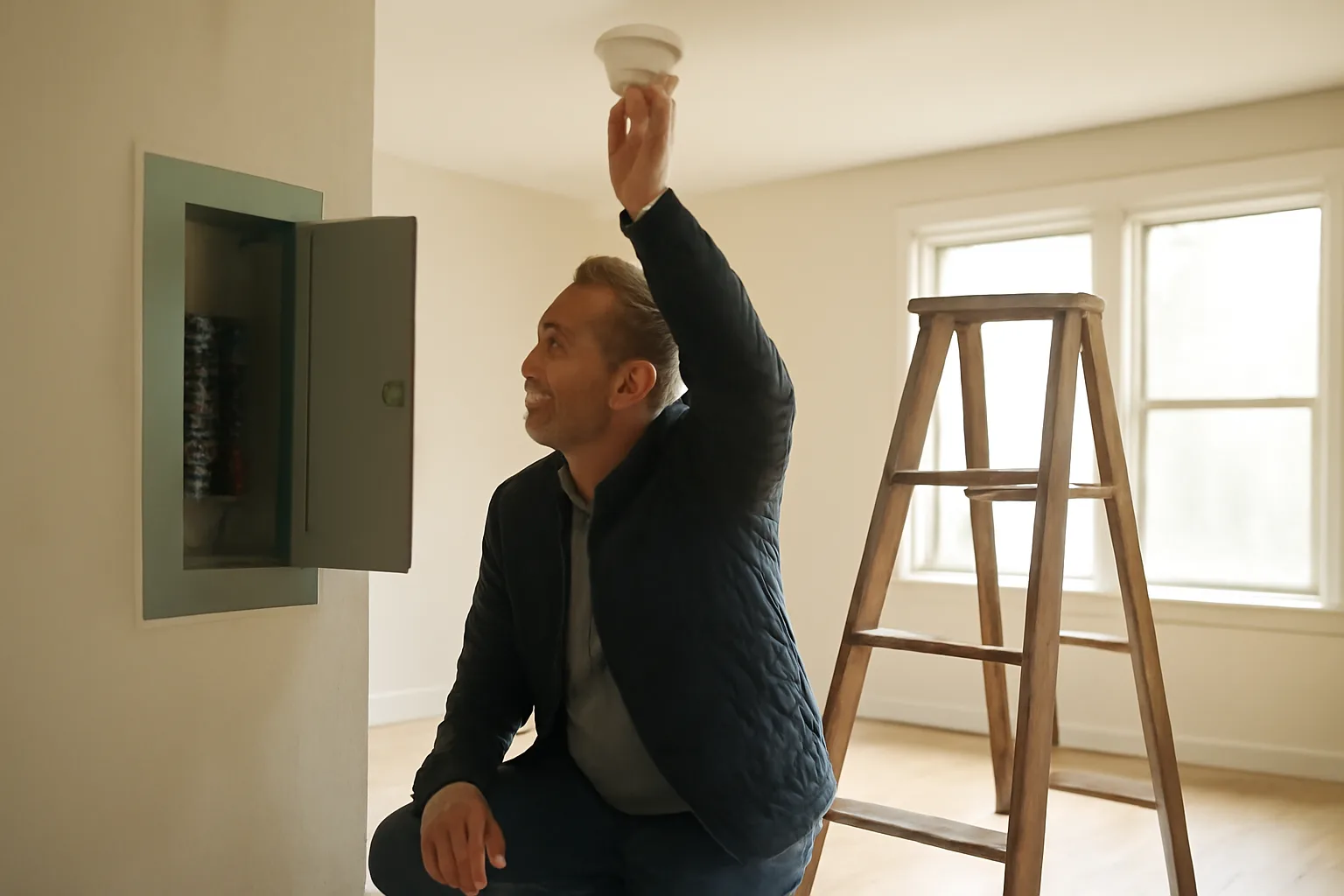
Walk the unit like an inspector would, not like an owner who's seen it a hundred times. Start at the front door and move room by room: smoke alarms and carbon monoxide detectors (test them, don't just eyeball them), every light switch and outlet, all windows for whether they open and lock, and every smoke path to an exit. Most inspection checklists group into five buckets: life safety, structural, mechanical/electrical, plumbing, and general sanitation/maintenance. Life safety items (smoke detectors, CO detectors, egress windows, handrails) are almost always the fastest way to fail, because inspectors treat them as non-negotiable. A dead 9-volt battery in a smoke alarm is a common, completely avoidable fail. Before the day of the inspection, pull the actual checklist your city or your Section 8/HUD program uses. HUD's Housing Quality Standards inspection covers a defined set of performance areas including space and security, electrical hazards, and sanitary conditions, and the standards themselves are codified in federal regulation. [1] Local rental licensing programs post similar checklists on their housing department pages; if yours doesn't, call and ask for the exact form the inspector will carry. A one-time prep tool like the Rental Packet Builder ($79) can save you time here: it maps your city's specific checklist so you're not guessing which of forty possible items your inspector actually cares about.
how much notice does a landlord have to give before an inspection?
Most states require at least 24 hours written notice before a landlord or their agent enters a unit for a non-emergency inspection, though the exact number and the acceptable delivery method vary by state and sometimes by city ordinance layered on top. California's Civil Code sets a presumption of reasonable notice at 24 hours for entry to make repairs or show the unit, and requires notice in writing unless the tenant consents to less. [2] Other states use 48 hours (some cities' rental licensing ordinances specify this separately from the state landlord-tenant statute). If your city requires a licensing inspection, check whether the notice requirement comes from the state's general entry statute or from the city code itself, because they're not always the same number. A few practical rules regardless of jurisdiction: put notice in writing (text and email count in most places, but check your state), specify a date and a reasonable time window rather than 'sometime Tuesday,' and keep a copy or a screenshot. If a tenant refuses entry after proper notice, most state statutes let you proceed under specific conditions, but this is where it's worth reading your state's actual entry statute rather than assuming, because remedies differ.
who is responsible for a rental property walk-through inspection in california?
In California, the landlord is responsible for scheduling and conducting move-in and move-out walk-through inspections, but the law gives the tenant specific rights around that process. Civil Code Section 1950.5 requires that if a landlord intends to withhold any part of a security deposit at move-out, the tenant gets the right to request an initial (pre-move-out) inspection, conducted no earlier than two weeks before the tenancy ends. [3] The landlord must give at least 48 hours written notice of that initial inspection unless the tenant waives it, and afterward must provide an itemized statement of any deficiencies along with the opportunity to fix them before move-out. [3] This is separate from a city rental licensing inspection, which is conducted by a code enforcement officer or housing inspector, not the landlord. For licensing inspections specifically, the responsible party for scheduling is usually whoever holds the rental license, which is the property owner unless a licensed property manager is designated. Confirm with your city rental licensing office who is listed as the responsible party on your specific license, since some cities require the actual owner's signature regardless of who manages the unit day to day.
what can a landlord look at during an inspection?
During a routine or licensing inspection, the inspector (or landlord, for move-in/move-out walk-throughs) generally looks at habitability and safety conditions, not the tenant's belongings or personal areas beyond what's needed to check systems. That means: smoke and CO detector function, electrical outlets and panels, plumbing fixtures and water pressure, HVAC operation, window and door locks, evidence of pests or water damage, and structural issues like damaged flooring or ceilings. What inspectors are not there to do is search drawers, closets, or personal storage, or evaluate how tidy the tenant keeps their things, beyond conditions that create a genuine safety or sanitation issue (like blocked egress paths or serious clutter that prevents access to a smoke detector or electrical panel). HUD's Housing Quality Standards, used for Section 8 inspections, are codified at 24 CFR 982.401 and limit the scope to specific performance categories like sanitary facilities, food preparation, and space/security, not general housekeeping. [1] A tenant does not have to remove personal items for the inspector to access every space, but they should provide clear access to detectors, breaker panels, water heaters, and windows. If clutter is blocking access to a required safety item, some jurisdictions will note it as a violation requiring correction, so it's worth telling tenants in your notice exactly what needs clear access.
what a landlord cannot do in ohio
Ohio's landlord-tenant law (Ohio Revised Code Chapter 5321) sets specific boundaries on landlord conduct. Under ORC 5321.04, a landlord cannot enter the unit except at reasonable times and after reasonable notice to the tenant, except in cases of emergency. [4] Ohio courts and the statute generally treat 24 hours as reasonable notice, though the statute itself doesn't fix an exact number the way California's does. A landlord in Ohio also cannot shut off utilities, remove doors or windows, or seize a tenant's belongings to force them out. Self-help eviction (changing locks, removing possessions, cutting off utilities to pressure a tenant to leave) is prohibited under ORC 5321.15, and a tenant can recover actual damages plus reasonable attorney fees if a landlord violates it. [5] A landlord in Ohio also cannot retaliate against a tenant for reporting a code violation or requesting repairs; ORC 5321.02 specifically bars retaliatory conduct like raising rent or decreasing services in response to a tenant's good-faith complaint to a government agency. [6] If you're prepping for a licensing inspection in an Ohio city and a tenant has previously complained to code enforcement, be extra careful that nothing about your notice or scheduling could look retaliatory.
what rights do tenants have without a lease?
A tenant without a written lease, sometimes called a tenant-at-will or a month-to-month tenant by default, still has real legal rights under state landlord-tenant law. The absence of a written lease doesn't erase habitability protections, entry notice requirements, or security deposit rules; those come from statute, not from the lease document itself. Most states treat an oral or unwritten rental arrangement as a month-to-month tenancy once rent has been accepted, which means either party generally needs to give notice (commonly 30 days, though some states use 60 days for tenancies over a year) to end it. The tenant still gets the same entry-notice protections as a tenant with a written lease. California's 24-hour entry notice rule, for example, applies regardless of whether there's a signed lease. [2] A tenant without a lease also keeps the right to a habitable unit under the implied warranty of habitability, which most states recognize by statute or case law regardless of what's written down. If you're a landlord operating without written leases (common with informal, long-term tenants), understand that you don't get fewer obligations just because nothing's on paper; you likely have less protection for yourself, since terms that aren't written down are harder to enforce.
why do landlords require renters insurance?
Landlords require renters insurance mainly to shift liability for a tenant's personal property damage and personal liability claims away from the landlord's own policy. A landlord's property insurance covers the building and the landlord's own losses; it typically does not cover a tenant's furniture, electronics, or clothing if there's a fire, burst pipe, or theft. Renters insurance also usually includes personal liability coverage, which matters if a tenant's guest is injured in the unit or if the tenant accidentally causes damage (a kitchen fire, an overflowing tub) that spreads to neighboring units. Without that coverage, the landlord's insurer may end up covering the loss and then pursuing subrogation against the tenant, which is messier and slower for everyone. Requiring renters insurance is legal in most states as a lease condition, though a landlord can't use it to discriminate or apply it unevenly to protected classes; the requirement has to be applied consistently to all tenants. Typical renters insurance policies run in the range of roughly $15 to $30 a month depending on coverage limits and location, according to industry rate surveys, though landlords should not treat any specific figure as guaranteed since rates vary by carrier and state.
how to become a landlord (and what it actually involves)
Becoming a landlord starts before you ever list a unit: you need to understand your city and state's landlord-tenant law, your local rental licensing or registration requirements if any apply, and basic habitability and safety code standards. In many mandatory-licensing cities, you legally cannot rent out a unit at all until you've registered it and, often, passed an initial inspection. The practical steps look like this: confirm whether your city requires a rental license or registration (many mid-size and large cities do, and fees commonly run somewhere between $50 and a few hundred dollars per unit annually, though this varies enormously by city, so confirm with your city rental licensing office), get the unit inspection-ready, screen tenants under fair housing law, and put a lease in writing even where it's not strictly required, since it protects you as much as the tenant. Landlording is ongoing work, not a one-time setup. You're responsible for maintaining habitability throughout the tenancy (more than at move-in), keeping up with any recurring inspection cycle your city requires, and responding to repair requests within whatever timeline your state's law sets (often a matter of days for serious issues like no heat or no working plumbing). If you're managing your first unit in a city with mandatory licensing, budget real time for the inspection prep itself; skipping it is the single biggest reason first-time landlords fail their first inspection.
what is landlording, and what does a landlord actually do?
Landlording is the ongoing practice of owning and managing rental property: collecting rent, maintaining the unit, screening and communicating with tenants, keeping the property compliant with local codes, and handling repairs and turnover. It's distinct from simply owning real estate, since a landlord has active legal obligations to the people living in the property, more than to the asset itself. Day to day, landlording covers tenant screening and lease signing, rent collection and late-fee handling, responding to maintenance requests, coordinating repairs, keeping the unit compliant with any rental registration or inspection ordinance, handling security deposits according to state timelines and itemization rules, and managing turnover between tenants (which is often when licensing inspections happen, since the unit is empty). Some landlords self-manage all of this; others hire a property manager to handle the operational side while remaining the license holder and legally responsible party. Either way, the legal obligations (habitability, entry notice, deposit handling, non-discrimination) attach to the landlord, not to whoever happens to be doing the day-to-day work.
what is a landlord, legally speaking?
A landlord is the party who owns or controls a rental property and leases it to a tenant in exchange for rent, taking on specific legal duties defined by state landlord-tenant statutes and local housing codes. The legal definition matters because it determines who's responsible for repairs, who can be sued for a habitability failure, and who's required to hold any rental license. In most states, the landlord is the property owner unless ownership has been formally transferred to an entity like an LLC, in which case the LLC is the landlord of record. A property manager acting on the owner's behalf is generally an agent of the landlord, not the landlord themselves, though some cities' rental licensing rules require the manager to be named on the license alongside the owner. The core legal duties that come with being a landlord, across nearly every state, include maintaining a habitable unit, giving proper notice before entry, handling security deposits according to statutory timelines (commonly 14 to 30 days after move-out, depending on the state, sometimes 45 or 60 in a few states), and following fair housing law in screening and treatment of tenants. [1]
how to be a landlord day to day (the practical version)
Being a landlord day to day mostly comes down to three habits: respond fast, document everything, and stay ahead of your city's compliance calendar. Tenants forgive a slow repair less than they forgive a landlord who goes quiet; a same-day acknowledgment ('got your message, plumber's coming Thursday') buys a lot of goodwill even when the fix takes longer. Documentation protects you in ways that matter more than most new landlords expect. Keep a written log of every repair request and response, every notice you send, and every inspection or violation notice you receive. If your city has a mandatory rental license, mark the renewal date and inspection cycle on a calendar the moment you get the license, not the week before it's due; many cities allow only a narrow reinspection window after a failed inspection before penalties escalate. Staying ahead of compliance also means reading every notice your city sends carefully rather than skimming it. Ordinance language changes, fee schedules get updated, and inspection checklists get revised. If your city just added a new life-safety requirement (a second CO detector location, updated smoke alarm placement rules), it's usually spelled out in the notice itself, and missing it is an easy way to fail an otherwise passable inspection.
how to prepare for the inspection itself: a room-by-room walkthrough
| Entry/exits | Locks function, doors open fully, no blocked egress | Deadbolt needing a key from inside (illegal in most fire codes) | |
|---|---|---|---|
| Smoke/CO detectors | Present in required locations, tested, battery or hardwired | Missing detector in a bedroom, dead battery | |
| Electrical | GFCI outlets near water, no exposed wiring, panel accessible | Ungrounded outlets, blocked panel | |
| Plumbing | No active leaks, water heater TPR valve and discharge pipe present | Missing TPR discharge pipe | |
| Windows | Open, close, lock; screens present if required | Painted-shut windows, broken locks | |
| HVAC | Functioning heat source (cooling often not required) | No permanent heat source in every habitable room | |
| Structural | No exposed hazards, stairs/handrails secure | Loose railing, missing handrail on 4+ step stairs | This table mirrors the structure of HUD's Housing Quality Standards categories (space/security, electrical hazards, sanitary facilities), which are set out in federal regulation at 24 CFR 982.401. [1] It overlaps heavily with what most city rental licensing inspections check, though the specific detector placement rules and required documentation vary by city, so confirm the exact list with your city rental licensing office before the visit. If you manage more than one unit, or you're prepping for your first inspection and don't want to reverse-engineer your city's exact checklist from a PDF, that's the specific gap the Rental Packet Builder ($79 one-time) is built to close: it organizes the checklist, notice templates, and documentation by city so you walk in with what the inspector expects, not a generic list. |
Here's a practical run-through most inspectors check, organized the way you'd actually walk the unit: | Area | What's checked | Common fail |
what happens if you fail the inspection or get a violation notice?
Most cities give you a defined reinspection window after a failed inspection, commonly somewhere between 10 and 30 days depending on the severity of the violation, though this varies by ordinance so check your specific notice for the deadline. Life-safety violations (no smoke detector, exposed wiring) are usually flagged as needing faster correction than cosmetic issues. Fines for missing a reinspection deadline or operating without a required license vary enormously by city, from modest daily accrual fines to flat penalties per violation. Rather than guess at a number here, treat every violation notice as having its own clock: read the deadline on the actual document, and if anything is ambiguous, call the inspector's office directly rather than assuming a standard grace period exists. If you get a violation notice, the fastest path is usually: fix what you can immediately, document the fix with photos and dated receipts, and call to schedule reinspection rather than waiting for the city to follow up. Cities that see landlords proactively re-engaging tend to be more flexible on minor timeline slips than ones who get silence back.
Frequently asked questions
How to become a landlord if I've never rented out property before?
Confirm your city and state's landlord-tenant law and any rental licensing requirement first, since some cities require registration before you can legally rent a unit. Then get the unit inspection-ready, screen tenants under fair housing law, and put a lease in writing even if your state doesn't require one.
Who is responsible for a rental property walk-through inspection in California?
The landlord schedules and conducts move-in/move-out walk-throughs, but California Civil Code 1950.5 gives tenants the right to request a pre-move-out inspection at least two weeks before move-out, with 48 hours written notice from the landlord and a chance to fix noted issues before the tenant leaves.
What is landlording?
Landlording is the ongoing work of owning and managing rental property: collecting rent, maintaining the unit, screening tenants, handling repairs, and keeping the property compliant with local rental codes. It's distinct from just owning real estate because it involves active legal duties to tenants.
What is a landlord, legally?
A landlord is the person or entity that owns or controls a rental property and leases it to a tenant for rent, taking on legal duties under state landlord-tenant law: maintaining habitability, giving proper entry notice, and handling security deposits within statutory timelines.
What rights do tenants have without a lease?
A tenant without a written lease still has full statutory protections in most states: entry notice rights, habitability protections, and (usually) month-to-month tenancy status once rent is accepted. The lack of a written lease doesn't reduce a tenant's rights, though it can make specific terms harder to prove or enforce.
How to be a landlord without constant stress?
Respond to repair requests fast, document every communication and notice in writing, and track your city's inspection and license renewal calendar the moment you get a license. Most landlord stress comes from missed deadlines and slow communication, not from the actual repairs themselves.
Why do landlords require renters insurance?
Renters insurance covers a tenant's personal belongings and personal liability, which a landlord's own property insurance typically does not cover. It shifts risk for tenant-caused damage and injury claims away from the landlord's policy, and most landlords can require it as a lease condition if applied consistently.
How much notice does a landlord have to give before an inspection?
Most states require at least 24 hours written notice before non-emergency entry; California sets this explicitly under Civil Code 1950.5 and related entry statutes. Some city rental licensing ordinances require 48 hours instead, so check both your state's general entry law and your city's specific ordinance.
What can a landlord look at during an inspection?
Inspectors and landlords doing walk-throughs check habitability and safety items: smoke/CO detectors, electrical outlets and panels, plumbing fixtures, window and door function, HVAC, and structural safety. They're not there to search personal belongings or judge general tidiness beyond what blocks access to safety equipment.
What can a landlord not do in Ohio?
Under Ohio Revised Code Chapter 5321, a landlord cannot enter without reasonable notice except in emergencies, cannot shut off utilities or remove doors/windows to force a tenant out (self-help eviction is barred under ORC 5321.15), and cannot retaliate against a tenant for reporting code violations.
What's the fastest way to fail a rental inspection?
Missing or dead-battery smoke detectors are the single most common fast-fail item across most city and HUD inspection checklists. Blocked egress paths, exposed wiring, and missing water heater TPR discharge pipes are close behind.
Do I need to be present for a rental licensing inspection?
Most cities require the property owner or an authorized representative to be present, or at minimum available by phone, since the inspector may need access to mechanical rooms or ask questions about recent repairs. Confirm your specific city's attendance requirement with your rental licensing office before the appointment.
How long do I have to fix violations after a failed inspection?
Reinspection windows commonly run 10 to 30 days depending on the severity of the violation, but this varies by city ordinance. Read the deadline printed on your specific violation notice rather than assuming a standard timeline, and call the inspector's office if it's unclear.
Sources
- 24 CFR 982.401, Housing Quality Standards (HQS): HUD's Housing Quality Standards inspection covers defined performance areas including electrical hazards, sanitary facilities, and space/security.
- California Legislative Information, Civil Code Section 1954: California presumes 24 hours written notice is reasonable notice for landlord entry to make repairs or show a unit.
- California Legislative Information, Civil Code Section 1950.5: Tenants may request a pre-move-out inspection no earlier than two weeks before tenancy ends, with 48 hours notice and an itemized deficiency statement.
- Ohio Laws, Revised Code Section 5321.04: Ohio landlords must enter at reasonable times after reasonable notice except in emergencies.
- Ohio Laws, Revised Code Section 5321.15: Ohio law prohibits landlord self-help eviction, including shutting off utilities or removing tenant possessions, with damages and attorney fees available to tenants.
- Ohio Laws, Revised Code Section 5321.02: Ohio law bars landlord retaliation against tenants who make good-faith complaints about code violations to a government agency.