Last updated 2026-07-26
TL;DR
Rental inspections exist so cities can verify a unit is safe and habitable, mainly working smoke detectors, no exposed wiring, working heat, no active leaks, and no pest infestations. Most jurisdictions require 24 to 48 hours notice before entry. They're separate from your lease and from a tenant's move-in walkthrough.
What are rental inspections for, exactly?
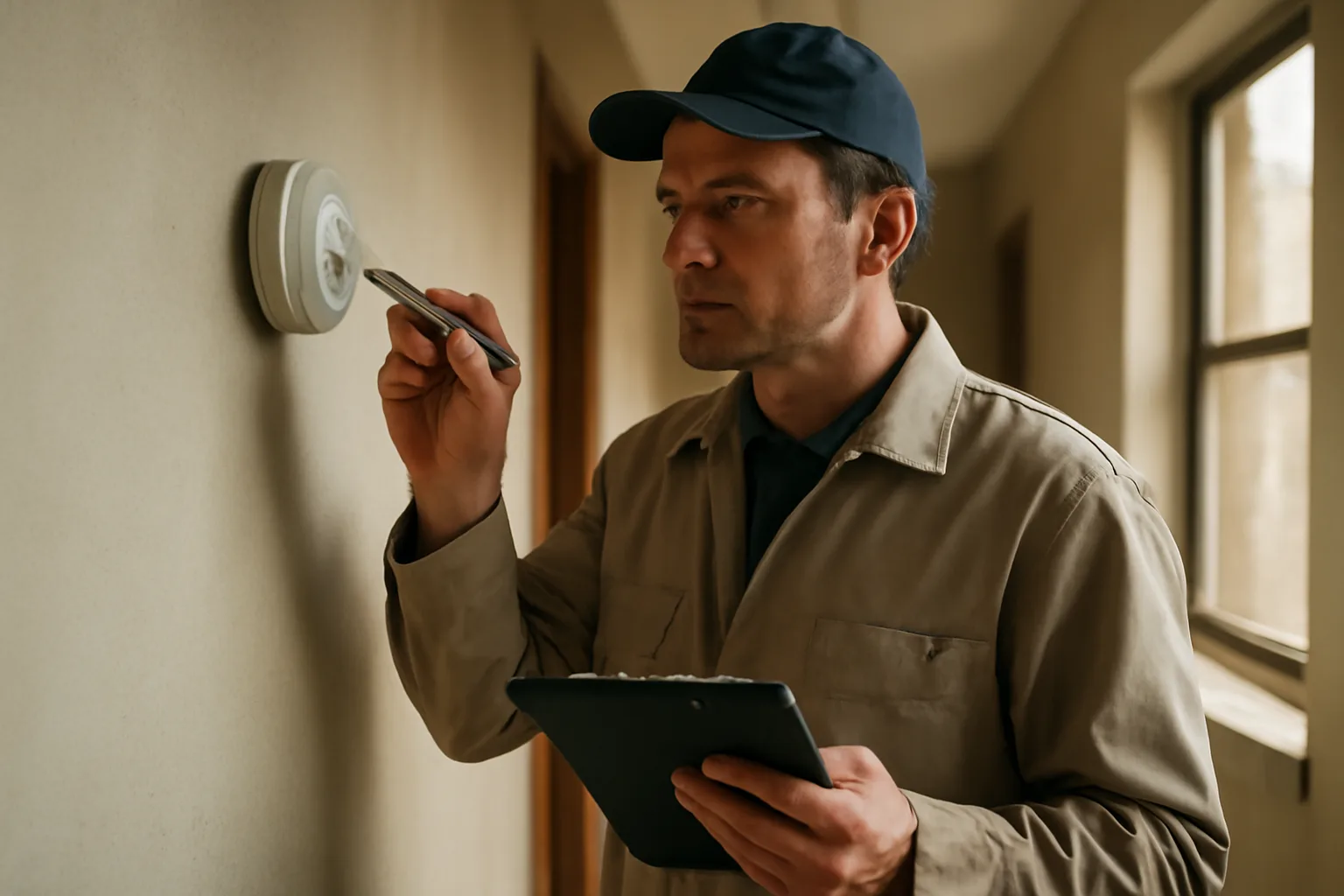
Rental inspections exist to catch the stuff that turns into a lawsuit, a fire, or a code violation before it happens. Cities that run mandatory rental inspection programs (think Los Angeles, Minneapolis, Toledo, Rockford) send an inspector to check that a unit meets basic health and safety standards under the local housing code, not the lease you signed with your tenant. The inspection usually checks things like working smoke and carbon monoxide detectors, functioning heat, no exposed or dangerous wiring, secure handrails, no active leaks or mold, and no rodent or pest problems that violate sanitation code. Some cities also check egress windows in bedrooms, water heater temperature-pressure relief valves, and whether a unit has the right number of exits. This isn't the same as a home inspection you'd get before buying a house. It's narrower. Inspectors are checking against a specific municipal code section (your city rental licensing office can tell you which chapter applies to your property), not doing a full structural review. Fail an item, and you typically get a written notice with a reinspection deadline, often 30 to 60 days depending on the city. If you're building out a compliance file before your first inspection, our rental license basics breaks down what most cities ask for before they'll even schedule you.
How do city rental inspection programs actually work?
Most mandatory rental inspection cities run on a cycle: register the unit, pay a fee, get inspected on a schedule (often every 1 to 3 years), fix anything flagged, get reinspected if needed. Minneapolis, for example, runs rental properties through its Rental Licensing program with inspections tied to the property's license category and prior violation history, and the city can inspect more often if a property has repeat problems [1]. Los Angeles runs its Systematic Code Enforcement Program (SCEP), which requires most rental units built before a certain cutoff to get inspected roughly every four years, funded by an annual per-unit fee charged to property owners [2]. Toledo's rental registration ordinance, similarly, requires owners to register units and allows the city to inspect for code compliance, with fines for unregistered rentals [3]. The fee, the cycle length, and what triggers a reinspection all vary by city. Don't assume your city's rules match your cousin's city three states over. Confirm the specific cycle and fee schedule with your city rental licensing office before you budget for the year. If you own in a city with mandatory licensing, our city guides hub has program-specific breakdowns where we've published them.
What can a landlord look at during an inspection?
A landlord (or the city inspector) can look at anything covered by the applicable housing or health code: smoke alarms, CO detectors, electrical panels, plumbing fixtures, window locks and screens, handrails, water heaters, HVAC function, and signs of pests or mold. Inspectors generally are not there to judge your tenant's housekeeping or personal belongings, only whether the unit itself is safe and code-compliant. In practice, that means an inspector will test smoke detectors, check that outlets near water sources are GFCI-protected, look at the furnace or boiler, check for peeling lead paint in older units (a real issue under federal disclosure rules for pre-1978 housing under 42 U.S.C. § 4852d), and look under sinks for leaks [4]. They're not opening drawers or inventorying furniture. A landlord doing a routine walkthrough (separate from a city inspection) can generally check the same categories: condition of appliances, signs of unauthorized pets, unreported damage, working smoke alarms. What a landlord cannot do is use an inspection as cover to search personal belongings, photograph a tenant's private items without cause, or show up without proper notice. That crosses from inspection into an unreasonable entry, which some states treat as a violation of the covenant of quiet enjoyment.
Who is responsible for a rental property walkthrough inspection in California?
In California, the landlord is responsible for both entry-notice compliance and habitability under state law, but tenants have a right to be present and to reasonable notice before any walkthrough. California Civil Code § 1954 requires landlords to give "reasonable notice in writing," with 24 hours presumed reasonable, before entering to make repairs, show the unit, or inspect [5]. California also has a specific move-out inspection rule: under Civil Code § 1950.5(f), a tenant can request an initial move-out inspection, and the landlord must give at least 48 hours written notice of that inspection and provide an itemized list of deficiencies, giving the tenant a chance to fix them before move-out to protect their deposit [6]. So the short answer: the landlord (or their property manager) is responsible for scheduling and conducting the walkthrough, the tenant has a right to notice and to attend, and if it's a move-out inspection under § 1950.5, the tenant can request it and the landlord has to accommodate that request with proper notice.
How much notice does a landlord have to give before an inspection?
Most states require 24 to 48 hours written notice before a landlord enters for a non-emergency inspection or repair, though the exact number and form of notice varies by state statute. California presumes 24 hours is reasonable under Civil Code § 1954 [5]. Other states set their own numbers, so check your specific state code rather than assuming California's rule applies everywhere. Emergencies are the exception almost everywhere: if there's a fire, a burst pipe, or a gas leak, landlords generally can enter without advance notice. Routine inspections, repairs, and showings to prospective tenants or buyers require the standard notice period. City-mandated code inspections are a separate track. The city inspector typically has to give notice too, but the notice period and process depend on the ordinance, sometimes the city notifies the landlord, who then notifies the tenant. Confirm your city's specific notice requirement with the rental licensing office, since it may differ from your state's general landlord-entry statute.
What a landlord cannot do in Ohio
Under Ohio Revised Code § 5321.04, landlords must supply running water, reasonable heat, functioning plumbing and electrical systems, and keep common areas safe, and § 5321.05 requires tenants to keep the unit clean and use fixtures properly . Ohio law also restricts self-help evictions: a landlord cannot lock a tenant out, shut off utilities, or remove a tenant's belongings without a court order, under ORC § 5321.15, which explicitly bars landlords from these actions to force a tenant out . Ohio landlords also cannot enter without reasonable notice except in an emergency; ORC § 5321.04 requires the landlord to give reasonable notice of intent to enter and to enter only at reasonable times, without specifying an exact hour count, so many Ohio leases spell out 24 hours as the practical standard . Cities like Toledo and Cleveland layer their own rental registration and inspection ordinances on top of state law, so a landlord in Ohio deals with both the state landlord-tenant code and whatever local licensing rules apply. If you're renting in Ohio, don't assume state law is the whole picture, check your city's registration ordinance too.
Why do landlords require renters insurance?
Landlords require renters insurance mainly to shift liability for a tenant's personal belongings and personal liability claims away from the landlord's own policy. A landlord's dwelling policy typically covers the building and the landlord's property, not the tenant's furniture, electronics, or clothing, and it usually doesn't cover a tenant's liability if their dog bites a visitor or their candle starts a fire that damages a neighbor's unit. Requiring renters insurance (commonly $100,000 to $300,000 in liability coverage, per typical policy minimums insurers offer) reduces the landlord's exposure when something goes wrong that's the tenant's fault. It's a cheap ask, renters insurance policies commonly run $15 to $30 a month depending on coverage and location, and it's become standard in many lease templates and in some city licensing programs that require proof of coverage as a condition of the rental license. Whether a landlord can legally require it varies by state, most states allow it as a lease condition, but a few have specific rules about how it can be enforced. Check your state's landlord-tenant statute or your city rental licensing office if the requirement shows up as part of your registration paperwork.
What rights do tenants have without a lease?
A tenant without a written lease still has rights, they're just governed by state landlord-tenant law and, often, an implied month-to-month tenancy rather than lease terms. Every state recognizes an implied warranty of habitability even without a written agreement, meaning the landlord still has to provide safe, livable housing regardless of whether anything was signed. Without a lease, the tenancy is usually treated as month-to-month, which means either party can typically end it with proper notice (commonly 30 days, though some states and cities require more for longer tenancies). The tenant still has the right to notice before entry, the right to a habitable unit, and protection from illegal lockouts or utility shutoffs in most states. What a tenant loses without a lease is the specific terms a lease would lock in, like a fixed rent amount for a set period, or specific rules about pets, guests, or subletting. Those default to whatever the landlord and tenant agree to verbally or whatever the state's default statute says. If there's a real dispute, our tenant rights and renters rights pages cover the baseline protections that apply regardless of lease status.
What is a landlord, exactly?
A landlord is the owner (or an authorized agent of the owner) of real property who rents that property to a tenant in exchange for regular payment, usually under a lease or rental agreement. The legal relationship creates specific obligations on both sides: the landlord has to maintain habitable conditions and respect the tenant's right to quiet enjoyment, and the tenant has to pay rent and avoid damaging the property beyond normal wear and tear. Legally, "landlord" isn't limited to individuals, it can be an LLC, a trust, a property management company acting as agent, or a corporation. What makes someone a landlord isn't a license or a title, it's the act of renting out real property for consideration. That said, most mandatory rental-licensing cities require the actual owner (or a registered local agent) to be listed on file with the city, even if a property manager handles day-to-day operations.
What is landlording, and how do you become a landlord?
Landlording is the ongoing work of owning and managing rental property: screening tenants, collecting rent, maintaining the unit, handling repairs, staying current on local code and licensing requirements, and managing the tenant relationship day to day. It's part business, part compliance job, part maintenance job. To become a landlord, you generally need to: buy or already own a property you intend to rent, check local zoning to confirm rental use is allowed, register the property with your city if it requires rental licensing (many cities do, and skipping this step is the single most common way new landlords end up with a fine), get the unit inspection-ready (smoke detectors, working locks, no code violations), screen and select a tenant under fair housing law, and sign a lease that complies with your state's landlord-tenant statute. The compliance side trips up more first-time landlords than the tenant-screening side. Federal fair housing law under the Fair Housing Act (42 U.S.C. § 3601 et seq.) bars discrimination based on race, color, religion, sex, national origin, familial status, and disability in rental housing decisions , and most states add protected categories on top of that, like source of income or sexual orientation. Get that wrong during tenant selection and it's a federal complaint, more than a fine. If your city requires rental registration or a license before you can legally rent the unit, our $79 City Rental License & Inspection Prep Packet walks through the common documentation cities ask for (proof of ownership, smoke detector certification, lead disclosure for pre-1978 units, sometimes a local agent designation) so you're not guessing what to bring to your first inspection.
How to be a landlord without getting fined for compliance issues
Staying out of trouble as a landlord mostly comes down to three habits: register the rental where required, keep safety systems (smoke detectors, CO detectors, egress windows) functioning and documented, and give proper notice before every entry. Cities that run mandatory rental inspection programs issue the bulk of their fines for unregistered units, not failed inspections, Toledo's ordinance, for instance, allows citations specifically for operating a rental unit without the required registration [3]. A practical routine: confirm your city's registration and inspection cycle before you list a unit, calendar the reinspection date the moment you get your first inspection report, keep receipts and photos of any repairs you make in response to a violation notice, and never skip the written notice before entering even for something as small as a filter swap. If you inherit a violation notice with a tight reinspection deadline, don't panic and don't ignore it either, most cities have an appeal or extension process if you contact the rental licensing office before the deadline passes rather than after.
City rental inspection cycles compared
| City program | Inspection trigger | Typical cycle | Source | |
|---|---|---|---|---|
| Los Angeles SCEP | Annual per-unit fee, cyclical inspection | Roughly every 4 years | [2] | |
| Minneapolis Rental Licensing | License category, violation history | Varies by license tier, can be more frequent after violations | [1] | |
| Toledo Rental Registration | Registration required, inspection on complaint or cycle | Set locally, confirm with city | [3] | Numbers above are the general framework each city publishes, not a guarantee of your specific unit's schedule. Confirm the current fee and cycle with your city rental licensing office since ordinances get amended. |
Frequently asked questions
What are rental inspections actually checking for?
They check for basic health and safety code compliance: working smoke and CO detectors, safe electrical and plumbing systems, functioning heat, no active leaks, no pest infestations, and secure exits. It's a code-compliance check, not a full home inspection and not a judgment of housekeeping.
Who pays for a mandatory rental inspection?
Almost always the landlord, either through an annual per-unit registration fee (Los Angeles charges one under its SCEP program [2]) or a per-inspection fee set locally. Confirm the current fee with your city rental licensing office since it changes and varies widely by city.
How much notice does a landlord have to give before an inspection?
Most states set 24 to 48 hours written notice as the standard for non-emergency entry. California presumes 24 hours reasonable under Civil Code § 1954. Emergencies (fire, flooding, gas leak) are the main exception allowing entry without advance notice.
Who is responsible for a rental property walkthrough inspection in California?
The landlord schedules and conducts it, but California Civil Code § 1954 requires 24 hours notice, and § 1950.5(f) lets tenants request a move-out inspection with 48 hours notice and a chance to fix flagged items before the final deposit deduction.
What can a landlord look at during an inspection?
Smoke and CO detectors, electrical panels and outlets, plumbing and water heaters, window locks, handrails, HVAC systems, and signs of pests, mold, or unreported damage. Inspectors and landlords generally cannot search personal belongings or use the visit as cover for an unrelated search.
What a landlord cannot do in Ohio during an inspection or entry?
Ohio landlords cannot enter without reasonable notice except in emergencies, per ORC § 5321.04. Under ORC § 5321.15, they also cannot lock out a tenant, shut off utilities, or remove belongings to force them out, even if rent is unpaid, without going through the court eviction process.
Why do landlords require renters insurance?
Mostly to shift liability off the landlord's own policy. A landlord's dwelling insurance usually doesn't cover a tenant's belongings or a tenant-caused liability claim (like a fire or a dog bite), so requiring renters insurance, typically $15 to $30 a month, closes that gap cheaply.
What rights does a tenant have without a signed lease?
A tenant without a lease still gets the implied warranty of habitability, protection from illegal lockouts, and the right to notice before entry, under state law, usually as an implied month-to-month tenancy. What's missing is the specific fixed terms a written lease would lock in, like a set rent for a defined period.
What is the difference between a landlord and a property manager?
A landlord owns the property (or is a legal entity that owns it) and bears the legal obligations under state landlord-tenant law. A property manager is an agent hired to handle day-to-day operations, rent collection, and maintenance, but the landlord remains legally responsible for habitability and licensing compliance.
How do you become a landlord for the first time?
Confirm local zoning allows rental use, register with your city if it requires rental licensing, get the unit inspection-ready (smoke detectors, working locks, lead disclosure if pre-1978), screen tenants under fair housing law, and sign a lease compliant with your state's landlord-tenant statute.
What happens if a rental unit fails a city inspection?
You typically get a written violation notice listing each failed item and a reinspection deadline, often 30 to 60 days depending on the city. Fix the items, document the repairs, and contact the rental licensing office before the deadline if you need more time.
Do all cities require rental inspections?
No. Rental inspection and licensing requirements are set city by city or sometimes county by county, not universally at the state level. Cities like Los Angeles, Minneapolis, and Toledo run mandatory programs; plenty of other cities have no inspection requirement at all. Always confirm with your specific city rental licensing office.
Sources
- U.S. Code, 42 U.S.C. § 4852d, Disclosure of information concerning lead-based paint hazards: Federal law requires lead-based paint disclosure for housing built before 1978
- California Civil Code § 1954: California presumes 24 hours written notice reasonable before landlord entry
- California Civil Code § 1950.5: California tenants can request a move-out inspection with 48 hours notice and a pre-move-out chance to cure deficiencies
- Ohio Revised Code § 5321.04: Ohio landlords must maintain habitable premises and give reasonable notice before entry
- Ohio Revised Code § 5321.15: Ohio law bars landlords from self-help evictions like lockouts, utility shutoffs, or removing belongings
- U.S. Code, 42 U.S.C. § 3601 et seq., Fair Housing Act: Federal fair housing law bars discrimination in rental housing based on protected classes including race, sex, national origin, familial status, and disability