Last updated 2026-07-26
TL;DR
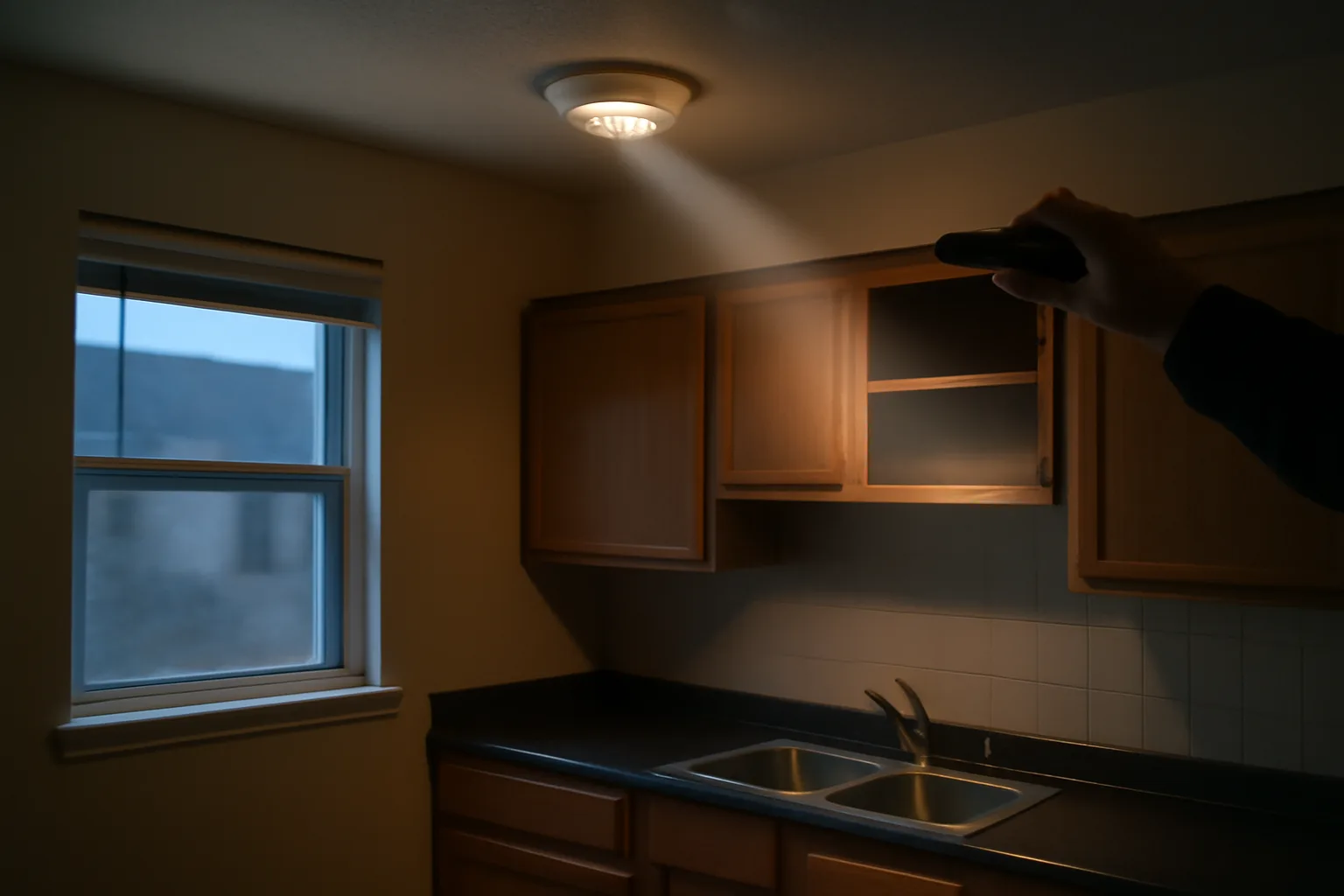
Rental inspectors typically check smoke and CO alarms, egress windows, electrical outlets and panels, plumbing leaks, water heater safety, heating systems, handrails, pest evidence, and overall structural condition. Exact items vary by city code, but alarms and electrical hazards cause the most failed inspections nationwide, according to fire and housing agencies.
What does a rental inspection actually check?
A rental inspection is a walk-through by a city code officer (or sometimes a fire marshal) to confirm the unit meets minimum housing standards before a license is issued or renewed. Most cities that run mandatory rental licensing programs use some version of the International Property Maintenance Code (IPMC) as their base standard, then layer local amendments on top. That means the checklist is never identical city to city, but the categories rhyme everywhere. Here's what shows up on almost every checklist: smoke alarms and carbon monoxide alarms in the right locations, working locks on exterior doors, at least one egress window in every bedroom, GFCI outlets near water sources, no exposed wiring, a water heater with a working temperature-pressure relief valve, functioning heat (often with a minimum temperature requirement written into the code), handrails on stairs with more than a few steps, no active leaks, and no obvious pest infestation. Inspectors also look at the exterior: peeling exterior paint (especially in homes built before 1978, because of lead paint rules), broken steps, damaged siding, and drainage that pools against the foundation. Some cities inspect every unit before initial licensing and then on a cycle (annually, every two years, every three years) after that. Others only inspect when a complaint comes in or a tenant requests one. Confirm the cycle and the exact checklist with your city rental licensing office, because a checklist from one county over can genuinely be different in ways that matter for a pass/fail outcome.
What can a landlord look at during an inspection?
If you mean a landlord's own periodic walk-through of an occupied unit (not the city's licensing inspection), the scope is narrower and governed by your state's landlord-tenant statute, not building code. A landlord doing a routine inspection can generally check smoke alarm function, look for water damage or mold, check for unauthorized occupants or pets, look for lease violations (illegal subletting, unpermitted alterations), and assess general wear and tear versus damage. A landlord cannot open drawers, closets, or personal storage just to look through belongings; the legal purpose has to be inspecting the condition of the property, not searching tenant possessions. Most states require advance written notice before entry for a non-emergency inspection, commonly 24 to 48 hours, and entry has to happen at a reasonable time. Emergency entry (fire, flooding, gas leak) doesn't require notice. The city's licensing inspector, by contrast, is checking code compliance, not lease compliance. The two inspections often get confused by first-time landlords, but they serve different purposes and sometimes happen on different schedules entirely.
How much notice does a landlord have to give before an inspection?
Notice requirements come from state law, not city rental licensing ordinances, and they vary. California requires "reasonable notice in writing," and the law specifically states that 24 hours is presumed to be reasonable notice in the absence of contrary evidence (California Civil Code Section 1954) [1]. Many other states use a similar 24-hour standard, though some use 48 hours and a handful don't specify a number at all, just "reasonable notice." For city-required licensing or code inspections, notice rules are set by the municipal ordinance, and they're often longer, sometimes a scheduled appointment window given days or weeks in advance so the landlord can coordinate access with the tenant. Confirm your state's specific notice statute and your city's inspection scheduling process with your city rental licensing office, since the two notice clocks (state entry law and city inspection scheduling) don't always match.
Who is responsible for a rental property walk-through inspection in California?
In California, the landlord is responsible for coordinating both the mandatory pre-move-in/move-out inspection under Civil Code Section 1950.5 and any city-required rental inspection under local ordinance. Civil Code Section 1950.5(f) gives a tenant the right to request an initial move-out inspection before the final one, so the landlord can identify repair items and give the tenant a chance to fix them and avoid deductions from the security deposit [2]. Separately, cities like Los Angeles run their own systematic code enforcement program (the Systematic Code Enforcement Program, or SCEP) that requires periodic inspections of most rental units, funded by an annual per-unit fee charged to the property owner [3]. That inspection is conducted by the city's Housing Department, not the landlord, but the landlord has to grant access and correct any violations found. So in California you can have three different "inspections" in play: the security deposit move-in/move-out walkthrough, the landlord's own periodic maintenance check, and the city's licensing inspection. They're not the same thing and they don't follow the same notice rules.
What can a landlord not do in Ohio?
Ohio's landlord-tenant law (Ohio Revised Code Chapter 5321) sets out specific things a landlord cannot do. A landlord cannot enter the rental unit without giving reasonable notice and without the entry being at a reasonable time, except in an emergency (ORC 5321.04) [4]. A landlord cannot shut off utilities, remove doors or windows, or otherwise force a tenant out without going through the court eviction process; Ohio law prohibits self-help eviction. A landlord also cannot retaliate against a tenant for reporting a code violation or requesting repairs (ORC 5321.02) [4]. Ohio landlords also have affirmative duties under ORC 5321.04, including keeping the premises in a fit and habitable condition, complying with local building and housing codes, and keeping common areas safe and sanitary. If a landlord ignores repair requests, tenants in Ohio have statutory remedies including rent escrow through the local municipal or county court. None of this is specific advice for your situation; if you're facing a dispute, Ohio's law library and legal aid organizations publish plain-language guides on the escrow and repair process.
How to become a landlord (the practical steps)
Becoming a landlord is mostly a licensing and paperwork problem, not a mystery. The rough sequence: buy or already own a property that's legal to rent (check zoning and any owner-occupancy requirements first), register the rental with your city or county if required (many cities mandate rental registration or licensing before you can legally collect rent), get the property inspected if your jurisdiction requires it, screen tenants consistent with fair housing law, sign a lease that complies with your state's landlord-tenant statute, and set up a system for collecting rent, handling maintenance requests, and documenting everything. A lot of new landlords skip the registration step because they don't know their city has one, and that's the single most common way people end up with a fine before they even get their first tenant in the door. Fines for operating an unregistered rental range widely depending on the city, sometimes a few hundred dollars per violation, sometimes escalating daily. Confirm your specific city's registration requirement, fee, and deadline with your city rental licensing office before you list the unit. If you already own multiple units or are scaling up, it's worth building a simple template system: one folder per unit with the registration certificate, inspection report, insurance certificate, and lease, so renewals don't turn into a scramble every year.
What is landlording and what is a landlord?
A landlord is the owner of a property (or their authorized agent) who rents that property to a tenant in exchange for rent, under a lease or rental agreement. Landlording is the informal term for the ongoing work of managing that relationship: collecting rent, handling repairs, complying with housing code, screening new tenants, and managing turnover between tenants. Legally, a landlord takes on real obligations, more than the right to collect a check. Most states impose an "implied warranty of habitability," meaning the landlord has a legal duty to keep the unit livable (working plumbing, heat, structural safety) regardless of what the lease says. This concept was formalized in a lot of state law during the 1970s following cases like Javins v. First National Realty Corp. in the D.C. Circuit, which held that a lease of an apartment carries an implied warranty that the landlord will maintain the premises in compliance with the local housing code [5]. Landlording, done right, is really property management plus legal compliance plus basic maintenance competence. It's not passive.
What rights do tenants have without a lease?
A tenant without a written lease still has rights. If rent is being paid and accepted on a regular basis (say, monthly), courts generally treat that as a month-to-month tenancy, and the tenant gets the protections of state landlord-tenant law even with nothing in writing. That includes the right to habitable conditions, protection from illegal lockouts or utility shutoffs, the right to advance notice before the landlord can end the tenancy, and (in states that require it) the right to a formal eviction process rather than the landlord just changing the locks. Without a lease, the terms default to whatever state law says a month-to-month tenancy looks like. Termination notice requirements still apply: many states require 30 days' written notice to end a month-to-month tenancy, though some require more (California requires 60 days' notice if the tenant has lived there a year or more, under Civil Code Section 1946.1) [6]. A verbal agreement to rent still counts as a legal tenancy in every state; the absence of paper doesn't erase the legal relationship, it just makes disputes harder to prove.
Why do landlords require renters insurance?
Landlords require renters insurance mainly to shift liability risk away from their own policy and to make sure a tenant's own belongings and liability exposure are covered by someone other than the landlord. A landlord's own property insurance covers the building and the landlord's liability; it does not cover a tenant's personal property (furniture, electronics, clothing) if there's a fire, burst pipe, or theft. Renters insurance also typically includes liability coverage, which matters if a tenant accidentally causes damage (a kitchen fire, an overflowing bathtub that damages the unit below) or if a guest gets injured in the unit and sues. Without that coverage, the landlord's insurer may end up fighting over who pays, and the landlord's premiums can rise after a claim regardless of fault. Average renters insurance premiums run roughly $15 to $20 a month nationally according to industry rate surveys, though the exact number depends on coverage limits and location; that's a fairly small ask for landlords to build into lease requirements given what it protects against. Requiring proof of renters insurance as a lease condition is legal in most states, though a few states and cities restrict how landlords can enforce it, so confirm your local rules if you plan to make it mandatory.
What typically fails a rental inspection?
| Smoke alarms | No alarms present in ~41% of home fire deaths (NFPA) [7] |
|---|---|
| CO alarms | Required near sleeping areas and fuel-burning appliances in most codes |
| Egress windows | Bedrooms need a window large enough to escape through and be rescued |
| GFCI outlets | Prevents shock near water; required in kitchens, baths, and exteriors |
| Water heater TPR valve | Prevents pressure buildup and explosion risk |
| Handrails | Required on stairways with more than a set number of risers under local code |
| Peeling paint (pre-1978) | Lead paint hazard; triggers federal disclosure rules |
Across most city rental inspection programs, a handful of issues account for most failed inspections and re-inspection visits. Missing or non-functioning smoke alarms is consistently at or near the top; the National Fire Protection Association reports that in reported home fires from 2015 to 2019, no smoke alarms were present in roughly 41% of home fire deaths, and dead or missing batteries were a major reason working alarms failed to operate [7]. That statistic alone is why nearly every city rental inspection checklist puts alarms first. Other frequent failure points: blocked or painted-shut egress windows in bedrooms, exposed or improperly spliced electrical wiring, missing GFCI protection near sinks and in bathrooms, water heaters without a proper temperature-pressure relief valve discharge pipe, missing handrails on stairways, active roof or plumbing leaks, and peeling paint in pre-1978 housing (which triggers lead paint disclosure and sometimes remediation requirements under federal law, since Congress banned lead-based paint in housing in 1978) [8]. Exterior issues like broken steps, missing address numbers, and overgrown vegetation blocking exits also show up often on municipal checklists, especially in older housing stock. | Common inspection item | Why it matters |
How do I prepare a rental for an inspection?
Walk the unit the week before with the actual checklist your city uses, not a generic one, since local amendments change specifics. Test every smoke and CO alarm, replace batteries even if they seem fine, and confirm placement matches code (usually inside and outside each sleeping area, plus one per floor). Check every window in every bedroom opens fully and isn't painted shut. Run water at every sink and tub, check under sinks for slow leaks, and confirm the water heater has a proper relief valve with a discharge pipe running down near the floor. Look at every outlet within 6 feet of a sink for GFCI protection, and check exterior outlets too. Walk every exterior step and stair rail and tighten anything loose. Clear anything blocking a required exit path, inside or outside. If the property was built before 1978, check for peeling or chipping paint anywhere, inside or out, since that's a near-automatic flag. This is exactly the kind of prep that turns a stressful surprise inspection into a routine formality. If you'd rather work from a structured, city-specific checklist instead of assembling one from scratch every renewal cycle, the City Rental License & Inspection Prep Packet is a one-time $79 tool built for landlords managing 1 to 10 units through exactly this process.
What happens if my rental fails inspection?
Most cities don't shut you down on the spot for a failed inspection; they issue a notice of violation with a list of items to correct and a re-inspection deadline, commonly somewhere between 10 and 30 days depending on the severity. Life-safety items (no smoke alarms, blocked exits, no heat in winter) tend to get much shorter correction windows, sometimes just a few days, because they represent immediate risk. If you don't correct the items by the deadline, most ordinances allow for escalating fines, and some allow the city to deny or revoke the rental license entirely until the unit passes. A revoked or denied license generally means you legally cannot rent the unit, or in some cities cannot collect rent, until it's reinstated, which can mean real lost income on top of the fine. Re-inspection often carries its own fee too. Confirm your specific city's correction timeline, fine schedule, and re-inspection fee with your city rental licensing office, since these numbers vary by a wide margin between cities.
Frequently asked questions
How to become a landlord in a city that requires rental licensing?
Register the property with your city's rental licensing office before you advertise it, schedule any required inspection, correct anything flagged, pay the licensing fee, and then screen tenants and sign a compliant lease. Skipping registration is the most common way new landlords get fined before they even have a tenant.
Who is responsible for a rental property walk-through inspection in California?
The landlord is responsible for coordinating both the state-required move-in/move-out walkthrough under Civil Code Section 1950.5 and any local city licensing inspection. Cities like Los Angeles conduct their own periodic code inspections through programs like SCEP, but the landlord must provide access and fix violations found.
What is landlording?
Landlording is the ongoing work of owning and managing a rental property: collecting rent, keeping the unit habitable, complying with local housing code, screening tenants, and managing turnover. It carries real legal duties, including an implied warranty of habitability in most states, more than the right to collect rent.
What is a landlord?
A landlord is the property owner (or their authorized agent) who rents a unit to a tenant under a lease or rental agreement, in exchange for rent. Landlords have legal duties around habitability, repairs, and notice before entry that vary by state.
What rights do tenants have without a lease?
A tenant paying rent regularly without a written lease is generally still a legal tenant under a month-to-month arrangement, with full state law protections: habitability, protection from illegal lockouts, and required notice before the tenancy can end. Verbal or implied rental agreements are legally enforceable in every state.
How much notice does a landlord have to give before entering?
It depends on your state. California presumes 24 hours' written notice is reasonable under Civil Code Section 1954. Many states use similar 24 to 48 hour standards, though wording and exceptions vary, so check your specific state's landlord-tenant statute.
What can a landlord look at during an inspection?
A landlord's routine inspection can check smoke alarm function, look for water damage, mold, pest signs, unauthorized occupants or pets, and lease violations. It cannot become a search through personal drawers or closets; the purpose has to be property condition, not the tenant's belongings.
Why do landlords require renters insurance?
Renters insurance covers a tenant's own belongings and personal liability, which a landlord's property policy doesn't cover. It protects both sides if there's a fire, water damage, or an injury caused by the tenant, and it typically costs around $15 to $20 a month.
What can a landlord not do in Ohio?
Under Ohio Revised Code Chapter 5321, a landlord cannot enter without reasonable notice except in an emergency, cannot force a tenant out through self-help (shutting off utilities, removing doors), and cannot retaliate against a tenant for reporting a code violation or requesting repairs.
What fails a rental inspection most often?
Missing or dead smoke alarms, blocked or painted-shut bedroom windows, exposed wiring, missing GFCI outlets near water, water heaters without a proper relief valve discharge pipe, missing stair handrails, and peeling paint in pre-1978 units are the most common failure points across city checklists.
How often do cities inspect rental units?
It varies widely. Some cities inspect every unit before initial licensing and then on a fixed cycle (annually, every 2 years, every 3 years); others only inspect on complaint or tenant request. Confirm the cycle with your specific city rental licensing office.
Does a landlord have to fix everything found in an inspection?
Generally yes, if the item is a code violation rather than cosmetic. Most cities issue a correction deadline, often 10 to 30 days for standard items and much shorter for life-safety issues like missing smoke alarms or no heat, before fines or license denial kick in.
Sources
- California Legislative Information, Civil Code Section 1954: California presumes 24 hours' written notice is reasonable before landlord entry
- California Legislative Information, Civil Code Section 1950.5: Tenant right to request initial move-out inspection before final security deposit inspection
- Ohio Legislature, Ohio Revised Code Section 5321.04: Ohio landlord duties and entry notice requirements, including emergency exceptions
- U.S. Court of Appeals D.C. Circuit, Javins v. First National Realty Corp.: Case establishing implied warranty of habitability tied to local housing code compliance
- California Legislative Information, Civil Code Section 1946.1: California requires 60 days' notice to end tenancy of one year or more
- National Fire Protection Association, Smoke Alarms in US Home Fires report: No smoke alarms were present in roughly 41% of reported home fire deaths, 2015-2019
- U.S. Environmental Protection Agency, Lead-Based Paint Ban history: Lead-based paint in housing was banned in 1978, triggering disclosure rules for older housing
- Ohio Legislature, Ohio Revised Code Section 5321.02: Ohio law prohibits landlord retaliation against tenants for reporting code violations