Last updated 2026-07-26
TL;DR
Rental inspectors mainly check life-safety items: working smoke and CO alarms, two exits from bedrooms, no exposed wiring, secure railings, no active leaks, working heat, and no pest infestation. Most cities use a checklist tied to their local housing code or a version of the International Property Maintenance Code. Fix obvious hazards before the inspector arrives and you'll clear most inspections.
What do they look for in a rental house inspection?
A rental house inspection is a walkthrough by a city code official (or sometimes a fire marshal) checking whether the property meets minimum housing standards spelled out in the local rental licensing ordinance. Most cities base their checklist on the International Property Maintenance Code (IPMC), which many states and cities adopt directly or adapt into local ordinance language [1]. The inspector isn't grading your paint job or judging your decor. They're looking for things that could hurt someone or that violate a specific code section: working smoke alarms, a second way out of bedrooms, no exposed electrical wiring, secure handrails on stairs with four or more risers, functioning heat, no active plumbing leaks, and no obvious pest or mold problems. Here's the pattern across most jurisdictions: life-safety items get flagged hard and often require same-day or short-window fixes. Cosmetic stuff (a cracked switch plate, a stained ceiling tile) usually gets a courtesy note but rarely fails you outright unless it signals a bigger problem like a hidden leak. If you want a structured way to walk your own property before the city does, a rental packet built around your city's actual checklist saves a lot of guessing. That's the whole point of doing a pre-inspection walkthrough yourself first.
What can a landlord (or inspector) look at during an inspection?
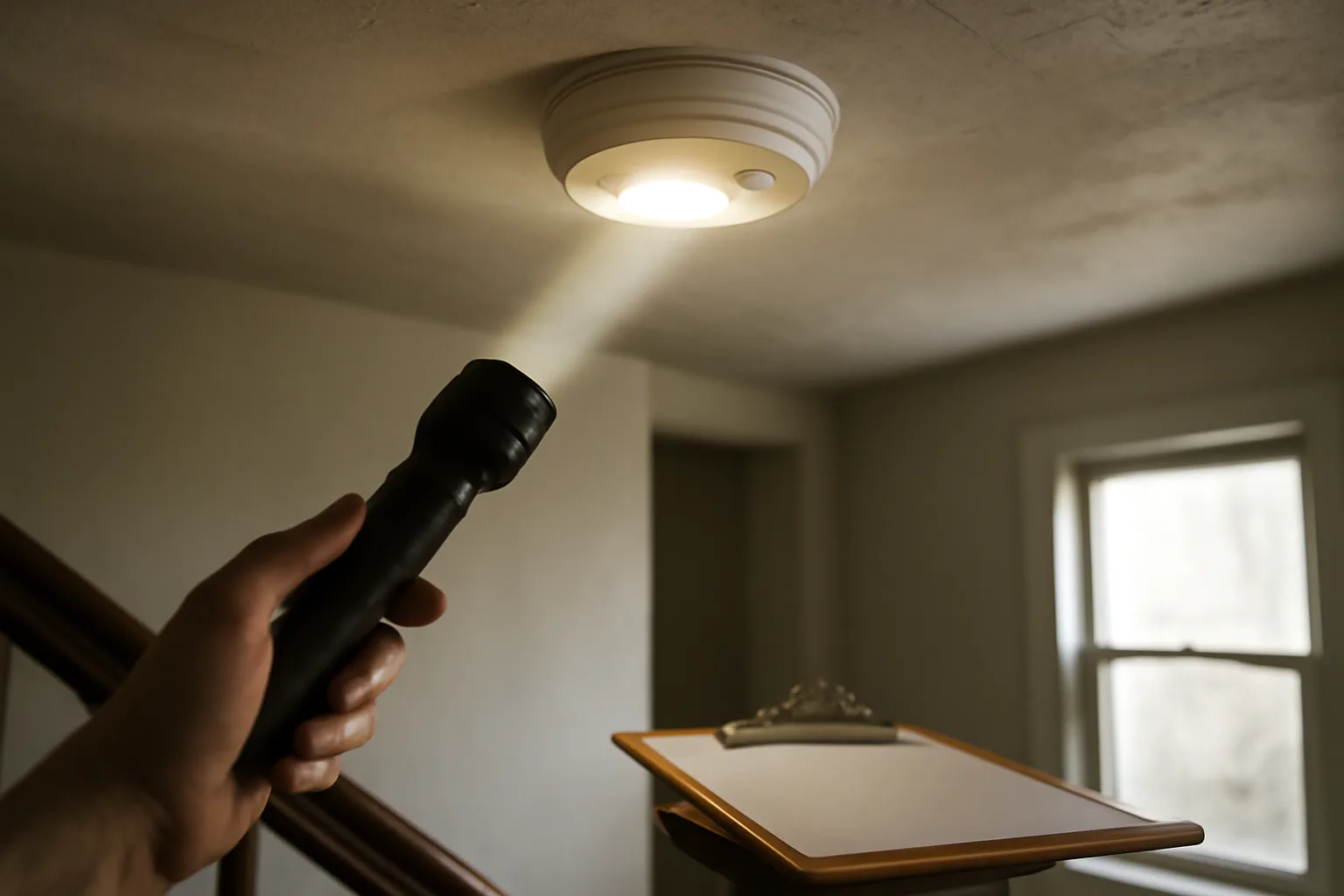
During a licensing inspection, the code official can look at anything covered by the housing or property maintenance code that applies to habitability and safety. That typically means: - Smoke alarms and carbon monoxide detectors: correct placement (inside each bedroom, outside sleeping areas, one per floor) and that they're not expired or disconnected [2]
- Electrical: no exposed wiring, no overloaded outlets, GFCI outlets near water sources in many jurisdictions, a labeled and accessible panel
- Plumbing: no active leaks, working hot water, proper drainage, no cross-connections
- Structural: stable stairs, secure handrails and guardrails, no rotted decking, windows that open and lock
- Egress: every bedroom needs a second way out, either a door to the exterior or an operable window meeting minimum size and sill height rules under the IPMC and most state building codes [1]
- Heating: a permanent heat source capable of maintaining a minimum temperature, commonly 68°F, though the exact number is set by the local code, not a federal standard
- Pest and sanitation: no active infestation, working exterior doors, tight-fitting screens
- Exterior: peeling paint (especially a concern in pre-1978 housing under federal lead paint disclosure rules), missing gutters causing water intrusion, unsecured trash areas What inspectors generally can't do is open closed drawers, search personal belongings, or inspect areas unrelated to habitability. The inspection is about the structure and its systems, not the tenant's stuff.
Who is responsible for a rental property walkthrough inspection in California?
In California, responsibility splits depending on the type of inspection. For move-in and move-out condition, the landlord is responsible for offering the tenant an initial inspection before move-out if the landlord intends to withhold any part of the security deposit. California Civil Code Section 1950.5(f) requires landlords to notify tenants of their right to this pre-move-out inspection and to give the tenant an itemized statement of anticipated deductions [3]. For licensing or code inspections, it depends on the city. California doesn't have a single statewide rental licensing law. Cities like Los Angeles run their own Systematic Code Enforcement Program (SCEP), which requires periodic inspections of most rental units and charges an annual per-unit fee, currently in the range you should confirm with the LA Housing Department since fee schedules change [4]. Other California cities have no licensing program at all and only inspect in response to a tenant complaint. So if you're asking who shows up at the door: for a code inspection, it's a city inspector. For a deposit-related walkthrough, it's the landlord or their agent, and the tenant has the right to be present.
How much notice does a landlord have to give before an inspection?
Notice requirements come from two different sources: state landlord-tenant law (for a landlord entering to inspect, repair, or show the unit) and the local rental licensing ordinance (for a city inspector). Most states require 24 to 48 hours of written or verbal notice before a landlord enters an occupied unit for a non-emergency reason. California requires 24 hours' written notice under Civil Code Section 1954, with an exception for emergencies where no notice is required [5]. Many other states use similar windows, though some (like Arizona) also specify 48 hours for certain entry types [6]. For city licensing inspections, notice periods vary widely and are set by local ordinance, not state law. Some cities mail a notice 30 days ahead with a scheduling window; others give as little as a week. Because this differs by city and even by department within a city, confirm the exact notice period with your city rental licensing office rather than assuming a standard number applies everywhere. One more wrinkle: if your tenant refuses entry even with proper notice, most ordinances still hold the landlord responsible for getting the inspection done, meaning you may need to pursue a lawful path to access rather than just telling the city 'the tenant said no.'
What rights do tenants have without a lease?
A tenant without a signed lease still has real legal protections. Occupying a unit and paying rent (or being permitted to stay) generally creates what's called a periodic tenancy, most often month-to-month, governed by state landlord-tenant statute rather than a written contract. Without a lease, a tenant still has the right to: - Habitable premises meeting local housing code, under the implied warranty of habitability recognized in most states
- Advance notice before the landlord enters, per state law (commonly 24 to 48 hours)
- Advance written notice before the tenancy is terminated, which for month-to-month tenancies is often 30 days, though some states require 60 days after a year of occupancy [7]
- Protection from retaliatory or discriminatory eviction under the federal Fair Housing Act, 42 U.S.C. § 3601 et seq., which bars discrimination based on race, color, religion, sex, national origin, disability, and familial status regardless of whether there's a written lease [8]
- Return of any security deposit collected, following the state's deposit return and itemization timeline What a tenant without a lease does NOT automatically get is a fixed rent amount or fixed term. Without a lease specifying otherwise, the landlord can typically raise rent or end the tenancy with proper notice, subject to any local rent control or just-cause eviction ordinance that applies.
What can a landlord not do in Ohio?
Ohio landlord-tenant law is spelled out in Ohio Revised Code Chapter 5321. A few things Ohio landlords specifically cannot do: - Enter the rental unit without reasonable notice and at a reasonable time, except in an emergency. Ohio courts have generally treated 24 hours as reasonable notice, though the statute itself just says 'reasonable' - Shut off utilities, change locks, or remove the tenant's belongings as a way to force them out ('self-help eviction'). Ohio law requires landlords to use the court eviction (forcible entry and detainer) process instead - Retaliate against a tenant for reporting a code violation or exercising a legal right, which ORC 5321.02 specifically prohibits
- Fail to maintain the unit in a habitable condition, keep common areas safe, or keep plumbing, heating, and electrical systems in good working order, all required under ORC 5321.04's landlord duties
- Discriminate in violation of federal fair housing law or Ohio's own fair housing provisions under ORC Chapter 4112 Ohio doesn't have a statewide rental licensing law, but individual cities (Cleveland, Cincinnati, and others) run their own registration and inspection programs, so a landlord operating in Ohio still needs to check the specific city's ordinance on top of state law.
How to become a landlord (the practical steps)
Becoming a landlord isn't a licensed profession in most states (a few cities require a rental license, which is different), but there's a real sequence worth following if you're renting out a property for the first time. 1. Check your local zoning and licensing rules first. Many cities require a rental registration or license before you can legally rent, sometimes with a fee (commonly in the $50 to $300 per unit per year range depending on the city, though you should confirm with your city rental licensing office). 2. Get the property inspection-ready. Smoke alarms, CO detectors, working locks, no active leaks. This is the same checklist a city inspector will use. 3. Understand your state's landlord-tenant law on deposits, notice periods, and habitability duties, since these override anything you might assume from a generic lease template. 4. Screen tenants consistently and legally under the Fair Housing Act, using the same criteria for every applicant [8]. 5. Get landlord insurance (different from a standard homeowner's policy) and set up a way to collect rent and track expenses. 6. Learn your local eviction process before you need it. Every state requires a formal court process; self-help eviction (changing locks, shutting off utilities) is illegal almost everywhere. A lot of first-time landlords skip step 1 and find out about the licensing requirement only after getting a notice of violation. If your city requires registration, a rental license and inspection prep packet can shortcut the process of figuring out what your specific city wants.
What is landlording and what is a landlord?
A landlord is the owner (or authorized agent of the owner) of real property who rents that property to another party, called a tenant, in exchange for rent. Landlording is the ongoing work of managing that relationship and the property: collecting rent, handling repairs, meeting code requirements, screening new tenants, and following the notice and eviction rules of your state. Legally, a landlord's core duties usually include: - Keeping the unit habitable (working plumbing, heat, electrical, structural safety), often called the implied warranty of habitability
- Making repairs within a reasonable time after being notified of a problem
- Following state law on security deposit handling and return
- Giving proper notice before entry and before ending a tenancy
- Complying with any local rental registration, licensing, or inspection ordinance where the property sits Landlording sounds simple until you're doing it. The paperwork side (registration renewals, inspection scheduling, lead paint disclosures for pre-1978 housing under federal law) is often the part that catches new landlords off guard, more than tenant issues do.
Why do landlords require renters insurance?
Landlords require renters insurance mainly to cover the tenant's personal belongings and liability, not the building itself. A landlord's own property insurance covers the structure, but it typically does not cover a tenant's furniture, electronics, or clothing if there's a fire, burst pipe, or theft. Renters insurance also usually includes personal liability coverage, which matters if a tenant's dog bites a visitor or their bathtub overflows and damages the unit below. Without it, the landlord (and their insurer) may end up absorbing costs that a $15 to $30 a month renters policy would have covered instead, based on typical premium ranges reported by the Insurance Information Institute . Requiring renters insurance as a lease condition is legal in the large majority of states, though a landlord can't require a specific insurance company; they can only require a minimum coverage amount. Some states or cities have specific rules about how this requirement has to be disclosed, so check your state's landlord-tenant statute before adding it to a lease.
What items get flagged most often on rental inspections?
| Smoke/CO alarms | Missing, expired, or disconnected | Install/replace, test batteries | |
|---|---|---|---|
| Egress | Bedroom window too small or painted shut | Repair or replace window hardware | |
| Electrical | Exposed wiring, missing GFCI near water | Licensed electrician repair | |
| Plumbing | Active leaks, no hot water | Repair fixture or water heater | |
| Handrails/guardrails | Loose or missing on stairs with 4+ risers | Re-secure or replace | |
| Heating | No permanent heat source, can't hit minimum temp | Repair/replace furnace | |
| Pests | Evidence of infestation | Pest control treatment, seal entry points | |
| Exterior | Peeling paint (pre-1978 lead concern), broken screens | Scrape/repaint, repair screens | Smoke alarm issues are consistently one of the most common findings in rental inspections nationally; the National Fire Protection Association reports that roughly three out of five home fire deaths happen in homes with no smoke alarms or non-working ones, which is exactly why inspectors weight this item so heavily [2]. |
Every city's checklist looks a little different, but the same handful of issues show up over and over in code enforcement data and inspector guidance. Here's a rough table of what typically gets flagged, based on common categories in municipal housing codes modeled on the IPMC [1]: | Category | Common violation | Typical fix |
What happens if the property fails inspection?
Failing a rental inspection almost never means immediate license revocation. Most cities issue a notice of violation with a correction period, commonly 10 to 30 days for minor issues and shorter windows (sometimes 24 to 72 hours) for hazards like no working smoke alarms or an unsafe electrical condition. The usual sequence looks like this: 1. Inspector documents the violation(s) and issues a written notice 2. Landlord has a set correction period (varies by city and by severity) 3. Landlord requests a re-inspection once fixes are done 4. If uncorrected, the city can issue fines, deny or revoke the rental license, or in serious habitability cases refer the unit for a vacate order Fines vary enormously by city and by how many times you've been cited before, so there's no honest single number to give you here; check the fee schedule on your city rental licensing office's page. What's consistent is that a first offense usually costs less than a repeat offense, and cities increasingly use escalating fine structures to push chronic non-compliance rather than one-time first fines.
How do I prepare for a rental inspection?
The fastest way to pass is to walk the property yourself using the same checklist the city uses, a few days before the scheduled date. Before the inspector arrives: - Test every smoke and CO alarm, replace batteries, check expiration dates (most alarms expire 10 years from manufacture)
- Open every bedroom window to confirm it isn't painted or nailed shut
- Check every GFCI outlet with the test button
- Look under every sink and around the water heater for leaks
- Wiggle every handrail and guardrail
- Confirm the thermostat can reach the minimum required temperature for your city (commonly around 68°F, but this is a local code number, not federal)
- Check for pest evidence, especially in kitchens and basements
- Make sure exterior doors latch and lock properly If your city requires paperwork alongside the physical inspection (proof of registration, lead paint disclosure for pre-1978 units, a copy of the current lease), have that ready too. A lot of failed inspections aren't about the building at all; they're a missing document that delays the license approval even after the physical walkthrough passes clean.
Frequently asked questions
How to become a landlord if I've never rented out a property before?
Check your city's rental registration or licensing requirement first, then get the unit inspection-ready (smoke alarms, no leaks, working locks), review your state's landlord-tenant law on deposits and notice periods, screen tenants under Fair Housing Act standards, and get landlord insurance before signing a lease.
Who is responsible for a rental property walkthrough inspection in California?
For move-out deposit inspections, the landlord must offer a pre-move-out walkthrough under California Civil Code 1950.5(f). For city licensing inspections, a city code official handles it, and requirements vary by city since California has no single statewide rental licensing law.
What is landlording?
Landlording is the ongoing work of owning and managing rental property: collecting rent, handling repairs, meeting local code and licensing requirements, screening tenants, and following state notice and eviction procedures. It's the day-to-day operational side of being a landlord, more than holding title to the property.
What is a landlord?
A landlord is the property owner (or their authorized agent) who rents real estate to a tenant in exchange for rent, taking on legal duties like maintaining habitability, handling deposits properly, and giving required notice before entry or lease termination under state law.
What rights do tenants have without a lease?
A tenant without a lease still gets habitability protections, notice before entry (usually 24-48 hours per state law), notice before eviction (often 30 days for month-to-month), Fair Housing Act protection against discrimination, and proper handling of any security deposit paid.
How do I be a good landlord day to day?
Respond to repair requests quickly, follow your state's notice rules for entry and rent increases, keep the property meeting code (especially smoke alarms and heat), document everything in writing, and treat every applicant under the same screening criteria to stay compliant with fair housing law.
Why do landlords require renters insurance?
Renters insurance covers the tenant's belongings and personal liability, which a landlord's own building insurance doesn't cover. It shifts risk away from the landlord for things like a tenant's dog bite claim or fire damage to their furniture, typically for $15-$30 a month per the Insurance Information Institute.
How much notice does a landlord have to give before entering?
Most states require 24 to 48 hours' notice for non-emergency entry. California requires 24 hours' written notice under Civil Code 1954. Emergency situations (fire, major leak) typically don't require advance notice at all. Check your specific state statute since the exact hours vary.
What can a landlord look at during an inspection?
Inspectors check habitability and safety items covered by local housing code: smoke and CO alarms, electrical wiring, plumbing leaks, heating, egress windows, stair railings, and pest evidence. They generally can't search personal belongings or closed drawers unrelated to code compliance.
What can a landlord not do in Ohio?
Under Ohio Revised Code 5321, landlords cannot enter without reasonable notice except in emergencies, cannot shut off utilities or change locks to force a tenant out (self-help eviction is illegal), cannot retaliate against a tenant for reporting code violations, and must maintain habitable conditions.
Do all cities require a rental license or inspection?
No. Rental licensing and inspection requirements are set city by city or sometimes county by county, not nationally. Some states have no cities with licensing programs at all, while others (Ohio, California, many Midwest and Northeast cities) have dozens of municipalities running their own programs with different fees and schedules.
What happens if my rental fails the city inspection?
You'll typically get a written notice of violation with a correction deadline, often 10-30 days for minor issues and much shorter for hazards like non-working smoke alarms. After fixing the issues, you request a re-inspection. Fines and license denial are possible for uncorrected repeat violations, but vary by city.
Sources
- National Fire Protection Association, Smoke Alarms in US Home Fires report: Roughly three out of five home fire deaths occur in homes with no smoke alarms or non-working alarms
- California Legislative Information, Civil Code Section 1950.5: California landlords must offer tenants an initial pre-move-out inspection and itemized deduction statement before withholding deposit funds
- California Legislative Information, Civil Code Section 1954: California requires 24 hours' written notice before landlord entry except in emergencies
- Arizona Legislature, Arizona Revised Statutes Section 33-1343: Arizona sets specific landlord entry notice requirements distinct from California's 24-hour standard
- California Legislative Information, Civil Code Section 1946.1: Month-to-month tenancies of one year or more may require 60 days' notice to terminate in California
- U.S. Department of Housing and Urban Development, Fair Housing Act overview: The federal Fair Housing Act, 42 U.S.C. 3601 et seq., bars housing discrimination based on race, color, religion, sex, national origin, disability, and familial status
- Ohio Laws and Rules, Ohio Revised Code Chapter 5321: Ohio landlord-tenant law requires reasonable notice for entry, prohibits self-help eviction, and bars retaliation against tenants who report code violations
- Insurance Information Institute, Renters Insurance facts and statistics: Typical renters insurance premiums run in the range of about $15 to $30 per month